When trauma strikes, it doesn’t just affect individuals – it impacts entire families. Whether it’s a sudden loss, violence, or a natural disaster, the aftermath can disrupt relationships, communication, and daily life. Early intervention is key. Trauma-informed family therapy techniques, typically lasting 1–10 sessions, focus on stabilizing families, reducing stress, and building coping skills within the first 30 days after a traumatic event. These approaches can lower the risk of long-term mental health issues like PTSD, which affects 6% of adults in the U.S.
Key Takeaways:
- Trauma’s Impact on Families: Emotional strain, trust issues, behavioral problems, and intergenerational effects. This often requires generational healing to break cycles of trauma.
- Signs You Need Help: Persistent anxiety, withdrawal, emotional suppression, or conflict.
- Effective Short-Term Interventions:
- Child-Parent Psychotherapy (CPP): Strengthens caregiver-child bonds for kids under 5.
- Combined Parent-Child Cognitive-Behavioral Therapy (CPC-CBT): Reduces conflict and improves coping for school-aged kids.
- Attachment and Biobehavioral Catch-up (ABC): Home-based program for children under 4 to improve emotional regulation and care.
Addressing trauma early with evidence-based methods ensures families can navigate recovery together, rebuilding trust and emotional safety. Services like Growth and Change Counseling offer tailored support to help families move from crisis to stability.
How Trauma Affects Families
What Trauma Is and How It Impacts Families
Trauma is a deep emotional wound caused by repeated experiences of abuse, neglect, or extreme stress [5]. When trauma affects a family, its impact often spreads like ripples in a pond, disrupting emotional connections and altering how trauma impacts parent-child relationships and family interactions.
This disruption typically shows up in four key areas. Emotionally, family members might struggle with anxiety, depression, shame, or sudden irritability. Relationally, trust can erode, communication may become strained, and individuals might withdraw from one another. Behaviorally, families may see more conflict, the emergence of unhealthy coping mechanisms like substance use or overeating, or new behavioral issues in children. Systemically, trauma can shift family roles and even carry over into future generations, influencing how parents raise their children [5][6].
Statistics show that nearly one in four children will face a traumatic event during their lifetime [5]. For children, trauma doesn’t just cause short-term distress – it can change their brain development and hinder emotional growth. Parents dealing with their own unresolved trauma may unintentionally pass their distress to their children through altered parenting or attachment styles. This process, known as intergenerational transmission, can shape family dynamics for years to come [6].
Spotting these effects early is crucial for addressing the challenges that trauma brings.
Warning Signs That Your Family Needs Help Now
Because trauma’s effects can be so pervasive, it’s important to recognize when professional help is necessary. While some families may heal over time, certain warning signs indicate that intervention shouldn’t wait. For instance, if family members are suppressing strong emotions [7] or avoiding emotional expression altogether [6], these behaviors can worsen relationship strain.
Other signs to watch for include ongoing anxiety or social withdrawal lasting more than a few weeks, difficulty managing emotions, or the development of harmful coping mechanisms [7]. Increased conflict between parents, persistent high-tension communication, or sudden behavioral changes in children following a traumatic event are also red flags. Ignoring these signs can reinforce negative patterns and lower the quality of life for everyone in the household [7].
sbb-itb-596b85d
Healing Trauma through Child and Family Traumatic Stress Intervention
Evidence-Based Short-Term Interventions for Families
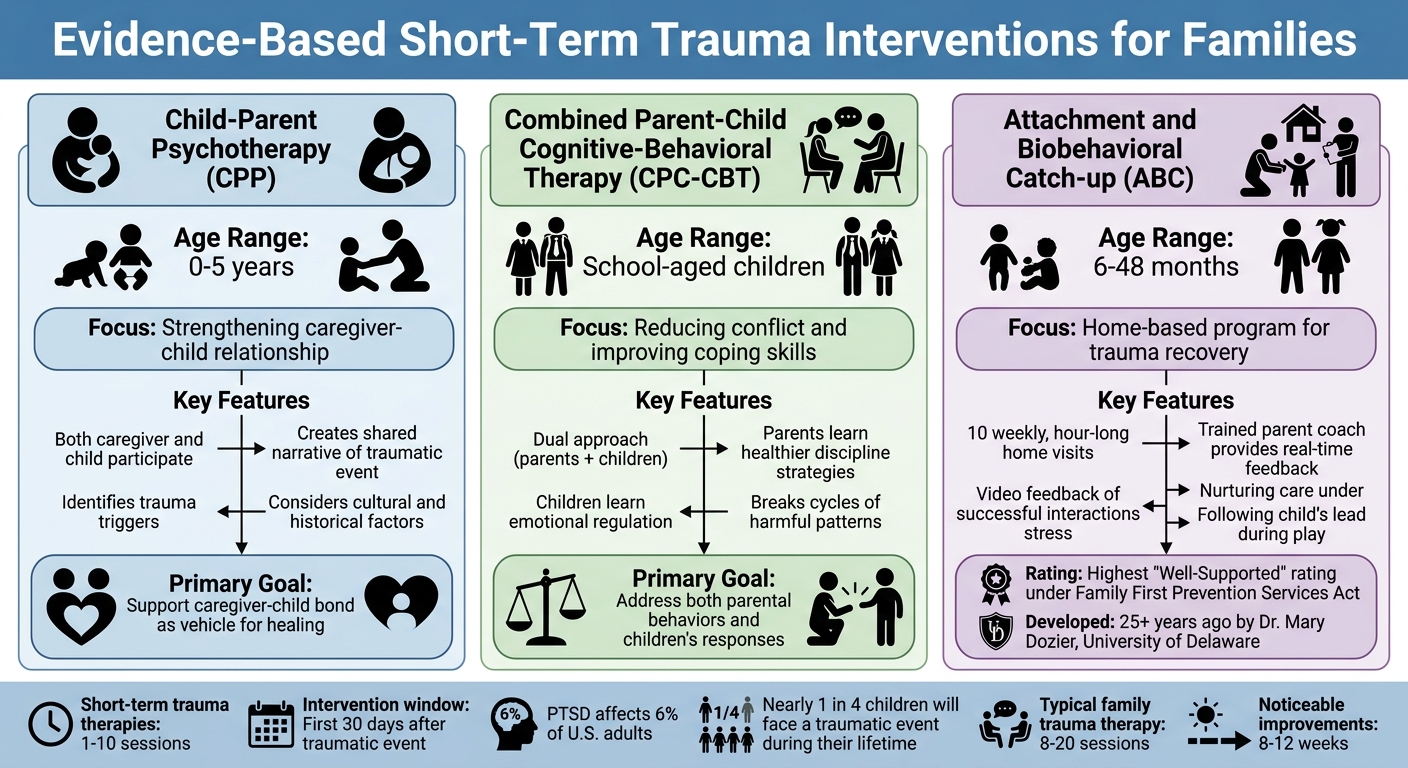
Evidence-Based Short-Term Trauma Interventions for Families by Child Age Group
Targeted therapeutic approaches can stabilize relationships and bring a sense of emotional safety back to families. Here, we explore three interventions that address family trauma across different age groups. These methods provide a solid foundation for long-term family therapy and trauma recovery.
Child-Parent Psychotherapy (CPP)
Child-Parent Psychotherapy focuses on infants, toddlers, and young children (ages 0–5) who have faced trauma or struggle with attachment issues. The approach centers on the belief that a strong caregiver-child relationship is key to healing.
"A central goal is to support and strengthen the caregiver-child relationship as a vehicle for restoring and protecting the child’s mental health." – The National Child Traumatic Stress Network [8]
This therapy involves both the caregiver and the child, helping them create a shared narrative of the traumatic event. This shared process allows the child to better understand and process what happened, reducing emotional dysregulation. CPP also emphasizes identifying trauma triggers, enabling caregivers to respond with sensitivity rather than frustration. Beyond addressing immediate trauma, the therapy considers broader influences like cultural and historical factors that impact family dynamics. Updated in 2025, CPP reinforces the caregiver-child bond as a primary pathway to healing, ensuring the child remains connected to their main source of comfort.
Combined Parent-Child Cognitive-Behavioral Therapy (CPC-CBT)
For families with school-aged children dealing with frequent conflicts, harsh discipline, or high levels of tension, Combined Parent-Child Cognitive-Behavioral Therapy offers a dual approach. This intervention helps parents adopt healthier strategies while teaching children emotional regulation and coping skills. By addressing both parental behaviors and children’s responses, CPC-CBT works to break cycles of harmful patterns that could otherwise continue through generations. For younger children, alternative approaches are often more appropriate.
Attachment and Biobehavioral Catch-up (ABC)
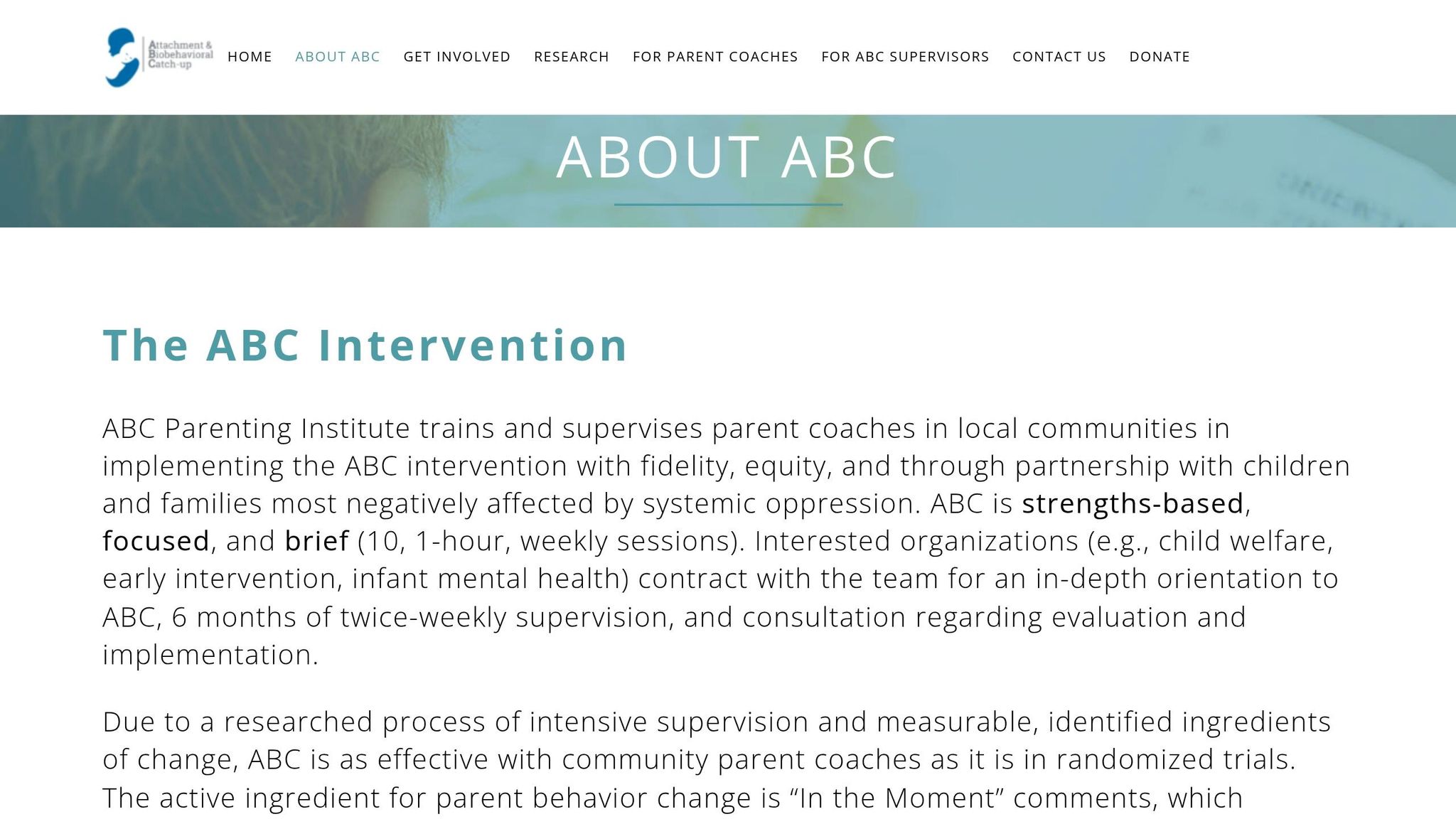
Attachment and Biobehavioral Catch-up is a home-based program designed for caregivers of children aged 6 to 48 months who have experienced challenges like abuse, neglect, domestic violence, or housing instability. Over the course of 10 weekly, hour-long home visits [9][10], a trained parent coach provides real-time feedback and guidance. Caregivers learn to:
- Offer nurturing care, even under stressful conditions
- Follow the child’s lead during play
- Avoid overwhelming behaviors that could distress the child
Video feedback is an integral part of the program, showcasing successful interactions to reinforce positive behaviors.
Developed over 25 years ago by Dr. Mary Dozier at the University of Delaware, ABC has earned the highest "Well-Supported" rating under the Family First Prevention Services Act. Research highlights the program’s lasting effects on biological regulation, impulse control, and brain development, with benefits extending into adolescence. Sessions 7 and 8 are particularly impactful, helping caregivers recognize and override automatic responses to provide more nurturing care.
How Family Therapy Supports Trauma Recovery
Why Integrative Family Therapy Works
Trauma doesn’t just affect one person – it ripples through entire families. When someone in a household experiences trauma, everyone feels the impact. Family therapy acknowledges this interconnectedness, offering a way to heal as a unit rather than focusing solely on individuals. This approach often leads to better outcomes because it addresses the dynamics that influence everyone’s well-being.
The strength of family therapy lies in its systems-based perspective. Instead of isolating the person who experienced trauma, therapists explore how family members’ emotions and behaviors influence one another. This approach shifts the focus from assigning blame to fostering shared responsibility for healing. Families work together to identify harmful patterns, like cycles of conflict or emotional withdrawal, and replace them with healthier ways of interacting. The goal? To rebuild trust and create a sense of emotional safety.
"Family support can improve interactions and relationships and can assist children in resolving trauma symptomology." – Wanda Boyer, Department of Educational Psychology and Leadership Studies, University of Victoria [11]
What makes this approach effective is its flexibility. Integrative family therapy combines different techniques tailored to the family’s specific needs. For instance, some families may benefit from learning about trauma symptoms like flashbacks or hyperarousal, which helps normalize reactions and reduce misunderstandings [4][5]. Others may focus on improving communication, creating a safe space where everyone feels heard and supported. This validation is key to repairing relationships strained by trauma.
Family trauma therapy is often short-term, typically lasting 8–20 sessions [7]. The initial focus is on stabilization – teaching grounding techniques and emotional regulation – before addressing traumatic memories. By prioritizing safety and helping families manage their nervous system responses, therapy minimizes the risk of re-traumatization and builds a foundation for deeper healing.
This systems-based approach is increasingly seen in practices that tailor interventions to the unique needs of each family.
Family Trauma Services at Growth and Change Counseling

Growth and Change Counseling exemplifies this integrative approach, offering family-focused trauma therapy across California. Families can access services in person at locations in Campbell, San Jose, Los Angeles, and Roseville, or through telehealth for added flexibility. The practice emphasizes solutions-focused strategies that address how family relationships are interconnected, customizing treatment to fit each family’s circumstances.
Caregivers play an active role in therapy sessions, learning trauma-informed parenting techniques to support their children’s recovery at home. For those needing additional guidance, parent coaching is available as a standalone service, helping caregivers manage their own stress while supporting their children.
The practice addresses a wide range of trauma-related challenges, including anxiety, depression, and emotional dysregulation. Therapists recognize that trauma affects families differently based on their dynamics, backgrounds, and the nature of the traumatic event. By using evidence-based methods, they help families navigate the path from crisis to stability.
Whether a family needs short-term care to manage immediate symptoms or long-term support to rebuild trust and improve communication, Growth and Change Counseling works collaboratively with all members. Their goal is to guide families toward shared healing and growth after trauma.
Taking the First Steps Toward Family Healing
Acknowledging the need for help is never easy, but it’s an important step. Trauma has a profound effect on families across the United States, making seeking support not only normal but essential. Taking quick action toward creating safety sets the stage for family therapy and the interventions mentioned earlier.
The first goal is to establish physical, emotional, and relational safety before addressing traumatic memories [4][2]. This is a critical step in creating the right conditions for healing [4]. Families can begin by practicing grounding techniques together. For example, sensory grounding involves focusing on the present by describing your surroundings, while somatic grounding uses controlled breathing to manage stress. These exercises help family members regulate their emotions and are a natural part of the stabilization process, laying the groundwork for deeper recovery work [4].
"The sooner a person can access trauma-informed treatment, the sooner they can heal." – Palo Alto University [1]
Taking action early reinforces the progress made during the stabilization phase. Recognizing signs like anxiety, social withdrawal, or emotional dysregulation allows families to intervene before issues escalate [5]. Many short-term trauma treatments can yield noticeable improvements within 8 to 12 weeks [5]. When reaching out for professional help, it’s worth asking about specific approaches aimed at rapid stabilization. Options like the Child and Family Traumatic Stress Intervention (5–8 sessions) or Attachment and Biobehavioral Catch-up (10 sessions) are designed to address trauma efficiently [3].
Family therapy offers a personalized approach to healing, addressing how trauma impacts everyone in the household. Growth and Change Counseling, for instance, provides trauma-focused family therapy throughout California, with locations in Campbell, San Jose, Los Angeles, and Roseville, as well as telehealth services. Their therapists collaborate with families to create tailored recovery plans, equipping caregivers with trauma-informed strategies to support their children at home. A single call can shift a family from crisis to recovery, aligning with the evidence-based, short-term methods highlighted in this guide.
Commonly Asked Questions About Growth and Change Counseling
How soon should my family start trauma therapy?
Families should consider starting trauma therapy shortly after a traumatic event. Acting early can help manage overwhelming emotions and may lower the chances of lasting psychological challenges. Quick access to support often plays a key role in helping every family member navigate the healing process.
Which short-term approach fits my child’s age best?
The most suitable short-term trauma intervention for a child depends on their age and developmental stage. For infants and toddlers under 3 years old, approaches like Child-Parent Psychotherapy (CPP) or Parent-Child Interaction Therapy (PCIT) are often effective. These therapies focus on strengthening the bond between the child and caregiver while addressing trauma-related challenges.
For children aged 3 to 18, Trauma-Focused Cognitive Behavioral Therapy (TF-CBT) is a widely recommended option. This therapy is flexible enough to cater to different ages, emphasizing coping skills and involving caregivers in the healing process. Additionally, CPP remains a strong choice for younger children in the 3 to 5 age range, offering support tailored to their developmental needs.
Can telehealth work for family trauma therapy?
Telehealth has proven to be an effective tool for family trauma therapy. Studies indicate that it facilitates evidence-based trauma treatments and family-focused interventions, all from a remote setting. This approach allows families to access necessary care while preserving the structure and consistency of therapy sessions. Plus, the convenience of receiving support from home makes it a practical solution for addressing trauma in a comfortable and familiar environment.
Related Blog Posts
- Trauma-Informed Family Therapy Techniques
- Family Therapy for Trauma Recovery: What Works
- How Family Therapy Improves Trauma Communication
- Stress from Trauma: Effects on Family Health
