When trauma disrupts a family, communication often breaks down, leading to misunderstandings, tension, and emotional distance. Family therapy helps repair these fractures by creating a safe space for open dialogue and teaching practical tools to rebuild trust and emotional connection. Here’s how it works:
- Active Listening: Encourages family members to truly hear each other, fostering understanding and validation.
- Healthy Expression of Emotions: Techniques like "I" statements reduce blame and defensiveness.
- Body Language Awareness: Recognizing non-verbal cues helps address emotions before conflicts escalate.
- Building Emotional Safety: Therapists prioritize trust and psychoeducation to help families better understand trauma’s effects.
- Restoring Trust: Reliable communication techniques, such as weekly check-ins, promote honest and consistent interactions.
- Tailored Support for Children: Age-appropriate methods like play therapy and emotional vocabulary building help kids process trauma safely.
Family therapy doesn’t assign blame but focuses on improving relationships and communication patterns. Most families see noticeable progress in just 12 sessions, with 90% reporting emotional improvements and 66% experiencing better physical health. By learning these tools, families can heal, strengthen connections, and face challenges together.
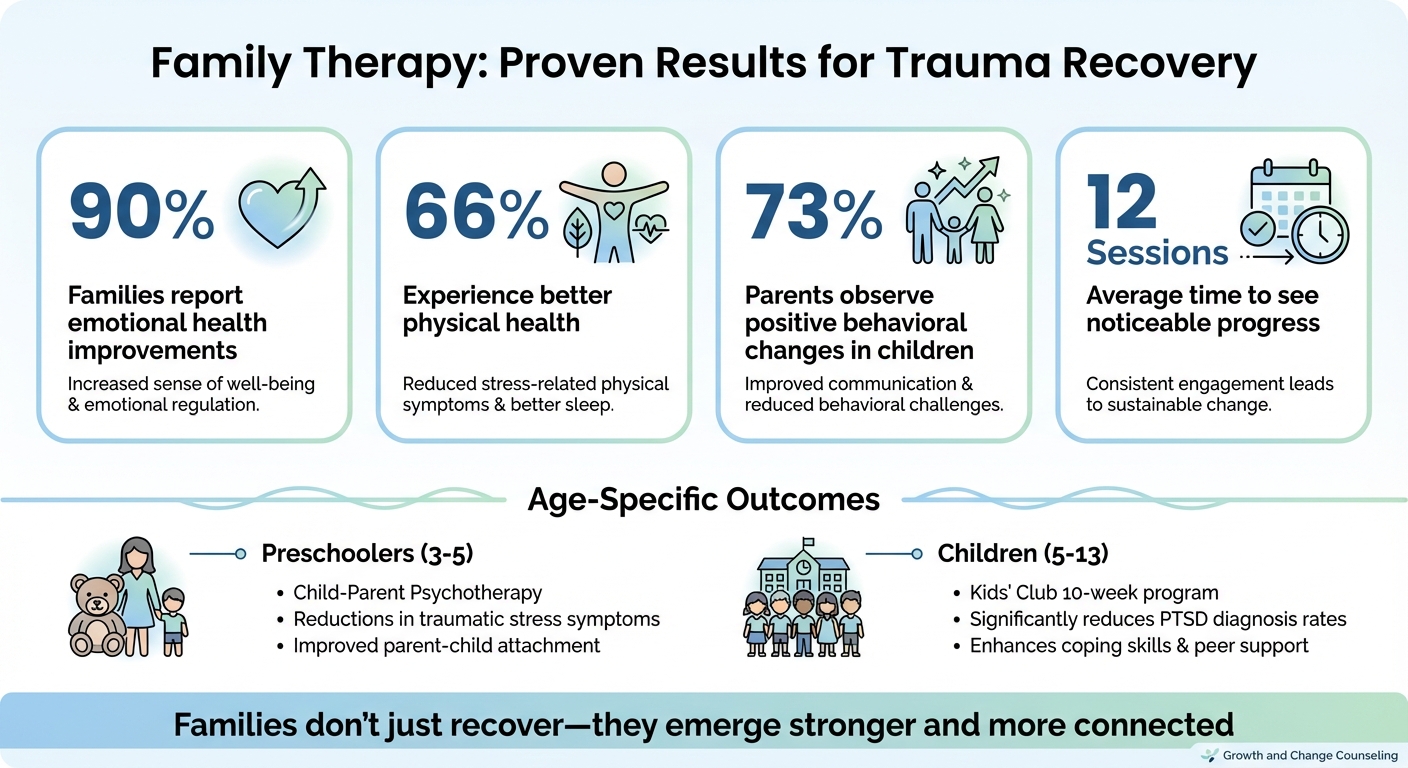
Family Therapy Outcomes: Key Statistics on Trauma Recovery and Communication Improvement
Keeping Secrets – Family Communication after Trauma | CTDTD
Communication Skills Developed in Family Therapy
Family therapy equips families with tools to rebuild communication disrupted by trauma. At Growth and Change Counseling, therapists use proven techniques to help families strengthen their everyday interactions. Let’s explore how these methods can transform communication within families dealing with trauma.
Active Listening and Understanding Others
Active listening can reshape family relationships. Psychologist Maggie Mulqueen, PhD, explains:
"Truly listening to another person so that they feel heard improves the quality of conversation and enhances the opportunity for understanding."
One approach that stands out is reflective responding. This involves restating what someone has said without adding personal opinions or interpretations. For instance, if a teenager says, "I feel like nobody cares about my problems", a parent might respond, "It sounds like you’re feeling alone with what you’re going through." This simple acknowledgment validates the teen’s emotions and opens the door to deeper understanding.
Expressing Emotions in Healthy Ways
Trauma often causes people to either shut down or express emotions in ways that strain relationships. Family therapy teaches individuals to use "I" statements to share their feelings without assigning blame. For example, instead of saying, "You make me angry", one might say, "I feel upset when this happens." This small adjustment lowers defensiveness and encourages empathy. Families also learn techniques like softened startups – beginning conversations gently – and taking cooling-off breaks, turning potential arguments into meaningful discussions.
Reading and Responding to Body Language
Non-verbal communication plays a huge role in family interactions. Therapy helps families become more aware of body language – such as crossed arms, averted eyes, or tense shoulders – that might signal discomfort or emotional withdrawal. Some sessions include somatic awareness, helping members recognize how trauma shows up physically and influences their behavior. For example, if a parent notices their child’s posture stiffening during a conversation, they can pause to check in, creating space to address emotions before they escalate into conflict.
Building a Safe Environment for Processing Trauma
Creating Emotional Safety
Before diving into the complexities of trauma, therapists prioritize building trust and a sense of security. Taylor Mayman from the Department of Biobehavioral Health at The Pennsylvania State University highlights this crucial step:
"Safety is paramount in trauma therapy, and TFFT emphasizes creating a secure environment for family members to explore their emotions and discuss difficult topics."
At Growth and Change Counseling, therapists ensure their sessions are predictable and free from judgment, fostering a space where emotions are recognized and validated. John Mark Kane, a Licensed Marriage and Family Therapist, describes this environment as:
"Therapy is a safe space to admit struggles and grow."
A key part of this process is psychoeducation, which helps families understand how trauma impacts the brain and behavior. For example, when parents realize their child’s anxiety or withdrawal stems from neurological changes rather than intentional defiance, their perspective shifts from blame to empathy. Mayman explains:
"Psychoeducation helps to normalize the child’s symptoms (such as anxiety, anger, or withdrawal) and helps family members recognize how their reactions to the child’s behavior may inadvertently contribute to the cycle of trauma."
This sense of emotional safety lays the groundwork for families to go beyond surface-level interactions and begin addressing deeper emotional wounds together.
Helping Families Understand Each Other’s Experiences
Once emotional safety is established, the focus shifts to helping families understand one another’s unique perspectives and experiences. This step involves stepping into each other’s shoes and seeing the world through their eyes. Therapists often turn to narrative therapy, a method that encourages family members to share their trauma stories. Hearing these stories allows others to grasp experiences they might not have fully understood before, guiding families to replace harmful narratives with more constructive ones.
Another effective technique is genogram mapping, where therapists create a visual family tree that highlights emotional connections and medical histories. This tool can uncover patterns of trauma passed down through generations, helping families identify cycles they may want to break. Therapists may also use role-playing exercises, where family members act out each other’s behaviors. These exercises often lead to powerful insights that simple conversations might not achieve.
Therapists also introduce reframing to shift how family members interpret each other’s actions. For instance, a parent’s repeated questions might initially feel like nagging. Through therapy, families can learn to see those questions as expressions of concern and love. This change in perspective reduces tension and fosters a sense of collaboration, paving the way for healing instead of ongoing conflict.
sbb-itb-596b85d
Rebuilding Trust and Changing Communication Patterns
Restoring Trust Through Reliable Communication
Rebuilding trust starts with consistent and honest communication. At Growth and Change Counseling, therapists guide families in developing what they call "reliable communication." This approach ensures that all family members feel safe to express themselves without fear of judgment or backlash. Over time, this predictability becomes the foundation for restoring trust.
One effective method is scheduling weekly check-ins. These dedicated times allow families to openly share feelings and track progress, preventing issues from simmering below the surface. During these sessions, therapists often use a technique called solution-focused scaling. Family members rate their current trust level on a scale from 1 to 10 and then brainstorm small, actionable steps to improve that number. This method simplifies the process of rebuilding trust, breaking it into achievable steps. As trust grows, families are better equipped to address and change unhelpful communication habits.
Identifying and Replacing Harmful Communication Habits
Families often fall into unproductive communication patterns without realizing it. For instance, a parent’s repeated questioning might feel like nagging, or a teenager’s silence could be misinterpreted as defiance. Therapists help families step back and identify these cycles before they escalate into deeper conflicts. Psychologist Mark Beyebach, an expert in family systems, describes a shift in focus:
"Instead of focusing on problematic behavioral patterns in order to change them, [this approach] places the focus on positive behavioral patterns, labeled ‘exceptions.’"
By highlighting successful interactions, therapists encourage families to replicate what works. For example, if a family manages to have a calm and productive conversation about a tough issue, the therapist will help them analyze what made that moment successful.
Techniques like mirroring, where one person repeats another’s words before responding, can also reduce misunderstandings. This is especially helpful in parent-child relationships. In fact, studies show that 73% of parents report improvements in their child’s behavior following therapy [1].
Helping Children and Teens Recover from Trauma
Communication Methods for Different Ages
When it comes to helping children talk about trauma, tailoring the approach to their age is key. For preschoolers (ages 3–5), tools like play therapy, puppets, and drawing can help them express emotions they might not yet have the words for. Research by Lieberman and colleagues revealed that preschoolers who participated in weekly Child-Parent Psychotherapy experienced notable reductions in both traumatic stress symptoms and behavioral issues compared to those who received standard referrals [5].
For children aged 6–12, group programs can be particularly effective. One example is the Kids’ Club intervention, a 10-week program designed for kids roughly between 5 and 13 years old. This program focuses on helping children talk about feelings connected to violence while teaching coping skills. The results are compelling – participants were significantly less likely to receive a PTSD diagnosis [5]. Teenagers, on the other hand, require a more mature approach, one that addresses relationships, social pressures, and assertiveness.
Helping Kids Express Their Feelings Safely
Beyond age-specific strategies, therapists also work to create a safe space where children feel comfortable sharing their emotions. One critical step is normalizing their reactions to trauma. By explaining that feelings like anxiety, anger, or withdrawal are natural responses to extraordinary events, therapists can help reduce the shame and self-blame that children often carry. At Growth and Change Counseling, family therapists guide children in building an emotional vocabulary, helping them distinguish between emotions like fear, sadness, and anger. This clarity makes it easier for kids to share their experiences.
Therapists also teach practical techniques to help children manage overwhelming emotions during tough conversations. For instance, the "TIPP" method – Temperature, Intense exercise, Paced breathing, and Paired muscle relaxation – offers actionable ways to stay calm in emotionally charged moments [5][4]. Additionally, researchers like Silvern and colleagues emphasize the importance of reframing children’s self-critical thoughts. They note that therapists can turn a child’s feelings of failure into a recognition of their strength. For example:
"if a child laments his or her failure to take action, the therapist might assert that staying out of the batterer’s way was smart"
[5]. This kind of reframing helps children see themselves as resourceful and capable, boosting their confidence to express their needs and navigate their emotions.
Conclusion: How Family Therapy Transforms Communication After Trauma
Family therapy plays a crucial role in repairing broken communication within families after trauma. The numbers speak for themselves: nearly 90% of participants report emotional health improvements, about 66% experience better physical health, and approximately 73% of parents observe positive behavioral changes in their children [1].
This approach works because it focuses on family dynamics rather than placing blame. Gabriela López-Zerón, a doctoral student in couple and family therapy at Michigan State University, explains:
"Close relationships can maintain or exacerbate problems, but they can also be a powerful source of healing" [6].
By teaching skills like active listening, using "I" statements, and reflective responding, therapy helps families move from cycles of blame to collaboration and mutual understanding.
The benefits of this systemic approach extend far beyond the therapy sessions. Families that embrace these tools often break long-standing patterns of dysfunction, rebuild trust, and foster emotional safety – especially for children, who need secure attachments to heal from trauma. Taylor Mayman from Pennsylvania State University’s Department of Biobehavioral Health emphasizes:
"Trauma-Focused Family Therapy offers a powerful approach to restoring balance and fostering long-term emotional well-being for all members of the family" [3].
With these skills, families learn to turn conflict into opportunities for growth and resilience. At Growth and Change Counseling, therapists guide families through this journey, helping them build the relational skills needed to face future challenges together. In most cases, just 12 sessions can lead to lasting communication improvements [1][2]. Families who maintain healthy routines, stay composed during conflicts, and truly listen to one another don’t just recover – they emerge stronger, more connected, and better prepared to support each other through life’s ups and downs.
Common Questions About Family Therapy at Growth and Change Counseling
How does family therapy help families talk about trauma in a safe way?
Family therapy offers a secure and supportive environment where families can openly discuss trauma. Therapists set clear guidelines to ensure respect, confidentiality, and constructive communication, allowing everyone to feel heard and valued. The sessions are shaped by a trauma-informed approach, using strategies like emotional check-ins and gradual pacing to avoid overwhelming participants.
In this space, families are introduced to practical tools like active listening and reflective communication, which help them handle tough conversations more effectively. Therapists work to shift the focus from individual blame to recognizing shared patterns, promoting empathy and collaboration. By building trust and understanding, family therapy enables families to confront trauma together and start the journey toward healing.
How does family therapy help improve communication after trauma?
Family therapy incorporates a range of effective techniques to help families improve communication and strengthen their connections, particularly when facing challenges like trauma. One commonly taught skill is active listening, which encourages individuals to give their full attention to the speaker, reflect on their emotions, and withhold judgment. This often works hand-in-hand with reflective speaking, where individuals paraphrase what they’ve heard to confirm understanding before responding. Together, these techniques promote clearer and more compassionate conversations.
Another approach therapists might use is narrative therapy, which helps families reframe their shared stories in a way that reduces blame and encourages teamwork. Additionally, exercises like role-playing, empathy-building activities, and problem-solving drills provide a safe space for family members to practice healthier ways of expressing their feelings and resolving conflicts. At Growth and Change Counseling, these methods are carefully customized to help families rebuild trust and develop long-lasting, positive communication patterns.
How does family therapy support children in processing trauma differently than adults?
Family therapy provides a nurturing space tailored to a child’s developmental stage, helping them process trauma in ways that feel natural and approachable. Since children often find it challenging to express emotions through words, therapists use creative, play-based techniques like drawing, storytelling, or role-playing. These activities allow kids to express feelings such as fear or anger in a way that aligns with their emotional and cognitive abilities.
Parents play an essential role in this process too. Family therapy equips them with tools to model calm coping mechanisms, offer reassurance, and help their child manage emotions. This teamwork improves communication within the family, eases parental stress, and creates a sense of security – key elements for a child’s recovery. By addressing both the child’s individual needs and the overall family dynamic, therapy helps rebuild trust and fosters healing for all family members.
Growth and Change Counseling offers family therapy services that incorporate these child-centered approaches, providing a compassionate environment where families can work together to navigate trauma and strengthen their bonds.
Related Blog Posts
- How Family Therapy Restores Trust After Addiction
- How Trauma Impacts Parent-Child Relationships
- Trauma-Informed Family Therapy Techniques
- Family Therapy for Trauma Recovery: What Works
