Trauma can deeply impact the bond between parents and their children, often creating cycles of emotional and behavioral challenges that span generations. When parents carry unresolved trauma, it can affect their ability to connect emotionally, regulate their feelings, and provide consistent care. This, in turn, influences how children develop emotionally, behaviorally, and even neurologically.
Key takeaways from the article:
- Parental Trauma Effects: Parents with trauma histories may struggle with emotional availability, leading to inconsistent or harsh parenting styles.
- Attachment Issues: Trauma disrupts secure attachments, often resulting in anxious, avoidant, or disorganized attachment patterns in children.
- Intergenerational Transmission: Trauma is passed down through parenting behaviors, not just direct experiences, impacting children’s mental health and stress responses.
- Child Development: Trauma in children often leads to anxiety, depression, aggression, and changes in brain function, like heightened stress responses.
- Healing Strategies: Trauma-informed parenting programs, family therapy, and parent coaching can help rebuild relationships and break the cycle of trauma.
Addressing trauma in parents and improving parent-child relationships can create a safer, more stable environment for children to thrive. Therapy and support tailored to both parents and children are critical for recovery and growth.
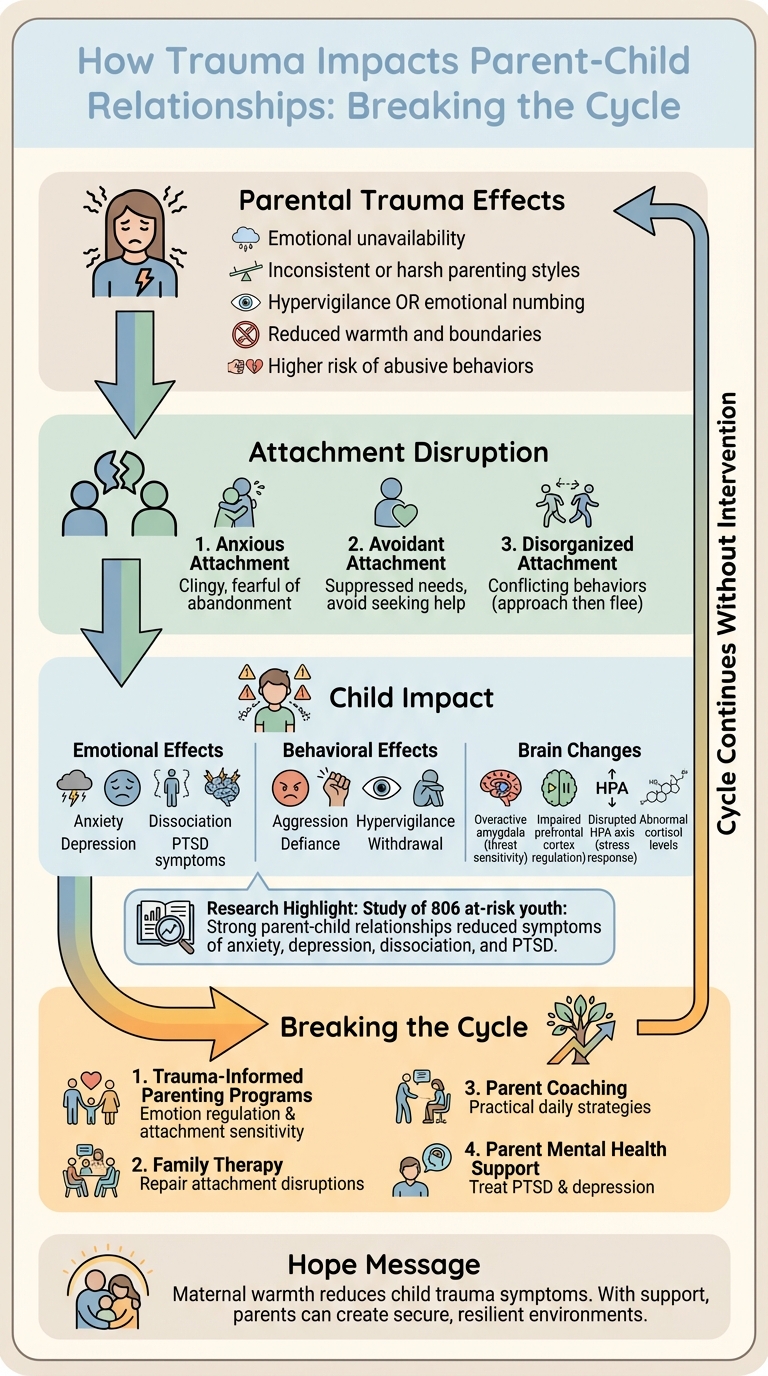
How Trauma Cycles Through Generations: Parent to Child Impact Pathway
How Trauma Affects Parenting and Attachment
Parent Trauma and Parenting Styles
Parents dealing with unresolved trauma often struggle with parenting in ways that those without trauma histories do not. Studies reveal that these parents are more likely to use harsh discipline, follow through inconsistently, and face a higher risk of abusive behaviors [2][6]. The lingering effects of trauma can manifest in two extremes: hypervigilance and fear may lead to overcontrol and overprotection, while emotional numbing can result in neglectful or disengaged parenting [2][6].
For example, a parent might yell excessively over minor missteps, withdraw entirely during moments of conflict, or flip unpredictably between strict rules and permissiveness when feeling overwhelmed. This inconsistency creates an unstable environment, which can erode a child’s sense of safety and predictability [2].
Effects on Emotional Availability and Attachment
Trauma directly impacts a parent’s emotional availability, which is critical for forming secure attachments. Trauma impairs emotion regulation, making parents more prone to anger, quicker to feel overwhelmed, or likely to shut down altogether [2][6]. Research has found that parents with trauma and PTSD symptoms often display heightened reactivity, weaker boundaries, and reduced warmth in everyday interactions [2]. For instance, a parent might overreact to something as small as a spilled drink, emotionally withdraw when their child seeks comfort, or isolate themselves to cope with personal triggers. These behaviors deprive children of the consistent emotional support they need.
This instability can lead to insecure and disorganized attachment. Insecure attachment may take the form of anxious attachment, where children become clingy and fearful of abandonment, or avoidant attachment, where they suppress their needs and avoid seeking help. In more severe cases, chaotic or frightening caregiving can result in disorganized attachment, where children display conflicting behaviors, such as approaching a parent but freezing or fleeing moments later. These attachment disruptions increase the risk of later mental health challenges, including anxiety, depression, and difficulties in forming healthy relationships [2][8].
Research on Parenting and Trauma
Scientific studies back up these observations, showing clear links between parental trauma and disruptions in parenting. Parents with trauma histories consistently display lower parenting quality across various studies [2]. In one longitudinal study, researchers found that maternal childhood trauma was a strong predictor of children’s behavioral issues by age 5, with maternal depression playing a significant role in this relationship [9]. Mothers with trauma histories were more likely to use punitive or psychologically aggressive parenting methods, feel less confident in their parenting abilities, and hold more negative self-perceptions. These factors directly correlated with higher rates of behavioral problems in their children [6].
However, there’s hope. Research suggests that consistent warmth, responsiveness, and structure can help counteract the effects of trauma. For example, maternal warmth has been shown to reduce children’s depressive and trauma-related symptoms, even in the face of adversity [2]. This highlights the importance of emotionally attuned and responsive parenting, which can provide a protective buffer for children and support their healthy development, even when parents are navigating their own trauma histories. These findings underscore how crucial it is to understand and address the interplay between trauma, parenting, and child outcomes.
How Trauma Affects Child Development
Emotional and Behavioral Effects
Trauma leaves a profound mark on children, shaping their emotional and behavioral responses in ways that can affect their daily lives. Emotionally, children may struggle with anxiety, depression, dissociation, and symptoms of post-traumatic stress [3][8]. These challenges often manifest in behaviors like clinginess, trouble sleeping, irritability, difficulty concentrating, withdrawal, and hypervigilance – both at home and in school settings [3][8].
On the behavioral side, trauma often leads to externalizing actions, such as aggression and defiance [2][6][8]. When caregivers have their own unresolved trauma, children are more likely to exhibit these behaviors. This connection stems from exposure to inconsistent or harsh parenting styles and the emotional intensity – like anger and fear – that children may observe and internalize at home [2][6]. Over time, these behaviors can create a cycle of conflict within families, lead to struggles with peers, and increase the likelihood of substance use and legal troubles during adolescence [8].
How Trauma Changes the Brain
Trauma doesn’t just affect emotions and behavior – it physically reshapes the brain. Key areas like the prefrontal cortex and amygdala, which are essential for managing emotions and processing threats, are particularly vulnerable [2]. Children exposed to trauma may develop an overactive amygdala, making them highly sensitive to perceived threats, while their prefrontal cortex struggles to regulate these responses. This imbalance often results in emotional outbursts, impulsivity, and difficulty calming down after stressful events [2].
Trauma also disrupts the hypothalamic-pituitary-adrenal (HPA) axis, which regulates the body’s stress response [2][8]. This disruption can lead to abnormal cortisol levels, leaving children in a constant state of alertness. Practically, this may show up as sleep disturbances, mood swings, trouble focusing, and an exaggerated startle response. Over time, these physiological changes increase the risk of mental health conditions like anxiety and depression, as well as physical health problems such as cardiovascular and metabolic disorders in later life [2][8]. These brain changes create additional hurdles, compounding the challenges children face and contributing to the cycle of trauma across generations.
How Parental Trauma Affects Children
Trauma doesn’t need to be experienced firsthand to impact a child. Parental trauma often shapes children’s experiences indirectly, influencing the way they are raised. Parents with unresolved trauma may exhibit harshness, inconsistency, emotional unavailability, or overcontrol, which are linked to higher rates of PTSD symptoms, anxiety, depression, and behavioral issues – like aggression and defiance – in their children [2][6][10].
Studies show that when mothers have a history of childhood trauma, it can impair their parenting abilities. This might include neglect, the use of punitive or psychologically aggressive discipline, or feelings of low confidence in their parenting role. These parents may also struggle with overwhelming emotions like fear, anger, or avoidance [6]. Children, in turn, often mirror their parents’ trauma-influenced responses, which can lead to emotional and behavioral difficulties, including anxiety, depression, and conduct problems [2][6].
The transmission of trauma from parent to child happens through multiple pathways. Biologically, trauma can influence a child’s brain development and stress response systems. Psychologically, parents’ own struggles with PTSD or depression can affect their ability to nurture their child. Relationally, insecure attachments, low warmth, and high levels of conflict create an environment where trauma continues to shape the next generation [2][10]. These interconnected factors highlight how deeply trauma can weave through families, leaving lasting effects.
The Challenge for Parents with Unresolved Trauma
sbb-itb-596b85d
How Parent-Child Relationship Quality Affects Trauma Recovery
The connection between a parent and child plays a pivotal role in trauma recovery. Beyond understanding how trauma impacts parenting, it’s equally important to explore how the quality of this relationship can shape recovery outcomes. Recognizing these dynamics is key to addressing and breaking cycles of intergenerational trauma.
Supportive Relationships as a Shield Against Trauma
In the context of trauma, a strong and positive parent-child bond can be a powerful force for recovery. Studies consistently highlight that warm, nurturing, and low-conflict relationships between parents and children help minimize the mental health effects of traumatic experiences [2][3]. For instance, research involving 806 youth in child welfare – many of whom had witnessed violence – found that those with higher-quality relationships with a parent showed fewer symptoms of anxiety, depression, dissociation, and posttraumatic stress [3]. These findings underscore how a positive connection can act as a buffer against the psychological toll of trauma.
Key elements like maternal warmth, predictable routines, and emotional availability are especially effective in helping children manage stress [2][3]. When a parent provides calm reassurance and emotional attunement, they help regulate their child’s stress responses, creating a sense of safety and stability.
The Impact of Harmful Relationship Dynamics
On the flip side, relationships marked by harshness, excessive control, or high conflict can hinder trauma recovery [2][10]. A systematic review revealed that parental overprotection and avoidance of trauma-related discussions are linked to heightened posttraumatic stress symptoms in children [10]. While parents may believe they’re protecting their child by avoiding reminders of trauma or tightly controlling their environment, these actions can unintentionally limit the child’s ability to rebuild confidence and may even intensify anxiety [2][10].
Harsh disciplinary practices further compound trauma symptoms, while ongoing conflict between parent and child is associated with increased depression and behavioral issues [5][6]. Such negative patterns can send damaging messages to children – that the world is inherently unsafe, that emotions are threatening, or that they themselves are somehow at fault. These beliefs can deepen the emotional scars left by trauma [2][10].
Parents grappling with their own unresolved trauma often face difficulties with emotion regulation, secure attachment, and consistency. These struggles can weaken the parent-child relationship, making it harder for children to heal [2][6]. Addressing these harmful patterns is a vital step in creating an environment where recovery is possible.
Strategies for Healing Parent-Child Relationships After Trauma
Repairing parent-child relationships after trauma requires a thoughtful approach that addresses both emotional health and behavior patterns.
Trauma-Informed Parenting Programs
Trauma-informed parenting programs provide structured support to help parents break cycles of intergenerational trauma. These programs focus on improving emotional regulation, reflective thinking, and attachment sensitivity. Research reveals that parents with histories of childhood maltreatment often experience heightened emotional empathy, which can lead to personal distress and depression. This, in turn, may increase the risk of abusive parenting[4]. By teaching parents how to manage emotional empathy effectively, these programs can disrupt harmful patterns.
Studies show that better empathy regulation can significantly lower the risk of abusive behavior. Parents learn to recognize when their heightened empathy triggers overwhelming emotions and develop practical strategies to respond more constructively.
When parents replace harmful behaviors with warmth and responsiveness, children often show fewer emotional and behavioral problems. For example, maternal trauma has been linked to child behavioral issues by age 5, but parenting programs that focus on reducing punitive practices and building parenting confidence can lead to better outcomes[9].
In addition to these structured programs, family therapy and individualized parent coaching offer further support to strengthen daily interactions and repair bonds.
Family Therapy and Parent Coaching
Family therapy takes a broader approach, addressing trauma across the entire family. It focuses on improving parent-child interactions and repairing attachment disruptions. Research involving 806 at-risk or maltreated youth found that strong parent-child relationships helped buffer the effects of witnessing violence, reducing symptoms of anxiety, depression, dissociation, and PTSD[3].
Parent coaching, on the other hand, provides hands-on guidance tailored to everyday challenges. According to Growth and Change Counseling, "supporting parents directly yields more lasting results than working with children alone"[1]. Coaching sessions emphasize strategies like fostering secure attachments, creating predictable routines, and reducing harsh parenting – all of which are linked to better child outcomes[2][5]. These sessions also help parents address trauma-related tendencies, such as being overly controlling or too permissive, with progress tracked through behavioral assessments that measure reductions in children’s problem behaviors[9].
Growth and Change Counseling offers family therapy and parent coaching in locations such as Campbell, San Jose, Los Angeles, and Roseville, CA, as well as through telehealth services across California. Their approach draws on methods like Cognitive Behavioral Therapy (CBT), attachment theory, somatic therapy, and EMDR to address the effects of trauma on family dynamics[1].
Support for Parents with Trauma Histories
Addressing a parent’s mental health is a critical part of healing family relationships. Trauma-related conditions like PTSD and depression can interfere with a parent’s ability to provide stable and consistent care[2][4]. Treating these underlying issues not only improves the parent’s well-being but also enhances their ability to nurture their children.
Therapy for parents often focuses on managing trauma-driven emotional responses and developing regulation strategies to prevent these reactions from affecting their parenting. This dual focus ensures that parents can provide the emotional stability and warmth their children need, even in the face of past trauma.
Practical steps include screening parents for trauma histories, enrolling them in programs that teach empathy regulation and depression management, and incorporating reflective thinking exercises. Telehealth options have made these resources more accessible, especially for specialized trauma care[2][4]. Growth and Change Counseling refers to this skill set as "relational intelligence" – the ability to understand and respond to mental and emotional states in both oneself and one’s child, creating a foundation for secure attachment and lasting healing[1].
Conclusion
Trauma has far-reaching effects, disrupting emotional availability, attachment, brain development, and behavior in children. Studies reveal that mothers with histories of childhood maltreatment often score higher on trauma assessments, which links to higher rates of depression and an increased risk of abusive parenting[4]. When left unaddressed, unresolved trauma in parents can create environments that breed anxiety, depression, and weak attachment bonds in children.
However, there’s hope. Research highlights effective ways to counteract these impacts. For instance, a study involving 806 at-risk youth found that strong parent–child relationships significantly reduce symptoms of anxiety, depression, dissociation, and PTSD[3]. Additionally, maternal warmth has been shown to have an inverse relationship with child depressive and trauma symptoms, underscoring how a nurturing connection can buffer against trauma’s harmful effects[2].
Breaking the cycle of intergenerational trauma requires targeted strategies that address the needs of both parents and children. This includes trauma history screening, teaching emotion regulation skills, and using trauma-informed methods to repair damaged attachment bonds. Researcher Kawaguchi points out, “By addressing emotional empathy and depression, we can help break this cycle and prevent maltreatment from being passed down”[4]. These interventions aim to tackle the core mechanisms of trauma transmission – helping parents regulate their emotional responses while fostering the warmth and stability children need to thrive[2][7].
Healing is possible. With the right resources and support, parents can create secure and resilient environments for their children. Families in California, for example, can turn to Growth and Change Counseling for trauma-informed family therapy and parent coaching.
Breaking the Cycle of Trauma with Growth and Change Counseling
How does unresolved trauma in parents affect their child’s development?
When parents carry unresolved trauma, it can have a profound effect on their child’s growth and well-being. It can disrupt a parent’s ability to manage emotions, making it harder to respond to their child with calmness and consistency. This emotional inconsistency can result in insecure attachment, leaving the child feeling uncertain or unsupported in the relationship.
The ripple effects of this trauma can also put children at a higher risk for behavioral problems, emotional struggles, and even mental health challenges. The stress and unpredictability stemming from a parent’s unresolved issues can create an unstable environment. Additionally, trauma can shape parenting styles in ways that may not serve the child’s needs – some parents may become overly reactive, while others might withdraw emotionally. Both of these extremes can limit a child’s social, emotional, and cognitive development.
Addressing and healing trauma is key to building a stronger parent-child connection and ensuring a stable, nurturing space where children can grow and flourish.
How can families break the cycle of trauma passed down through generations?
Breaking the cycle of intergenerational trauma begins with identifying and understanding patterns of emotional pain and behaviors that may have carried through generations. Therapy plays a key role in this process, offering a space to address unresolved experiences, develop self-awareness, and explore healthier coping strategies.
Families can also benefit greatly from encouraging open communication and establishing positive relational habits. This might involve setting clear boundaries, showing empathy, and working together to create a safe and nurturing environment. With the support of a professional, these efforts can lead to meaningful healing and lasting transformation. Growth and Change Counseling offers personalized guidance to help individuals and families on this path toward healing.
How can trauma-informed parenting programs strengthen the bond between parents and children?
Trauma-informed parenting programs are designed to enhance the bond between parents and children by helping caregivers grasp how trauma influences behavior and emotional health. These programs equip parents with tools for managing emotions, improving communication, and building a home environment that feels safe and supportive.
By understanding the effects of trauma and prioritizing the rebuilding of trust and attachment, parents can nurture stronger, more meaningful connections with their children. These approaches give families the resources they need to heal and grow as a unit.
Related Blog Posts
- Attachment Styles in Couples Counseling
- Relationship Trauma: Root Causes and Solutions
- 5 Trauma-Informed Communication Tips for Couples
- Parenting Through Marital Conflict and Mental Health Struggles
