Family trauma can affect daily interactions and relationships, often hiding behind behaviors like irritability, withdrawal, or strictness. This guide offers practical steps to help families address these patterns, create safer environments, and build healthier dynamics. Key strategies include:
- Understanding Trauma History: Identify past events affecting your family and recognize patterns of behavior linked to generational trauma.
- Ensuring Safety: Address physical risks (e.g., securing harmful items) and watch for warning signs like mood changes or isolation.
- Creating a Supportive Space: Establish calming routines, designate retreat areas, and hold regular family check-ins for open communication.
- Using De-escalation Techniques: Practice grounding exercises, calm communication, and trigger identification to manage conflicts effectively.
- Tracking Progress: Use tools like family journals or symptom trackers to monitor changes and celebrate improvements.
- Seeking Professional Help: When needed, consult marriage therapists in Roseville for tailored support, especially for persistent issues like depression or anger.
This checklist prioritizes actionable steps, helping families move from reaction to intentional responses, fostering a path toward healing and resilience.
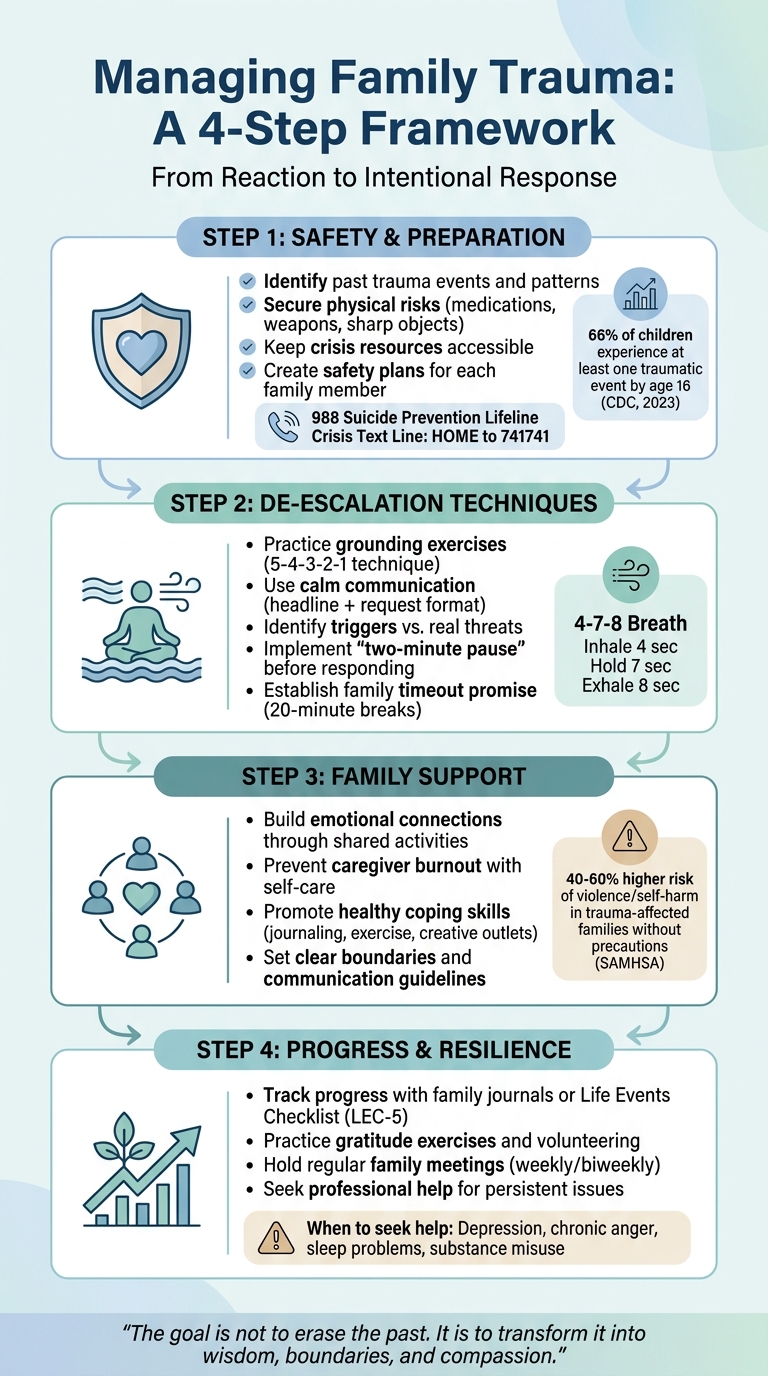
4-Step Framework for Managing Family Trauma Responses
Safety and Preparation Checklist
Identify Past Trauma
Understanding your family’s trauma history is a key step in addressing behaviors and emotional responses that may stem from past events. According to 2023 data from the CDC, about 66% of children experience at least one traumatic event by the age of 16, meaning many families are navigating the effects of trauma in some way [2].
Start by creating a straightforward record of significant events that have impacted your family. These could include the loss of a loved one, divorce, accidents, abuse, serious illnesses, or financial hardships. If these events have strained your relationship, marriage counseling can help you navigate the resulting emotional distance. For each event, note when it occurred, who was most affected, and any behaviors that appeared afterward. For instance, you might discover that your teenager’s sudden anger began after a car accident or that your partner’s heightened need for control followed a job loss. Signs such as hypervigilance, emotional detachment, or intense reactions may indicate unresolved trauma [1][4]. Mapping this history not only provides valuable insight for mental health professionals but also helps you recognize patterns you may have overlooked.
Once you have this foundation, shift your attention to addressing safety risks at home.
Check for Safety Risks
Perform a comprehensive safety check of your home, focusing on both physical dangers and behavioral warning signs. Start by identifying and securing any items that could pose a risk for self-harm, such as medications, weapons, sharp tools, or harmful substances. Research from SAMHSA‘s National Survey on Drug Use and Health reveals that families with trauma histories face a 40-60% higher risk of interpersonal violence or self-harm if these precautions are not taken [3].
Pay close attention to behavioral cues that might signal immediate concern, such as:
- Statements or actions suggesting self-harm
- Sudden and extreme mood changes
- Giving away personal belongings
- Aggressive episodes involving property damage
- Withdrawal or increased isolation
Always have important resources readily available. Keep the National Suicide Prevention Lifeline (988) and Crisis Text Line (text HOME to 741741) on hand for emergencies. Your safety plan should include clear warning signs for each family member, trusted contacts for support, and step-by-step instructions for handling crises.
Once these safety measures are in place, focus on fostering a more supportive and calming home environment.
Create a Supportive Home Environment
Transforming your home into a space that promotes comfort and security can help reduce the impact of trauma. Start by removing or storing items that might trigger painful memories – certain photos, objects, or even specific scents can activate the brain’s stress response.
Designate a calm space where family members can retreat when feeling overwhelmed. Equip this space with comforting items like soft blankets, fidget tools, noise-canceling headphones, or a weighted blanket. Use soft lighting instead of harsh overhead lights, keep the temperature comfortable, and minimize background noise. Establish consistent daily routines for meals, bedtime, and family check-ins. Predictability helps reduce anxiety by giving the brain a sense of stability and control.
Additionally, hold regular family meetings where everyone can share their feelings openly and respectfully. Set clear communication guidelines, such as no yelling or name-calling, and allow breaks during tough conversations. These steps will help create a foundation for healthier family dynamics while addressing trauma responses over time.
sbb-itb-596b85d
A Trauma-Informed Approach to De-escalation and Crisis Response
De-escalation Techniques Checklist
These steps can help transform reactive trauma responses into calm, constructive interactions within your family dynamic.
Use Grounding Exercises
When stress levels rise, grounding exercises can interrupt the fight-or-flight response and refocus everyone on the present. One effective method is the 5-4-3-2-1 technique, where you name 5 things you see, 4 you can touch, 3 you hear, 2 you smell, and 1 you can taste. This simple practice shifts attention away from overwhelming emotions and back to the here and now.
Breathing exercises are also a powerful tool for calming the nervous system. The 4-7-8 breath (inhale for 4 seconds, hold for 7 seconds, exhale for 8 seconds) can activate the parasympathetic nervous system, promoting relaxation. For kids aged 4–12, the balloon breath – where they "inflate" their belly like a balloon and slowly "deflate" it – offers a playful yet effective way to manage stress. Research shows that mindfulness practices like these can lower stress hormones, improve emotional regulation, and even help reduce parental burnout [5].
Consider creating a "coping box" filled with sensory items, breathing guides, or quick mindfulness activity cards. For younger children, turn grounding into a game using the "Spidey-Senses" approach, where they silently walk and notice sounds like a superhero. Even a single deep breath (inhale for 4 seconds, hold for 4 seconds, exhale for 6 seconds) can provide a quick reset for both parents and children.
Apply Calm Communication Methods
The way you begin a difficult conversation often sets the tone for how it unfolds. Start with a "headline and a request" instead of revisiting past grievances, which can trigger defensiveness [6]. To ensure understanding, have the listener briefly repeat back the main point after every couple of sentences. This not only reduces miscommunication but also validates the speaker’s emotions [6]. Periodically check in by asking, "Should we pause or keep going?" – this helps prevent anyone from becoming overwhelmed [6].
Focus on separating the reaction from the person. For example, instead of saying, "You’re overreacting", try, "It sounds like the alarm is taking the wheel right now" [6]. Agree on a pause word – a shared signal that any family member can use to halt a conversation before emotions escalate. Even if a discussion isn’t fully resolved, end it with one agreed-upon next step and a specific time to revisit the topic [6].
Distinguish Triggers from Real Threats
Trauma often leaves the body in a state of hypervigilance, which can lead to responses like numbness or explosive anger that are out of proportion to the current situation [7]. Families can work together to identify triggers by noting emotional reactions that seem too intense for the moment, such as anger over a small mistake [7]. Encourage each family member to list three personal triggers along with one suggested support response, and post these lists somewhere visible to reduce confusion during tense moments [7].
To better understand "flashpoint" blowups, analyze what happened two minutes before and after the event. This can help reveal patterns and distinguish reactions rooted in past trauma from those tied to present circumstances [7]. Practice a "two-minute pause" before responding to heated comments: name the feeling in one sentence, then ask a curious question to slow things down and promote understanding [7]. Establish a timeout promise, allowing any family member to call for a 20-minute break during conflict, with a commitment to return later the same day to resolve the issue [7].
"The goal is not to erase the past. It is to transform it into wisdom, boundaries, and compassion." – Spark Wiki [7]
When a trigger causes conflict, use the "repair in three parts" approach: acknowledge the impact, explain what you’ll do differently next time, and ask if there’s anything that could help in the moment [7].
These de-escalation techniques lay the groundwork for building more supportive practices within families and caregiving environments.
Family and Caregiver Support Checklist
Recovering from trauma as a family requires thoughtful effort and collaboration. When caregivers and loved ones come together with understanding and patience, they create an environment of trust and strength that supports healing.
Build Emotional Connections
Strengthening emotional bonds starts with shared activities. Consider creating an "Enjoyable Activities Checklist" to discover interests you can enjoy together. This might involve cooking a meal as a team, exploring a new hobby, or working on a creative project. The aim is to find joy in shared moments, moving beyond the focus on managing crises.
Clear and open communication plays a key role in building these connections. Share your thoughts and feelings honestly, express your intentions clearly, and show empathy when others open up about their struggles. A family or couples coping checklist can help ensure everyone knows what kind of support is needed, avoiding situations where one person feels overwhelmed. Working together on a boundaries assessment can help clarify individual needs and establish mutual respect. Additionally, a kindness and compassion checklist can encourage family members to give genuine compliments or simply listen without judgment, fostering a more positive atmosphere at home.
While emotional connections are important, caregivers also need to prioritize their own well-being.
Prevent Caregiver Burnout
Caregivers can’t take care of others effectively if they’re running on empty. Practicing self-soothing techniques like mindful breathing, journaling, or listening to calming music can help manage stress. Techniques such as Progressive Muscle Relaxation are also useful for easing physical tension.
Using symptom checklists for anxiety or depression can prompt early conversations about mental health and help caregivers seek professional support if needed. For families looking for additional resources, Growth and Change Counseling provides services like family therapy and individual counseling, offering structured guidance on setting boundaries and navigating challenging times.
At the same time, it’s important for every family member to develop their own strategies for managing stress.
Promote Healthy Coping Skills
Equipping each family member with coping tools benefits both the individual and the family as a whole. Activities like writing, physical exercise (e.g., walking, dancing, or playing sports), and creative outlets (e.g., painting, music, or crafting) can help process emotions and alleviate stress.
Thought reframing is another effective tool – recognizing negative patterns and replacing them with more positive perspectives. Creating a "safe place" visualization, where everyone imagines a comforting and calming mental space, can also provide relief during overwhelming moments. The key is to practice these coping skills regularly, making them a natural part of daily routines rather than something to turn to only in times of crisis.
Progress Tracking and Resilience Checklist
Healing from trauma is a journey, and it doesn’t happen overnight. Keeping track of progress can highlight challenges, celebrate victories, and help you decide when professional support might be necessary. Building on earlier steps like safety and de-escalation, tracking and resilience-building are essential for long-term recovery.
Track Family Progress
A progress journal can be a powerful tool for accountability and uncovering patterns that might otherwise go unnoticed. Start by recording both challenges and successes. Tools like the Life Events Checklist (LEC-5) – designed to screen for 16 types of potentially traumatic events – can help establish a starting point and track changes over time. For the best results, pair this with symptom-specific tools and review them with a qualified mental health professional to ensure accurate insights [8].
Regular family meetings, whether weekly or biweekly, provide a structured way to review progress and address ongoing concerns. Digital tools, such as apps for tracking symptoms or coping strategies, can help maintain consistency between meetings. The key is to choose a method that fits your family’s lifestyle. Once you’ve established a tracking habit, focus on reinforcing progress with resilience-building activities.
Practice Resilience-Building Activities
Resilience grows with consistent effort. Simple practices like gratitude exercises can make a big difference. For example, share something you’re thankful for during dinner or create a family gratitude jar where everyone contributes. Activities like volunteering – whether at a food bank or helping a neighbor – can also instill a sense of purpose and strengthen bonds beyond your immediate circle.
Collaborative problem-solving helps develop resilience as well. When minor issues arise, such as scheduling conflicts or uneven household chores, involve the whole family in brainstorming solutions instead of dictating answers. This not only builds confidence but also teaches children how to work through challenges as a team. Physical activities, like hiking or trying a new sport together, can further enhance mental and physical strength. If these strategies don’t seem to be enough, a professional can provide trauma-informed family therapy techniques and tailored support.
Get Professional Help When Needed
Sometimes, self-help strategies aren’t enough. Seek professional support if anyone in your family is dealing with persistent depression, chronic anger, sleep problems, substance misuse, chronic pain, or symptoms of a traumatic brain injury. In crisis situations, such as suicidal thoughts or acute distress, contact the Veterans Crisis Line by calling 988 (Press 1), texting 838255, or using their confidential chat service [8].
For ongoing support, Growth and Change Counseling offers trauma-focused therapy for families and individuals in California, both in-person and via telehealth. Their services include tailored interventions, with session fees ranging from $150 to $200 for 45 minutes, and sliding scale options for those with financial constraints. By working with qualified professionals, you can ensure that your family receives evidence-based care and that any assessment tools are used effectively to guide your recovery journey.
Conclusion
Addressing family trauma responses becomes more approachable when you have a clear plan in place. A trauma-informed checklist can bring structure to overwhelming situations by helping you pinpoint triggers, establish a sense of safety, practice de-escalation techniques, and work toward long-term resilience. By following these steps – like recognizing past trauma and tracking progress – you empower your family to respond with intention rather than reacting out of emotion.
The four key areas – preparation, de-escalation, support, and resilience-building – play a crucial role in nurturing healthier family relationships.
While self-help strategies are invaluable, professional support can provide additional relief, especially when dealing with ongoing challenges such as persistent anger, depression, or sleep disturbances. Tools like the Life Events Checklist for DSM-5 (LEC-5) are most effective when paired with professional assessments [8].
For those seeking trauma-focused therapy, Growth and Change Counseling offers in-person and telehealth services throughout California. Their offerings include individual therapy, family therapy, and parent coaching. Sessions range from $150 to $200 for 45 minutes, with sliding scale options available for families facing financial difficulties. Collaborating with qualified professionals ensures you receive care tailored to your family’s unique needs.
Moving Toward Healing with Growth and Change Counseling
How can we differentiate a trauma trigger from a real safety threat?
A trauma trigger refers to a stimulus – such as a particular sound, smell, or visual cue – that can set off PTSD symptoms or lead to harmful behaviors. On the other hand, a real safety threat involves an actual, tangible risk of harm or danger. Distinguishing between the two requires careful attention to the context, observable behaviors, and objective signs. Paying close attention to the specifics of the situation can help clarify whether you’re dealing with a trigger or a genuine threat.
What should we put in a family safety plan for crises?
A family safety plan for emergencies should cover a few key elements: emergency contact information, designated safe locations, strategies to calm or de-escalate conflicts, and access to helpful resources. Tools like the Checklist for Managing Family Trauma Responses can offer practical guidance for creating such a plan. For more tailored assistance, consider reaching out to professional services like Growth and Change Counseling.
When should we get professional help for trauma at home?
When trauma starts to interfere with communication, emotional stability, or relationships – and self-help methods just don’t seem to cut it – it might be time to consider professional guidance. Some signs to watch for include increasing arguments, trouble handling emotional triggers, or struggles to maintain a sense of safety in the relationship. Trauma-informed therapy offers the tools and support needed for individuals and families to work through these challenges and begin healing together.
Related Blog Posts
- Trauma-Informed Family Therapy Techniques
- Trauma-Informed Mindfulness: 7 Practices for Families
- How Family Therapy Improves Trauma Communication
- Stress from Trauma: Effects on Family Health
