Balancing sobriety with parenting is challenging but achievable. Recovery impacts your ability to provide stability for your children, while parenting stress can test your sobriety. To succeed, prioritize sobriety as the foundation for a healthy family environment. Key strategies include:
- Setting Boundaries: Protect recovery time and communicate needs clearly to co-parents and children.
- Daily Routines: Create consistent schedules for recovery and family activities to reduce stress.
- Support Networks: Lean on therapy, peer groups, and trusted individuals for guidance and help.
- Self-Care: Prioritize physical and mental health to handle parenting demands effectively.
- Relapse Prevention: Identify relapse triggers in family systems, plan responses, and maintain a "Sober Village" for support.
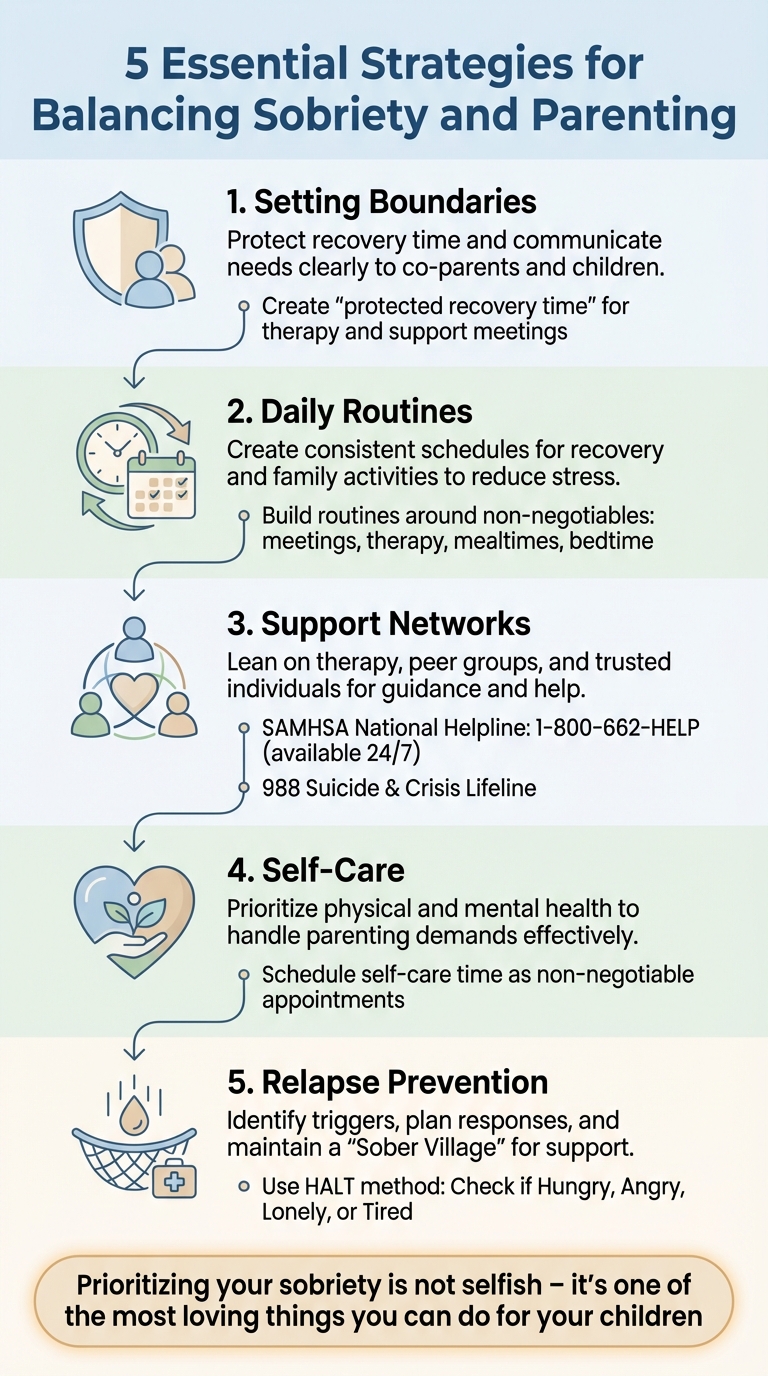
5 Essential Strategies for Balancing Sobriety and Parenting
Parenting Through Addiction: Risks, Recovery, and Child Well-Being
sbb-itb-596b85d
How Sobriety and Parenting Affect Each Other
Balancing sobriety with parenting responsibilities is no small feat, as the two are deeply intertwined. A parent’s ability to stay sober directly impacts how they show up for their children, while the challenges of parenting can both support and test their recovery. This creates a delicate cycle: parenting stress can sometimes trigger a relapse, and a relapse can harm the parent–child relationship, making recovery even harder.
When parents maintain sobriety, they gain the emotional stability needed to connect with their children in meaningful ways. It’s not about spending every waking moment together but about being present during key moments – like bedtime stories or family meals – that help rebuild trust and create a sense of security. On the flip side, when recovery falters, children may face instability that can leave lasting emotional scars, often requiring trauma-informed care to heal. Research highlights that both substance use and parenting skills are not static – they shift based on how well a parent can manage stress and consistently care for their children [3].
Emotional Challenges of Recovery
Recovery is an emotional marathon, and it can leave parents feeling drained, making active parenting even more challenging. Parents in recovery often grapple with guilt, societal stigma, and fears about losing custody of their children. Add to this the effects of post-acute withdrawal syndrome (PAWS) – which may cause mood swings and irritability for up to two years – and the emotional toll becomes even heavier [2].
The constant effort to stay sober can lead to emotional exhaustion and even burnout. For parents dealing with co-occurring mental health issues like depression or anxiety, the demands multiply. Finding the balance between caring for themselves and being fully present for their children is a tightrope walk, especially when chronic stress threatens to weaken the parent–child bond.
Co-Parenting Stress and Its Impact
Co-parenting can add another layer of complexity to sobriety. Financial pressures, custody disputes, and strained relationships and marital crises often create emotional triggers that test a parent’s recovery. Conflict with a co-parent – whether over schedules, boundaries, or parenting styles – can intensify stress and increase the risk of relapse.
Communication challenges can make things even harder. Parents in recovery may face tough questions from their children about past substance use, needing to balance honesty with what’s appropriate for their child’s age. Disagreements with a co-parent about how to handle these conversations or other parenting decisions can further strain the situation, making recovery feel like an uphill battle.
Sobriety and parenting are undeniably connected, and navigating these challenges requires emotional resilience, support systems, and a willingness to adapt to ever-changing circumstances.
Why Sobriety Must Come First
Parenting is tough, even under the best circumstances. Add the emotional complexities of recovery, and it becomes clear why sobriety must be your top priority. Think of it like the oxygen mask rule on a plane: you can’t help anyone else until you’ve secured your own. Without a firm foundation in recovery, it’s nearly impossible to provide the consistency, safety, and emotional availability your children need.
Prioritizing your sobriety is not selfish – it’s one of the most loving things you can do for your children.
When you focus on your recovery, you’re not just healing yourself – you’re also teaching your kids how to handle challenges without turning to unhealthy coping mechanisms. By watching you manage stress soberly, they learn resilience and begin to rebuild trust that may have been shaken by addiction.
Sobriety is the foundation that helps you succeed at your job and show up for your family.
Once sobriety becomes non-negotiable, you shift from merely surviving to truly thriving. Treat therapy, support meetings, and self-reflection as essential appointments, just like you would a critical work meeting or a doctor’s visit. This level of commitment strengthens your emotional stability, making it easier to handle the everyday hurdles of parenting – whether it’s managing tantrums, helping with homework, or navigating bedtime chaos. A stable, sober parent creates a safer, more secure home environment. With this foundation in place, you can move on to setting boundaries that protect your recovery.
Setting Boundaries to Protect Recovery
Boundaries aren’t about shutting people out – they’re about creating space to protect what matters most. Start by carving out "protected recovery time" and clearly communicating this to your co-parent, family, and even your children. For instance, if you attend evening support group meetings, make it known that this time is reserved for your recovery and should only be interrupted for true emergencies.
Be upfront about your needs. If your ex-partner tends to call during your therapy sessions, let them know you’re unavailable at that time and offer an alternative for urgent child-related matters. You could also formalize household expectations with a Family Agreement Form, which can help reduce misunderstandings and conflict.
When explaining these boundaries to your kids, keep it age-appropriate. You might say, “I’m working on being healthier, and that means I need to go to meetings sometimes so I can be the best parent I can be.” This way, they understand the importance of certain routines without feeling burdened by adult issues. Similarly, set limits around work by unplugging from emails and phone calls during family time. Being fully present with your kids during these moments reinforces the sense of stability and love they need.
Developing a Relapse Prevention Plan
Boundaries are a great start, but a solid relapse prevention plan takes things further. Begin by identifying the specific parenting triggers that might lead to cravings – like sleep deprivation, financial stress, or challenging child behaviors. Write these down and map out how you’ll respond to each one.
Create a "Sober Village" of people who understand both recovery and parenting. This could include your sponsor, therapist, other parents in recovery, and sober friends who can offer advice or practical help. Keep important helpline numbers close by, such as the SAMHSA National Helpline (1-800-662-HELP) or the 988 Suicide & Crisis Lifeline, so you’re prepared for moments when you need immediate support.
It’s also smart to plan for childcare emergencies. Identify at least three trusted, sober individuals who can step in if you need to attend an urgent recovery meeting or take a break to refocus. This preparation removes any barriers to prioritizing your sobriety.
When you feel overwhelmed, try the HALT method – check if you’re Hungry, Angry, Lonely, or Tired – and address those needs before making decisions. Another helpful tool is the 5-4-3-2-1 grounding technique: name five things you see, four things you can touch, three things you hear, two things you smell, and one thing you taste. This simple exercise can quickly bring you back to the present moment, helping you regain control and clarity.
How to Balance Sobriety and Parenting
Balancing sobriety with parenting responsibilities can feel overwhelming, but it’s achievable with intentional strategies. This isn’t about striving for perfection – it’s about practical ways to prioritize recovery while meeting your children’s needs. By creating systems that reduce stress, you can avoid feeling like you need to choose between your sobriety and your family.
Creating Daily Routines That Work
Having a consistent routine is a game-changer when balancing recovery and parenting. Predictability helps reduce stress for both you and your children, minimizing decision fatigue and creating a calmer environment. Start by identifying your non-negotiables – like recovery meetings, therapy sessions, family mealtimes, and bedtime – and build the rest of your day around these key moments.
When setting routines, an authoritative approach can work wonders. For instance, instead of just saying, “Bedtime is 8:00 PM,” explain why: “We do bedtime at 8:00 PM so everyone gets enough sleep to feel good tomorrow.” Research shows that children thrive in environments with clear expectations, which can help them develop self-discipline and do better academically [6].
To avoid misunderstandings, consider using a Family Agreement Form to outline who handles specific tasks and when you need time for your recovery. Monitoring everyday habits – like limiting screen time, managing snack choices, and sticking to homework schedules – can also keep minor issues from turning into bigger problems.
Stay flexible with your routine, adjusting as needed while maintaining consistency. The goal is to create a rhythm that supports your recovery and your children’s well-being. And don’t hesitate to lean on your support network to help with the inevitable challenges that arise.
Using Your Support Network
You don’t have to do this alone. A strong support network can provide the help you need when parenting stress threatens to interfere with your recovery. Start by reaching out to professional resources. For example, the SAMHSA National Helpline (1‑800‑662‑HELP) offers free, confidential treatment referrals and information 24/7 in both English and Spanish. If you’re in crisis, the 988 Suicide & Crisis Lifeline can provide immediate support to help you stay grounded for your kids.
You can also search for local support groups tailored to parents in recovery. Tools like FindTreatment.gov allow you to filter results by insurance type, whether you’re covered by Medicaid, CHIP, or private insurance. Peer support groups not only reduce feelings of isolation but also connect you with others who understand the unique challenges of balancing recovery and parenting. Additionally, the “Talk. They Hear You.” mobile app offers conversation starters and tips for discussing tough topics with your children [5].
Don’t forget about trusted, sober friends and family members who can step in to help during emergencies or when you simply need a break. Alongside external support, prioritizing your own self-care is just as critical.
Self-Care for Parents in Recovery
Self-care isn’t indulgent – it’s essential. Think of it like recharging your phone: if you’re depleted, you can’t function effectively. Focus on activities that support your sobriety and mental health, like exercise, mindfulness, or therapy.
Even something as simple as a 20-minute walk or a short mindfulness session can help lower stress levels.
Protect your self-care time by scheduling it, whether that means enlisting help from a co-parent or swapping babysitting duties with another parent in recovery. Treat this time as non-negotiable and block it out on your calendar.
Taking care of yourself directly benefits your children. When you’re well-rested, emotionally balanced, and healthy, you’re better equipped to handle parenting challenges – and you model positive coping strategies instead of turning to substances during tough times [5].
Growth and Change Counseling: Support for Families in Recovery

For parents juggling the challenges of recovery and co-parenting, specialized counseling can offer much-needed guidance. Managing sobriety while navigating the complexities of co-parenting in recovery is no small feat, but professional support can make a real difference. Growth and Change Counseling focuses on helping parents tackle these dual demands. With 7% of American adults struggling with alcohol abuse, as reported by the National Institute on Alcohol Abuse and Alcoholism [7], the need for family-focused recovery support is clear.
Their addiction recovery therapy addresses emotional hurdles like guilt, societal stigma, and custody conflicts. Research highlights that children of parents with alcohol abuse issues often experience deep feelings of anxiety, fear, confusion, guilt, and shame [1]. To help these young family members, Growth and Change Counseling offers family counseling services that aim to help children process their emotions and understand that their parent’s addiction is not their fault.
In addition to family counseling, parent coaching provides practical solutions for daily challenges. These services include strategies like creating structured routines, setting healthy boundaries with co-parents, and managing stress during custody disputes. This approach aligns with guidance from the American Academy of Child and Adolescent Psychiatry, which emphasizes prioritizing a child’s safety and emotional well-being throughout the recovery process [7]. These actionable steps complement broader recovery methods and help parents navigate their responsibilities with greater confidence.
Growth and Change Counseling offers its services in Campbell, San Jose, Los Angeles, and Roseville, CA, with telehealth options available across California. Consistent participation in therapy is key to managing triggers and maintaining sobriety [4]. Telehealth sessions provide flexibility, making it easier for parents to balance recovery with work and parenting responsibilities, ultimately reducing stress that could lead to relapse.
Whether you’re seeking individual therapy, family counseling, or co-parenting guidance, Growth and Change Counseling delivers comprehensive care tailored to your needs. Their services reinforce the daily routines and boundary-setting techniques essential for recovery. To learn more about how they can support your journey, visit johnmarkkane.com.
Conclusion
Balancing sobriety with parenting isn’t about striving for perfection – it’s about creating habits that safeguard your recovery while fostering a secure environment for your children. As Growth and Change Counseling puts it, “Prioritizing your sobriety is not selfish – it’s one of the most loving things you can do for your children” [4]. By staying committed to your recovery, you’re better able to be emotionally and physically present for your family.
Make recovery a top priority by setting aside time for therapy and support groups. Combine this with consistent daily routines to provide stability for both yourself and your children. These routines not only help you stay grounded but also create a sense of security for your family.
Professional support can also play a key role in maintaining sobriety. Studies indicate that family therapy can lower relapse rates while improving relationships. If you’re feeling overwhelmed, resources like the SAMHSA National Helpline (1-800-662-HELP) are available 24/7 to connect you with free treatment referrals. Additionally, FindTreatment.gov can help you locate licensed facilities that meet your specific needs.
Focus on long-term progress rather than short-term perfection. Incorporate small moments of self-care – whether it’s a few minutes of deep breathing, mindfulness, or taking short breaks to recharge. Establish boundaries between work and family life, and engage in activities like exercise or hobbies that help you maintain balance.
Your recovery journey not only transforms your life but also strengthens your family. By modeling healthy coping mechanisms and staying sober, you teach your children resilience and build stronger connections. When challenges arise, lean on your support network – whether that’s a sponsor, therapist, or a trusted group – so you don’t have to navigate it all alone. Sobriety is a journey, and every step forward enriches both you and your family.
Finding Your Path Forward with Growth and Change Counseling
How can I protect recovery time without making my kids feel ignored?
To safeguard your recovery time while making sure your kids feel appreciated, set up clear routines and boundaries. Talk openly with them about why this time matters and schedule meaningful moments together either before or after. Whenever possible, include them in activities that suit their age to build a sense of connection. Being consistent and honest can help you balance your sobriety needs with nurturing a strong, supportive relationship with your children.
What should I do if co-parent conflict triggers cravings or urges to relapse?
If conflicts with your co-parent spark cravings, it’s crucial to identify these emotions early and use strategies to manage the stress. Techniques like deep breathing, mindfulness exercises, or finding healthy distractions can make a difference. Reaching out to a counselor or joining a support group can also provide valuable tools for addressing emotional triggers. If cravings continue or result in a relapse, it’s important to consult a mental health professional. Growth and Change Counseling offers therapy designed to help you tackle these challenges and build effective strategies to prevent relapse.
How can I talk to my child about my past substance use in an age-appropriate way?
When talking to your child about past substance use, honesty is key, but it’s important to consider their age and emotional maturity. Use straightforward, easy-to-understand language to explain that substance use was a challenge you faced in the past and that you’re actively working on recovery. Make sure to reassure them that none of it was their fault and that they are deeply loved.
Acknowledge any emotions they may express, whether it’s confusion, sadness, or anger, and focus on rebuilding trust through consistent actions over time. Family therapy can be a great way to encourage open communication and support emotional healing for everyone involved.
Related Blog Posts
- Ultimate Guide to Co-Parenting in Recovery
- 7 Biblical Principles for Parenting in Recovery
- Parenting Strategies For Addiction Recovery Support
- How Relapse Impacts Co-Parenting Dynamics
