Co-parenting during recovery is about balancing addiction treatment with parenting responsibilities while prioritizing your child’s well-being. This guide provides practical strategies to help you navigate emotional challenges, rebuild trust, and address legal considerations. Key takeaways include:
- Emotional Impact: Recovery affects both parents and children. Managing guilt, rebuilding trust, and providing stability are essential.
- Children’s Needs: Predictable routines and reassurance help children feel secure. Therapy can address emotional distress.
- Legal Framework: Courts prioritize child safety. Parenting plans should include custody details, therapy requirements, and relapse protocols.
- Communication Tools: Clear, calm communication and co-parenting apps reduce conflict and maintain focus on your child’s needs.
- Support Systems: Therapy, peer groups like AA/NA, and professional counseling improve co-parenting dynamics and recovery progress.
The goal is to create a stable environment where children thrive while supporting your recovery journey.
How to Co Parent with an Addict Ex Spouse
Challenges of Co-Parenting During Recovery
Co-parenting during recovery comes with its own set of obstacles, blending logistical challenges with deeply rooted emotional struggles. For the non-recovering parent, there may be lingering fears about relapse, while the recovering parent often wrestles with feelings of guilt, shame, and vulnerability. Add to this the potential for anger, betrayal, and resentment to bubble to the surface, and the situation becomes even more delicate. These emotions need careful handling to ensure they don’t spill over into parenting decisions or affect children in harmful ways. Let’s break down the emotional toll this process takes on co-parents and how it shapes family dynamics.
Emotional Effects on Co-Parents
For the recovering parent, the weight of rebuilding trust can feel immense. They’re not only managing their recovery but also dealing with guilt, shame, and the ever-present fear of relapse. Every conversation about parenting can feel like a high-stakes test of their reliability. On the other hand, the non-recovering parent may find themselves caught between conflicting emotions – bitterness about the past and grief over what’s been lost, all while trying to support their co-parent’s progress and shield their children from further pain. These emotional struggles inevitably influence the atmosphere at home, shaping how children view recovery and the changes it brings.
How Recovery Affects Children
Children in families navigating recovery face unique challenges. In the U.S., over eight million children under 18 – most of them under five – live with at least one adult struggling with a substance use disorder. This reality puts them at a higher risk for developing mental and emotional disorders, as outlined in the Diagnostic and Statistical Manual of Mental Disorders [5].
Recovery can be a confusing time for kids. They might feel unsettled by changing family roles, worry about their recovering parent’s health, or even blame themselves for the family’s struggles. Predictable routines and constant reassurance that they’re safe and loved can provide much-needed stability. A 2016 study revealed that children exposed to high parental distress or frequent arguments were more likely to develop emotional and behavioral problems [8]. Creating a stable environment isn’t just crucial for the recovering parent’s journey – it’s also vital for the children’s long-term emotional health.
Legal Aspects of Co-Parenting in Recovery
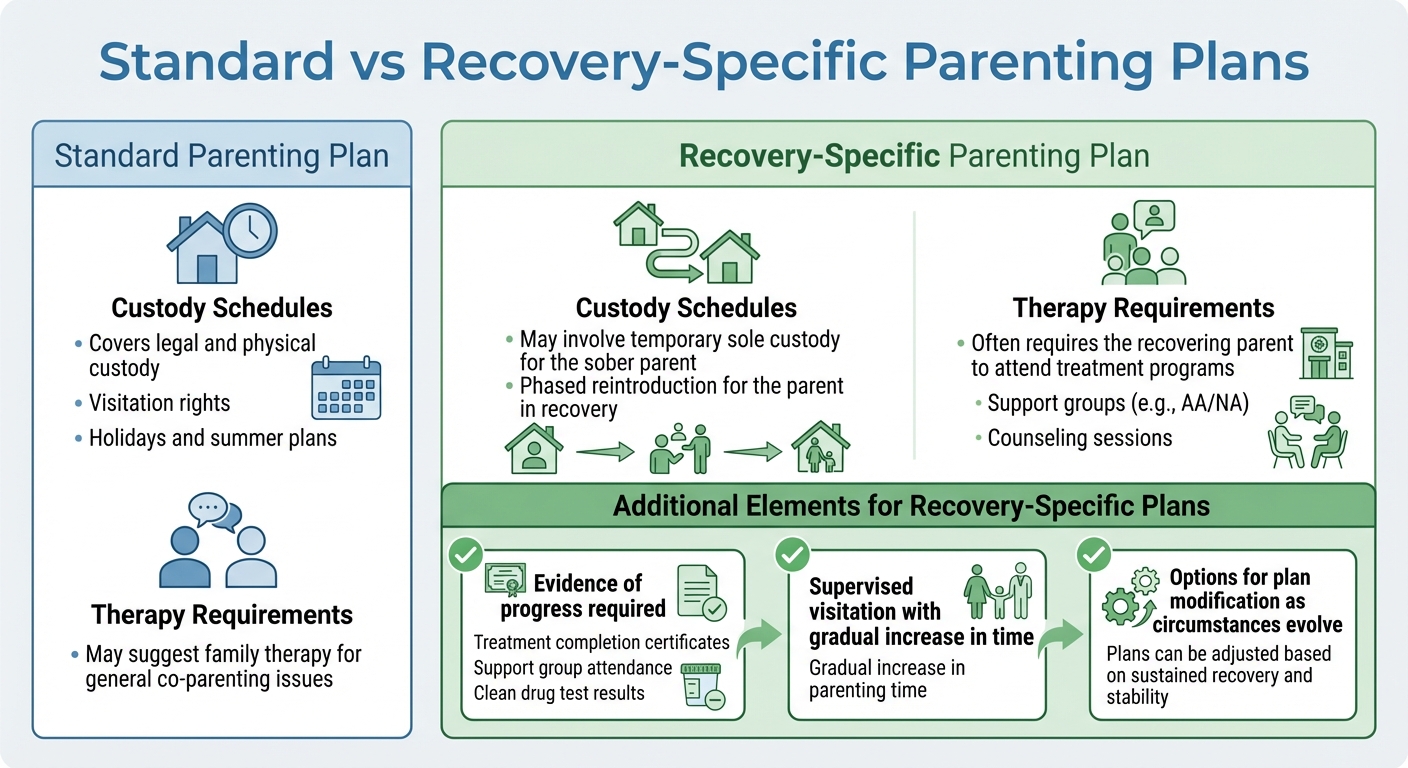
Standard vs Recovery-Specific Parenting Plans Comparison
Legal systems provide a necessary framework for stability during recovery. Courts in California and throughout the U.S. take substance abuse seriously when making custody decisions, prioritizing the child’s well-being above all else [9]. A well-crafted parenting plan not only protects children but also supports the recovery process. These plans should clearly define custody arrangements, visitation schedules, and strategies for managing unexpected challenges.
Creating Parenting Plans for Recovery
Parenting plans tailored for recovery address the unique complexities of addiction and healing. Beyond the basics, these plans must detail legal and physical custody, visitation arrangements, and decision-making responsibilities for key areas like education and healthcare [9]. They should also include steps to manage potential relapses, requirements for ongoing therapy, and provisions for drug testing.
| Feature | Standard Parenting Plan | Recovery-Specific Parenting Plan |
|---|---|---|
| Custody Schedules | Covers legal and physical custody, visitation rights, holidays, and summer plans [9]. | May involve temporary sole custody for the sober parent or a phased reintroduction for the parent in recovery [10]. |
| Therapy Requirements | May suggest family therapy for general co-parenting issues [11]. | Often requires the recovering parent to attend treatment programs, support groups (e.g., AA/NA), and counseling sessions [10][2]. |
Recovering parents should provide evidence of progress, such as treatment completion certificates, consistent attendance at support groups, and clean drug test results [10]. Plans often start with supervised visitation, with parenting time gradually increasing as the parent demonstrates reliability [10]. It’s also essential to include options for modifying the plan as circumstances evolve [9].
These structured plans often lead to court-imposed conditions, adding an extra layer of protection for children.
Court-Required Conditions
When children’s safety is at risk, courts act decisively. If substance abuse is a concern, you can request emergency custody orders, temporary sole custody, or court-mandated drug testing [10]. Supporting these requests with evidence – like text messages, photos, witness testimony, police reports, or failed drug tests – can strengthen your case for custody modifications [10].
For parents in recovery, courts frequently impose specific requirements. Random drug testing is a common condition, and refusal to comply can severely limit parenting time [10]. Courts may also require treatment program completion, regular attendance at AA or NA meetings, and participation in both individual and family counseling [10][2].
Supervised visitation often serves as a transitional step when substance use raises concerns [10]. These visits follow strict guidelines regarding timing, location, and supervision. Tools like Soberlink, which provides video-verified proof of sobriety, are sometimes used to ensure compliance [10]. Additionally, appointing a parenting coordinator or Guardian Ad Litem (GAL) can help enforce the plan and advocate for the child’s best interests [10][11].
Clear legal guidelines not only provide structure but also build the trust and boundaries essential for your family’s recovery journey.
"You can eliminate many of the complications your co-parent brings to the table by simply deciding what is in your child’s best interest – and acting only toward that end." – Michael Flannery, Family Law Attorney, Professor [6]
Rebuilding Trust and Communication Between Co-Parents
Sobriety alone doesn’t automatically rebuild trust – it takes consistent effort and a commitment to leaving old patterns behind. Rebuilding trust not only reassures your children that the chaos of addiction is in the past but also provides visible proof of change for both parents. This creates a strong foundation for effective communication about everything from school events to discipline [7]. A shared focus on your children’s well-being drives this transformation, requiring persistence and fresh approaches [2]. Transparent communication and conflict resolution are key steps in strengthening this foundation.
Transparent Communication Practices
Think of your co-parenting relationship as a business partnership, with your children’s well-being as the central goal. Keep conversations calm, clear, and focused [2][3][12]. Avoid discussing sensitive issues in front of your kids [13][14]. Decide on specific communication methods – like phone calls for urgent matters, texts for quick updates, or emails for more detailed topics – and stick to these methods. For high-conflict situations, written communication through co-parenting apps can help maintain clarity and accountability. Apps like OurFamilyWizard are particularly useful for documenting schedule changes and reimbursement requests [11].
"Good co-parenting helps kids feel safe, cared for and calm in a divorce. But successful co-parenting doesn’t just happen. It takes conscious effort." – Marble Law [13]
Once clear communication practices are in place, focus on resolving disagreements in ways that maintain a positive and stable environment for your children.
Resolving Disagreements Constructively
Disagreements will happen, but how you handle them has a lasting impact on your children’s emotional health and sense of security. Always prioritize your children’s needs by focusing on their stability rather than personal grievances. Give your co-parent the space to share their perspective, ask questions to clarify, and take time to process their points before responding thoughtfully.
A written co-parenting plan can help prevent many conflicts by outlining agreements on key areas like discipline, education, health decisions, screen time, and holiday schedules. Revisiting and updating this plan as your children grow ensures it stays relevant. Flexibility on minor issues and consistency on major ones create a balanced, harmonious environment [13][14].
"Cooperation and compromise are powerful tools in co-parenting, a guardian ad litem explains. They can shield your child from the long-term impacts of a contentious divorce." – OurFamilyWizard [11]
Avoid speaking negatively about your co-parent in front of your children or using them as messengers – these actions can cause lasting emotional harm. If disagreements persist, seeking professional help through family therapy or parent coaching can provide neutral guidance. Services like those from Growth and Change Counseling can help resolve recurring conflicts while keeping your children’s best interests at the center of every decision.
sbb-itb-596b85d
Supporting Children’s Emotional Needs
Addressing your child’s emotional needs is a key part of fostering a healthy family dynamic, especially during parental recovery or co-parenting transitions. Children often carry an emotional load they shouldn’t have to bear, and without proper support, these burdens can affect them well into adulthood [2]. Early intervention and steady, consistent support are essential for their well-being. A united approach to co-parenting can provide the stability they need to heal and thrive.
Identifying and Addressing Children’s Worries
Children express emotional distress in a variety of ways, and it’s important to recognize the signs. Look for mood changes, such as irritability, sadness, or tearfulness, and behavioral shifts like aggression, rebellion, or regression (e.g., bedwetting or clinginess). Physical symptoms like headaches or stomachaches without a clear medical cause may also point to underlying emotional struggles [15][16].
Reactions often vary by age. Younger children (under 7) may show confusion, clinginess, or tantrums. School-age kids (7–12) might worry about safety or develop anxiety. Teenagers, on the other hand, face more complex challenges, including depression, defiance, academic struggles, anger toward parents, sleep issues, or even substance use and suicidal thoughts [15][16]. Other signs to watch for include social withdrawal, excessive concern about family issues, and noticeable changes in appetite or sleep patterns [15][16].
Some children may hide their true feelings, especially in high-conflict situations, out of fear or loyalty to one parent. Others may take on the emotional responsibilities of an unstable parent, a behavior known as "parentification", which can have long-term effects on their development [17]. Pay attention to whether your child becomes more emotional after spending time with the other parent – this could indicate they’re processing suppressed emotions [17]. These observations underscore the importance of creating a supportive, stable environment.
"By exposing children to less chaos during divorce, they are shielded from the negative impacts that divorce has on child development. This may be the most important practice in a divorcing family." – Leah Hill, Divorce Strategies Northwest [17]
Using Family Therapy
If your child shows early signs of emotional distress, family therapy can be a powerful tool. In addition to rebuilding trust, therapy offers a safe space for children to share their feelings, navigate difficult transitions, and build resilience during parental recovery [18]. A skilled therapist can validate their emotions, improve parent-child communication, and help address misunderstandings within the family. Therapy is especially helpful when children display behaviors like withdrawal, aggression, acting out, or declining school performance [18].
For younger children, play therapy provides a way to express emotions through activities like drawing, storytelling, or playing with toys. Older children may benefit from Cognitive Behavioral Therapy (CBT), which helps them identify and reframe negative thoughts while teaching coping strategies like journaling or relaxation techniques [18]. Children aged 8 and older who have witnessed substance use often find it helpful to speak openly with a professional in a supportive environment [2].
"Emotional support for kids in recovery is essential to make this work. Consider therapy with children who witnessed substance use around the age of 8 and older. This can help children speak freely in a safe space with productive advice from a trained professional." – HCR Centers [2]
When choosing a therapist, look for someone experienced in working with families dealing with divorce or recovery. Growth and Change Counseling offers services tailored to support children’s emotional growth while strengthening family relationships. Sessions can include the child and parent together or separately, depending on what best supports the child’s healing process [10][18].
Co-Parenting Strategies and Setting Boundaries
Establishing a solid framework and clear boundaries is essential for effective co-parenting during recovery. With over 7.5 million children in the U.S. living with a parent struggling with alcohol use disorder, predictable routines and well-defined limits are critical [10]. For children, especially those with parents in recovery, knowing what to expect and feeling secure in both homes is crucial. These elements lay the groundwork for practical routines and boundaries, which are explored further below.
Establishing Routines and Safety Measures
Start by reviewing and updating your parenting plan to include clear expectations, routines, and boundaries. This plan should detail custody schedules, acceptable behaviors, rules for activities and travel, and expectations for communication and daily tasks like homework, hygiene, and meals [14][2][13][6]. Putting everything in writing eliminates confusion and provides clarity for both parents when uncertainties arise.
Consistency is key. Align daily routines, such as bedtimes and meal schedules, across both households to provide stability for your child. Children thrive when their environments are predictable, and this consistency fosters trust, an essential theme in recovery [2][11]. For neurodiverse children, you might consider structured schedules – such as specific days with each parent – to reduce transitions and increase predictability [11].
Leverage shared digital tools to stay organized. Apps or online calendars can help both parents track school events, medical appointments, and extracurricular activities without needing constant direct communication. This approach minimizes misunderstandings and keeps everyone on the same page.
Additionally, maintaining sobriety consistently is vital for rebuilding trust in your co-parenting relationship [19]. While routines provide stability, boundaries ensure your child’s well-being and guide their experience.
Setting Clear Boundaries
Boundaries serve as a protective framework for everyone involved. A fundamental boundary is ensuring both parents follow the parenting plan [11]. By respecting these agreements, you demonstrate a commitment to your child’s needs above personal preferences.
Define clear communication guidelines. Agree on preferred methods, such as text, email, or co-parenting apps, and establish reasonable response times for non-urgent matters. Keeping communication focused solely on child-related topics reduces conflict and restores a sense of control [20].
For high-conflict situations, consider parallel parenting. This approach minimizes direct interaction between parents, allowing each to handle routine decisions independently during their time with the child. However, major decisions – such as those related to education or medical care – should still follow the parenting plan to protect children from unnecessary tension [11].
Recovery is not always a straight path, and relapses can happen. It’s essential to maintain firm boundaries that prioritize your child’s safety while remaining adaptable to changing circumstances [6]. Above all, every co-parenting decision should center on what’s best for your child [6][11][10].
Professional Support and Resources
Navigating co-parenting challenges doesn’t have to be a solo journey. With the right professional guidance, what starts as conflict can evolve into a cooperative, child-focused partnership.
Family Therapy and Parent Coaching Services
Family therapy and parent coaching provide tools to improve communication and minimize misunderstandings between co-parents [21]. These services encourage respectful dialogue and help shift the focus from "winning" to fostering mutual understanding [21].
By reducing exposure to conflict – like arguments, name-calling, or displays of anger – these interventions create a safer, more predictable environment for children, which can significantly ease their anxiety [21]. Additionally, family therapy can address substance use issues by equipping parents with healthier coping strategies, promoting long-term stability [21]. These professional services go hand-in-hand with the structured co-parenting techniques discussed earlier.
Growth and Change Counseling offers family therapy, parent coaching, and addiction recovery support in Campbell, San Jose, Los Angeles, and Roseville, CA, as well as through telehealth. Their programs help parents navigate emotional hurdles such as anger, guilt, and resentment while strengthening family connections – even during times of separation. Even if only one parent engages in therapy, that effort alone can reduce conflict and improve co-parenting dynamics [21].
Building Your Support System
In addition to professional help, having a strong personal support network is crucial for maintaining recovery and effective co-parenting. Peer support groups like Alcoholics Anonymous (AA), Narcotics Anonymous (NA), and specialized groups for parents in recovery offer a sense of community, accountability, and shared understanding [1][4].
For immediate help, you can reach SAMHSA‘s National Helpline at 1-800-662-HELP (4357) or text 435748 (HELP4U) for free, confidential referrals to treatment programs and support groups [22]. Lean on trusted family and friends for emotional and practical support, and prioritize self-care – whether that’s regular exercise, getting enough sleep, or eating well. These habits are vital for managing stress and preventing relapse [1].
Conclusion: Moving Forward with Co-Parenting in Recovery
Co-parenting during recovery is no easy feat, but it offers a chance to rebuild family harmony and grow together [2]. The way you and your co-parent work together significantly influences your child’s well-being and overall quality of life [23]. Recovery brings profound changes, and navigating it successfully requires persistence and determination [2]. As your children grow and their needs shift, your co-parenting arrangements may also need to adapt [11]. Strive to stay flexible while providing the structure and stability your family needs. By prioritizing open communication, clear boundaries, and keeping your children’s needs at the forefront – as outlined in the strategies above – you lay the groundwork for a healthier future. This approach not only supports your child but also paves the way to utilize support systems and expert resources effectively.
To help along the way, take advantage of available tools like parent groups, family therapy, or SAMHSA’s National Helpline at 1-800-662-HELP (4357) for immediate support. Growth and Change Counseling offers services such as family therapy, parent coaching, and addiction recovery support throughout California, guiding parents through emotional challenges and fostering stronger family bonds. Staying committed to your recovery rebuilds trust with your children and shows them the positive steps you’re taking [2].
Taking care of yourself is just as important as caring for your family. Self-care plays a key role in managing the stress of parenting and reducing the risk of relapse [2]. Focus on getting enough sleep, eating well, and staying active. When you prioritize your own well-being, you’re better equipped to care for your children and maintain a productive co-parenting relationship.
"You can eliminate many of the complications your co-parent brings to the table by simply deciding what is in your child’s best interest – and acting only toward that end." – Michael Flannery, Family Law Attorney, Professor [6]
FAQs
How do co-parenting apps help reduce conflict during recovery?
Co-parenting apps offer a practical and organized way for parents in recovery to work together on their children’s needs. These tools simplify communication, scheduling, and expense tracking, helping to avoid misunderstandings and minimize conflicts. Features like shared calendars, time-stamped message logs, and alerts for hostile language encourage clear and respectful exchanges.
Many of these apps also provide secure storage for essential documents, such as medical records or school notices. This ensures both parents can access the same information without constant back-and-forth. Expense tracking features further ease the process by allowing parents to log and share costs transparently, reducing the risk of financial disputes – a common source of stress during recovery.
By promoting consistent routines and respectful communication, these apps help parents prioritize their sobriety while creating a stable and supportive environment for their children.
What legal steps should parents in recovery take when creating a parenting plan?
When developing a parenting plan during recovery, the court’s primary concern is the best interest of the child. This includes ensuring the child’s safety, stability, and protection from exposure to drugs or alcohol. For parents with a history of substance use, courts often require evidence of sobriety, a structured recovery plan, and adherence to treatment or testing requirements. Typical conditions might involve random drug or alcohol testing, mandatory counseling, and gradually increasing parenting time as sobriety milestones are reached.
To ensure the plan is legally enforceable, it must be documented in writing, signed by both parents, notarized, and approved by a family court judge. For instance, in California, courts must take substance use into account under Family Code § 3011(d) when determining custody arrangements. Seeking professional assistance can be invaluable for parents in recovery, helping them design a plan that aligns with legal requirements and supports their progress. Growth and Change Counseling provides tailored services like parent coaching and addiction-focused therapy to guide families through this challenging process.
How does therapy help parents and children navigate recovery together?
Therapy plays an essential role in helping both parents and children navigate the recovery process. For parents, it equips them with strategies to manage stress, avoid relapse, and improve communication with their co-parent. These skills are key to building a stable co-parenting relationship. Joint therapy sessions can be particularly effective, as they allow parents to create shared parenting plans, establish healthy boundaries, and rebuild trust. This teamwork can significantly reduce conflicts that might otherwise affect their children.
For children, therapy provides a safe and supportive environment to explore their emotions, develop coping mechanisms, and understand that they are not to blame for their parent’s recovery journey. It promotes emotional balance and eases anxiety by introducing consistent, positive behaviors they can rely on.
Growth and Change Counseling offers tailored services to meet these needs, including individual therapy for parents, family therapy, and parent coaching. Families can access these services in person or via telehealth throughout California, ensuring support is always within reach.
Common Questions about Co-Parenting with Growth and Change Counseling
- How Family Therapy Restores Trust After Addiction
- Addiction Recovery and Marriage Communication
- Parent Coaching with Faith in Addiction Recovery
- Addiction Recovery and Marriage: What Works
