When a parent enters rehab, explaining the situation to children can feel overwhelming. Kids often sense changes and may blame themselves without a clear explanation. Honest, age-appropriate conversations can help them understand that addiction is a disease, not their fault, and that rehab is a positive step toward healing. Here’s how to approach this:
- Be truthful but simple: Use clear language suited to their age. For young kids, explain rehab as a place to "get better." For older kids, describe addiction as a "brain sickness" that needs treatment.
- Reassure them: Emphasize the "3 C’s" – they didn’t Cause it, can’t Control it, and can’t Cure it. Let them know they’re loved and cared for.
- Maintain stability: Stick to routines like school, meals, and bedtime to provide a sense of normalcy.
- Stay connected: Regular calls, letters, or video chats during rehab can ease their worries.
- Watch for distress: Look out for signs like clinginess in younger kids or withdrawal in teens, and seek support if needed.
These steps promote trust and security while helping children navigate this challenging time. Clear communication and consistent routines can make a lasting difference.
How to Explain Alcohol Addiction to Your Kids: The Recovery Village #AlcoholFacts #Alcoholism

Why Honest Communication Matters
Kids are incredibly observant. They pick up on changes in behavior, tension in the home, or whispered conversations behind closed doors. Trying to shield them from the truth doesn’t protect them – it often makes things worse. When children sense something is wrong but don’t know what, their fears can grow. Honest conversations not only validate their feelings but also clear up confusion. Without this clarity, kids might even start to believe they’re somehow to blame.
This tendency toward self-blame is especially common in younger children, who often view themselves as the center of their world. They may assume that they caused the problem. By explaining that addiction is a disease affecting the parent’s brain, children can understand that it’s not their fault. This understanding can lift a heavy burden of guilt and reassure them that the issue is an adult challenge, not something they caused or could fix.
"By telling them the truth, in an age-appropriate way, you’re giving them validation for what they’ve observed or felt, a sense of security in knowing what’s happening, and a model of honesty and accountability." – Reviving You Recovery [4]
Being truthful also teaches kids how to handle tough situations. When parents admit they need help and take steps to get it, they show that seeking support is a strength, not a weakness. This example can stick with children, helping them see that talking about difficult emotions and asking for help are healthy ways to cope with challenges.
Honesty also strengthens the parent-child relationship, which can be fragile during tough times. Trust grows through transparency, even when the topic is hard to discuss. Age-appropriate, clear communication helps kids feel emotionally secure. It reassures them that they can rely on their parents for the truth, creating a foundation of trust that can carry the family through recovery and beyond.
Adjusting Your Explanation by Age
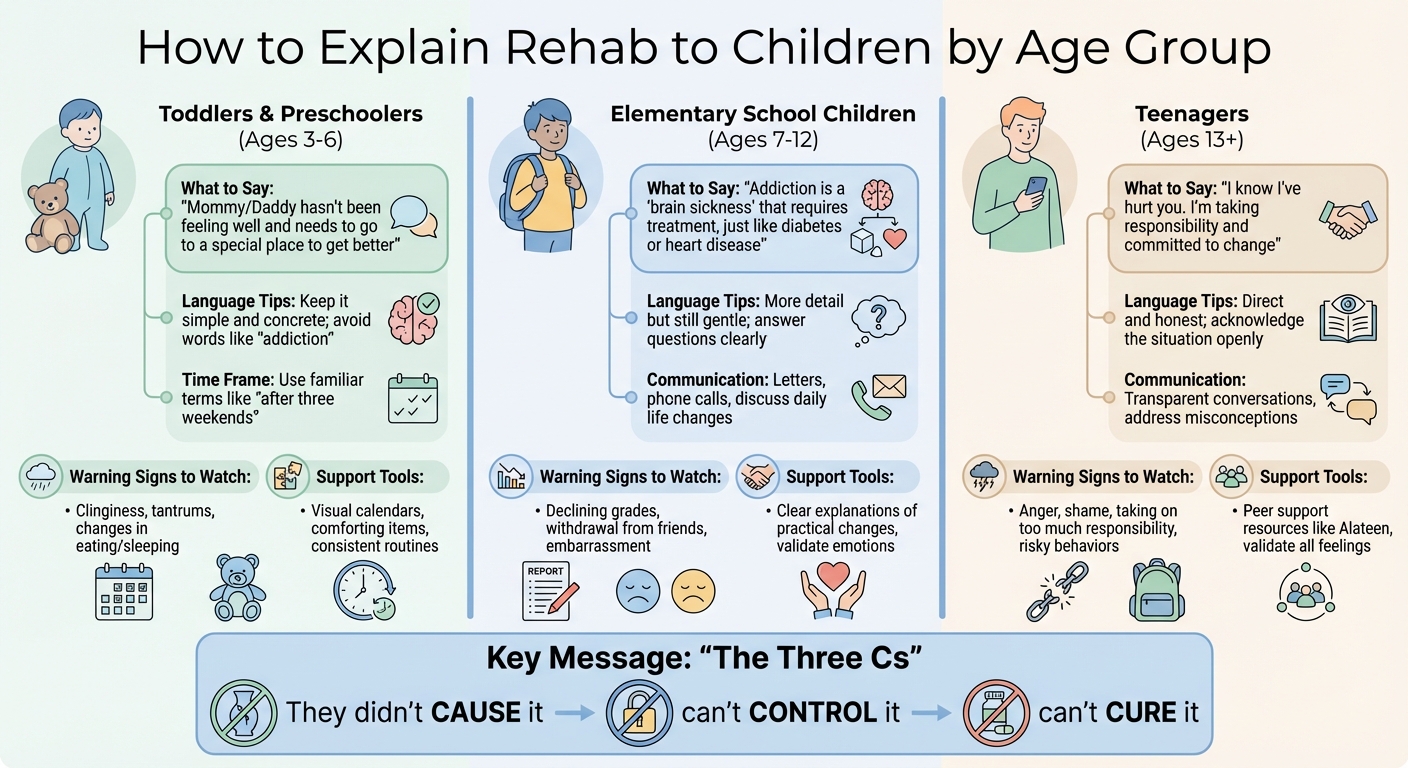
Age-Appropriate Guide to Explaining Rehab to Children
Children understand the world differently depending on their age, so it’s important to adapt your language accordingly. What works for a teenager might confuse or overwhelm a preschooler.
Talking to Toddlers and Preschoolers
For very young children, keep your language simple and concrete. Avoid complex terms like "addiction" or "substance use disorder." Instead, use phrases they can relate to. For example, you might say, "Mommy/Daddy hasn’t been feeling well and needs to go to a special place to get better" (Harmony Junction Recovery [1]). Explain that rehab is a safe place where people go to heal and feel well again.
Since toddlers don’t understand time well, frame their wait in terms they know, like “after three weekends” (Harmony Junction Recovery [1]). A visual calendar can help them see when you’ll be back. Offering a comforting item, like a favorite stuffed animal or a recorded voice message, can also bring them a sense of security.
Children between 3 and 6 years old might express their distress through behaviors like clinginess, tantrums, or even regressing to earlier habits [2][5]. Maintaining consistent routines – like meal times, naps, and play – can help them feel grounded. Be clear about who will take care of them, saying something like, “Grandma will pick you up from school.” Be ready to repeat your answers, as young children often need to hear things multiple times to fully process them.
Talking to Elementary School Children
School-aged kids can handle more detail, though explanations should still be gentle and age-appropriate. You can describe addiction as a kind of "brain sickness" that requires treatment, much like other chronic conditions they might know about.
"Having an addiction is not about being weak or making bad choices. It’s a medical condition that requires substance abuse treatment, just like diabetes or heart disease" (First Steps Recovery [2]).
Answer their questions clearly, but avoid overwhelming them with unnecessary details. Let them know about practical changes in their daily life, like who will help with homework or prepare meals. Encourage them to talk about their feelings – whether it’s anger, sadness, or embarrassment – and reassure them that all emotions are valid. To stay connected during treatment, plan activities like writing letters or scheduling phone calls.
Talking to Teens
Teens usually appreciate direct and honest communication. They’re more aware of what’s happening and may feel frustrated by vague explanations. Be transparent and acknowledge the situation openly. For instance, you might say, “I know I’ve hurt you. I’m taking responsibility and committed to change” (Reviving You Recovery [4]).
It’s also important to address common misconceptions. Explain that while addiction can have genetic components, it doesn’t guarantee a particular outcome – many factors play a role in recovery and overall health. Validate their feelings by saying something like, “You might feel angry, confused, or embarrassed. Whatever you’re feeling, it’s okay. We can talk about it” (Reviving You Recovery [4]). Encourage them to ask questions and consider introducing them to peer support resources like Alateen, which can help them connect with others in similar situations and feel less isolated.
What to Say and What to Avoid
The way you talk about addiction can have a big impact on how your child feels – secure or scared. Some words can help them understand, while others might cause confusion or fear.
Recommended Approaches
When discussing addiction, keep your child’s age in mind and use language they can grasp. For school-aged kids, you might explain addiction as a health issue: “Addiction is a brain disease that makes people very sick and makes it hard for them to stop using drugs or alcohol without help.” This simple explanation frames addiction as something treatable, not a personal failure.
Another helpful tool is the "Three Cs." This reminds children that they didn’t cause the problem, they can’t control it, and they can’t cure it. For example, you could say, “This isn’t your fault. I love you so much, and while I’m away, there will be people to take care of you.” Adding details about their daily routines – like who will pick them up from school, who will cook dinner, and where they’ll sleep – can also create a sense of stability during this time.
Using “I” statements is another effective approach. Take responsibility for your actions and reassure your child. For instance, you could say, “I know my behavior has affected our family, and I want to work on getting better. Rehab will help me learn how to be healthier for all of us.” These statements show accountability and help your child understand that you’re taking steps to improve, which can ease feelings of guilt or blame.
Words and Phrases to Avoid
Just as important as what you say is what you choose not to say.
Avoid vague phrases like “I’m going away for a while” without giving more context. When kids don’t have enough information, their imaginations can run wild, leading to fears about jail, abandonment, or even death.
Steer clear of using overly technical terms like “detoxification,” “withdrawal,” or “substance use disorder” unless you explain them in a way that’s easy for your child to understand. If you mention “rehab,” be sure to follow up with a simple definition, such as, “Rehab is a place where people learn how to live healthier lives and make better choices.”
It’s also best not to share graphic details about drug use or addiction’s physical effects. These can be upsetting and may do more harm than good. Similarly, try to stay calm when talking to your child. If you appear overly emotional or cry excessively, your child might see rehab as something frightening instead of a positive step toward healing. Save those emotional conversations for trusted adults instead.
sbb-itb-596b85d
Helping Children While a Parent Is in Rehab
When a parent enters rehab, children often feel unsettled and unsure of what’s happening. Nearly 19 million children in the U.S. – about 1 in 4 – live with at least one parent who struggles with a substance use disorder [10]. Supporting them through this period with steady routines and open communication can make a world of difference in how they cope.
Keeping Daily Routines Consistent
Kids thrive on routines, especially during uncertain times. Keeping their daily schedule intact – like attending school, spending time with friends, and participating in after-school activities – provides a sense of normalcy [9]. Even small rituals, such as family dinners, bedtime stories, or evening walks, can remind them that life remains steady despite the changes [8].
If you’re arranging for someone else to step in while you’re away, make sure responsibilities like school drop-offs, meals, and homework help are clearly assigned [11][12]. Introducing your children to this caregiver before you leave can ease their transition and reduce anxiety [12]. It’s also a good idea to inform teachers or school counselors about the situation so they can provide extra support and keep an eye on your child’s emotional well-being during the school day [8]. Once routines are in place, staying connected during treatment becomes the next focus.
Staying Connected During Treatment
Maintaining contact while in rehab reassures children that they haven’t been forgotten. Depending on the rehab facility’s policies, this could mean scheduled phone calls, video chats, or even handwritten letters [3][12]. Stick to a consistent communication schedule, so your child knows when to expect updates.
Encourage your child to send drawings, letters, or voice messages to stay emotionally connected [1][4]. For younger kids, marking communication days on a family calendar can make the process more tangible. You can also show them photos of the rehab center or its website to help them visualize where their parent is, making the experience less intimidating [11].
Watching for Emotional Distress
Children of parents with substance use disorders are more likely to face challenges like anxiety, depression, or difficulty managing emotions [3]. Keep an eye out for signs of distress, which can vary by age.
- Toddlers and preschoolers (ages 3–6) might become clingier, throw more tantrums, or experience changes in eating and sleeping patterns [2].
- Elementary-aged kids (ages 7–12) could show signs like declining grades, withdrawing from friends, or feeling embarrassed or overly worried about their parent [2].
- Teenagers may express anger, shame, or take on too much responsibility by trying to care for others or manage household tasks. They might also engage in risky behaviors [2].
If you notice ongoing changes in behavior or academic performance, don’t hesitate to seek professional help [2]. Build a support system of trusted adults – teachers, counselors, or relatives – who can provide additional guidance [2][3]. For older kids and teens, programs like Alateen or Al-Anon can offer a safe space to share their feelings with peers who understand [13][2].
The "Seven Cs" framework can help children process the situation: they didn’t Cause it, they can’t Cure it, and they can’t Control it. Instead, they can focus on taking Care of themselves, Communicating their feelings, making healthy Choices, and Celebrating their own strengths [10]. By addressing their emotional needs, alongside maintaining routines and connection, you can help your child navigate this challenging time with greater resilience. These steps also lay the groundwork for a smoother transition when the parent returns home.
Preparing for Your Partner’s Return Home
As treatment progresses and routines settle, the next big step is preparing for your partner’s return. When a parent comes home from rehab, children often experience a mix of hope, uncertainty, and even skepticism. Statistics show that 40%-60% of individuals relapse after completing addiction treatment [14]. Naturally, kids may wonder if things will truly change. Clear communication and setting realistic expectations can make this transition smoother for everyone.
Discussing New Routines and Expectations
Before your partner comes home, take time to sit down with your children and talk about how daily life may change. A visual schedule can be a helpful tool to outline new routines, such as who will handle school pick-ups, meal prep, or homework [6][7]. This kind of clarity can ease anxiety and help kids feel more prepared. Establishing clear rules and boundaries is equally important – things like designated therapy times or limits on visitors can support your family’s healing process [14].
It’s useful to explain the difference between boundaries (personal values that protect emotions) and rules (non-negotiable limits, like curfews or house rules) [14]. For instance, you might implement a rule that disagreements should be free of yelling or foul language, with clear consequences for breaking it. Frame these changes as part of the family’s growth, not as punishments. Once the household routines feel steady, the focus can shift to addressing emotional wounds caused by the absence.
Allowing Time to Rebuild Relationships
Rebuilding trust and relationships after addiction takes patience. Children who lived through a parent’s active addiction may have taken on more responsibilities than they should have [15]. They might feel hurt, guarded, or unsure about trusting again. As one recovery expert puts it:
"I know I missed a lot, and I’d love to rebuild our relationship, but I understand that might take time. I’m here whenever you’re ready." – Recovery Lighthouse [16]
Let your child set the pace for reconnection. Small, consistent actions – like being dependable at breakfast or showing up for a weekly soccer game – can often rebuild trust better than grand gestures, like a big family vacation [16]. Younger kids might reconnect through simple activities, like making pancakes or playing outside, while teenagers may need honest conversations and a safe space to vent their feelings [3]. If your child seems distant or hesitant, understand it as a protective reaction rather than rejection. Keep offering gentle, steady attempts to connect without pressuring them.
Providing Continued Reassurance
Children need to feel secure in their parent’s commitment to recovery. Share with them the steps your partner is taking, like attending therapy or support groups, to help ease their uncertainty. You might say something like:
"While I was away, I learned a lot about myself and how to handle my emotions better. I’m excited to show you how I’ve grown and how we can grow together as a family." – Chateau Recovery
It’s also important to validate your child’s feelings during this time. Let them know it’s okay to feel scared, angry, or unsure, and that their emotions are heard. Avoid making promises you can’t guarantee; instead, focus on the actions being taken now. Reassure them that your partner sought treatment out of love for the family and a desire to be a better parent. Keep in mind that forgiveness doesn’t happen overnight, and healing is rarely a straight path [15]. There will be ups and downs, and it’s important to remember that your child’s emotional recovery may not align perfectly with your partner’s timeline.
How Growth and Change Counseling Supports Families

Discussing addiction and rehab with children can be a daunting task for parents who may not know how to approach the subject. Growth and Change Counseling provides families with tools to navigate these conversations while focusing on strengthening relationships during recovery. Using Family Systems Therapy, they address deeper family dynamics and offer tailored parent coaching to ensure communication aligns with each child’s developmental needs [18].
Parent Coaching Services
Parent coaching at Growth and Change Counseling equips parents with practical strategies for addressing sensitive topics like addiction and rehab. Counselors work with parents to create a clear and focused outline of key points, helping them stay calm and use age-appropriate language during discussions. This guidance is especially helpful in correcting common misunderstandings, such as when children mistakenly believe they are to blame for a parent’s addiction [3,6].
Family therapy has shown promising results: nearly 90% of participants report emotional health improvements, while about 73% of parents note positive changes in their child’s behavior [19]. Counselors also help identify signs of emotional distress, like mood swings or struggles in school [3,7]. Additionally, they assist families in preparing for life after rehab by establishing new routines and expectations that promote stability [17].
Therapy Pricing and Options
For families ready to begin, Growth and Change Counseling offers flexible pricing and accessible options. Sessions with a Licensed Marriage and Family Therapist (LMFT) cost $200 for 45 minutes, with sliding scale rates starting at $100. They accept a range of insurance plans, including Aetna, Optum (United Health Care, Oscar, Oxford), Anthem Blue Cross, Blue Shield of California, Cigna, Kaiser NorCal, and Medicare [18]. Services are available in Campbell, San Jose, Los Angeles, and Roseville, California, as well as through telehealth via Google Meets, making support convenient and widely accessible.
Conclusion
Talking to children about rehab requires honesty and sensitivity. Using age-appropriate language can help reduce their confusion and prevent feelings of self-blame. When parents take the time to explain the purpose of rehab and reassure kids that the situation isn’t their fault, it helps them understand that the problem lies with the disease, not the person. This approach builds trust during what can be an unsettling time.
Creating consistent routines is another way to provide emotional stability. Regular meal times, bedtimes, and school schedules can offer a sense of normalcy when life feels unpredictable. As First Steps Recovery explains:
"Creating stable routines helps them feel more secure when other parts of their life feel chaotic" [2].
Simple tools like calendars or predictable communication schedules can also help children feel less anxious and more in control.
In addition to routines, seeking outside support can strengthen the family’s ability to navigate these challenges. Professional resources, such as parent coaching and family therapy offered by organizations like Growth and Change Counseling, can help clear up misunderstandings and establish healthier patterns once treatment is complete.
FAQs
How much should I tell my child about why I’m going to rehab?
When talking to your child about going to rehab, honesty is crucial, but it’s important to tailor your explanation to their age. Let them know it’s not their fault and explain that you’re seeking help to improve your health and become a better parent.
For younger kids, keep the conversation simple. Focus on reassuring them that they’re loved and cared for. Older children might have more questions – be prepared to answer calmly and provide a bit more detail, while still emphasizing their security and your commitment to getting better. Balancing honesty with reassurance helps them feel safe and supported.
What if my child asks if I’m leaving because of them?
If your child asks this, take a deep breath and respond with calm reassurance. Let them know it’s not their fault – this is so important for their peace of mind. Explain, in simple and age-appropriate terms, that you’re going to rehab to work on getting healthier and stronger. Emphasize that your love for them remains the same and hasn’t changed one bit. This decision is about taking steps to improve your well-being and building a better future for the whole family.
How do I handle school and childcare while I’m in rehab?
Managing school and childcare during rehab takes careful planning to ensure your children feel supported and secure. Start by having an honest, age-appropriate conversation with them about your plans. This helps provide reassurance and reduces uncertainty.
It’s also important to arrange for trusted adults or caregivers to step in while you’re away. Whether it’s a family member, close friend, or another reliable person, having someone who can maintain their daily routines – like school drop-offs, pickups, and bedtime rituals – can make a big difference in keeping things stable.
Be clear about who will be caring for them during this time. Open communication about these arrangements can ease their worries and help them feel safe while you focus on your recovery.
Related Blog Posts
- Ultimate Guide to Co-Parenting in Recovery
- How to Create Emotional Safety for Kids in Recovery
- Parenting Strategies For Addiction Recovery Support
- How Relapse Impacts Co-Parenting Dynamics
