Creating emotional safety for children during a parent’s recovery is about rebuilding trust and providing a secure, supportive environment. Kids affected by addiction often feel fear, guilt, and instability. Recovery offers a chance to repair these relationships by focusing on:
- Predictability: Establish consistent routines like regular meals and bedtimes to reduce chaos.
- Open Communication: Explain addiction in age-appropriate ways and validate their feelings.
- Emotional Responsiveness: Show empathy, listen actively, and be present.
- Healthy Boundaries: Set clear, loving limits and follow through consistently.
Parents must first work on their own emotional stability and seek professional help when needed. Family therapy, parenting support, and tools like the "7 Cs" framework can help children process emotions and reduce self-blame. Building routines, addressing their concerns, and modeling calm behavior are key steps to creating a safe space for kids to heal and thrive.
What Emotional Safety Means for Children
How Addiction Affects Children
When a parent struggles with addiction, the home can feel like a "warzone" for children, where constant hyper-vigilance and fear take over their lives [4]. This heightened state of alertness erodes their sense of security and leaves lasting emotional scars.
Kids in these environments often become overly sensitive to their surroundings and carry an overwhelming sense of guilt [4]. Over time, this guilt morphs into shame, shaping how they view themselves and the world.
The concept of secure versus insecure attachment is especially important here. A secure attachment allows a child to carry a sense of "confidence and trust in the goodness of me, you, us" throughout their life [6]. On the other hand, insecure attachment develops when a parent repeatedly dismisses a child’s need for comfort or displays excessive anxiety that prevents the child from exploring their environment [6]. Addiction disrupts this critical bonding process, leaving children unsure if they can rely on their parents for safety and support.
Basic Elements of Emotional Safety
Understanding the harm caused by addiction underscores the importance of creating an emotionally safe environment. Four key principles can help rebuild this sense of safety:
- Predictability: Establishing consistent routines – like regular mealtimes, bedtimes, and daily activities – provides stability in what might have been a chaotic home [2][5]. Knowing what to expect each day helps children feel grounded.
- Open communication: Be honest with your children in a way they can understand. Explaining addiction as a disease, similar to diabetes or asthma, helps them separate the parent they love from the harmful behaviors [4][5].
- Emotional responsiveness: As psychiatrist Dan Siegel puts it, make your child "feel felt" [6]. This means giving them your full attention – putting down your phone, making eye contact, and responding with empathy. Instead of offering quick fixes or dismissing their feelings, show them you truly understand.
- Healthy boundaries: Children need clear, firm, and loving limits to feel secure. Setting expectations and following through consistently helps them know where they stand [8][1].
Mistakes are inevitable, but emotional safety also involves repairing relationships when things go wrong. This includes active listening, offering sincere apologies, and fostering forgiveness on both sides [1]. Repairing teaches children that conflicts don’t have to break relationships – they can actually strengthen them through honest communication.
For children affected by addiction, trauma-informed parenting is crucial. These kids often believe they are to blame for accidents or problems. Build a sense of safety by staying calm during tough moments, explaining that mistakes are part of being human, and responding without blame or shame [4]. These practices create a foundation for reconnecting with your children and rebuilding trust.
Getting Ready to Reconnect with Your Kids
Building Your Sobriety and Emotional Control
Your emotional stability is the cornerstone of your child’s sense of safety. Before you can create a secure environment for your kids, it’s crucial to first establish that stability within yourself.
Why emotional control is so important: Kids learn how to manage their emotions by observing you. When you remain calm during stressful situations, you’re teaching them lifelong coping skills. As KVC Health Systems puts it:
"When you model calmness and composure, you’re teaching valuable lessons. It also strengthens your bond by creating safety and stability" [9].
On a biological level, emotional control is essential. When you’re overwhelmed, your brain shifts into survival mode, relying on the amygdala while shutting down logical thinking [11]. In this state, effective communication and setting healthy boundaries become nearly impossible.
How to regulate your emotions: Start with simple techniques like deep breathing to calm your nervous system. Practice naming your emotions – this can actually lessen their intensity [9][10][11]. Create a personal plan for managing emotional triggers. Identify what unsettles you and prepare immediate coping strategies. For example, list people you can call, places you can go, or activities that help you regain calm [9][12]. Having these tools ready can prevent impulsive reactions that might harm your relationship with your kids.
Once you’ve built a foundation of self-regulation, seeking professional support can help strengthen your progress even further.
Getting Professional Support
Professional guidance can be a game-changer for both your recovery and parenting journey. Individual therapy allows you to work through guilt and shame that may block meaningful connections with your children [2][10]. Family therapy provides a safe environment for everyone to express feelings and develop healthier communication patterns. Parent coaching equips you with tools to explain addiction in ways your kids can understand and navigate tough conversations [2][3].
For parents in recovery across California, Growth and Change Counseling (https://johnmarkkane.com) offers tailored services. They provide individual therapy to enhance emotional regulation, family therapy to rebuild relationships, and parent coaching to develop practical strategies. Whether you’re located in Campbell, San Jose, Los Angeles, or Roseville, these services are available in person or via telehealth.
With professional support, you can approach rebuilding trust with patience and a realistic mindset.
Setting Realistic Expectations
Rebuilding trust doesn’t happen overnight. Your children may not immediately respond to the positive changes you’re making. They’ve likely developed emotional defenses, and it will take time – weeks or even months – for them to believe that things are genuinely different [2][3].
Focus on progress rather than perfection. Mistakes will happen, and how you handle them can actually strengthen trust. Apologize sincerely, listen to your child’s feelings, and take steps to make things right [3]. This kind of repair work can build even deeper trust than never making mistakes at all.
It’s also essential to create a relapse prevention plan. Identify your triggers, recognize early warning signs, and establish accountability measures [2]. Define what safe behaviors look like in your home now – this could mean keeping alcohol out of the house, attending regular support meetings, or checking in with your sponsor daily. When your children see you consistently following through on these commitments, they’ll begin to trust that the changes are real and lasting.
Parenting in Early Recovery from Alcoholism and Drug Addiction
sbb-itb-596b85d
Steps to Create Emotional Safety
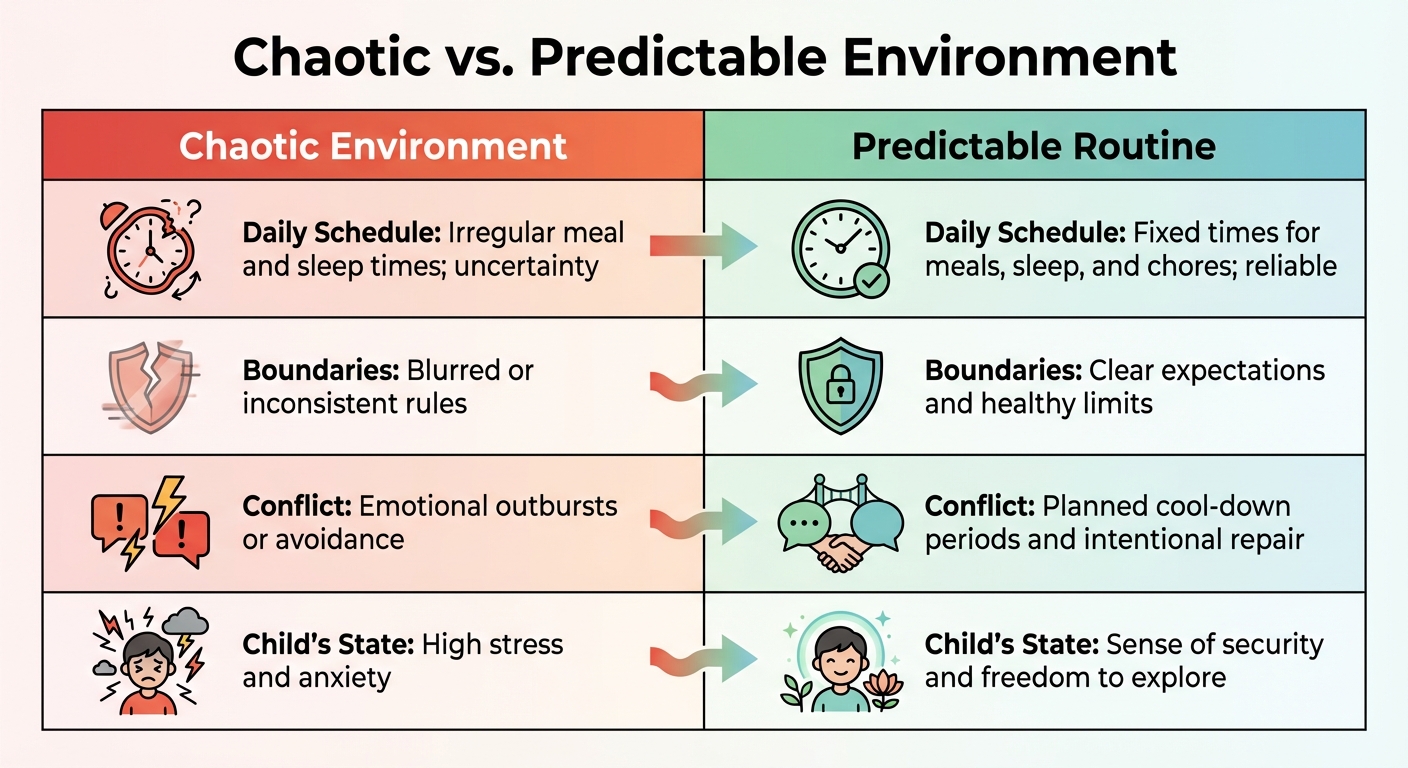
Chaotic vs Predictable Environment: Impact on Children in Recovery
Now that you’ve established a foundation of sobriety and secured professional support, it’s time to focus on creating a safe and emotionally supportive environment for your children in their day-to-day lives.
Building Predictable Daily Routines
Predictability is a cornerstone of emotional safety. When children know what to expect, their stress levels decrease, allowing them to relax and feel secure. If your household was previously marked by inconsistent routines, reintroducing structure can rebuild trust.
During active addiction, your family life may have felt chaotic – meals at random times, unpredictable emotional reactions, and unclear boundaries. By establishing consistent schedules for meals, bedtime, and family activities, you can restore a sense of normalcy. Simple rituals, like movie nights or family meetings, can further reinforce stability and show your children they can rely on you.
Here’s a quick comparison of chaotic versus predictable environments:
| Feature | Chaotic Environment | Predictable Routine |
|---|---|---|
| Daily Schedule | Irregular meal and sleep times; uncertainty | Fixed times for meals, sleep, and chores; reliable |
| Boundaries | Blurred or inconsistent rules | Clear expectations and healthy limits |
| Conflict | Emotional outbursts or avoidance | Planned cool-down periods and intentional repair |
| Child’s State | High stress and anxiety | Sense of security and freedom to explore |
Creating an "emotional safety plan" can also help during moments of heightened anger or anxiety. Sit down with your family when everyone is calm and agree on a cool-down routine. For example, use a simple phrase like, "I need five minutes", to signal the need for space. Designate a specific area for cooling down and suggest calming activities, such as deep breathing. These steps teach healthy ways to manage overwhelming emotions and prevent emotional blowups.
With these routines in place, you’ll also create a foundation for open conversations about addiction and recovery.
Talking to Your Kids About Addiction and Recovery
Breaking the silence about addiction is critical. Avoiding the topic can lead children to fill in the gaps with their own fears and misconceptions – sometimes even blaming themselves. Honest, age-appropriate communication can ease their worries and reduce the likelihood of unhealthy coping mechanisms. Research shows that children of parents with substance dependence are twice as likely to develop a substance use disorder themselves [13].
Tailor your conversations to your child’s age. For younger kids, you might explain addiction as "a sickness of the brain" that makes people feel they need substances to feel okay. Emphasize that it’s not contagious, like a cold. For school-age children, use tools like the "7 Cs" to help them understand that they didn’t cause the addiction and can focus on their own strengths.
It’s also important to separate a person’s actions from their character. Addiction can lead even good people to make poor choices, but it doesn’t define them as "bad." To clarify this, here are examples of helpful versus harmful language:
| Helpful/Reassuring Phrases | Hurtful/Confusing Phrases |
|---|---|
| "Addiction is a disease that makes it hard to stop." | "They love the bottle more than they love you." |
| "You didn’t cause this, and you can’t fix it." | "If you behaved better, they wouldn’t be so stressed." |
| "It’s okay to feel angry or sad about this." | "Don’t tell anyone what happens in this house." |
| "They are a good person with a sickness." | "They are just a bad person/liar." |
For teens, keep conversations brief and informal but frequent. Regularly check in, ask how they’re feeling, and validate their concerns. These ongoing dialogues can help them process their emotions and understand the situation better.
Handling Your Children’s Emotions
Recovery can stir up intense emotions in children – anger, sadness, anxiety, or confusion. How you respond to these feelings plays a major role in either strengthening or undermining their sense of safety.
Focus on connection rather than control. As Innerchange explains:
"Love is the foundation of change. It promotes long-lasting change while fear promotes short-lived behavioral changes." [1]
When your child is upset, prioritize staying connected and helping them navigate their emotions instead of shutting them down. Validation is essential here. Psychiatrist Dan Siegel emphasizes:
"Feeling felt is one of the most important needs children have." [6]
Acknowledging your child’s emotions shows them that their feelings matter and that you’re a safe person to turn to. This builds trust and a secure attachment.
When emotions run high, the brain’s amygdala can take over, making logical thinking nearly impossible. In these moments, focus on calming the intense feelings before attempting to reason through the situation. A simple, three-step validation process can help:
- Heighten awareness: Use gentle, curious language like, "I’m wondering if you’re feeling upset?" instead of making assumptions.
- Name the feeling: Help your child identify specific emotions, building their emotional vocabulary.
- Explore together: Offer comfort through supportive gestures, like holding their hand or sitting close.
As Hilary Jacobs Hendel, LCSW, notes:
"Naming our emotions helps dial down distress." [10]
Practicing empathetic listening – such as nodding and maintaining eye contact – also shows your child that you’re fully present, even if you don’t have immediate solutions.
Teaching children how to express anger constructively is equally important. As Lyman Abbott wisely advised:
"Do not teach your children never to be angry; teach them how to be angry." [11]
Anger is a natural emotion, but it’s crucial to model healthy ways to express it, like using cool-down routines when tempers flare. These skills not only help your child manage their emotions but also strengthen your bond.
Fixing Mistakes as a Parent
No parent gets it right every time. There will be moments when you lose your temper or slip into old habits. What truly matters is how you repair the relationship afterward.
A heartfelt apology can go a long way in rebuilding trust. Take full responsibility for your actions – say something like, "I’m sorry I yelled at you. I know that scared you and made you feel unsafe." Then, ask your child what they need to feel better and listen closely to their response.
Before you can mend the relationship, it’s important to address any guilt or shame you may feel. Shifting from defensiveness to openly addressing your emotions is a vital part of the healing process, both for you and your child.
Maintaining Long-Term Stability for Children
Ensuring your child’s emotional safety during recovery requires consistent effort and adaptability. Let’s explore practical ways to help your child build resilience and identify when additional support might be necessary.
Connecting with Safe Adults and Professional Help
Having at least one reliable, caring adult in their corner can be a game changer for children. This person could be a trusted family member, teacher, coach, or counselor – someone who offers steady emotional support and eases feelings of loneliness. Knowing they have someone to turn to provides children with a sense of security as they navigate the challenges of recovery. These relationships, paired with the daily routines and open conversations mentioned earlier, help maintain consistency during the healing journey.
Professional help can also play an important role. Family therapy, for example, can improve communication and address conflicts that may have arisen during addiction. Individual counseling offers children a private space to process their emotions without feeling the need to protect others in the family. Growth and Change Counseling, available throughout California both in-person and via telehealth, specializes in addiction recovery and trauma treatment. Their approach focuses on rebuilding trust and strengthening family connections.
If you’re unsure where to begin, there are several resources to guide you. The American Academy of Child & Adolescent Psychiatry (AACAP) provides tools to locate local psychiatrists and offers expert videos about child mental health. The American Psychological Association (APA) shares advice on stress management and effective communication with children. Meanwhile, the Association for Behavioral and Cognitive Therapies (ABCT) offers information on evidence-based treatments [11].
Teaching Coping Skills and Resilience
Beyond emotional support, teaching your child practical coping strategies can make a big difference. For instance, grounding exercises are particularly helpful in moments of high stress. Something as simple as taking ten deep breaths can help clear stress hormones from the brain, allowing for clearer thinking [11].
Encouraging creative outlets is another effective way to help children process emotions they might not yet be able to articulate. Journals, art supplies, or even physical activities like building with blocks or playing outside can provide a healthy release for pent-up feelings [11].
Involving your child in recovery planning can also empower them. Work together to create a plan that includes family goals, rewards for positive behavior (like a special dinner to celebrate milestones), and clear consequences for boundary violations [7]. This collaborative approach teaches problem-solving skills and reinforces the idea that everyone in the family contributes to maintaining stability.
The "Seven C’s" framework is a helpful tool for explaining their role in your recovery. Teach them that they didn’t Cause the addiction, can’t Cure it, and can’t Control it. However, they can take Care of themselves by Communicating their feelings, making healthy Choices, and Celebrating their own achievements [14]. This framework reduces guilt and helps them focus on their own well-being.
Finally, lead by example. Children learn how to manage stress by observing you. When you practice self-care, use healthy coping mechanisms, and stay emotionally grounded, you’re teaching them skills they’ll carry for life [11][1].
Spotting Warning Signs
Even with a strong support system, some children may struggle more than others. Recognizing the signs of deeper issues early can prevent them from escalating into larger problems.
Physical signs can often reveal emotional distress. For instance, trembling when scared or flushing when angry might indicate underlying anxiety [11]. Children from homes impacted by addiction may remain on "high alert", constantly bracing for the next emotional upheaval, and often blame themselves for problems they didn’t cause [4].
Behavioral changes are another red flag. If your child becomes overly serious, stops being playful, or takes on responsibilities beyond their age, they might be carrying an emotional burden that’s too heavy [4]. Other concerning behaviors include withdrawing from friends, frequent outbursts, or taking on adult chores inappropriately. Physical signs of depression, such as changes in sleep or appetite, are also worth noting.
Pay attention to the frequency of distress. If sadness, anxiety, or behavioral issues persist, it’s time to seek professional help [11]. Self-harm, severe withdrawal, or trauma symptoms always require immediate attention.
With nearly 19 million children in the U.S. – about one in four – living with a parent who has a substance use disorder, there are many resources designed specifically for families like yours [14]. Seeking help from these services isn’t a sign of failure. On the contrary, it shows strength and commitment to your child’s well-being.
If you notice concerning signs, don’t hesitate to reach out to a pediatrician, mental health professional, or organizations like AACAP or APA. Early intervention can make a world of difference in supporting your child’s emotional health and resilience.
Your Journey to Lasting Healing with Growth and Change Counseling
Helping your children feel emotionally safe during recovery is an ongoing process that thrives on clear communication, consistent actions, and professional guidance. These elements work together to rebuild trust, heal emotional wounds caused by addiction, and provide a stable foundation for your family to move forward.
Establishing predictable routines plays a key role in creating emotional stability. When children know what to expect, it helps them develop healthier emotional patterns and feel more secure in their environment [8].
Equally important is open communication. By validating your child’s emotions rather than dismissing them, you show them that their feelings are both acknowledged and manageable. This approach reduces feelings of shame and helps them navigate difficult experiences in a constructive way.
Professional support can be a game-changer. Family counseling not only addresses the emotional and relational damage caused by addiction but also equips your family with tools like stress management techniques and methods for rebuilding trust [2][11]. Growth and Change Counseling provides families with resources to strengthen resilience and maintain progress throughout recovery.
Ultimately, emotional safety is built one small step at a time – whether it’s listening intently, apologizing when necessary, or demonstrating the emotional regulation you hope your children will adopt. These daily efforts reflect the actionable strategies outlined in this guide, showing that recovery is not just about overcoming challenges but also about fostering resilience and creating lasting change.
FAQs
How can I help my child feel emotionally safe while I’m in recovery?
Creating a sense of emotional safety for your child during your recovery is crucial for their sense of stability and overall well-being. Emotional safety means your child feels free to share their thoughts and feelings without fear of being judged or rejected. This kind of environment helps strengthen their resilience, build self-esteem, and develop healthy emotional regulation – especially during challenging times.
Here are a few ways to create that safe space for your child:
- Stick to predictable routines: Regular mealtimes, bedtimes, and other daily rituals provide a comforting sense of stability.
- Set clear and consistent boundaries: Explain rules calmly and focus on repairing trust when mistakes happen, rather than resorting to harsh discipline.
- Encourage open conversations: Validate their emotions and show them healthy ways to cope with stress, like deep breathing or taking a short walk.
Seeking professional support, such as family therapy or parent coaching, can also make a big difference. Growth and Change Counseling offers personalized services to help you navigate recovery while providing a nurturing space for your child. By combining steady routines, honest communication, and expert guidance, you can create an environment where your child feels secure as you work toward healing and growth.
What is the ‘7 Cs’ framework, and how can it help my child cope with a parent’s addiction?
The 7 Cs framework offers a thoughtful and practical way to support children navigating the challenges of having a parent with addiction. It provides seven simple, age-appropriate strategies that help kids understand that addiction is a disease – not something they caused – and equips them with tools to handle feelings of fear, guilt, or isolation.
With the 7 Cs, children can learn to:
- Recognize and express their emotions effectively
- Develop healthy ways to cope with stress
- Feel a greater sense of safety and control in their lives
- Build resilience and maintain hope, even in tough times
This framework also emphasizes collaboration between parents and children, making it an excellent fit for Growth and Change Counseling’s parent-coaching services. Therapists can work with families to apply these principles, creating a stable and supportive environment that encourages healing and emotional growth.
How can I talk to my kids about addiction and recovery in a way they understand?
Talking to your children about addiction and recovery works best when you approach it with honesty, sensitivity, and an understanding of their age and emotional needs. Pick a calm, quiet moment to begin the conversation, and use words that match their level of understanding. For younger kids, keep it straightforward, saying something like, “I’m getting help to feel better.” Older kids or teens can handle more detailed explanations about addiction and the recovery process. Most importantly, reassure them that none of this is their fault, and explain the steps you’re taking to improve your health.
Children may react in various ways – some might ask questions, others might stay quiet, and some could even show changes in behavior. Whatever their response, meet it with patience and empathy. Listen to them without judgment, validate their emotions, and let them know it’s perfectly okay to feel confused, scared, or even upset. Maintaining consistent routines and setting clear boundaries can also help them feel more secure during this time.
This isn’t a one-time conversation – keep the lines of communication open. Check in regularly and share updates in a way they can understand. If your child seems overwhelmed or struggles to process what’s happening, consider seeking professional support. Family therapy or parent coaching can be incredibly helpful. Growth and Change Counseling offers services designed to support families navigating addiction and recovery, helping rebuild trust and promote emotional healing.
Related Blog Posts
- How Family Therapy Restores Trust After Addiction
- Rebuilding Trust After Addiction
- Ultimate Guide to Family Resilience in Addiction Recovery
- Ultimate Guide to Co-Parenting in Recovery
