Addiction recovery is tough, but the right support network can make all the difference. Here’s how you can build a structured system to support sobriety and strengthen relationships:
- Start by evaluating your needs: Identify emotional needs (like stress management and trust-building) and practical needs (housing, finances, and transportation). Communicate these clearly to your support system.
- Assess your current support: List who’s involved – therapists, friends, family, sponsors – and determine if they help or hinder your recovery.
- Fill in the gaps: Address missing elements, like joining peer groups (e.g., Al-Anon, SMART Recovery, or RCA) or adjusting your home environment to remove triggers.
- Work with professionals: Licensed therapists, addiction specialists, and medical professionals provide essential guidance for emotional, mental, and physical health.
- Maintain your network: Use tools like recovery contracts, regular check-ins, and telehealth to keep your support system active and effective.
Why it matters: A strong support network can reduce relapse risks, improve overall health, and rebuild relationships. Start by prioritizing your needs and connecting with the right resources to safeguard both your sobriety and your future.
CREATING A SOBER SUPPORT SYSTEM | How to find help to recover from addiction | Reclamation Sisters
Review Your Current Support System
To build a stronger recovery network, it’s crucial to first evaluate how well your current support system aligns with your recovery needs. According to SAMHSA, recovery encompasses four key dimensions: Health, Home, Purpose, and Community [2]. Start by identifying what you need – both emotionally and practically – to support your journey.
Define Your Emotional and Practical Needs
Take time to outline both emotional and practical needs clearly.
Emotional needs might include tools for managing stress, a sense of belonging, regular accountability check-ins, and rebuilding trust and intimacy that may have been strained by addiction. It’s also important to have validation from people who understand recovery without judgment, as well as support for co-occurring mental health conditions like depression or anxiety, which often accompany addiction.
Practical needs are equally important. These include access to stable housing free from triggers, financial stability to ease survival stress, assistance with medication schedules and therapy appointments, help managing daily responsibilities like childcare and household tasks, reliable transportation to meetings or treatment, and education for family members to prevent enabling behaviors.
"If you want something from someone, it’s best to ask for it specifically, or you are not likely to get what you want. Same goes for support . . . ask specifically for what you want from someone else!" – Josh King, PsyD [4]
Communicate your needs clearly. Tools like HALT – which helps identify emotional triggers by asking if you’re Hungry, Angry, Lonely, or Tired [6] – can guide these conversations. If verbal communication feels overwhelming, consider writing your thoughts down. This allows both you and your support network time to process without immediate pressure.
Once you’ve defined your needs, take stock of who is currently supporting you and how well they meet those needs.
Take Inventory of Your Current Resources
Creating a detailed record of your existing support system can help you identify where gaps exist. Start by listing everyone involved in your recovery journey, dividing them into categories such as:
- Professional support: Therapists, doctors, substance abuse counselors, recovery coaches.
- Personal social circle: Family members, a spouse or significant other, close friends, members of your faith community.
- Peer support network: Sponsors, peer mentors, support group members, or rehab alumni [2][3].
For each person, assess whether they genuinely contribute to your recovery. Do they help you build self-esteem and avoid triggers? Or do they enable unhealthy behaviors? Effective supporters hold you accountable to your recovery goals while maintaining healthy boundaries [3][7]. Studies show that strong, secure social relationships can improve longevity by up to 50% [2], underscoring the importance of this step for both your sobriety and overall well-being.
Pinpoint Missing Support Elements
Now, compare your needs to your current resources. Are there gaps? For instance, you might have emotional support from family but lack accountability from a sponsor or 12-step group [3]. Perhaps you’re missing practical help, like childcare or transportation, or your home environment hasn’t been adjusted to reduce triggers, such as removing paraphernalia or changing routines [1].
A weak sober network can increase the risk of relapse [2][3]. If family members haven’t been educated about addiction, they might unintentionally enable harmful behaviors or fail to set necessary boundaries [1]. Similarly, the absence of structured aftercare – like sober living homes or follow-up therapy – can leave a dangerous void during the transition from intensive treatment to everyday life [5].
Conduct a "help or hinder" audit of your social connections. Distance yourself from people or relationships that lead to triggering situations, even if they’ve been a part of your life for a long time [3]. Address practical gaps by ensuring responsibilities like childcare, pet care, or financial obligations are handled, so you can prioritize your recovery without added stress [1].
The next sections will guide you on how to fill these gaps with the right support groups and professional team members.
Choose Support Groups for Couples and Families
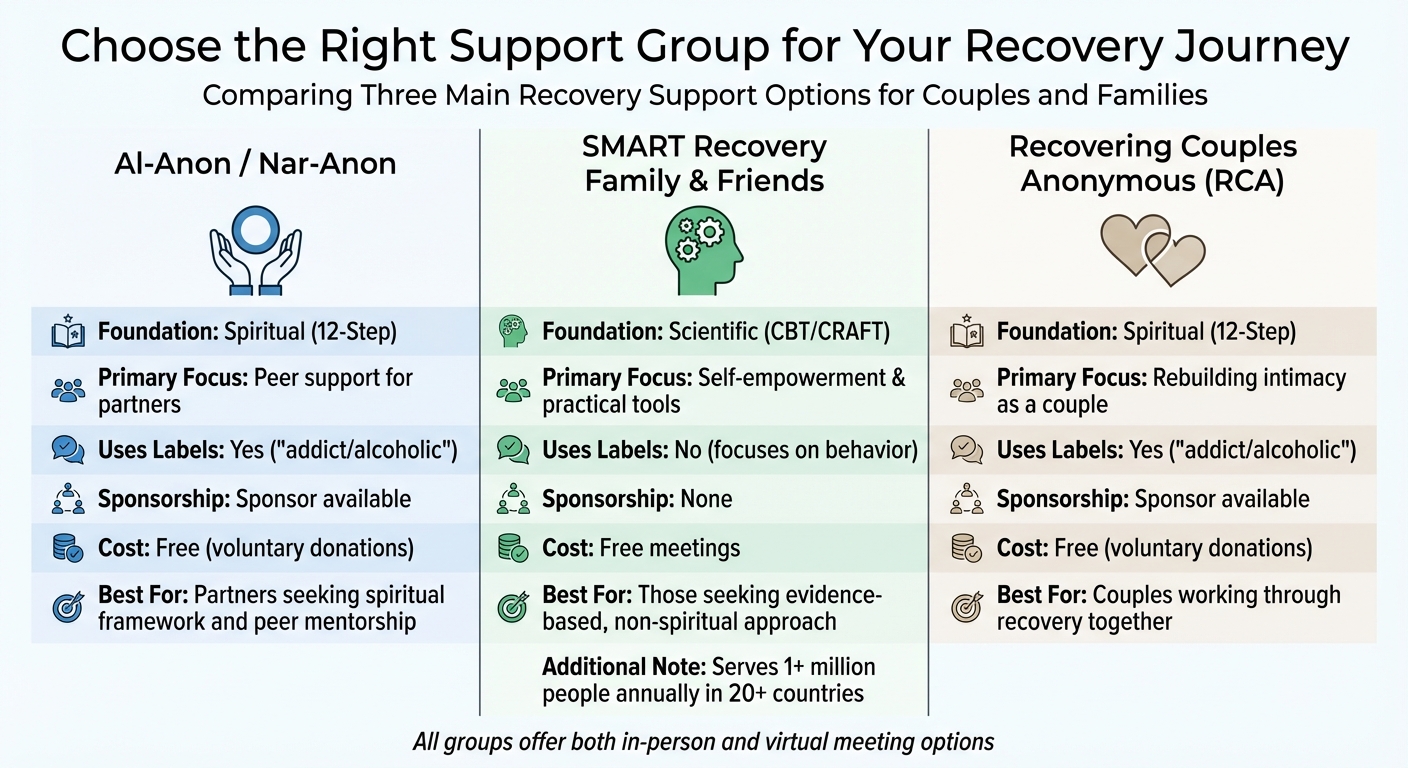
Comparison of Recovery Support Groups for Couples and Families
Once you’ve identified where support might be lacking, the next step is finding peer support groups that align with both partners’ recovery needs. The right group can offer shared experiences, accountability, and practical tools to strengthen recovery for everyone involved. Think about what each partner needs most. Some groups focus on self-care for the supporter, others provide peer support for those directly affected by addiction, and some are designed to help couples rebuild intimacy. You’ll also want to decide whether a spiritual 12-step approach or a science-based framework suits your situation better. Below are some options tailored to different recovery needs.
Here’s a quick comparison of three main types to help you decide:
| Feature | Al-Anon / Nar-Anon | SMART Recovery Family & Friends | Recovering Couples Anonymous |
|---|---|---|---|
| Foundation | Spiritual (12-Step) | Scientific (CBT/CRAFT) | Spiritual (12-Step) |
| Primary Focus | Peer support for partners | Self-empowerment & practical tools | Rebuilding intimacy as a couple |
| Uses Labels | Yes ("addict/alcoholic") | No (focuses on behavior) | Yes ("addict/alcoholic") |
| Sponsorship | Sponsor available | None | Sponsor available |
| Cost | Free (voluntary donations) | Free meetings | Free (voluntary donations) |
Al-Anon and Nar-Anon
Al-Anon and Nar-Anon are geared toward partners, family members, and friends affected by addiction. These groups provide a safe environment where participants can share their experiences with others who truly understand the emotional challenges of supporting someone in recovery. Built on a spiritual foundation, they guide members through the 12 steps for their own healing. Peer sponsors are also available to offer one-on-one guidance and accountability.
Recovering Couples Anonymous

Recovering Couples Anonymous (RCA) is specifically designed for couples working through recovery together. The focus is on rebuilding trust and intimacy in the relationship. Meetings follow a 12-step format adapted for couples, and both partners are encouraged to attend together to strengthen their bond during recovery.
SMART Recovery Family & Friends
SMART Recovery Family & Friends takes a science-based approach, drawing on Cognitive Behavioral Therapy (CBT) and the CRAFT (Community Reinforcement & Family Training) model. Unlike traditional 12-step programs, SMART Recovery avoids labels and does not use sponsors. Instead, it focuses on self-reliance through its structured 4-Point Program, which addresses motivation, managing urges, handling thoughts, and creating balance in life. SMART Recovery supports over a million people annually through free weekly meetings in more than 20 countries [8]. You can use their "SMARTfinder" tool online to locate both in-person and virtual meetings that fit your schedule. This program is especially helpful for couples seeking evidence-based tools without a faith-based framework.
sbb-itb-596b85d
Assemble Your Professional Support Team
Peer support groups can offer a sense of community and shared understanding, but professional guidance is what transforms intentions into lasting progress. Recovery involves rebuilding trust, managing mental health, and maintaining sobriety – all of which require a team of skilled professionals who understand addiction and the complexities of relationships.
Your core team will likely include a licensed therapist to address emotional health and relationship dynamics, an addiction specialist to provide structured strategies for sobriety, and medical professionals to oversee physical health and medication management. Coordination among these experts ensures a unified approach to recovery.
Work with a Licensed Therapist
While a strong support system is essential, professional therapy is a cornerstone for meaningful, lasting change. Consider starting with a Licensed Marriage and Family Therapist (LMFT) who specializes in addiction recovery and relationship repair. LMFTs are trained to address addiction within the context of family systems, often using approaches like Behavioral Couples Therapy, Emotionally Focused Therapy, Cognitive Behavioral Therapy (CBT), or Dialectical Behavior Therapy (DBT).
It’s particularly important to choose a therapist who practices trauma-informed care. Past trauma, including childhood experiences, can fuel recurring conflict in recovery. A therapist familiar with attachment styles can help both partners identify and break these patterns. If you or your partner are managing additional mental health challenges, such as anxiety, depression, or ADHD, ensure the therapist has the necessary expertise to address these as well.
When selecting a therapist, ask about their methods. For example, do they use tools like "scaling" and "visualization" from Solution-Focused Therapy to set short-term goals? Do they teach emotional regulation techniques such as shared breathing exercises, structured time-outs, or regular check-ins? If you’re considering telehealth, verify their policies on session structure and digital privacy.
Growth and Change Counseling in California provides individual and couples therapy, as well as addiction recovery services, through licensed therapists. Their approach combines trauma-informed care with evidence-based methods tailored to individual and relational needs. Services are offered in Campbell, San Jose, Los Angeles, Roseville, and statewide via telehealth.
Consult an Addiction Specialist
An addiction specialist, often a Certified Addiction Counselor, offers structure and accountability that bridges clinical treatment with daily life. They provide psychoeducation to help you better understand addiction and work to dismantle enabling or codependent behaviors within the family system. Specialists can also facilitate open discussions about needs and emotions, helping to prevent misunderstandings or overreactions. For couples, they may use approaches like Behavioral Couples Therapy or Emotionally Focused Therapy to strengthen sobriety while repairing the relationship.
Collaborate with your specialist to develop a relapse prevention plan that identifies triggers such as "HALT" (Hungry, Angry, Lonely, Tired) for the recovering partner. They can also help establish physical and emotional boundaries to safeguard sobriety at home. Be sure to ask for aftercare recommendations, such as sober living arrangements, sober companions, or alumni support groups.
"Having the support of loved ones increases the chances of a successful recovery with no or fewer relapses." – Bridges to Recovery
Connect with Medical Professionals
Recovery is as much about physical health as it is about mental well-being. Regular check-ins with your primary care physician or psychiatrist can help manage ongoing health conditions and oversee any necessary medications. In fact, about 27% of adults in recovery use prescribed medications as part of their treatment plan [2].
Medical professionals are also essential for monitoring Post-Acute Withdrawal Syndrome (PAWS), which can cause fluctuating symptoms for up to two years after quitting substance use [9]. By tracking long-term progress rather than day-to-day changes, they provide a clearer picture of your recovery journey.
To ensure your team works together effectively, authorize communication between your therapist, addiction specialist, and medical professionals. A coordinated schedule of appointments with each team member can address the full spectrum of recovery, including physical, mental, and social health.
"Recovering individuals are as sick as their secrets." – Steven M. Melemis, Modern Therapies
Honesty is key. Be upfront with every member of your support team. Holding back information from one while sharing it with another can create gaps that weaken your recovery plan. If you find it difficult to be open with someone on your team, it may be an early sign of emotional relapse that needs immediate attention.
Maintain and Grow Your Support Network
Starting a support network is one thing, but keeping it active and effective is just as important. Recovery isn’t static – it evolves over time. The strategies that work in the beginning may need adjustments to stay effective for the long haul. Your support system should grow and adapt alongside your recovery journey.
A key shift for couples in recovery is moving away from trying to "fix" each other and toward mutual support. As Samantha Cooper explains:
"The focus of Al-Anon is on helping you get better, not on ‘fixing’ your loved one" [10].
This mindset allows both partners to focus on their individual healing while strengthening the relationship. Regularly evaluating your support network ensures it continues to address the four pillars of recovery: health, home, purpose, and community [2][11]. By keeping your support system dynamic, you create a foundation where both partners can thrive.
Write a Recovery Contract
A written recovery contract can help solidify the commitments you’ve made within your support system. This document outlines each partner’s responsibilities, boundaries, and expectations, serving as a clear reference point during challenging times. For example, you might include non-negotiables like keeping alcohol out of shared spaces, being transparent about your whereabouts, or not covering for missed work responsibilities [12].
When drafting the contract, use "I" statements to avoid placing blame. For instance, say, "I need to attend my support group every Tuesday evening", instead of, "You always make me feel guilty about going to meetings" [12]. Review and update the contract every few months or after major life changes to ensure it stays relevant.
Set Up Regular Check-Ins
Consistent communication is a powerful tool to reduce feelings of isolation and depression – both of which are common triggers for relapse [2]. Regular check-ins with your partner and broader support network help keep everyone aligned with the emotional and practical needs of recovery. For couples, consider scheduling weekly or bi-weekly check-ins to discuss progress. You can borrow a technique from solution-focused therapy by rating stress or relationship satisfaction on a scale of 1–10. This simple exercise can highlight areas that may need extra attention or professional support [6].
Attend support groups like Al-Anon, Nar-Anon, or SMART Recovery consistently – not just during tough times. Exchange contact information with peers to ensure you have access to support outside of formal meetings [2]. During check-ins, use the HALT tool (Hungry, Angry, Lonely, Tired) to identify emotional triggers that may signal a need for additional therapy or group sessions [6]. Research indicates that strong, secure social relationships can increase longevity by as much as 50% [2].
| Support Element | Purpose for Couples | Evaluation Frequency |
|---|---|---|
| Support Groups | Peer connection and self-care tools | Weekly attendance; monthly review |
| Professional Therapy | Address trauma and attachment styles | Bi-weekly or monthly sessions |
| Digital Resources | Crisis support and online forums | As needed |
| Recovery Contract | Clarify boundaries and commitments | Quarterly or after major changes |
Even small gestures, like sending a quick message to check in, can help maintain connections. As Josh King, PsyD, from the Center for Motivation and Change, puts it:
"The more you can push yourself to stay connected, the more you can benefit from their support" [4].
Use Telehealth and Local Resources
Telehealth has become a lifeline for many in recovery, especially for couples managing busy schedules with work, family, and treatment. Growth and Change Counseling offers telehealth services across California, making it easier to access licensed therapists without the hassle of travel. Their services include individual therapy, couples counseling, and addiction recovery support. Sessions start at $150 for a 45-minute appointment with an Associate Marriage and Family Therapist, and sliding scale options are available for those in financial need.
You can also supplement in-person meetings with digital tools. For immediate assistance, text your 5-digit ZIP code to 435748 (HELP4U) to receive referrals to local treatment facilities and support resources [13].
Conclusion
Building a recovery support network is a continuous journey that calls for a combination of professional, peer, and personal support. The possibility of relapse highlights the need for a flexible and evolving system. Recovery is not static – it requires regular reflection and adjustment to ensure your resources meet your needs.
A well-rounded support system addresses four key areas: health, home, purpose, and community[2]. This means working with licensed therapists and medical professionals, participating in peer support groups, maintaining a stable living environment, and engaging in meaningful daily activities. These elements, woven into your routine, create a strong foundation for recovery. As the Substance Abuse and Mental Health Services Administration (SAMHSA) puts it:
"Recovery is a process of change through which individuals improve their health and wellness, live self-directed lives, and strive to reach their full potential" [2].
For couples, shifting the focus from trying to "fix" one another to providing mutual support can be life-changing. Clearly communicating your needs is key to receiving the right kind of help. Dr. Josh King from the Center for Motivation and Change highlights the importance of this approach:
"Having a robust support network can significantly reduce the odds of relapse (or the length of relapse should there be one)" [4].
Blending in-person interactions with digital tools creates a dynamic and effective recovery network. A 2021 study of U.S. adults in successful recovery found that 48% of those using digital recovery services also attended in-person sessions, showing that a hybrid model can be highly effective[2]. Whether it’s attending weekly support groups, scheduling therapy appointments, or using telehealth options, maintaining consistent contact with supportive individuals is crucial.
Social connections do more than support recovery – they can increase life expectancy by up to 50%[2]. By prioritizing your support network now, you’re not only safeguarding sobriety but also laying the groundwork for a healthier and more connected future.
Couples, in particular, thrive with a comprehensive and adaptable support system. For those seeking professional guidance, Growth and Change Counseling offers specialized services for couples and recovery support. Visit Growth and Change Counseling to learn more.
FAQs
How can I find and address gaps in my recovery support network?
To figure out where your recovery support network might need improvement, start by looking at the main pillars that help sustain long-term recovery: family and friends, peer-support groups, professional care, and everyday assistance. Reflect on questions like, “Who can I turn to for emotional support when things get tough?” or “Do I have a therapist who truly understands addiction recovery and relationships?” If any of these areas feel lacking, it’s a sign that adjustments are needed.
Once you’ve identified potential gaps, take a closer look at the quality and reliability of the support you currently have. Ask yourself if you have:
- Regular, judgment-free conversations with loved ones who genuinely care.
- A peer-support group, like AA, NA, or SMART Recovery, that you actively participate in.
- A licensed therapist or counselor who offers structured guidance and effective relapse-prevention tools.
- Access to emergency resources, including helplines or someone you can contact in a crisis.
If you notice any weak spots or missing elements, it’s time to take action. This might mean reaching out to supportive family members, exploring new peer-support groups, scheduling therapy sessions, or ensuring you have quick access to crisis resources. A strong, dependable support system is a cornerstone of successful recovery.
How do I choose the right support group for addiction recovery?
Finding the right support group means choosing one that aligns with your beliefs and recovery goals. Some groups focus on science-based, self-management techniques, while others emphasize spiritual principles or connection to a higher power. Think about what approach feels right for you and what will keep you motivated.
Practical details matter too. Consider how often the group meets, where it’s located, and whether it’s in-person, virtual, or a mix of both. Regular, consistent meetings can help with accountability, but if your schedule is packed, a less frequent option might work better. If you’re in a relationship, look for groups that welcome partners or family members – getting loved ones involved can be a huge asset to your recovery.
Lastly, think about the group’s specific focus and resources. Some cater to particular substances or address co-occurring challenges like anxiety or trauma. For couples navigating recovery together, pairing group support with tailored therapy, like the services offered by Growth and Change Counseling, can provide extra guidance to strengthen both your relationship and your recovery.
How can I clearly communicate my needs to my recovery support network?
Effectively sharing what you need is a key part of creating a reliable recovery support network. Start by figuring out the type of help you’re looking for – whether that’s emotional reassurance, assistance with everyday tasks, or someone to join you in sober-friendly activities. Be clear and specific when expressing your needs, and use "I" statements to keep the focus on your feelings. For example, you might say: "I feel anxious in the evenings and would really appreciate a quick check-in call around 8 p.m." This way, you’re sharing your perspective without making anyone feel blamed or pressured.
It’s also important to choose the right person for each request. Reach out to someone who brings positivity into your life and avoids situations that could be triggering. When you ask for support, be straightforward about both what you need and when you need it. If you’re struggling to find the right words, practicing with a counselor or therapist can be a great way to build confidence and fine-tune your message. Regularly touching base with your support system can help you stay aligned and adjust your requests as your recovery journey progresses.
Related Blog Posts
- How Couples Build Accountability After Addiction
- Ultimate Guide to Family Resilience in Addiction Recovery
- 7 Tips for Supporting a Partner After Relapse
- Common Challenges in Partner Support During Recovery
