When a loved one struggles with addiction, the entire family feels the strain. Building resilience as a family is key to supporting recovery and improving outcomes. This guide explains how families can:
- Shift perspectives by viewing addiction as a chronic medical condition, not a moral failing.
- Strengthen emotional skills like communication, boundary-setting, and stress management.
- Navigate recovery stages with tailored strategies for early recovery, maintenance, and relapse.
- Use tools like family therapy, structured routines, and self-care to foster long-term stability.
Recovery is a journey. With the right skills and support, families can create a healthier, more supportive environment for everyone involved.
What Makes Families Resilient During Addiction Recovery
Why Addiction Is a Chronic Medical Condition
Substance use disorder is widely recognized by major medical organizations – including the National Institute on Drug Abuse (NIDA), the American Society of Addiction Medicine (ASAM), and the American Psychiatric Association (APA) – as a chronic brain disease. This condition impacts the brain’s reward, stress, and self-control systems, which reframes addiction as a medical issue rather than a moral failing[7]. By shifting the focus from blame to treatment, families can approach recovery with compassion, reducing unnecessary conflict.
Viewing addiction as a chronic condition also helps families manage their expectations. Relapses, while challenging, are not failures but rather setbacks in a long-term treatment process. According to NIDA, relapse rates for substance use disorders range between 40–60%, similar to those of other chronic illnesses like hypertension or asthma[7]. This perspective encourages families to stay supportive and patient, even during difficult times.
Understanding addiction as a chronic disease is a critical first step in identifying the qualities that help families succeed in recovery.
What Resilient Families Have in Common
Families that successfully navigate addiction recovery often share certain characteristics that help them adapt and thrive. They excel in emotional regulation, managing stress, anger, and fear without resorting to blame or destructive conflict. When setbacks occur, these families focus on calm problem-solving instead of pointing fingers.
Their relationships are both strong and flexible. They stay connected while adapting to new challenges, often sharing responsibilities, adjusting routines, and renegotiating roles as needed. Communication is open and nonjudgmental, creating a safe environment for discussing concerns. For instance, using "I" statements like "I feel worried when you miss appointments" fosters understanding without triggering defensiveness.
Hope and shared meaning play a significant role in their resilience. They celebrate small victories, maintain a belief in recovery, and view setbacks as opportunities to refine their approach. Many resilient families also seek support through family therapy, support groups, and professional guidance. Studies show that balanced accountability and external support can improve long-term outcomes by about 30%[5].
These shared traits pave the way for exploring specific emotional skills that further strengthen family resilience.
How Addiction Affects Family Members
Even in resilient families, addiction deeply affects each member. Chronic stress, anxiety, depression, financial strain, and a loss of trust are common. Family members may also experience trauma-like symptoms, such as hypervigilance, sleep disturbances, and intrusive worries, stemming from the unpredictability of substance use.
Addiction can also disrupt family roles in unhealthy ways. For example, children might take on adult responsibilities, partners may overextend themselves by trying to manage everything, and siblings could assume financial burdens. These shifts often lead to resentment and feelings of isolation. Research has linked untreated family stress to a 40% higher relapse rate, highlighting the importance of building resilience through therapy, clear boundaries, and self-care[4].
Growth and Change Counseling provides resources to address these challenges. Offering family therapy, parent coaching, and specialized addiction treatment in Campbell, San Jose, Los Angeles, Roseville, and via telehealth throughout California, they help families develop effective communication, emotional regulation, and healthy boundaries. These skills can transform family dynamics and support recovery.
April 2023 Webinar: Resiliency, Relapse and Recovery
Emotional Skills That Build Family Resilience
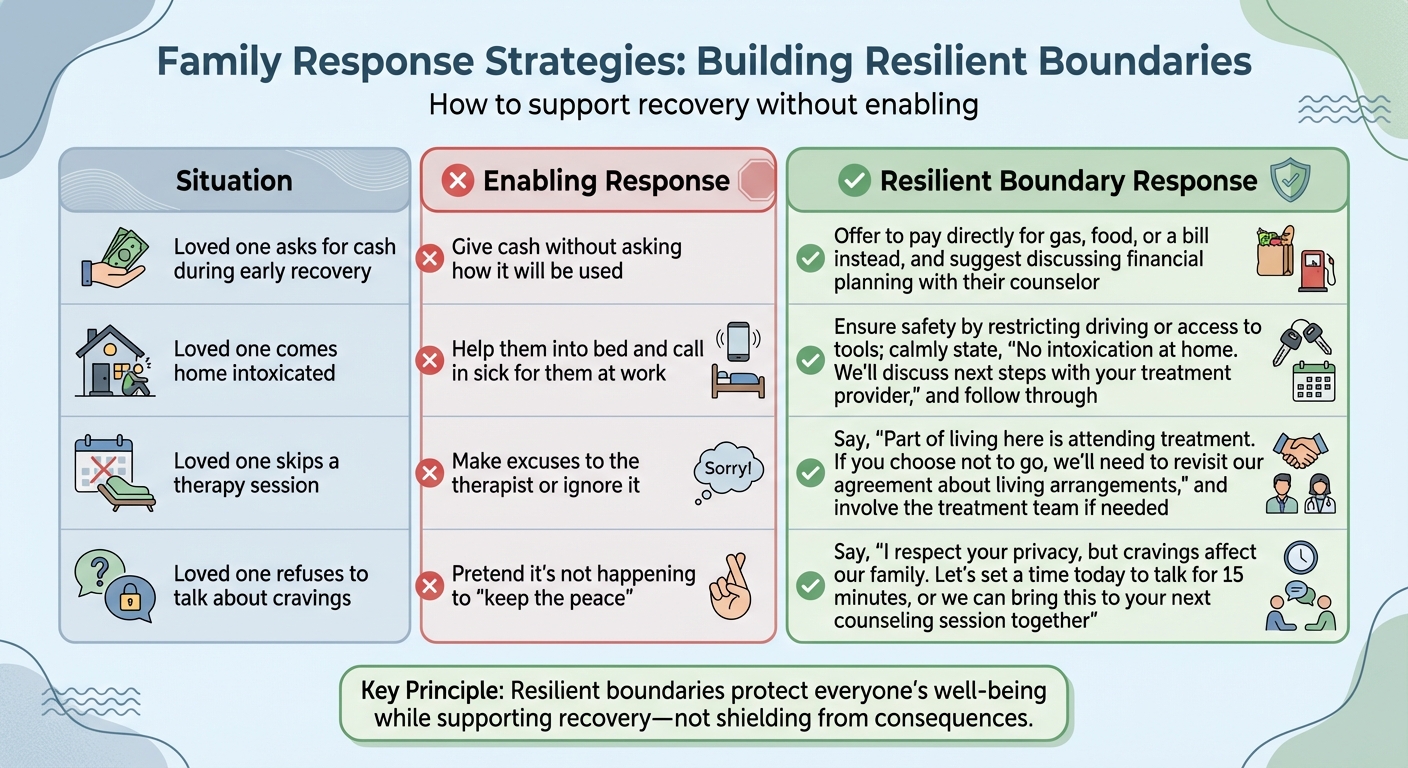
Family Response Strategies in Addiction Recovery: Enabling vs Resilient Boundaries
How to Manage Emotions During Crisis
When addiction disrupts your family life, it can feel like your stress levels are constantly on high alert. One way to regain control is through diaphragmatic breathing. This technique is simple but effective: inhale deeply for 4 seconds, then exhale slowly for 6 to 8 seconds. Repeat this for 5 to 10 minutes. This process activates your parasympathetic nervous system, which helps lower your heart rate and stress hormones, allowing you to think more clearly instead of reacting out of panic or anger[6].
Another helpful tool is grounding exercises, especially when emotions feel overwhelming. A popular method is the 5–4–3–2–1 technique: identify 5 things you can see, 4 you can touch, 3 you hear, 2 you smell, and 1 you taste. This practice draws your focus back to the present, pulling you out of spiraling thoughts about worst-case scenarios. By staying mindful, you can reduce anxiety and approach challenging situations with a calmer mindset, which is crucial when supporting a loved one during a relapse or trigger moment[8][7].
Maintaining a routine with consistent sleep, meals, and family check-ins can also help. These habits create stability, conserve your emotional energy, and keep your body regulated even when chaos arises[8][9].
Next, we’ll look at how effective communication can strengthen your family’s resilience even further.
Communication Techniques That Work
Effective communication can be a game-changer when managing family challenges. Start with reflective listening, which involves summarizing what you’ve heard before responding. For instance, saying, "You’re feeling pressured and scared about failing treatment", shows you understand their perspective and can immediately reduce defensiveness[2][5]. Over time, this approach can turn heated arguments into constructive conversations.
Another powerful tool is using "I" statements. These follow a simple structure: "I feel [emotion] when [specific behavior] because [impact]. I would like [specific request]." For example: "I feel anxious when you don’t come home by 10 p.m. because I worry you might be using. I would like you to text me if you’re going to be late." This keeps the focus on your feelings and needs, rather than assigning blame. Families can practice this technique during a daily 10–15 minute check-in, where each person shares their own "I feel… when… because… I need…" statement, and the listener reflects back what they heard before responding[2][3].
Communication strategies will evolve depending on the stage of recovery. In early recovery, focus on clear expectations and a lot of empathy. Ask open-ended questions like, "How can I support you this week?" and avoid overwhelming your loved one with long lectures. During the maintenance phase, shift to collaborative problem-solving, where your loved one takes an active role in setting goals. This approach encourages two-way conversations instead of constant monitoring[8][9]. After a relapse, it’s important to avoid shaming. Acknowledge your feelings, such as saying, "I’m hurt and scared", and then pivot quickly to solutions, like, "What’s the next step – calling your counselor or considering a higher level of care?" This keeps the focus on moving forward rather than dwelling on past mistakes[8][7].
Organizations like Growth and Change Counseling specialize in helping families practice these skills through therapy and coaching. Their programs, available in locations like Campbell, San Jose, Los Angeles, and Roseville, as well as via telehealth, turn these techniques into daily habits.
Clear communication is a cornerstone of resilience, but it works best when paired with healthy boundaries.
Setting Boundaries That Support Recovery
Alongside emotional management and open communication, setting clear and compassionate boundaries is essential. Healthy boundaries define what is acceptable while protecting everyone’s well-being. For example, a boundary might be: "We won’t allow drug use in the home" or "We’ll provide rides to treatment but won’t give cash that could be used for substances"[2]. These boundaries should be consistent yet respectful, emphasizing care: "Because I care about you, I can’t lie for you or give money without accountability"[2][5].
It’s also important to avoid enabling behaviors, which unintentionally support substance use by shielding your loved one from consequences. Examples include paying legal fines, covering up missed work, or giving money without oversight[2][5]. At the same time, avoid harsh responses like insults or threats, which can deepen feelings of shame and secrecy[8].
Here’s how different responses might look in common situations:
| Situation | Enabling Response | Harsh/Punitive Response | Resilient Boundary Response |
|---|---|---|---|
| Loved one asks for cash, "just $20", during early recovery | Give cash without asking how it will be used | Accuse them of lying and call them "a junkie" | Offer to pay directly for gas, food, or a bill instead, and suggest discussing financial planning with their counselor |
| Loved one comes home intoxicated | Help them into bed and call in sick for them at work | Scream, threaten to kick them out immediately without a plan | Ensure safety by restricting driving or access to tools; calmly state, "No intoxication at home. We’ll discuss next steps with your treatment provider", and follow through |
| Loved one skips a therapy session | Make excuses to the therapist or ignore it | Say, "You obviously don’t care, you’ll never change" | Say, "Part of living here is attending treatment. If you choose not to go, we’ll need to revisit our agreement about living arrangements", and involve the treatment team if needed |
| Loved one refuses to talk about cravings | Pretend it’s not happening to "keep the peace" | Demand full details on the spot and interrogate them | Say, "I respect your privacy, but cravings affect our family. Let’s set a time today to talk for 15 minutes, or we can bring this to your next counseling session together" |
Creating a boundary plan can help everyone stay on the same page. Each adult in the family should outline their non-negotiables (e.g., no substance use in the home, no driving while impaired), the support they’re willing to provide (e.g., rides to treatment, attending family therapy), and specific consequences (e.g., "If you use in the house, you’ll need to stay elsewhere for 24–72 hours, and we’ll inform your treatment team")[2]. Share this plan during a calm, scheduled conversation – not during a heated argument. Use "I" statements and reflective listening to reduce defensiveness. For financial boundaries, be specific: avoid shared credit cards, keep separate bank accounts, and ensure financial support comes with clear accountability.
These steps create a foundation for recovery while protecting the emotional health of everyone involved.
sbb-itb-596b85d
Resilience Strategies for Each Recovery Stage
Recovery is a journey that unfolds in phases, and each stage requires different approaches to support a loved one effectively. What works in the first month may not be enough to sustain progress years later. By understanding these stages, you can better align your actions and expectations with the evolving needs of your family. Below, we break down strategies tailored to each phase of recovery, building on the emotional skills discussed earlier.
Early Recovery: Getting Started with Treatment
The first 30–90 days of recovery are critical. During this time, create a written safety plan that includes overdose precautions – such as keeping naloxone easily accessible and ensuring everyone knows how to use it – along with emergency contacts, clear substance rules, and consistent routines. Simple structures like set wake/sleep times, shared meals, and brief 10-minute check-ins can help reduce stress for everyone involved[9][10]. Tools like a printed weekly calendar or a shared chore chart make these routines more tangible.
While offering support, it’s equally important to maintain healthy boundaries. Help in practical ways, such as providing transportation to treatment, listening without judgment when therapy is discussed, and encouraging medication adherence. However, avoid enabling behaviors like lying to employers, covering substance-related debts, or bending household rules to accommodate use[2].
Once safety and structure are in place, the focus can shift to building a foundation for long-term recovery.
Maintaining Recovery Over Time
After the initial crisis subsides, focus on creating a recovery-friendly home environment. This includes securing or removing alcohol and any misused medications, keeping naloxone accessible, and using non-shaming language when discussing recovery[10]. Celebrate milestones in sobriety with meaningful, low-cost activities – like a family outing or a special dinner – rather than rewards tied to substances[2][8].
Work together with your loved one to identify and address triggers. Conduct a "trigger audit" by listing specific people, places, objects, or times that are associated with past substance use. Then, brainstorm alternatives – such as taking different routes to avoid old hangouts or adjusting routines during high-risk periods like evenings or weekends[7][8]. Encourage social connections with peers in recovery and minimize chaotic or substance-focused gatherings at home[3].
Long-term resilience is built through consistent habits and shared values. Schedule regular family check-ins – like a 15-minute "family health" meeting every Sunday evening – and continue attending both individual and family therapy sessions[7][8]. Establishing rituals, such as annual sobriety celebrations, gratitude practices during meals, or volunteering together, can reinforce positive values beyond addiction. Reviewing these habits every few months with a therapist ensures they remain effective as life circumstances change[5][6].
As recovery progresses, it’s essential to have a plan in place for handling potential relapses.
Responding to Relapse with Strength
Addiction is a chronic condition, and relapses can happen. Preparing a response plan in advance can make all the difference[7][8]. Watch for early warning signs like sleep disruptions, secrecy, or missed appointments, and agree on steps to take if these signs appear. These steps might include increasing therapy sessions, contacting a sponsor or treatment provider, and outlining emergency actions – such as designating who will call the doctor or care for children if active use resumes[7].
Discuss the relapse plan during calm moments and involve treatment professionals to ensure it’s practical and effective. Keep the plan easily accessible to all key adults in the household[5][7]. Role-playing the plan in therapy can help family members stay calm and focused during high-stress situations[6].
If a relapse occurs, prioritize safety first. Assess immediate risks, such as overdose, self-harm, or unsafe driving. If necessary, call 911 and administer naloxone if opioids are involved[7][10]. Stabilize the environment by removing children from stressful situations, securing medications, and restricting vehicle access if needed[10]. Calmly reinforce pre-agreed boundaries, such as, "We cannot allow you to stay here if you are actively using and refuse treatment", and follow through consistently[2][6]. Contact the treatment team immediately to arrange urgent appointments and support a return to care[5][7]. Ensure that family members have access to their own support – whether through counseling or support groups – to process emotions like fear, grief, or anger and to prevent burnout[2][10].
The table below provides examples of how proactive, resilient responses differ from reactive ones:
| Situation | Reactive Response | Resilient Response |
|---|---|---|
| Discovering active use | Yell, call them names, threaten immediate expulsion | Speak calmly using "I" statements; refer to the pre-agreed relapse plan and boundaries |
| Loved one refuses to discuss what happened | Demand full details and interrogate on the spot | Express feelings (e.g., "I’m hurt and scared") and suggest calling a counselor to decide on next steps |
| Deciding whether to inform the treatment team | Hide the relapse to avoid embarrassment | Notify the treatment team immediately |
| Setting consequences | Completely cut off contact or provide no clear expectations | Limit contact while clearly outlining the expected changes and scheduling a follow-up discussion |
Panic, shame, or anger often lead to reactive responses, which can increase secrecy and substance use. In contrast, resilient responses – rooted in preparation and compassion – help ensure timely care and better outcomes[5][6][7][8]. As Brianna Martin, AMFT at Growth and Change Counseling, explains:
"There is no problem we can’t face together, no challenge too big to overcome, no relationship too broken to be repaired."[1]
Professional support plays a key role at every stage of recovery. Individual therapy during early recovery helps family members process emotions like shock or guilt, while family therapy clarifies roles and establishes healthy boundaries[2][5]. Over time, couples therapy – such as programs offered by The Marriage Rescue Institute at Growth and Change Counseling – can rebuild trust, address marital challenges, and reduce conflict patterns that might trigger substance use. Periodic family therapy sessions can also help refine strategies as recovery evolves.
Keeping Your Family Resilient Long-Term
Recovery is not a quick fix; it’s a lifelong journey that requires ongoing effort, patience, and dedication. It’s about nurturing relationships, prioritizing self-care, and working together toward shared goals. Building resilience means creating habits that not only help your family weather challenges but also provide room for growth and healing. Below are practical strategies to support emotional well-being and strengthen family bonds throughout the recovery process.
Rebuilding Family Relationships
Addiction often leaves behind broken trust and emotional wounds, and healing those takes time and intentional effort. Honest, regular conversations are key to rebuilding trust and mending past hurts. Studies show that families who engage professional support during recovery tend to achieve better outcomes[5][10].
For couples, addiction can severely strain intimacy and connection, requiring specialized care to repair. Couples counseling is an effective way to rebuild trust and navigate conflicts. For instance, Growth and Change Counseling offers family therapy and a focused 12-week couples coaching program through The Marriage Rescue Institute, designed for relationships in crisis. As John Mark Kane, LMFT, puts it:
"You are a relational being, wired for healthy relationship. The more relationally healthy people are, the less anxious, addicted, and depressed they are."[1]
Creating shared goals is another way to strengthen family ties. Collaboratively setting milestones – like celebrating sobriety anniversaries, planning family outings, or starting new traditions – can help shift the family focus from crisis management to building a positive future. These collective efforts foster unity and reinforce the progress you’ve made together[2][5].
Of course, maintaining healthy relationships also depends on taking care of yourself as an individual.
Taking Care of Yourself as a Family Member
Supporting someone in recovery can be draining, both emotionally and physically. If you’re not careful, caregiver burnout can leave you feeling overwhelmed and less effective in providing support. That’s why prioritizing your own well-being is essential. Neglecting self-care can lead to stress and enabling behaviors, which can actually hinder recovery success[2][3].
Make time for personal hobbies, stay connected with friends, and consider individual therapy to process your emotions. Support groups like Al-Anon or Nar-Anon are invaluable for connecting with others who understand the challenges you’re facing and can offer practical advice[2][3]. Don’t overlook your physical health either – regular check-ups and maintaining a healthy work-life balance are crucial for staying grounded.
Be mindful of burnout warning signs like constant fatigue, irritability, or trouble sleeping, and take action to restore balance when needed[2][3][6]. Caring for yourself isn’t just about you – it ensures you have the energy and perspective to continue supporting your loved one.
Planning for Your Family’s Future
Once recovery habits are established, long-term resilience comes from planning for stability and growth. This includes financial planning, personal development, and setting shared goals. Family meetings can be a great way to outline achievable milestones, such as creating a budget to tackle debt (e.g., allocating $1,500 a month for repayments), scheduling therapy sessions, or making home adjustments to support sobriety[2][3].
Collaborative planning ensures everyone is on the same page and promotes accountability. Set goals that reflect your family’s recovery values, such as pursuing education, advancing careers, or starting new traditions. As Brianna Martin, AMFT at Growth and Change Counseling, wisely points out:
"There is no problem we can’t face together, no challenge too big to overcome, no relationship too broken to be repaired."[1]
Conclusion: Building a Resilient Family Through Recovery
Creating a resilient family during addiction recovery requires practical skills, meaningful connections, and timely support. Resilience isn’t something you’re born with – it’s a set of habits and skills you can develop. Emotional regulation, clear communication, healthy boundaries, and consistent self-care form the foundation. When families get involved in the recovery process, it enhances treatment engagement, reduces the risk of relapse, and nurtures mental well-being.
The tools highlighted in this guide – managing crisis reactions, using "I" statements, setting boundaries, and responding to relapse with structure instead of panic – are meant for everyday use. Addiction is a chronic medical condition, which means setbacks may occur even when everything seems on track. What truly counts is how your family responds. Approaching challenges with compassion, re-establishing boundaries, and recommitting to treatment creates a supportive environment, free from shame or blame. At the same time, prioritizing personal well-being strengthens the family as a whole.
Self-care plays a key role here. Joining support groups like Al-Anon or Nar-Anon, seeking individual therapy, and maintaining personal routines can help family members avoid burnout while offering sustainable support. Professional services, such as those provided by Growth and Change Counseling, offer family therapy, individual counseling, and specialized couples work through The Marriage Rescue Institute. Their solutions-focused approach, available locally and via telehealth, emphasizes relationship-centered care. Research confirms that structured support like this improves recovery outcomes.
Taking practical, immediate steps can solidify your family’s resilience. Begin this week by scheduling a family meeting to discuss shared goals, reaching out to a therapist or support group, or choosing one self-care habit for each family member to adopt. These actions build on the skills introduced in this guide, proving that change is always within reach. As Brianna Martin, AMFT at Growth and Change Counseling, says:
"No relationship too broken to be repaired."
Common Questions About Recovery at Growth and Change Counseling
How does family therapy support addiction recovery?
Family therapy is a key part of addiction recovery, helping to improve communication, rebuild trust, and tackle unresolved family issues that might impact the healing process. It creates a space where families can work together, fostering a supportive environment that encourages accountability and emotional growth.
When loved ones are actively involved in recovery, family therapy strengthens bonds and provides everyone with practical tools to handle stress, set healthy boundaries, and support lasting recovery.
What are some practical ways families can communicate better during addiction recovery?
Effective communication plays a crucial role in addiction recovery, and it all begins with active listening. This means giving your undivided attention, showing empathy, and resisting the urge to interrupt. When expressing your feelings, try using "I" statements – for example, “I feel worried when…” – to share your emotions without sounding accusatory. This approach can help prevent defensiveness and encourage open dialogue.
Staying calm, even during tough conversations, is essential. Emotions may run high, so practicing patience is just as important. Setting clear boundaries and creating a safe, judgment-free environment can help establish trust and encourage honest communication. Compassion and consistency go a long way in strengthening relationships and supporting recovery during this challenging journey.
What should families do if a loved one relapses during addiction recovery?
If a relapse happens, families should respond with compassion and patience, steering clear of judgment. Begin by having an open and calm conversation about what may have led to the relapse, and reassure your loved one that you’re there to support their recovery.
It might be helpful to revisit recovery goals together and, if needed, consult a professional to adjust treatment plans. Family therapy or counseling can also play a key role in building emotional strength and fostering better communication, helping the whole family stay united as a source of encouragement during this difficult period.
Related Blog Posts
- How Family Therapy Restores Trust After Addiction
- Parent Coaching with Faith in Addiction Recovery
- Boundaries for Addiction Recovery and Healthy Love
- Family Systems Model for Addiction Recovery
