Supporting a partner through addiction recovery is emotionally taxing and requires balancing care with clear boundaries. You may face challenges like emotional burnout, rebuilding trust after betrayal, and managing the fear of relapse. Therapy can help you navigate these issues by teaching practical tools for communication, boundary-setting, and emotional resilience.
Key points to consider:
- Burnout: Emotional exhaustion from constant worry and responsibility is common. Therapy can help you process feelings and set boundaries to protect your well-being.
- Support vs. Enabling: Learn to differentiate between helping your partner and enabling harmful behaviors. Boundaries are essential for both your health and their recovery.
- Rebuilding Trust: Addiction often damages trust with dishonesty and relapse. Therapy can guide you through small, consistent steps to repair and strengthen your relationship.
- Fear of Relapse: Relapse is often part of recovery. A relapse prevention plan and therapy can help you manage anxiety and prepare for potential setbacks.
Therapy options like Behavioral Couples Therapy (BCT) and Cognitive Behavioral Therapy (CBT) are effective for improving communication, setting boundaries, and fostering mutual accountability. Prioritizing your own well-being is just as important as supporting your partner’s recovery.
Can Your Relationship Survive the Addiction Recovery Process?
Emotional Exhaustion and Burnout
Supporting a partner through addiction recovery can be an emotional rollercoaster, filled with moments of hope followed by disappointment. This back-and-forth often stirs up feelings like resentment, confusion, guilt, and even chronic anger [6][4]. Many partners find themselves trapped in the "fixer" mindset, believing they can somehow control or cure their loved one’s addiction. When setbacks like relapses occur, the weight of that self-imposed responsibility can feel unbearable [4]. Over time, this emotional strain builds up, leading to clear signs of burnout.
Signs of Burnout in Partners
Burnout doesn’t happen overnight – it creeps in gradually. It often starts with physical exhaustion and irritability, followed by withdrawal from activities that once brought joy [6][7]. You might find yourself pulling away from friends and family, feeling isolated and alone [5][6]. For many, this shift is accompanied by a loss of identity, as their lives become consumed by the addiction and its impact. This can lead to codependent behaviors, such as struggling to set boundaries, saying "no", or constantly trying to please others [6][7].
Interestingly, the concept of codependency was first identified in the families of individuals with alcohol use disorder, showing just how common this pattern is [7]. While these behaviors often come from a place of care, they can fast-track emotional exhaustion and make recovery even more challenging – for both you and your partner.
Recognizing these signs is an important first step toward reclaiming your emotional well-being and finding healthier ways to cope.
Building Emotional Resilience Through Therapy
Therapy offers a lifeline for partners navigating the emotional toll of addiction recovery. It provides a safe space to process feelings like anger, shame, and isolation while helping you understand that your partner’s addiction does not define them – or you [8][5][4].
Candice Rasa, LCSW, Clinical Director of the Beach House Center for Recovery, highlights the importance of boundaries in this process:
Giving yourself permission to have healthy boundaries is itself a way to support your spouse in their recovery [5].
In therapy, you can learn practical communication techniques, such as using "I feel" and "I need" statements instead of blame-filled "you" statements [5]. These strategies encourage connection and reduce defensiveness. Therapy also helps identify enabling behaviors that drain your energy and prevent your partner from taking responsibility for their recovery [4].
Growth and Change Counseling offers individual therapy sessions tailored to help partners create personalized coping strategies and maintain emotional balance throughout this challenging journey. By focusing on your own needs and boundaries, you can build the resilience needed to support both yourself and your partner in a healthier, more sustainable way.
Support vs. Enabling: Finding the Balance
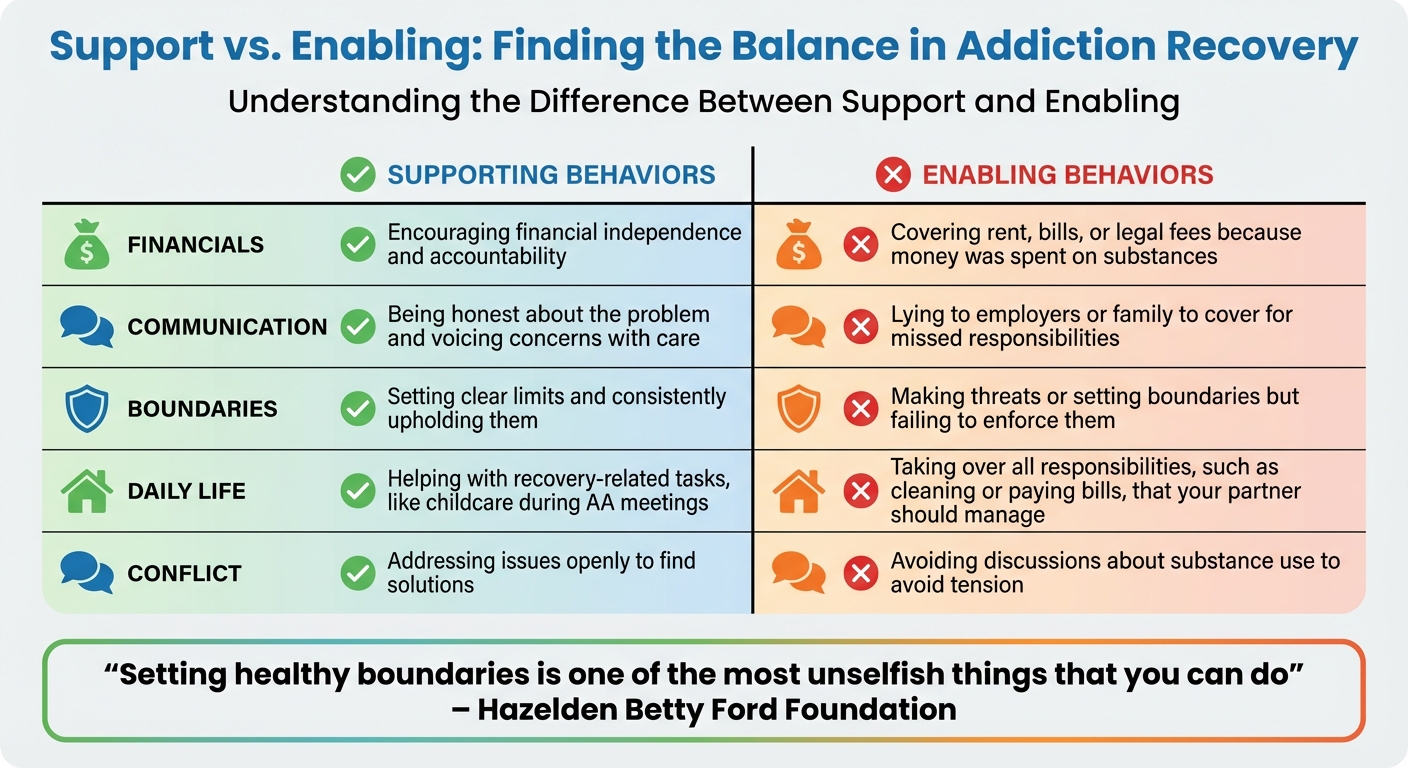
Supporting vs Enabling Behaviors in Addiction Recovery
Supporting a partner through recovery is a delicate dance. It requires knowing when you’re genuinely helping and when you might unintentionally be enabling harmful behaviors. The distinction between these two is key – not just for your partner’s recovery, but for your own mental and emotional well-being. This is where boundary-setting, often explored in therapy, becomes essential.
What Support and Enabling Look Like
Enabling occurs when you shield your partner from the natural consequences of their substance use. It often involves taking over responsibilities or making excuses, which can inadvertently allow the addiction to continue unchecked [9][12]. Charity Anderson, MPS, CPS, explains:
Helping a person with an alcohol use disorder may involve you setting clear boundaries and following through on them… enabling may consist of you purchasing your loved one’s drug of choice for them [9].
On the other hand, support means offering help that actively promotes recovery. This could include encouraging treatment, recognizing progress, and allowing your partner to face the outcomes of their decisions. As Emily Guarnotta, PsyD, notes:
When a person sees that their behavior has consequences, they are more likely to change [12].
Here’s a breakdown of how these behaviors differ:
| Action Category | Supporting Behaviors | Enabling Behaviors |
|---|---|---|
| Financials | Encouraging financial independence and accountability [12]. | Covering rent, bills, or legal fees because money was spent on substances [9][11]. |
| Communication | Being honest about the problem and voicing concerns with care [12]. | Lying to employers or family to cover for missed responsibilities [9][11]. |
| Boundaries | Setting clear limits and consistently upholding them [9][14]. | Making threats or setting boundaries but failing to enforce them [13]. |
| Daily Life | Helping with recovery-related tasks, like childcare during AA meetings [9]. | Taking over all responsibilities, such as cleaning or paying bills, that your partner should manage [9]. |
| Conflict | Addressing issues openly to find solutions [1]. | Avoiding discussions about substance use to avoid tension [9]. |
Setting Healthy Boundaries
Recognizing the difference between support and enabling is the first step toward setting boundaries that protect both you and your partner. Boundaries aren’t about controlling your partner – they’re about safeguarding your own well-being [10][14]. As the Hazelden Betty Ford Foundation puts it:
Setting healthy boundaries is one of the most unselfish things that you can do [13].
Therapy can guide you in creating clear, enforceable limits. For example, you might decide not to engage with your partner when they’re under the influence, establish a substance-free home, or stop bailing them out financially [10][14][15]. The critical part? Following through. Safe & Sound Treatment explains:
Boundaries aren’t ultimatums. You’re telling your partner what kind of behavior you accept, not telling them what to do [10].
Evidence-based methods like CRAFT (Community Reinforcement and Family Training) can teach you how to communicate positively and encourage treatment without resorting to threats [13]. Cognitive-Behavioral Therapy (CBT) can help you identify and change thought patterns that lead to enabling behaviors [12]. Another valuable concept is "detaching with love" – allowing your partner to face their own challenges while you prioritize your healing and self-care [13][3].
Keri George, Chief Nursing Officer at Granite Recovery Centers, offers a powerful reminder:
The supporting partner needs to let the addicted individual take the recovery journey and own it [15].
Growth and Change Counseling provides individual and couples therapy to help partners navigate these challenging dynamics. Through personalized sessions, you can learn how to support your partner’s recovery while protecting your own emotional health.
Rebuilding Trust After Betrayal and Relapse
Once healthy boundaries are in place, the next step in recovery is working to rebuild trust. Addiction often tears at the very fabric of a relationship. With dishonesty, broken promises, and relapses becoming part of daily life, trust can erode quickly and profoundly. But with patience, effort, and professional support, repairing that trust isn’t out of reach.
How Relapse Impacts Trust
When a partner relapses, it can feel like a deep betrayal, leaving you feeling drained of time, energy, and hope. As the Compassion Recovery Center explains:
Addiction introduces chaos, unpredictability, secrecy, and often, dishonesty into relationships. Promises are broken, responsibilities are neglected, and actions contradict words time and again [16].
This kind of damage can cut to the core. Deception, secrecy, and financial issues – such as hidden spending on substances or unpaid bills – can create an environment where trust is replaced by constant doubt. This cycle often leads to resentment and instability within the family. Statistics reveal that substance abuse is present in 40% to 60% of intimate partner violence cases [18].
Relapse can also trigger what’s known as betrayal trauma. This trauma activates the brain’s amygdala, releasing stress hormones like adrenaline and cortisol. The result? A fight-or-flight response that can show up as hypervigilance, intrusive thoughts, or even emotional numbness [21]. As Dennis Ortman, Ph.D., puts it:
The word trauma means "wound", and the betrayed partner has been wounded to the core of his/her being by their partner’s betrayal of trust [21].
Because of these profound effects, targeted therapy becomes essential for healing.
Therapy Approaches for Rebuilding Trust
Rebuilding trust doesn’t happen overnight. It’s a process, requiring consistent, small steps over time. Tarzana Recovery emphasizes this point:
Trust isn’t restored with a single promise – it’s rebuilt through small, daily actions that reinforce reliability [17].
Several therapeutic methods have been shown to help, including:
- Behavioral Couples Therapy (BCT): Studies show that BCT can lead to reduced substance use and improved relationship satisfaction compared to individual counseling alone [18]. This approach helps couples process betrayal, share hidden truths, and work toward safety and transparency [16][21].
- Cognitive Behavioral Therapy (CBT): This method focuses on identifying and challenging negative thought patterns that contribute to untrustworthy behavior [16].
- Trauma-Informed Therapy: For the betrayed partner, this therapy addresses PTSD-like symptoms caused by betrayal trauma [21].
- 12-Step Programs: The "making amends" process provides a structured way for individuals in recovery to apologize and begin repairing the harm caused by their addiction [19].
For couples facing severe challenges, Growth and Change Counseling offers a 12-week intensive program through The Marriage Rescue Institute. This program uses structured communication exercises, boundary-setting techniques, and evidence-based practices to help couples rebuild their relationship – one honest conversation and consistent action at a time.
sbb-itb-596b85d
Dealing with Fear of Relapse
After beginning to rebuild trust, one major hurdle remains: the persistent fear of relapse. Even as trust starts to mend, the anxiety of a potential setback can feel overwhelming. You might catch yourself constantly on edge, looking for warning signs, questioning your partner’s whereabouts, or worrying that one difficult moment could undo all the progress you’ve made together. This heightened vigilance – sometimes called "hovering" – can take a serious emotional toll, especially after the chaos and heartbreak addiction often brings.
The fear doesn’t stop at substance use. Many partners worry about slipping back into unhealthy relationship patterns or enabling behaviors. There’s also the very real concern about whether the relationship can survive another relapse, not to mention fears about your partner’s safety or how they might act during a relapse episode.
Relapse as Part of the Recovery Process
One of the most valuable lessons therapy offers is learning to reframe how you view relapse. Nitara Osbourne from American Addiction Centers puts it plainly:
Relapse is simply part of the process. [20]
Relapse doesn’t usually happen out of the blue – it tends to unfold in stages. Recognizing early warning signs, like increased isolation or irritability, can create opportunities for intervention before things spiral. Interestingly, about 30% of people dealing with alcohol use disorders also have an underlying mental health condition [22]. This underscores the importance of addressing these deeper issues alongside addiction. By understanding relapse as a symptom of a larger struggle, it becomes easier to separate your partner from their disease, allowing you to maintain empathy even during setbacks.
Developing a Relapse Prevention Plan
Therapy offers practical tools to ease this fear and build a sense of shared responsibility. A key step is creating a relapse prevention plan – a roadmap that identifies potential triggers, such as specific social situations or work-related stress, and outlines strategies to handle them effectively.
A strong plan also addresses tough questions in advance: What happens if relapse occurs? Does it mean the relationship ends? Who can be contacted in an emergency? Where can your partner turn for immediate support? Approaches like Behavioral Couples Therapy often include "recovery contracts", which outline daily recovery activities and mutual expectations. Research shows these contracts can significantly reduce substance use compared to individual therapy alone.
Using "I" statements – like saying, "I feel scared when I don’t hear from you for hours" – can help you communicate your concerns without putting your partner on the defensive. Therapy can also introduce relaxation techniques and cognitive strategies to help both partners manage stress and build healthier coping mechanisms. A clear relapse prevention plan, combined with these tools, can ease the constant fear of relapse and provide a solid foundation for continued recovery.
How Therapy Supports Partners During Recovery
Therapy plays a key role in helping partners navigate the emotional challenges of recovery and rebuild trust. It provides practical tools to address issues like trust, communication breakdowns, and fears of relapse.
Evidence-Based Therapy Approaches
Behavioral Couples Therapy (BCT) is one of the most effective methods for couples dealing with addiction. Studies reveal that 50% of men participating in BCT stayed abstinent, compared to just 30% in individual-focused treatments [23]. This therapy focuses on two goals: supporting sobriety and improving communication between partners.
BCT uses recovery contracts to strengthen commitment to sobriety and rebuild trust with daily affirmations [23][25]. It also emphasizes communication skills, such as reflective listening (repeating back what you hear to confirm understanding) and using "I" statements to share feelings without sparking defensiveness [24][25].
Another key aspect of BCT is shifting focus from past mistakes to present progress. Exercises like daily recognition of positive behaviors help couples move forward [23][25]. A year after completing BCT, couples reported 67% abstinent days, compared to 45% for those in individual treatment [23].
For couples facing severe challenges, intensive programs like those at The Marriage Rescue Institute offer structured, 12-week coaching to provide additional support.
Therapy Services at Growth and Change Counseling
Growth and Change Counseling incorporates evidence-based methods like BCT into its services, tailoring them to meet the specific needs of partners. Whether you’re dealing with substance abuse, behavioral addictions, or the aftermath of betrayal, their therapists are equipped to help.
Their services are accessible both in-person at locations in Campbell, San Jose, Los Angeles, and Roseville, and through telehealth across California. Individual sessions with a Licensed Marriage and Family Therapist (LMFT) cost $200 for 45 minutes, while sessions with an Associate Marriage and Family Therapist (AMFT) are $150. Sliding scale options start at $100.
In addition to couples therapy, they offer individual therapy to help you process your emotions, family therapy to address the impact on children, and parent coaching for those whose parenting has been affected by addiction. These comprehensive services recognize that recovery touches every part of life, ensuring you have the support you need.
Conclusion
Supporting a partner through addiction recovery is no small task. It often means dealing with emotional exhaustion, figuring out the fine line between supporting and enabling, rebuilding trust, and coping with the constant fear of relapse. These challenges can feel overwhelming, which is why seeking professional guidance is so important.
Therapy provides a structured and effective way to navigate these complexities. Evidence-based approaches, such as Behavioral Couples Therapy, have been shown to create what researchers call a "virtuous cycle" – where improvements in the relationship directly contribute to maintaining sobriety [27]. Studies even suggest that couples-focused therapies result in better long-term abstinence rates compared to individual treatment alone [2].
It’s crucial to remember: you didn’t cause the addiction, you can’t cure it, and you can’t control it [28][29]. What you can do is prioritize your own well-being while learning how to support your partner in a healthy way. Therapy can help you separate the person you love from their addiction, set boundaries to protect yourself from burnout, and develop communication tools to prevent minor disagreements from escalating into major setbacks.
For example, specialized services like those offered by Growth and Change Counseling provide a range of support options. From couples counseling and individual therapy to intensive 12-week programs through The Marriage Rescue Institute, they offer resources tailored to your needs. With locations across California and telehealth services, help is always within reach.
Recovery isn’t a quick fix – it’s a lifelong journey [26]. But with the right therapeutic support, you and your partner can work toward building a healthier, more resilient relationship.
Finding Professional Support at Growth and Change Counseling
How can I support my partner in recovery without enabling their addiction?
Supporting a partner through recovery means helping them own up to their actions, not shielding them from the fallout of their addiction. Enabling happens when you cover for missed responsibilities, hand over money that might fuel their addiction, or make excuses for their behavior. While these actions may come from a place of love, they can inadvertently strengthen the addiction. On the other hand, true support involves setting firm boundaries, promoting accountability, and showing compassion – without neglecting your own mental and emotional health.
Here are some practical ways to provide healthy support:
- Establish clear boundaries: For instance, don’t provide money or allow substance use in your home.
- Encourage professional help: Recommend therapy or treatment programs, and celebrate even the smallest milestones in their journey.
- Let natural consequences unfold: Allow your partner to experience the results of their choices, which can help them take responsibility.
- Prioritize self-care: Join a support group or consider therapy to protect your well-being and prevent burnout.
For couples seeking structured guidance, Growth and Change Counseling offers support through The Marriage Rescue Institute. This 12-week program focuses on rebuilding trust, setting boundaries, and working together to navigate recovery.
How can I rebuild trust with my partner after a relapse?
Rebuilding trust after a relapse takes time, effort, and a genuine commitment to change. The first step is to take full responsibility for your actions. Acknowledge the relapse and its impact on your partner without making excuses or minimizing what happened. Honest and open communication is essential – be transparent about your progress and willing to answer your partner’s questions.
Trust is rebuilt through consistent, reliable actions. This means sticking to your recovery plan, maintaining sobriety, and being emotionally present for your partner. These daily efforts show your commitment to making things right. Seeking help through individual and couples therapy can also be incredibly helpful. Therapy offers a safe and supportive space for both of you to process emotions, rebuild trust, and work toward a stronger, healthier relationship.
How can therapy help me cope with the fear of my partner relapsing?
Therapy can equip you with practical tools to manage the fear of your partner relapsing. For example, cognitive-behavioral therapy (CBT) can help you identify and challenge catastrophic thoughts like, "If they relapse, everything will fall apart." Instead, you’ll learn to reframe these into more balanced, realistic perspectives. On top of that, mind-body relaxation techniques – like deep breathing or guided imagery – can ease the physical tension that often accompanies anxiety.
A therapist can also help you develop a personalized relapse prevention plan. This plan might include recognizing early warning signs, outlining clear action steps, and building effective coping strategies. With a structured approach like this, fear can shift into a sense of readiness and control.
Couples-focused therapy provides a supportive environment to discuss boundaries, expectations, and mutual support strategies. Learning how to express concerns constructively while protecting your emotional well-being allows you to be there for your partner without losing your own resilience. Growth and Change Counseling specializes in guiding couples and individuals through these challenges, helping to strengthen relationships and build confidence on the journey to recovery.
Related Blog Posts
- Addiction Recovery and Marriage Communication
- Boundaries for Addiction Recovery and Healthy Love
- Addiction Recovery and Marriage: What Works
- 7 Tips for Supporting a Partner After Relapse
