Parenting while managing addiction recovery is challenging, often straining family relationships and increasing stress. Over 8 million children live with parents who struggle with substance use, and 20% of adults in treatment live with their kids. This creates cycles of conflict, stigma, and fear that can hinder recovery. Emotional wounds and unmet needs often drive these patterns.
Emotionally Focused Therapy (EFT) helps families rebuild emotional bonds, addressing addiction as a response to unresolved emotional pain. EFT focuses on three stages:
- De-escalation: Reducing family conflict by identifying emotional triggers and creating calmer interactions.
- Restructuring Bonds: Strengthening relationships through honest communication and addressing attachment needs.
- Consolidation: Teaching families tools for long-term emotional connection and conflict resolution.
EFT is compared to two other methods:
- Behavioral Marital Therapy (BMT): Focuses on practical recovery tools, like "Recovery Contracts", and improving family interactions.
- Multidimensional Family Therapy (MDFT): Addresses addiction across family dynamics, parenting, and external systems like schools.
Each approach has strengths:
- EFT: Builds emotional connections and secure attachments.
- BMT: Provides structured strategies for recovery and parenting.
- MDFT: Tackles addiction broadly, benefiting families with complex challenges.
EFT, especially when integrated into family therapy, helps parents improve caregiving by addressing emotional barriers, offering tools to strengthen bonds, and supporting long-term recovery.
Treating Addictions with EFT Emotionally Focused Therapy featuring EFT Trainer Michael Barnett
1. Emotionally Focused Therapy (EFT)
Emotionally Focused Therapy (EFT) offers a way to address the challenges families face during addiction recovery by focusing on rebuilding emotional bonds. These connections are key to effective parenting. The therapy unfolds in three stages, guiding families from moments of crisis to meaningful, lasting change. With 70 million children and adolescents living in households where at least one parent struggles with alcohol or substance dependency [4], this approach holds immense importance.
De-escalation in Addiction Contexts
The first step in EFT is all about reducing family conflict. Therapists work to identify repetitive behaviors – like a parent’s constant questioning or a child’s tendency to withdraw – which often serve as protective responses to avoid deeper emotional pain [1]. By focusing on these patterns, therapists help uncover the primary emotions, such as fear or sadness, that fuel secondary reactions like anger [1]. This process opens the door to empathy and reduces immediate conflict.
To create a calmer environment, therapists use the RISSSC Protocol – an approach that emphasizes Repetition, Images, Simple words, Soft tones, Slow pacing, and Client’s words [1]. This method slows down interactions, enabling family members to reflect on their emotions rather than reacting impulsively. As conflict subsides, the groundwork is laid for the next stage: redefining family bonds.
Restructuring Family Bonds
After de-escalating conflict, the focus shifts to strengthening family connections. This phase involves structured exercises where family members share honest, vulnerable messages with one another [1]. These interactions help the family move away from defensive behaviors and toward being more responsive to each other’s needs. For parents in recovery, this means learning how to meet their children’s attachment needs more effectively.
Research has shown that transitioning from insecure to secure attachment styles through EFT can significantly improve recovery outcomes [5]. Secure attachment plays a critical role in recovery by engaging the brain’s dopamine-driven reward systems [4].
"The goal is to modify family relationships in the direction of increased accessibility and responsiveness, thus helping the family create a secure base for children to grow and leave from." – Sue Johnson [1]
This phase sets the stage for families to apply these new skills in their everyday lives.
Consolidation for Long-Term Parenting
The final stage focuses on creating lasting positive changes. Families learn how to address future conflicts by viewing them through an attachment-focused lens, building a "secure base" for children [1]. A key aim is to equip families with the tools to repair emotional disconnects on their own, even after therapy ends [1]. At this point, the therapist steps back, affirming the family’s ability to resolve conflicts using their newly developed communication skills. This consolidation phase ensures the lessons from therapy become a permanent part of family life, supporting both effective parenting and sustained recovery.
2. Behavioral Marital Therapy (BMT)
Behavioral Marital Therapy (BMT), also known as Behavioral Couples Therapy (BCT) in addiction treatment, is designed to address the connection between relationship struggles and substance use. The approach works by creating a "virtuous cycle" that promotes recovery while strengthening family bonds [2].
De-escalation in Addiction Contexts
One of BMT’s key strategies is reducing immediate conflict through structured agreements called Recovery Contracts. Couples engage in a daily "Sobriety Trust Discussion", where the partner in recovery commits to staying abstinent for the next 24 hours, and their spouse offers verbal support [6]. This straightforward ritual helps minimize arguments about past substance use or fears of relapse. Additionally, couples agree to limit discussions about drug or alcohol use to therapy sessions, preventing these conversations from becoming triggers for relapse [6].
The results are promising. A study involving male patients showed that only 8% of those participating in BCT faced drug-related arrests in the year after treatment, compared to 28% receiving individual counseling [6]. These agreements not only reduce conflict but also set the stage for rebuilding positive interactions – an essential focus of the next phase of BMT.
Restructuring Family Bonds
Once conflicts subside, BMT shifts toward strengthening the relationship through positive interactions. Couples participate in exercises like "Catch Your Partner Doing Something Nice" and plan "Caring Days", where they intentionally perform kind acts for each other [6][2]. These activities, combined with communication techniques like paraphrasing and validation, help replace negative patterns with supportive ones. This approach also equips couples to handle daily parenting challenges more effectively [6].
For families with children, Parenting Skills Behavioral Couples Therapy (PSBCT) adds six sessions focused on parenting strategies. Research shows this addition improves children’s adjustment and overall family dynamics [2]. By fostering these positive changes, couples can better support recovery and maintain parenting stability.
Consolidation for Long-Term Parenting
The final phase of BMT emphasizes sustaining progress. Therapists work with couples to develop a Continuing Recovery Plan that includes specific steps for preventing relapse [6]. Couples also schedule "Shared Rewarding Activities" – enjoyable experiences they may have neglected during active addiction [6].
The impact of BCT is clear: participants achieved 67% days abstinent compared to 45% among those in individual therapy. Additionally, only 13% required inpatient care, compared to 35% in individual treatment [6]. These tools provide families with practical ways to maintain sobriety and nurture their parenting roles well beyond the therapy sessions.
3. Multidimensional Family Therapy (MDFT)
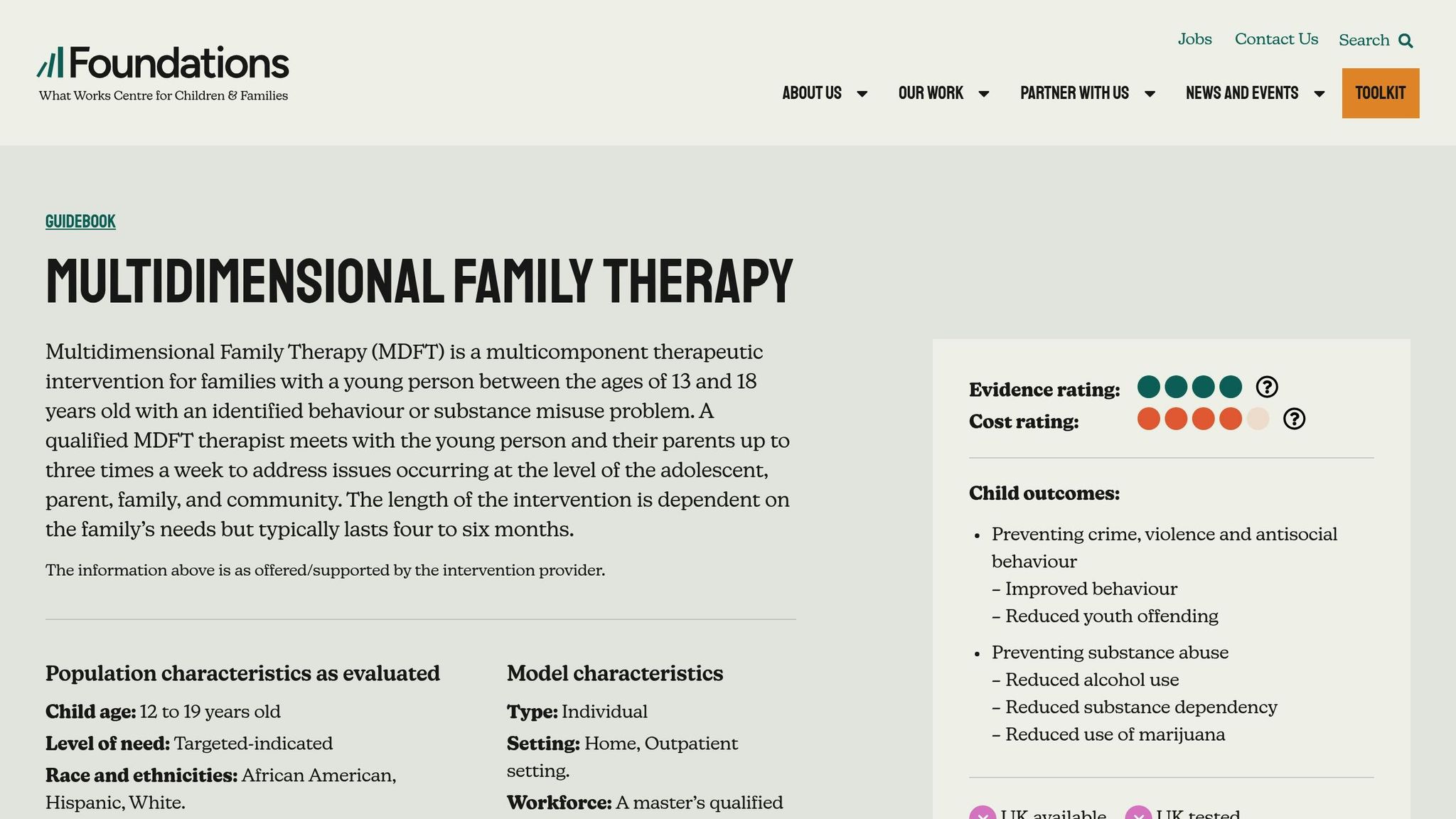
Multidimensional Family Therapy (MDFT) is designed to address the complexities of addiction within families by engaging adolescents, parents, the family dynamic, and external influences like schools or the justice system [2][8]. This approach acknowledges that addiction doesn’t exist in isolation – it impacts every thread of family life. To tackle this, MDFT coordinates efforts across multiple areas.
"The multidimensional approach suggests that behavior change occurs via multiple pathways, in different contexts, and through diverse mechanisms." – Substance Abuse and Mental Health Services Administration (SAMHSA) [2]
De-escalation in Addiction Contexts
MDFT begins by fostering individual therapeutic relationships with each family member before bringing everyone together. During Stage I, known as Foundation Building, therapists use family crises as opportunities to spark change [2][9]. Individual sessions offer a safe space for parents and teens to confront sensitive topics, which helps reduce tension and conflict when the family meets as a group.
Parents receive focused attention in two ways: as individuals navigating their own struggles and as caregivers managing the challenges of their adolescent’s substance use [8]. This dual focus ensures their needs are addressed while preparing them for their role in family recovery.
Restructuring Family Bonds
Stage II, or Activation, is where transformation begins. Parents are coached to handle difficult conversations in real-time, while adolescents are encouraged to open up about their thoughts and feelings. At the same time, parents learn to set boundaries and monitor their teen’s behavior effectively. This phase typically involves 16–25 sessions spread over 4–6 months [2].
MDFT’s influence doesn’t stop at the family unit. Therapists actively help families navigate external systems, such as advocating for their child in school or working with probation officers when needed [8]. This broader, community-focused approach ensures that the positive changes made at home are supported and reinforced in other areas of life. Studies show that families maintain these improvements over time, with MDFT offering an alternative to residential treatment for some teens [2].
Consolidation for Long-Term Parenting
Stage III, called Seal the Change and Exit, focuses on sustaining progress. This phase prioritizes meeting parents’ individual needs, enabling them to maintain their caregiving roles more effectively [8]. By shifting from reactive parenting to proactive, evidence-based approaches, families can reshape their daily routines and interactions for lasting change.
"Progress in one area or with one person has implications for and use in others." – Howard A. Liddle, University of Miami Miller School of Medicine [8]
The gains made in individual sessions are reinforced during family meetings and supported by external systems like schools. This interconnected framework creates a safety net that helps families avoid relapse and maintain healthier dynamics long after therapy ends. By integrating these systemic efforts, MDFT complements the attachment-based focus of Emotionally Focused Therapy (EFT), laying the groundwork for how Growth and Change Counseling incorporates EFT into family recovery.
sbb-itb-596b85d
Advantages and Disadvantages
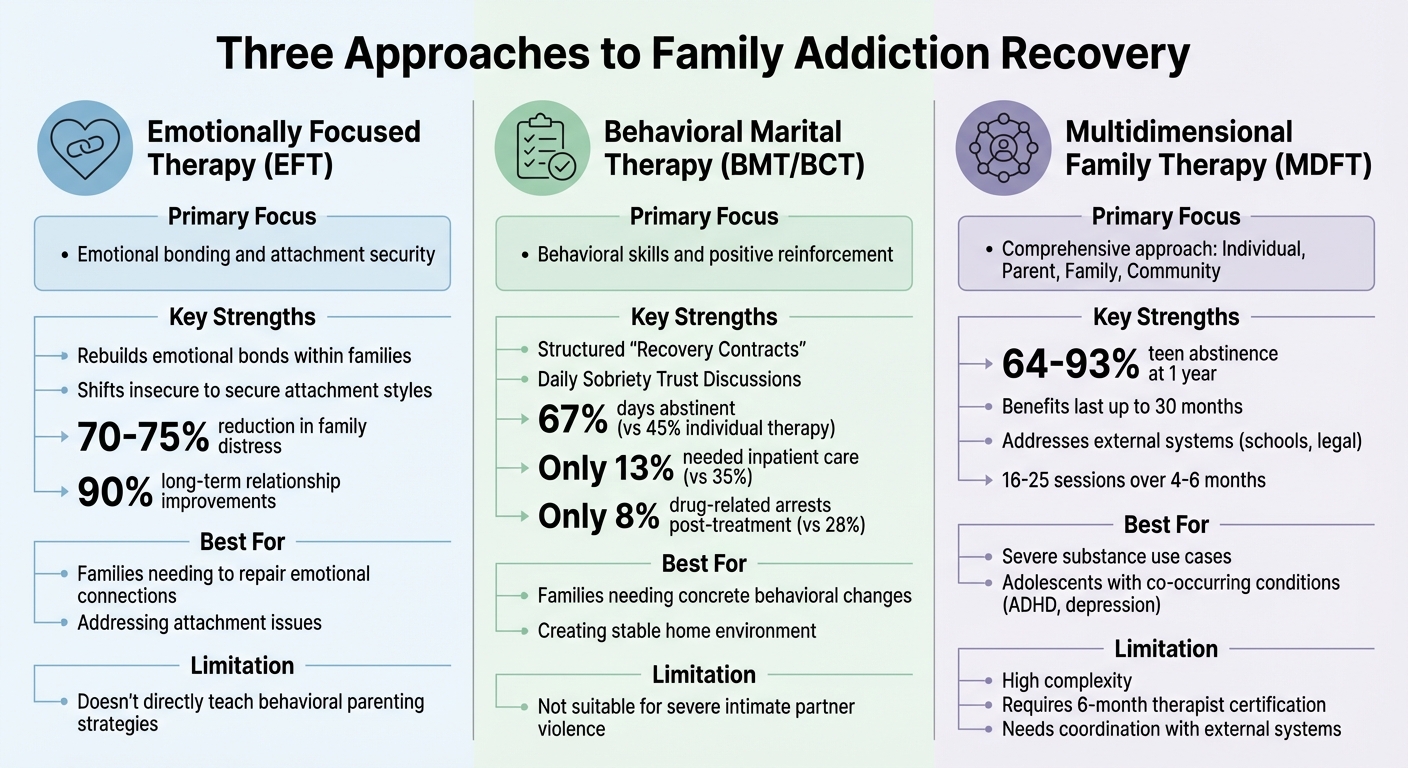
Comparison of EFT, BMT, and MDFT for Addiction Recovery in Families
Looking at the strengths and challenges of each therapy, it’s clear that every approach offers something distinct for families navigating addiction and parenting hurdles.
Multidimensional Family Therapy (MDFT) takes a broad approach, addressing not just the adolescent but also parenting skills, family relationships, and external systems like schools and legal organizations [10][12]. Impressively, between 64% and 93% of teens undergoing MDFT report abstinence one year after treatment, with benefits lasting up to 30 months [10]. It also focuses on improving parenting through strategies like "parental reconnection" and better monitoring techniques [11][12]. However, MDFT’s complexity is a challenge – it requires therapists with advanced degrees, a six-month certification process, and coordination with outside systems [12][13].
Emotionally Focused Therapy (EFT) shines in rebuilding emotional bonds within families. By helping family members shift from insecure to secure attachment styles, EFT strengthens relationships, which serve as a buffer against stress and substance cravings [5]. That said, EFT doesn’t directly teach behavioral parenting strategies or address external systems. Families often come into EFT with emotional barriers – like anxiety or anger – that hinder understanding. Therapists must reframe these conflicts as attachment needs rather than personal failings [1].
Behavioral Marital Therapy (BMT), which includes Behavioral Couples Therapy, focuses on practical skills and positive reinforcement to create a stable home environment [15]. Tools like "recovery contracts" and daily trust discussions help establish structure around abstinence. However, BMT isn’t suitable for situations involving severe intimate partner violence [2], and if both partners struggle with substance use, the approach needs adjustments to avoid mutual triggers.
| Feature | EFT | BMT/BCT | MDFT |
|---|---|---|---|
| Primary Focus | Emotional bonding and attachment security [5] | Behavioral skills and positive reinforcement [15] | Comprehensive: Individual, Parent, Family, Community [12] |
| Relapse Prevention | Strengthens recovery through secure relationships [5] | Uses structured reinforcement strategies [15] | 64–93% abstinence at 1 year; long-term gains [10] |
| Emotional Connection | High; focuses on relational bonds [5] | Moderate; improves family dynamics [15] | High; deepens emotional attachments [12] |
| Parenting Results | Indirectly improves parenting through better relationships [5] | Offers specific behavioral strategies [15] | Directly targets parenting practices and teamwork [12] |
| Implementation Complexity | Requires therapists trained in attachment-based methods | Needs structured protocols and safety assessments [2] | High; involves certification and coordination with external systems [12][13] |
Each therapy fits different family needs. MDFT works well for severe substance use cases, especially when paired with conditions like ADHD or depression [14][10]. EFT is ideal for families looking to repair emotional bonds and strengthen attachment [5]. Meanwhile, BMT offers a structured approach for families needing concrete behavioral changes and skill-building [15]. These options allow families and therapists to find the right path toward recovery and stronger parenting.
How Growth and Change Counseling Uses EFT in Family Recovery
At Growth and Change Counseling, Emotionally Focused Therapy (EFT) is adapted specifically to support families navigating recovery. By framing substance use as an "action tendency" – a way to cope with unresolved emotional pain – this approach shifts the focus from blame and shame to understanding the relational struggles that often fuel addiction and relapse [16][17]. Instead of zeroing in solely on the addiction itself, therapists examine the patterns of interaction within the family to uncover how disconnection might perpetuate the cycle of substance use.
The counseling process is structured into three key stages. First, the focus is on creating a sense of safety by linking substance use to unmet emotional needs. In the restructuring phase, family members are guided to recognize and express their emotions, building stronger emotional connections instead of avoiding or numbing their feelings. Finally, the consolidation phase helps families solidify these new patterns, ensuring they can sustain these changes and support long-term recovery [17]. This structured approach also addresses the unique challenges parents face during the recovery process.
For parents, Growth and Change Counseling integrates Emotionally Focused Family Therapy (EFFT) to address what they call "blocks in parental caregiving responses" [18]. This method enhances parental responsiveness by helping parents understand that a child’s challenging behaviors often stem from unmet attachment needs rather than intentional defiance. Therapists work with parents to overcome generational patterns and improve communication, fostering a unified and supportive parenting strategy [18].
These therapies are offered through family-focused programs and parent coaching, available in Campbell, San Jose, Los Angeles, and Roseville offices, as well as through telehealth across California. This flexibility ensures that families can choose between in-person sessions or online therapy, making attachment-based recovery support more accessible and convenient.
Conclusion
Emotionally Focused Therapy (EFT) provides families with a way to rebuild and strengthen their relationships when addiction and parenting struggles threaten to create lasting divides. By addressing the emotional wounds and unmet relational needs often driving addictive behaviors, EFT fosters meaningful and lasting change. In fact, research indicates that 70–75% of families who participate in EFT experience notable reductions in distress, with about 90% reporting long-term improvements in their relationships[7]. These numbers highlight the powerful impact EFT can have on families navigating recovery.
A key part of EFT is helping families recognize their negative cycles – those repetitive patterns where one person might criticize or pursue while another withdraws. Identifying this cycle as a shared challenge allows family members to move beyond surface emotions like anger and connect with deeper feelings such as fear, loneliness, or a sense of inadequacy[1][3]. This deeper understanding encourages empathy and reduces defensiveness, paving the way for healthier communication.
EFT also addresses how unresolved attachment issues or past trauma in parents can interfere with caregiving. When parents learn to see a child’s difficult behavior as a signal of unmet attachment needs rather than as defiance, they can respond with care and availability instead of frustration. This shift helps create what attachment experts call a "secure base" – an emotionally safe foundation that supports both recovery and a child’s healthy development[18][1].
Families can start applying EFT principles right away by practicing enactments – openly sharing vulnerable feelings instead of avoiding or talking around the issue. Techniques like the RISSSC method, discussed earlier, can help guide these emotionally charged conversations and make them more productive[1].
Growth and Change Counseling incorporates these EFT strategies into its family therapy and parent coaching services. They offer in-person sessions in Campbell, San Jose, Los Angeles, and Roseville, along with telehealth options throughout California. Their mission remains consistent: to repair emotional bonds, rebuild secure family patterns, and improve caregiving responses[18].
FAQs
How can Emotionally Focused Therapy (EFT) support families navigating addiction recovery?
Emotionally Focused Therapy (EFT) plays a crucial role in helping families navigate the challenges of addiction recovery by addressing deep emotional wounds and building stronger attachment bonds. This therapeutic approach enables family members to connect on a deeper level, fostering understanding, reducing conflict, and encouraging healthier ways to communicate.
EFT provides caregivers with practical tools to support their loved ones during recovery. It emphasizes positive behavior changes while nurturing emotional connections within the family. By prioritizing relational healing, EFT not only aids individual recovery but also helps restore trust and strengthen resilience across the entire family.
How does Emotionally Focused Therapy (EFT) differ from other approaches like Behavioral Marriage Therapy (BMT) and Multidimensional Family Therapy (MDFT)?
Emotionally Focused Therapy (EFT) is a structured therapeutic approach centered on emotional bonds and attachment. It’s designed to help individuals, couples, and families uncover and work through deep emotional patterns, ultimately fostering stronger and more secure relationships. EFT has proven especially useful for addressing relational struggles and improving emotional balance.
However, details about Behavioral Marriage Therapy (BMT) and Multidimensional Family Therapy (MDFT) are not included in the available information. Without these specifics, a full comparison to EFT isn’t possible. For a deeper understanding of these approaches, exploring additional resources would be essential.
How can Emotionally Focused Therapy (EFT) help families facing addiction challenges?
Emotionally Focused Therapy (EFT) offers a meaningful way for families to tackle the challenges that come with addiction. By focusing on emotional connections and improving how family members communicate, EFT helps rebuild trust, ease tensions, and nurture healthier relationships. This creates a more supportive atmosphere that can boost recovery efforts for everyone involved.
Addiction often puts immense emotional strain on families, and EFT directly addresses this by examining and reshaping attachment patterns. This process can be key to breaking cycles of harmful behaviors and encouraging long-term healing – not just for the individual struggling with addiction, but for their loved ones as well.
Related Blog Posts
- How Family Therapy Restores Trust After Addiction
- EFT for Addiction Recovery in Marriage
- Structured Communication for Addiction Recovery
- How Attachment Styles Affect Addiction Recovery in Couples
