Addiction recovery is hard enough on its own, but when marriage is involved, the challenges multiply. Rebuilding trust, improving communication, and addressing enabling behaviors are crucial steps for couples navigating this journey. Research shows that couples-based therapies, like Behavioral Couples Therapy (BCT) and Emotionally Focused Therapy (EFT), often lead to better outcomes than individual treatment alone. Here’s a quick summary of what works:
- Trust and Communication: Rebuild trust through honesty and regular check-ins. Use "I feel… when… because…" statements to express concerns without blame.
- Stop Enabling: Replace enabling behaviors (e.g., covering for missed work) with healthy support, like encouraging treatment and setting boundaries.
- Joint Recovery Plans: Create a shared plan that includes therapy, relapse prevention, and relationship goals.
- Therapy Options: Programs like Growth and Change Counseling’s 12-Week Marriage Rescue Institute provide structured support for couples facing addiction challenges.
Healing a marriage affected by addiction is possible with the right tools and professional guidance. Programs that integrate relationship repair with recovery efforts can help couples rebuild stronger connections while maintaining sobriety.
Evidence-Based Recovery Strategies at Growth and Change Counseling
How Addiction Damages Marriages
Enabling vs Healthy Support Behaviors in Addiction Recovery
Loss of Trust and Emotional Connection
Addiction often leads to a cycle of dishonesty, where the addicted partner hides substance use, conceals spending, or gives conflicting stories. This constant deception erodes trust, leaving the non-addicted spouse feeling compelled to monitor bank accounts, check phones, or track whereabouts – actions that only deepen suspicion and resentment [2][8][5].
Repeated broken promises to quit or cut back add to the emotional toll, leaving the non-addicted partner feeling betrayed and drained [2][8][1]. Over time, the addicted partner may withdraw, become irritable, or unreliable, creating a growing emotional distance. What was once a strong connection between spouses is replaced by frustration and alienation, forming patterns of dependency that strain the marriage even further [1][2].
Codependency and Enabling Patterns
As addiction progresses, the non-addicted spouse may fall into codependency, where their sense of self-worth becomes tied to managing the crisis [3][5]. Actions meant to help – like covering up mistakes or taking on all responsibilities – can unintentionally shield the addicted partner from consequences, allowing the addiction to persist while building resentment [3][5][8].
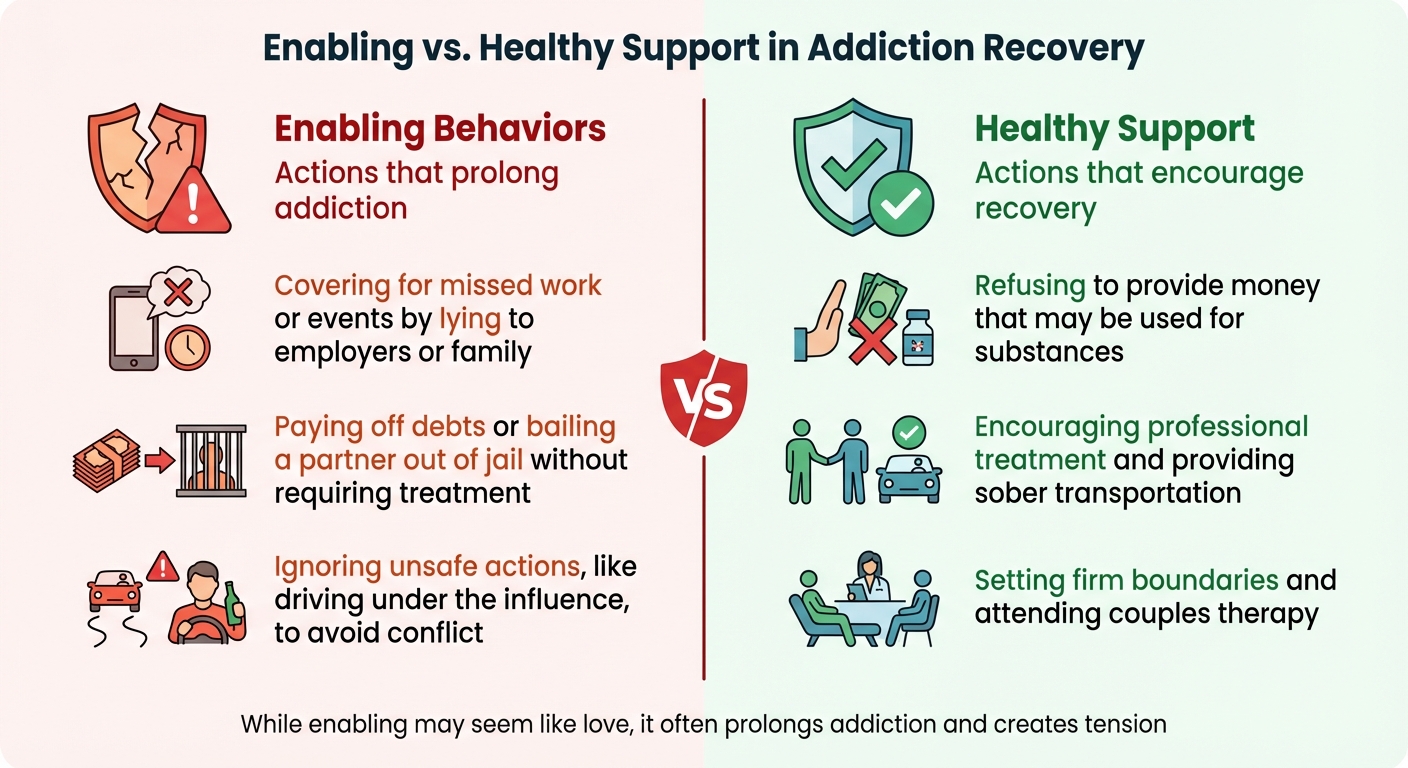
Here’s a breakdown of enabling behaviors versus healthy support:
| Enabling Behaviors | Healthy Support |
|---|---|
| Covering for missed work or events by lying to employers or family [5][8] | Refusing to provide money that may be used for substances [3][6][8] |
| Paying off debts or bailing a partner out of jail without requiring treatment [5][8] | Encouraging professional treatment and providing sober transportation [3][6][8] |
| Ignoring unsafe actions, like driving under the influence, to avoid conflict [5][8] | Setting firm boundaries and attending couples therapy [3][6][8] |
While enabling behaviors may seem like acts of love, they often prolong the addiction and create additional tension in the relationship.
Relapse and Its Effect on the Marriage
Relapse introduces another layer of stress, often triggering fear, anger, and hypervigilance in the non-addicted partner. They may react by monitoring their spouse’s phone or whereabouts, or by expressing anger through emotional outbursts. While these reactions are understandable, they can fuel conflict, increase feelings of shame, and encourage secrecy – all of which make recovery conversations more challenging [7][3][4][2].
One way to address this is by creating a written relapse response plan. This plan can outline warning signs, safety measures, and agreed-upon steps for both partners to follow if a relapse occurs. Such a plan can help reduce emotional reactions and protect the relationship from further harm [3][6][8].
Therapy Methods for Couples in Addiction Recovery
Behavioral Couples Therapy (BCT)
Behavioral Couples Therapy focuses on reshaping daily interactions to encourage sobriety while strengthening the relationship. Instead of tackling addiction as an individual issue, BCT brings both partners into the process through structured activities that promote mutual support. For instance, partners are encouraged to acknowledge each other’s efforts – like offering a compliment when one successfully resists temptation – and to plan strategies together for handling high-risk situations. Activities such as taking morning walks or cooking meals together help rebuild positive connections. Research suggests that BCT can decrease substance use by 50–70% in the short term compared to individual therapy [6]. A key element of this method involves identifying triggers as a team and practicing responses, shifting the dynamic from one of judgment to one of shared support.
Emotionally Focused Therapy (EFT)
While BCT centers on behavioral patterns, Emotionally Focused Therapy takes a deeper dive into emotional connections. EFT explores the emotional wounds and attachment insecurities that often accompany addiction. It helps uncover core feelings – like anger that masks a fear of abandonment or withdrawal that stems from shame. Therapists use guided conversations, often referred to as "hold me tight" discussions, to help partners articulate their unmet emotional needs. By addressing addiction-related shame and fear through compassionate dialogue, couples can develop stronger emotional bonds that pave the way for long-term recovery. Research shows that EFT enhances attachment security in 70–75% of couples experiencing distress [7].
sbb-itb-596b85d
Practical Techniques for Marriage Healing
As mentioned earlier, rebuilding trust and addressing enabling behaviors are key steps in repairing a marriage during addiction recovery. Below are some practical strategies that focus on solutions to help couples navigate this process.
Building Better Communication Skills
Open and honest communication is essential, yet it can sometimes lead to defensiveness or feelings of shame. To improve this, couples can schedule regular check-ins – 20 to 30 minutes a few times a week – to discuss recovery progress, emotions, and practical matters without interruptions or distractions [3][10]. During these conversations, using statements like "I feel… when… because… I need…" can help express concerns without coming across as accusatory. For example, saying, "I feel scared when you come home late because I worry about relapse; I need a text if plans change", allows for a constructive dialogue.
Active listening is another critical tool. This involves one partner speaking while the other paraphrases what they heard to confirm understanding before responding [3][9][10]. Experts at Harmony Ridge Recovery Center emphasize the importance of validating each other’s emotions, even when there are disagreements [1]. Couples can also rebuild their bond by engaging in sober activities together, such as taking walks, cooking meals, or planning a weekly date night. These shared experiences can help replace the time previously consumed by substance use [2][9][10].
Stopping Enabling Behaviors and Setting Boundaries
Improving communication is just one piece of the puzzle – tackling enabling behaviors is equally important. Enabling can perpetuate addiction by shielding the addicted partner from the natural consequences of their actions. Examples include covering for missed work, downplaying the addiction to family or employers, repeatedly paying off debts or legal fees, and taking on extra responsibilities to avoid conflict [3][6][8][9]. While these actions may come from a place of love, they often prevent the addicted partner from facing the reality of their situation. Shifting from "rescuing" to offering practical support – like providing rides to treatment while allowing natural consequences to occur – is a healthier approach [3][6][8][9].
Setting clear, written boundaries can help address enabling behaviors. Couples can work together to establish rules, such as maintaining a substance-free home, avoiding dangerous activities like driving while intoxicated, and being transparent about finances and treatment attendance. These boundaries should include specific consequences, such as temporary separation, reaching out to a sponsor or therapist, or even involving legal protections if abuse occurs [3][8][9]. Consistency in enforcing these boundaries is crucial. Additionally, the non-addicted partner can benefit from individual therapy or support groups like Al-Anon to reduce codependency and develop healthier coping mechanisms [3][6][9].
Creating a Joint Recovery Plan
Once communication and boundaries are in place, couples can benefit from creating a shared recovery plan. This plan turns abstract goals into actionable steps. It should outline treatment sessions (such as therapy, support groups, and medical care), daily routines that support sobriety (like regular sleep schedules, meals, and exercise), and a relapse prevention plan. The relapse plan should identify triggers, warning signs, and immediate actions, such as contacting a sponsor or scheduling an extra couples therapy session [3][6][9]. Research shows that involving a partner in the recovery process leads to better treatment engagement and reduced substance use compared to individual-focused approaches [6].
The recovery plan should also address relationship goals, such as rebuilding trust through honesty about whereabouts and spending, scheduling weekly time to connect, and establishing clear steps for resolving conflicts [2][3][10]. Growth and Change Counseling incorporates these techniques in The Marriage Rescue Institute‘s 12-week program. This program provides structured coaching to promote open dialogue, address enabling behaviors, and encourage collaborative planning. Available via telehealth in California locations like Campbell, San Jose, Los Angeles, and Roseville, the program offers a practical framework for couples. Revisiting and updating the plan monthly with a therapist can help ensure both partners stay aligned and committed [3][6][9].
How Intensive Couples Coaching Supports Addiction Recovery
Intensive coaching goes beyond everyday techniques, offering a focused strategy to help mend long-standing relationship challenges, especially when addiction is part of the picture.
The 12-Week Marriage Rescue Institute Program
Addiction can push a marriage to its breaking point, but a structured, time-sensitive program can provide the stability and tools needed to rebuild. Growth and Change Counseling’s Marriage Rescue Institute offers a 12-week couples coaching program specifically designed for marriages in crisis, including those affected by addiction. Unlike traditional weekly therapy, which can take time to show results, this intensive approach delivers quicker progress, helping couples regain control amid the chaos of addiction.
The program is divided into three key phases.
- Weeks 1–4 focus on creating safety through crisis planning and addressing harmful behaviors, such as lying about substance use or enabling destructive patterns.
- Weeks 5–8 emphasize trust-building through better communication, setting boundaries around triggers, and guided discussions to address past hurts.
- Weeks 9–12 solidify the progress made by developing joint relapse-prevention strategies, maintenance plans, and regular check-ins to ensure long-term success.
Each week includes a 75–90-minute session targeting specific skills, supported by daily check-ins and written exercises. Sessions begin with a review of accountability, giving couples a chance to track their progress and refine their strategies. This hands-on approach is particularly effective for couples struggling with cycles of blame, enabling behaviors, or high conflict, guiding them toward healthier patterns of interaction.
Research highlights the benefits of involving partners in structured recovery planning. Not only does this improve abstinence rates, but it also enhances relationship satisfaction compared to individual treatment alone. The program also prioritizes the non-addicted partner, addressing feelings of betrayal, anxiety, and the need for self-care. This trauma-aware approach helps rebuild trust at a pace that respects both partners. As John Mark Kane, LMFT and founder of Growth and Change Counseling, explains:
"The Marriage Rescue Institute, our 12 week marriage program is in the habit of putting marriages in dire circumstances back together!"
The program is further supported by telehealth options, making it accessible to couples regardless of location.
Telehealth Counseling Options
Growth and Change Counseling extends the Marriage Rescue Institute program via telehealth across California, serving areas like Campbell, San Jose, Los Angeles, and Roseville. With telehealth, couples can attend video-based sessions from the comfort of their home, eliminating travel time, childcare issues, and work-related disruptions – common hurdles for those navigating addiction recovery. This accessibility is especially valuable for couples in remote areas or those without local access to specialized addiction-focused therapy.
To make the most of telehealth sessions, couples are encouraged to treat them as they would in-person appointments. This includes being on time, minimizing distractions (like silencing phones or turning off the TV), ensuring privacy (using headphones or separate spaces), and having necessary materials like journals or worksheets ready. A short post-session routine, such as a walk or a brief check-in, can help couples decompress after discussing challenging topics. When approached with intention, telehealth can be just as effective as in-person sessions for addressing both addiction recovery and relationship challenges.
Conclusion
Addiction can deeply strain trust, communication, and emotional connections in a marriage. However, with mutual commitment to recovery and repairing the relationship, couples can not only overcome these challenges but also emerge stronger. The road to recovery is rarely smooth, and setbacks often indicate the need for additional support.
To truly heal, it’s essential to address both the addiction itself and the damage it causes to the relationship. Focusing solely on sobriety may leave unresolved wounds that could lead to relapse. Couples who prioritize rebuilding their bond alongside their individual recovery efforts are more likely to maintain sobriety and find greater satisfaction in their relationship. This dual focus creates a foundation for actionable steps to reconnect and rebuild.
Professional guidance can make a world of difference. Evidence-based therapies and intensive programs, such as Growth and Change Counseling’s Marriage Rescue Institute, provide effective tools and strategies for couples facing crises. Whether dealing with ongoing conflicts, repeated relapses, or the brink of divorce, professional support helps shift from reactive damage control to a proactive, shared plan for staying sober and emotionally connected. With expert help, couples can reclaim their partnership.
Start by having a calm conversation about shared recovery goals, addressing any immediate concerns, or scheduling an initial consultation. Whether you choose couples therapy, individual sessions, or telehealth options, there’s help available to fit your needs. Growth and Change Counseling offers specialized addiction-informed care throughout California, including Campbell, San Jose, Los Angeles, and Roseville, as well as via telehealth, ensuring support is accessible no matter where you are in the state.
Healing and recovery begin with that first step – together.
FAQs
What are the best ways for couples to rebuild trust during addiction recovery?
Rebuilding trust during addiction recovery takes time, dedication, and a shared effort from both partners. At the heart of this process is open and honest communication, which allows couples to confront past pain and begin to restore a sense of emotional security. Setting clear boundaries and consistently keeping promises can also help reestablish reliability and trust in the relationship.
Professional therapy can be a valuable tool for couples navigating this challenging journey. A therapist provides a supportive environment to address deeper issues, improve how conflicts are handled, and strengthen the bond between partners. Showing empathy, working toward forgiveness, and celebrating even the smallest victories together can gradually rebuild trust and deepen the connection over time.
What are enabling behaviors in addiction recovery, and how can couples avoid them?
Enabling behaviors are actions that, often unintentionally, help sustain someone’s addiction. For instance, covering up a partner’s substance use, making excuses for their behavior, or providing money that allows them to continue using are all common examples.
To break this cycle, couples can work on establishing firm and healthy boundaries, promoting accountability, and turning to professional support when necessary. These approaches not only aid recovery but also help build a stronger, more trusting relationship.
What makes Behavioral Couples Therapy different from individual therapy in addiction recovery?
Behavioral Couples Therapy (BCT) is designed to help partners work through addiction-related challenges as a team. By involving both individuals in therapy sessions, the focus shifts to improving communication, rebuilding trust, and creating a supportive environment that promotes recovery.
While individual therapy hones in on the personal growth of the person in recovery – addressing their behaviors, emotions, and deeper issues – BCT adds another layer of support. It strengthens the couple’s relationship, encourages mutual accountability, and lays the groundwork for shared, long-term recovery success.
Related Blog Posts
- How Addiction Impacts Marital Stability
- EFT for Addiction Recovery in Marriage
- Restoring Trust in Marriage After Addiction
- Structured Communication for Addiction Recovery
