Recovering from addiction as a parent is hard, and shame can make it even more challenging. Unlike guilt, which focuses on actions, shame attacks your sense of self, making you feel unworthy. This emotion can harm relationships with your children, increase the risk of relapse, and grow stronger under societal judgment.
Key points to address shame in recovery:
- Recognize triggers: Past actions, societal stigma, or feelings of failure often spark shame.
- Practice self-compassion: Treat yourself with kindness and separate mistakes from self-worth.
- Rebuild trust: Use accountability and meaningful actions to repair your relationship with your children.
- Seek professional help: Therapy and coaching can provide tools to manage shame and improve parenting.
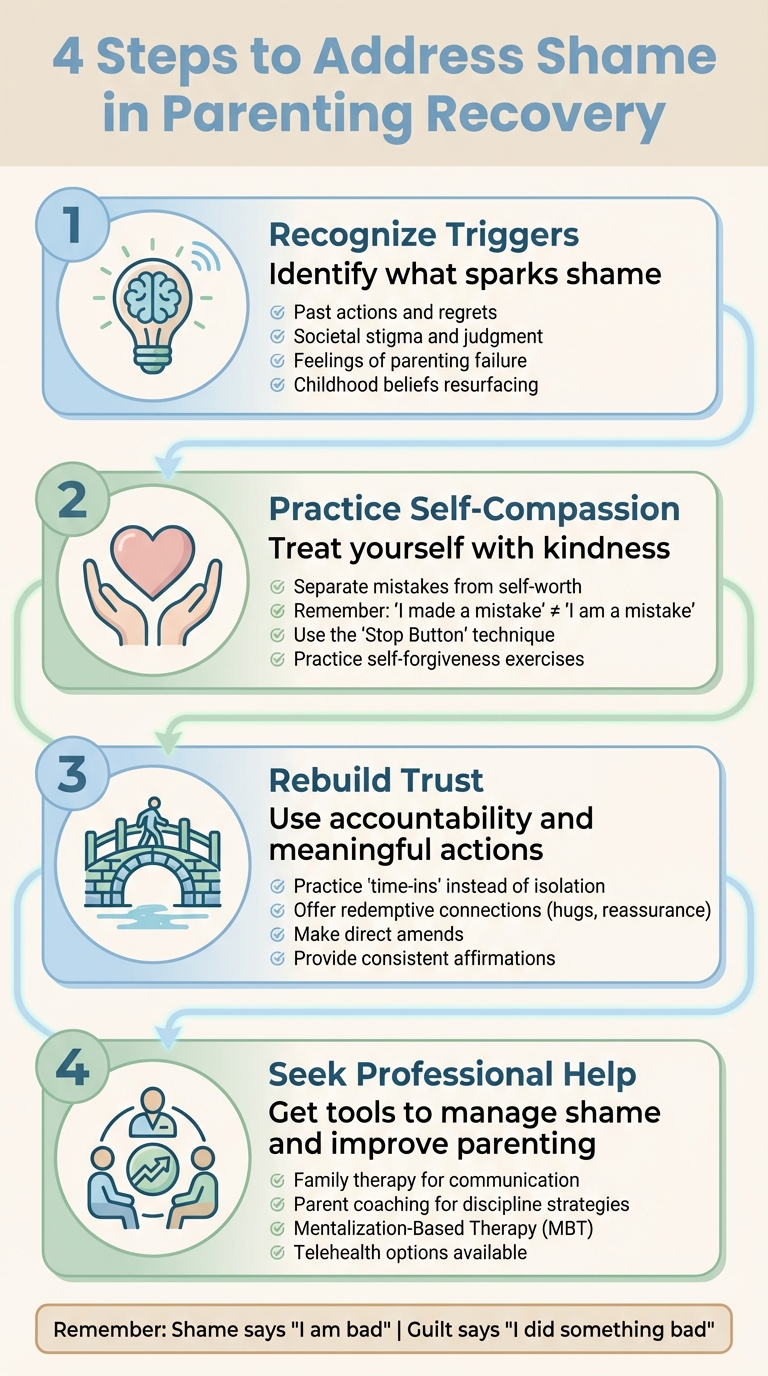
4-Step Guide to Overcoming Shame in Parenting Recovery
Shame and Addiction: What You Need to Know (From the Vault 🗝️ Series)
How Shame Affects Parenting in Recovery
Shame has a way of disrupting recovery and complicating the already challenging role of parenting. When you internalize the belief that "I am bad" rather than "I did something bad", it creates a heavy sense of inadequacy. This mindset can leave you stuck, making it difficult to move forward in recovery and truly connect with your children [3][8]. Let’s take a closer look at how shame damages emotional bonds, increases the risk of relapse, and grows stronger under external judgment.
Shame Damages Emotional Connection with Children
Shame can sap your emotional energy, leaving you physically present but emotionally distant. As Nancy E. Suchman, Associate Professor at Yale University School of Medicine, explains:
"When a parent is preoccupied by emotional states (e.g., guilt, shame, anger, disappointment) there is often little or no room in her mind for the child." [9]
This emotional withdrawal often comes as a defense mechanism – a way to protect a fragile sense of self [7]. Unfortunately, this isolation blocks the openness and vulnerability needed for meaningful relationships with your children. In some cases, parents may direct their shame outward, blaming their children, or they might strive for an impossible level of perfection to avoid future feelings of shame [3].
Shame Can Trigger Relapse
Shame doesn’t just harm relationships; it can also fuel relapse. Studies show that higher levels of shame are linked to slower progress in reducing stimulant use over time [10]. Substance use may offer temporary relief from the pain of feeling fundamentally flawed, but it often leads to even deeper shame due to societal stigma, especially for parents [2][10].
This cycle can be further worsened by isolation. Withdrawing from support systems cuts off access to accountability and emotional care, both of which are essential for recovery [1][2]. And when the stress of caregiving combines with overwhelming shame, it can become a powerful trigger. As one study explains:
"Shame and guilt are barriers to reducing stimulant use, and expanded efforts are needed to mitigate the deleterious effects of these self-conscious emotions in recovery." [10]
External Stigma Increases Shame
Judgment from others only amplifies the shame parents already feel. Cultural narratives often paint individuals with substance use disorders as "weak" or "bad people", reinforcing the belief that they are fundamentally flawed [1][11]. This external stigma creates immense pressure to maintain an illusion of perfect parenting. Many parents, fearing judgment or exposure, keep their struggles hidden instead of seeking help.
In some communities, particularly in certain church settings, parents may worry about being labeled a "bad Christian", which deepens their sense of isolation [3]. The less you talk about your challenges due to fear of judgment, the more intense the shame becomes.
What’s more, shame has a ripple effect – it can affect your children. Kids often pick up on and internalize the shame they see in their parents, which can have lasting emotional consequences [3].
Recognizing and Managing Shame Triggers
Common Shame Triggers for Parents
Shame often stems from specific experiences or beliefs. For parents, regret over past actions is a frequent source. Moments like losing your temper or being absent during struggles with addiction can linger in your memory and fuel feelings of shame [1][2]. Another common trigger is seeing your child’s behavior as a reflection of your own parenting, leading to thoughts of personal failure [1][3].
Societal stigma can make it even harder. Cultural narratives that label individuals struggling with addiction often amplify internalized shame [1][3]. Many parents also carry deeply ingrained childhood beliefs – such as associating basic needs with failure – that can resurface during challenging times [3]. Gender expectations play a role too: women may internalize shame related to body image, while men often feel it around career or financial responsibilities [3].
Understanding these triggers is vital. It’s the first step in breaking the cycle of shame and reclaiming emotional control.
Techniques for Awareness and Emotional Control
Once you’ve identified your triggers, the next step is learning how to manage them. Often, physical symptoms appear before you’re fully aware of what’s happening. Watch for signs like stomach discomfort, flushing, or sweating – these are common early indicators of a shame response [3][4]. Behavioral patterns can also offer clues. Feeling the urge to isolate, striving for unattainable perfection, or blaming others might signal that shame is at play [1][3].
Journaling and mindfulness can be powerful tools for spotting these signs early. Writing down your physical sensations and thoughts helps you track patterns and recognize triggers as they arise [2][6]. When you feel shame creeping in, try naming it. Saying something as simple as “I feel shame” to a trusted person or writing it down can help diminish its hold [2].
Dr. Brené Brown, a leading researcher on shame, highlights the importance of distinguishing between shame and guilt:
"Guilt says, ‘You’re someone who struggles with lying’… Shame says, ‘You’re a liar’" [3]
This distinction matters. Recognizing the difference between “I made a mistake” and “I am a mistake” allows you to approach yourself with kindness rather than criticism. Self-compassion becomes a key tool in managing and reducing shame.
sbb-itb-596b85d
Practical Steps to Overcome Shame and Improve Parenting
Practice Self-Compassion and Forgiveness
Letting go of shame starts with treating yourself as kindly as you would a close friend. Self-compassion involves acknowledging your struggles, showing yourself kindness during tough times, and remembering that challenges are part of the human experience – not a personal failing [1]. When feelings of self-blame creep in, try the "Stop Button" technique: take a deep breath, shift your posture, repeat a calming affirmation, or imagine the negative thought fading away [12].
Dr. Fred Luskin suggests a five-minute exercise to help release shame. It involves holding space for past regrets, practicing empathy for yourself and others, and then asking for and granting forgiveness. This process helps shift from self-criticism to acceptance [12][15]. As Luskin explains:
"Self-forgiveness is a form of emotional healing that allows us to move from despair and self-attack to acceptance and peace, without letting ourselves off the hook" [12].
Another helpful visualization is to picture your negative feelings as a heavy stone. Imagine yourself letting it go, symbolizing a fresh start and a clear conscience [12].
By practicing these steps, you can create the emotional space needed to rebuild trust and accountability in your relationships.
Rebuild Relationships Through Accountability
Once you’ve begun to forgive yourself, the next step is accountability, which can repair and strengthen your connection with your children. Accountability shifts the focus from guilt to meaningful action [11][14].
One effective approach is practicing "time-ins" – instead of isolating your child during discipline, stay connected and present with them [13]. After a disciplinary moment, follow up with a "redemptive connection" like a hug or reassuring words. This ensures your child understands the correction without internalizing shame [3].
Taking direct steps to make amends and offering consistent affirmations can also rebuild trust [14]. When combined with self-compassion, these actions create a nurturing environment where both you and your child can heal and grow.
Focus on Present-Moment Parenting
Parenting is most impactful when you focus on the here and now. Establishing predictable routines for meals, bedtime, and daily activities can provide your children with a sense of stability and security during uncertain times [6]. These routines act as anchors, helping everyone feel more grounded.
Replace criticism with moments of joy and connection – offer hugs, words of encouragement, and affirmations [3]. When past mistakes resurface, mindfulness can help you refocus on the present. Adopting a growth mindset allows you to see errors as opportunities to learn and improve [3]. As Ashley Patek, an occupational therapist and parenting coach, wisely points out:
"The way we speak to our children becomes their internal dialogue so our words matter" [13].
This approach not only builds resilience in your children but also fosters a family environment where growth is celebrated and shame has no place.
Getting Professional Help for Shame in Recovery
How Parent Coaching and Family Therapy Help
Dealing with shame while navigating the challenges of parenting and recovery can feel like too much to handle on your own. That’s where professional support comes in. Trained therapists can help you distinguish between guilt and shame – learning to focus on specific behaviors rather than attacking your sense of self [3]. This builds on the self-compassion and accountability strategies mentioned earlier.
For example, therapists skilled in Mentalization-Based Therapy (MBT) can help you develop reflective thinking skills. This means taking a step back during moments like a toddler’s tantrum to assess whether your reaction stems from your own anxiety rather than their behavior [16]. This kind of self-awareness can stop shame from spiraling out of control. Research backs this up: in clinical trials, mothers who received mentalization-based therapy showed a moderate decrease in heroin use over six months, while those who only had basic parenting education saw their substance use increase [16].
Family therapy and parent coaching build on these practices by offering structured ways to heal and grow. Family therapy provides a safe space for open communication, allowing you to rebuild trust and repair relationships with your children [6]. Meanwhile, parent coaching – like the programs at Growth and Change Counseling – focuses on helping you reclaim your role as a parent. Coaches guide you in developing age-appropriate discipline strategies that avoid shame-based language. Nancy E. Suchman highlights this key concept:
"Mentalizing enables a parent to make sense of a child’s behavior in terms of underlying mental states and to make decisions about how to manage or respond" [16].
Professional support also tackles another tough aspect of recovery: the way it can disrupt your brain’s reward system. Everyday parenting may feel more stressful and less fulfilling than it used to [16]. Therapists can help you navigate these challenges without resorting to substances, modeling empathy and vulnerability as tools to combat shame [3].
Accessing Services in California and Online
If you’re in California, accessing these services is straightforward. Growth and Change Counseling offers both in-person and telehealth options, serving cities like Campbell, San Jose, Los Angeles, Roseville, and beyond [17]. Telehealth is especially helpful for parents juggling tight schedules or transportation issues.
Costs for sessions are $200 for a Licensed Marriage and Family Therapist (LMFT) or $150 for an Associate Marriage and Family Therapist (AMFT) per 45-minute session, with sliding scale rates starting at $100 [17]. The practice works with several in-network insurance providers, including Anthem Blue Cross, Aetna, United Health Care, Oxford, and Oscar Health. They also provide superbills for out-of-network reimbursement [17].
To ensure privacy, all telehealth sessions use HIPAA-compliant video platforms [17]. Services are available in English, Spanish, and Afrikaans, ensuring language isn’t a barrier to getting the support you need [17]. Whether you’re seeking therapy to address shame, parent coaching to rebuild confidence, or family therapy to strengthen relationships, Growth and Change Counseling offers a consistent and supportive approach tailored to your needs [17].
Moving Forward with Growth and Change Counseling
You have the ability to move past shame, strengthen your recovery, and build a healthier relationship with your children. It starts with recognizing the difference between guilt and shame – while guilt can motivate positive changes, shame often works against you by attacking your sense of self [3][5]. Since shame thrives in secrecy and isolation, breaking its hold requires openness and connection.
The journey ahead isn’t about being perfect; it’s about embracing self-compassion. This mindset gives you the emotional strength to be present for your kids, even on tough days [1]. After conflicts, focus on meaningful reconnection – taking the initiative to repair the relationship helps your child understand that mistakes don’t define them and reinforces their sense of worth [3].
Self-compassion also builds resilience, which is key to seeking and benefiting from support. Family therapy and parent coaching can help you identify triggers and respond thoughtfully rather than defensively when challenges arise. These tools allow you to parent with intention, even in difficult moments.
To put these ideas into practice, start by paying attention to how shame feels in your body, avoid shaming language during corrections, and establish consistent routines at home. Show your children what vulnerability looks like – when they see you admit mistakes and practice self-forgiveness, they learn that growth and change are possible after setbacks.
Your recovery does more than heal you – it offers your children a powerful example of resilience and hope. By addressing shame and seeking support, you’re not only improving your own well-being but also teaching your kids that compassion, connection, and courage are stronger than any mistake.
If you’re seeking personalized support, Growth and Change Counseling can help. Their team offers parent coaching and family therapy throughout California, including Campbell, San Jose, Los Angeles, and Roseville, as well as via telehealth. Visit Growth and Change Counseling to learn more about building lasting, healthy relationships with your children.
FAQs
What’s the difference between guilt and shame in parenting during recovery?
Guilt and shame might feel like two sides of the same coin, but they play very different roles – especially when it comes to parenting during recovery. Guilt zeroes in on specific actions, acting as a signal that you’ve done something that doesn’t align with your values. For instance, guilt might sound like, “I made a mistake, and I can fix it.” Shame, however, takes aim at your self-worth, whispering, “I am a bad parent.” While guilt can push you toward positive change, shame often traps you in feelings of inadequacy and hopelessness.
The key to telling them apart lies in your inner dialogue. If you catch yourself reflecting on a particular behavior, like, “I shouldn’t have yelled at my child,” that’s guilt – it’s pointing to something you can address and improve. But if your thoughts spiral into, “I’m a terrible parent,” that’s shame undermining your confidence. To counteract shame, try practicing self-compassion, celebrating your progress, and reframing negative thoughts. If the weight of shame becomes too heavy, seeking support – such as parent coaching or therapy through Growth and Change Counseling – can help you transform these feelings into steps toward healing and growth.
How can I manage feelings of shame while parenting during recovery?
Managing shame while parenting in recovery starts with recognizing when it surfaces. Instead of reacting right away, take a moment to pause and name the feeling as shame. This simple act of acknowledgment can help take the edge off its intensity. From there, practice self-compassion – talk to yourself as you would to a child, reminding yourself that feeling shame doesn’t define your worth as a parent.
When thoughts like "I’m a bad parent" creep in, challenge them. Ask yourself for proof and replace those harsh judgments with more balanced, constructive ones like, "I’m learning and doing my best." Surrounding yourself with a strong support network is also key. Trusted friends, a sponsor, or a therapist can provide the connection and perspective that help combat isolation, which often makes shame feel heavier.
If you’re finding it hard to manage on your own, professional resources like parent coaching or family therapy can offer valuable tools. These approaches can help you handle triggers and create a home environment that feels safe and supportive. For example, Growth and Change Counseling specializes in helping parents in recovery build confidence and strengthen family bonds.
Lastly, make self-care a daily habit. Activities like exercise, mindfulness, or journaling can help lower stress levels and equip you to face parenting challenges with empathy instead of self-criticism. Small, consistent efforts can make a big difference in how you navigate recovery and parenting.
How can professional support help parents overcome shame during addiction recovery?
Parents navigating addiction recovery often carry a heavy burden of shame, but professional support offers a compassionate space to work through these emotions. Therapists play a crucial role in helping parents distinguish between shame ("I am a bad person") and guilt ("I did a bad thing"). This distinction is key to shifting away from harsh self-judgment and toward a healthier, more balanced view of oneself. With tools like mindfulness practices and self-compassion exercises, therapy helps lighten the emotional load of shame, paving the way for constructive change.
Beyond emotional healing, counseling equips parents with practical strategies to rebuild trust and strengthen their family bonds. Through therapy, parents can learn how to communicate more effectively, develop co-parenting plans, and establish consistent routines that support a sober lifestyle. At Growth and Change Counseling, services such as individual therapy, family therapy, and parent coaching are specifically designed to address the challenges of addiction-related shame while prioritizing emotional well-being. With the right guidance, parents can transform feelings of shame into opportunities for personal growth and build stronger, more meaningful relationships with their children.
Related Blog Posts
- Root Causes of Shame in Sexual Addiction
- How Family Therapy Restores Trust After Addiction
- How to Create Emotional Safety for Kids in Recovery
- Scapegoat Role in Addiction Recovery
