Faith can support recovery, but it should not replace treatment. If you want the short answer, here it is: faith often helps by giving people purpose, daily structure, accountability, relationship repair, and long-term support.
In the U.S., about 46.3 million people age 12 or older had a substance use disorder in 2021, but only 1 in 10 received treatment. That gap matters. Many people need more than detox, therapy, or medication alone. They also need help with meaning, guilt, connection, and day-to-day stability.
Here’s the article in plain terms:
- Purpose and identity: Faith can help you see yourself as more than your addiction.
- Daily coping: Prayer, reflection, and reading can give your day structure and help with cravings.
- Community: A faith group can give you check-ins, support, and people who notice when you start to slip.
- Marriage and family repair: Faith can support forgiveness, honesty, and boundaries after trust has been damaged.
- Long-term recovery: Since relapse rates are often 40% to 60%, steady habits and support matter long after early treatment ends.
The article also makes one point clear: addiction is a health condition, not a moral failure. So faith works best when it is voluntary, personal, and used alongside counseling, medical care, and relapse planning.
God and Addiction Recovery: Finding Strength and Healing in Faith-Based Addiction Treatment"
sbb-itb-596b85d
Faith-Integrated Recovery at Growth and Change Counseling
| Area | How faith may help | What still matters |
|---|---|---|
| Identity | Gives a sense of worth, hope, and direction | Therapy and, when needed, MAT |
| Daily habits | Adds routine during stress and cravings | A written recovery plan |
| Community | Creates support and honest check-ins | Safe, healthy relationships |
| Relationships | Helps with amends, forgiveness, and boundaries for addiction recovery | Couples or family counseling |
| Long-term recovery | Keeps people grounded after treatment | Relapse-prevention care |
If you’re reading this for yourself or someone you love, the main takeaway is simple: faith can strengthen recovery when it supports – not replaces – clinical care.
Faith, Spirituality, and Addiction Recovery: Key Distinctions
Addiction is a chronic condition, not a moral failing. It changes the brain’s reward pathways, which helps explain why willpower alone usually isn’t enough.
The damage rarely stops with one person, either. Addiction often spreads through marriages and families, wearing down trust, communication, and day-to-day stability.
In recovery, three terms often get mixed together. Spirituality is the search for meaning, purpose, and connection beyond the self. It doesn’t require any one belief system. Religion adds structure through an organized community, shared rituals, and doctrine. Faith goes a step further. It describes active trust in God or in a sacred source, depending on the person’s tradition.
That distinction matters. Faith can support recovery, but it should stay voluntary and client-led, alongside CBT, medical detox, and MAT.
Used that way, faith supports care rather than trying to replace it. And that sets up the first way it can help: by giving recovery a sense of purpose and a new identity.
1. Faith Gives Recovery a Sense of Purpose and a New Identity
Recovery isn’t just about quitting substance use. It’s also about figuring out who you are without it.
For a lot of people, addiction wasn’t only a habit. It was how they coped, and over time, it became part of how they saw themselves. Faith can offer a different starting point for identity – one tied to purpose, worth, and renewal.
That shift can change everyday decisions in a big way. Instead of acting out of pressure or fear, a person starts moving with purpose. When faith teaches someone to care for their life and body, staying sober becomes less about avoiding failure and more about living on purpose.
Grace also gives people room to face guilt without letting guilt define them. Addiction no longer has to be the final label. It can become part of a redemption story instead.
This kind of identity shift tends to work best when it’s paired with clinical treatment. MAT can stabilize brain chemistry, which can make it easier for someone to take part in counseling and spiritual growth [2]. And when a person feels more steady, that new sense of self can help support the day-to-day self-control recovery asks for.
2. Faith Builds Daily Self-Control and Coping Skills
Daily spiritual habits help turn a new identity into steady recovery. That shift doesn’t happen all at once. It starts to feel real through what a person does each day.
Practices like morning prayer, Scripture reading, and quiet reflection can steady the mind before the stress of the day kicks in. That matters because unstructured time can invite cravings. A simple morning routine helps lower that risk. Even a short reading from a sacred text can give the day a clear starting point.
Prayer can also serve as an immediate coping tool. It gives people something to reach for in hard moments, instead of leaning on willpower alone. Just as important, these habits can help a person spot warning signs early, before a slip turns into a relapse.
For people in early recovery, daily spiritual practice can add structure during a long healing process. And structure often matters more than people think. When the day has shape, it’s easier to stay grounded.
Faith-based recovery can also build what clinicians call relapse-prevention awareness. Emotional relapse – signs like isolation, poor sleep, or neglecting self-care – often begins long before a person uses a substance again. Daily habits are meant to catch that slow drift early, while there’s still time to respond.
Spiritual disciplines tend to work best alongside clinical care. A written recovery plan that includes therapy, medication, prayer, and group support is more durable than a plan built on just one kind of care. And when those habits are shared with other people, they’re often easier to keep.
3. Faith Creates Accountability Through Community
Addiction grows in isolation. Faith communities push back by giving people a place to belong. And when someone feels like they belong, accountability starts to feel like care, not punishment.
That shows up in a few clear ways. Mentorship can pair someone in early recovery with a person who’s been walking that road longer. That kind of relationship gives space for honest guidance and steady check-ins. Small groups can make it easier to open up without feeling exposed. And practices like honest confession, rooted in James 5:16, bring hidden struggles into the open before they spiral.
Accountability works best when it connects to day-to-day life too. Many faith communities support recovery with practical help, like:
- Food assistance
- Transportation to meetings
- Housing referrals [7]
That matters because recovery doesn’t happen in a vacuum. People often need help getting through the week, not just help talking through the week.
The same kind of support can keep recovery steady after formal treatment ends. Faith communities can keep showing up when the program is over and the harder part begins: daily life.
4. Faith Helps Repair Marriages and Relationships Damaged by Addiction
Recovery also has to mend the relationships addiction has worn down. Addiction breaks trust, weakens communication, and leaves marriage and family life feeling unsafe. Faith gives couples a clear path for repair – not by acting like the damage never happened, but by facing it honestly and moving through it on purpose.
A lot of that work starts with forgiveness. That doesn’t mean excusing the harm or rushing past the grief. Grace can give couples room to move out of shame and toward repair, which makes healing possible. When that is paired with repentance – openly owning the harm that was done – families may start to see the person in recovery as more than the worst things from the past.
In marriage, honest disclosure is the first step to restoring trust. That honesty needs to happen between spouses and, when needed, with a pastor or counselor. It cuts through the secrecy that often keeps addiction in place.
Faith can also help families set healthy boundaries. That’s not rejection. It’s love with clear lines. Healthy boundaries help stop enabling and make change more likely.
As trust starts to return, faith can also support the long work of staying sober.
5. Faith Supports Long-Term Relapse Prevention and Personal Growth
Repairing trust matters. But lasting recovery depends on what happens after the crisis passes.
Relapse rates for substance use disorders are 40% to 60%, which is why long-term recovery planning matters [5]. This is where steady spiritual practice can help. Regular prayer and reflection can help people notice drift before it turns into relapse. They make it easier to spot warning signs early [5][3].
Relapse usually doesn’t happen all at once. It tends to build slowly, as small compromises chip away at structure over time.
Faith can also change how a person sees themselves. When someone begins to view themselves through a renewed identity instead of a permanent label, shame loses some of its grip during long-term recovery [4]. That shift matters. Shame often keeps people stuck, while a renewed sense of self can help them keep moving.
Serving others can strengthen that change too. It gives people a higher purpose and can make relapse feel less appealing [3]. In plain terms, it’s harder to slide backward when your life starts to feel bigger than the struggle itself.
When progress feels slow – and sometimes it does – faith practices can help people stay steady through the long middle stretch of recovery. Pairing faith with counseling gives recovery both spiritual support and clinical structure.
Setbacks don’t automatically mean failure. They can point to places where support needs to grow stronger. Faith frameworks often treat recovery as a lifelong journey of spiritual growth, so setbacks are warning signs, not final verdicts [4].
Different faith traditions express this long-term support in different ways, but the core pattern stays the same.
Multi-Faith Recovery: Comparison Tables
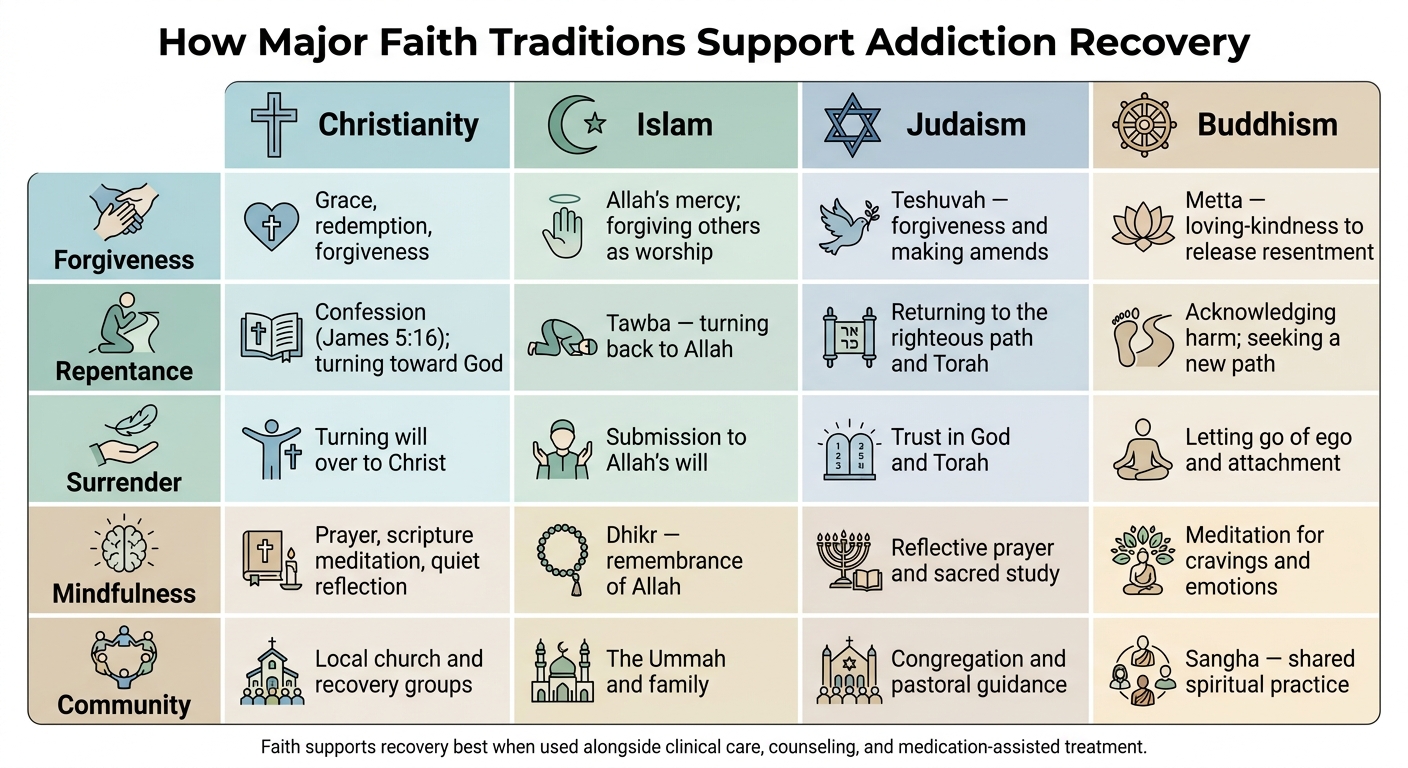
How Major Faith Traditions Support Addiction Recovery
Different faith traditions use different language. But the core recovery themes sound strikingly similar: forgiveness, surrender, community, and daily spiritual practice. Those ideas start to matter in day-to-day life when they shape habits, support systems, and a written relapse plan.
How Major Faith Traditions Address Recovery Themes
| Theme | Christianity | Islam | Judaism | Buddhism |
|---|---|---|---|---|
| Forgiveness | Grace, redemption, and forgiveness | Allah’s mercy; forgiving others as worship | Teshuvah: forgiveness and making amends | Metta: loving-kindness to release resentment |
| Repentance | Confession (James 5:16); turning toward God | Tawba: turning back to Allah | Returning to the righteous path and Torah | Acknowledging harm; seeking a new path |
| Surrender | Turning will over to Christ | Submission to Allah’s will | Trust in God and Torah | Letting go of ego and attachment |
| Mindfulness | Prayer, scripture meditation, quiet reflection | Dhikr: remembrance of Allah | Reflective prayer and sacred study | Meditation for cravings and emotions |
| Community | Local church and recovery groups | The Ummah and family | Congregation and pastoral guidance | Sangha: shared spiritual practice |
Once those themes are clear, the next move is simple: turn them into tools you can use every day.
Faith-Based Coping Tools and Their Recovery Benefits
These practices help move belief off the page and into daily life.
| Coping Tool | Recovery Benefit |
|---|---|
| Daily Prayer | Provides connection to a higher power and reduces isolation |
| Scripture Reading | Replaces shame with truth; anchors the mind and prevents idle time where cravings often fester |
| Meditation / Mindfulness | Manages cravings, regulates emotions, and grounds during stress |
| Dhikr / Chanting | Calms the nervous system and restores spiritual focus |
| Journaling | Identifies emotional triggers and tracks patterns over time |
| Service to Others | Shifts focus away from self-centered addiction and builds purpose |
What does that look like in practice? Prayer can slow a panicked mind. Journaling can help someone spot the same trigger showing up again and again. Service can pull a person out of the mental spiral that addiction often feeds. Small actions like these may seem modest, but they can give structure to hard moments.
The same practices tend to work better when they fit inside a clear plan for triggers, support, and setbacks.
A Faith-Informed Relapse-Prevention Plan
A relapse-prevention plan should be written down and rehearsed. It should name triggers, list people to call when cravings hit, and spell out what to do if a slip happens. Faith can add another layer of support to evidence-based clinical care. It does not replace that care.
| Plan Component | Faith-Informed Elements | Recovery Benefit |
|---|---|---|
| Spiritual Practices | Daily prayer, scripture study, Sabbath rest, confession | Grounds the day; provides language for emotions; prevents exhaustion-based triggers |
| Community Supports | Step Study groups, sponsors, church attendance | Reduces isolation; creates shared-faith accountability |
| Family Agreements | Healthy boundaries, direct amends, honest disclosure | Rebuilds trust; stops enabling; repairs damaged relationships |
| Professional Care | CBT, Medication-Assisted Treatment (MAT), dual-diagnosis therapy | Addresses brain chemistry; treats co-occurring mental health conditions |
| Accountability | Regular check-ins with a sponsor or mentor who shares the same theological framework | Catches early drift before it becomes relapse |
In marriage and family recovery, these same supports often work better when counseling is part of the picture too.
When Faith and Counseling Work Together in Relationships
When faith becomes part of counseling, it can help couples start repairing the harm addiction leaves behind.
Religiously Integrated Cognitive-Behavioral Therapy blends CBT with Scripture to challenge distorted thoughts. That approach can support an identity shift with less shame, which may help strengthen recovery [8]. One example of faith-informed couples care is Growth and Change Counseling‘s 12-week Marriage Rescue Institute.
For couples, recovery is about rebuilding trust through honest communication, healthy boundaries, and a shared commitment to healing. Spiritual growth during treatment may help support abstinence after treatment ends [8]. Shared prayer or worship can also help couples regulate emotions and stay connected during recovery [1][6].
Conclusion
These five supports show how faith can strengthen recovery without taking the place of clinical care. Faith can help a person heal, steady their choices, and keep going. But it does not replace professional treatment. That kind of support can matter even more when addiction has rebuilding trust after addiction has damaged relationships at home.
What makes these supports work? They shape everyday life. Purpose affects direction. Discipline influences daily choices. Community gives people support and accountability. Repair helps rebuild strained relationships. Persistence keeps a person moving when recovery feels hard. Faith tends to help most when it works alongside medical care, counseling, and support groups.
Across traditions, the same themes keep showing up: hope, accountability, and community. That pattern appears again and again across traditions.
Recovery is about rebuilding a stable, meaningful life. Faith, professional support, and community can help that life hold over time.
FAQs
Can faith help if I’m not religious?
Yes. You don’t have to be religious to get something from faith-based principles in recovery.
A lot of programs lean on spiritual ideas such as purpose, connection, and a sense that life is bigger than your own struggles, not strict religious rules. That matters because the focus is often on shared values, honest reflection, and support from a community that helps keep you accountable.
So even if you’re unsure about religion – or you’re still figuring out what you believe – these programs can still meet you where you are and support you at any point in your spiritual journey.
How do I use faith without avoiding treatment?
Faith should support treatment, not take its place. Prayer, scripture study, and a spiritual community can help during recovery. At the same time, professional care deals with the medical, mental, and behavior-related parts of the process.
When both work side by side, they can give you a stronger base for healing by caring for your emotional, physical, and spiritual well-being.
What should I do if my faith community feels unsafe?
If your faith community feels unsafe, put your emotional and physical well-being first. Recovery tends to go better in places where you feel seen, valued, and free from judgment or stigma.
If that’s not your current setting, consider professional faith-integrated counseling or a different church-hosted recovery group. Growth and Change Counseling offers confidential, nonjudgmental support for addiction recovery.
Related Blog Posts
- Parent Coaching with Faith in Addiction Recovery
- How Faith Helps Rebuild Trust After Addiction
- How Faith Helps Couples Overcome Addiction Together
- 5 Ways Clergy Support Addiction Recovery
