When trauma impacts a relationship, couples often face challenges that traditional therapy methods fail to address. Trauma-informed couples therapy focuses on creating safety, understanding trauma’s effects, and rebuilding trust. Here’s a quick summary of the five steps:
- Create Safety and Stability: Establish a secure environment for both partners to feel physically and emotionally safe. Techniques like synchronized breathing and grounding exercises help manage emotional responses.
- Develop Trust and Collaboration: Shift focus from blame to understanding trauma as an external factor. Learn how trauma influences reactions and set shared goals.
- Work Through Trauma Stories: Explore past experiences using structured methods like narrative therapy to link old wounds to current behaviors.
- Teach Co-Regulation and Communication Skills: Learn to calm each other’s nervous systems and improve communication by bridging differences in neurotypes.
- Rebuild Connection and Empower Growth: Restore intimacy, handle conflict constructively, and strengthen resilience for long-term partnership success.
Trauma-informed therapy equips couples with tools to heal together, fostering a deeper connection and mutual understanding. For professional support, seek therapists trained in evidence-based methods like EMDR or EFT.
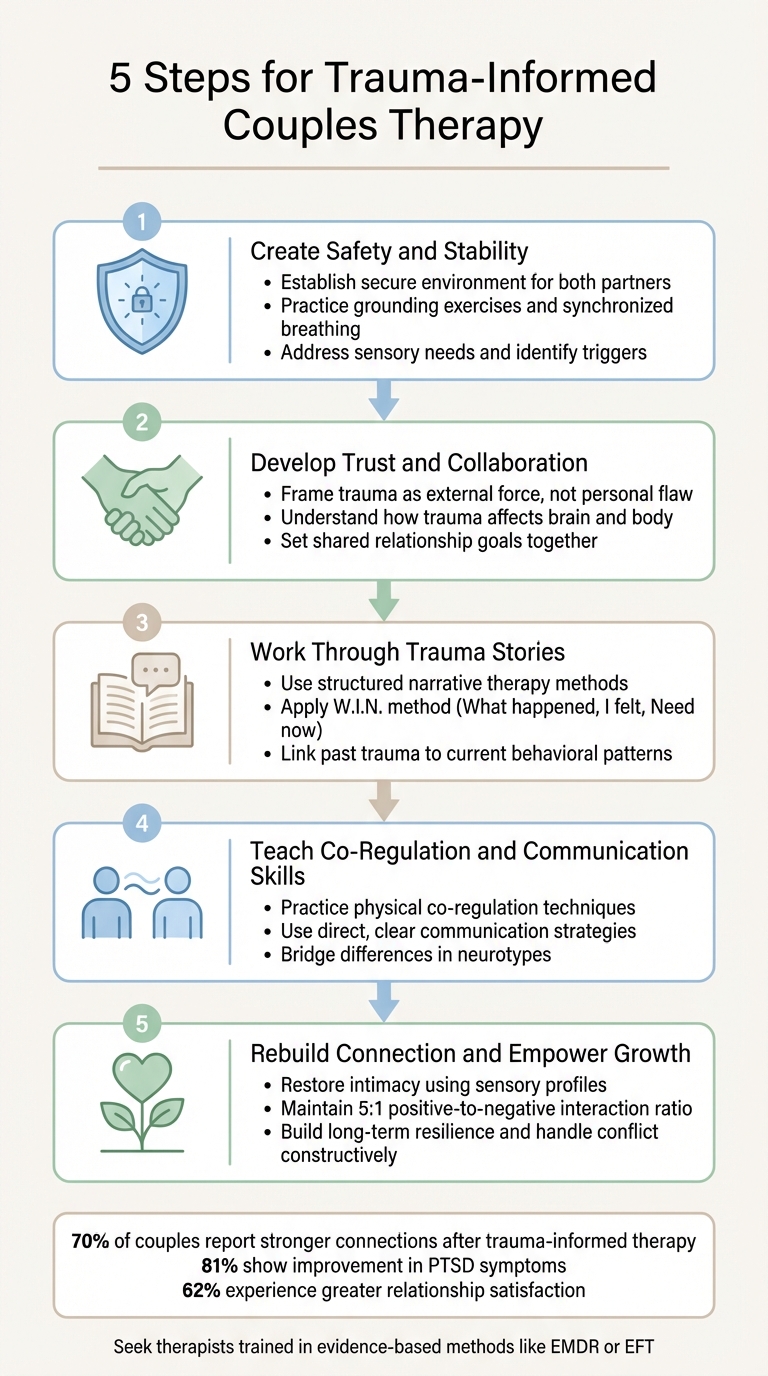
5 Steps of Trauma-Informed Couples Therapy Process
[FREE] Treating Trauma with Integrative Relationship Therapy (IRT)
Step 1: Create Safety and Stability
Healing in relationships starts with creating an environment where both partners feel safe – physically, emotionally, and sexually. This sense of security is the foundation for effective therapy. When the nervous system senses danger, it automatically shifts into protection mode, making connection and vulnerability nearly impossible[7][5]. This process, known as "neuroception", constantly scans for potential threats. If a threat is detected, openness and trust take a backseat.
Building a Safe Therapy Space
Establishing safety begins with understanding that communication issues in neurodiverse couples aren’t about flaws or deficits but rather differences in neurotypes[4]. Liz Zhou, a Holistic Trauma Therapist, explains it well:
"Communication difficulties are not due to the deficits of either autistic or allistic people, but due to the differences in neurotype." [4]
Therapists play a crucial role in fostering this safe environment. They ensure confidentiality, use neutral and nonjudgmental language, set clear boundaries, and address sensory needs. This might involve identifying triggers like harsh lighting or creating comfort through tools like weighted blankets[8][4].
If there’s any active violence or abuse in the relationship, individual therapy must come first. Both partners need to stabilize individually before safely engaging in couples therapy[3].
Once a secure environment is in place, couples can begin learning practical techniques to manage and stabilize their emotional reactions.
Grounding and Emotion Regulation Tools
A key part of this step is helping couples recognize when they’re stepping outside their window of tolerance – whether that’s tipping into hyper-arousal (fight/flight) or hypo-arousal (shutdown)[3][4]. Early signs, like a clenched jaw, sweaty palms, or a racing heart, serve as indicators that emotions are escalating[4][5].
To counteract these moments, couples can practice synchronized breathing – holding hands and breathing together to promote co-regulation[6]. Another helpful method is body softening, which involves consciously relaxing muscles and unclenching the jaw to shift from a defensive state to one of connection[5]. Taking strategic time-outs during heated moments allows both partners’ nervous systems to reset before resuming difficult discussions[6].
Over time, these tools can become part of daily life, helping couples stay grounded and present during challenging moments. Developing these habits sets the stage for deeper, collaborative work in the next steps of the process.
Step 2: Develop Trust and Collaboration
Once safety is established, the next step is building trust by helping couples see trauma as an external force, not a personal flaw. The Connect Couples Therapy Team describes it this way:
"Trauma can be like a third person in a relationship, a complex personality who governs expression and proximity." [9]
By framing trauma as something external, couples can shift their focus from blaming each other to addressing the real issue. As they further explain:
"The chaos of trauma is not a character flaw, but a physiological issue." [9]
This perspective helps couples understand that reactions like emotional withdrawal or sudden anger often stem from the nervous system, not a lack of love. With this understanding, they can approach each other with more empathy and begin to explore how trauma shapes their interactions.
Teaching Couples About Trauma
Helping couples understand trauma can strengthen trust by removing feelings of personal blame. Therapists often explain how trauma affects both the brain and body. For example, many trauma survivors experience alexithymia – a difficulty identifying and describing emotions – which can leave one partner feeling confused or disconnected [9]. When both partners recognize this challenge, frustration can be replaced with patience and understanding.
For neurodiverse couples, this process includes an added layer of complexity. As discussed in Step 1, communication breakdowns often arise from differences in how each neurotype processes information, rather than from deficits [4].
Therapists may also introduce sensory profiles as a tool to deepen trust. Building on earlier safety strategies, each partner identifies specific triggers and sources of comfort. This helps create a sensory-friendly environment where both individuals feel understood and supported [4].
Setting Goals Together
Once couples understand how trauma influences their relationship, they can work together to set meaningful goals. The focus should be on improving the relationship as a whole, rather than labeling one partner as the problem [1].
A key part of this process involves identifying recurring trauma scripts – automatic defensive patterns that disrupt connection. Jenny TeGrotenhuis, a Certified Gottman Therapist, emphasizes:
"Nobody can connect to another person’s defenses." [5]
Couples can work on recognizing when these patterns arise and practicing new responses that foster connection instead of creating distance. For neurodiverse couples, this might also involve understanding each partner’s "window of tolerance" – the range of sensory and emotional input they can handle without becoming overwhelmed. By noticing early signs of distress, like jaw clenching or a racing heart, couples can agree on strategies such as taking short breaks during difficult conversations. These approaches ensure that both partners feel heard, respected, and supported.
Step 3: Work Through Trauma Stories
With safety and trust in place, couples can begin to dive into their trauma stories. This step is about understanding how past experiences shape present dynamics. Drawing from Judith Herman’s three-stage model – safety, processing, and integration – the focus shifts from asking, "What is wrong with you?" to "What happened to you?" This reframing helps uncover the survival strategies behind reactions like withdrawal or anger[10].
Using Narrative Therapy
Therapists often use narrative therapy to guide couples in sharing their trauma stories in a structured and safe way. One effective approach is the W.I.N. method, where the speaker communicates:
- W: A factual detail about the event
- I: The emotion they felt at the time
- N: A specific, negotiable need they have now[11]
Before diving into these conversations, grounding techniques like deep breathing or progressive muscle relaxation are essential to help both partners stay present and regulated. If emotions run too high, taking a pause to co-regulate can make all the difference. For example, a partner might say, "I’m stepping away to calm down, not to leave you", while agreeing on a specific time to reconnect[11][12]. This structured sharing helps couples safely explore how past wounds influence their current behaviors.
Linking Past Trauma to Current Behaviors
The next step is connecting past trauma to present reactions by identifying "enduring vulnerabilities" – automatic patterns rooted in past wounds. For example, a partner who experienced childhood neglect might interpret a busy schedule as rejection, leading to feelings of abandonment or anger[5].
Gabor Maté provides an insightful perspective:
We may not be responsible for the world that created our minds, but we can take responsibility for the mind with which we create our world.[5]
These trauma scripts often manifest as deeply held beliefs, such as "I’m only valuable when I serve others." While these beliefs may have been protective in the past, they can now block authentic connection. Therapists might use Internal Family Systems (IFS) to help couples identify and integrate these trauma-related parts. By working together to recognize and rewrite these patterns, couples can create a new narrative – one that emphasizes connection over self-protection[5][8]. This understanding lays the groundwork for developing better communication and co-regulation skills in the next steps.
sbb-itb-596b85d
Step 4: Teach Co-Regulation and Communication Skills
Once trauma is better understood, couples can begin learning how to support each other effectively. Co-regulation plays a key role in this process. It’s the way partners use their presence and interactions to help calm each other’s nervous systems. This is especially crucial for neurodiverse couples, where differences in communication styles and sensory needs can add complexity.
Co-Regulation Methods for Partners
Physical connection can be a powerful tool for managing stress. Research using fMRI scans has shown that simply holding a partner’s hand can significantly reduce stress signals in the hypothalamus[13]. This biological link between attachment and stress underscores the importance of co-regulation techniques in trauma-informed therapy.
Therapists often teach couples practical strategies for co-regulation. One such method is the "Heart Hug", where partners embrace with their hearts aligned on the left side, holding the position until their breathing naturally syncs and both feel calmer[13]. For couples who find verbal communication overwhelming, the Ball Toss Activity offers a gentler alternative. Here, partners toss a soft ball or bean bag back and forth while talking, using the rhythmic motion to stay connected and regulate their nervous systems[13]. Another effective practice is synchronized breathing: couples sit together, hold hands, and follow a 4-4-4 breathing pattern – inhale for 4 seconds, hold for 4, and exhale for 4[13][6].
For neurodiverse couples, parallel play can be a game-changer. This involves engaging in separate activities side-by-side, such as reading, drawing, or working on puzzles. It allows for companionship without the stress of constant verbal interaction, minimizing sensory overload[14]. Additionally, creating sensory profiles to identify each partner’s triggers and comforts can help establish a more supportive and welcoming environment[4].
While these physical techniques help regulate emotions, they also lay the groundwork for improving verbal communication and strengthening emotional bonds.
Improving Communication and Attachment
Once physical connection brings a sense of stability, the focus shifts to refining verbal communication. In neurodiverse relationships, communication challenges often stem from differences in how each partner processes information. Holistic therapist Liz Zhou highlights this dynamic:
Communication difficulties are not due to the deficits of either autistic or allistic people, but due to the differences in neurotype.[4]
For example, autistic individuals often favor direct, literal communication, while allistic (non-autistic) partners may rely more on subtext and indirect cues[4][14]. To bridge this gap, therapists encourage couples to replace vague statements (like "The couch looks comfy") with clear and direct requests (such as "I need some time alone now")[14]. It’s also essential to understand that avoiding eye contact isn’t a sign of disrespect. For many autistic individuals, direct eye contact can activate the amygdala, triggering a fight-or-flight response. Breaking eye contact is often a self-regulation strategy that helps them focus and listen more effectively[14].
The Clarifying Question Framework is another useful tool for improving communication. It encourages partners to ask questions in specific categories:
- Specifics: “Can you tell me more about what’s making you feel overwhelmed?”
- Confirmation: “If I understand correctly, you’re concerned about X. Is that right?”
- Type of Support: “Do you need advice, or would you prefer I just listen?”[4]
When conflicts escalate, structured breaks can help. Couples agree on a set amount of time – anywhere from 10 to 60 minutes – to step away, self-regulate, and then come back to resolve the issue. This approach builds trust, as both partners know they’ll return to the conversation once they’ve regained emotional balance[13][6].
These co-regulation and communication strategies set the stage for couples to rebuild their connection and move forward together.
Step 5: Rebuild Connection and Empower Growth
Once couples have gained control over their emotions and improved communication, the next step is rebuilding intimacy and fostering long-term resilience. This stage shifts the focus from merely managing trauma to creating a stronger, more connected relationship.
Restoring Intimacy and Trust
Trauma often triggers defensive behaviors that can block genuine connection. As Certified Gottman Therapist Jenny TeGrotenhuis puts it:
Nobody can connect to another person’s defenses.[5]
Healing begins when couples recognize how past wounds influence their current reactions. By discussing these patterns, they can identify when they’re responding to old trauma scripts instead of the reality of their partner’s behavior[5].
For neurodiverse couples, creating sensory profiles can make a significant difference. These profiles outline what each partner finds calming or triggering, helping to make intimacy feel safe rather than overwhelming. For example, one partner might find comfort in weighted blankets or specific scents, while another might need dim lighting or quiet spaces to relax[4].
The effort pays off – about 70% of couples report stronger connections after addressing these patterns[15]. Practicing attunement is key to this process. This involves being fully present with each other, such as maintaining eye contact during safe moments, sharing genuine emotions, and avoiding "should" statements rooted in outdated scripts[5].
When intimacy is restored, couples are better equipped to turn conflicts into opportunities for growth.
Handling Conflict and Building Resilience
Conflict doesn’t vanish after trauma work, but couples can learn to see disagreements as opportunities to grow rather than as threats. Research highlights that stable relationships maintain a 5:1 ratio of positive to negative interactions, even during conflicts[16]. This means for every difficult exchange, there are five moments of kindness, humor, or affection.
When arguments escalate, taking a 20-minute time-out can help partners reset[16]. During this break, it’s important to engage in calming activities like reading or exercising instead of mentally replaying the argument. For neurodiverse couples, recognizing early signs of overload – such as jaw tension, sweaty palms, or a racing heartbeat – can prevent conflicts from spiraling beyond what either partner can handle[4].
Using "I" statements instead of "you" statements also makes a big difference. For example, instead of saying, "You’re always on your phone", try, "I miss feeling connected to you and sometimes feel alone when we’re together." This approach shifts the focus from blame to expressing feelings and acknowledges the double empathy problem – the idea that communication challenges arise from differences in neurotypes rather than individual shortcomings[4]. As holistic trauma therapist Liz Zhou explains:
Communication difficulties are not due to the deficits of either autistic or allistic people, but due to the differences in neurotype.[4]
These strategies, built on earlier co-regulation practices, help couples stay connected even during stressful moments. True resilience comes from consolidating change – integrating these new habits into everyday life outside therapy[17]. Couples who view their emotional cycles – such as one partner lashing out while the other shuts down – as a shared challenge, rather than blaming each other, build a stronger foundation[16]. Shifting from a mindset of protection to one of connection takes ongoing effort, but it reshapes how partners face challenges together.
Getting Professional Support
Trauma-informed therapy treats trauma as a "third party" in the relationship, shifting the focus away from blame and toward tackling a shared challenge instead [9]. This perspective aligns with earlier discussions on creating safety and fostering co-regulation between partners.
Communication struggles often stem from the differences in neurotypes. A neurodiversity-affirming therapist can craft strategies that cater to each partner’s unique sensory and emotional needs [4]. For couples navigating the complexities of Cluster B personality traits, the situation becomes even more intricate. Research indicates that these traits are often linked to persistent and heightened levels of conflict in relationships over time [2]. Since individuals with such traits may have limited insight into the impact of their behavior, a well-rounded therapeutic approach is crucial.
Growth and Change Counseling, based in California, provides specialized care for couples dealing with these multifaceted challenges. Their approach combines Emotion Focused Couples Therapy (EFT), Cognitive Behavioral Therapy (CBT), and addiction treatment models to simultaneously address trauma and neurodivergence [15]. This method aligns with the foundational principles of safety, trust, and growth. Founder John Kane, LMFT, emphasizes the importance of relational intelligence, explaining that partners often turn to manipulative behaviors when this skill is lacking, ultimately damaging their connection [15]. Through a structured framework, the practice helps couples build relational intelligence, often achieving noticeable progress within 6–8 sessions [15]. Sessions are priced at $165 for 45 minutes, and insurance is accepted from providers like Anthem Blue Cross, Aetna, United Health Care, Cigna, Medicare Part B, Oxford, and Oscar Health [15]. Services are offered in Campbell, San Jose, Los Angeles, and Roseville, as well as statewide through telehealth.
Professional guidance further strengthens the foundation of safety, trust, and communication. Around 70% of couples who participate in marriage counseling report improvements in their relationships [15]. However, the choice of therapist is critical. It’s important to seek someone with real postgraduate training in trauma and evidence-based techniques like EMDR or Brainspotting, rather than someone who uses "trauma-informed" as a trendy term [3]. With proper support and a focus on emotional regulation, true healing becomes possible.
Conclusion
Trauma-informed couples therapy offers a clear and structured approach to addressing the effects of trauma on relationships. By working through five essential steps – safety, trust, trauma processing, co-regulation, and reconnection – couples can find ways to heal together. Research highlights the effectiveness of this method, with 81% of participants reporting improvements in PTSD symptoms and about 62% experiencing greater relationship satisfaction [18].
This method emphasizes understanding over blame. Therapist Erika Labuzan-Lopez sheds light on this perspective:
When we see someone have a big reaction to a ‘small’ problem, we have to wonder if they respond to the present moment or their past [18].
Acknowledging that intense reactions often stem from past trauma, rather than personal flaws, helps partners cultivate empathy and compassion. This shift in perspective lays the groundwork for meaningful therapeutic intervention.
Professional support is key to navigating this process effectively. Therapists trained in evidence-based methods like EMDR, EFT, or Somatic Experiencing can customize trauma work to fit each couple’s unique needs. These approaches provide tools for co-regulation and create a safe space for vulnerability, enabling couples to rebuild trust and connection.
Healing from trauma is no quick fix – it demands commitment, patience, and a shared effort to understand each other’s triggers. With the right guidance and a willingness to engage, couples can move past reactive patterns and foster secure, resilient relationships that thrive far beyond the therapy setting.
For those ready to take this step, Growth and Change Counseling offers trauma-informed couples therapy, including the intensive 12-week Marriage Rescue Institute program. Services are available in Campbell, San Jose, Los Angeles, Roseville, and through telehealth across California.
Start Your Healing Journey with Growth and Change Counseling
How does trauma-informed therapy help neurodiverse couples communicate better?
Trauma-informed therapy plays a crucial role in helping neurodiverse couples improve communication by building a foundation of safety and trust. This foundation is key to addressing challenges like sensory differences and frequent misunderstandings. By focusing on creating a sense of emotional and relational safety, therapy helps minimize the fight-or-flight responses that can arise from past trauma or feelings of being misunderstood. This, in turn, allows partners to communicate in a calmer and clearer way.
Therapists work with couples to identify sensory triggers – such as loud noises or physical touch – that might cause distress. They also help develop alternative communication strategies, like using pause signals or written notes when verbal exchanges become overwhelming. Additionally, grounding techniques are introduced to help partners stay present during difficult conversations. These methods encourage understanding, reduce blame, and promote collaborative problem-solving, helping couples reconnect on a deeper level and communicate more effectively.
At Growth and Change Counseling, we focus on trauma-informed care tailored specifically for neurodiverse relationships. Our approach aims to strengthen empathy and foster meaningful connections between partners.
How can couples create a safe and stable foundation in their relationship?
Creating a safe and stable foundation in a relationship is crucial, especially when dealing with trauma. One of the first steps is for both partners to agree that any form of aggression – whether physical, emotional, or sexual – is completely unacceptable. From there, setting up a safety plan can make a big difference. This might include choosing a mutually agreed-upon "time-out" word, designating a safe space for cooling off during tense moments, and establishing clear boundaries around consent. These steps can help reduce conflict and foster a sense of security for both partners.
Therapists often suggest practical tools to navigate emotionally charged situations. For example, pausing a conversation when emotions run high, practicing grounding techniques like deep breathing, or replacing blame with "I feel" statements can be incredibly effective. These approaches help calm the nervous system, preventing the fight-or-flight response and encouraging more productive communication. Beyond that, consistently validating each other’s feelings, listening attentively, and ensuring that both partners feel heard – without fear of judgment – are essential for rebuilding trust and emotional safety.
At Growth and Change Counseling, therapists work with couples to integrate these strategies into their daily lives. By focusing on clear boundaries, compassionate communication, and routines that support connection, they help partners create lasting stability and a deeper sense of closeness.
How can narrative therapy help couples heal from trauma?
Narrative therapy offers couples a way to tackle trauma by treating it as a story – one that can be examined, understood, and reshaped. Instead of letting the trauma define them or their relationship, couples are encouraged to see it as a separate entity that impacts their dynamic. This shift in perspective helps them work together to rewrite their shared story in a way that supports healing and renewal.
Through this process of reframing past experiences, couples can enhance communication, rebuild trust, and develop healthier emotional patterns. The focus is on curiosity rather than blame, allowing partners to move away from trauma-driven behaviors and create more supportive, collaborative interactions. Over time, this approach not only strengthens their bond but also lays the groundwork for resilience and deeper understanding.
Related Blog Posts
- Couples Therapy for Trauma Recovery
- Trauma Recovery for Couples: A Path to Healing
- Trauma Recovery for Cross Cultural Couples
- How Trauma Shapes Anger in Relationships
