Addiction recovery can be overwhelming, especially for couples dealing with strained trust and communication. Solution-Focused Brief Therapy (SFBT) offers a practical way forward by focusing on solutions rather than past mistakes. A key tool in this approach is scaling questions, which help couples measure progress and set achievable goals. Here’s how it works:
- Scaling Questions: Couples rate abstract concepts like trust or sobriety on a 0–10 scale, with 10 being the ideal state. This helps quantify emotions and track progress.
- Improved Communication: Scaling creates a neutral space for discussing sensitive topics, reducing blame and fostering understanding.
- Actionable Steps: Therapists guide couples to identify small, specific actions that can move them one step closer to their goals.
- Measurable Progress: Tracking incremental changes builds motivation and confidence in the recovery process.
This method shifts the focus from blame to solutions, helping couples rebuild trust and strengthen their relationship while navigating addiction recovery.
Strengths Based Tools for Depression, Anxiety and Addiction Recovery Part 2
How Addiction Affects Couples’ Relationships
Addiction creates a destructive loop where substance use and relationship struggles fuel each other, making couples three times more likely to face addiction challenges together [4]. Once addiction takes root, it undermines the core pillars of a relationship – trust, communication, and emotional connection.
Trust often crumbles under the weight of "relational wounds" caused by behaviors like lying about substance use, disappearing without explanation, and neglecting responsibilities [4]. One study draws a striking comparison: "A parallel is often drawn between the magnitude of the hurt and betrayals experienced by these couples and that experienced by couples dealing with infidelity" – Springer Nature, Families Affected by Addiction [4]. For the partner not using substances, this betrayal can lead to symptoms that resemble PTSD, such as heightened vigilance and constant anxiety about potential crises [4]. These breaches in trust set the stage for the communication breakdowns that frequently follow.
Communication suffers as the person struggling with addiction avoids talking about their substance use, fearing judgment or conflict. When conversations do happen, they often spiral into heated arguments [4]. This dynamic creates "attachment fears" – the non-using partner may question their value in the relationship with thoughts like, "Do I matter to you?" Meanwhile, the partner with addiction might grapple with feelings of inadequacy or shame [4]. These unspoken fears widen the emotional gap, and as communication deteriorates, intimacy often fades, leaving the couple even more disconnected.
Addiction also impacts physical intimacy and shared activities that once brought joy to the relationship [4]. Over time, couples may drift apart, with the relationship becoming defined more by conflict than connection. William Fals-Stewart, Ph.D., from the State University of New York, explains this dynamic succinctly: "Substance use and marital problems generate a destructive cycle in which each induces the other" [5]. This erosion of intimacy and connection creates a feedback loop where substance use and relationship issues reinforce one another [5].
Substance abuse is strongly linked to verbal and physical aggression, deep dissatisfaction within the relationship, and a much higher risk of separation or divorce [4][5]. When one partner uses substances while the other does not, the imbalance intensifies conflict and unhappiness. Addressing addiction as a shared challenge, rather than an individual issue, is critical for breaking this cycle and supporting lasting recovery.
Solution-Focused Therapy: An Overview
Solution-Focused Brief Therapy (SFBT) shifts the focus of therapy from dissecting past problems to creating actionable solutions for the future. Often requiring just two to six sessions [7], this approach is designed to be efficient and forward-looking.
"Although ’causes of problems may be extremely complex, their solutions do not necessarily need to be,’"
explains Steve de Shazer, one of the pioneers of SFBT [7]. Instead of lingering on past mistakes, SFBT encourages couples to imagine the kind of relationship they want and take small, practical steps toward making that vision a reality. This forward-thinking approach ensures that therapy sessions remain both focused and productive [7].
Core Principles of SFBT
SFBT is grounded in several key principles that make it particularly effective for couples navigating challenges. First, it operates on the understanding that change is a constant process. Rather than resisting it, SFBT uses this momentum to drive progress. Second, it emphasizes that even small changes can lead to meaningful results. Instead of expecting overnight transformations, this approach celebrates gradual, steady improvement. Most importantly, SFBT views the couple – not the therapist – as the true experts in their own lives. This empowers partners to identify and leverage their strengths. Therapists help couples uncover "exceptions" – moments when addiction or conflict had less control over their lives – and use these as templates for future success [6][7].
Applying SFBT with Couples in Addiction Recovery
SFBT adapts naturally to the unique challenges faced by couples dealing with addiction. It provides a collaborative framework that emphasizes shared goals and mutual support. A key technique in SFBT is "co-construction", where therapists listen closely to each partner’s language and use their own words to craft meaningful, personalized questions. This method ensures that both partners feel heard and can articulate their hopes and past successes [8]. By highlighting what is already working and setting achievable, small-scale goals, SFBT helps couples stay grounded and avoid becoming overwhelmed by the complexities of recovery [8].
Scaling Techniques for Addiction Recovery
Scaling techniques, rooted in the Solution-Focused Brief Therapy (SFBT) approach, offer practical ways to measure progress and foster growth in relationships during addiction recovery.
What Are Scaling Questions?
Scaling questions help turn abstract emotions into something measurable by using a simple 0–10 scale. On this scale, 10 represents the "future perfect" – the ideal scenario where addiction challenges are resolved and the relationship flourishes – while 0 or 1 marks the lowest point experienced, offering a clear starting point for tracking progress.
"Scaling questions ask clients to rate something on a scale, usually from 0 to 10. This gives a clear picture of where clients are now and where they want to be,"
explains Ayisha Amatullah, Certified Coach Trainer [3].
This method shifts the focus from vague feelings to actionable insights. For example, if a partner rates their hope at a 3, the therapist explores what has helped them reach that level instead of dwelling on the gap to 10. This approach emphasizes existing strengths and resources, aligning with SFBT’s goal of addressing the unique challenges couples face during addiction recovery.
Using Scaling to Improve Communication and Accountability
Scaling questions create a shared framework for couples to discuss difficult topics without assigning blame. For instance, if one partner rates their progress at a 9 and the other at a 3, the discrepancy becomes an opportunity for understanding, prompting questions like, "What do you think explains the difference in how you both see things?" [10].
This technique also connects progress to specific, observable actions. Instead of expecting a jump from 5 to 10, the therapist might ask, "What would it take to move from a 5 to a 6?" [3][9]. For example, they could ask, "What would one small improvement in behavior look like?" By focusing on incremental changes, couples can track their progress in a tangible way, which helps sustain motivation and reinforces their commitment to the recovery journey.
sbb-itb-596b85d
How to Use Scaling in Couples Therapy
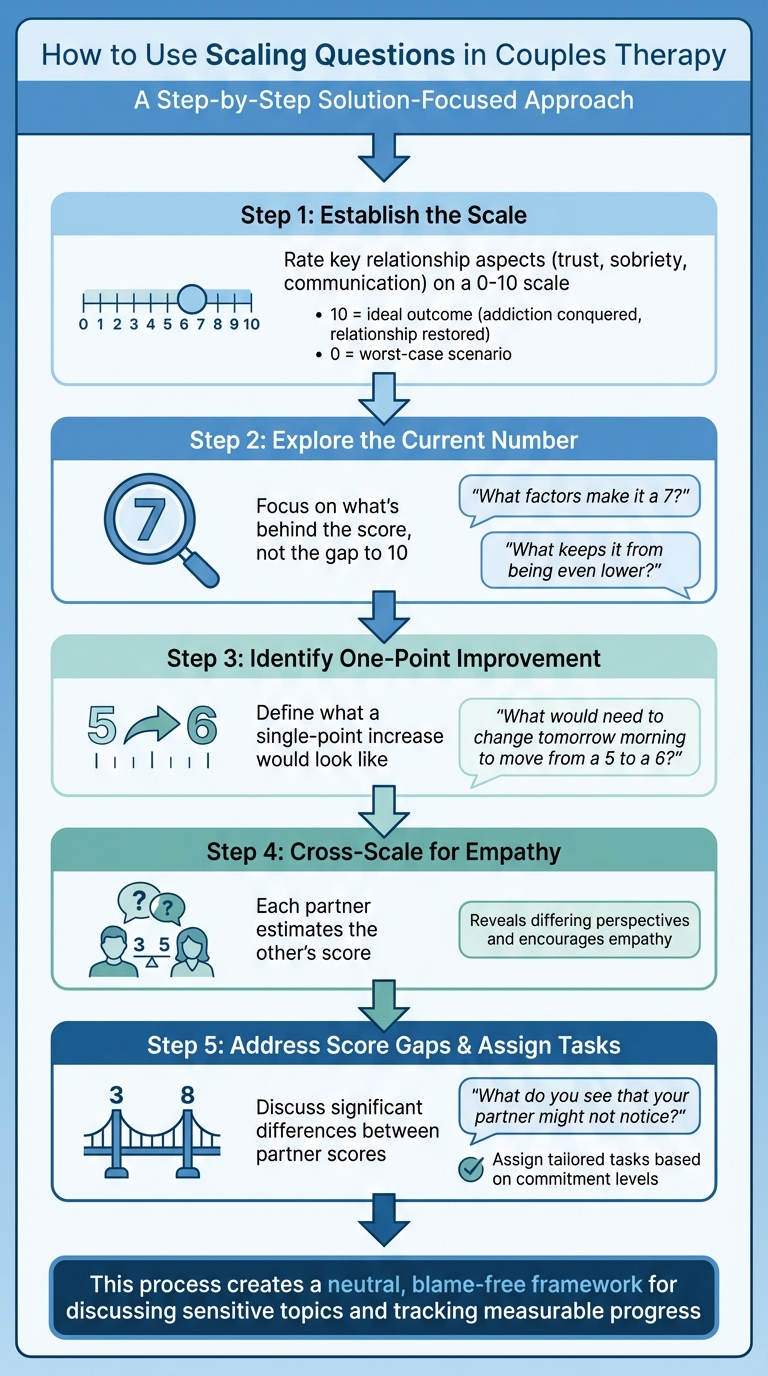
Solution-Focused Scaling Questions: 5-Step Process for Couples in Addiction Recovery
Step-by-Step Guide to Scaling in Joint Sessions
Therapists use a 0-to-10 scale to help couples evaluate key aspects of their relationship, where 10 represents the ideal outcome – addiction conquered and the relationship fully restored – and 0 marks the worst-case scenario. Partners rate areas like trust, sobriety, and communication on this scale.
When a partner shares their score, the focus shifts to what’s behind that number instead of how far it is from 10. For instance, if someone rates their confidence at a 7, the therapist might ask, "What factors make it a 7?" For lower scores, questions like, "What keeps it from being even lower?" help uncover small but meaningful strengths.
The next step involves identifying what a single-point improvement would look like in practical terms. Rather than vague goals, the therapist might ask, "What would need to change tomorrow morning to move from a 5 to a 6?" Cross-scaling, where each partner estimates the other’s score, encourages empathy and reveals differing perspectives.
If there’s a big gap between scores (e.g., one partner gives a 9 while the other scores a 3), this difference becomes a useful discussion point. Questions like, "What do you see in your relationship that your partner might not notice, which gives you hope?" can uncover hidden strengths or overlooked perceptions. Using this information, therapists can assign tailored tasks, such as offering a compliment for minimal engagement or practicing specific behaviors when commitment is higher.
These steps create a solid foundation for using scaling questions to explore and clarify each partner’s perspective.
Examples of Scaling Questions for Couples
Here are some targeted scaling questions designed for different aspects of recovery. These examples show how scaling can address specific challenges:
For sobriety:
- "On a scale of 0 to 10, where 10 means complete freedom from addiction and 0 means being fully controlled by it, where do you see yourself today?"
To assess trust:
- "On a scale of 0 to 10, how much do you believe your partner wants this marriage to work? And how much do you think they believe you want it?"
For communication and emotional connection:
- "If 10 represents the best possible connection given the current circumstances, where do you think your partner would say your relationship stands today?"
To measure confidence and willingness to change:
- "On a scale of 0 to 10, where would your partner place you in terms of your willingness to address the drinking problem?"
To evaluate investment in the recovery process:
- "On a scale of 0 to 10, how committed do you feel to resolving this issue? And how committed do you think your spouse is?"
These questions help break down complex challenges into clear, actionable steps, encouraging open conversation and fostering a solution-oriented mindset between partners.
Benefits of Scaling Techniques in Recovery
Scaling techniques offer a way for couples to break free from the rigid "all or nothing" mindset that often overshadows addiction recovery. Rather than seeing progress as either total success or complete failure, these methods encourage a more nuanced perspective, helping partners notice small but meaningful steps forward. This approach can ease the daunting feeling that recovery is an insurmountable challenge.
Psychotherapist Mark Tyrrell explains how assigning numbers to emotions can bring a sense of calm:
"Scaling switches the conversation from being ‘about’ emotions to being ‘about’ numbers – and this in itself can help people feel calmer."
By engaging the "thinking brain" instead of the "emotional brain", couples can distance themselves from overwhelming feelings and assess their situation with greater objectivity. This shift makes problems feel more contained and manageable. Beyond clarifying emotions, this method also reveals untapped strengths, complementing the practice of setting small, achievable goals.
Scaling also highlights hidden resources. For instance, when a therapist asks, "Why are you a 3 and not a 0?" it prompts partners to reflect on the coping strategies and efforts that have kept them from slipping further. Ayisha Amatullah, Director of Universal Coach Institute, emphasizes the value of this approach:
"The main goal is to identify what is already working for them so they can see the solutions that may already be present."
Focusing on what’s working – rather than what’s wrong – helps build a sense of hope and confidence, reinforcing the idea that meaningful change is within reach.
Moreover, scaling provides a clear framework for tracking progress. Instead of vague debates about whether things are improving, partners can use specific numbers to pinpoint their current state and discuss what it would take to move up just one level. Fangzhou Yu from The Family Institute at Northwestern University highlights the motivational power of this process:
"The ongoing scaling process encourages and motivates the couples and families to eventually achieve their final therapeutic goals."
Even small advancements – like moving from a 4 to a 5 – serve as tangible proof that progress is happening, reinforcing the belief that recovery is possible and aligning with earlier strategies for measurable growth.
Growth and Change Counseling Services for Couples in Recovery
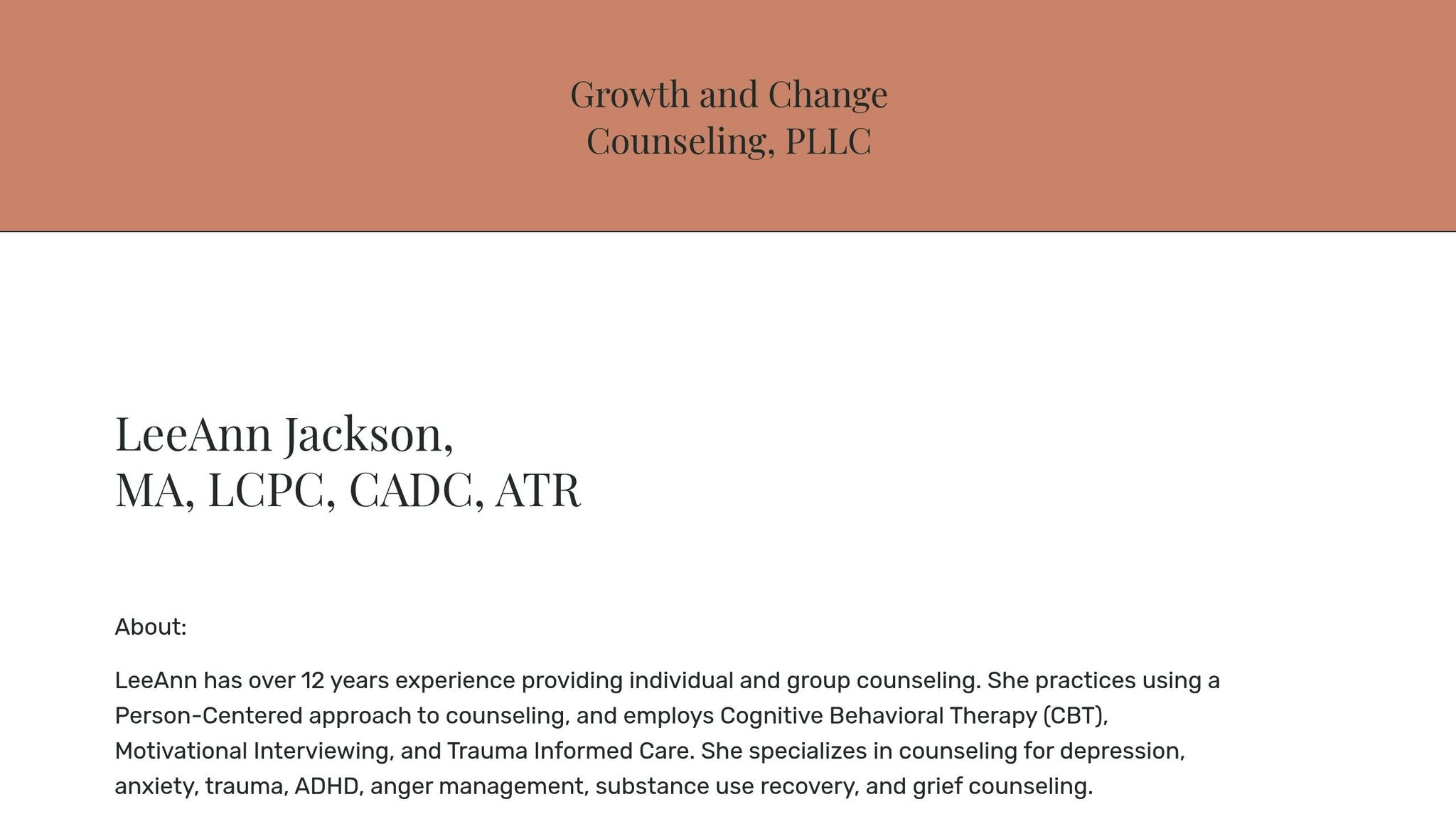
Growth and Change Counseling incorporates solution-focused scaling techniques into specialized therapy for couples navigating addiction recovery. A standout offering is the Marriage Rescue Institute, a focused 12-week program designed to help couples in crisis due to substance or behavioral addictions. John Mark Kane, LMFT, the founder of the practice, describes its purpose:
"The Marriage Rescue Institute, our 12 week marriage program is in the habit of putting marriages in dire circumstances back together!"
[2] This intensive program uses scaling questions to track small but meaningful progress, making even tough challenges feel more approachable.
The counseling practice follows a solutions-focused, integrative model to ensure consistent outcomes across all therapists. This framework combines Emotion Focused Therapy, Cognitive Behavioral Therapy, and EMDR, addressing the core issues driving addiction rather than just treating surface-level symptoms.
A key component of the program is relational homework, which helps couples solidify the progress made during sessions. This homework encourages partners to use scaling questions to measure their confidence and connection between sessions. By tracking small improvements – like moving from a 4 to a 5 – couples can see tangible progress and stay motivated. Arione Capolupo, LMFT, emphasizes the practical nature of this approach:
"We don’t believe in endless therapy. Our goal is to get you in and out as quickly as reasonably can be done and do it with the aim of sustainable change!"
For those unable to attend in person, telehealth services provide the same high level of care across California, from Campbell and San Jose to Los Angeles and Roseville. These virtual sessions maintain the structure and accountability essential to the scaling framework, while offering the convenience and privacy that busy couples often need. Beyond couples therapy, the practice also offers individual therapy and parent coaching, recognizing that supporting the entire family system can lead to more enduring results.
Proven Tools for Recovery at Growth and Change Counseling
Scaling techniques, inspired by solution-focused therapy, offer a practical way to measure progress in addiction recovery. By assigning numbers on a 0–10 scale to abstract ideas like trust and sobriety, couples can track small but meaningful improvements – like moving from a 4 to a 5. This method steers conversations away from blame or past setbacks and toward actionable steps that both partners can take together, building confidence in the recovery process.
The impact of this approach is backed by research. Behavioral couples therapy has shown a 50% abstinence rate compared to 30% with individual treatment. It also leads to fewer drug-related arrests (8% vs. 28%) and a lower likelihood of inpatient episodes (13% vs. 35%) [5]. These results demonstrate how focusing on positive changes can create a ripple effect, where healthier relationships support long-term recovery.
Scaling questions also provide a neutral way to communicate. Asking, "What would help us move from a 4 to a 5?" shifts the focus from unproductive arguments to actionable solutions. This shift in dialogue lays the foundation for lasting progress.
For couples navigating the challenges of addiction, professional support can turn these small steps into meaningful change. Growth and Change Counseling offers an integrative, solution-focused approach, including programs like the 12-week Marriage Rescue Institute [2]. With offices in Campbell, San Jose, Los Angeles, Roseville, and telehealth services across California, they are ready to help you take the first step toward recovery and connection.
FAQs
How do scaling questions enhance communication during addiction recovery?
Scaling questions are a powerful tool for turning emotional or abstract topics into clear, measurable discussions. For instance, a therapist might ask, “On a scale of 0 to 10, how confident are you in managing cravings today?” or “What could help shift your confidence from a 4 to a 5?” These kinds of questions encourage partners to articulate their feelings in a way that’s easier to understand and discuss.
This method also sheds light on differing perspectives. One partner might rate their sense of hope as a 7, while the other sees it as a 3. These differences open the door to meaningful conversations about fears, strengths, and areas for growth. Revisiting the scale over time offers a tangible way to track progress, helping couples celebrate small wins and stay motivated in their journey.
At Growth and Change Counseling, scaling techniques play a central role in couples coaching. They help partners build trust, enhance communication, and take actionable steps toward meaningful change – all within a supportive environment.
How does Solution-Focused Brief Therapy help couples recovering from addiction?
Solution-Focused Brief Therapy (SFBT) works well for couples navigating addiction recovery because it shifts the focus from dwelling on problems to building on what’s already working. It helps partners set clear, actionable goals and keeps the attention on creating positive changes in the near future.
This method incorporates practical tools like scaling questions to gauge progress and boost motivation. It also uses personalized strategies tailored to each couple’s specific strengths and relationship dynamics. By focusing on achievable, action-oriented goals, couples can monitor their progress and celebrate small victories along the way.
At Growth and Change Counseling, these SFBT techniques are woven into couples-coaching programs, helping partners not only maintain recovery but also deepen their connection and strengthen their bond.
How can couples use scaling techniques to track progress in addiction recovery?
Scaling techniques, commonly used in solution-focused therapy, offer couples a way to measure their recovery journey using a simple 0-to-10 scale. A therapist might ask something like, "On a scale of 0 to 10, where 10 means you feel fully supported in each other’s recovery and 0 means you feel completely stuck, where would you place yourselves today?" This number becomes a foundation for meaningful conversations and tracking progress.
Here’s how couples can use this method to navigate their recovery:
- Set a starting point: In the first session, couples rate their current levels of trust, cooperation, or confidence in sobriety.
- Check in regularly: Each session, they revisit the same question to see how things have shifted over time.
- Discuss the changes: If the score has improved, they explore what actions or behaviors contributed to the positive shift. If it’s lower, they identify obstacles and strategize ways to overcome them.
- Focus on small steps: Instead of aiming for dramatic change, they set manageable goals – like moving from a 3 to a 4 by attending a recovery meeting together.
This method allows couples to see their progress clearly, celebrate even the smallest victories, and stay motivated as they build toward lasting recovery.
Related Blog Posts
- Addiction Recovery with Solution-Focused Therapy
- Building Resilience: Solution-Focused Therapy for Addiction
- Solution-Focused Therapy for Addiction Recovery Couples
- Addiction Recovery and Marriage: What Works
