If you want to grow closer to God and closer to each other, keep it simple: pray together, pick 2–3 clear goals, put them on the calendar, and review them once a month.
I’d boil the whole article down to this:
- Start with prayer
- Agree on one shared vision
- Look at your current habits honestly
- Choose small goals you can track
- Build a weekly plan
- Review progress every month
Most couples do better with small, clear habits than big plans. For example, “pray together for 5 minutes three times a week” will usually work better than “be more spiritual.” That matters because habits are easier to keep when life gets busy. And busy is normal.
A simple plan also helps when marriage feels strained. If trust is weak, conflict keeps repeating, or you feel distant, one shared next step can bring some order back. Even a short daily prayer or weekly check-in can help you move from talk to action.
Quick view:
| Step | What I’d focus on | Simple example |
|---|---|---|
| 1 | Pray and agree on direction | Write a 1–2 sentence vision |
| 2 | Review current habits | Talk about prayer, Bible reading, church, service |
| 3 | Pick clear goals | Pray together 3 mornings a week |
| 4 | Schedule the habits | Add prayer time to a shared calendar |
| 5 | Review and adjust | Meet once a month for 15 minutes |
One fact stands out to me: the article recommends just 2–3 goals at a time. That’s smart. Fewer goals usually mean a better chance of follow-through.
The main point: spiritual growth in marriage does not need to be big or complex. It needs to be shared, clear, and steady.
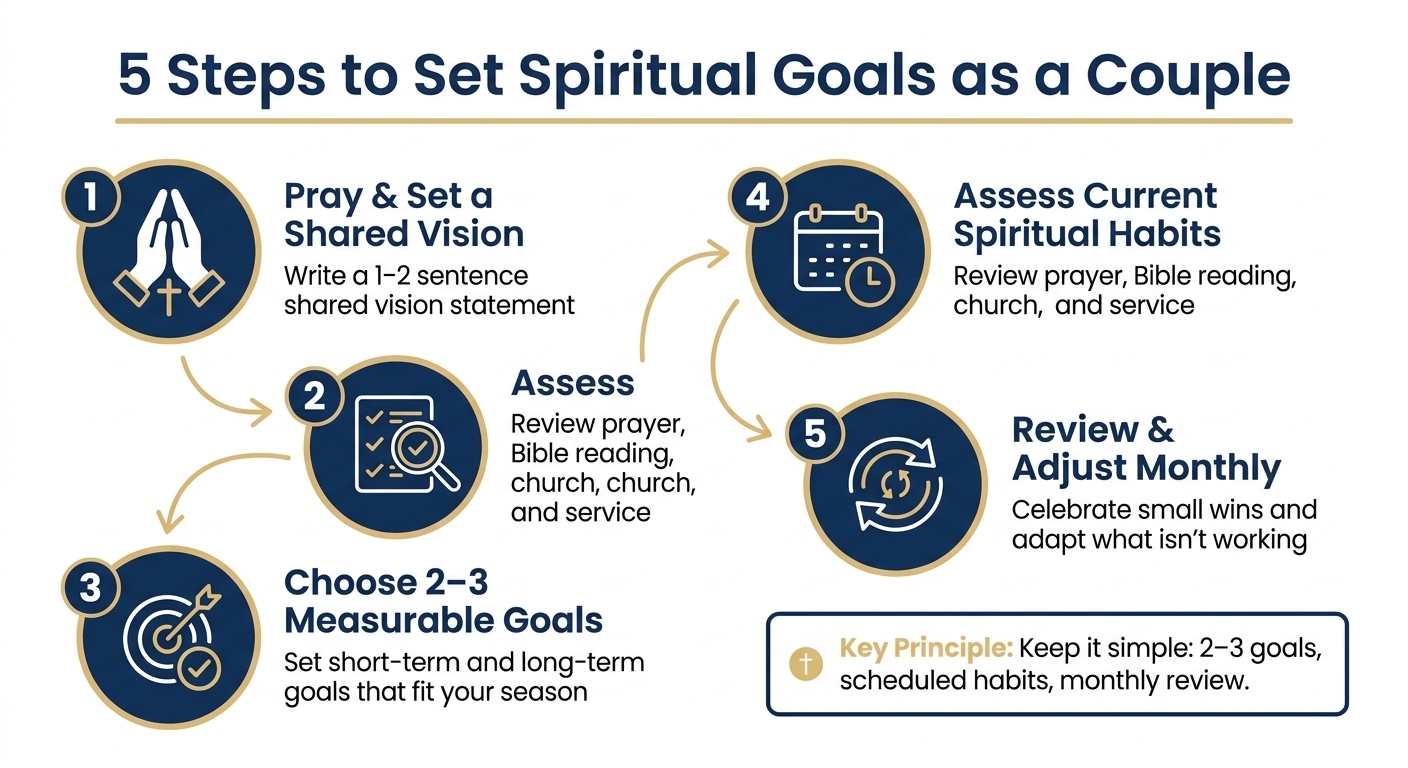
5 Steps to Set Spiritual Goals as a Couple
How to Connect Spiritually. Connect in Faith together.
sbb-itb-596b85d
Step 1: Pray Together and Set a Shared Spiritual Vision
Before you write down a single goal, pray together. Start there. Proverbs 16:3 says, "Commit to the Lord whatever you do, and your plans will succeed." [4] Bringing your marriage goals to God first can shift the whole conversation. It slows you down, puts you on the same page, and helps you think about where your marriage is headed.
Pick a time when you’re both calm and not rushing out the door. The prayer doesn’t need to be long. Even a brief prayer can bring unity at the start, and Matthew 18:19 connects agreement in prayer with answered prayer.[5][6]
Ask Clear Questions About Where You Want to Grow
After praying, talk openly and name the areas where your marriage needs to grow. Be specific. A prayerful conversation about actual struggles usually helps more than staying broad or vague.
A few questions can make that easier:
- What does God want to strengthen in our marriage this year?
- Where are we currently neglecting our spiritual life?
- Are there any resentments or unresolved issues we need to surrender to God before moving forward?
- How can our marriage be used to bless others in our church or community?
If communication has been hard, say that. If selfishness keeps getting in the way, bring that up too. Clear prayers often lead to clearer goals. And if one spouse feels less ready in this area, go gently. Pushing usually backfires. A calm, kind tone goes a long way.
Write a One- or Two-Sentence Vision Statement
Once you both have some clarity, put it into a short shared vision. Write down what you want your spiritual life together to look like. Keep it simple. Something like "We want our home to be a place of prayer, honesty, and grace" works well.
This isn’t a contract. It’s a guide. It gives you a simple answer to the why behind your marriage goals and helps keep your focus on God’s purpose, not just personal success. Write it in a journal, place it on your nightstand, or keep it somewhere you’ll both see often. Let that statement anchor the goals you set next.
Step 2: Assess Your Current Spiritual Habits
With your shared vision in mind, take a clear look at your current spiritual habits – not the version of yourselves you hope to be someday. Use that vision as the benchmark for this check-in.
Before you sit down together, each of you should spend a little time reflecting on your own. Ask yourself: Where am I personally neglecting my spiritual life? and What practices have actually meant something to me over the past year? Doing this on your own first gives you more clarity. It also helps you come into the conversation ready to share, instead of just reacting in the moment.
Review Prayer, Bible Reading, Church Involvement, and Service
Take an honest look at the whole picture – your shared habits and your personal ones. That includes prayer, Bible reading, church involvement, service, and forgiveness in your marriage.
The goal here is honesty, not blame. If one of you has a hard time with standard Bible reading, say that plainly. If church attendance has slipped, put it on the table. Don’t treat those gaps like personal failures. Treat them like shared issues you can work on together.
And be practical. If a podcast helps more than reading, use that. Go with the format you’ll stick with.
Compare Your Current Pattern With Your Desired Pattern
Now map the distance between your current habits and your shared target.
| Spiritual Practice | Current Pattern | Desired Pattern |
|---|---|---|
| Shared Prayer | Occasional, mostly at meals | 5 minutes of shared prayer every morning |
| Bible Reading | Individual reading twice a week; no shared study | Listen to a Bible podcast together weekly |
| Church Involvement | Sporadic, twice a month | Consistent weekly attendance and joining a small group |
| Serving Others | Nothing scheduled | Volunteer at the local food bank once a month |
| Other Rhythms | Inconsistent generosity and slow to forgive | Set a monthly giving target; resolve conflicts before bed |
Start with the habits that already have some momentum. Then use the biggest gaps to pick one or two measurable goals next.
Step 3: Choose Specific Spiritual Goals You Can Measure
Pick 2–3 spiritual goals based on the gaps you spotted in Step 2, and give each goal a clear deadline. The gap between where you are now and where you want to be will help you see which goals matter most.
Set Short-Term and Long-Term Goals
Think in two timeframes. Short-term goals shape the daily and weekly habits that keep your spiritual life moving. Long-term goals give those habits a bigger sense of purpose and direction [3][1].
A short-term goal might be praying together for 30–60 seconds each day or memorizing one Bible verse each month [5]. A long-term goal might be building a 5–10 minute daily prayer routine or finishing an 8-week couples’ devotional [5][1][2].
That mix works well for a simple reason: one small habit keeps you going, while one larger milestone gives you something to aim for. Start with one habit you can stick with this week, then build from there.
Choose Goals That Fit Your Season of Life
Your goals should match your actual life, not your ideal one. If you’re caring for small children, working long hours, dealing with money stress, walking through conflict and needing biblical resolution, or just plain tired, smaller and more focused goals usually make more sense [1][2]. A 10-minute daily spiritual check-in will often help your marriage more than a big plan you quit after two weeks.
Here’s a simple side-by-side view of a few realistic options [1][2][3]:
| Goal Type | Time Required | Spiritual Impact |
|---|---|---|
| Daily Shared Prayer | Low (5–10 mins) | High (Unity) |
| Monthly Scripture Memory | Very Low (5 mins) | Medium |
| 8-Week Couples Devotional | Low/Medium (10–15 mins) | High |
| Weekly Worship Service | Medium (2–3 hours) | High (Community) |
| Monthly Shared Service | High (2–4 hours) | Very High |
| Annual Spiritual Retreat | Very High (2–3 days) | Very High |
A good place to start is simple:
- Choose one low-demand goal that can anchor your week
- Add one longer-term goal that gives you both something to work toward
That’s enough. One steady habit and one long-term goal can give your marriage a clear rhythm without making spiritual growth feel like one more heavy task on the calendar. Once you’ve picked the goals, the next step is to work them into your week.
Step 4: Build a Weekly Plan and Get Support to Stay Consistent
Once you’ve picked your goals, put them into a weekly plan. Without that step, good intentions tend to fade.
Put Spiritual Habits on the Calendar
This is the point where spiritual goals stop being abstract and start becoming part of your weekly marriage rhythm. If your spiritual life depends on leftover time, it usually gets pushed aside. A simple move can make a big difference: put these habits on a shared calendar, set a recurring reminder, and keep a written list somewhere you’ll see it often – inside a Bible, on a nightstand, or pinned on your phone.
A plan works better when it has a clear time and place.
It also helps to decide ahead of time who starts each practice, so one spouse isn’t carrying the whole spiritual load.
| Spiritual Habit | Frequency | Practical Implementation |
|---|---|---|
| Shared Prayer | Daily | 30–60 seconds before bed or before work |
| Daily Spiritual Check-in | Daily | A 10-minute conversation about spiritual health |
| Scripture Study | Weekly or monthly | Read one Psalm or a short devotional paragraph together |
| Worship/Service | Weekly | Attend church or volunteer together |
| Progress Review | Monthly | Check what is working and adjust the plan |
Get Counseling Support When Conflict Keeps Blocking Progress
If you still can’t stick with the plan because of conflict, the issue may run deeper.
Some couples hit a wall that a shared calendar won’t fix. When unresolved hurt, broken trust, addiction, or trauma keeps getting in the way of your spiritual plan, outside help can make room for progress. Growth and Change Counseling offers couples counseling through The Marriage Rescue Institute, a focused 12-week intensive coaching process built to help couples in serious conflict repair their marriages.
If conflict keeps disrupting your spiritual rhythm, counseling can help clear the path.
Once that rhythm is in place, review it each month and adjust as needed.
Step 5: Review Progress, Adjust the Plan, and Keep Going
Once you have a weekly plan, give it a monthly check-in so it doesn’t drift into the background. A shared spiritual plan can lose steam fast when no one pauses to look at it. Life changes. Schedules shift. Stress shows up out of nowhere. Your plan should be able to shift too.
What matters most is this: check whether your spiritual goals are actually helping you grow closer and build unity.
Check In Monthly and Celebrate Small Signs of Growth
Set aside one set time each month to sit down together, look at how things went, and notice the small signs of growth. Keep the conversation simple:
- What worked?
- What slipped?
- What should we change?
The goal is not perfection. It’s honest adjustment.
Each month, name one clear sign of growth and celebrate it together. Maybe you prayed more often. Maybe hard conversations got calmer. Maybe you stayed more steady with one small habit than you expected. Small steps count.
If something isn’t working – if reading the Bible together feels forced, for example – change it without guilt. Try something that fits your life better, like listening to a Bible reading podcast or watching a message together [1]. Spiritual growth isn’t linear, and setbacks don’t mean failure. When conflict throws off the plan, marriage counseling can help you deal with it early through confession and repentance so you can restore connection and return to shared prayer, shared habits, and a shared direction together [5].
Conclusion: Keep Spiritual Growth Simple, Steady, and Shared
A monthly review helps keep your goals shared, realistic, and active. Consistency matters more than intensity. Shared commitment, grace when things slip, and a willingness to adjust the plan are what make spiritual goals part of everyday married life.
Keep spiritual growth simple: pray, review, adjust, repeat.
FAQs
What if my spouse isn’t interested?
It’s common for one spouse to care more about spiritual growth than the other. If that’s where you are, stay steady, not harsh. Skip the nagging. Offer gentle invitations instead, and pay close attention to your own obedience and tone.
Keep praying for your marriage in private and do it with consistency. When your spouse shows even a little interest, celebrate it. Small steps still matter.
If things feel stuck, Growth and Change Counseling offers specialized support, including intensive couples coaching through The Marriage Rescue Institute.
How do we stay consistent when life gets busy?
Focus on small habits you can stick with instead of trying to do everything perfectly. Consistency matters more than long, intense efforts. A brief daily practice can go a long way, whether that’s praying together for 60 seconds or having a 10-minute check-in about your spiritual health.
It also helps to keep your goals realistic. Life changes, schedules shift, and some weeks feel packed from start to finish. Adjust your plans as needed, then use a weekly or monthly check-in to see how things are going and make updates.
What goals make sense for our season of life?
Take time to look back on the past year together. Talk honestly about the moments that felt full of grace and the moments that felt hard. Name the highs and the lows. Share which habits helped you draw near to God – maybe prayer, Scripture, church, worship, silence, or serving others – and which seasons made that connection feel strained.
Be specific. One of you may have felt close to God through steady morning prayer, while the other may have struggled through stress, doubt, burnout, or distraction. That kind of honesty matters. It helps you see each other more clearly, and it keeps the conversation rooted in truth instead of vague good intentions.
From there, shift to where you are right now. This current season matters more than some ideal version of what you think your spiritual life should look like. Ask: what does each of you need most at this point? One person may need rest. The other may need structure. One may be hungry for deeper Bible study, while the other may need help saying what’s going on inside.
Pay attention to both strengths and gaps. Maybe you pray well together but don’t communicate deeply. Maybe you talk openly but haven’t built a steady rhythm of studying Scripture. Maybe one of you leads easily, while the other hangs back. None of that is a reason for shame. It’s just useful information.
Choose goals that are intentional and small enough to keep. Don’t load this season with pressure. Pick practices that match your actual capacity, not your best-case fantasy. A few simple ideas:
- Pray together for 10 minutes, three times a week
- Read one passage of Scripture together each week and talk about it
- Set aside one check-in each week to talk about your spiritual life
- Pick one area where each person wants to grow and revisit it at the end of the month
The point isn’t to do more just to feel good about yourselves. It’s to make room for steadiness, honesty, and growth that you can live out right now.
Overcoming Obstacles with Growth and Change Counseling
- Faith-Based Tools for Couples in Recovery
- How Christian Values Shape Parenting in Marriage
- Ultimate Guide to Emotional Intimacy Through Shared Faith
- How Shared Faith Builds Marital Resilience
