Shared faith can strengthen marriages by providing a unified foundation to navigate challenges. Couples who share spiritual beliefs often report higher satisfaction, better communication, and deeper emotional connections. Key practices like praying together, studying scripture, and engaging in faith-based activities create a bond that helps couples face hardships with unity and grace.
Here’s a quick breakdown:
- Daily Practices: Spend 5–15 minutes praying or reading scripture together.
- Forgiveness: Use faith to let go of resentment and rebuild trust.
- Conflict Resolution: Pause and pray during disagreements to approach issues calmly.
- Counseling Support: Faith-based counseling offers structured tools for healing and growth.
- Community: Join small groups or find mentors to strengthen your spiritual journey together.
Whether through small daily habits or professional support, keeping faith at the center of your marriage fosters resilience and unity.
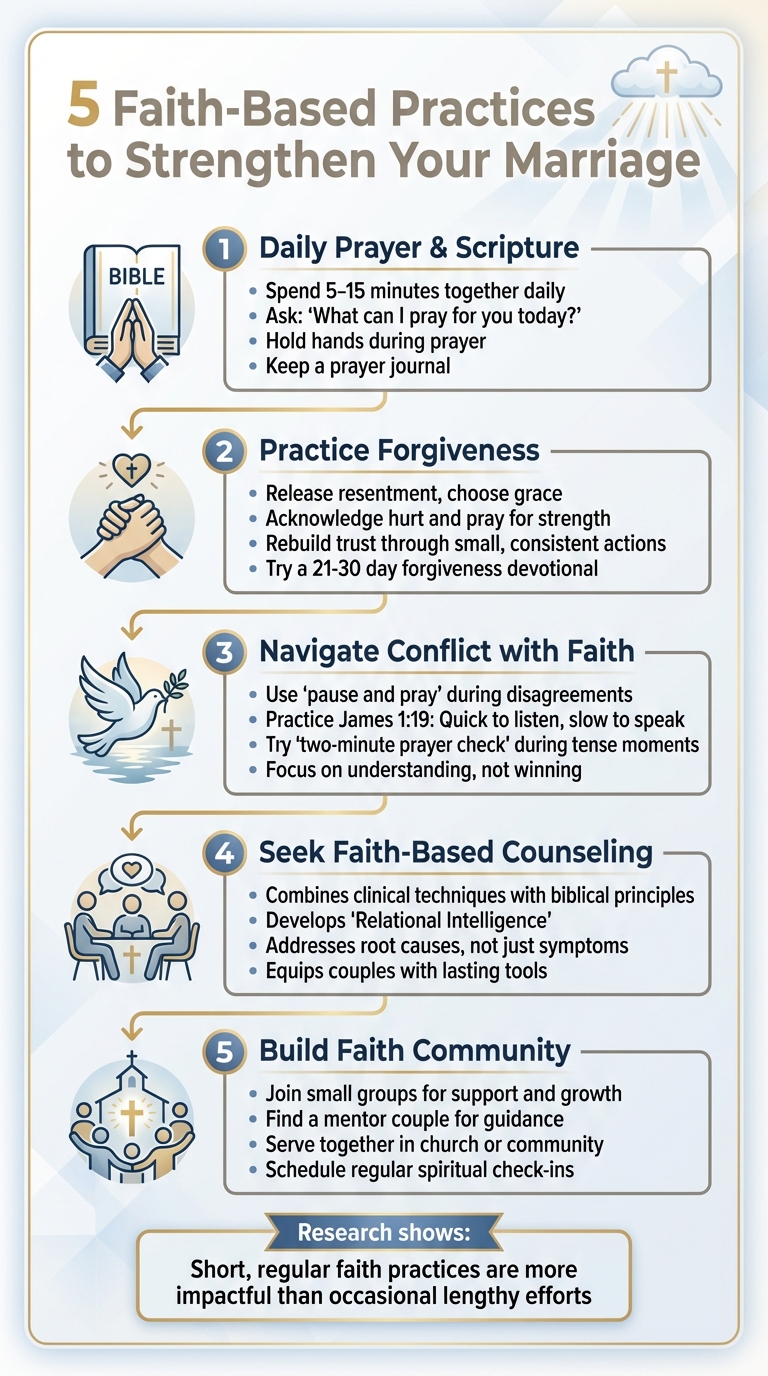
5 Faith-Based Practices to Strengthen Your Marriage
What 42 Years of Marriage Taught Us About Forgiveness & Faith | Crazy Little Thing Called Marriage
Evaluate Your Shared Spiritual Foundation
Take a moment to reflect on your spiritual connection as a couple. Start by considering your personal relationship with God and how it impacts your marriage. Dennis Rainey, co-founder of FamilyLife, emphasizes:
"Marriage first and foremost is a spiritual relationship. It works best when two people are connected individually to their God, walking with Him, obeying Him through Scripture, and praying as individuals and as a couple" [5].
This personal reflection is key to identifying and strengthening shared faith practices. Think about how your own prayer life, engagement with Scripture, and relationship with God influence how you communicate and interact with your partner. Do you notice the fruits of the Spirit – like love, joy, peace, and patience – shaping your relationship?
Identify Common Faith Practices
Have an open conversation about the spiritual activities you currently share or hope to develop. Do you attend worship services together? Do you pray as a couple, serve your community, or engage in small group discussions? These discussions can highlight the practices that naturally bring you closer and those that might require more focus.
Dennis and Barbara Rainey offer a meaningful example from their early marriage. During their first Christmas as newlyweds, they created an exercise called "Title Deeds to Our Lives." They each listed their most cherished dreams and goals – like "security" or "a healthy family" – and sealed them in an envelope addressed to "God Our Father." Eighteen years later, they revisited the envelope and realized how their perspective had shifted from material desires to prioritizing "what really counts: people and His Word" [5].
Once you’ve identified shared practices, take time to evaluate how your individual spiritual journeys align and support each other.
Understand Your Spiritual Compatibility
Spiritual compatibility doesn’t mean you need to share identical beliefs or be at the same stage in your faith journey. Instead, it’s about a mutual commitment to growing closer to God and letting Him guide your marriage. Kevin Wood, co-director of The Marriage Partnership, explains:
"Christian spiritual intimacy between a married couple is the deep shared connection, they have, in their mutual relationship with God where they seek to grow together in faith" [6].
To explore your compatibility, discuss three key questions: Are we both part of the family of God? Does Christ hold first place in our individual lives? Are we allowing the Holy Spirit to guide our decisions and actions? When disagreements arise – as they inevitably will – approach them with understanding. Use "I feel" statements instead of accusatory language, and create a safe, respectful space for your partner to share their spiritual struggles. Regularly checking in on your spiritual health as a couple can ensure both partners feel supported and valued on their faith journey.
Faith-Based Practices to Strengthen Your Marriage
Once you’ve reflected on your spiritual foundation, the next step is to bring that faith to life through daily actions. Even dedicating just 5 to 15 minutes a day to specific practices can help build a deeper connection and create resilience in your marriage.
Pray and Study Scripture Together Daily
Start small and make this part of your routine. Spend 5 to 15 minutes each day praying and reading a short scripture passage together. Pair this with an existing habit – like morning coffee or winding down before bed – to make it easier to stick with.
Ask your spouse a simple but meaningful question like, "What can I pray for you today?" This opens the door to understanding their worries, goals, or emotional needs. Holding hands during prayer can also create a feeling of closeness and strengthen your emotional bond. After reading a verse, such as one from Psalms or Proverbs, take a moment to discuss it with an open-ended question. This encourages thoughtful conversation and shared reflection.
You might also keep a prayer journal to track requests and answered prayers. Over time, this can serve as a powerful reminder of how faith has guided your relationship through different seasons. To keep things fresh, alternate roles – one of you can lead the prayer while the other reads the scripture. This shared responsibility ensures both partners stay engaged. By committing to this daily practice, you’ll build the spiritual tools to navigate challenges with grace.
Practice Forgiveness Through Faith
Forgiveness doesn’t mean excusing hurtful actions – it’s about letting go of resentment and choosing grace. Richmond Kobe puts it well:
"Forgiveness isn’t excusing wrong, but releasing the grip of resentment. It frees both partners and strengthens trust" [9].
Scripture offers guidance here, such as Colossians 3:13, which encourages us to forgive as we have been forgiven.
When hurt arises, start by acknowledging it and praying for the strength to forgive. Humility is key – own your part in conflicts and recognize that forgiveness is often a decision made before the emotional pain fully fades. It’s an act of obedience that can lead to healing over time.
Rebuilding trust doesn’t require grand gestures. Instead, focus on small, consistent actions. Keep promises, be transparent (like sharing calendars or decisions), and give your partner the benefit of the doubt when appropriate. You might also work through a 21- to 30-day devotional plan focused on forgiveness to help reshape your responses and repair emotional wounds. This practice creates a stable foundation for handling conflicts with calmness and faith.
Use Faith to Navigate Conflict
When disagreements arise, try the "pause and pray" approach. Stop the conversation and pray together, asking for God’s wisdom. This simple act can defuse tension and help you approach the issue with a calmer mindset. As Rodgers Christian Counseling explains:
"It is difficult to stay angry at someone you are praying with. Prayer softens the heart, encourages forgiveness, and helps couples see each other with compassion" [7].
Scripture can also guide your communication. For example, James 1:19 advises being quick to listen and slow to speak. Practice this by repeating back what your spouse says before responding – phrases like, "So what I’m hearing is…" show you’re actively listening. Approach conflicts with humility, focusing on valuing your partner rather than trying to "win" the argument, as Philippians 2:3 suggests.
Another helpful tool is a "two-minute prayer check" during tense moments. Each of you shares one praise and one need, followed by a short prayer for each other. This creates a safe, predictable space for honest communication and helps prevent minor issues from escalating into major disputes. By leaning on faith during conflicts, couples can build a stronger, more compassionate partnership.
sbb-itb-596b85d
Build Resilience with Christian Counseling Support
Sometimes, personal spiritual practices like prayer and scripture study aren’t enough to bring the healing or change we need. This is where professional counseling can step in, offering a clear plan to address deeper issues. Growth and Change Counseling combines clinical techniques with biblical principles to tackle the root causes of marital struggles, moving beyond surface-level fixes [7, 19].
Instead of endless discussions, this approach focuses on structured, actionable steps. Counselors help couples understand each other’s needs, improve communication, and develop what is called "Relational Intelligence" [10]. As John Mark Kane, LMFT, the founder, explains:
"Conflict is not the enemy; it is the road map to intimacy if done correctly." [10]
This method integrates prayer and biblical guidance to navigate challenges like infidelity, betrayal, and addiction [7, 20]. The goal isn’t to keep couples dependent on therapy but to equip them with tools to resolve conflicts and grow independently.
The Marriage Rescue Institute

For couples facing significant challenges, The Marriage Rescue Institute offers a 12-week intensive program designed to transform relationships in crisis. The program follows a three-phase structure:
- Weeks 1-2: Stabilize the relationship with immediate crisis intervention and stop harmful patterns.
- Weeks 3-8: Rebuild the foundation by fostering emotional and relational intelligence while healing past wounds.
- Weeks 9-12: Apply new skills to critical areas like finances and parenting while rebuilding trust and intimacy [10].
Sessions are 45 minutes long and cost $165, with coverage options available through major providers like Anthem Blue Cross, Aetna, United Health Care, Oxford, and Oscar Health [11]. Couples are also expected to complete "relational homework" – practical exercises that take 15 to 30 minutes daily and help turn new insights into lasting habits [18, 21]. To see if this structured coaching approach is a fit, couples can start with a free 15-minute consultation [10].
In addition to the intensive program, the institute offers broader support for families.
Additional Counseling Services
Growth and Change Counseling provides a range of services to support families and individuals. These include therapy for anxiety, depression, and trauma recovery using EMDR and somatic techniques. Parent coaching is available to help restore authority and foster healthy relationships with children, while specialized treatment is offered for addictions related to sex, media, and substances [19, 21].
For neurodiverse couples, the practice offers tailored counseling to address communication challenges when one or both partners have ADHD or Autism [19, 20]. Services are available both in-person across California and through secure telehealth options, making support accessible and flexible [18, 21].
Maintain Resilience Through Faith-Centered Habits
Structured counseling can provide the foundation for healing a struggling marriage, but the strength to endure often comes from the small, daily habits couples create together. It’s these consistent, faith-centered routines that build lasting resilience. Research shows that short, regular practices are more impactful than occasional, lengthy efforts [3]. The key? Weaving faith into your everyday life.
Build a Supportive Faith Community
Thriving as a Christian couple is tough without connection to others. Kevin Wood, Co-director of The Marriage Partnership, emphasizes this:
"It’s very difficult to grow as a Christian in isolation, so we encourage all Christian couples to be part of a small group or Christian community however big or small that is" [6].
Joining a small group offers a safe environment to explore Scripture, share challenges, and learn from the experiences of others walking a similar path. It creates a space where you can grow spiritually and relationally.
Additionally, finding a spiritually mature couple to mentor you can be transformative. This "Priscilla and Aquila" model provides guidance, encouragement, and accountability that’s difficult to achieve alone. Serving together in your church or community is another way to strengthen your bond. Whether it’s volunteering or participating in ministry, these shared acts of service allow you to see each other’s faith in action and connect with a purpose larger than yourselves [1]. These external connections complement and enhance the personal habits you cultivate together.
Develop Long-Term Faith Habits
While community offers external support, personal routines are the anchor for long-term growth. Simple, consistent habits keep your marriage grounded in God. Start with a daily prayer routine – just a few moments to share your hearts with each other and with Him [7]. Even if praying out loud feels uncomfortable at first, begin with a minute or two of honest, heartfelt words. Over time, this practice strengthens both your spiritual and emotional connection.
To keep things engaging, alternate responsibilities for devotions. You might use a "Bible in One Year" app or a shared prayer journal to track prayer requests and celebrate answered prayers. Scheduling regular check-ins to discuss your spiritual health as a couple is another valuable habit. These conversations help ensure that both of you feel nurtured and allow you to make adjustments to stay spiritually aligned [6].
When paired with the encouragement of a faith community, these daily practices create a strong foundation for a marriage that can withstand life’s challenges.
Forgiveness and Faith: Insights from Growth and Change Counseling
Strong marriages weather challenges through a deep, shared faith. This faith acts as the foundation for trust, love, and unity, holding couples together even in difficult times [2]. Inviting God into your relationship as the "third strand" creates a bond that’s not easily broken [4].
Start small by dedicating just five minutes a day to prayer, a shared devotional, or reading Scripture together [2][6][7][8]. A simple act like holding hands and asking, "What can I pray for you today?" can deepen your connection in ways that go beyond words or physical affection [7].
When personal efforts don’t seem enough, seeking professional support can help rebuild your relationship. Challenges like broken trust, poor communication, or emotional distance often require more structured solutions. Faith-based counseling blends biblical principles with clinical methods to guide couples toward healing. Growth and Change Counseling offers resources like The Marriage Rescue Institute, a 12-week program designed to restore struggling marriages. These services are available in Campbell, San Jose, Los Angeles, Roseville, and across California through telehealth.
While professional help is valuable, individual spiritual growth also plays a crucial role. When each partner strengthens their own relationship with God, they bring greater humility, patience, and love into the marriage [1][3]. Engage with a supportive faith community through small groups or mentorship, serve others together, and regularly assess your spiritual well-being to ensure both partners feel spiritually nourished [6]. By keeping God at the center, you build a marriage that reflects strength and unity [4].
Through prayer, mutual support, and consistent spiritual practices, you can anchor your marriage in faith. A relationship rooted in shared faith weaves strength and resilience into every part of your life together.
FAQs
What if my spouse and I aren’t at the same place spiritually?
It’s not unusual for couples to find themselves at different points in their spiritual journeys. However, with patience and intentional effort, this doesn’t have to create distance. Engaging in shared activities like prayer, Bible study, or attending church services together can foster mutual understanding and connection.
Open and respectful communication is critical – talking honestly about your beliefs and listening to each other’s perspectives can bridge gaps. If you find these differences challenging to navigate, consider seeking faith-based counseling. A counselor can offer guidance to help you work through differences while strengthening your bond.
With consistent care and a willingness to grow together, spiritual closeness can develop, even when starting from different places.
How can we start praying together without it feeling awkward?
Starting small can make praying together feel more approachable. Begin with simple steps, like creating a gratitude list where each of you writes short prayers of thanks. You might also try praying silently together or holding hands during prayer for added connection. Choosing a consistent time and a comfortable setting can help it feel more natural over time. Even little gestures, like holding hands or praying in the dark, can ease any initial awkwardness and help make prayer a meaningful part of your relationship.
When should we consider faith-based marriage counseling?
Faith-based marriage counseling offers a way to strengthen your relationship by weaving shared spiritual practices into your journey, especially during tough times or when seeking a deeper bond. It’s a meaningful choice for couples who want to incorporate elements like prayer, scripture, or worship into their relationship. This approach can be especially supportive when dealing with challenges such as addiction, betrayal, or emotional pain. By focusing on faith and trusting in God’s guidance, couples can find a path toward resilience and healing together.
Related Blog Posts
- 5 Ways Faith Supports Emotional Healing in Marriage
- Ultimate Guide to Emotional Intimacy Through Shared Faith
- Prayer and Forgiveness in Marriage Restoration
- Christian Counseling for Emotional Triggers in Marriage
