Building emotional intimacy in marriage starts with shared faith. This guide explores how Christian principles can strengthen your relationship, offering practical steps to deepen your connection. Key takeaways include:
- Marriage as a Covenant: Reflects Christ’s love for the Church, emphasizing commitment and vulnerability.
- Daily Practices: Praying, worshiping, and expressing gratitude together create trust and closeness.
- Forgiveness and Reconciliation: Address conflicts with humility, accountability, and grace.
- Overcoming Barriers: Tackle challenges like addiction or trauma with faith-based strategies and, when needed, professional counseling.
Biblical Principles for Emotional Intimacy
Marriage as a Covenant Like Christ and the Church
The Bible views marriage as a covenant deeply rooted in God’s steadfast character. In Ephesians 5:25–28, husbands are urged to love their wives just as Christ loved the church and gave Himself for her. This profound analogy reveals marriage as a sacred relationship that reflects Christ’s unwavering commitment to His people. Unlike fleeting emotions or shifting circumstances, this covenantal bond calls for enduring dedication. Even during conflict, spouses are encouraged to stay emotionally present – choosing to listen, understand, and engage rather than withdrawing. Genesis 2:24–25 further emphasizes the importance of complete vulnerability – physically, emotionally, and spiritually – within the safety of this covenant. Seen in this light, marriage becomes a refuge where both partners can openly share their deepest thoughts and struggles, knowing they are secure. Christ’s example of sacrificial love inspires spouses to genuinely care for each other’s emotional well-being, check in regularly, and actively seek reconciliation after disagreements.
This covenantal perspective naturally fosters an environment of mutual humility and service, as explored in the next section.
Love, Submission, and Serving Each Other
Ephesians 5:21 encourages believers to submit to one another out of reverence for Christ, establishing a foundation of mutual humility in marriage. This is not about control or dominance but about willingly setting aside personal preferences to meet each other’s emotional needs. Serving your spouse might look like giving your full attention when they’re upset, adjusting your schedule to make time for connection, or learning how they express and receive emotions. The qualities of love described in 1 Corinthians 13 – patience, kindness, selflessness, and a refusal to hold grudges – offer a blueprint for how couples can interact emotionally. Additionally, passages like Galatians 6:2, which calls us to bear one another’s burdens, and Ephesians 4:32, which urges us to be tenderhearted and forgiving, remind spouses to respond with empathy rather than criticism. When partners have different communication styles, choosing to serve each other – rather than focusing on self-protection – can bridge gaps and deepen emotional bonds.
Forgiveness and Reconciliation in Marriage
No marriage is without its share of emotional wounds, but the Bible provides a clear path to healing. James 5:16 encourages believers to confess their sins to one another, while Ephesians 4:31–32 advises letting go of bitterness and forgiving as God forgave us in Christ. Practically, this involves acknowledging hurtful actions and their impact without shifting blame. For instance, saying, "I dismissed your feelings when you tried to share", shows accountability and a desire for change. Forgiveness in Scripture is not about minimizing the pain or ignoring consequences; it’s about releasing the desire for revenge and choosing grace. It means deciding not to weaponize past mistakes while remaining open to rebuilding trust. True repentance is demonstrated through consistent efforts – better listening, a gentler tone, and keeping promises – all of which signal genuine healing and a commitment to growth.
"Conflict is a pathway to intimacy. If there’s no conflict in a relationship, at least one person isn’t being genuine." – John Mark Kane, LMFT, Growth and Change Counseling
For couples facing deep-seated resentment, trauma, or communication struggles, seeking professional help that aligns biblical principles with structured guidance can provide a path toward healing and renewed intimacy.
How to Build Emotional, Spiritual, and Physical Intimacy in Marriage | Dr. Doug Weiss
Faith-Based Practices to Build Emotional Closeness
Grounded in biblical principles, these practices help turn faith into daily acts that nurture intimacy and connection.
Praying and Worshiping Together
Prayer offers a unique opportunity for couples to be vulnerable – not just before God but also with each other. When you pray together, you share your deepest fears, hopes, and gratitude, opening doors to conversations that might otherwise remain locked. This kind of spiritual transparency builds trust and fosters emotional closeness. Start small: spend just five minutes each evening where both of you name two or three blessings and offer a short prayer for the following day. This simple habit invites God into your relationship and helps soften hearts toward one another.
Worshiping together, whether at church or in the quiet of your home, reinforces your unity as a couple before God. Make attending church a weekly priority, and afterward, take time to reflect together: "What stood out to you today? What challenged you?" Serving together in a ministry – like welcoming guests, helping with children’s programs, or participating in outreach – can also strengthen your bond. These shared experiences not only create a sense of teamwork but also cultivate a deeper sense of purpose and love through acts of service. Over time, these practices lay the groundwork for even more meaningful conversations about your faith journey.
Talking About Your Faith Journey
Building on shared worship, opening up about your personal spiritual experiences can take your connection to the next level. When you share the ways you’ve seen God at work or the moments you’ve struggled with faith, you’re inviting your spouse into your inner world. This kind of vulnerability fosters deeper emotional intimacy. Set aside time for a weekly "faith and feelings" check-in – 20 to 30 minutes on Sunday evenings works well. Use this time to ask questions like, "Where did you notice God this week?" or "What’s been spiritually or emotionally challenging for you lately?"
To dig deeper, try specific prompts such as, "What Bible verse has been on your mind and why?" or "Can you share a time when God answered your prayer in an unexpected way?" Journaling individually about spiritual highs and lows and then sharing excerpts with each other once a month can also be a powerful way to connect. These practices mirror the emotional vulnerability God intended for marriage, helping both partners feel truly seen and understood. By discussing your faith openly, you build intellectual and emotional intimacy, creating a relationship where both partners feel confident in each other’s support.
Expressing Gratitude and Affirmation Daily
Daily gratitude and affirmation are simple but powerful ways to strengthen your emotional bond. When you consistently thank and affirm your spouse, you shift the focus from frustrations to appreciation, creating an atmosphere where both partners feel valued and loved. This practice not only nurtures positivity but also builds the emotional safety needed for deeper vulnerability. Try a bedtime routine: share three things you’re grateful to God for, three specific things you appreciate about your spouse, and three affirmations rooted in Scripture. For example, you might say, "You reflect Christ’s love through your kindness, just like Ephesians 5:25 teaches", or "You are fearfully and wonderfully made, as Psalm 139:14 reminds us."
Small gestures throughout the day can also make a big difference. Send a quick text like, "Thank you for always being so patient", or "I appreciate how hard you work for our family." Consider keeping a shared gratitude journal where each of you writes one to three things you appreciated about the other that day. Occasionally, read these entries aloud during prayer time. In Christian counseling, gratitude and affirmation are often highlighted as tools that help couples thrive, even when life’s challenges feel overwhelming. These small, intentional acts create a foundation of love and support that can withstand difficult times.
sbb-itb-596b85d
Overcoming Barriers to Emotional Intimacy
Even with the best intentions, challenges like addiction, trauma, and chronic conflict can create emotional walls between spouses. These barriers go beyond surface-level disagreements – they replace your spouse and even God as sources of comfort. Addiction to substances, pornography, or work often begins as a way to manage stress or escape pain, but it inevitably leads to secrecy, dishonesty, and emotional withdrawal. You might notice behaviors like hiding online activity, repeatedly breaking promises to change, reacting defensively when confronted, or avoiding spiritual practices like prayer and church due to guilt or shame. Trauma – whether from childhood abuse, infidelity, or spiritual harm – can lead to hypervigilance, mistrust, and emotional numbing, making vulnerability feel unsafe. The following sections explore how these issues disrupt connection and offer steps to rebuild safety and trust.
How Addiction and Trauma Damage Intimacy
Addiction reshapes how someone connects with their spouse and with God. The addicted individual shifts their focus to a substance or behavior, leaving their partner feeling isolated, rejected, or abandoned. Daily life often becomes tense, with irritability, avoidance, and a sense of "walking on eggshells." One spouse may react explosively to difficult conversations, while the other emotionally checks out or shuts down. On a spiritual level, couples may stop praying together, feel disconnected from God, or become overwhelmed by shame, preventing them from addressing their struggles openly.
Trauma creates distance in different ways. A spouse carrying trauma might interpret everyday disagreements as threats, withdraw emotionally, or avoid physical and emotional closeness altogether. They may wrestle with questions like, "Why did God allow this to happen?" – questions that can make shared worship feel unsafe or even triggering. Recognizing addiction and trauma as forms of suffering, rather than simply "bad choices", helps couples move away from shame while still holding individuals accountable for their actions. Understanding these dynamics is a critical step toward healing and rebuilding connection.
Rebuilding Trust and Safety
Restoring trust after betrayal or trauma requires both practical actions and spiritual accountability. Trust is rebuilt through consistent, visible change. This means being transparent about behaviors, maintaining predictable routines, honoring commitments, and communicating with respect. Couples can establish daily check-ins to share openly about their day, create a shared plan for transparency around technology or finances, and agree on boundaries that both partners honor.
Faith can play a powerful role in this process. Couples can pray together for courage and honesty, study Scriptures that emphasize truth and repentance (like James 5:16: "Confess your faults one to another"), and seek guidance from a trusted pastor or mature Christian couple. Christlike communication involves four key elements: confession (acknowledging specific wrongs without excuses), repentance (showing clear steps toward change), empathy (truly listening to your spouse’s pain), and forgiveness (letting go of personal vengeance while maintaining healthy boundaries). For example, you might say, "When I did [specific action], I broke your trust. I see it made you feel [emotion]. I’m committed to changing by [specific step]." Forgiveness doesn’t mean trust is instantly restored, but it opens the door for God to work in the relationship over time.
When to Get Professional Counseling
Sometimes, professional counseling is necessary, especially in cases of ongoing addiction, repeated betrayal, emotional or physical abuse, untreated trauma, suicidal thoughts, or extreme conflict that always leads to escalation or withdrawal. Other signs include chronic hopelessness, fear of a partner’s reactions, significant effects on children, or years of trying self-help and pastoral care without meaningful progress. Counseling may also be vital if trauma symptoms like flashbacks or panic attacks persist, or if one partner’s defensiveness blocks intimacy and healing.
When prayer and self-help aren’t enough, professional counseling can provide the structure needed to move forward. Growth and Change Counseling offers therapy that integrates emotional and relational well-being, with specialized treatments for addiction, trauma, anxiety, depression, and neurodiverse relationships. Their Marriage Rescue Institute is a focused 12-week program designed for couples in crisis – those dealing with deep trust issues or who haven’t seen results from prior counseling. This program helps stabilize the relationship, rebuild safety, and establish new interaction patterns through assessments, clear goals, guided homework, and the integration of Christian values. Services are available in person across California (Campbell, San Jose, Los Angeles, and Roseville) or via telehealth statewide, making professional support accessible for couples seeking to rebuild emotional intimacy while staying grounded in their faith.
Building Your Plan for Emotional Intimacy
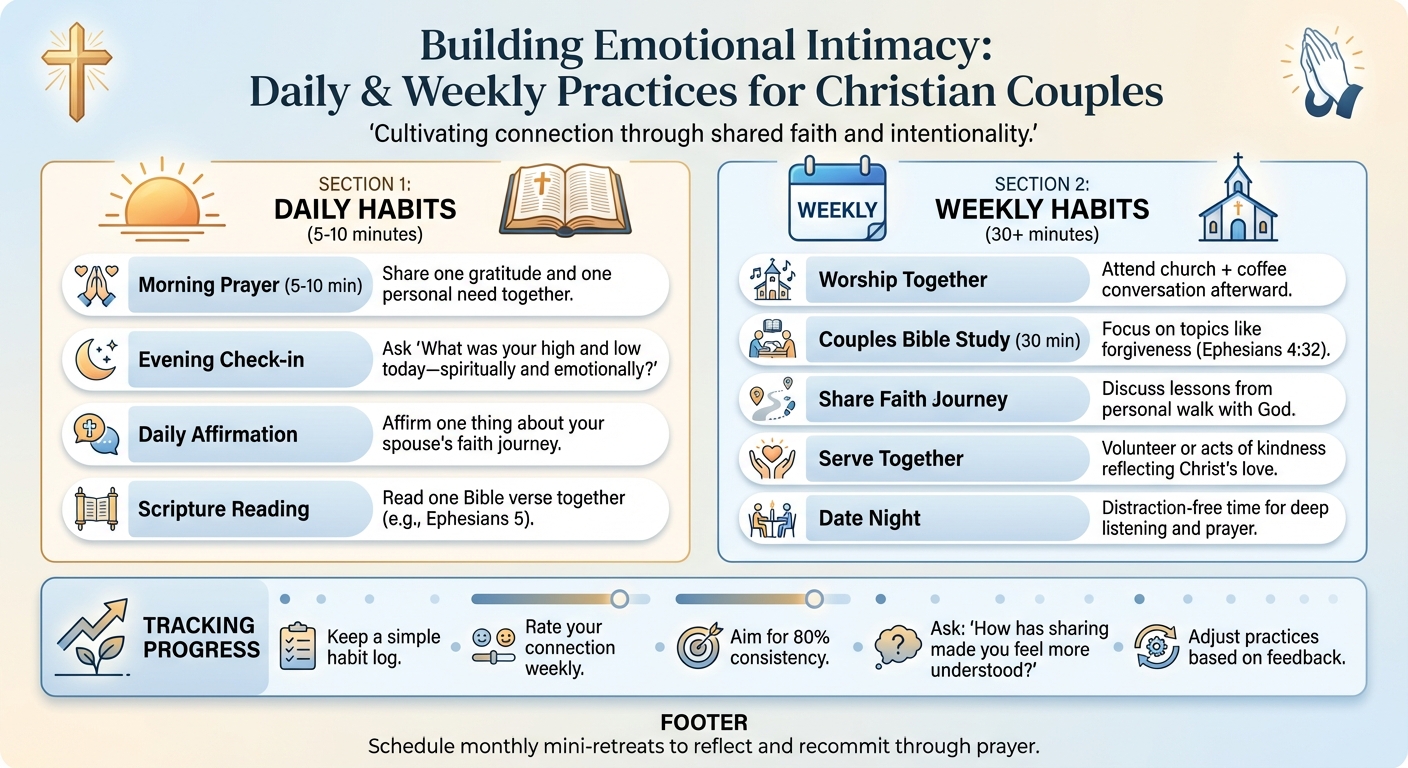
Building Emotional Intimacy Through Faith: Daily and Weekly Practices
Evaluating Your Current Connection
Taking an honest look at your relationship is the first step toward building emotional intimacy. Grounded in scripture, this reflection helps you understand where you stand and what needs attention. Ask yourself and your spouse these five key questions:
- On a scale of 1–10, how comfortable are you being emotionally close and trusting your spouse?
- Do you feel safe confiding in each other about anything – your fears, joys, and everything in between?
- Even when you’re apart, do you feel secure in your connection, knowing your spouse cares about your struggles and triumphs?
- How often do you share your inner thoughts, feelings, and faith journey without fear of judgment or shame?
- Are you spiritually aligned? Do you pray, study Scripture, and worship together regularly?
Next, take a closer look at patterns that might be holding you back. Are you stuck in cycles where one of you prioritizes your own needs over serving each other, as Jesus taught in John 13:34–35? Does one partner feel emotionally neglected because of a lack of meaningful communication? On a scale of 1–10, how safe do you feel being emotionally vulnerable with each other? Have past wounds, like addiction or trauma, created barriers to open and honest sharing?
Write down your answers individually, then come together in prayer to discuss them. Use this time to pinpoint areas where growth is needed. As John Kane, a relationship therapist at Growth and Change Counseling, explains:
"What you believe about yourself defines and shapes all of your relationships!"
If trust or emotional safety scores remain low after 4–6 weeks of intentional effort, consider seeking professional counseling. Ecclesiastes 4:12 reminds us that "a cord of three strands is not easily broken." Sometimes, that third strand is a counselor who can help you see what you might be missing.
Once you’ve assessed your connection, it’s time to establish habits that nurture emotional closeness every day.
Establishing Daily and Weekly Habits
Building emotional intimacy takes consistent effort. Start small by carving out 5–10 minutes each morning for joint prayer. Share one thing you’re grateful for and one personal need. At the end of the day, check in emotionally by asking, “What was the high and low of your day, both spiritually and emotionally?” This simple practice encourages empathy and helps you live out Romans 12:15: “Rejoice with those who rejoice; mourn with those who mourn.”
Take time to affirm one thing you appreciate about your spouse’s faith journey, and read a Bible verse together – passages like Ephesians 5 on mutual submission can offer powerful insights.
On a weekly basis, prioritize worshiping together. Attend church and follow it with a meaningful conversation over coffee, or dedicate 30 minutes to a couples Bible study on topics like forgiveness (Ephesians 4:32). Share lessons from your personal walk with God, and consider serving together, whether through volunteering or another act of kindness that reflects Christ’s love for the Church. Make time for a distraction-free date night focused on deep listening and prayer.
To track your progress, keep a simple log of completed habits and rate your connection weekly. Aim for consistency – about 80% adherence is a good goal. Regularly ask each other, “How has my sharing made you feel more understood?” and adjust your practices based on feedback.
With these habits in place, you’ll be better equipped to maintain and deepen your emotional connection over time.
Sustaining Growth Over Time
Think of your journey toward emotional intimacy as a continuous process. Over time, you’ll move from isolation to deeper connection through selfless love, as Galatians 5:13 teaches. Schedule monthly mini-retreats to reflect on your habits, confess any barriers, and recommit through prayer. During challenging seasons, turn to God together through fasting or extended worship to renew your strength.
Celebrate milestones – like a year of consistent habits – by creating gratitude lists as a couple. Every three months, revisit the evaluation questions to see how far you’ve come and identify any lingering struggles. Trust the Holy Spirit to guide you in overcoming false beliefs or fears that may still hinder your intimacy.
Strengthening Intimacy with Growth and Change Counseling
Strengthening emotional intimacy through shared faith can transform your marriage into a beautiful reflection of Christ’s love for the Church. By praying together, openly sharing your spiritual journey, and practicing gratitude daily, you build the connection that God designed for marriage from the very beginning.
This journey doesn’t require grand gestures – it starts with small, consistent steps. Dedicate 10 minutes each morning to prayer, take time in the evening to talk about your spiritual highs and lows, and confront challenges like unforgiveness or lingering wounds with honesty. As John Mark Kane, LMFT, wisely points out:
"What you believe about yourself defines and shapes all of your relationships!"
When your thoughts are anchored in Scripture and renewed by the Holy Spirit, you create a strong foundation for lasting intimacy. However, if trust remains elusive after four to six weeks of intentional effort, seeking additional support may be necessary.
Growth and Change Counseling offers faith-based therapy tailored to your needs, including The Marriage Rescue Institute – a 12-week intensive program for couples navigating challenging times. Services are available in Campbell, San Jose, Los Angeles, and Roseville, CA, as well as through telehealth across California, ensuring expert help is within reach.
Your marriage has the potential to flourish in Christ’s covenant love. Start today with one small habit, track your progress, and trust God to lead you toward the emotional and spiritual unity He desires for you both.
FAQs
How can shared faith help couples overcome challenges like addiction and trauma in their marriage?
Faith can play a significant role in helping couples face challenges such as addiction or trauma within their marriage. Building your relationship on the foundation of God’s love can offer hope, inspire forgiveness, and provide a sense of purpose, all of which are essential for healing and emotional recovery.
Through faith, couples can experience spiritual growth, find accountability, and connect with a supportive community. These elements are crucial for overcoming hardships, rebuilding trust, and strengthening the bond between partners. Together, faith and shared commitment can help couples create a stronger, more unified relationship.
What are some simple daily habits to strengthen emotional intimacy through shared faith?
Building emotional closeness through shared faith can grow from simple, consistent actions. Begin your mornings with a brief prayer together, seeking guidance and sharing gratitude. Dedicate time to read and talk about scripture as a couple, reflecting on how it relates to your relationship and everyday life. Show appreciation for each other often, recognizing ways your partner embodies God’s love. Also, make space for heartfelt discussions about your faith, personal struggles, and growth. These small but meaningful habits can strengthen your bond both spiritually and emotionally.
How do you know when it’s time to seek counseling for emotional intimacy struggles in your marriage?
If you and your spouse are feeling emotionally disconnected, misunderstood, or notice increasing distance that’s causing tension or distress, it might be a good time to consider professional counseling. Tackling these challenges early can help rebuild trust, deepen your connection, and bring back the emotional closeness you once shared.
Counseling offers practical tools and personalized guidance designed specifically for your relationship. It can help you work through these difficulties with compassion and a clearer sense of direction.
Related Blog Posts
- 5 Ways Faith Supports Emotional Healing in Marriage
- 5 Steps to Forgiveness in Christian Marriage
- How Faith Helps Couples Overcome Addiction Together
- Why Long-Suffering Matters in Christian Marriage
