When trauma affects a family, it impacts everyone – emotionally, mentally, and spiritually. Faith-based recovery offers a path to healing by addressing these interconnected needs. By combining forgiveness, prayer, scripture, and Christian values, families can rebuild trust, find hope, and create meaningful connections. Research shows that practices like religious coping, gratitude, and community support can ease trauma’s effects, reduce anxiety, and nurture emotional safety.
Key takeaways:
- Forgiveness helps release resentment and promotes reconciliation.
- Prayer and scripture provide comfort, grounding, and a sense of divine presence.
- Christian values guide families in restoring trust and improving communication.
- Faith communities and faith-based counseling offer support and professional care.
Faith-based trauma recovery blends spiritual practices with evidence-based therapies, offering families tools to heal deeply and rediscover purpose.
Biblical Healing from Trauma – ASKCCA #43
Core Principles of Faith-Based Trauma Recovery
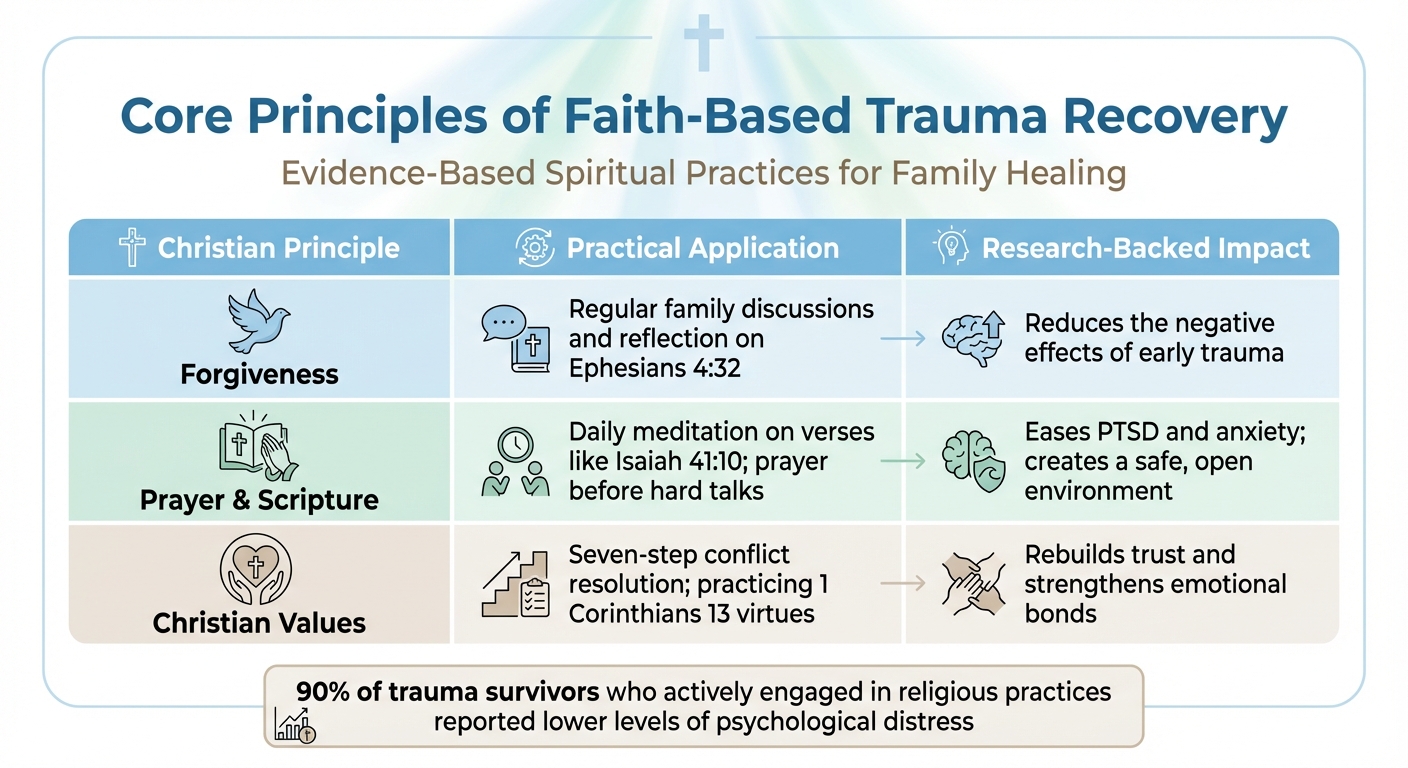
Faith-Based Trauma Recovery: Core Principles and Their Impact
Christian teachings offer a profound framework for healing emotional wounds while addressing spiritual needs. Studies show that these teachings can significantly reduce the effects of trauma. When families base their recovery on these spiritual truths, they create a path toward healing that respects both their pain and their faith. These principles lay the groundwork for practical strategies that guide families through the recovery process.
Using Forgiveness to Heal
Forgiveness is a cornerstone of trauma recovery, especially within a Christian context. But it’s not just about moving on or excusing harmful actions – it’s a deeper, more transformative process.
Bassem Melki, who leads the Non-Formal Training and Peacemaking Department at ABTS, introduces the idea of "fore‐giveness", which means choosing to forgive even before confronting the issue:
"Forgiveness creates the space in which honest, healing dialogue becomes possible. Without it, confrontation can easily become an accusation. With it, confrontation becomes an invitation to reconciliation." [6]
This perspective turns forgiveness into an active, almost combative effort – what Melki refers to as "spiritual warfare." It’s a way for families to overcome trauma’s lingering effects without letting bitterness take root [6]. The Greek term for forgiveness, aphiēmi, translates to "release" or "send away", perfectly capturing the act of letting go of a tightly held grievance [6]. Families can engage in this practice through regular discussions and by reflecting on Ephesians 4:32: "forgiving each other, just as in Christ God forgave you" [7]. This verse reminds families that forgiveness is a gift they’ve already received, and it’s a starting point for deeper healing through prayer and trust.
How Prayer and Scripture Provide Comfort
Prayer and scripture act as stabilizing forces in the chaos of trauma recovery. They not only provide emotional relief but also spiritual grounding. Research supports this, showing that these practices can alleviate symptoms of PTSD, anxiety, and spiritual distress, helping families transition from survival mode to a place of healing [4].
Scripture, in particular, offers targeted comfort for specific fears. For instance, Isaiah 41:10 reassures families of God’s strength in moments of fear, while Psalm 147:3 speaks to those feeling brokenhearted. These verses help reframe painful memories, offering a new lens through which to view past events.
When families incorporate scripture meditation into their routines, they create what counselors describe as a "sacred environment" that encourages openness and emotional safety [8]. Simple practices like starting difficult conversations with prayer can foster trust and provide a sense of hope. While prayer and scripture help calm internal struggles, Christian values work to rebuild trust within the family.
Building Trust and Connection Through Christian Values
Trauma often fractures trust within families, but Christian values offer a path toward restoration. The guidance found in 1 Corinthians 13 – emphasizing love that is patient, kind, and forgiving – provides actionable steps for mending relationships [5]. These values translate into practical habits like maintaining honest communication and addressing concerns before they grow into larger issues.
As A.W. Tozer wisely puts it: "What you believe about the world determines the way you live your life!" [5]
By rooting their recovery in biblical truths, families can challenge the distorted narratives trauma often creates. A structured approach – praying together, identifying issues, practicing active listening, confessing mistakes, speaking with kindness, pausing during emotional moments, and offering forgiveness – helps rebuild trust [4]. This process fosters what researchers call "relational intelligence", the skill to navigate conflict and restore emotional safety after deep harm [5].
| Christian Principle | Practical Application | Research-Backed Impact |
|---|---|---|
| Forgiveness | Regular family discussions and reflection on Ephesians 4:32 | Reduces the negative effects of early trauma [2] |
| Prayer & Scripture | Daily meditation on verses like Isaiah 41:10; prayer before hard talks | Eases PTSD and anxiety; creates a safe, open environment [4] [8] |
| Christian Values | Seven-step conflict resolution; practicing 1 Corinthians 13 virtues | Rebuilds trust and strengthens emotional bonds [4] [5] |
Using these principles, families can rediscover hope and rebuild meaningful, lasting relationships.
Practical Faith-Based Strategies for Trauma Recovery
Understanding the principles of faith in recovery is one thing; applying them in everyday life is another. Families navigating trauma need practical ways to incorporate faith into their routines. These strategies focus on taking small, consistent steps rather than striving for perfection.
Getting Support from Your Faith Community
A supportive faith community can be an invaluable resource for families working through trauma. Research involving over 10,000 adults found that 90% of trauma survivors who actively engaged in religious practices reported lower levels of psychological distress [2]. Positive religious coping – leaning on spiritual beliefs and practices through community – can act as a buffer against the mental health challenges that trauma often brings [2,3].
David C. Wang, PhD, from Fuller Theological Seminary, highlights the importance of such support:
"Accompaniment – perhaps the greatest gift of the Holy Spirit for healing and recovery." [1]
This kind of accompaniment means having people who walk alongside your family, offering presence and understanding rather than judgment or pressure. When seeking a faith community, look for groups that are trauma-informed – those that respect privacy while providing genuine spiritual care [3]. For families in smaller congregations who may worry about confidentiality, connecting with trauma-informed leaders or "wounded healers" – individuals who have experienced and navigated their own recovery – can create a safe space for open and honest conversations [1,8].
These relationships can naturally help families establish consistent, faith-centered routines.
Creating Faith-Based Family Rituals
Daily rituals provide stability when trauma leaves life feeling chaotic. Simple, repeatable practices can help anchor your family in faith. Prayer, for instance, goes beyond being a spiritual act – it serves as a grounding technique, helping to manage anxiety, fear, or flashbacks by fostering a sense of safety and divine presence [16,18].
Dr. Denice Colson, creator of the S.T.A.R. Program, explains:
"Turning to a ‘higher power’ for safety and stability while the wound is healing is comforting, encouraging, and provides a sense of security necessary to address the wound." [12]
Establish a daily prayer time focused on seeking strength and peace [10]. Pair this with scripture reading that helps challenge negative beliefs rooted in trauma [15,16]. You can also use scripture during family discussions to offer comfort and guidance [11].
For families with children, incorporating tools like an "emotion wheel" during devotional time can help kids identify and process their feelings within a spiritual framework [9]. Gratitude and forgiveness rituals are also powerful tools for improving mental health [3,15]. Additionally, create personal markers or commemorative rituals to celebrate milestones in your family’s healing journey, recognizing the role of faith in your progress [12].
Working with Faith-Based Professional Counselors
When community and family practices need additional support, professional counseling can provide personalized guidance. This approach helps avoid "toxic theology" – the harmful notion that individuals should simply "pray harder" to overcome challenges, which can add unnecessary pressure and perpetuate stigma around mental health. Faith-based counseling integrates spiritual practices with evidence-based therapies like Cognitive Behavioral Therapy (CBT) and Eye Movement Desensitization and Reprocessing (EMDR) to address healing on all levels – mind, body, and spirit [16,17,8].
Growth and Change Counseling (https://johnmarkkane.com) exemplifies this approach, offering services across California in cities like Campbell, San Jose, Los Angeles, and Roseville, as well as via telehealth. Their therapists focus on addressing root issues rather than just symptoms, blending Christian principles with proven therapeutic methods [7,8]. For couples facing severe challenges, their Marriage Rescue Institute provides an intensive 12-week program designed to restore struggling marriages [5].
When choosing a counselor, look for someone who demonstrates "relational intelligence" – the ability to navigate conflict and rebuild emotional safety after harm [5]. A skilled therapist will offer practical tools like the "7 Biblical Steps" for conflict resolution: praying, identifying root issues, listening, confessing, speaking in love, pausing, and forgiving [4]. They may also assign relational exercises, such as practicing "I" statements and active listening, to help families integrate these skills into daily life [7,8]. For those concerned about privacy, telehealth services provide access to specialized trauma care from the comfort of home while maintaining confidentiality [7,8].
sbb-itb-596b85d
Faith-Based Counseling at Growth and Change Counseling
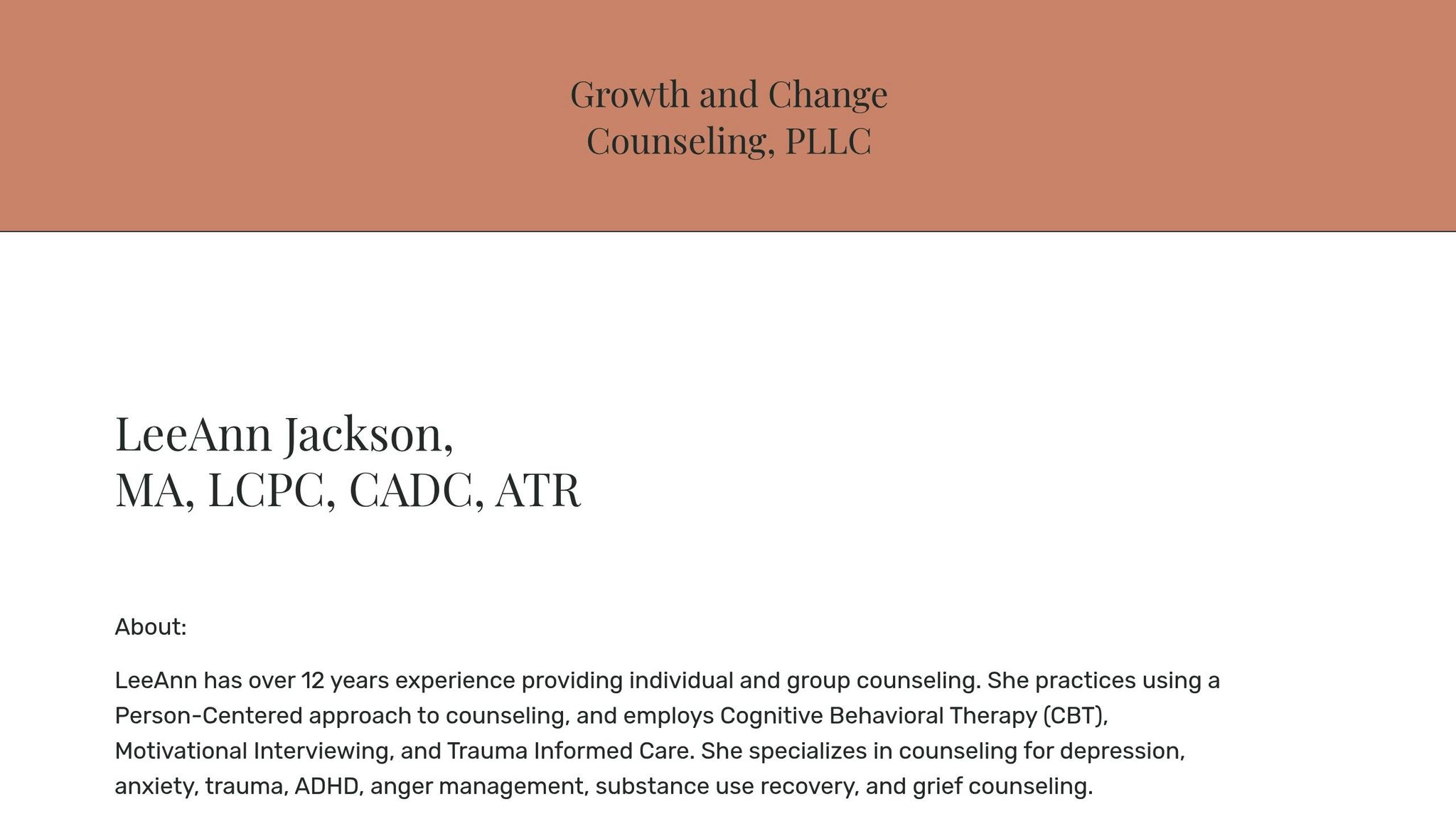
Expanding Faith-Based Trauma Recovery Services
Growth and Change Counseling (johnmarkkane.com) provides trauma recovery services tailored for families. Their offerings include family therapy, individual counseling, and specialized sessions for children, adolescents, and parents. These services address challenges such as PTSD, complex trauma, and related issues. A key focus of the practice is parent coaching, aimed at helping parents rebuild authority while fostering stronger connections with their children [5].
To ensure inclusivity, services are available in multiple languages, including English, Spanish, Afrikaans, and Hmong, making faith-based counseling accessible to a wide range of communities [5]. Sessions are priced at $165 for 45 minutes, and they accept insurance from Anthem Blue Cross, Aetna, United Health Care, Oxford, and Oscar Health. They also provide superbills for out-of-network reimbursement [13]. This combination of services highlights their commitment to integrating faith with professional care.
Combining Faith with Evidence-Based Treatment
Growth and Change Counseling combines Christian principles with evidence-based therapeutic methods. Founder John Mark Kane, LMFT, describes his approach:
"I take a practical and integrated approach to therapy, using skill-building interventions and techniques from science, psychology, and the Christian faith." [5]
The practice employs a variety of proven therapies, including EMDR, CBT, Somatic Therapy, EFT, and Attachment Theory, to address trauma within a faith-based framework [5]. Therapist April Silva, LMFT, elaborates on her approach to trauma work:
"In cases of PTSD, I will help you uncover the underlying defenses that protected you through a traumatic experience but now are interfering with your ability to move forward in intimacy." [5]
A central theme of their approach is fostering "relational intelligence", which emphasizes that many mental health challenges stem from broken relationships rather than isolated symptoms. This perspective aligns with a biblical understanding of human worth, emphasizing the inherent value and dignity of every individual [5]. This integrated approach is offered through various locations and telehealth options across California.
In-Person and Telehealth Services Across California
Families can access services in Campbell, Los Angeles, and Roseville, CA, or take advantage of secure telehealth sessions available statewide [13]. Additionally, couples can benefit from The Marriage Rescue Institute, a 12-week intensive coaching program designed to strengthen relationships [5].
Conclusion: Using Faith to Heal Your Family
Trauma can deeply disrupt family life, but faith can be a guiding light on the road to recovery. By combining spiritual practices like prayer, reading scripture, and embracing forgiveness with professional support, families can address trauma on multiple levels – emotional, relational, and spiritual. In fact, research highlights that positive religious coping can significantly lessen trauma’s effects [2].
The way you respond to hardship plays a critical role in shaping your healing journey. As Charles Stanley wisely said:
"It is not the trials in your life that develop or destroy you, but rather your response to those hardships" [5].
This perspective reminds us that families hold the power to actively participate in their healing. By reframing painful experiences through the lens of faith, it’s possible to uncover meaning and purpose even amid suffering [14].
For those facing complex trauma, PTSD, or deep relational wounds, professional care is often essential. Faith-based counselors offer a unique approach by blending Christian principles with evidence-based therapies like EMDR, CBT, and Somatic therapy. This approach not only honors your spiritual beliefs but also provides the clinical tools needed for meaningful and lasting healing [4][5].
Growth and Change Counseling supports families across California with trauma recovery services. Whether you’re in Campbell, San Jose, Los Angeles, or Roseville – or prefer telehealth options statewide – their therapists bring together spiritual insight and professional expertise to help rebuild trust and connection. Reach out to Growth and Change Counseling to explore their services and begin your journey toward healing.
Faith, combined with intentional action, can mend even the deepest wounds. As L.R. Knost beautifully puts it:
"Do not be dismayed by the brokenness of the world. All things break. And all things can be mended. Not with time, as they say, but with intention" [5].
Choosing to seek help and lean into your faith can be the first step toward renewal and strength for your family.
FAQs
What role does forgiveness play in faith-based trauma recovery?
Forgiveness plays a central role in Christian-based trauma recovery, embodying the biblical ideals of grace and reconciliation. Letting go of resentment is not just a spiritual act – it’s a path to emotional relief. Resentment often keeps emotional wounds open, while forgiveness allows survivors to experience healing, restoring a sense of peace and balance in their lives.
Studies highlight that forgiveness, particularly within a faith-centered framework, encourages growth and mends relationships. Families who embrace forgiveness together can overcome patterns of blame and isolation, building a stronger foundation rooted in grace and trust. At Growth and Change Counseling, forgiveness exercises are a key part of therapy, helping families reconnect and move toward lasting recovery in alignment with their spiritual values.
How can families incorporate prayer and Scripture into their daily lives to support healing from trauma?
Incorporating prayer and Scripture into everyday family routines can bring a sense of calm and connection, especially during challenging times. Begin each morning with a brief family devotion. You might read a short Bible passage, such as Psalm 23 or Philippians 4:6-7, and invite everyone to share a simple prayer – whether it’s an expression of gratitude or a personal request. This small practice can set a positive tone for the day ahead.
To keep faith at the forefront throughout the day, consider using visual reminders. A "prayer board" in the kitchen can serve as a space for family members to share prayer requests or favorite Bible verses. Alternatively, a "scripture jar" filled with meaningful verses can be used during meals to spark reflection. At night, end the day with a short prayer of thanks and a comforting reading, such as a Psalm or the Lord’s Prayer (Matthew 6:9-13).
When tough moments arise, turning to a specific Bible verse can help guide your family. For example, during conflicts, reading Ephesians 4:2-3 together and praying for understanding and unity can provide direction. These practices not only help families process pain but also remind them of God’s presence. For additional support, faith-based counseling can blend these spiritual practices with professional therapy to encourage healing and strengthen relationships.
How does faith-based counseling help families recover from trauma?
Faith-based counseling weaves Christian principles – like prayer, Scripture, and forgiveness – into trauma-focused therapy to promote healing. By combining spiritual practices with therapeutic techniques, families can discover deeper meaning, strengthen resilience, and ease emotional struggles. Activities such as shared worship, group prayer, and Scripture-centered conversations play a key role in rebuilding trust and fostering stronger connections.
This approach also integrates proven therapeutic methods, such as cognitive-behavioral techniques, with biblical values to address trauma-related thoughts and emotions. Families have the opportunity to grow both emotionally and spiritually in a supportive, faith-driven setting. Growth and Change Counseling provides these services, offering family therapy, parent coaching, and trauma treatment across multiple locations in California, as well as through telehealth options.
Related Blog Posts
- Parent Coaching with Faith in Addiction Recovery
- How Christian Counseling Supports Family Healing
- Healing Trauma Through Prayer and Reflection
- Christian Healing for Trauma: What Studies Show
