Addiction recovery is more effective when it respects the client’s background and values. Here’s why: many individuals face stigma, systemic barriers, and biases that prevent them from seeking care. A tailored approach that considers family, community, and personal beliefs can bridge these gaps.
Key strategies include:
- Personalized assessments that consider cultural identity, past experiences, and treatment preferences.
- Addressing stigma by reframing addiction as a health condition and involving trusted community leaders.
- Language access to ensure communication aligns with the client’s needs.
- Family and community involvement to strengthen support systems.
- Clinician training to reduce biases and improve care quality.
These methods build trust, improve engagement, and lead to better outcomes in diverse communities.
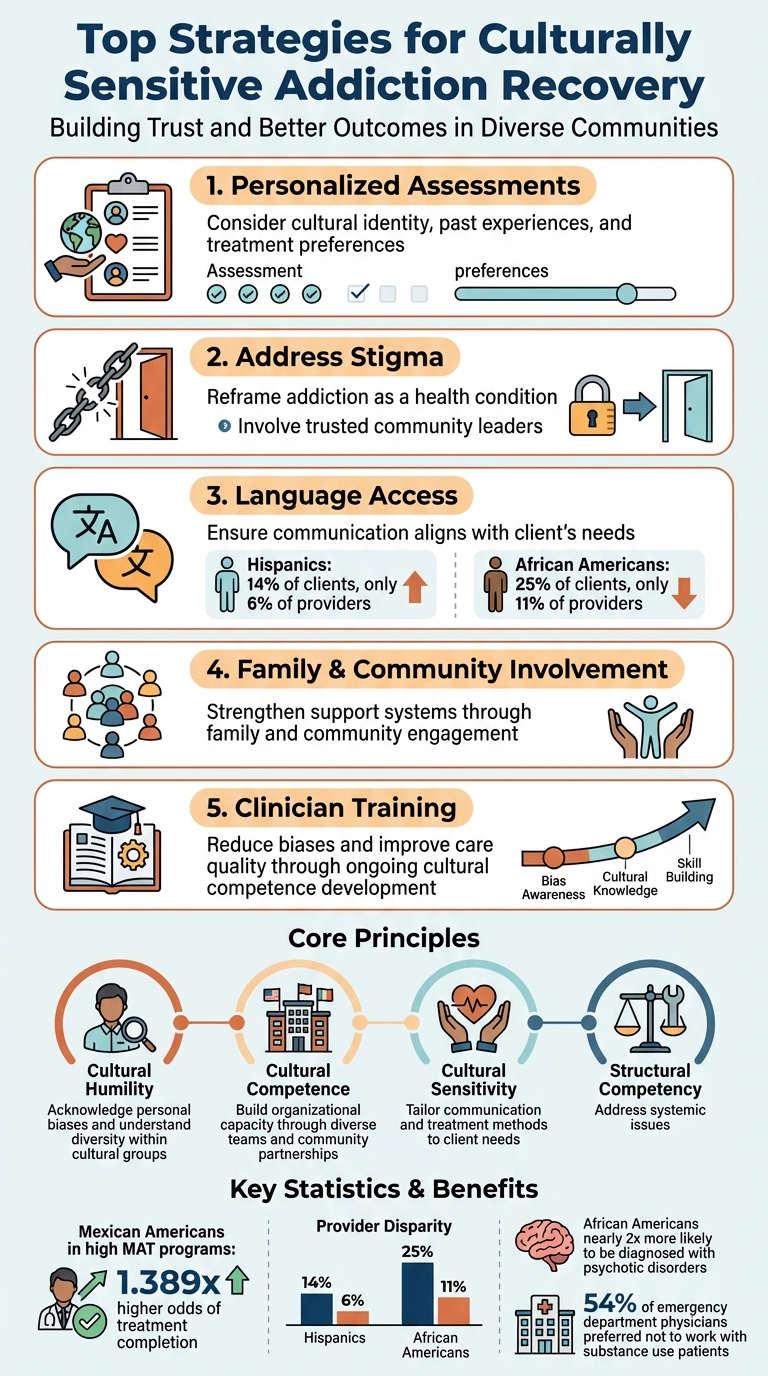
5 Key Strategies for Culturally Sensitive Addiction Recovery
Culturally Responsive Substance Use Treatment: A Guide for Practitioners, Students, & Organizations
Core Principles of Culturally Responsive Care
Culturally responsive care is built on three key principles: cultural humility, cultural competence, and cultural sensitivity. These principles require continuous self-reflection and organizational growth. Cultural humility involves acknowledging and examining personal biases while understanding that there is diversity within every cultural group. Cultural competence focuses on building an organization’s capacity by hiring diverse teams, fostering community partnerships, and addressing the unique needs of racial and ethnic minorities. Lastly, cultural sensitivity emphasizes tailoring communication styles and treatment methods to ensure clients feel understood, safe, and empowered. Together, these elements form the foundation for culturally aware recovery practices.
Another critical aspect is structural competency, which addresses larger systemic issues like housing instability, educational inequities, and legal challenges that contribute to health disparities. Tackling these social determinants of health is essential for supporting recovery beyond individual therapy. This approach also encourages shared decision-making, involving not only patients but also family members and community leaders, including faith-based figures when appropriate.
"Becoming culturally responsive begins with a self-evaluation of personal biases, including how they may affect one’s own ability to provide services." – SAMHSA
The U.S. Department of Health and Human Services describes cultural competence as "a dynamic, ongoing developmental process that requires a long-term commitment and is achieved over time." For treatment centers, this means moving from ignoring cultural differences to actively respecting and addressing them, creating opportunities for continuous improvement.
How Culture Shapes Addiction and Recovery
Cultural values play a significant role in shaping perceptions of addiction and recovery. For instance, in some African American communities, addiction may be viewed as a personal failing rather than a medical condition. This belief can delay treatment and increase feelings of shame.
Family roles and community expectations also influence recovery. In many Native American and Latino communities, healing is often seen as both an individual and a collective journey. Incorporating traditional practices into treatment has been shown to improve engagement and outcomes in these populations.
"Treatment providers need to learn how a client’s identification with one or more cultural groups influences the client’s identity, patterns of substance use, beliefs surrounding health and healing, help-seeking behavior, and treatment expectations and preferences." – Center for Substance Abuse Treatment (US)
Clinician biases can further hinder effective care. Research shows that African Americans are nearly twice as likely to be diagnosed with psychotic disorders compared to White Americans, potentially due to biased symptom assessments [2]. Additionally, a survey revealed that 54% of emergency department physicians preferred not to work with patients who have substance use disorders when they presented with pain [4]. Such biases can lead to disparities in care and negatively impact treatment outcomes.
Benefits of Culturally Tailored Approaches
Adapting treatment to align with cultural needs has been shown to improve engagement, retention, and completion rates. A study from May 2017 examined 153 publicly funded treatment programs in Los Angeles County. It found that Mexican Americans in programs with high implementation of Medication-Assisted Treatment (MAT) had 1.389 times higher odds of completing treatment successfully compared to non-Latino Whites in programs with low MAT implementation [1]. This highlights the importance of culturally aligned care in reducing disparities.
Language access is another crucial factor. Programs that provide services in a client’s preferred language and offer translated materials often see better retention rates. However, gaps remain. For example, Hispanics make up 14% of the treatment population but only 6% of treatment providers, while African Americans account for 25% of the treatment population but only 11% of providers [6].
Culturally tailored approaches also strengthen the therapeutic relationship. When clients feel respected and understood, they are more likely to engage in treatment. Validating their experiences can help reduce feelings of anger, anxiety, or depression – emotions that often contribute to substance use. Building this trust is particularly important in communities with a history of mistrust in the healthcare system.
These foundational principles pave the way for strategies that prioritize family and community involvement, clinician education, and integrated counseling approaches.
Strategies for Culturally Sensitive Addiction Recovery
Culturally Informed Assessment and Treatment Planning
When it comes to culturally responsive care, the intake process needs to reflect the unique background of each client. Forms should include questions that explore treatment preferences, past healthcare experiences – whether good or bad – and expectations about medication use [3]. For clients who face language barriers or struggle with literacy, taking things slowly can make a big difference. Overloading them with too much information upfront can create barriers instead of building trust [2][6]. Establishing a connection first allows deeper, more meaningful conversations to unfold naturally. For example, asking a simple, nonjudgmental question about concerns with a new medication can open the door to honest dialogue without making the client feel pressured or judged [3].
Privacy is another key concern. Many people of color may hesitate to share openly, fearing their disclosures could lead to legal consequences or even losing custody of their children. Addressing these fears early by explaining confidentiality protections during intake can lay the groundwork for open, honest communication throughout the recovery process [3]. This approach not only builds trust but also ensures treatment aligns with each individual’s cultural values and needs.
Addressing Stigma in Families and Communities
Stigma is often a significant barrier to seeking treatment, and addressing it requires reframing the narrative around addiction. Instead of viewing it as a personal failure, it’s essential to present addiction as both a health issue and, in some cases, a spiritual challenge [2][7]. Cultural hesitations about medication can create opportunities for education, where providers can explain the biological benefits of treatment in a way that resonates with the client’s values [3].
Partnering with trusted community figures – like pastoral counselors, religious leaders, or tribal elders – can lend credibility to the treatment process and provide spiritual guidance [2][3]. Involving family members in decisions about recovery can also align treatment goals with cultural values, while reducing feelings of shame within the family unit [3][7]. Additionally, acknowledging and addressing the psychological toll of racism can help clients confront internalized negativity that might fuel substance use [2]. These culturally aware strategies not only reduce stigma but also create a supportive foundation for recovery.
Language Access and Adapted Treatment Modalities
Effective communication goes beyond just translating words – it’s about understanding cultural subtleties and matching clients with staff who share their linguistic and cultural backgrounds [6]. Unfortunately, there’s still a significant gap in representation. For example, while Hispanics make up 14% of the treatment population, they account for only 6% of providers. Similarly, African Americans represent 25% of clients but only 11% of counselors [6].
Tailoring therapies to reflect cultural values has been shown to improve outcomes across diverse groups [1]. For Native American clients, integrating traditional practices like sweat lodges can add a layer of cultural meaning and emotional healing that complements group therapy [2]. Even the physical environment of treatment facilities matters – using art and imagery that reflect the diversity of the clients can create an immediate sense of belonging [6]. By adapting both language and treatment approaches, providers can ensure their methods resonate with clients, making recovery efforts more effective and meaningful.
Engaging Family, Community, and Faith Resources
Recovery isn’t just about the individual – it often involves a broader network of support. In many cultures, the concept of "family" extends beyond blood relatives to include spiritual mentors, neighbors, community leaders, teachers, coaches, and faith leaders. These individuals can provide emotional and practical support, creating a strong foundation for recovery while respecting the person’s autonomy and privacy [8][9].
Open and honest communication is key. Instead of discussing someone’s recovery behind their back, consider practices like “daily trust discussions.” This involves family members affirming the individual’s commitment to sobriety in a respectful, non-confrontational way. Not only does this reinforce trust, but it also strengthens the support system and relationships [8][9].
Faith leaders and spiritual mentors often play a critical role, especially in communities where spirituality is deeply ingrained in daily life. For instance, in American Indian and Alaska Native communities, involving elders and spiritual healers in treatment bridges the connection between the individual, their family, and the community [10]. However, it’s essential that the person in recovery decides who from their faith circle participates, ensuring their individuality is respected while leveraging meaningful support.
Families also need to strike a balance between setting boundaries and maintaining privacy. Responses to substance misuse can ripple through the entire family system. As SAMHSA observes:
"When family members change their thinking about and responses to substance misuse, the entire family system changes." [8]
Beyond family, community organizations can provide additional layers of support. Programs tailored to specific cultural needs, like Multidimensional Family Therapy, help families navigate complex systems such as courts, schools, and healthcare providers. These programs ensure access to care that aligns with cultural values. Connecting families with mutual support groups and educational resources can further reduce feelings of isolation and shame, while fostering long-term strategies that honor their cultural identity.
sbb-itb-596b85d
Training Clinicians in Competence
Even clinicians with the best intentions can fall short without the right training. Developing cultural competence isn’t a one-and-done achievement – it’s an ongoing process that requires dedication. As the U.S. Department of Health and Human Services explains:
"Cultural competence is an ongoing process requiring long-term commitment." [5]
The journey begins with self-reflection. Clinicians need to examine their implicit biases – those unconscious attitudes that can influence the quality of care they provide. The American Psychological Association highlights that culturally informed clinicians must recognize their own stereotypes and understand how cultural factors shape a patient’s experience with opioid use, maintenance, abstinence, and relapse [3].
Effective training programs should include three key components: cultural awareness, both general and culture-specific behavioral health knowledge, and practical skills [5]. Additionally, clinicians must develop "structural competency", which involves understanding how systemic inequities, historical traumas, and social determinants of health contribute to health disparities. For example, African Americans are nearly twice as likely to receive a diagnosis of psychotic disorders compared to White Americans, often due to biased symptom evaluations by clinicians [2].
Organizational support is just as important as individual training. Providing culturally competent supervision and mentorship helps clinicians apply these principles in real-world scenarios. Intake processes should also be adapted to incorporate cultural formulation – a method that includes asking about patients’ cultural treatment preferences and identifying barriers to care [3]. This approach builds on earlier strategies for culturally informed assessments and treatment planning.
Practical skills are equally critical. Clinicians should use shared decision-making approaches that might involve family members or spiritual leaders, avoid stigmatizing language, and ensure patients have access to care in their preferred language. These skills play a key role in narrowing the treatment gap for Black and Hispanic adults [11].
Integrating Recovery and Relationship Counseling
Addiction doesn’t just affect the person struggling with it – it ripples through their relationships and support systems. This is where Behavioral Couples Therapy (BCT) shines. Studies show that BCT is more effective than individual treatment alone because it creates a "virtuous cycle": as the quality of the relationship improves, so does the individual’s recovery. Counselors work with couples to evaluate family dynamics and introduce practical tools like recovery contracts and trust-building exercises. For instance, activities like "Catch Your Partner Doing Something Nice" encourage positive interactions while addressing both addiction and relationship challenges simultaneously [8].
This integrated approach also opens the door for culturally responsive practices, which can make recovery efforts even more impactful. Take, for example, a case study from SAMHSA: a counselor working with a Native American client organized a family therapy session that included the client’s girlfriend, a local "clan mother", and an uncle in recovery who joined by phone. To address spiritual needs, the counselor also arranged for the couple to participate in a traditional sweat lodge ceremony [2]. This method highlights the importance of weaving family, community, and spiritual elements into the healing process.
In California, Growth and Change Counseling offers a similar integrated model. They combine addiction recovery with marriage counseling while incorporating culturally relevant care. Their services include individual and family therapy, as well as a 12-week Marriage Rescue Institute designed to rebuild trust and tackle underlying substance use issues.
Ultimately, recovery is about more than just overcoming addiction – it’s about restoring self-esteem, dignity, and meaningful connections. By embracing an egalitarian approach, acknowledging the impact of discrimination, and connecting clients with community resources, counselors create a support system that fosters lasting change [2] [12] [13].
Conclusion: Key Takeaways for Supporting Recovery in Diverse Communities
Addressing addiction recovery with cultural awareness reshapes how treatment is delivered, ensuring clients are paired with providers who understand their cultural background. Studies consistently show that aligning treatments with cultural needs leads to better outcomes, highlighting the critical role of culturally responsive care discussed throughout this article.
Successful approaches emphasize shared decision-making and trust-building. This includes recognizing historical trauma, using language that normalizes experiences, and fostering equal relationships. As SAMHSA explains:
"Counselors who are culturally competent are better able to understand and respect their clients’ identities and related cultural ways of life" [2].
When clients feel understood and safe, they are more likely to stay engaged in treatment.
In addition to these strategies, addressing stigma is crucial. Involving family members, community leaders, and spiritual practices in the recovery journey taps into the natural support networks many cultures rely on. These connections are often central to the healing process.
Reframing addiction as a manageable health condition helps reduce stigma and encourages individuals to seek help sooner. For example, during intake, counselors can assess how stigma or discrimination might affect clients’ willingness to adhere to treatment plans. Growth and Change Counseling in California exemplifies this by integrating culturally responsive practices into its addiction and relationship counseling services, recognizing that recovery is not just about the individual but also about restoring dignity and rebuilding meaningful relationships.
FAQs
How does cultural sensitivity enhance addiction recovery?
Cultural sensitivity is key to enhancing addiction recovery outcomes. It helps build trust, reduces stigma, and ensures treatment aligns with each client’s unique values and communication style. When clinicians take the time to understand and respect a client’s cultural background, it opens the door to honest conversations, better assessments, and ongoing participation in treatment.
Adapting interventions to meet cultural needs – like accommodating language preferences, acknowledging family roles, or considering community practices – can significantly improve retention and lower the chances of relapse. Addressing implicit biases and using culturally relevant strategies, such as involving family in the process or providing services in the client’s primary language, strengthens therapeutic relationships and leads to more effective results.
At Growth and Change Counseling, we focus on delivering care that respects and reflects each client’s cultural identity. By designing personalized treatment plans rooted in their cultural context, we ensure clients feel heard and valued, paving the way for consistent engagement and lasting recovery.
How do family and community support contribute to culturally sensitive addiction recovery?
Family and community are key elements in addiction recovery, especially when cultural sensitivity is a priority. When family members are actively involved in the recovery process, it can boost engagement, lower the chances of relapse, and support lasting recovery. The definition of "family" can vary widely – it might include extended relatives, blended households, or other close supporters. Because of this, therapy needs to adapt to the unique relationships and cultural values of each individual.
Communities also offer valuable support systems, such as faith-based groups, peer networks, and resources that align with cultural needs. These connections not only help to reduce stigma but also provide a strong foundation for long-term recovery. Growth and Change Counseling emphasizes family-centered therapy and community-based services to respect each client’s cultural identity while fostering healing and strength.
Why is training essential for clinicians in culturally sensitive addiction care?
Training plays a crucial role in equipping clinicians to provide addiction care that respects and aligns with the diverse cultural backgrounds of their clients. By understanding cultural values, language differences, and addressing implicit biases, clinicians can minimize miscommunication, build stronger trust, and deliver more effective treatment. This knowledge allows them to tailor evidence-based methods, such as motivational interviewing or trauma-informed care, to better meet the specific needs of each client, ultimately improving recovery outcomes.
At Growth and Change Counseling, clinicians participate in regular cultural-competence training to ensure their care reflects the realities and needs of the diverse communities they serve throughout California. This commitment creates a welcoming and supportive environment where clients feel seen, heard, and empowered as they work toward recovery.
Related Blog Posts
- Top 7 Therapy Approaches for Cross-Cultural Couples with Addiction
- Best Practices for Multicultural Telehealth Counseling
- Cultural Healing for Addiction Recovery
- How Addiction Impacts Marriage and Family Systems
