Social media can harm relationships. Constant phone use leads to less connection, more jealousy, and unrealistic expectations. A detox can help couples prioritize each other over screens, improving communication, trust, and quality time.
Key Steps for a Detox:
- Evaluate usage: Track how much time you and your partner spend on social media and identify problem behaviors like phubbing or comparisons.
- Set boundaries: Create phone-free zones (like the bedroom or dining table) and limit app usage with tools like Screen Time or Digital Wellbeing.
- Replace scrolling: Use reclaimed time for shared hobbies, cooking, or meaningful conversations.
- Plan offline days: Dedicate a day each week to disconnect entirely and focus on your relationship.
- Handle setbacks: Expect challenges like FOMO or withdrawal but address them together with open communication.
If deeper issues persist, couples counseling may provide additional support. This guide outlines simple, actionable steps to help you reconnect and reduce the negative effects of social media on your relationship.
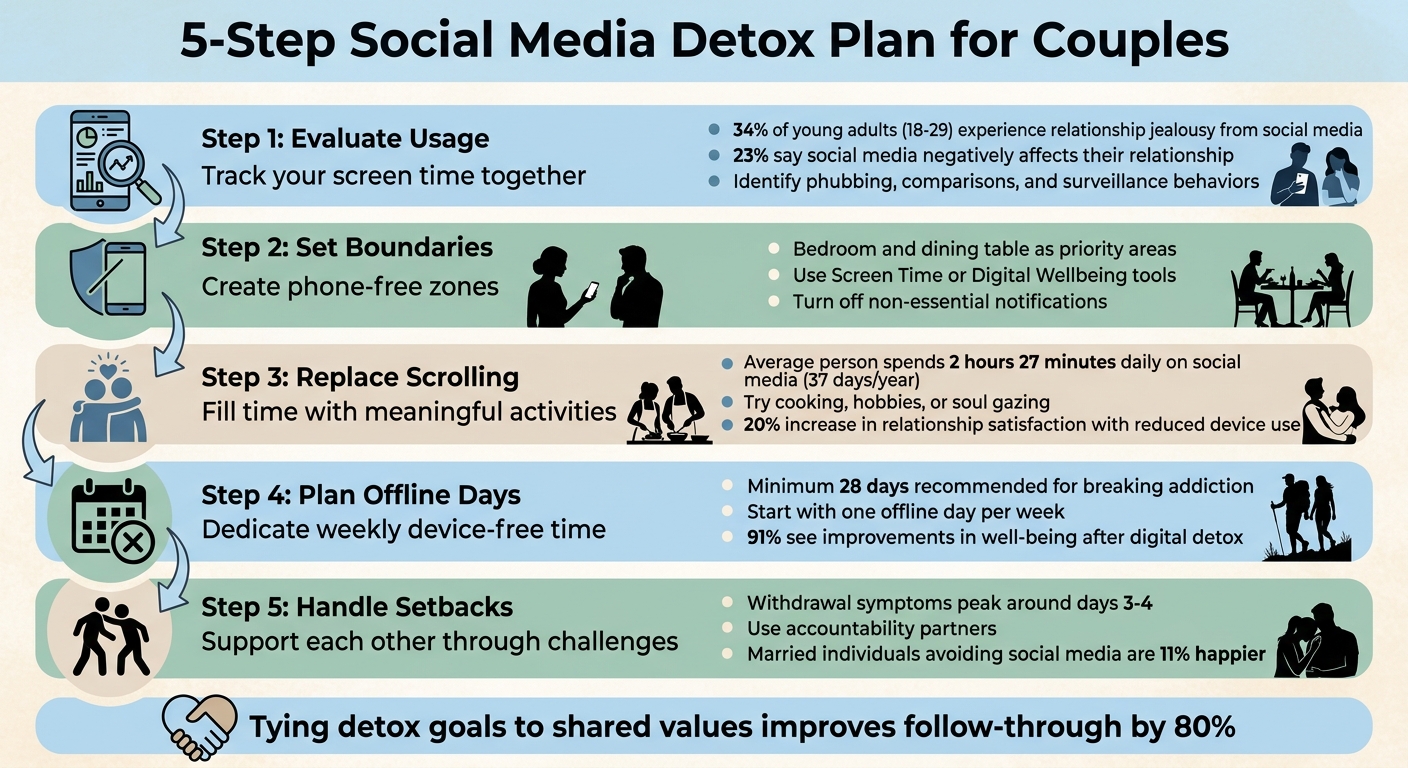
5-Step Social Media Detox Plan for Couples
Social Media Detox: Does Your Relationship Need One? #healthyrelationships #socialmediadetox
sbb-itb-596b85d
Evaluating Your Social Media Use as a Couple
Before diving into a detox, it’s important to take a step back and evaluate how much time you and your partner spend on social media – and how it’s affecting your relationship. This isn’t about pointing fingers or assigning blame. It’s about shining a light on habits that may have quietly woven themselves into your routine.
Start by asking some honest questions. Do you find yourself scrolling through Instagram during dinner? Does it bother you when your partner interacts with an ex’s post? Have you ever caught yourself comparing your relationship to those “perfect” couples online? These might be signs that social media is taking a toll on your connection. In fact, 34% of young adults aged 18–29 have felt jealousy or uncertainty in their relationship due to their partner’s social media behavior [3]. Identifying these behaviors is the first step toward addressing the underlying issues.
Recognizing Problem Behaviors
One of the most obvious signs of trouble is phubbing – that’s when you ignore your partner in favor of your phone. It might seem small, but these moments can chip away at intimacy, especially when they happen during what experts call "bids for connection." These are those little moments when your partner is looking for attention or interaction, and scrolling past them can create distance.
Another big issue is the comparison trap. Social media makes it all too easy to pit your relationship against someone else’s highlight reel. But remember, you’re comparing your real life – flaws and all – to a curated performance [3].
Then there are surveillance behaviors. This includes things like obsessively checking who your partner follows, monitoring their "last active" status, or analyzing every single like they give. While these habits might feel protective, they often do more harm than good. Research backs this up: 23% of people say social media negatively affects their relationship, and only 17% report a positive impact [3]. Even worse, jealousy fueled by social media often leads to lower relationship satisfaction over time [3]. Recognizing these behaviors is key to understanding the role social media plays in your relationship.
Measuring Your Daily Social Media Time
Sometimes, the numbers tell the story better than anything else. Your phone already tracks this data for you. Tools like iPhone’s "Screen Time" or Android’s "Digital Wellbeing" can show you exactly how much time you’re spending on different apps. Many platforms, like Instagram, also have their own time-tracking features.
Take 15 minutes this week to review your screen time. No judgment – just gather the facts. Are you spending two hours a day on Instagram? Three hours scrolling through Facebook? Add it all up to get a weekly total. Then, think about what you could do with that time instead. Maybe it’s having deeper conversations, trying out a hobby together, or simply enjoying each other’s company without a screen in the way. This data gives you a starting point for creating a detox plan that helps you reconnect.
Planning Your Social Media Detox Together
Once you’ve tracked your screen time and pinpointed problem behaviors, the next step is creating a plan. For a social media detox to work, both partners need to be on the same page. This isn’t about one person pressuring the other into change – it’s about having an open, honest conversation and deciding together how you want your relationship to look without the constant buzz of notifications.
Studies show that tying your detox goals to shared values can improve follow-through by up to 80% [6]. Asking yourselves, "Why are we doing this?" can help solidify your commitment. Maybe it’s about spending more quality time together, reducing jealousy tied to social media, or simply getting better sleep without the lure of your phone. Writing down these reasons can serve as a reminder when the temptation to scroll creeps back in.
Having social support also plays a huge role, boosting your chances of success by up to 65% [6]. By tackling this detox as a team, you can hold each other accountable. Let friends and family know about your plan so they understand why you might not respond to messages or tags as quickly as usual.
Setting Goals and Expectations Together
Start by defining what success looks like for both of you. Are you planning to go completely offline for a weekend? Take a full week off? Or maybe limit your usage to two 15-minute check-ins per day [6]? Agree on a timeline and set clear boundaries.
Dr. Larry Rosen, a psychology professor, explains it well:
"The difference between digital wellness and digital distraction is intentionality. When technology use is planned rather than reactive, it enhances rather than diminishes well-being" [6].
Instead of reflexively reaching for your phone out of boredom, this approach encourages you to make deliberate choices about when and how to engage with social media.
Be prepared for some discomfort, especially if you’re used to spending hours a day on platforms like Instagram. Cutting back drastically can lead to withdrawal symptoms like FOMO, restlessness, or irritability, which tend to peak around days 3 or 4 [6]. Anticipating these challenges and discussing them together can help you stay on track.
Here’s a simple framework to guide your detox planning:
| Detox Planning Step | Purpose for Couples | Practical Action |
|---|---|---|
| Intentionality | Aligns the "why" behind the detox | Write down shared goals (e.g., "more presence during dinner") |
| Environmental Design | Reduces reliance on willpower | Move chargers out of the bedroom; delete distracting apps |
| Communication | Manages external expectations | Set auto-replies or let family know you’ll be less responsive |
| Replacement | Fills the time previously spent scrolling | Choose a shared hobby like cooking, walking, or playing games |
A helpful tip is to create "speed bumps" that make it harder to mindlessly use your phone [6]. For instance, you could temporarily delete apps that suck up your time or enable grayscale mode to make your screen less appealing. You might even exchange passwords for app time limits so you can’t easily override the restrictions [1].
Make sure you have an alternative method for emergencies so you remain reachable. Then, plan how to use the time you’ll gain. The average American spends 2 hours and 27 minutes on social media daily – that’s over 37 days a year [6]. Think of the possibilities! You could go on morning walks, try new recipes, or tackle a home project together.
Once your goals are set, you’ll need to figure out which platforms are causing the most disruption.
Choosing Which Platforms to Limit
Not all social media platforms affect your relationship in the same way. Some are bigger time-wasters, while others fuel unhealthy comparisons or are specifically designed to keep you hooked. Start by reviewing your screen time data together to identify the apps that consume the most hours. For many couples, Instagram and TikTok are common culprits due to their endless scroll features and addictive algorithms. Facebook can also be problematic, especially if you find yourself doomscrolling through negative news [4].
After identifying the most problematic platforms, decide which ones to tackle first. You don’t have to quit everything at once. Maybe start by deleting Instagram for a weekend or keep Facebook but turn off non-essential notifications and set a daily time limit [5]. Another effective strategy is to review your social feeds together. Look at the accounts you follow and unfollow those that trigger comparisons or negativity. Curating your feeds can help improve your overall experience.
With these boundaries in place, you’ll be ready to make meaningful changes to your daily routine.
Your Social Media Detox Action Plan
Now that you’ve assessed your habits and created a detox plan, it’s time to put it into action. The goal? Make it harder to fall back into old patterns while encouraging deeper, more meaningful connections. This involves reshaping your surroundings, silencing the endless buzz of notifications, and carving out intentional offline moments.
Designating Phone-Free Areas at Home
Start by establishing zones in your home where phones are off-limits. Two key areas to prioritize are the bedroom and the dining table. Keeping phones out of the bedroom can improve your sleep and eliminate the temptation to scroll late at night, which often disrupts quality time with your partner[2]. Instead of reaching for your phone when you wake up or before bed, take the opportunity to connect face-to-face.
The dining table is another critical space to reclaim. Whether it’s breakfast or dinner, make meals about conversation, not screens. This is the perfect time for what relationship experts call "soul gazing" – being fully present with each other, free from digital distractions[7]. You’ll likely find that conversations flow more naturally when phones aren’t within reach.
To support this habit, set up a shared charging station in a common area, like the kitchen or living room. This small tweak helps reduce the urge to "just check one thing" and encourages more purposeful phone use. Once you’ve tackled your environment, it’s time to address notifications.
Managing Notifications as a Team
Notifications are designed to grab your attention – and they do it well[2]. To combat this, turn off non-essential notifications from social media apps. Nicole Golden, NASM Master Trainer, explains:
"Turning off notifications is a simple way to help you focus on your life instead of your phone."[2]
Use features like "Do Not Disturb" mode to minimize interruptions during quality time or before bed. You can customize settings to allow calls from key contacts while still avoiding unnecessary distractions[2]. Additionally, set specific times during the day to check for essential updates, rather than letting your phone dictate your attention.
Consider using tools like Screen Time, Moment, or Quality Time to monitor your usage and set limits on specific apps[2]. For a more drastic approach, some couples opt to delete social media apps entirely during their detox, breaking the cycle of mindless scrolling[2][7]. As relationship writer Krystyna Trushyna advises:
"You need to turn off reminders, close shortcuts, and totally disconnect from any online presence for a substantial time."[7]
With notifications under control, the next step is to schedule dedicated offline time.
Taking Weekly Breaks from All Devices
Beyond setting daily boundaries, commit to a full day each week without any devices. Experts recommend at least 28 days of social media abstinence to break the addiction cycle, but starting with one offline day per week is a manageable way to build this habit[7].
Choose a consistent day, like Saturday, and plan activities that fill the void left by scrolling. A 2023 study revealed that even a two-week social media detox improved sleep, strengthened social bonds, and boosted overall well-being[2]. Use your offline day to cook a meal together, explore the outdoors, tackle a creative project, or simply enjoy uninterrupted conversation.
Let friends and family know about your offline day so they’re aware you won’t be immediately reachable[2]. This reduces the pressure to check your phone and helps curb any FOMO (Fear of Missing Out). Remember, you’re not missing out – you’re choosing to be fully present with the person who matters most.
Activities to Replace Social Media Time
Cutting back on screen time opens up opportunities to reconnect and strengthen your relationships. Research suggests that reducing device use during shared moments can increase relationship satisfaction by 20% [8]. By filling this newfound time with meaningful activities, you can rebuild emotional intimacy and create lasting memories.
Shared Hobbies and Projects
Engaging in hands-on activities can help you stay present and focused. Try hobbies like painting, sculpting, or gardening – anything that requires attention and creativity. These activities not only keep you away from your phone but also encourage collaboration and shared enjoyment.
Cooking together is another fantastic way to bond. Instead of scrolling through online recipes, pick a dish from a physical cookbook – perhaps even a cherished family heirloom. Start small, like making breakfast together on weekends, or establish a weekly "cooking night" to try new recipes as a team. The act of preparing and enjoying a meal together fosters teamwork and creates a sense of accomplishment.
Music and movement can also bring you closer. Play your favorite songs and dance around the living room, or spend an evening exploring vinyl records instead of streaming music. Physical activities like dancing, hiking, or even sitting side-by-side for a card game can deepen your connection in ways that scrolling through your phone simply can’t.
In addition to shared projects, improving communication is key to building a stronger bond.
Improving Communication and Presence
Use your reclaimed time to focus on emotional connection. Try "soul gazing" – sitting across from each other during meals and maintaining eye contact instead of looking at screens [7]. Although it might feel awkward at first, this practice can significantly enhance attentiveness and presence.
Structured conversations can also help. Play games like "20 Questions" to explore each other’s thoughts, or journal together about your relationship and shared aspirations. Dating coach Jenni DeAlto emphasizes the value of this time, saying:
"A digital detox is a gift to your relationship – it’s time reclaimed for real connection." [8]
If social media has triggered feelings of jealousy or insecurity, use this time to address them openly. Transparent conversations about social media habits can reduce jealousy-related conflicts by 25% [8]. Share your feelings, discuss what you miss about your connection, and identify ways to rebuild it together. The goal isn’t to achieve perfection but to make steady progress toward a more present and fulfilling relationship.
Measuring Results and Handling Setbacks
Assessing Changes in Your Relationship
Take stock of your progress by observing shifts in emotional connection. Are you making more eye contact? Do conversations feel more engaging and natural, whether during meals or walks? Even small signs like better responsiveness to nonverbal cues or an increase in physical touch can indicate growth.
Interestingly, research highlights that married individuals who steer clear of social networking sites report being 11% happier in their marriages [9]. You might find yourself noticing the little things – your partner’s smile, their genuine laughter, or subtle emotional cues that were once overshadowed by phone distractions. Many couples also report feeling less irritable and stressed, which aligns with studies linking lower cortisol levels to reduced digital overstimulation. These positive changes provide a solid foundation for navigating occasional setbacks.
Managing Slip-Ups and Adjusting Your Plan
Progress isn’t always linear, and slip-ups are bound to happen. One common misstep is the "one message" trap – where a quick check of a single notification spirals into an extended social media scroll session [1]. This isn’t surprising, given that apps are designed to keep you engaged.
When setbacks occur, address them openly with your partner. You can support each other by becoming accountability partners. For instance, try setting each other’s passwords for app time limits, making it harder to bypass restrictions [1]. If you’re dealing with withdrawal symptoms like FOMO (Fear of Missing Out), keep in mind that psychologists suggest a minimum of 28 days for a social media detox to break the habit and experience lasting benefits [7]. If a full detox feels overwhelming, start by curating your feeds – filter out accounts or content that spark negative comparisons. The key is to adapt your plan to what suits both of you. Remember, this isn’t about being perfect; it’s about making steady progress together.
Combining Detox with Professional Counseling at Growth and Change Counseling

When personal efforts to manage social media use don’t seem to resolve deeper issues, it might be time to consider professional help.
Sometimes, stepping away from social media reveals underlying relationship challenges that need more than just reduced screen time. If feelings like empathy loss, conflict, or jealousy persist, professional counseling can provide the guidance needed. As writer Krystyna Trushyna observes:
"Social media is an addiction just like drinking or doing drugs" [7]
This comparison highlights how breaking free from social media’s grip can require professional support, much like overcoming other forms of dependency.
Growth and Change Counseling in California offers a specialized program called the Marriage Rescue Institute. This 12-week couples coaching program is designed for relationships in crisis, providing a structured plan with weekly 45-minute sessions and daily assignments lasting 15–30 minutes. The initial two weeks focus on “stopping the bleeding” by identifying and addressing toxic behaviors, such as criticism and stonewalling. These patterns are often exacerbated by comparing real-life relationships to the curated, idealized images seen on social media [10].
John Mark Kane, LMFT, the lead therapist at Growth and Change Counseling, has expertise in tackling technology-related relationship challenges. He emphasizes:
"conflict is not the enemy; it is the road map to intimacy if done correctly" [10]
The program equips couples with relational intelligence, teaching them how to manage their emotions and understand their partner’s needs – skills that are especially important in dealing with the emotional triggers social media can amplify.
For added convenience, Growth and Change Counseling offers telehealth sessions across California, making it easier to incorporate professional support into your detox journey. Individual therapy sessions are also available, with rates starting at $150 for a 45-minute session with an Associate Marriage and Family Therapist, or $200 with a Licensed Marriage and Family Therapist. Couples interested in the Marriage Rescue Institute can schedule a free 15-minute consultation to explore whether this approach aligns with their needs. Services are available in Campbell, San Jose, Los Angeles, Roseville, and statewide through telehealth options, providing accessible support to help you reconnect and rebuild.
Conclusion
Taking a break from social media can help rebuild the foundation of your relationship. By stepping away from constant digital distractions, you make room for meaningful conversations, deeper emotional connections, and the kind of attention your partner deserves. Research highlights that 91% of people who completed a digital detox saw improvements in at least one key area of well-being, such as attention or mental health [11]. For couples, these changes often lead to stronger connections and fewer conflicts.
The benefits don’t stop at feeling closer. You might also enjoy better sleep – one study found participants gained an extra 20 minutes of rest per night [11] – along with reduced anxiety and sharper focus. Kostadin Kushlev, Associate Professor of Psychology at Georgetown University, explains:
"Even a little bit of digital detox – a little bit of reduction of the constant stimulation from our phones, social media, games and so forth – could actually help us reclaim our ingrained ability to sustain attention" [11].
That renewed focus means you’ll truly listen to your partner, rather than half-paying attention while mentally scrolling through your to-do list.
These changes can inspire meaningful action. Consider committing to a 28-day detox to break the cycle of digital dependency and encourage lasting habits [7]. Create phone-free zones in your home, replace scrolling with shared activities like cooking or hiking, and regularly discuss how the detox is impacting your relationship.
If challenges like anxiety, conflict, or emotional distance remain, seeking professional support could make a difference. Growth and Change Counseling’s Marriage Rescue Institute offers intensive therapy for couples in crisis tailored for those facing serious issues, with services available across California both in-person and via telehealth. Sometimes, reaching out for help is the most courageous step you can take.
FAQs
How do we start if only one of us wants a detox?
If just one partner is ready to take a break from social media, the first step is to have an open and honest conversation. Share why this is important to you and highlight how it could positively impact your relationship. Start small – try turning off devices during meals or before bedtime, and invite your partner to join in. You can also suggest activities that don’t involve screens, like going for a walk or picking up a shared hobby. Remember, patience and empathy go a long way in encouraging them to participate at their own pace.
What should we do when FOMO or irritability hits?
When feelings of FOMO (fear of missing out) or irritability creep in during a social media detox, it’s important to recognize them as normal withdrawal symptoms. To manage these emotions, consider giving yourself a mental reset. Activities like exercising, diving into a favorite hobby, or practicing mindfulness and relaxation techniques can make a big difference. Keep in mind, these feelings are only temporary, and reminding yourself of this can help you stay committed to your detox journey.
When should we seek couples counseling for this?
Couples counseling can be a helpful step if social media is straining your relationship or making it tough to establish clear boundaries. Whether it’s concerns about infidelity, lingering ties to past relationships, or disagreements over online behavior that lead to tension, these are all signs worth addressing. If social media is fueling conflicts or you’re struggling to work through these issues together, counseling offers a space to navigate these challenges with support.
Related Blog Posts
- Signs Screen Time Hurts Your Marriage
- Best Apps for Couples in Counseling
- How Couples Heal After Technology-Driven Conflicts
- Ultimate Guide to Digital Detox for Couples
