Trauma, addiction, and depression form a destructive cycle that can deeply damage marriages. These challenges often erode trust, communication, and emotional connection, making recovery difficult without the right support. Here’s what you need to know:
- Trauma can lead to emotional withdrawal and hypervigilance, creating distance and misunderstandings between partners.
- Addiction shifts priorities, damages trust, and often results in secrecy, financial strain, and even codependency.
- Depression affects both partners, leading to withdrawal, relationship fatigue, and increased responsibilities for the non-depressed partner.
Warning signs include emotional detachment, secretive behaviors, unresolved conflicts, and physical symptoms like fatigue or anxiety. Integrated therapy, combining individual and couples counseling, has proven effective in addressing these intertwined issues. Approaches like Behavioral Couples Therapy (BCT) and Emotionally Focused Therapy (EFT) focus on rebuilding trust, improving communication, and fostering mutual healing.
Early intervention is key. Recognizing the patterns and seeking professional help can transform struggles into opportunities for growth. Therapy options, including intensive programs, are available to support couples in rebuilding their relationships and moving forward together.
What is a Trauma Bond in Couples Therapy? Trauma Bond Marriage Therapist Katie Ziskind Talks
Recognizing Warning Signs in Your Marriage
Spotting early warning signs can make a big difference in saving your marriage. These signs often creep in over time, but when issues like trauma, addiction, or depression take hold, they leave behind noticeable patterns that shouldn’t be ignored.
Emotional and Behavioral Warning Signs
Trauma, addiction, and depression often reveal themselves through emotional and behavioral changes that can strain a relationship.
Depression can drain the energy from a partnership, leading to withdrawal from shared activities and a noticeable drop in intimacy. A partner struggling with depression might seem distant, unmotivated, or uninterested in things that used to bring joy to both of you.
Addiction, on the other hand, leaves its own set of clues. You might notice secretive behavior around finances, unexplained absences, or an unusual amount of time spent alone. An addicted partner may form a new social circle that excludes you and react defensively when confronted, brushing off concerns as unwarranted.
Betrayal trauma can result in dishonesty, emotional detachment, and physical or emotional absence. As Dennis Ortman, Ph.D., explains:
"The word trauma means ‘wound,’ and the betrayed partner has been wounded to the core of his/her being by their partner’s betrayal of trust."
This kind of betrayal often leaves the hurt partner in a state of hypervigilance, leading them to engage in investigative behaviors to make sense of what’s happening.
Conflict Patterns and Communication Problems
The way you and your partner handle conflict can reveal deeper relationship issues. Recurring loud arguments, avoiding tough conversations, or falling into a pattern where one partner pulls away while the other feels increasingly isolated are all red flags. Withdrawal caused by depression or trauma often leads to defensive reactions and escalating disputes.
Anna Aslanian, LMFT, notes:
"Mistrust shatters the sense of personal safety needed to engage in an intimate relationship."
Over time, as trust erodes, you may notice a loss of humor, less openness, and more difficulty resolving problems together. For example, nearly 50% of couples where only one partner drinks heavily end up divorcing, compared to 30% of couples who share similar drinking habits [5]. This highlights how behavioral imbalances, like addiction, can disrupt communication and deepen relationship struggles.
These unresolved conflicts don’t just affect your emotional well-being – they can take a toll on your physical health too.
Physical and Mental Health Warning Signs
Marital distress often shows up in physical ways. You might experience fatigue, headaches, or stomach issues. Virginia Williamson, Licensed Marriage and Family Therapist, explains:
"Anxiety can show up as gastrointestinal issues, heaviness in the chest, or heart palpitations, while depression could lead to weight gain or inexplicable lethargy."
Mental health warning signs are just as telling. Sudden mood swings, irritability, or disproportionate anger over small things can indicate deeper problems. Other signs, like poor hygiene, bloodshot eyes, or slurred speech, may point to substance abuse. Depression often manifests as a persistent sense of hopelessness, lack of motivation, and disinterest in activities that once brought happiness – including physical intimacy.
With more than 20% of people in the United States diagnosed with a mental health condition annually [8], it’s clear that mental and physical health are closely tied to the state of your relationship. Recognizing these signs can help you take the first step toward addressing the root causes of your struggles.
Why Couples Need Integrated Therapy
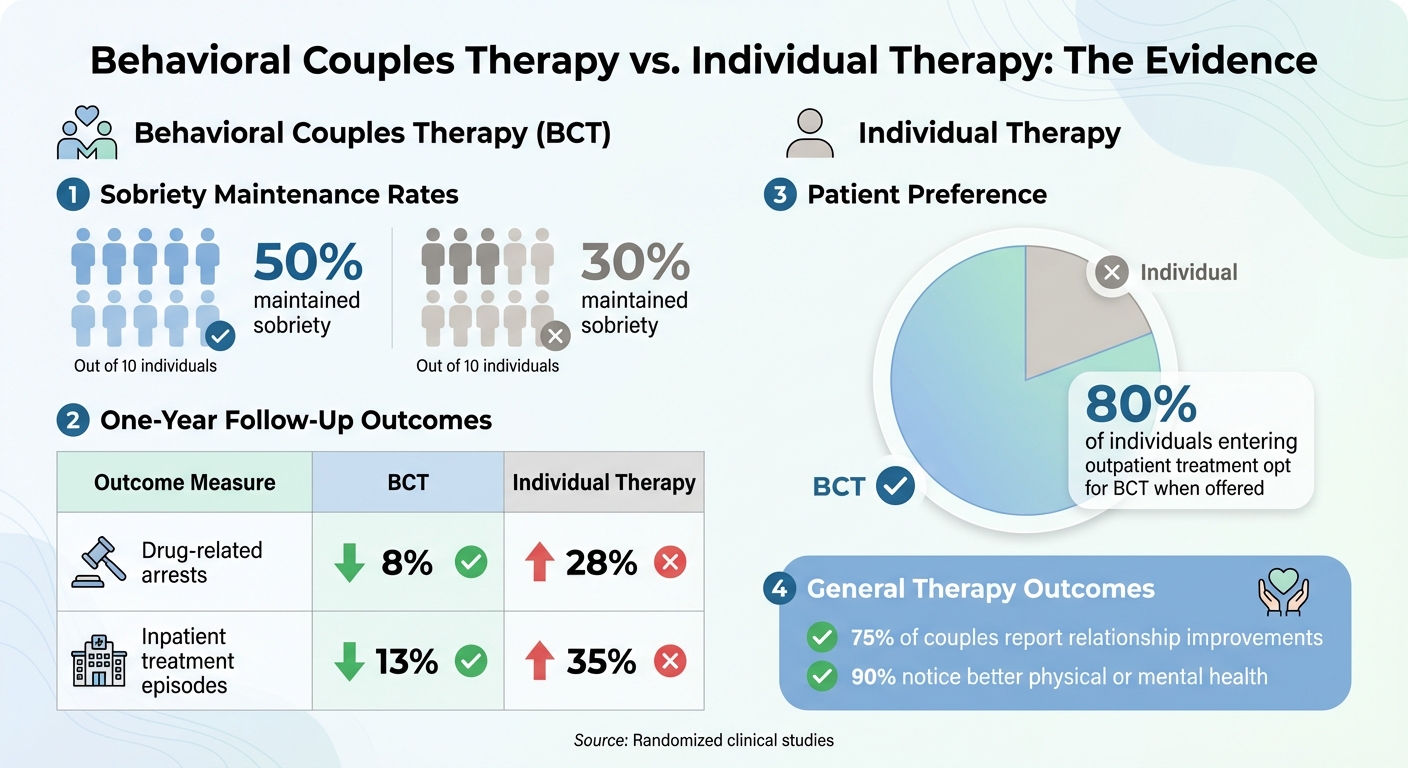
Behavioral Couples Therapy vs Individual Therapy: Success Rates and Outcomes
When trauma, addiction, or depression finds its way into a marriage, focusing on just one partner or addressing individual symptoms in isolation often falls short. These challenges are deeply interconnected, creating a web of issues that affect both the individual and the relationship. To truly heal, both must be addressed together.
Mark A. Whisman from the University of Colorado Boulder explains it clearly:
"Relationship problems and depression often influence one another in a bidirectional, recursive fashion." [9]
In other words, mental health and the health of a marriage are deeply intertwined, forming a cycle that requires a dual-focused approach to break. This is where integrated therapy steps in.
The evidence is compelling. A randomized study of male patients found that 50% of those who participated in Behavioral Couples Therapy (BCT) maintained sobriety from drugs and alcohol, compared to just 30% of those who underwent individual therapy [10]. Even more striking, during the year following treatment, the BCT group had fewer drug-related arrests (8% vs. 28%) and fewer inpatient treatment episodes (13% vs. 35%) [10].
This approach works because it goes beyond treating symptoms. As Jamula Taylor, LMFT, puts it:
"We understand that our mental health conditions are related to the breakdown in our relationships and that we can’t simply make depression, anxiety, or other problems go away by simply treating the symptoms." [2]
Combining Individual and Couples Therapy
Integrated therapy combines the best of both worlds: individual and couples counseling. Individual therapy offers a safe space for each partner to process personal struggles, like trauma or addiction triggers, without external pressures. At the same time, couples therapy focuses on repairing trust, improving communication, and rebuilding intimacy.
This dual approach tackles both the internal struggles of each person and the dynamics between them. For instance, certain relational patterns – such as one partner accommodating the other’s symptoms or responding with hostility – can unintentionally worsen PTSD symptoms [4]. Individual sessions help people explore their own reactions, while couples therapy teaches them how to interact in healthier ways.
John Kane, founder of Growth and Change Counseling, highlights this connection:
"The more relationally healthy people are, the less anxious, addicted, and depressed they are." [2]
By improving relationship skills, individual mental health often improves as well. Similarly, working on personal healing allows each partner to bring a stronger, healthier version of themselves to the relationship. It’s no surprise that around 80% of individuals entering outpatient treatment opt for BCT when it’s offered [10], showing how much people value including their partner in the recovery process.
Specialized Counseling Methods That Work
Integrated therapy isn’t one-size-fits-all. Effective treatment adapts to the couple’s unique challenges, combining proven methods with strategies tailored to their needs.
- Behavioral Couples Therapy (BCT): This method works to restructure harmful interactions that fuel addiction. Couples engage in practical exercises like daily "abstinence trust discussions", where the partner in recovery reaffirms their commitment to sobriety while the other offers support [10]. To rebuild their bond, couples also practice activities like "Catch Your Partner Doing Something Nice" and "Caring Days", which focus on fostering positive interactions [10]. One key boundary: discussions about past substance use or fears of relapse are reserved for therapy sessions to avoid unnecessary conflict or triggers [10].
- Cognitive-Behavioral Conjoint Therapy (CBCT) for PTSD: This 15-session program addresses both PTSD symptoms and relationship struggles [4]. The therapy progresses through three phases: psychoeducation and creating safety, developing communication skills to reduce avoidance, and rethinking trauma-related beliefs [4].
- Emotionally Focused Therapy (EFT): Especially effective for trauma survivors and high-conflict couples, this approach strengthens emotional bonds by addressing attachment wounds and rebuilding trust [2][4]. For couples dealing with depression or significant relational pain, EFT can help restore intimacy and connection.
April Silva, LMFT, explains her trauma-focused approach:
"In cases of PTSD, I will help you uncover the underlying defenses that protected you through a traumatic experience but now are interfering with your ability to move forward in intimacy." [2]
How Growth and Change Counseling Can Help
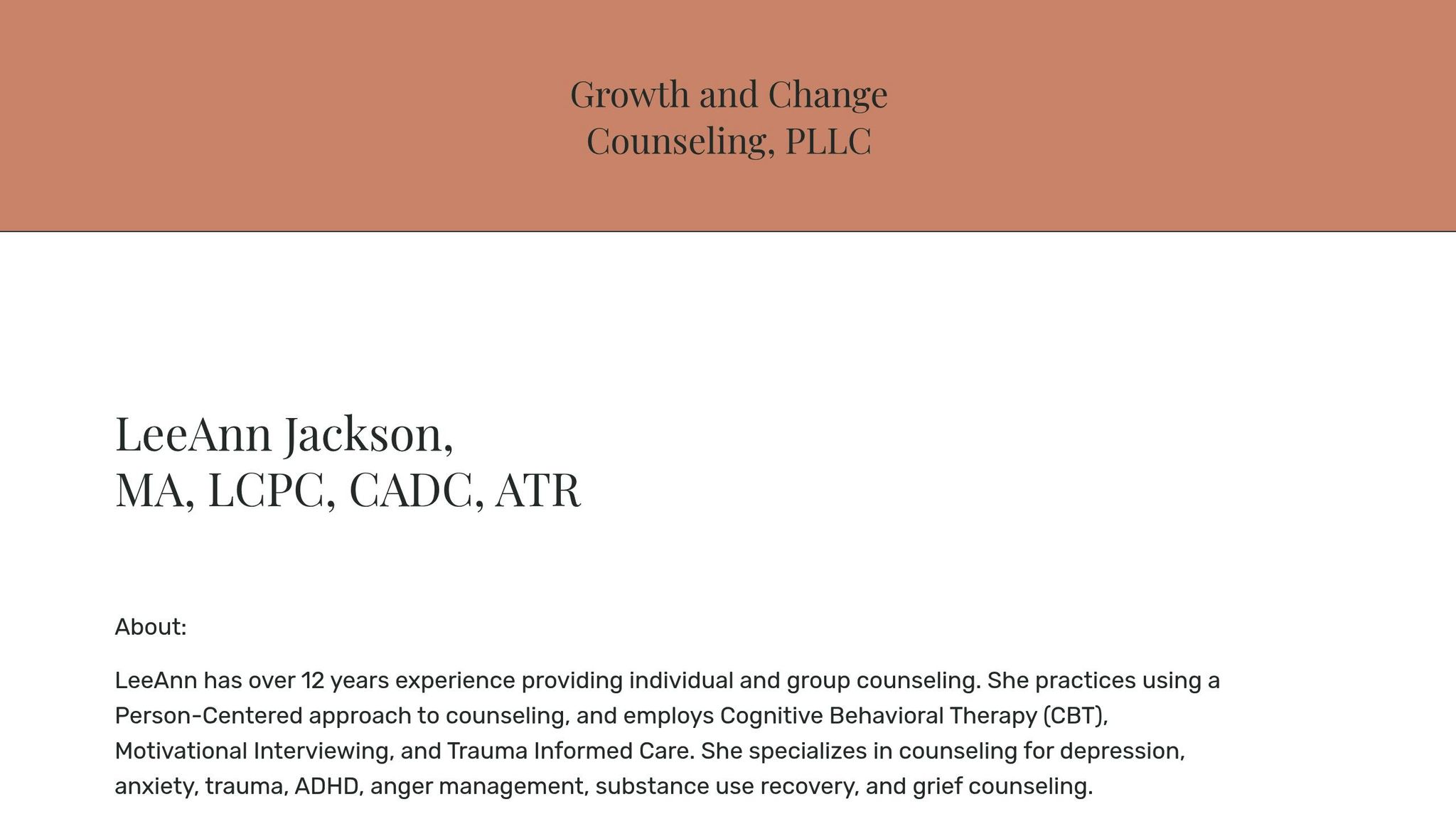
Growth and Change Counseling takes a comprehensive approach, combining clinical expertise with practical tools to address anxiety, depression, and addiction through strengthening relationships [2][7]. Instead of just managing symptoms, the focus is on resolving the deeper relational issues at the heart of these challenges [7].
For couples facing severe difficulties, The Marriage Rescue Institute offers an intensive 12-week program specifically designed to repair relationships impacted by trauma, addiction, or depression [2]. This structured coaching process provides the guidance and support couples need when their relationship is at a breaking point.
Services include individual therapy (starting at $150 for a 45-minute session with an Associate Marriage and Family Therapist) and couples counseling, available in Campbell, San Jose, Los Angeles, and Roseville, as well as through telehealth for clients across California [7].
Growth and Change Counseling also specializes in working with neurodiverse couples, where communication differences can contribute to stress and depression [2]. Their approach ensures that both partners’ needs are addressed while strengthening the relationship itself. When couples heal together, the results are deeper and more enduring than individual therapy alone.
sbb-itb-596b85d
Steps for Couples to Rebuild and Heal
Healing takes time, but when partners face trauma, addiction, and depression together, their marriage can emerge stronger [4]. By following these steps, couples can transform shared struggles into a journey of mutual recovery, inspired by the integrated therapy approach.
Building Trust and Open Communication
Rebuilding trust starts with honesty and accountability. Licensed Marriage and Family Therapist Anna Aslanian captures the gravity of this process:
"Mistrust shatters the sense of personal safety needed to engage in an intimate relationship… Betrayal trauma hits the foundation of the person and the relationship." [3]
Creating a safe space where both partners feel comfortable admitting their challenges and addressing hard topics is key. As John Mark Kane, LMFT, puts it:
"Conflict is a pathway to intimacy. If there’s no conflict in a relationship, at least one person isn’t being genuine." [2]
Structured communication exercises can help defuse tension and ensure both partners feel heard [10]. The goal is to develop what Growth and Change Counseling calls "relational intelligence" – the ability to handle complex emotions and express needs without assigning blame or playing the victim [3].
Setting Boundaries and Shared Goals
Healthy boundaries are about balancing individuality with intimacy [11]. Dr. Alison Cook, a psychotherapist, explains:
"The more you understand what you want and need, the healthier your relationship will be. As you can communicate on behalf of what you are feeling, you stop fighting and move toward solving problems together, as a team." [11]
One helpful tool is the 1–10 Boundary Exercise, where couples rate key areas of their relationship – such as parenting, finances, and intimacy – to pinpoint trouble spots [11].
For couples dealing with addiction, clear boundaries are essential to avoid enabling behaviors like making excuses or taking over responsibilities that belong to the addicted partner [6]. Keep in mind the ‘3 C’s’: you didn’t Cause it, you can’t Control it, and you can’t Cure it [1].
When setting limits, use firm yet kind language. For instance: "I love you, but that behavior is not okay with me. We can talk about this later, but for now, please respect my wishes" [1].
Shared goals give couples a sense of purpose. Daily check-ins, like affirming commitment to sobriety, can strengthen that bond [10]. Research shows that strong family relationships are among the best predictors of long-term sobriety [3].
Once boundaries and shared goals are in place, it’s time to focus inward.
Practicing Self-Care and Emotional Regulation
The health of each individual in the relationship directly affects the couple’s recovery journey. Emotional regulation can start with simple practices like the "centering breath" – a technique where you inhale through your nose and exhale through your mouth to calm yourself before reacting to conflict [1]. This helps shift from a defensive reaction to a thoughtful response [1].
Self-care is critical. Activities like exercise, meditation, prayer, and joining support groups can build resilience [1]. For the non-addicted partner, seeking external support can safeguard their mental well-being [6].
Couples can also strengthen their bond by reintroducing enjoyable shared activities. Research links spending quality time together with positive recovery outcomes [10]. Try exercises like "Catch Your Partner Doing Something Nice", where you acknowledge kind gestures, or plan "Caring Days", where you surprise your partner with thoughtful acts of affection [10].
These practices help rebuild intimacy and mutual support. Growth and Change Counseling refers to this as "relational homework" – integrating therapy skills into everyday life [2]. As Charles Stanley wisely said:
"It is not the trials in your life that develop or destroy you, but rather your response to those hardships." [2]
For those seeking professional help, individual therapy sessions start at $150 for a 45-minute session with an Associate Marriage and Family Therapist, with sliding scale options for financial flexibility [7]. Couples in crisis may consider the Marriage Rescue Institute’s 12-week program, designed to tackle the challenges of trauma, addiction, and depression in marriage [2]. These services are available in Campbell, San Jose, Los Angeles, and Roseville, as well as via telehealth across California [7].
Conclusion: Moving Forward with Healing and Growth
When faced with trauma, addiction, or depression, seeking professional help is not just important – it’s necessary. Research highlights that 50% of men in Behavioral Couples Therapy (BCT) stayed abstinent, compared to just 30% in individual therapy [10]. On top of that, 75% of couples in counseling report improvements in their relationship, and an impressive 90% notice better physical or mental health individually [12].
Yet, many couples wait far too long to seek help. On average, couples delay addressing marital issues for about six years, even though 88% of couples in therapy agree it’s better to start before problems escalate [12]. Tackling underlying trauma and unhealthy patterns early can make all the difference – not just in managing symptoms but in fostering real change [2][1].
Integrated therapy offers a path toward meaningful recovery, and professional guidance can help you navigate it. Programs like The Marriage Rescue Institute specialize in providing intensive, personalized support for couples facing complex challenges [2]. Whether you’re in Campbell, San Jose, Los Angeles, or Roseville – or prefer telehealth services across California – help is within reach when you’re ready to take that step.
Healing is a purposeful journey. As L.R. Knost so beautifully puts it:
"Do not be dismayed by the brokenness of the world. All things break. And all things can be mended. Not with time, as they say, but with intention" [2].
Your relationship can mend. With intention, commitment, and the right professional guidance, you can break free from harmful cycles and build a stronger, healthier future together.
Understanding Trauma Bonds at Growth and Change Counseling
How does trauma affect communication in a marriage?
Trauma can deeply affect how couples interact, often shaking the very foundation of their communication. It can lead to behaviors like pulling away, becoming defensive, or shutting down emotionally. These actions, though often rooted in pain, may be misunderstood by the other partner as indifference or even hostility. Unfortunately, this misinterpretation can spark a cycle of conflict, chipping away at emotional closeness.
When trauma is paired with challenges like depression or addiction, communication struggles can become even more pronounced. Partners might fall into patterns of criticism, avoidance, or complete silence. These behaviors make resolving conflicts feel nearly impossible and can gradually erode the trust and connection that hold a marriage together.
To address trauma within a marriage, it’s essential to focus on both individual recovery and improving how partners relate to one another. Growth and Change Counseling offers a structured 12-week couples coaching program called The Marriage Rescue Institute. This program is designed to help couples rebuild healthy communication and strengthen their relationship for the long term.
How can integrated therapy help couples dealing with addiction and trauma?
Integrated therapy, which blends trauma-aware strategies with couples-focused interventions, offers valuable support for partners dealing with addiction and trauma. Studies highlight that couples engaging in therapy together see lower rates of substance use, enhanced relationship satisfaction, and healthier family interactions, including fewer conflicts and more positive communication.
This method also tackles related issues like depression, anxiety, or PTSD, paving the way for a more comprehensive healing process. By approaching recovery as a team, couples can rebuild trust, improve communication, and develop shared coping mechanisms, promoting lasting recovery and emotional stability for both individuals.
What are the early signs that your partner might be struggling with depression?
Depression in a partner often shows up in small but telling ways. They might become more distant, lose enthusiasm for hobbies they used to love, or seem persistently down for weeks at a time. You might also notice their sleep habits changing – either sleeping far more than usual or battling sleepless nights. Appetite and weight fluctuations can also be red flags.
Other signs could include irritability, overwhelming guilt, or a sense of hopelessness. They may struggle to focus, find decision-making challenging, or exhibit a noticeable drop in energy. You might see them pulling away from family or social events and avoiding conversations about their emotions. If these behaviors persist for several weeks, it’s essential to encourage them to connect with a professional who can help.
Growth and Change Counseling offers therapy tailored for couples and individuals, focusing on challenges like depression, trauma, and addiction within relationships. Their solutions-based approach aims to rebuild emotional health and strengthen bonds.
Related Blog Posts
- How Addiction Impacts Marital Stability
- Cognitive-Behavioral Therapy for Couples with Addiction
- Trauma and Depression in Marriage: Key Connections
- Addiction Recovery and Marriage: What Works
