When parents separate, ongoing conflict can deeply affect children, often leading to emotional and physical struggles. High-stress co-parenting creates tension that kids can sense, even if they don’t fully understand it. This stress can manifest as anxiety, depression, physical symptoms like headaches or stomachaches, sleep disturbances, or changes in behavior.
Key warning signs include:
- Physical symptoms: Frequent headaches, stomachaches, disrupted sleep, or regressive behaviors like bedwetting.
- Behavioral changes: Mood swings, withdrawal, defiance, or risky behaviors.
- Academic struggles: Declining grades, trouble focusing, or disinterest in school.
- Emotional struggles: Anxiety, fear of abandonment, or self-blame.
Addressing these issues early can protect children’s emotional well-being and prevent long-term harm. Strategies include shielding kids from conflict, maintaining consistent routines, and seeking professional help if needed. Therapy and parent coaching can offer tools to improve communication and create a healthier environment for children.
If warning signs persist for more than two weeks or escalate, reaching out to a mental health professional is critical. Early intervention can make a significant difference in helping children feel secure and supported.
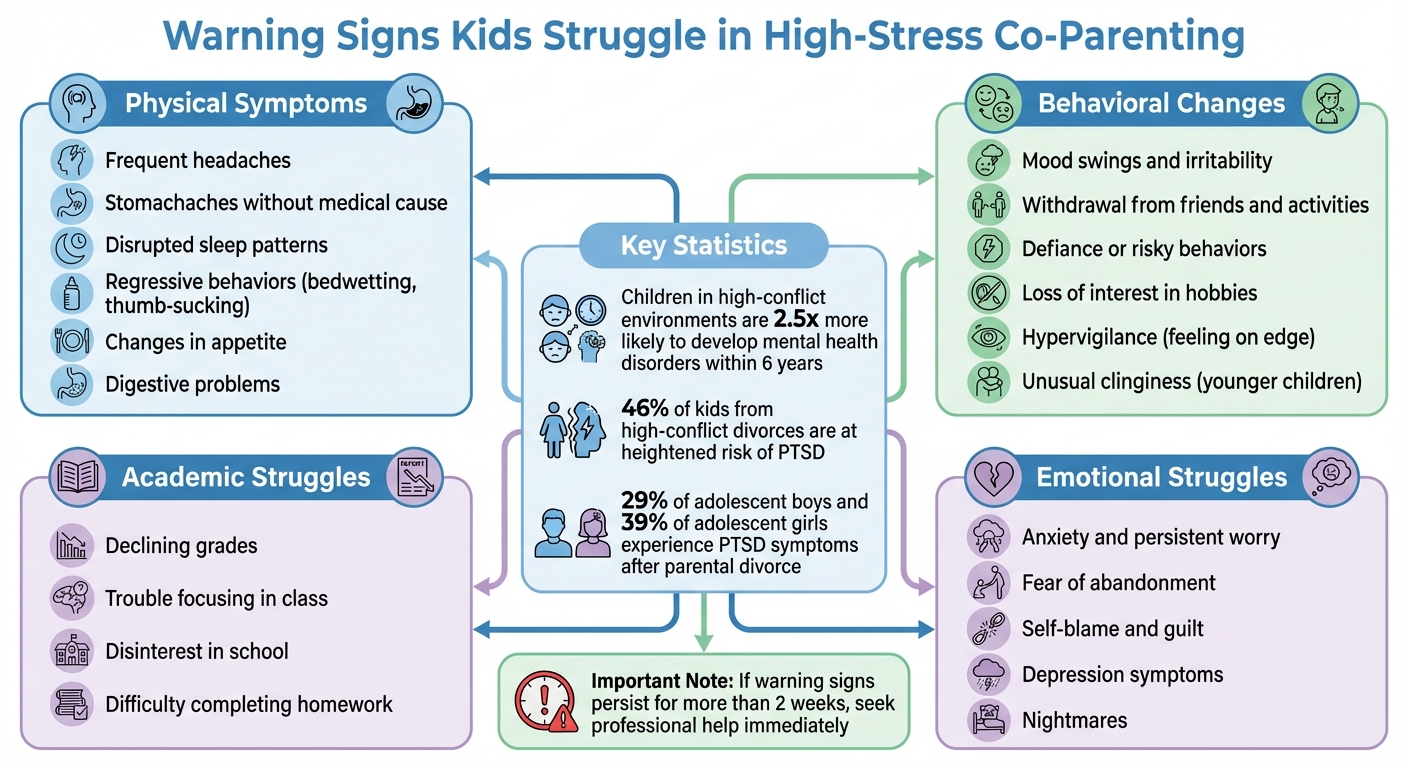
Warning Signs Children Struggle in High-Stress Co-Parenting Situations
Protecting Kids in High Conflict Co-Parenting Situations
Physical and Behavioral Warning Signs
Kids often show signs of distress physically before they can articulate their feelings. Common complaints like frequent headaches or stomachaches – without a clear medical explanation – are red flags to watch for [5][9][10]. However, it’s essential to consult a pediatrician first to rule out any underlying medical issues [9]. Pay attention to whether these symptoms worsen during stressful transitions or heightened tension, as they often appear before noticeable behavior changes.
Sleep issues can also signal stress. Trouble falling asleep, waking up frequently, or regressive behaviors like bedwetting and thumb-sucking may indicate that a child’s nervous system is overwhelmed [6][9][10]. Nightmares might become more common, and these regressions suggest a return to earlier coping mechanisms when stress feels unmanageable.
Behavioral changes often accompany physical symptoms. Emotional distress can show up as irritability, mood swings, defiance, or withdrawal. Younger children might become unusually clingy, while older ones could engage in risky behaviors [1][5][6][7][8]. You might notice a loss of interest in activities they once loved or a sudden desire to isolate themselves from friends.
Stress can also take a toll on academic performance. A drop in grades, trouble focusing, or a lack of interest in school may all point to deeper emotional struggles [5][6][8]. Teachers and coaches are often the first to notice these changes, so staying in touch with them can offer valuable insights [8]. Kids might not say they’re “stressed,” but phrases like “I’m worried,” “I’m confused,” or “I’m stupid” can reveal how they’re feeling [8].
Changes in appetite and digestive problems are another warning sign [8][9]. Children in high-conflict environments may also display hypervigilance, constantly feeling on edge or as though danger is always near [10].
PTSD in children doesn’t always look like it does in adults [10].
These signs, taken together, suggest a child is struggling. Spotting them early can make a big difference in supporting their emotional health, especially in high-stress co-parenting situations.
Emotional and Mental Health Struggles
Anxiety and Fear
Children caught in high-conflict co-parenting situations often face a level of worry that feels relentless, far exceeding typical childhood concerns. They may constantly anticipate the next argument or fear their family falling apart altogether. E. Mark Cummings, a psychologist from Notre Dame University, explains it well: "Children are like emotional Geiger counters. Kids pay close attention to their parents’ emotions for information about how safe they are in the family" [2]. This hyper-awareness can lead to chronic anxiety, showing up as separation anxiety or nightmares in younger children and withdrawal or loss of interest in activities among teenagers.
Another heavy burden is the fear of abandonment. When children witness their parents’ relationship unraveling, they may begin to question their own security, wondering if they too could be left behind or uncared for [13]. Studies reveal that children exposed to frequent and intense parental conflict in the early years after a divorce are over 2.5 times more likely to develop a mental health disorder within six years compared to those in low-conflict environments [13]. On top of that, nearly 46% of kids from high-conflict divorces are at a heightened risk of developing Post-Traumatic Stress Disorder (PTSD) [4]. These fears often spiral into self-blame, creating a foundation for long-term self-doubt and emotional struggles.
Self-Blame and Guilt
Fear isn’t the only emotion children grapple with – self-blame often takes root as well. Many children internalize their parents’ conflicts, mistakenly believing they are somehow responsible. This guilt intensifies when parents involve them in adult matters, like passing messages or gathering information about the other parent’s household [13]. The emotional toll is compounded by what’s known as the "spillover effect", where parents’ stress and emotional exhaustion lead to harsher discipline or reduced emotional availability. This dynamic can make children feel even more at fault for the tension around them [1]. As William Bernet, MD, Professor Emeritus at Vanderbilt University School of Medicine, puts it: "Children are damaged when their parents fight in front of them, over them, and through them" [14].
Effects on Emotional Growth
The emotional toll of high-conflict co-parenting doesn’t just affect the present – it can leave lasting marks on a child’s ability to form healthy relationships. When their primary example of relationships involves hostility, manipulation, or emotional detachment, trusting others and building intimacy becomes a challenge. Research even shows that babies as young as six months can sense and mimic their parents’ distress, proving that these effects start remarkably early [2]. Combined with physical and behavioral symptoms, this emotional strain creates a heavy burden for children to carry.
The long-term consequences can be profound. Adults who grew up in high-conflict homes report higher rates of issues like vascular and immune system problems, substance dependency, and chronic loneliness [2]. In extreme cases, children may experience parental alienation, where the emotional strain of trying to maintain relationships with both parents leads them to reject one parent entirely, often without a valid reason [14]. These struggles underscore how deeply unresolved conflict can shape a child’s emotional and mental development.
sbb-itb-596b85d
How Parents Can Support Their Children
Helping children manage the stress signals discussed earlier starts at home.
Keep Conflict Away from Children
Protecting kids from parental disputes is essential. Arguments about issues like discipline, schoolwork, or schedules can be especially harmful since children often internalize these conflicts, blaming themselves [17]. Even subtle tension is noticeable to kids, so it’s crucial to keep disagreements out of their view [17].
Approach co-parenting as a professional partnership centered on your child’s well-being. Communicate respectfully with your co-parent – for instance, saying, “Could we adjust the pickup time on Friday?” is far more constructive [16]. Avoid making your child a go-between or asking them to relay messages or share details about the other parent’s home [15][16].
Before interacting with your child after a stressful exchange, take a moment to reset. Deep breathing or a short walk can help you manage your emotions, preventing unintentional harshness or withdrawal that your child doesn’t deserve [1].
By keeping conflict away from your child, you create a stable and nurturing environment where they can feel secure.
Build a Stable and Supportive Home
Predictability and consistency are key to helping children feel safe, especially when they’re dividing their time between two homes. While rules don’t have to be identical in both households, aligning on basics like homework, curfews, and bedtime routines can reduce confusion and stress [16]. Collaborate with your co-parent on major decisions, such as those involving medical care or education, to present a united front.
Transitions between homes can be challenging, but small steps can make them smoother. For example, plan drop-offs to minimize disruption [16]. Help your child pack in advance, including comforting items like a favorite toy or a family photo, to make the change easier [16]. When your child comes back to your home, keep the atmosphere calm with simple activities like reading together, giving them time to adjust [16].
Spending quality one-on-one time with your child also strengthens your connection. Whether it’s sharing a meal, playing a game, or taking a walk, these moments show your child they are loved and supported [1]. Be available to listen when they want to share their feelings, but steer clear of placing them in situations where they feel pressured to choose sides or keep secrets [15].
If everyday efforts don’t seem to be enough, seeking outside help can make a big difference.
Get Professional Support
Sometimes, external guidance is necessary to address deeper issues. Family therapy can help rebuild trust and improve communication within your household [5]. Parent coaching provides tailored strategies for managing stress, strengthening your relationship with your child, and improving co-parenting dynamics [3]. Individual counseling, whether for you or your child, can address challenges like anxiety, depression, or trauma that may arise from a high-conflict environment [3].
Growth and Change Counseling in California offers specialized services for families facing these challenges. They provide family therapy, parent coaching, and treatment for anxiety, depression, and trauma. Their focus is on improving relational intelligence to address the root causes of issues, rather than just managing symptoms [3]. Services are available in Campbell, San Jose, Los Angeles, Roseville, and statewide through telehealth. Seeking professional help isn’t a sign of failure – it’s a proactive way to equip your child with the tools they need to thrive.
When Professional Help Is Needed
Signs You Need Professional Help
The two-week rule serves as a helpful guideline: if noticeable changes in mood or behavior last longer than 14 days, it’s time to reach out to a mental health professional [19]. This rule helps differentiate between short-term reactions and more serious concerns that require intervention.
Be alert for signs like declining academic performance (such as falling grades or trouble focusing) or social withdrawal (like avoiding friends or activities). Physical symptoms without a clear medical cause – such as frequent headaches, stomachaches, or disrupted sleep – are also red flags [5][6][19]. For younger kids, regressive behaviors like thumb-sucking or bedwetting can indicate they’re struggling to cope [6][18].
Some warning signs demand immediate attention. Intense anxiety, persistent feelings of worthlessness, or escalating risk behaviors in older children are serious concerns [19][6][18]. Any mention of self-harm, suicidal thoughts, or actions requires urgent professional help. It’s worth noting that suicide is the second-leading cause of death for individuals aged 10 to 34 [6].
Strained parent-child relationships can also signal the need for intervention. When children are put in the middle – asked to take sides, deliver messages, or report on the other parent – they may develop divided loyalties and long-term trust issues [18][20][21]. As TalkingParents emphasizes:
Seeking assistance from a qualified therapist may be one of the most important decisions you ever make for your child’s long-term health and happiness [6].
If these signs persist or worsen, professional support becomes essential.
How Growth and Change Counseling Can Help

When these challenges arise, professional guidance can help break the cycle of distress. Growth and Change Counseling in California offers tailored support for families dealing with high-stress co-parenting situations. Their family therapy focuses on rebuilding trust, addressing emotional and behavioral challenges, and improving communication [3]. Parent coaching helps parents regain confidence, manage conflict’s impact on their parenting, and strengthen their bond with their children [1][3].
For children facing anxiety, depression, or trauma from conflict-heavy environments, the practice provides individual therapy using evidence-based approaches like EMDR, CBT, and somatic therapy [3]. Additional services include support for neurodiverse relationships and anger management [3]. Families can access these services in Campbell, San Jose, Los Angeles, and Roseville, or opt for telehealth sessions throughout California to accommodate busy schedules [3]. Therapy sessions cost $200 for 45 minutes with a Licensed Marriage and Family Therapist, but more affordable options are available with Associate therapists at $150 per session. Sliding scale rates start at $100 for those with financial challenges.
Acting early can help prevent small concerns from developing into long-term issues [18][19]. Professional help equips both parents and children with tools to break harmful patterns and build stronger, healthier relationships, setting the stage for a more secure and confident future [5].
Moving Forward with Growth and Change Counseling
Identifying emotional distress in children early is crucial for their well-being. Since children’s brains are still developing, they often lack the tools to process and manage chronic stress independently [12].
The impact of stress can be severe: 29% of adolescent boys and 39% of adolescent girls experience PTSD symptoms following their parents’ divorce [12]. Contrary to popular belief, children don’t simply "adjust" to family stress. They remain sensitive to parental conflict well into their teenage years [2]. Prolonged exposure to such stress can alter their stress hormone levels [1] and harm their developing nervous systems [2].
However, when parents address distress early and adopt healthier ways to resolve conflicts, children can develop stronger emotional resilience [2] and learn positive social skills [11]. Steps like reducing conflict, keeping consistent routines across homes, and managing personal stress before engaging with children can interrupt the harmful "spillover" effect [1][11]. Recognizing these risks and taking action can help restore a sense of stability for children.
If signs of distress persist, professional support may be needed. Growth and Change Counseling offers specialized family therapy, parent coaching, and individual therapy to address issues like anxiety, depression, or trauma stemming from high-conflict environments. With offices in Campbell, San Jose, Los Angeles, and Roseville, as well as telehealth services across California, families can access help when they need it most [3]. Therapy with a Licensed Marriage and Family Therapist costs $200 for a 45-minute session, while more affordable options are available with Associate therapists at $150 per session. Sliding scale rates start at $100 for those facing financial difficulties.
FAQs
What are the early signs that a child is struggling in a high-stress co-parenting situation?
Children caught in high-conflict co-parenting situations often display clear emotional or behavioral shifts. You might notice frequent emotional outbursts – such as bursts of anger or episodes of sadness – or a tendency to withdraw from friends and activities they once loved. Some children may also act out through defiance or rebellious actions, as they struggle to process the tension within their family.
These behaviors are often a child’s way of communicating their feelings about the instability or conflict they’re experiencing. Spotting these signs early can give parents the chance to step in and provide support, whether through counseling or other resources, to address their child’s emotional well-being and create a more stable environment.
What can parents do to shield their children from conflict in high-stress co-parenting situations?
Parents play a crucial role in shielding their children from the harmful effects of conflict by fostering a calm and stable environment. One essential approach is to avoid arguing or addressing sensitive topics in front of the children. Witnessing parental disagreements can take a toll on a child’s emotional health, so keeping these conversations private and respectful is key.
Another important step is reassuring children that any disagreements between parents are not their fault. Teaching them healthy coping strategies can also help them navigate challenging situations. Maintaining a respectful co-parenting relationship is vital – this includes avoiding negative remarks about the other parent and prioritizing the child’s emotional well-being. By focusing on positive communication and putting the child’s needs first, parents can ease stress and create a sense of security that supports their overall development.
How do I know if my child needs professional help for stress caused by co-parenting conflicts?
If your child is experiencing emotional or behavioral changes that disrupt their daily life, it might be time to consider professional help. Look out for signs like frequent tantrums, intense anxiety, pulling away from friends or activities they once enjoyed, trouble sleeping, or a sudden drop in school performance. These behaviors could signal that your child is struggling to manage stress.
In more serious cases, keep an eye out for excessive worrying, ongoing aggression, frequent physical complaints (like stomachaches or headaches), or, in older kids, signs of substance use. Spotting these issues early and consulting a mental health professional can make a big difference. A professional can help your child navigate their emotions and build healthier ways to cope, which can prevent long-term challenges and support their overall well-being.
Related Blog Posts
- Parenting Through Marital Conflict and Mental Health Struggles
- Mental Health and Co-Parenting: Problem-Solving Strategies
- 5 Steps to De-Escalate Co-Parenting Arguments
- How to Communicate Effectively in High-Stress Co-Parenting
