When couples work together toward sobriety, they achieve better outcomes than tackling addiction alone. Research shows that 50% of men in couples-focused therapy stay sober, compared to only 30% in individual treatment. Shared goals not only enhance recovery success but also strengthen relationships, reduce conflict, and improve emotional connection.
Key takeaways:
- Behavioral Couples Therapy (BCT) improves abstinence rates, reduces arrests, and lowers inpatient treatments.
- Shared activities like trust-building discussions, attending meetings, and creating recovery contracts promote accountability.
- Couples who align their recovery efforts experience better communication, trust, and long-term success.
This approach turns addiction recovery into a team effort, helping couples rebuild their lives together.
Webinar Excerpts from "Addiction Recovery: What Do We Do with Couples?"
Research Findings: Shared Goals and Sobriety Success
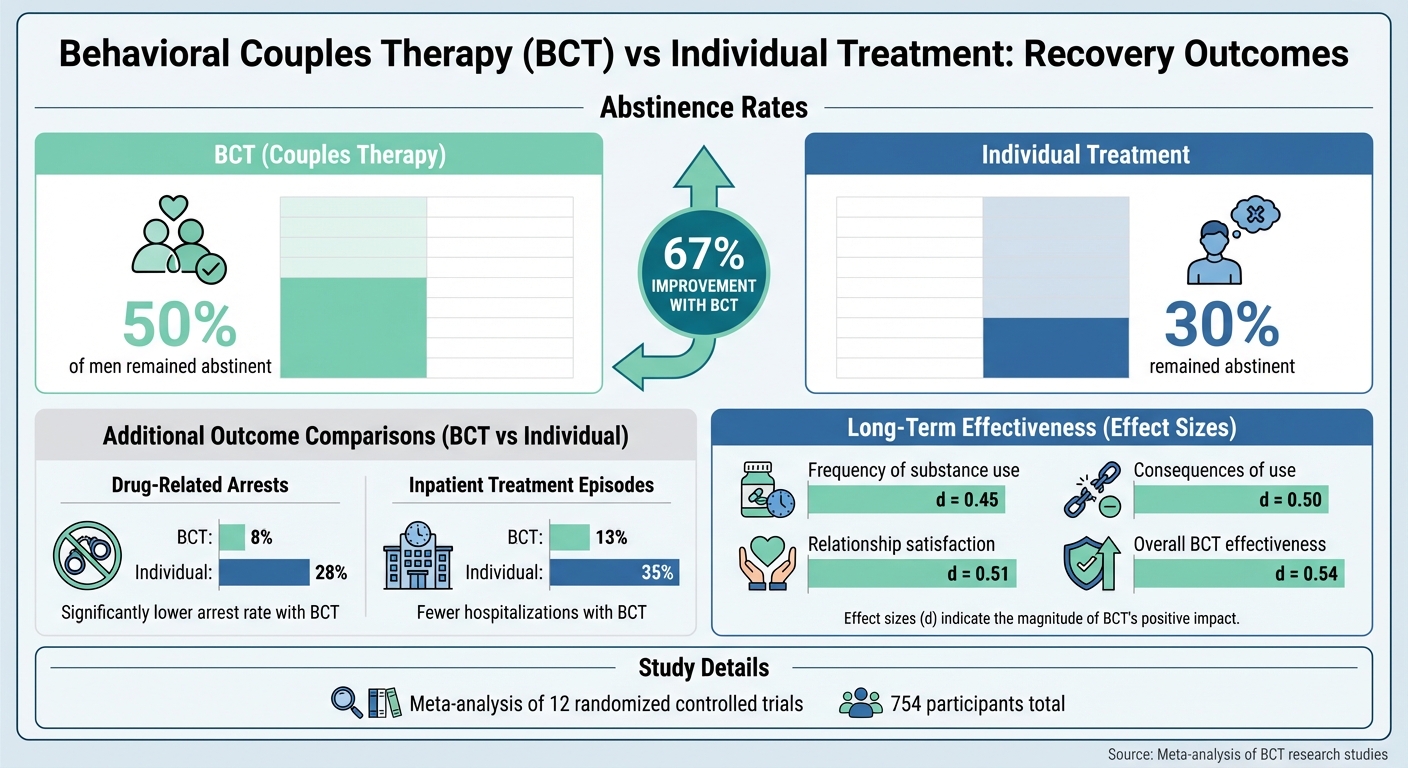
Behavioral Couples Therapy vs Individual Treatment: Recovery Success Rates
When couples align their recovery efforts, they can turn individual struggles into a shared journey toward lasting sobriety.
How Shared Goals Increase Recovery Success Rates
Studies reveal that couples who tackle sobriety together see better outcomes compared to those who face the challenge alone. For instance, research shows that 50% of men participating in Behavioral Couples Therapy (BCT) remained abstinent, compared to just 30% in individual treatment – a powerful 67% improvement driven by shared commitment [3].
A meta-analysis of 12 randomized controlled trials involving 754 participants further highlights the benefits of BCT. The analysis found that BCT outperformed individual treatments, with an effect size of Cohen’s d = 0.54 [1]. Couples engaged in BCT also experienced fewer drug-related arrests (8% vs. 28%) and fewer inpatient treatment episodes (13% vs. 35%) compared to those in individual counseling [3]. Even "dual problem couples", where both partners struggle with alcohol use disorder, can achieve similar success rates as single-problem couples when they commit to mutual abstinence [2]. The secret lies in alignment: when both partners share the same goal, they stop pulling in opposite directions and start building momentum together.
But the benefits of shared recovery goals extend beyond just numbers – they also create opportunities for deeper emotional and relational growth.
Building Stronger Relationships Through Recovery Goals
A mutual commitment to sobriety doesn’t just improve recovery outcomes – it also strengthens the bond between partners. BCT fosters what researchers call a "constructive cycle", where progress in recovery supports the relationship, and a healthier relationship, in turn, reinforces sobriety [3].
William Fals-Stewart, Ph.D., explains this dynamic:
"BCT attempts to create a constructive cycle between substance use recovery and improved relationship functioning through interventions that address both sets of issues concurrently."
- William Fals-Stewart, Ph.D., State University of New York [3]
The data supports this. Long-term follow-ups show that BCT outperforms individual treatments in three critical areas: frequency of substance use (d = 0.45), consequences of use (d = 0.50), and relationship satisfaction (d = 0.51) [1]. Couples who work together on recovery don’t just drink less – they build better communication, deepen trust, and reconnect emotionally. Activities like daily trust discussions and joint recovery efforts shift the focus from past blame to proactive teamwork, reducing conflicts that can lead to relapse [3].
Goal-Setting Strategies for Couples in Recovery
When it comes to recovery, setting clear and shared goals can make all the difference for couples. Building on the idea that shared goals strengthen relationships, couples in recovery should focus on defining specific commitments to guide their journey.
Research backs this up: couples who document and track their recovery goals daily see better outcomes. In fact, studies show that writing down goals can significantly improve success rates (effect size d = 0.34) [6].
Using the SMART Framework for Recovery Goals
The SMART framework is a practical tool for turning intentions into actionable steps. Here’s how it works:
- Specific: Set clear, detailed goals like “attend three AA meetings per week.”
- Measurable: Track your progress using a calendar, chart, or app.
- Achievable: Make sure your goals are realistic given your current resources and situation.
- Relevant: Focus on goals that directly support sobriety and strengthen your relationship.
- Time-bound: Set deadlines or daily commitments to stay on track [6][7].
"Goal setting is an effective behavior change technique that has the potential to be considered a fundamental component of successful interventions."
- Epton et al., Authoritative Source [6]
One effective way to make goals actionable is through a recovery contract – a written agreement between both partners outlining their commitments. This approach, often used in Behavioral Couples Therapy, eliminates confusion and provides a clear accountability system. Around 80% of individuals offered this structured method choose to participate because it simplifies what’s expected of each person [3].
Examples of Shared Recovery Goals
Real-life examples show how couples can succeed by combining accountability with activities that nurture their relationship. Take Sue and Gene, for instance. Both struggled with Alcohol Use Disorder and created a recovery contract that included four commitments: a daily trust-building discussion with mutual promises of abstinence, taking Antabuse together each morning, attending three 12-step meetings weekly, and completing weekly urine screens [2].
When they relapsed after visiting a local bar four weeks into treatment, they didn’t give up. Instead, they adjusted their goals. They decided to avoid that bar and the social circle tied to it entirely. To replace their usual Friday nights at the bar, they started attending AA meetings together. This change not only helped them maintain sobriety but also paved the way for them to regain custody of their three children [2].
Other shared goals that have proven effective include:
- Practicing “Caring Days,” where partners intentionally perform acts of kindness for one another.
- Training together for a 5K race.
- Cooking healthy meals as a team.
- Holding weekly financial check-ins to rebuild trust [3][8].
The common thread? Replace time previously spent on substance use with positive, shared activities that not only support sobriety but also strengthen the relationship.
For couples seeking additional support, professional guidance can be invaluable. Growth and Change Counseling offers specialized couples counseling to help you create and stick to recovery goals tailored to your unique situation.
sbb-itb-596b85d
Behavioral Couples Therapy (BCT) Research in Addiction Recovery
How BCT Works and Its Benefits
Behavioral Couples Therapy (BCT) tackles two interconnected issues: substance abuse and the relationship struggles that often fuel addiction. The approach acknowledges the damaging cycle where addiction worsens relationship conflicts, and those conflicts, in turn, intensify addiction behaviors [3].
BCT typically involves 12 to 20 weekly sessions over a span of three to six months. At the heart of the therapy is a "Recovery Contract", a daily commitment where the individual battling addiction pledges to stay sober for 24 hours, while their partner provides daily support and encouragement. This shared effort helps solidify the recovery goals set during therapy. If medications like Disulfiram or Naltrexone are part of the treatment, the partner plays an active role by observing their use and reinforcing adherence [3][4].
In addition to these daily rituals, BCT focuses on strengthening the relationship. Couples engage in exercises designed to improve communication, such as practicing active listening and using "I" statements, and they plan activities to replace time previously spent on substance use. One key rule is to avoid discussing past substance use or fears of relapse outside therapy sessions – this helps minimize conflicts that could derail progress [3][4]. These structured commitments create a foundation for lasting recovery.
BCT Treatment Outcomes for Couples
BCT’s structured approach has shown impressive results over time. A meta-analysis of 12 randomized controlled trials, involving 754 participants, revealed that BCT outperformed individual treatments, with an effect size of d = 0.54 [9][1].
The benefits extend far beyond achieving sobriety. For example, individuals in BCT reported fewer drug-related arrests (8% compared to 28%) and fewer inpatient treatment episodes (13% compared to 35%) than those receiving individual counseling alone [3].
Women with alcohol dependence also see notable improvements with BCT. When combined with individual therapy, women achieved higher abstinence rates and faced fewer substance-related challenges in the year following treatment [10]. Beyond addiction recovery, BCT fosters healthier relationships, with a medium effect size of d = 0.57 for relationship satisfaction. It also contributes to reductions in intimate partner violence and enhances the overall well-being of children in the household [3][11].
Maintaining Long-Term Sobriety as a Couple
Building on the foundation of Behavioral Couples Therapy (BCT), achieving and maintaining long-term sobriety depends on having a clear recovery plan and reliable support systems.
Developing a Long-Term Recovery Plan
A solid recovery plan transforms good intentions into actionable steps. One effective approach is incorporating a daily sobriety trust discussion into your routine. Keeping track of these discussions, along with meeting attendance and medication adherence, on a calendar can provide a visual record of progress. This simple tool not only highlights positive patterns but also serves as a tangible reminder of your commitment during challenging times.
For example, a case study from the VA Boston Healthcare System highlighted the power of a dual recovery contract. The couple involved followed a structured plan that included daily Antabuse, attending three Alcoholics Anonymous (AA) meetings each week, and undergoing regular urine screenings. When they experienced a relapse, it became an opportunity to reassess their goals and strengthen their efforts. Over time, they were able to regain custody of their children [2]. This illustrates how setbacks, rather than being seen as failures, can serve as opportunities for growth.
As William Fals-Stewart, Ph.D., from the State University of New York, wisely said:
"Relapse does not indicate that the treatment has failed… [it is] a learning experience and not a reason to abandon hope and commitment." [3]
A detailed recovery plan should also include specific steps to address relapse. For instance, this might involve contacting a therapist immediately, increasing the frequency of self-help meetings, or restarting prescribed recovery medications [3].
Using Support Systems and Professional Counseling
Long-term sobriety isn’t just about personal effort – it thrives on professional and peer support. Research shows that participants in BCT achieve higher abstinence rates compared to those in individual treatment. Regular counseling sessions and peer groups like AA and Al-Anon provide essential accountability and encouragement [4].
Many couples find it helpful to transition to quarterly counseling check-ins or crisis sessions after completing intensive therapy. This balance of professional guidance and growing independence helps them stay on track while fostering self-reliance [4].
For couples seeking specialized support, Growth and Change Counseling offers tailored services for addiction recovery. Their programs include individual therapy, couples counseling, and family therapy, all designed to address the unique challenges of maintaining sobriety. They provide services in Campbell, San Jose, Los Angeles, Roseville, and through telehealth across California. Learn more at Growth and Change Counseling.
Couples Recovery Insights from Growth and Change Counseling
Recovering from addiction is challenging, but it becomes more manageable – and meaningful – when couples take the journey together. Research highlights that when partners align their recovery goals, they can transform cycles of substance use and conflict into patterns of sobriety and healthier relationship dynamics. This mutual reinforcement creates a foundation where both recovery and the relationship thrive [3].
At the core of this transformation is goal alignment – the pursuit of truly shared objectives rather than simply supporting individual ones. Studies show that this alignment strongly correlates with relationship satisfaction (r = .43) [5]. Whether it’s engaging in daily trust-building conversations, attending support meetings as a team, or planning substance-free activities, these shared efforts encourage accountability and mutual growth. Beyond these personal commitments, professional guidance can play a pivotal role in helping couples maintain their progress. By addressing motivational gaps, formalizing recovery agreements, and improving communication skills, counseling can help couples navigate challenges and reduce the risk of relapse.
For couples looking to take the next step, Growth and Change Counseling provides tailored support for recovery. Visit Growth and Change Counseling to learn how expert guidance can help strengthen your partnership and recovery journey.
Your relationship has the potential to be a powerful source of support and resilience. With aligned goals and professional help, couples can achieve lasting sobriety while rebuilding trust and connection – one step at a time.
FAQs
How can Behavioral Couples Therapy (BCT) support couples in achieving sobriety together?
Behavioral Couples Therapy (BCT) focuses on helping couples work together to support sobriety by turning their relationship into a tool for recovery. Through this approach, therapists assist couples in developing a sobriety agreement, planning enjoyable activities they can do together, and enhancing their communication skills. The goal is to enable the non-using partner to reinforce abstinence positively, while also equipping both partners to handle conflicts that might otherwise lead to relapse.
Studies have found that couples who engage in BCT often see better results than those relying on individual treatment alone. These couples tend to have more days of sobriety, face fewer substance-related problems, and enjoy stronger, more satisfying relationships. Growth and Change Counseling incorporates these evidence-based techniques into its couples-counseling program, helping partners create a solid and supportive path toward lasting recovery.
What are some practical ways couples can work together to support sobriety?
Couples can enhance their recovery journey by establishing shared routines and habits that promote sobriety. One effective approach is creating a sobriety contract. This involves the partner in recovery committing to remain substance-free, while their partner offers support and holds them accountable. Reviewing this commitment regularly helps both stay aligned and focused on their shared goals.
Participating in structured activities is another way to foster connection and maintain progress. This might include regular check-ins to discuss recovery, practicing communication techniques like active listening, or engaging in enjoyable activities together – think cooking, walking, or picking up a new hobby. Couples can also work together to develop a relapse-prevention plan by identifying potential triggers, agreeing on coping strategies, and finding ways to support each other through tough times.
Growth and Change Counseling incorporates these proven methods into its 12-week couples coaching program, guiding partners toward stronger relationships while working toward sobriety.
Why is it important for couples to align their goals in addiction recovery?
When couples work together toward addiction recovery, they create a shared journey that builds accountability, boosts motivation, and fosters mutual support. Studies reveal that couples tackling sobriety as a team often experience greater success and face fewer addiction-related hurdles compared to those navigating recovery alone. On top of that, pursuing shared goals can strengthen relationships and enhance family dynamics.
What makes this approach so effective is the support partners offer one another – whether it’s through encouragement, celebrating milestones together, or staying actively involved in the recovery process. This teamwork not only helps each person stay focused but also deepens their connection as a couple. At Growth and Change Counseling, our 12-week couples coaching program is specifically designed to guide partners in setting and achieving shared sobriety goals, equipping them with the tools and support needed for lasting recovery and a stronger relationship.
Related Blog Posts
- Behavioral Therapy for Couples in Addiction Recovery
- Ultimate Guide to Couples Communication in Addiction Recovery
- Addiction Recovery and Marriage: What Works
- Top Strategies for Sustaining Change in Addiction Recovery
