Recovering from addiction is challenging, but incorporating structured strategies can significantly improve success rates. This article outlines proven approaches to maintain sobriety, emphasizing the role of intimate relationships in recovery. Key strategies include:
- Daily Recovery Contracts: Commit to 24-hour abstinence with partner support.
- Clear Boundaries: Set rules to avoid triggers and maintain stability.
- Accountability Partnerships: Regular check-ins to track progress and address challenges.
- Structured Communication: Use techniques like active listening and emotional validation to reduce conflict.
- Shared SMART Goals: Define specific, measurable recovery targets and celebrate milestones.
- Behavioral Couples Therapy (BCT): Evidence-based therapy to improve abstinence and relationship dynamics.
- Mutual Self-Care: Develop shared routines for physical and emotional well-being.
- Trust-Building Practices: Rebuild trust through openness and daily affirmations.
- Intensive Coaching: For couples in crisis, focused programs offer tailored solutions.
- Support Networks: Build a safety net of trusted contacts and response plans for relapse prevention.
Studies show couples who work together on recovery achieve higher abstinence rates and improved relationship satisfaction. Behavioral Couples Therapy, for instance, has helped 50% of participants maintain sobriety compared to 30% in individual therapy. These strategies provide a structured path to long-term recovery and relationship repair.
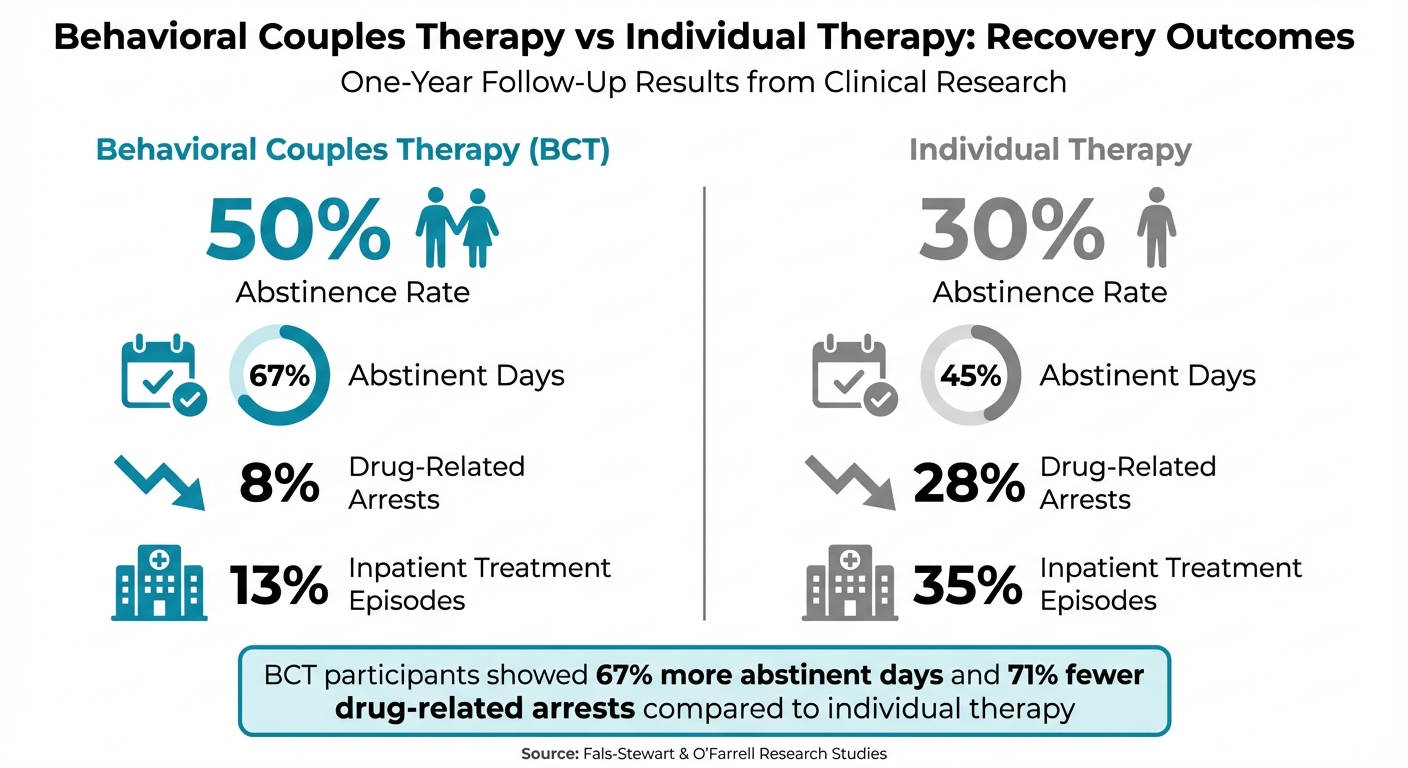
Behavioral Couples Therapy vs Individual Therapy: Recovery Success Rates and Outcomes
1. Use Daily Recovery Contracts
Effectiveness in Preventing Relapse
Daily recovery contracts create a simple yet powerful daily ritual aimed at preventing relapse through mutual support. Each morning, the person in recovery commits to staying abstinent for the next 24 hours, while their partner responds with gratitude and encouragement[4].
Behavioral Couples Therapy (BCT) highlights the value of this practice:
"BCT promotes abstinence with a ‘recovery contract’ that involves both members of the couple in a daily ritual to reward abstinence."
– Timothy J. O’Farrell, Ph.D., Director of Families and Addiction Program, VA Boston Healthcare System[4]
An essential part of this approach is keeping discussions about past substance use or fears of relapse confined to therapy sessions. This helps maintain a calm and supportive atmosphere at home[4].
In addition to helping prevent immediate relapse, these contracts provide a visible record of progress, reinforcing accountability and fostering a sense of achievement.
Support for Long-Term Behavioral Change
The recovery contract also serves as a tool for tracking progress. A physical calendar is often used, where the partner marks each successful day. This visual representation of success strengthens commitment and acts as a motivator. For those prescribed medications like naltrexone or disulfiram, the partner can observe the daily dose being taken, offering verbal reinforcement to ensure adherence and mutual accountability[4].
The contract also includes a plan for handling setbacks. For instance, if a slip occurs, the couple can immediately contact a therapist or sponsor. This proactive strategy prevents a single lapse from spiraling into a full relapse[9]. By combining daily commitment with structured support, the recovery contract becomes a central pillar in achieving long-term behavioral change.
Professional Guidance
For the best results, recovery contracts are most effective when used as part of a structured program like Behavioral Couples Therapy. These programs typically consist of 12–20 weekly sessions over a period of 3–6 months. During therapy, couples practice trust-building discussions under professional guidance to maintain a cooperative and supportive tone[4][7].
Recovery contracts are often paired with other recovery-focused activities, such as weekly urine drug screenings and participation in 12-step meetings like Alcoholics Anonymous (AA) or Al-Anon. This integration strengthens the overall recovery process, providing multiple layers of support[4].
Relapse Prevention and Accountability in Addiction Recovery
2. Set Clear Boundaries and Safety Contracts
Once daily recovery contracts are in place, adding clear boundaries and safety contracts can further shield against relapse triggers.
Effectiveness in Preventing Relapse
Boundaries serve as protective measures, helping to define what’s acceptable in relationships and daily routines. For example, physical boundaries might involve keeping the home substance-free, while emotional boundaries could limit discussions that feel judgmental or overwhelming [12][14].
Studies reveal that more than 50% of relapses are driven by negative emotional states or interpersonal conflicts, with social pressure accounting for over 20% of cases [9]. By setting boundaries around these high-risk situations, couples can create a safer and more stable environment for recovery.
Safety contracts formalize these boundaries into clear agreements. They often include commitments like supervised medication intake (e.g., Antabuse or Naltrexone), attending 12-step meetings, or undergoing regular drug screenings. Research highlights the effectiveness of these contracts: participants in Behavioral Couples Therapy who used safety contracts showed significantly more drug-free urine samples compared to those in individual therapy (F = 6.09, p < 0.05) [3].
Support for Long-Term Behavioral Change
The Hazelden Betty Ford Foundation underscores the importance of boundaries in recovery:
"Boundaries are the limits you set to protect your time, energy and well-being. They help to define what’s okay and what’s not in your relationships, routines and even your self-talk." [12]
Boundaries can cover various aspects of life, such as prioritizing recovery activities over social engagements, safeguarding financial resources, and managing internal self-talk. When communicating boundaries to loved ones, using clear and non-confrontational language is key. For instance, saying, "I feel overwhelmed when plans change at the last minute; I need more structure to stay focused on my recovery", keeps the discussion constructive and focused on personal needs [12][14]. This structured approach not only supports recovery but also strengthens the relationship dynamics that are vital for long-term success.
Focus on Relationship Dynamics
Safety contracts are most effective when both partners see them as collaborative tools rather than methods of surveillance. As Timothy J. O’Farrell, Ph.D., Director of Families and Addiction Program at VA Boston Healthcare System, explains:
"Each spouse should view the agreement as a cooperative method for rebuilding lost trust and not as a coercive checking-up operation." [4]
By setting clear boundaries, couples can avoid becoming overly dependent on each other or emotionally distant. This balance encourages a team-oriented approach to solving problems [15].
Professional Guidance Availability
Behavioral Couples Therapy typically includes 12 to 20 weekly outpatient sessions over a 3- to 6-month period, where therapists guide couples in establishing and maintaining effective boundaries [7][4]. Additionally, organizations like the Hazelden Betty Ford Foundation offer recovery coaches to help individuals confidently navigate boundary-setting [12].
For couples in California dealing with significant relationship challenges alongside addiction recovery, Growth and Change Counseling (https://johnmarkkane.com) provides specialized support through The Marriage Rescue Institute. This intensive 12-week coaching program integrates boundary-setting and safety contracts into personalized recovery plans. Services are available in locations such as Campbell, San Jose, Los Angeles, Roseville, and statewide via telehealth.
3. Create Accountability Partnerships with Regular Check-Ins
Once daily recovery and safety contracts are in place, the next step is building accountability partnerships. These partnerships act as a crucial support system, ensuring any early warning signs of relapse are addressed promptly. By combining boundaries with regular check-ins, this approach helps strengthen commitment and maintain progress.
Effectiveness in Preventing Relapse
Regular check-ins are a powerful way to catch early signs of relapse. Studies show that relapse rates within a year of quitting alcohol or tobacco can range from 80% to 95% [8]. Structured accountability plays a key role in identifying emotional and mental warning signs before they escalate.
Steven M. Melemis from Modern Therapies highlights the importance of honesty in recovery:
"Recovering individuals are as sick as their secrets." [20]
He suggests forming a "recovery circle" where individuals commit to being fully transparent about their challenges. This openness allows accountability partners to recognize potential triggers – whether emotional, environmental, or behavioral – and work together to develop healthier coping mechanisms [17].
Support for Long-Term Behavioral Change
Accountability partnerships also address isolation, a common relapse trigger, by creating a structured system of support. Scheduled check-ins – whether face-to-face or virtual – offer a chance to track progress and use tools like the 5Ds to manage cravings and spot decisions that could lead to relapse [17][18][19][9].
Research using Ecological Momentary Assessment reveals that self-efficacy tends to dip on the day before a lapse [8]. Regular check-ins not only celebrate small wins but also help individuals navigate challenging situations, fostering a sense of control and confidence.
Focus on Relationship Dynamics
Daily interactions play a vital role in strengthening trust and commitment. For couples, accountability often involves a "sobriety trust discussion." In this routine, the recovering partner affirms their intent to stay abstinent for the next 24 hours, while the non-using partner offers encouragement and support [1][4]. This simple, daily exchange reinforces progress without becoming repetitive.
The tone of these discussions is key – they should feel collaborative, not confrontational. Active listening is essential, with partners paraphrasing to ensure clarity (e.g., "What I heard you say was…") [4]. This approach fosters understanding and mutual respect, strengthening the partnership.
Professional Guidance Availability
Behavioral Couples Therapy often incorporates structured sessions where therapists teach communication skills and assign related homework for couples to practice [1][4]. Therapists also help couples create lapse management plans, which include contacting an accountability partner immediately after a lapse to prevent it from escalating into a full relapse [9].
In California, Growth and Change Counseling offers accountability-focused programs through its 12-week Marriage Rescue Institute. These sessions include personalized check-in routines and communication strategies, available both in-person (in locations like Campbell, San Jose, Los Angeles, and Roseville) and via telehealth for statewide access.
4. Practice Structured Communication and Emotional Validation
Substance abuse and relationship struggles often feed into each other, creating a cycle that can lead to relapse. Poor communication can spark stress, which in turn can trigger substance use. That substance use then further damages the relationship, perpetuating the cycle. By building on tools like daily agreements and clear boundaries, structured communication helps couples foster better understanding and strengthen recovery efforts. Breaking this destructive pattern requires specific techniques that reduce conflict and rebuild emotional safety.
Effectiveness in Preventing Relapse
Structured communication is a powerful tool for tackling one of the most common relapse triggers: relationship conflict. Studies reveal that nearly half of individuals recovering from alcohol dependency relapse within three months of detox [22]. However, couples who adopt clear communication strategies often see much better outcomes, complementing other recovery efforts.
Take, for instance, a 1996 study led by Dr. William Fals-Stewart at the Research Institute on Addictions in Buffalo, NY. The research found that 50% of men participating in Behavioral Couples Therapy (BCT) stayed abstinent, compared to only 30% of those in individual therapy. Additionally, the BCT group experienced 67% abstinent days over a year, significantly more than the 45% achieved by individual counseling participants [1].
One of the keys to effective communication is ensuring that the message sent is the message received. Techniques like paraphrasing – where the listener repeats both the words and emotions they hear – can make all the difference. For example, responding with, "So you’re saying work stress is overwhelming?" helps clarify understanding and reduces the chance of miscommunication, which can lead to arguments and potential relapse triggers.
Support for Long-Term Behavioral Change
Emotional validation is another cornerstone of effective communication. It allows partners to feel heard and understood without requiring agreement. Using "I" statements, such as "I feel anxious when plans change suddenly", keeps the conversation less accusatory compared to phrases like "You always change plans without telling me."
To strengthen these skills, couples can schedule 10–15-minute communication sessions three to four times a week [4]. During these sessions, one partner speaks while the other listens without interrupting. The listener’s role is to understand – not to solve problems or defend themselves.
Simple exercises, like "Catch Your Partner Doing Something Nice", can also help shift focus from past grievances to positive, supportive behaviors. For example, acknowledging a kind gesture like making coffee or offering a compliment builds goodwill and trust [4]. These small, consistent actions create emotional safety, which is essential for long-term recovery.
Focus on Relationship Dynamics
Dr. William Fals-Stewart of the State University of New York highlights the complex relationship between substance use and marital discord:
"The causal connections between substance use and relationship discord are complex and reciprocal… substance use and marital problems generate a destructive cycle in which each induces the other." [1]
Structured communication helps couples set clear boundaries about when and how to discuss substance-related concerns. For instance, partners might agree to talk about past substance use or fears of relapse only during therapy sessions, rather than during everyday conversations at home [1][4]. This approach prevents sensitive topics from escalating into conflicts that could trigger a relapse.
Another helpful tool is the SOBER technique – Stop, Observe, Breathe, Expand, Respond. This mindfulness-based method encourages both partners to pause and regulate their emotions before speaking, reducing the likelihood of reactive or hurtful comments that can erode trust [22].
Professional Guidance Availability
Behavioral Couples Therapy provides a structured framework for learning these communication skills. Through guided sessions and assigned homework, couples can practice and refine their ability to navigate conflict and support each other [1][4]. Therapists work with couples to develop personalized strategies tailored to their specific challenges and triggers.
For example, Growth and Change Counseling in California incorporates structured communication training into its 12-week Marriage Rescue Institute program. This intensive coaching includes sessions specifically designed for couples dealing with addiction recovery. Services are available in-person in locations like Campbell, San Jose, Los Angeles, and Roseville, as well as via telehealth for those across California. Additionally, SAMHSA‘s National Helpline (1-800-662-HELP) offers 24/7 referrals to local treatment centers that provide couples therapy [11].
5. Set Shared SMART Goals and Reward Systems
Building on the earlier conversation about accountability and structured communication, setting shared SMART goals can bring couples closer as they navigate the recovery process together.
Effectiveness in Preventing Relapse
Vague intentions often lead nowhere, but shared SMART goals – those that are specific, measurable, achievable, relevant, and time-bound – offer couples clear and actionable targets. For example, goals like staying sober for 24 hours, attending three support meetings in a week, or successfully managing one high-risk social situation provide tangible milestones to work toward [9].
Daily recovery contracts can help couples focus on short-term sobriety while reinforcing these SMART goals. One case study from 2000 demonstrated how a couple used daily trust-building discussions and regular support meetings to strengthen their recovery. Over two months, the recovering partner maintained sobriety while attending three meetings per week, and their spouse found support through Al-Anon to manage their own stress. This structured approach not only stabilized their 8-year marriage but also highlighted the value of clear, goal-oriented planning [4]. Achieving these goals opens the door to immediate rewards, which further encourage progress.
Support for Long-Term Behavioral Change
Once specific goals are in place, reward systems can help maintain motivation over the long haul. For instance, "Caring Days" – dedicated times for small, thoughtful gestures – can build goodwill and reinforce the couple’s commitment to one another [1][4]. Another simple yet effective exercise is "Catch Your Partner Doing Something Nice," where each person takes a moment to acknowledge one positive behavior during a short 2–5 minute check-in [4].
The impact of these strategies is clear: participants in Behavioral Couples Therapy (BCT) show a 50% abstinence rate, underscoring the effectiveness of shared, measurable goals [1]. Dr. Timothy J. O’Farrell from the VA Boston Healthcare System emphasizes the importance of shared activities in recovery:
"Planning and engaging in shared rewarding activities is important; many substance abusers’ families have lost the custom of doing things together for pleasure, and regaining it is associated with positive recovery outcomes." [1]
Focus on Relationship Dynamics
Shared goals shift recovery from being an individual struggle to a collaborative effort. By negotiating positive, specific requests – like saying, "Could you text me when you arrive at work?" instead of "You never communicate" – couples can set clear expectations that minimize misunderstandings [4]. Using a shared calendar to track these commitments provides a visual reminder of progress and creates opportunities for encouragement and praise [1][4].
In one case, a couple used a dual recovery contract to navigate a relapse and ultimately achieve long-term sobriety through structured, shared goals [4].
Professional Guidance Availability
Behavioral Couples Therapy offers a structured way to implement goal-setting and reward systems, typically through 15 to 20 outpatient sessions over five to six months [1]. Therapists guide couples in creating personalized contracts, teach negotiation techniques, and track progress using objective tools like weekly urine drug screens [4].
For couples in California, Growth and Change Counseling’s 12-week Marriage Rescue Institute program provides specialized support for addiction recovery. This program combines shared goal-setting and reward strategies and is available in-person in Campbell, San Jose, Los Angeles, and Roseville, as well as via telehealth across the state.
6. Apply Behavioral Couples Therapy Techniques
Effectiveness in Preventing Relapse
Behavioral Couples Therapy (BCT) tackles addiction by reshaping unhealthy patterns in a couple’s relationship. At its core, BCT emphasizes recovery contracts that promote daily accountability, laying the groundwork for meaningful behavioral changes.
The results speak volumes. In one study, 50% of men who underwent BCT stayed abstinent, compared to just 30% of those in individual treatment. Arrest rates also dropped significantly, with only 8% of BCT participants facing drug-related charges in the year following therapy, versus 28% in the individual treatment group. Additionally, BCT participants reported 67% abstinent days, compared to 45% for those in individual counseling [1]. Dr. William Fals-Stewart from the State University of New York, Buffalo, explains:
"Behavioral couples therapy (BCT)… attempts to reduce substance abuse directly and through restructuring the dysfunctional couple interactions that frequently help sustain it" [1].
Support for Long-Term Behavioral Change
BCT doesn’t just address addiction – it aims to break the cycle where relationship struggles fuel substance use, which then worsens the relationship. Through structured routines and positive reinforcement, partners are guided to support each other’s recovery. Instead of enabling old habits, they learn to encourage abstinence. For example, couples are taught to replace vague criticisms with clear, actionable requests. Asking, "Could you call me during your lunch break?" is far more effective than saying, "You never keep me informed."
Consider the story of Sue and Gene, who both struggled with heavy drinking and cocaine use. During six months of weekly BCT sessions, they committed to a dual recovery contract, which included daily medication and attending AA meetings three times a week. When Gene relapsed five weeks into treatment, their therapist used the incident to adjust their weekend plans and increase sponsor involvement. By the end of therapy, they had regained custody of their three children and achieved long-term abstinence [4].
Focus on Relationship Dynamics
BCT provides couples with tools to improve communication and reduce conflict, which helps prevent relapse triggers. Partners practice skills like active listening, using "I" statements to express feelings, and validating each other’s emotions. These techniques are reinforced through brief, structured communication sessions held several times a week. Additionally, therapy encourages couples to reintroduce shared activities, helping them reconnect and enjoy time together without substances.
Professional Guidance Availability
BCT is often integrated with other recovery strategies to build a strong foundation for success. Typically, therapy involves 15–20 outpatient sessions over five to six months, allowing therapists to customize treatment and track progress. Safety is a priority – therapists conduct screenings to ensure BCT is appropriate, especially in cases involving severe physical aggression or unsafe dynamics. They also model key behaviors, such as emotional validation, manage crises after relapses, and use standardized tools to monitor relationship satisfaction [1].
For couples in California, Growth and Change Counseling offers a 12-week Marriage Rescue Institute program that incorporates BCT techniques. This program is available in-person in Campbell, San Jose, Los Angeles, and Roseville, as well as via telehealth throughout the state.
sbb-itb-596b85d
7. Build Mutual Self-Care Routines and Track Milestones
Effectiveness in Preventing Relapse
When couples commit to shared self-care routines, they create a strong defense against relapse. Activities like regular exercise, balanced eating, and relaxation techniques help lower stress levels, which are often a trigger for substance use [23][24]. Research highlights this approach: 50% of male drug abusers who engaged in therapy focused on mutual support and shared activities maintained abstinence, compared to just 30% in individual treatment [1].
As addiction specialist Steven M. Melemis points out:
"The common denominator of emotional relapse is poor self-care, in which self-care is broadly defined to include emotional, psychological, and physical care" [16].
These shared routines naturally align with the long-term strategies discussed earlier.
Support for Long-Term Behavioral Change
Building habits that stick takes time – anywhere from six months to five years [26]. Consistent routines make healthy behaviors feel automatic. Psychologist DiClemente explains:
"To become habitual, the new behavior must become integrated into the individual’s lifestyle. This is the task of the Maintenance stage of change" [25].
Tracking progress is key to keeping up motivation. Using a shared recovery calendar to log daily wins can be incredibly motivating [4][24]. Adding mutual reward days into the mix can make the process even more fulfilling [1][4].
Focus on Relationship Dynamics
Self-care routines do more than improve individual well-being – they also deepen the connection between partners by replacing old, substance-related habits. Shared activities like playing sports, exploring hobbies, or enjoying nature walks help couples reconnect. Timothy J. O’Farrell from Harvard Medical School explains:
"A behavioral approach assumes that family members can reward abstinence — and that alcoholic and drug abusing patients from happier, more cohesive relationships with better communication have a lower risk of relapse" [4].
This emphasis on encouraging positive behavior pairs well with the accountability and communication strategies covered earlier.
Simple techniques, like spending 2-5 minutes daily recognizing one positive action your partner has taken (known as "Catch Your Partner Doing Something Nice"), can shift the focus from past struggles to present progress, boosting relationship satisfaction [1][4]. The HALT acronym – Hungry, Angry, Lonely, Tired – also serves as a helpful self-check to identify early warning signs that might lead to relapse [16].
Professional Guidance Availability
Therapy can help cement these self-care habits. Behavioral Couples Therapy offers structured guidance, typically involving 12–20 weekly sessions over three to six months [1][4]. These sessions teach couples how to choose enjoyable activities, set realistic goals for sleep and nutrition, and create simple tracking systems.
For couples in California looking for more intensive support, Growth and Change Counseling offers a 12-week Marriage Rescue Institute program. This program incorporates proven techniques and is available in Campbell, San Jose, Los Angeles, and Roseville, as well as through telehealth for those across the state.
8. Build Trust Through Vulnerability and Active Listening
Effectiveness in Preventing Relapse
Rebuilding trust is a cornerstone of maintaining behavioral change. One practical way to foster trust is by initiating daily conversations where the recovering partner reaffirms their 24-hour commitment to sobriety, and the other partner offers verbal support. This practice not only reinforces accountability but also strengthens the relationship bond through mutual participation [1].
Active listening plays a vital role here. Techniques like paraphrasing, acknowledging emotions, and validating perspectives help address stress before it becomes overwhelming, reducing the risk of relapse [1].
The numbers back this up: 50% of men engaged in Behavioral Couples Therapy (BCT) remained abstinent, compared to just 30% of those in individual therapy. Additionally, couples in BCT achieved 67% abstinent days versus 45% in individual counseling [1].
Support for Long-Term Behavioral Change
To avoid unnecessary conflict at home, it’s best to reserve discussions about past substance use for therapy sessions [1]. Dr. William Fals-Stewart underscores this approach:
"The therapist should highlight skill-building goals and focus consistently on the present and future rather than the processing of emotional reactions to past problems" [1].
The HALT framework – Hungry, Angry, Lonely, or Tired – is another effective tool for identifying emotional states that could lead to relapse. By openly naming these needs without judgment, partners turn potential triggers into moments of shared understanding and support. This kind of vulnerability fosters stronger connections and lays the groundwork for deeper relational growth [21].
Focus on Relationship Dynamics
Trust doesn’t just happen – it’s built through consistent, positive interactions. Activities like "Caring Days", where partners plan thoughtful gestures for each other, help rebuild intimacy and create a "constructive cycle." In this cycle, relationship support directly reinforces sobriety, making it easier to maintain [1].
The impact of Behavioral Couples Therapy goes beyond abstinence. In the year following therapy, participants experienced fewer drug-related arrests (8% compared to 28%) and fewer hospital readmissions (13% compared to 35%) than those who underwent individual counseling [1].
Professional Guidance Availability
For couples seeking additional support, professional guidance can refine skills like trust-building and active listening. Behavioral Couples Therapy typically includes 12 to 20 weekly sessions over three to six months, offering structured, evidence-based strategies [1][7].
In California, Growth and Change Counseling offers a 12-week Marriage Rescue Institute program for couples needing intensive coaching. This program incorporates proven techniques and is available in Campbell, San Jose, Los Angeles, and Roseville, as well as through telehealth statewide.
9. Work with Intensive Couples Coaching
Effectiveness in Preventing Relapse
While daily actions and open communication are essential for recovery, intensive couples coaching offers a more focused approach for couples facing serious challenges. By applying Behavioral Couples Therapy (BCT) techniques, this type of coaching addresses harmful patterns – like enabling behaviors – that may unintentionally support substance use [1].
Research backs this up. In a 1996 randomized clinical trial led by William Fals-Stewart, Ph.D., married or cohabiting male outpatients who combined BCT with individual treatment achieved a 50% abstinence rate over one year. In contrast, those who only received cognitive-behavioral coping skills training saw a 30% abstinence rate [1]. This concentrated method builds on earlier recovery efforts, creating a positive feedback loop where sobriety strengthens relationships and vice versa.
Support for Long-Term Behavioral Change
Intensive coaching doesn’t just address immediate crises – it lays the groundwork for lasting change. By encouraging a supportive dynamic, it transforms the partner’s role from being a critic or overseer into a source of encouragement and positive reinforcement [4].
For example, a 2003 study by Fals-Stewart and O’Farrell involving 124 opioid-dependent men demonstrated the power of Behavioral Family Contracting. Participants who used this method to monitor naltrexone ingestion attended more treatment sessions and reported significantly more drug-free days during the year following treatment [1].
Professional Guidance Availability
To sustain progress, intensive coaching programs typically include 12 to 20 weekly sessions over three to six months [1][7]. These sessions are led by therapists who guide couples through trust-building exercises, such as daily Recovery Contracts, to strengthen their partnership and support recovery [1].
One such program is Growth and Change Counseling’s Marriage Rescue Institute, a 12-week intensive couples coaching initiative. This program, available in Campbell, San Jose, Los Angeles, and Roseville, as well as through telehealth across California, uses proven BCT techniques to help couples rebuild their relationships. By focusing on restructuring interactions, it provides a solid foundation for both relationship repair and long-term recovery.
10. Maintain Support Networks and Trigger Response Plans
Effectiveness in Preventing Relapse
Building on earlier approaches like recovery contracts and accountability partnerships, keeping strong support networks and clear response plans is essential. These networks act as a safety net when triggers arise. Relapse rates hover between 40% and 60% [10], with nearly half of individuals relapsing within the first 12 weeks after treatment [2]. Peer support groups, such as Alcoholics Anonymous, have been shown to lower relapse risks significantly [10].
Support networks provide both emotional reassurance and immediate crisis intervention. It’s important to identify triggers – whether they stem from external situations or internal emotions [5][27]. A solid trigger response plan should include at least five reliable contacts, such as sponsors, trusted friends, or family members, who can provide immediate assistance [13][27]. These connections form the backbone of long-term relapse prevention.
Support for Long-Term Behavioral Change
"Relapse is a process rather than an event. Some relapse prevention programs have delineated stages of relapse, starting with an ’emotional relapse’ followed by a ‘mental relapse’ and culminating in a ‘physical relapse.’" [2]
Understanding the stages of relapse – emotional isolation, mental cravings, and eventual substance use – can help individuals intervene early [2][10]. A well-prepared response plan should address each stage with practical coping strategies. Techniques like deep breathing, journaling, or removing oneself from high-risk situations can be effective in managing these challenges [13][27].
Strengthening long-term recovery involves building what’s known as Recovery Capital, which includes both internal resources and external support systems [5]. Regularly revisiting and updating the response plan – perhaps monthly – ensures it stays aligned with the individual’s evolving recovery journey [5][27]. At the same time, addressing triggers specific to relationships plays a key role in maintaining progress.
Focus on Relationship Dynamics
Couples, in particular, should tailor their response plans to suit their unique relationship needs. The non-using partner may encounter their own triggers, such as feelings of resentment, that require careful acknowledgment [27][28]. Using "I" statements – like, "I feel overwhelmed when we talk about drinking; I’d prefer we focus on other topics" – can help express emotions without assigning blame [27]. To avoid unnecessary conflict, couples might choose to reserve discussions about past substance use or concerns about relapse for therapy sessions [1][4].
A safety contract can also be a helpful tool. This might include specific actions like attending a 24/7 meeting, seeking a safe space, or reaching out to a therapist to prevent a lapse from escalating [27]. Additionally, couples who participate in mutual self-help meetings – such as one partner attending AA and the other attending Al-Anon – can cultivate a shared recovery mindset, reinforcing their commitment to each other and their goals [4].
Comparison Table
Here’s a breakdown of three recovery support options for couples, emphasizing the benefits of couples-based approaches discussed earlier.
| Feature | Marriage Rescue Institute (Intensive Couples Coaching) | Individual Therapy | Sliding Scale Services |
|---|---|---|---|
| Primary Focus | Relationship system and mutual support [1] | Individual triggers and coping skills [1][25] | Accessibility and basic stabilization [11] |
| Typical Duration | 12-week intensive program | 15–20 sessions over 5–6 months [1] | Varies by program |
| Abstinence Success Rate | About 50% [1] | About 30% [1] | Depends on the program |
| Drug-Related Arrests (1-Year Follow-Up) | 8% [1] | 28% [1] | Not typically tracked |
| Inpatient Treatment Episodes | 13% [1] | 35% [1] | Varies by program |
| Relationship Satisfaction | Significant improvement [1] | Minimal direct impact on partner | Varies |
| Best Suited For | Committed couples (1+ year cohabiting); one partner with substance issues [1] | Situations involving severe violence or uncommitted partners [1] | Those with financial limitations or lacking insurance [11] |
| Contraindications | Severe domestic violence; both partners actively using substances [1] | None | None |
| Cost Range | Custom pricing determined during consultation | $150–$200 per 45-minute session | $100+ per session (income-based) [11] |
This comparison underscores how the Marriage Rescue Institute stands out by addressing both substance use and relationship challenges, offering a dual approach that enhances its effectiveness.
Research consistently shows that couples-based recovery methods, like those used by the Marriage Rescue Institute, lead to higher abstinence rates and fewer substance-related issues [1]. For instance, their 12-week program includes daily "sobriety trust discussions" and structured recovery contracts, tools designed to reduce conflict and encourage transparency. These methods not only help with addiction recovery but also strengthen the relationship, creating a positive cycle where one supports the other [1].
For couples with financial concerns, resources like SAMHSA’s National Helpline (1-800-662-HELP) can connect them to local facilities offering sliding fee scales or accepting Medicare and Medicaid [11]. Growth and Change Counseling, for example, provides sliding scale services starting at $100 per session across California.
This comparative overview highlights the importance of tailored recovery strategies that integrate relationship support with addiction recovery techniques, proving how effective these combined approaches can be [1].
Conclusion
Maintaining addiction recovery is a journey that thrives on teamwork and expert guidance. The strategies discussed here – like daily recovery contracts, structured communication, and trigger response plans – are most effective when both partners are fully committed to the process. Research highlights that intimate partners play a vital role in reinforcing abstinence and supporting long-term behavior change [3][7].
Recovery is not a quick fix; it unfolds in stages and can take five years or more to stabilize [2][6]. Typically, the abstinence stage lasts one to two years, followed by two to three years of repairing relationships and building stability, and then transitions into a phase of ongoing personal and relational growth [2]. This timeline emphasizes the importance of consistent daily actions – tools like recovery contracts, regular check-ins, and shared goals provide the structure needed to navigate these stages effectively.
Professional support further strengthens these efforts. Therapists can help couples identify high-risk situations, address the Abstinence Violation Effect, and create tailored coping strategies to prevent relapse [5][8]. Research shows that couples engaged in Behavioral Couples Therapy achieve 67% abstinent days, compared to 45% for those in individual counseling [1]. This underscores the power of working together as a team.
Specialized coaching can take these strategies even further. Growth and Change Counseling offers personalized support through The Marriage Rescue Institute, a 12-week intensive program designed for couples in crisis. Services are available in Campbell, San Jose, Los Angeles, and Roseville, with telehealth options across California. Individual therapy sessions start at $150 for 45 minutes, with sliding scale options beginning at $100 for those facing financial challenges.
For more information or to schedule a consultation, visit Growth and Change Counseling at https://johnmarkkane.com and take the first steps toward building lasting recovery together.
FAQs
What are daily recovery contracts, and how do they support addiction recovery?
Daily recovery contracts are agreements that spell out short-term goals, the steps needed to reach them, and the outcomes tied to progress or setbacks. By formalizing these expectations, they provide a clear structure for accountability and make recovery efforts feel more concrete. These contracts work best when they’re created collaboratively, giving the individual in recovery an active role in setting achievable goals. This approach encourages a sense of ownership and strengthens commitment.
For couples, daily recovery contracts can become part of their shared routine. Together, partners can review progress, celebrate wins, and address any obstacles. This regular check-in fosters open communication and reinforces positive habits, helping to prevent relapse while weaving recovery into everyday life. Over time, this practice supports meaningful and lasting change.
Growth and Change Counseling integrates these proven strategies into its addiction recovery programs, guiding individuals and couples in building routines that support long-term success.
How does Behavioral Couples Therapy help maintain sobriety in addiction recovery?
Behavioral Couples Therapy (BCT) is an approach designed to help couples build a stronger, more supportive relationship while navigating the challenges of recovery. It emphasizes improving communication, encouraging enjoyable shared experiences, and easing relationship tensions – all while promoting lasting sobriety.
A standout feature of BCT is the recovery contract, where the partner who isn’t using substances takes an active role in supporting and reinforcing sobriety. This partnership transforms everyday interactions into a safeguard against relapse. Studies reveal that couples engaging in BCT are less likely to experience relapses, report greater satisfaction in their relationship, and face fewer family conflicts compared to those who only pursue individual therapy.
During BCT sessions, therapists work with couples to set clear sobriety goals, monitor progress, and celebrate milestones together. This process helps turn the relationship itself into a powerful tool for preventing relapse and fostering mutual growth.
Why are accountability partners important for preventing relapse during addiction recovery?
Accountability partners play an essential role in addiction recovery by offering support and structure that helps individuals stay aligned with their goals. They provide a reliable check-in system where progress is acknowledged, challenges are tackled, and warning signs of potential setbacks are addressed early – before they lead to relapse.
These partners bring three major benefits to the table: real-time feedback to spot triggers and refine coping methods, emotional support to combat feelings of isolation or shame, and a shared sense of commitment that promotes motivation and teamwork. Together, these factors reinforce key relapse-prevention strategies, such as practicing self-care, recognizing triggers, and consistently applying coping tools. For couples, this partnership not only aids recovery but also strengthens their connection, ensuring both partners feel supported throughout the process.
Related Blog Posts
- Addiction Recovery and Marriage Communication
- How Couples Build Accountability After Addiction
- Solution-Focused Therapy for Addiction Recovery Couples
- Addiction Recovery and Marriage: What Works
