Childhood trauma can deeply affect a child’s emotions, behavior, and health. As a parent, your role is critical in helping them recover. Here’s how you can support your child:
- Understand Trauma: Learn how trauma impacts children differently by age and recognize signs like emotional changes, behavioral shifts, or physical symptoms.
- Create Stability: Build a safe home environment with consistent routines and a quiet space for your child to feel secure.
- Encourage Communication: Validate their emotions, listen without judgment, and use creative tools like drawing or play to help them express feelings.
- Seek Professional Help: If symptoms persist, consult a trauma-trained therapist. Watch for warning signs like severe anxiety, withdrawal, or risky behavior.
- Take Care of Yourself: Manage your stress, connect with support networks, and prioritize your mental health to better support your child.
Recovery takes time, but your steady presence and love can make a difference. If needed, professional resources like Trauma-Focused Cognitive Behavioral Therapy (TF-CBT) are available to guide the healing process.
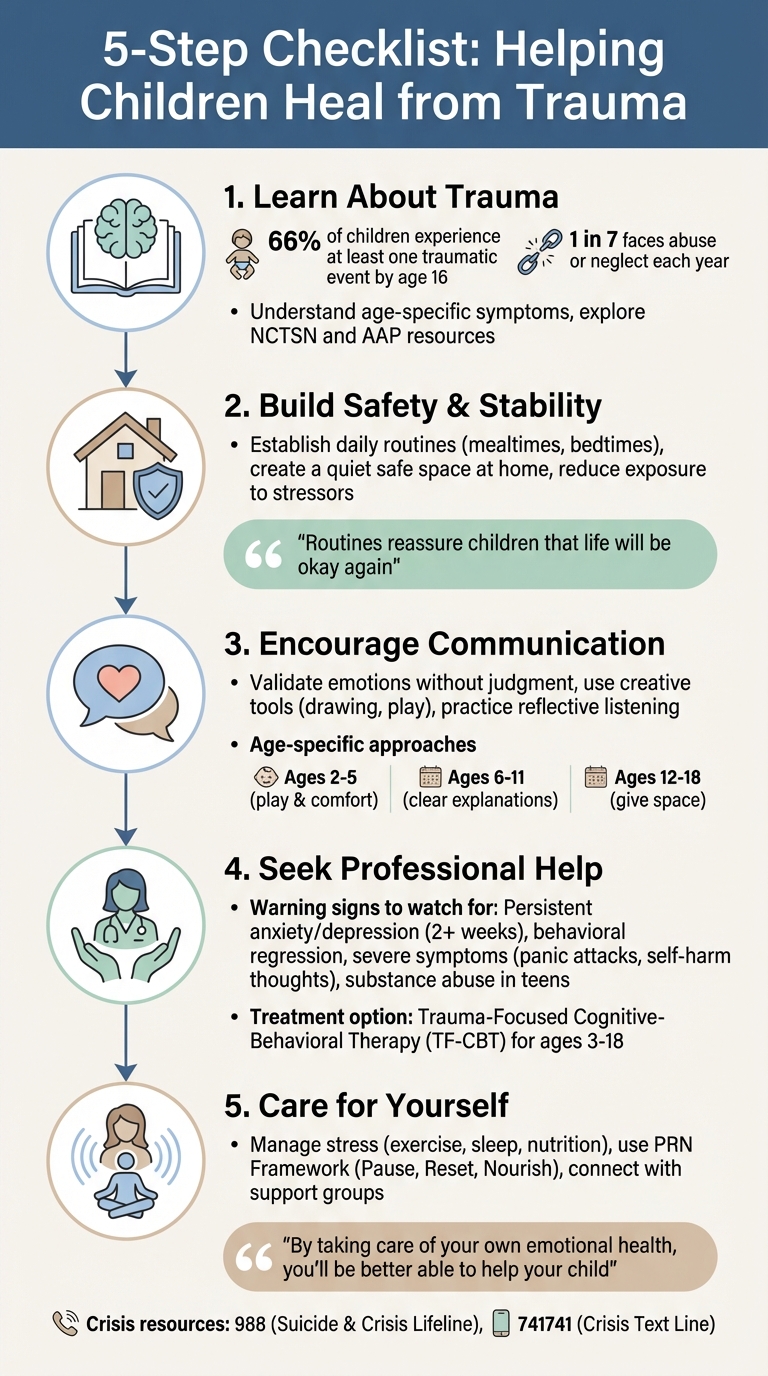
5-Step Guide to Helping Children Heal from Trauma
Step 1: Learn About Trauma and How It Affects Children
Learn the Basics of Childhood Trauma
Understanding how trauma affects children is a critical step in supporting their recovery. According to SAMHSA, "Traumatic stress occurs when a child (0-18 years) feels intensely threatened by an event they experience or witness" [6]. The numbers are staggering: over 66% of children experience at least one traumatic event by age 16, and 1 in 7 faces abuse or neglect each year [6].
Trauma can show up differently depending on a child’s age. Preschool-aged children (5 and younger) might cling to caregivers, cry frequently, or revert to earlier behaviors like bed-wetting [5][2]. School-aged children (6-11) might struggle in school, blame themselves for the event, withdraw socially, or act out aggressively [6][7]. Adolescents (12-18) may take risks, experiment with drugs or alcohol, or show signs of depression [6][7].
Physical symptoms are also common. Headaches, stomachaches, nightmares, and trouble concentrating often accompany trauma. Younger children might even express their feelings through play or drawings [5][2][7]. While some of these reactions are normal in the short term, it’s important to pay attention if symptoms persist or disrupt daily life [5][7].
To better support your child, take time to explore reliable resources that can deepen your understanding of trauma and its effects.
Find Trusted Learning Resources
Several organizations offer excellent tools to help you navigate childhood trauma. The National Child Traumatic Stress Network (NCTSN) has a "Families and Caregivers" portal filled with fact sheets that explain how trauma impacts children of different ages and what behaviors you might observe. The American Academy of Pediatrics (AAP) provides the "Safe and Sound" series, which includes easy-to-share guides for teachers, coaches, and relatives to help them understand what your child is going through [10].
The National Institute of Mental Health (NIMH) has educational materials on helping children cope with disasters and traumatic events. They highlight how "How adults respond to trauma can strongly influence how children and adolescents react to trauma" [5]. For more personalized help, the SAMHSA Behavioral Health Treatment Services Locator can connect you with trauma-informed care providers in your area [5].
These resources can give you the tools to recognize warning signs, respond effectively, and ensure your child gets the support they need.
Healing Trauma Through Parental Self-Care
Step 2: Build a Safe and Stable Home Environment
After trauma, your child’s sense of security may feel shattered. Rebuilding that foundation starts with small, consistent actions that restore trust and create stability.
Set Up Daily Routines and Consistency
A predictable routine can work wonders in helping your child feel grounded during uncertain times. Regular mealtimes, bedtimes, and family activities provide structure that reassures them life can feel normal again. As the Child Mind Institute notes:
"Amidst chaos and change, routines reassure children that life will be okay again" [7].
When your child knows what to expect, it’s easier for them to relax and feel safe. Start by anchoring their days with set mealtimes and bedtimes. Bedtime, in particular, can be a moment for extra bonding – snuggle up, read a story, or have a quiet chat to help them wind down and feel secure [9].
Incorporating simple, positive activities like cooking together, going for a walk, playing a board game, or making art can further reinforce a sense of normalcy. These moments remind your child that, even after difficult events, life can still include joy and connection.
Giving your child small choices within these routines can also help them regain a sense of control. Let them pick their outfit for the day, choose a bedtime story, or decide which vegetable to include in dinner. Even during transitions, new routines can bring stability. Maintaining reasonable expectations for chores or homework signals that their world remains structured and manageable.
Beyond routines, creating a designated calm space at home can further enhance their sense of safety.
Create a Quiet, Safe Space at Home
In addition to predictable routines, having a personal retreat can help your child feel secure. Set up a quiet area where they can go to relax or recharge. This doesn’t need to be fancy – it could be a cozy corner or a small nook free from stressors. Keep it stocked with comforting items like books, art supplies, or calming music. The National Institute of Mental Health highlights the importance of such spaces:
"Caregivers and family members can help by creating a safe and supportive environment, remaining as calm as possible, and reducing stressors" [5].
It’s also important to shield this space from things that might heighten anxiety, like constant news coverage or other media reminders of the trauma. If your child develops new fears – such as being afraid of the dark or feeling uneasy when alone – make temporary adjustments to help them feel at ease. A nightlight or letting them sleep in your room for a short time can provide the comfort they need.
Make sure this space also allows for closeness with you. A comfy chair for snuggling or a quiet spot where you can sit and talk can go a long way in reinforcing your child’s sense of control and safety. These small steps create an environment where they can begin to process their feelings while knowing they’re supported and loved.
Step 3: Encourage Emotional Expression and Open Communication
Once you’ve created a secure and structured home environment, the next step in supporting your child’s healing journey is encouraging them to express their emotions openly. Trauma can leave children feeling confused or overwhelmed, making it hard for them to put their feelings into words. Your role as a caregiver is to establish a space where they feel truly heard and understood – without judgment or pressure.
Acknowledge and Validate Your Child’s Emotions
When your child shares their feelings, it’s important to acknowledge them without dismissing or minimizing their emotions. Phrases like "don’t be scared" or "be brave" may seem comforting, but they can unintentionally send the message that certain feelings are unacceptable. Dr. Marissa Nunes-Moreno, a child psychiatrist at Children’s Hospital Colorado, explains:
"Sometimes parents will say, ‘Don’t be scared.’ Or if they’re crying, parents might say, ‘Shh, don’t cry.’ It’s a well-intentioned way of consoling, but it can be confusing for kids, because it sends the message that their feelings are wrong" [11].
Instead, focus on validating what your child is expressing. If they say they’re scared, you might respond with, "I can see that you’re feeling worried, and that’s okay." This kind of acknowledgment reassures them that their emotions are normal and acceptable. Let them know it’s fine to feel a range of emotions – whether it’s anger, sadness, guilt, or confusion – and that everyone processes these feelings differently [7].
You can also model emotional honesty in your own behavior. For example, if you’re feeling upset, you might say, "I’m feeling sad because our dog passed away." According to CHOC pediatric experts, this approach helps children build emotional awareness and understand that it’s normal to experience and express feelings [3]. When they see you handling emotions in a healthy way, it reinforces their ability to do the same.
By validating their emotions, you create a foundation for helping them explore and express those feelings more effectively.
Use Communication Tools That Help Children Express Feelings
Sometimes, children struggle to express their emotions through words alone. Creative outlets like drawing, writing, or play can provide alternative ways for them to communicate. If your child creates a drawing related to their feelings or experiences, take the time to sit with them and ask gentle, open-ended questions about their artwork [4][7].
Reflective listening is another key strategy. This involves focusing on understanding your child’s perspective without jumping in to lecture or offer immediate solutions. You might ask, "Are you feeling scared? Angry? Sad?" to help them identify the emotions behind their behavior [7]. Low-pressure moments – like when you’re cooking, walking, or driving together – often create natural opportunities for these conversations. The Child Mind Institute highlights the importance of this approach:
"What children need most is someone whom they trust to listen to their questions, accept their feelings, and be there for them" [7].
The way you support your child may also depend on their age:
- For younger children (ages 2–5): Encourage play and provide physical comfort, like hugs or cuddles [7].
- For school-age children (ages 6–11): Offer clear, honest explanations using straightforward language. For example, use terms like "hurricane" or "died" instead of vague euphemisms [7].
- For teenagers (ages 12–18): Be patient and give them space. They may prefer to talk during shared activities rather than in formal, face-to-face conversations [7].
Another helpful tool is teaching your child simple breathing exercises to manage anxiety. Techniques like belly breathing can be introduced using a feather or a stuffed animal to make the process more engaging. These exercises provide a practical way for children to calm their nervous system when their emotions feel overwhelming [7].
sbb-itb-596b85d
Step 4: Get Professional Help When Your Child Needs It
While a secure and supportive home environment is a crucial foundation, sometimes children need additional help to recover from trauma. Seeking professional intervention at the right time can play a key role in your child’s healing journey. Knowing when to ask for help – and where to find it – can make a world of difference.
Find Therapists Trained in Childhood Trauma
If you decide to explore professional therapy, it’s important to choose a therapist with specific training in addressing childhood trauma. Your child’s pediatrician can be a helpful resource for referrals to qualified specialists. One effective approach to look for is Trauma-Focused Cognitive-Behavioral Therapy (TF-CBT). This evidence-based treatment is designed for children ages 3–18 and focuses on managing post-traumatic stress and related challenges [1][8].
According to KidsHealth, TF-CBT is particularly effective because it not only supports the child but also actively involves parents in the process. As they explain:
"In TF-CBT, parents can play a big role in their child’s healing. They are coached to listen in ways that help their child open up, talk, and feel close" [1].
It’s also critical to recognize when professional help may be needed. Here are some warning signs that could indicate your child is struggling to cope:
- Persistent negative emotions, such as anxiety or depression, lasting more than two weeks, or difficulty functioning in everyday activities like school or social settings.
- Behavioral regression in younger children, such as bed-wetting or thumb-sucking.
- Severe symptoms, including panic attacks, paranoia, or hallucinations.
- Expressions of self-harm or thoughts of harming others.
- In teenagers, signs of substance abuse, risky behavior, or suicidal thoughts.
Dr. Whitney Raglin Bignall from The Kids Mental Health Foundation highlights the importance of paying attention to these changes:
"If there are new or more intense negative emotions and other symptoms (such as anxiety, depression, disruptive behaviors) that are growing in intensity or lasting longer than two weeks, reach out to a professional" [2].
Similarly, the Child Mind Institute stresses the need for immediate action if symptoms persist or escalate:
"Seek immediate help from your family doctor or from a mental health professional if [symptoms] do not abate or your child starts to hear voices, sees things that are not there, becomes paranoid, experiences panic attacks, or has thoughts of wanting to harm himself or other people" [7].
Taking these steps can help you connect with the right specialist when additional support becomes necessary.
Consider Services at Growth and Change Counseling
For families in California, Growth and Change Counseling offers a range of services to help children and their families navigate trauma and emotional challenges. With locations in Campbell, San Jose, Los Angeles, and Roseville, as well as telehealth options across the state, they provide trauma therapy, family therapy, and parent coaching tailored to individual needs.
Their approach combines practical, solutions-focused strategies with personalized recovery plans. Parent coaching is a key component, equipping you with tools to support your child’s healing between sessions. Whether your child is dealing with anxiety, depression, behavioral issues, or trauma-related challenges, Growth and Change Counseling works to create a plan that fits your family.
For more information or to schedule a consultation, visit Growth and Change Counseling.
Step 5: Take Care of Your Own Mental Health as a Parent
Helping your child recover from trauma is an emotionally demanding journey. It requires patience, resilience, and a steady presence. But here’s the thing – if you’re not taking care of yourself, it becomes much harder to provide the stability your child needs. Kids often pick up on how adults handle stress and use those behaviors as their own guide. By managing your own stress, you’re not just helping yourself – you’re showing your child how to navigate tough emotions and creating a more secure environment for their healing.
Manage Your Own Stress and Emotions
Start with the basics: take care of your body. Make time for nutritious meals, regular exercise, staying hydrated, and getting enough sleep. These simple steps can go a long way in building your emotional resilience. When stress starts creeping in, try a quick breathing exercise – breathe in deeply for three counts, then exhale for three counts. It’s a small but effective way to find your center.
Another helpful tool is the PRN Framework, which can guide you through overwhelming moments [12]. First, pause – check in with your body and acknowledge any tension or emotions you’re feeling. Next, reset by focusing on the immediate task in front of you, instead of letting your thoughts spiral. Finally, nourish yourself by doing something that recharges you, like stepping outside for fresh air, spending time with a pet, or simply unplugging from screens for a bit.
Speaking of screens, limiting your exposure to distressing news or social media can make a big difference. Schedule specific times to check updates, and turn off notifications to avoid constant interruptions.
As Melinda Smith, M.A., Lawrence Robinson, and Jeanne Segal, Ph.D., wisely put it:
"By taking care of your own emotional health and well-being, you’ll be more of a calming influence and better able to help your child." [4]
Connect with Other Parents and Support Resources
Self-care becomes even more effective when paired with a strong support system. Isolation can make stress feel heavier, so reach out to others who can help lighten the load. This might mean leaning on friends, family, or faith leaders, or connecting with other parents who understand what you’re going through. Parent groups at schools, churches, or community centers can be a great place to start. Even hosting a casual get-together with parents facing similar challenges can provide comfort and camaraderie.
If you need immediate support, there are resources available. You can call or text 988 (Suicide & Crisis Lifeline), text "HOME" to 741741 (Crisis Text Line), or reach out to the Disaster Distress Helpline at 1‑800‑985‑5990. For local assistance, dial 211 or visit your library to explore community resources.
The National Child Traumatic Stress Network offers this gentle reminder:
"Acknowledge that you are experiencing a lot right now. You may not be able to show up in the same ways you could before. That is okay. You are doing your best." [12]
And remember, asking for help is not a sign of weakness. Whether it’s requesting a break from parenting duties, seeking help with chores, or just needing someone to listen, these small acts of self-care are vital. Taking care of yourself isn’t selfish – it’s how you ensure you can continue to be there for your child in the long run.
Conclusion: Moving Forward on the Healing Journey
Helping your child recover from trauma requires patience, love, and unwavering support. The steps we’ve discussed work together to create a solid foundation for their healing process.
It’s important to keep in mind that recovery doesn’t follow a set timeline. As your child continues to process their experiences, new questions or challenges may arise. The key is to remain a consistent and compassionate presence in their life. As CHOC wisely notes:
"In the end, just listening to and comforting your child will have long-lasting positive effects on your child’s ability to cope with the traumatic event." [3]
If your child struggles with persistent symptoms like flashbacks, severe anxiety, or self-harm, don’t hesitate to seek professional support. Treatments such as Trauma-Focused Cognitive Behavioral Therapy (TF-CBT) have been shown to be effective. Growth and Change Counseling offers specialized trauma care, family therapy, and parent coaching across California, with offices in Campbell, San Jose, Los Angeles, and Roseville, as well as telehealth services statewide.
FAQs
How can I tell if my child’s behavior changes are related to trauma?
It can be challenging to tell if shifts in your child’s behavior are tied to trauma, but there are some key indicators to keep an eye on. These might include heightened fear or being easily startled, trouble sleeping or recurring nightmares, and unexplained physical complaints like headaches or stomachaches. On an emotional level, children may show deep sadness, anger, guilt, or sudden changes in attachment – becoming overly clingy or unusually withdrawn. Younger kids might revert to earlier behaviors like bed-wetting or thumb-sucking, while school-age children could have difficulty focusing, notice a dip in their grades, or experience frequent emotional outbursts.
If you notice these changes lasting more than a few weeks, reaching out for professional help can make a difference. Growth and Change Counseling offers trauma-focused therapy and parent coaching to provide a safe space for children to heal. Their skilled therapists work to understand your child’s unique needs and develop a tailored plan to support emotional recovery and growth.
How can I create a safe and supportive home environment for my child after trauma?
Creating a nurturing and secure home environment is essential for a child recovering from trauma. Start by reminding them often that they are loved and safe. Simple gestures like using kind words, spending extra one-on-one time together, and offering physical comfort – like hugs or even a high-five if they’re okay with it – can go a long way in building trust and reassurance.
Establishing a predictable daily routine is another important step. A consistent schedule for meals, bedtime, and activities helps create a sense of stability that can be incredibly comforting. You might also consider setting up a special "safe space" in your home – a cozy corner with pillows, books, or calming toys – where your child can retreat to when they’re feeling overwhelmed.
Giving your child opportunities to make small, age-appropriate decisions can also help them regain a sense of control. Let them choose their outfit for the day or decide on a snack. At the same time, it’s crucial to validate their emotions. Acknowledge what they’re feeling and remind them that it’s okay to experience those emotions.
By weaving these practices into your daily life, you can create a supportive environment that helps your child feel secure as they work through their healing journey.
How do I know if my child needs professional support to recover from trauma?
If your child is displaying persistent signs of distress – like ongoing fear, nightmares, flashbacks, mood changes, withdrawal, trouble sleeping, or challenges at school – and these symptoms last for weeks or disrupt their daily life, it’s important to consider seeking professional help.
A mental health professional can offer personalized care, helping your child navigate their emotions and work toward healing. Acting early can play a key role in supporting their recovery and overall well-being.
Related Blog Posts
- How Trauma Impacts Parent-Child Relationships
- Trauma-Informed Family Therapy Techniques
- Family Therapy for Trauma Recovery: What Works
- How to Create Emotional Safety for Kids in Recovery
