Digital burnout is more than too much screen time – it’s how digital environments overwhelm neurodiverse kids’ unique neurological needs. This can lead to meltdowns, irritability, and even physical symptoms like headaches or sleep issues. Neurodiverse children (e.g., those with ADHD or autism) are especially sensitive to the fast-paced, overstimulating nature of screens due to challenges with dopamine regulation, sensory overload, and executive function.
Key takeaways:
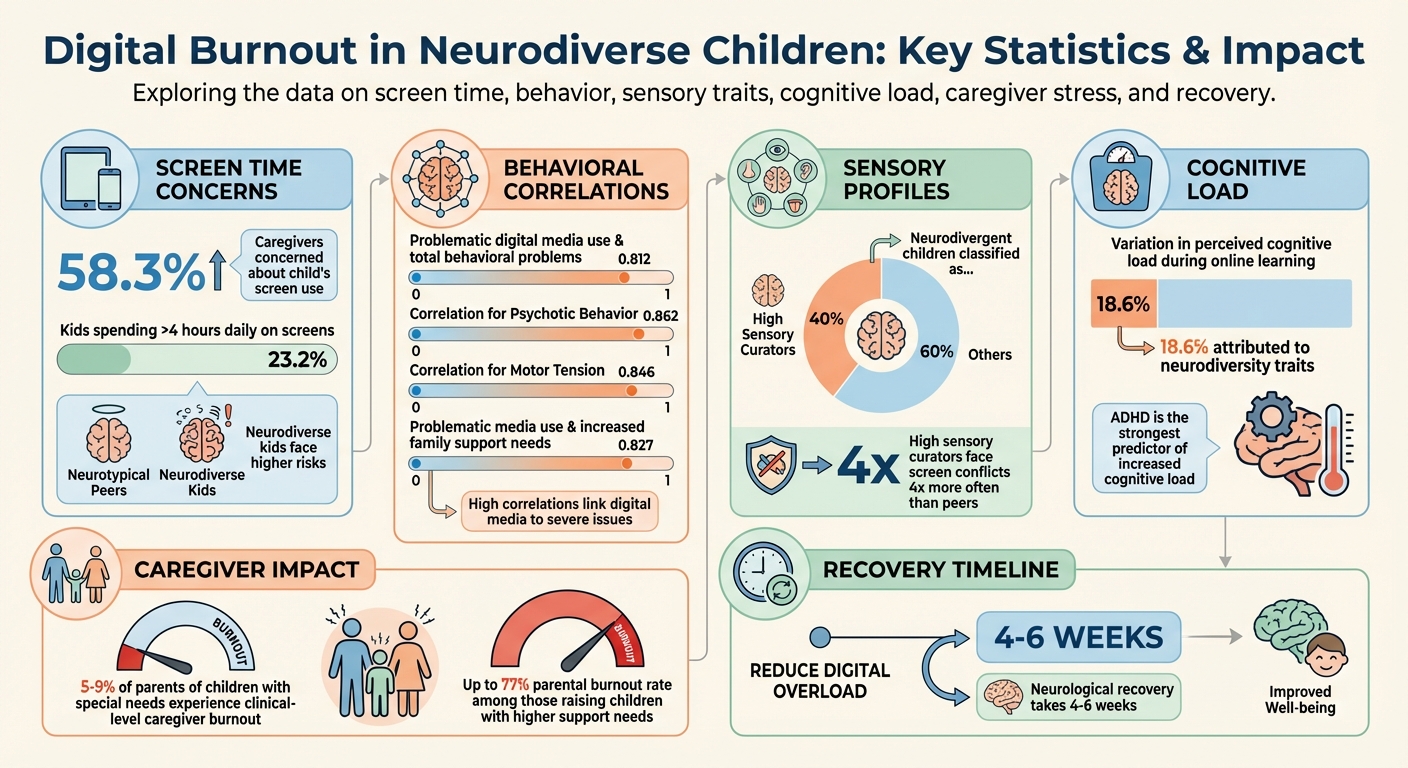
- 58.3% of caregivers report concerns about their child’s screen use, with neurodiverse kids facing higher risks.
- Digital burnout impacts mental health, learning, and family dynamics, with 23.2% of kids spending over 4 hours daily on screens.
- Strategies include reducing sensory triggers, setting gradual screen time limits, and promoting offline activities like tactile play or nature walks.
- Parent coaching and family therapy offer tailored solutions to help families manage these challenges effectively.
The solution? Understanding your child’s needs, creating balanced routines, and seeking professional support when needed.
Digital Burnout Statistics and Impact on Neurodiverse Children
What Digital Burnout Means for Neurodiverse Children
Defining Digital Burnout
Digital burnout refers to the mental and physical exhaustion caused by extended exposure to screens. For children, constant streams of digital content – like videos, games, notifications, and rapid scene changes – can overwhelm their working memory. This overload often results in cognitive fatigue, which shows up as mental fog, irritability, and difficulty focusing [8].
For neurodiverse children, this challenge takes on an even deeper dimension. They may experience what’s called neurodivergent burnout, a form of chronic exhaustion tied to neurological overload rather than just physical or mental workload. As Nric Ri explains, even seemingly small transitions, such as turning off an iPad, can lead to intense meltdowns or shutdowns [6] [7].
Why Neurodiverse Children Face Greater Risks
Neurodiverse children – those with ADHD, autism, or dyslexia – are particularly vulnerable to digital burnout due to their unique sensory and neurological profiles.
Their slower sensory processing makes them more sensitive to the rapid scene changes, bright colors, and flashing lights common in digital media. These stimuli can overstimulate their nervous systems, creating a heightened risk of burnout [2]. Interestingly, about 40% of neurodivergent children are classified as "high sensory curators", meaning they use screens as a way to tune out overwhelming physical environments [1]. However, this reliance on screens can backfire, increasing their susceptibility to digital overload.
Dopamine regulation adds another layer of complexity. For children with ADHD, the instant rewards provided by games and apps can trigger stronger cravings, making it harder for them to step away from screens [7]. Additionally, these children often use up significant mental energy managing executive functions like planning, staying focused, and switching tasks. The fast-paced demands of digital environments can drain their cognitive reserves even faster [6]. Studies show that high sensory curators face conflicts around screen use up to four times more often than their peers [1].
Communication challenges in digital spaces also play a role. Autistic children, who tend to think in concrete and literal ways, may struggle with the nuances of online communication. This can make them more vulnerable to cyberbullying and social fatigue [1] [3]. When sensory overstimulation, executive function challenges, dopamine sensitivity, and communication difficulties converge, neurodiverse children face a perfect storm that significantly raises their risk of digital burnout.
Recent Research Findings on Digital Burnout
Mental Health Effects
Research highlights the unique mental health challenges digital burnout poses for neurodiverse children. A study revealed a strong correlation of 0.812 between problematic digital media use and total behavioral problems in children with special needs [9]. Specific behavioral markers show even higher correlations – 0.862 for "Psychotic Behavior" and 0.846 for "Motor Tension", as measured by standardized behavioral checklists [9].
The mental health toll on neurodiverse children is particularly severe. Digital burnout often leads to irritability, anxiety, shutdown episodes, and emotional exhaustion [6]. Researchers describe this as "chronic functional exhaustion", a condition stemming from the mismatch between a child’s neurological needs and the demands of their digital environment [6]. Physical symptoms such as headaches, sleep disturbances, and chronic fatigue are also common, especially among children with ADHD [11][12].
"Neurodivergent student burnout in 2026 reflects cumulative systemic pressure rather than individual weakness." – Nric Ri [6]
The effects extend beyond the child to the entire family. Studies show that 5–9% of parents of children with special needs experience clinical-level caregiver burnout, driven by the ongoing stress of managing their child’s complex digital and behavioral challenges [12]. Additionally, a 0.827 correlation between problematic media use and increased family support needs underscores how digital burnout impacts the household as a whole [9].
These behavioral and physical symptoms also have a ripple effect on academic and cognitive performance.
Impact on Learning and School Performance
Digital burnout significantly hinders academic performance in neurodiverse children by increasing cognitive strain. Research shows that neurodivergent students face much higher Extraneous Cognitive Load (ECL) in digital environments compared to their neurotypical peers [10]. This added strain, caused by poorly designed digital interfaces rather than learning material, overwhelms working memory and makes it difficult to retain information.
One study found that 18.6% of the variation in perceived cognitive load during online learning can be attributed to neurodiversity traits, with ADHD being the strongest predictor [10]. The consequences of this increased cognitive load are evident in behaviors like task paralysis, missed deadlines, declining grades, and higher absenteeism – all symptoms of severe neurological exhaustion [6].
"High extraneous cognitive load due to poor instructional design might impede learning by overloading working memory resources." – Anne-Laure Le Cunff, King’s College London [10]
In 2026, these challenges have grown more pronounced. Neurodiverse students must juggle multiple digital platforms, each requiring constant cognitive switching – a taxing process for children with ADHD or autism [6]. The shift to self-directed digital learning has also heightened executive functioning demands, leaving many neurodiverse students without adequate support to navigate these increasingly complex environments [6].
These findings underscore the need for tailored strategies to help families and educators mitigate cognitive overload and support neurodiverse learners effectively.
Practical Strategies for Parents
Setting Appropriate Screen Time Limits
When it comes to managing screen time for neurodiverse children, predictability and collaboration are key. Abruptly taking away devices can lead to meltdowns, so it’s better to gradually reduce screen time by 15–20 minutes a day to ease the transition [13]. Tools like visual schedules, charts, and timers can help set clear expectations about when screen time starts and ends [5]. Adding countdown warnings – at 30, 15, and 5 minutes – allows children to prepare for the change. As Dr. Roseann Capanna-Hodge explains:
"It’s hard to stop something fun. Your brain needs time to switch gears" [2].
Another helpful approach is involving your child in creating a "Family Tech Contract" that outlines screen use rules. This gives them a sense of control and accountability. You can also use the "First, Then" principle, where screen time is a reward for completing tasks, to reinforce boundaries [14]. Instead of focusing on how much time is spent on screens, prioritize quality by choosing interactive or educational content over passive scrolling. Breaking screen sessions into smaller chunks with short breaks and establishing tech-free zones – like bedrooms or dining areas – can also encourage healthier habits [4][15].
Lastly, consider sensory triggers that might contribute to digital burnout, which brings us to the next strategy.
Reducing Sensory Overload During Screen Use
Neurodiverse children often experience digital environments differently, and their sensory needs should guide how screen time is managed. Rapid scene changes and unpredictable digital rewards can overstimulate their nervous system, leading to "Device Dysregulation", where the prefrontal cortex essentially shuts down [2]. Watch for signs of digital strain, such as headaches, eye irritation, increased stimming, skin picking, or jaw tension, and adjust device settings to reduce these effects [16].
Simple adjustments can make a big difference. Turn on night mode or blue light filters, increase text size and contrast, and lower screen brightness [15]. For children with auditory sensitivities, reducing high-pitched sounds and keeping the volume low can help. Switching to grayscale mode can also make screens less stimulating by reducing the dopamine-driven urge to stay hyperfocused [16]. Dr. Matthew Walker from UC Berkeley highlights another important consideration:
"Screen use within two hours of bedtime can delay sleep by up to an hour in sensitive children, triggering emotional challenges the next day" [2].
To prevent burnout, ensure your child has at least 10 hours of recovery time daily, including sleep [16]. Adding short, five-minute physical activities or stretches between screen sessions can also help the body process cortisol buildup and reset [5].
Promoting Activities Away from Screens
Beyond managing screen time and reducing sensory overload, balancing it with meaningful offline activities is essential. Dr. Dave Anderson, a senior psychologist, explains:
"It’s not that we think that the screens are inherently harmful. It’s more that we’re worried about what screen time displaces in the rest of the child’s life" [3].
Engage your child in sensory-based activities that provide focus without relying on screens. Tactile play, like using sand, water, or kinetic sand, can be calming and enjoyable. Tools like fidget spinners or stress balls are also great for self-regulation. Physical activities – jumping on a trampoline, biking, or taking a nature walk – help regulate the nervous system and ease anxiety. Creative outlets like building with LEGOs, painting, or working with modeling clay can channel their interests into hands-on projects.
You can also connect digital interests to offline activities. For example, if your child loves a specific game or show, explore related books, art projects, or outdoor activities. Functional life skills, such as cooking, watering plants, or setting the table, not only build independence but also give them a sense of purpose. At bedtime, replace screens with calming alternatives like audiobooks, reading together, or soft music to help their brain wind down. Transition objects – like a favorite snack, a specific song, or a preferred activity – can make shifting from digital to offline activities smoother and more comfortable [2].
As Dr. Roseann Capanna-Hodge points out:
"Your child isn’t choosing screens over you – they’re choosing regulation over overwhelm" [2].
sbb-itb-596b85d
Professional Support Through Parent Coaching
Customized Guidance for Neurodiverse Families
When traditional parenting advice falls short, parent coaching becomes an essential resource for families dealing with digital burnout in neurodiverse children. Instead of generic solutions, coaching focuses on creating personalized strategies that cater to each child’s specific neurotype and sensory needs [17][19].
Coaches help parents understand their child’s unique neurological makeup – whether it’s ADHD, autism, or another neurodiverse profile – and emphasize the importance of quality over quantity when it comes to screen time [5].
One particularly helpful method involves minimizing excessive demands to reduce pressure on a child’s overwhelmed nervous system [18]. Parenting expert Amanda Diekman explains:
"Burnout isn’t a problem that discipline can fix. In fact, doubling down on discipline and routines often makes things worse" [18].
Recognizing that parental burnout often accompanies a child’s struggles, professional coaching supports the well-being of both caregivers and children [19]. Growth and Change Counseling offers a great example of this approach. Based in California, with services in Campbell, San Jose, Los Angeles, Roseville, and statewide via telehealth, they combine customized digital strategies with emotional support for caregivers. Their sessions, led by Licensed Marriage and Family Therapists (LMFT) at $200 per 45 minutes, or Associate Marriage and Family Therapists (AMFT) at $150, also include sliding scale options starting at $100 for families facing financial challenges.
Parent coaching not only addresses individual needs but also lays the groundwork for broader family collaboration.
Family Therapy for Coordinated Solutions
To build on the progress made through parent coaching, family therapy provides a space for aligning everyone’s efforts to combat digital burnout. By fostering better communication and teamwork, family therapy ensures that all members contribute to creating a supportive environment for the neurodiverse child. Experts often refer to this as building a "restorative environment" or a "healing cocoon" [18][20].
Therapy sessions teach parents and siblings how to use declarative language, which shifts from direct commands to observations that encourage cooperation without triggering resistance [21]. For instance, instead of saying, "Turn off the iPad now", a parent might say, "I notice it’s almost dinner time, and your body might be getting hungry." These subtle changes can make a big difference in reducing tension and fostering collaboration. Additionally, family therapy helps parents communicate their child’s needs effectively to schools and healthcare providers, ensuring a consistent approach across all settings.
The impact of professional guidance is backed by data. In one study of an internet-based parent training program, 88% of families completed the course, and over 90% expressed high satisfaction with the coaching they received [22]. After six months, the number of children with severe behavioral challenges dropped from 96% to 58% [22]. These results highlight how coordinated family efforts, supported by professional coaching and therapy, can lead to meaningful and lasting improvements in managing digital burnout.
Neuro-Affirming Screen Strategies from Growth and Change Counseling
Conclusion
Digital burnout in neurodiverse children stems from more than just screen time – it’s tied to the overwhelming demands placed on their executive function, emotional regulation, and cognitive flexibility[6]. By 2026, these children face mounting pressures as they juggle multiple digital learning platforms and emerging AI tools, often while masking their neurodiverse traits at school. This often leaves them drained and exhausted at home.
Recovery starts with understanding that burnout signals an imbalance between demands and available support. As Corrie Goldberg, Ph.D., from Shore Therapy Center for Wellness, explains:
"Burnout means you’ve been carrying more than any person should have to carry alone, and that you aren’t getting the right support."[20]
For parents, it’s important to remember that neurological recovery can take 4–6 weeks after reducing digital overload[2].
The need for expert guidance cannot be overstated, especially as parental burnout rates soar to as high as 77% among those raising children with higher support needs, such as ADHD or anxiety[19]. Families can benefit from neurodiversity-affirming strategies that focus on both the child’s recovery and the parent’s well-being. Growth and Change Counseling provides specialized parent coaching and family therapy services across California, including Campbell, San Jose, Los Angeles, and Roseville, as well as through telehealth. Their approach helps families implement low-demand strategies, nervous system regulation techniques, and calm-first digital boundaries tailored to each child’s needs.
When families work together, supported by experts like Growth and Change Counseling, they can create meaningful improvements in managing digital burnout and restoring balance at home.
FAQs
How can I tell digital burnout from “normal” screen-time crankiness?
Digital burnout isn’t just feeling grumpy after too much screen time. It comes with more persistent and noticeable symptoms. Watch for headaches, eye strain, mental fatigue, and even changes in behavior. Interestingly, kids might completely lose interest in their digital devices – a clear red flag. These symptoms tend to stick around longer and feel more intense than everyday irritability, signaling something more serious is at play.
What are the fastest ways to reduce sensory overload during screen use?
To help neurodiverse children manage sensory overload during screen time, try setting clear and consistent screen time limits. Create a calming environment by minimizing distractions and offering sensory-friendly options. Incorporate regular breaks with soothing activities, such as listening to gentle music or using tactile toys. Tools like visual schedules or timers can make transitions smoother and reduce feelings of anxiety. These approaches support self-regulation and help prevent overstimulation, addressing the specific needs of each child.
When should we seek parent coaching or family therapy for screen struggles?
If your child is experiencing burnout, struggles with managing emotions, or has frequent meltdowns tied to screen time, it might be worth looking into parent coaching or family therapy. These resources can provide valuable support – not just for the child, but also for caregivers who may need help navigating these challenges and establishing healthier screen time routines.
Related Blog Posts
- Parenting Stress: Solutions for Neurodiverse Families
- Screen Time vs. Family Time: Finding Balance
- Parenting with ADHD: Sensory Overload Solutions
- Screen Time vs. Family Time
