Telehealth offers neurodiverse couples – where one or both partners are neurodivergent – a way to improve communication and connection from the comfort of home. This guide provides practical steps to navigate therapy tailored to unique neurological needs, including:
- Key Benefits: Access therapy without the stress of travel, scheduling conflicts, or sensory discomfort.
- Common Challenges: Differences in communication styles, sensory sensitivities, and emotional processing.
- Preparation Tips: Create a private, distraction-free space with proper lighting, noise control, and necessary tools.
- Therapy Tools: Use techniques like sensory adjustments, written communication, and emotional regulation strategies.
- Technology: Choose secure, user-friendly telehealth platforms with features like captions and chat options.
- Post-Session Progress: Build routines, track growth, and adjust goals to maintain momentum between sessions.
Whether addressing sensory needs, emotional regulation, or addiction recovery, telehealth provides a flexible way to strengthen relationships. With the right tools and strategies, couples can work toward better understanding and connection.
Understanding Neurodiversity in Relationships
What Neurodiversity Means
Neurodiversity refers to the idea that brains function in diverse ways, and no single way of thinking or processing is inherently "wrong." Dr. Nicole Baumer and Dr. Julia Frueh from Harvard Health Publishing explain it well:
"Neurodiversity describes the idea that people experience and interact with the world around them in many different ways; there is no one ‘right’ way of thinking, learning, and behaving, and differences are not viewed as deficits." [4]
When someone is neurodivergent, it means their brain processes information differently – examples include Autism and ADHD. In neurodiverse relationships, one or both partners may be neurodivergent, leading to unique ways of interpreting language, social cues, and emotions. These differences play a significant role in shaping relationship dynamics and require approaches that respect each individual’s neurological makeup. This understanding forms the basis for creating tailored telehealth strategies, which we’ll explore further.
Common Challenges for Neurodiverse Couples
Neurodiverse couples often face challenges rooted in communication and sensory differences. For instance, one partner might prefer straightforward, direct communication, while the other relies on subtle cues like facial expressions or tone. These contrasting styles can lead to misunderstandings, especially when paired with sensory sensitivities. For example, a partner experiencing sensory overload from loud sounds or bright lights might withdraw, which can be mistaken for emotional detachment rather than a natural response to overstimulation.
Emotional processing differences can also create hurdles. Some neurodivergent individuals experience alexithymia, which makes it hard to identify or articulate their emotions. This can leave emotional check-ins feeling uneven or one-sided. Others may struggle with interoception, meaning they might not notice internal signals like hunger or escalating anxiety until they become overwhelming. Additionally, those with ADHD often deal with Rejection Sensitivity Dysphoria, where even mild feedback can trigger intense emotional pain.
These challenges aren’t personality flaws – they stem from neurological differences. As Jenni Hartwell aptly notes:
"When we understand the ‘why’ behind our partner’s behavior… we can start working together to build a relationship that works for everyone." [3]
Acknowledging these differences is crucial for developing telehealth practices that address the sensory and emotional needs of neurodiverse couples.
How to Prepare for Telehealth Sessions
Creating a Comfortable Session Space
Setting up the right environment for your telehealth session is crucial. Start by ensuring proper lighting – position a light source in front of you so your therapist can clearly see your face, which helps maintain a personal connection during your conversation.
Privacy is key, especially when discussing sensitive relationship topics. Use earbuds to keep the session confidential. If finding a private room is a challenge, consider alternatives like sitting in a parked car or a quiet outdoor spot. To avoid distractions, turn off any background noise, such as music or the TV. If you need some ambient sound for added privacy, a white noise machine or even a fan can do the trick.
Before your session begins, restart your device, close unnecessary apps, and silence notifications. Ask others in your household to avoid high-bandwidth activities – like streaming or gaming – during your session to ensure a stable connection. Keep essentials like tissues, water, or any sensory tools you might need close by.
Taking these steps creates a focused and distraction-free space for your session.
Setting Goals and Expectations
With your space ready, it’s time to focus on your goals for therapy. Think about what you want to achieve – whether it’s improving communication, addressing sensory sensitivities, or balancing household responsibilities. Before your first session, take some time to identify the key challenges you’d like to tackle. This clarity helps guide the conversation and sets a solid foundation for progress.
A helpful approach is the 2-1-1-2 session format, where joint sessions bookend individual ones. This structure allows you and your partner to address shared concerns while also exploring personal perspectives. John Mark Kane, LMFT, Founder of Growth and Change Counseling, emphasizes the importance of achieving results efficiently:
"We don’t believe therapy should go on forever. You deserve real results in the quickest way possible" [5]
Typically, a foundational therapy plan spans around 6 to 8 sessions to work through core issues. The good news? About 70% of couples who participate in marriage counseling report improvements in their relationship [5]. Between sessions, you’ll likely receive practical homework assignments – these tasks are designed to reinforce progress and help you see results more quickly.
Neurodiverse Couples Therapy
Counseling Techniques for Neurodiverse Couples
Once you’ve set up a supportive telehealth environment and defined clear session goals, it’s time to focus on counseling techniques that address the unique communication and emotional needs of neurodiverse couples.
Adjusting for Sensory Needs
Many neurodiverse individuals experience sensory processing challenges, which can impact how they engage in therapy and their relationships overall[6]. Making sensory accommodations during telehealth sessions can help create a more comfortable and effective environment.
Simple adjustments, like using dimmer switches or blackout curtains, can reduce visual overstimulation. Noise-canceling headphones or white noise machines can minimize distracting sounds. Having sensory tools – such as fidget toys, stress balls, or weighted blankets – readily available can also provide comfort during intense discussions.
Dr. Crystal I. Lee, a psychologist who specializes in neurodiversity, highlights the importance of these adjustments:
"Sensory processing differences are neurological, not preferences. If your partner experiences distress, pain, or significant discomfort from certain sensory inputs, these are legitimate needs that deserve accommodation." [6]
Non-verbal cues, like a hand signal to indicate "too loud", can streamline communication about sensory discomfort without breaking the flow of conversation. Additionally, incorporating sensory breaks for movement or relaxation, along with visual agendas, can ease anxiety and keep sessions productive.
These adaptations lay the groundwork for improving communication, which is a key focus for neurodiverse couples.
Strengthening Communication Skills
Neurodiverse couples often face what’s called the "double empathy problem", where differences in neurological processing can make mutual understanding tricky. A therapist can act as a bridge, helping both partners better articulate their perspectives and needs.
For instance, written communication during sessions can allow for more thoughtful responses. Therapists might also encourage clarifying questions like, "Do you want advice or just someone to listen?" or "What does support look like for you in this situation?" Establishing clear expectations around response times can also reduce misunderstandings and help both partners feel valued.
Liz Zhou, a trauma therapist, explains:
"Communication difficulties are not due to the deficits of either autistic or allistic people, but due to the differences in neurotype." [1]
If stimming or movement helps you stay engaged during conversations, therapists can help normalize these behaviors. The aim isn’t to change how you naturally communicate but to develop mutual understanding and adaptability.
Improved communication strategies go hand-in-hand with emotional regulation, which is another critical area for growth.
Enhancing Emotional Regulation Skills
Learning to manage emotions effectively is crucial for navigating stress during telehealth sessions. Recognizing your "window of tolerance" – the range where you can function without becoming overwhelmed – is a helpful starting point. Signs like jaw clenching, sweaty palms, or a racing heart can signal when you’re nearing your limits.
Therapists may recommend tools like emotional vocabulary cards or simple non-verbal cues (e.g., a hand signal or color card) to express feelings or request a pause. Grounding exercises, such as deep breathing or mindfulness techniques, can also help you return to your window of tolerance when emotions run high.
Barbara (Blaze) Lazarony, LMFT, emphasizes the importance of patience:
"Patience isn’t passive; it’s an active relational skill that says, ‘I’m here, and I’m not rushing you.’" [7]
Between sessions, practicing reset routines – like quiet time spent together or planned conversation breaks – can help maintain emotional balance. Writing down session takeaways can also make it easier to process insights and continue progress outside of therapy.
sbb-itb-596b85d
Technology and Platform Considerations
Choosing the right telehealth platform is crucial for effective counseling, especially when partners have varying sensory and communication needs. Video conferencing tools must cater to these requirements to ensure a smooth experience.
Selecting a Telehealth Platform
When it comes to therapy sessions, HIPAA compliance is a must. Popular apps like Skype and FaceTime may seem convenient, but they don’t meet medical privacy standards, leaving your sessions vulnerable [10]. Before starting therapy, confirm that your therapist’s platform signs a Business Associate Agreement (BAA) to ensure your privacy [10].
But privacy isn’t the only factor. Platforms with accessibility features tailored to neurodiverse users can make a big difference. For instance, real-time captions are invaluable for individuals with auditory processing difficulties or hearing impairments. Sarah Clark, LMFT, LMHC, CVRT, emphasizes:
"The ability to turn on captions is extremely beneficial… It allows them to follow along easily without the need for an ASL interpreter" [8].
Another helpful feature is integrated chat functions, which act as a lifeline when verbal communication becomes challenging. If one partner experiences a verbal shutdown during a heated moment, typing responses can keep the conversation going [8]. Additionally, tools like screen sharing and photo uploads allow therapists to use visual aids, which can clarify relationship dynamics or emotional concepts [9].
For a smoother experience, look for platforms with simple and customizable interfaces. This is particularly important for mobile apps, where features like adjustable brightness, volume, and notifications can minimize sensory overload [8]. Google Meet, for example, offers solid screenreader compatibility and a user-friendly iOS app, though HIPAA compliance requires a paid G-Suite plan [8]. However, Clark points out a broader issue:
"It is apparent that disability access was not considered with many of the telehealth systems, electronic medical records products, payment processors, scheduling tools, and other platforms" [8].
Once you’ve chosen a secure and accessible platform, it’s time to tackle potential technical challenges.
Avoiding Technical Problems
Even the best platform can falter without proper preparation. Start by using a desktop or laptop, as these devices generally provide larger screens and more reliable hardware. Whenever possible, opt for a wired ethernet connection – it’s more stable than Wi-Fi. If you’re stuck with wireless, position yourself near the modem for a stronger signal.
To maximize bandwidth, close unnecessary browser tabs and background programs. Place your device on a stable surface for better video and audio quality.
Log in 15 minutes early to troubleshoot any last-minute issues. This extra time helps reduce pre-session stress and ensures your therapy time isn’t wasted on technical hiccups [9]. Always have a backup communication method, such as a phone number, ready to go. If video lags or the platform crashes, switching to an audio-only call can save the session [9][10].
Your therapist should document these backup options in your initial consent forms, as privacy protections cover all communication methods [10]. On your end, make sure your physical environment supports privacy. Consider using a white noise machine, a fan, or even stepping outside to avoid being overheard by housemates [10]. While your therapist ensures the platform’s security, it’s up to you to create a private space for your sessions [10].
Lastly, eliminate distractions by closing background programs and silencing notifications [10]. For safety, always provide your current physical address and local emergency contact information at the beginning of each session. This ensures your therapist can act quickly in case of a crisis [10].
Maintaining Progress After Sessions
Your telehealth sessions provide the foundation, but the real transformation happens between appointments. For neurodiverse couples, maintaining progress means creating structured routines that respect and accommodate both partners’ unique ways of processing and engaging with the world.
Building a Practice Routine
Creating a routine – or what some call a "relational vehicle" [2] – is a key step in meeting both partners’ needs. These routines don’t need to be complex; in fact, keeping them simple and flexible is often the most effective approach.
- Structured Conversations: Set aside time for discussions with a clear agenda so both partners can prepare their thoughts in advance. For more complex topics, written communication can provide the space needed for deeper reflection.
- Shared Emotional Vocabulary: Tools like emotion cards or feelings charts can help bridge communication gaps by giving both partners a common language to express their emotions.
- Conflict Reset Routines: When tensions rise, have a plan to de-escalate. This might include taking a short walk, spending a few quiet moments apart, or practicing a calming activity together.
- Dividing Responsibilities: Assign household tasks based on each partner’s strengths in executive functioning rather than relying on traditional role expectations.
- Non-Verbal Cues: Develop clear signals to indicate when you need space or are ready to connect.
- Mutual Compassion: When misunderstandings happen, extend grace – to yourself and your partner. Recognizing that both of you are navigating challenges can foster patience and understanding.
These routines not only support day-to-day harmony but also provide a framework for tracking and refining your shared goals over time.
Monitoring Growth and Adjusting Goals
Tracking progress is essential in a neurodiverse relationship, particularly in areas like communication, emotional regulation, and connection. Studies show that about 70% of couples participating in marriage counseling report improvements in their relationship [5]. Regularly revisiting your "Relational Map" – the goals and strategies developed during therapy – can help you evaluate what’s working and identify areas that need tweaking.
Many telehealth platforms include mood-tracking tools, offering valuable insights into emotional patterns between sessions. If a particular routine feels overwhelming, it’s okay to revise it rather than abandon it entirely. As Budlong-Morse explains:
"Routines are ways you and your partner agree to consistently engage in a practice or structure that works well for both of your brains" [2]
As your relationship evolves, take time to reassess your long-term goals and adjust them to reflect your changing needs. Progress is a journey, and flexibility is key to sustaining it.
Addressing Addiction Recovery in Telehealth
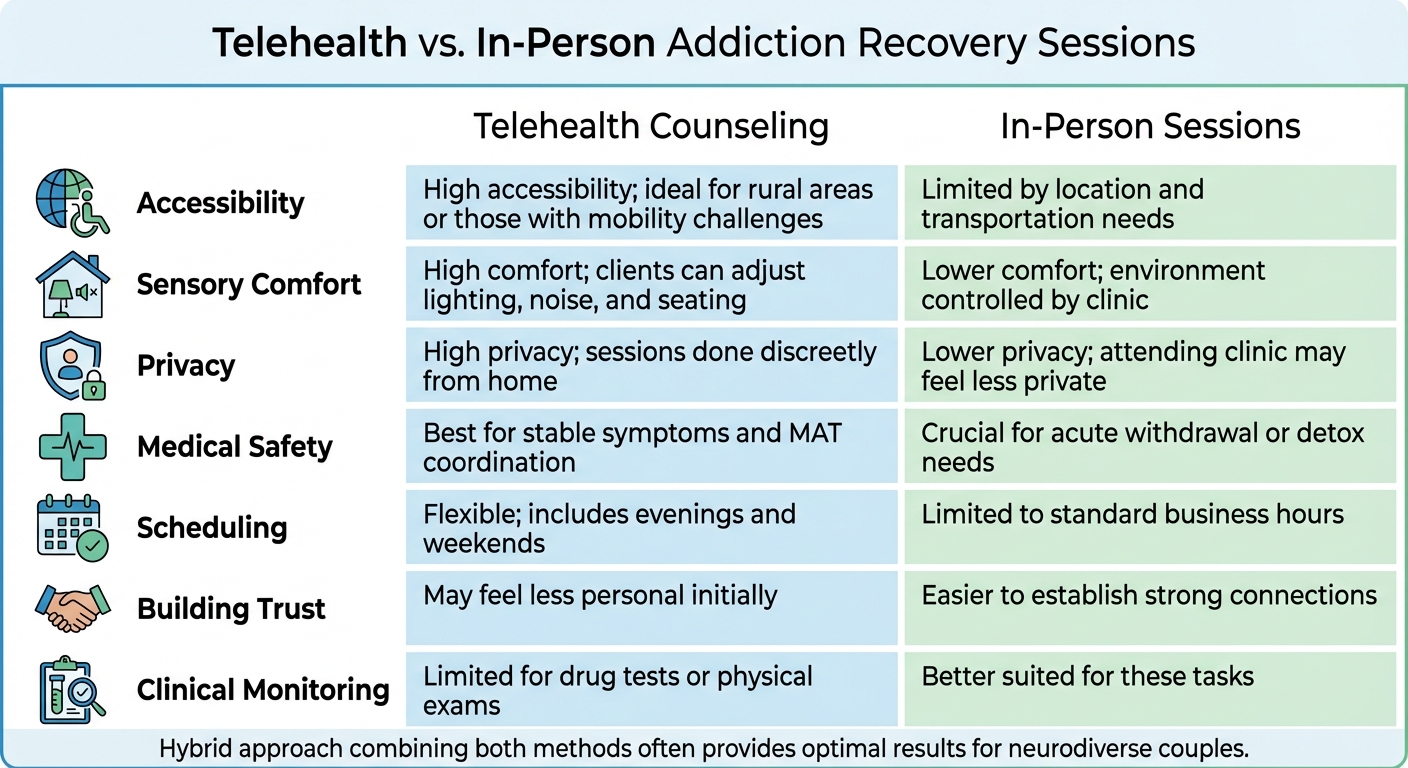
Telehealth vs In-Person Addiction Recovery for Neurodiverse Couples
Let’s shift focus to addiction recovery strategies tailored for neurodiverse couples. When addiction intersects with neurodiversity, the recovery journey demands specialized care. Nearly half of individuals with substance use disorders also face co-occurring mental health conditions [11]. For neurodivergent individuals, this often means managing challenges like ADHD, OCD, or anxiety alongside addictive behaviors – a complex situation that requires a thoughtful approach.
Just like other telehealth practices for neurodiverse couples, addiction recovery works best when it’s customized. The most effective programs bring together addiction specialists, mental health professionals, and recovery coaches to address not just substance use, but also underlying issues like trauma, anxiety, or emotional dysregulation [11][12]. For couples, this integrated model ensures that each partner gets individualized care while also supporting their relationship as a whole.
Combining Telehealth with In-Person Sessions
A hybrid approach that mixes virtual counseling with occasional in-person visits can be particularly effective for couples navigating addiction recovery. During the pandemic, 58% of addiction patients relied on telehealth for individual counseling, highlighting its value for consistent support [14]. However, certain aspects of recovery still benefit from face-to-face interaction.
Telehealth shines when it comes to regular check-ins, individual therapy, and couples counseling. It’s convenient, cutting out the hassles of travel or childcare, and it lets therapists observe your home environment to provide tailored advice for creating a recovery-friendly space. On the other hand, in-person sessions are ideal for tasks like assessments, drug testing, or medication-assisted treatment (MAT) monitoring. For example, only 17% of drug testing occurred via telehealth, emphasizing the need for in-person protocols in certain situations [14].
One simple but effective tool in addiction recovery is the "90 and 90" routine – attending one support meeting daily for the first three months [13]. Research shows it takes about 90 days to build a new habit, making this period crucial for establishing sobriety. Virtual meetings make this commitment more manageable by eliminating travel time and offering flexible scheduling, including evening and weekend options [11].
Telehealth vs. In-Person for Addiction Recovery
Knowing when to use telehealth versus in-person care can help you create a recovery plan that’s practical and effective:
| Feature | Telehealth Counseling | In-Person Sessions |
|---|---|---|
| Accessibility | High; great for rural areas or those with mobility challenges [11]. | Limited by location and transportation needs [11]. |
| Sensory Comfort | High; clients can adjust lighting, noise, and seating [11]. | Lower; environment is controlled by the clinic [11]. |
| Privacy | High; sessions can be done discreetly from home [11]. | Lower; attending a clinic may feel less private [11]. |
| Medical Safety | Best for stable symptoms and MAT coordination [11]. | Crucial for acute withdrawal or detox needs [11]. |
| Scheduling | Flexible; includes evenings and weekends [11]. | Typically limited to standard business hours [11]. |
| Building Trust | May feel less personal at first [14]. | Easier to establish strong connections [14]. |
| Clinical Monitoring | Limited for drug tests or physical exams [14]. | Better suited for these tasks [14]. |
By blending telehealth with in-person care, you can achieve a balance that supports both consistent progress and safety. As the World Health Organization points out:
"digital mental health solutions are closing long-standing gaps in timely mental health care, providing essential support between clinical sessions" [11].
For neurodiverse couples, this approach offers access to specialized care that might not be available locally, while ensuring the structure and accountability critical for recovery. Growth and Change Counseling provides telehealth services across California, offering addiction treatment alongside neurodiverse relationship counseling to address both challenges in a coordinated way.
Before starting any virtual session, make sure both partners are in a secure, private space where sensitive topics can be discussed openly. This privacy is key to building the trust and vulnerability needed for a successful recovery process [14].
Conclusion
Telehealth has opened doors for neurodiverse couples seeking specialized support, eliminating hurdles like travel, scheduling conflicts, and sensory sensitivities. By focusing on tailored strategies, it offers a framework for meaningful progress. In this guide, we’ve covered practical methods such as creating sensory-friendly environments, using clear communication to reduce misunderstandings, understanding your "window of tolerance" to manage conflicts, and combining telehealth with in-person care for more complex situations like addiction recovery.
Taking that first step can feel daunting, but services like those offered by Growth and Change Counseling make it easier. This California-based practice specializes in neurodiversity-affirming care, with therapists trained to address the unique dynamics of mixed-neurotype relationships. Telehealth sessions are priced at $165 for 45 minutes, and many major insurers – like Anthem Blue Cross, Aetna, United Healthcare, and Cigna – provide coverage [5]. Their approach typically spans 6 to 8 sessions, incorporating evidence-based methods like Emotion Focused Couples Therapy (EFT) and Cognitive Behavioral Therapy (CBT) [5].
John Kane, founder of Growth and Change Counseling, emphasizes:
"Even the most challenging relationships can heal. We’ll work alongside you if you’re ready to take that first step!" [5]
Whether you’re facing sensory challenges, communication struggles, or the complexities of addiction recovery, specialized telehealth support can guide you toward genuine connection. Take the first step and schedule a consultation today to begin building a stronger, more connected relationship.
Taking the Next Steps with Growth and Change Counseling
How does telehealth make communication easier for neurodiverse couples?
Telehealth makes it easier for neurodiverse couples to communicate by eliminating common stressors like traveling, arranging childcare, or dealing with sensory overload. With virtual sessions, couples can engage in therapy from the comfort of their own home, creating a more relaxed setting for meaningful discussions. Therapists can also incorporate tools like screen-sharing, visual aids, and chat features to clarify language, practice scripts, and break down complex topics into more manageable steps.
The flexibility of telehealth doesn’t stop there. Couples can benefit from adaptable scheduling and, with consent, the option to record sessions for later review. This allows them to revisit important moments and reinforce the skills they’re working on. Evidence-based methods, such as the Gottman Method or solution-focused techniques, translate seamlessly to a virtual format, helping partners build understanding and empathy. Growth and Change Counseling provides these specialized telehealth services throughout California, empowering neurodiverse couples to strengthen their communication and deepen their connection.
How can I create a sensory-friendly environment for telehealth sessions with neurodiverse couples?
Creating a comfortable and engaging telehealth environment can make a big difference for neurodiverse couples. Start by setting up a sensory-friendly physical space. Choose a quiet room with minimal background noise, opt for soft or natural lighting, and keep the background simple to reduce visual distractions. Using headphones can improve sound quality, while a reliable internet connection helps avoid interruptions that can feel unsettling.
Next, customize technology settings to suit sensory preferences. Options like muting microphones, hiding self-view, enabling captions, or switching to audio-only can make sessions more adaptable. Before starting, test the camera angle, lighting, and audio setup. Kicking off the session with a quick check-in allows for real-time adjustments to ensure everyone feels at ease.
Lastly, focus on clear and structured communication. Visual aids like shared screens or bullet points can help convey information effectively. Pause regularly to give time for processing, and plan for short breaks if needed. By blending a calming environment, adaptable tech, and thoughtful communication, you can create a telehealth experience that truly supports neurodiverse couples.
How can telehealth complement in-person sessions for addiction recovery?
Telehealth offers a practical and convenient way to complement in-person addiction recovery sessions. Through video-based check-ins between office visits, it helps individuals stay on track, tackle challenges during high-risk moments, and navigate obstacles like travel time or childcare. This approach makes it easier to maintain consistent participation and receive ongoing support.
At Growth and Change Counseling, telehealth is thoughtfully combined with in-person care to create a balanced, hybrid approach. Therapists utilize telehealth for techniques like relapse prevention and motivational interviewing, while in-office visits focus on tasks such as medication management or skill-building exercises. This blend increases accessibility, reinforces accountability, and builds the strong therapeutic connection necessary for lasting recovery.
Related Blog Posts
- Understanding Emotional Cues in Neurodiverse Couples
- Q&A: Supporting Neurodiverse Couples with Mental Health Issues
- Ultimate Guide to Emotional Growth for Neurodiverse Couples
- Ultimate Guide to Emotional Support in Autism-Neurotypical Marriages
