Supporting a partner in recovery is challenging, but it’s essential to protect your own well-being while helping them. This article outlines seven practical steps to strike that balance:
- Prioritize Self-Care: You can’t help others if you’re emotionally or physically drained. Take time daily for activities that recharge you.
- Set Boundaries: Define clear limits to protect your mental health and avoid enabling harmful behaviors.
- Join Support Groups: Groups like Al-Anon or Nar-Anon provide community and tools to navigate this journey.
- Communicate Without Judgment: Use open, empathetic conversations to build trust and understanding.
- Let Them Own Their Recovery: Avoid micromanaging; let your partner take responsibility for their progress.
- Seek Professional Help Together: Therapy can address relationship challenges and improve communication.
- Celebrate Progress: Acknowledge small wins to encourage continued effort and growth.
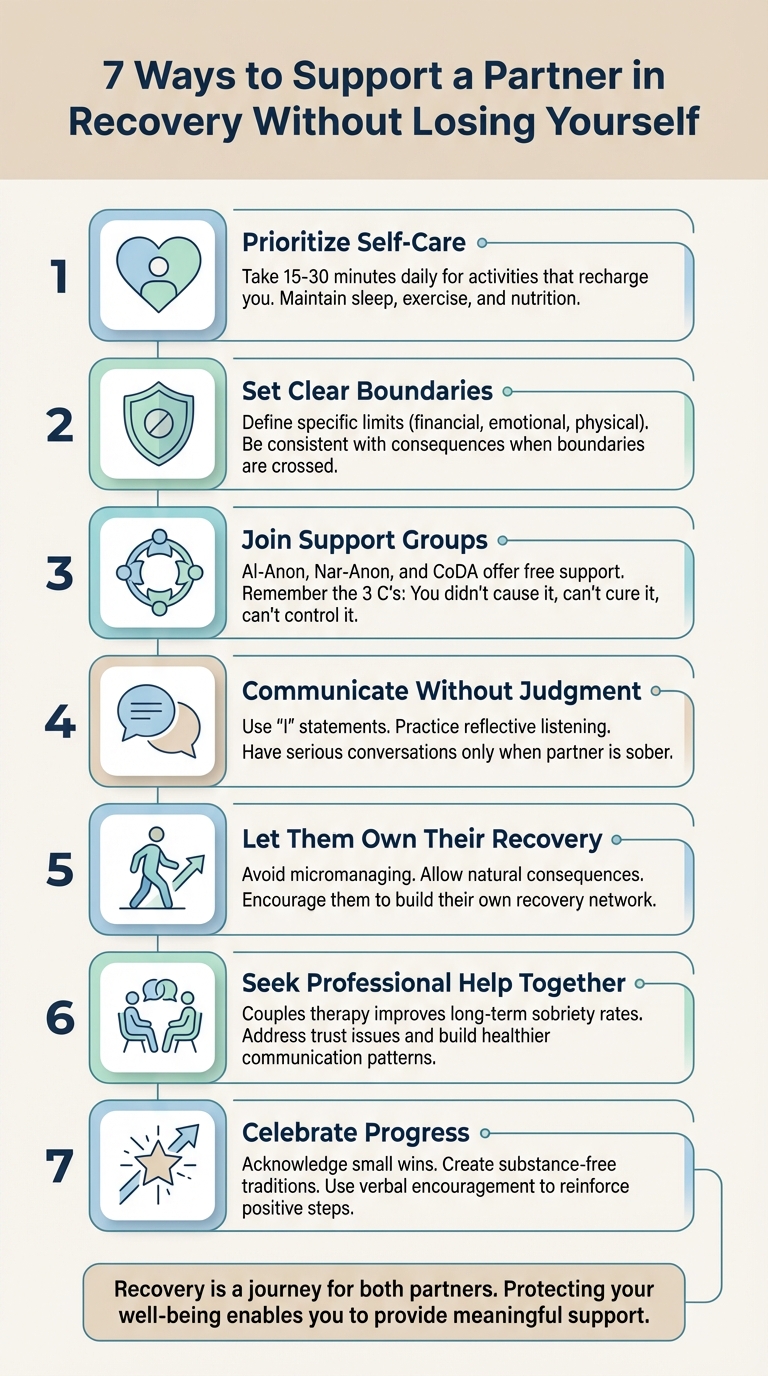
7 Ways to Support a Partner in Recovery While Protecting Your Well-Being
Can Your Relationship Survive the Addiction Recovery Process?
1. Make Your Own Self-Care a Priority
When your partner is working through recovery, it’s easy to pour all your energy into their healing process. But here’s the truth: you can’t effectively support someone else if you’re running on empty. Taking care of yourself isn’t selfish – it’s necessary for the long haul.
Skipping self-care can lead to burnout, which not only affects your health but also limits your ability to provide meaningful support. Recovery is an emotional rollercoaster, and self-care helps you stay grounded and resilient through the ups and downs [10]. Make your physical and emotional well-being a daily priority to ensure you’re in the best position to help.
"The reality is that you can not take care of your partner if you do not prioritize caring for yourself." – West Coast Recovery Centers [1]
Start small. Dedicate 15–30 minutes each day to something that genuinely relaxes or uplifts you [10]. Whether it’s a brisk walk in the morning, getting lost in a great book, or practicing meditation, these moments are key to recharging. Don’t overlook the basics either – get enough sleep, stay active, and fuel your body with nutritious meals to keep your energy steady [10].
It’s equally important to maintain your own identity. Keep up with hobbies you love, spend time with friends, and consider individual therapy if needed. These activities not only preserve your sense of self but also set a positive example for your partner. By prioritizing your well-being, you’re better equipped to set healthy boundaries and avoid slipping into codependency [1].
2. Set Clear Boundaries
Setting boundaries isn’t about trying to control your partner’s recovery – it’s about protecting your well-being and fostering a healthier relationship for both of you. Think of boundaries as a way to honor your own values and needs [3]. Without them, you may unintentionally enable harmful behaviors, leaving yourself emotionally drained. Clear boundaries also pave the way for better communication.
Be as specific as possible. For example, instead of saying, "I need respect", you could say, "I need you to speak to me calmly without yelling" [12]. Defining your needs in actionable terms helps avoid misunderstandings. And if a boundary is crossed, make sure the consequences are appropriate and consistent.
Here are some practical examples of boundaries you can set:
- Financial boundaries: Don’t give money, cover bills tied to addiction, or bail your partner out of legal trouble.
- Communication boundaries: Refrain from having serious discussions or arguments when your partner is under the influence.
- Emotional boundaries: Remove yourself from situations where your partner becomes manipulative or verbally abusive.
- Physical boundaries: Prohibit drugs or alcohol in your home, and leave if your partner is using substances.
"True support sometimes means stepping back and allowing your loved one to experience the natural consequences of their choices, while safeguarding your own emotional and financial stability." – Mountainside [12]
Research shows that families who educate themselves about addiction and boundary-setting see better recovery outcomes and improved treatment retention [12]. By steering clear of enabling behaviors, you empower your partner to take responsibility for their recovery while ensuring you maintain your own emotional and mental health.
3. Join Support Groups for Partners
Supporting a partner through recovery can feel overwhelming and isolating. That’s where support groups come in – they remind you that you’re not alone. Groups like Al-Anon (for partners of alcoholics) and Nar-Anon (for partners of individuals battling drug addiction) connect you with others who truly understand your challenges and emotions [14]. Beyond easing that sense of isolation, these groups provide tools and insights that can help you navigate this journey.
In these groups, you’ll learn practical coping strategies, gain familiarity with recovery terms like "hitting bottom", and discover how to set healthy boundaries [14]. A key takeaway from Al-Anon is the "3 C’s" philosophy: you didn’t cause it, you can’t cure it, and you can’t control it [5]. This perspective can be a game-changer, helping you let go of self-blame and redirect your energy toward your own well-being.
"Support groups provide hope and a listening ear for those affected [14]."
One of the best parts? Most of these groups are completely free. Al-Anon, Nar-Anon, Families Anonymous (FA), and Codependents Anonymous (CoDA) rely on voluntary member contributions [14]. Plus, they offer a variety of meeting formats – in-person, hybrid, and online – so you can choose what works best for your schedule and comfort level [13]. If one group doesn’t feel like the right fit, don’t hesitate to explore others. For instance, PAL (Parents of Addicted Loved Ones), founded in 2005 by Licensed Independent Substance-Abuse Counselor Michael Speakman, offers a unique approach that some find helpful alongside traditional 12-step programs [14].
These groups are available to you at any point in your partner’s recovery journey [14]. They’re designed for your healing, no matter where your partner stands in theirs [14]. Building a strong support network not only helps prevent burnout but also ensures you maintain your sense of self [1]. It’s all about striking the balance between being there for your partner and taking care of your own emotional health.
4. Communicate Openly Without Judgment
Once boundaries are set, the next step is to focus on open communication without judgment.
Talking openly is key to building trust and breaking down barriers, especially during recovery. The idea is to create a safe space where your partner feels they can share their struggles without worrying about being judged.
It’s important to separate the person from the addiction. Recognizing addiction as a diagnosable condition, rather than a personal failing, helps you stay empathetic and keeps the conversation productive [4]. Use "I" statements to express your feelings – for example, saying, "I felt terrified when I found you passed out" [4]. This approach shifts the focus to your feelings rather than blaming your partner, which can lower defensiveness and create room for meaningful discussion.
Listening matters as much as speaking. Let your partner talk without interrupting or passing judgment. Practice reflective listening [7], and save serious conversations for when your partner is sober [2]. During the early stages of recovery, avoid rehashing past mistakes. Instead, keep discussions centered on the present and the progress ahead [8].
Conflict doesn’t have to be a bad thing. According to John Mark Kane, LMFT from Growth and Change Counseling, conflict can actually bring people closer; avoiding disagreements altogether might come across as inauthentic [6]. If you’re constantly tiptoeing around issues to avoid conflict, you’re not fostering safety – you’re creating distance. Honest and compassionate communication involves addressing concerns directly but with care, rather than brushing them aside.
To keep communication clear and respectful, consider setting up weekly check-ins and using a "pause signal" for when things get heated [7]. These practices not only support your partner’s recovery but also protect your emotional well-being, ensuring that open communication strengthens your relationship rather than straining it.
sbb-itb-596b85d
5. Let Your Partner Own Their Recovery
Recovery is deeply personal, and it’s a journey your partner must take ownership of. You can’t want their sobriety more than they do. Trying to micromanage their recovery – like keeping tabs on their meetings, questioning their whereabouts, or steering their treatment – can undermine their independence and strain your own mental health. Respecting their autonomy not only reinforces the boundaries you’ve set but also helps them take responsibility for their actions.
Supporting someone means encouraging accountability, not shielding them from the natural outcomes of their choices. These consequences – like missed work, strained relationships, or legal trouble – often serve as powerful motivators for change. This doesn’t mean you stop caring; it means you’re respecting their ability to take responsibility for their own life and recovery, avoiding unhealthy dependency in the process.
"The supporting partner needs to let the addicted individual take the recovery journey and own it."
While natural consequences play their role, you can still support them in building a solid recovery network that doesn’t rely too heavily on you. Encourage them to connect with sponsors, therapists, and peers who can provide guidance and understanding. Offering practical help – like watching the kids or giving them a ride to meetings – is great, but let them handle their own schedule and communicate directly with their treatment team.
The key is to stay emotionally present without trying to manage their recovery. Be there to listen, validate their feelings, and resist the urge to fix every problem. This balance not only strengthens their recovery but also nurtures your relationship. Just like setting clear boundaries, being a supportive but non-controlling presence is essential for both of you.
6. Get Professional Help Together
Recovery is a journey best traveled together, and professional guidance can make all the difference. Couples counseling or therapy offers a safe space to tackle the trust issues, emotional distance, and isolation that often come with addiction [8]. With the help of a skilled therapist, you can navigate the complex emotions tied to recovery while maintaining your individuality. Therapy also sheds light on how your personal beliefs and patterns influence your relationship. As John Kane, a relationship therapist, explains:
"The more relationally healthy people are, the less anxious, addicted, and depressed they are" [6].
Therapy helps couples break free from unhealthy cycles and move toward genuine intimacy by addressing deeper issues like unresolved anger, trauma, or anxiety. This creates a stronger foundation for understanding your relationship dynamics.
Local professionals can offer tailored solutions to meet your unique needs. For example, Growth and Change Counseling in Campbell and San Jose, CA, focuses on addiction recovery alongside marriage and family therapy. Their approach combines practical tools – like structured conflict pauses and relapse prevention plans – with solution-focused strategies you can use between sessions. For couples in crisis, their 12-week Marriage Rescue Institute program provides intensive coaching designed to rebuild and restore relationships.
Studies highlight that couples therapy significantly improves long-term sobriety rates compared to individual treatment alone [15]. It also helps you clarify the difference between supporting your partner (holding them accountable) and enabling them (covering for their behavior) [9].
Whether you choose in-person sessions or telehealth options available across California, professional support ensures you don’t have to shoulder everything on your own. You’ll gain tools like using "I" statements, practicing active listening, identifying triggers together, and creating shared relapse prevention plans [7][8]. The goal isn’t to "fix" your partner but to build a healthier, more supportive relationship where both of you can thrive. This collaborative approach strengthens your bond while respecting each person’s individuality.
7. Celebrate Small Wins and Progress
Recovery is a journey built on everyday victories. Recognizing your partner’s efforts – whether it’s attending their first support group meeting or handling a stressful work situation without turning to substances – reinforces the positive steps they’re taking toward long-term sobriety [16][17]. As JADE Wellness Center puts it:
"Recovery should be seen as a series of accomplishments, no matter how small. Celebrating these milestones can boost morale and encourage continued effort towards sobriety" [16].
These small achievements lay the foundation for lasting progress.
Mark each milestone with activities that are meaningful and substance-free. The goal is to focus on connection rather than fleeting rewards. Instead of alcohol-based celebrations, opt for alternatives like coffee dates, a relaxing tea session, or a weekend hike [11]. You can also create new traditions – game nights, movie marathons, or weekly date nights – that celebrate the rebuilding of trust and intimacy in your relationship [18][11]. Acknowledge moments like completing a treatment phase, consistently attending therapy, or handling a triggering situation with healthy coping mechanisms [16]. These shared experiences create lasting memories while fostering a safe and supportive environment.
Progress matters more than perfection [1]. Offering verbal encouragement and being a non-judgmental listener can go a long way in celebrating their commitment [17]. Using "I" statements – such as "I feel proud seeing you prioritize your recovery meetings" – allows you to express appreciation without adding unnecessary pressure. By celebrating these small wins, you not only support your partner’s recovery but also strengthen your own resilience. This shared approach deepens your bond while honoring both their journey and your own well-being.
Conclusion
Supporting a partner through addiction recovery can be emotionally draining. Without making self-care a priority and setting clear boundaries, you may find yourself overwhelmed or experiencing compassion fatigue. As West Coast Recovery Centers puts it, "You cannot take care of your partner if you do not prioritize caring for yourself" [1]. Taking care of your own mental and emotional well-being isn’t selfish – it’s what allows you to offer steady and meaningful support.
Alongside self-care, holding onto your personal identity is just as important. When you maintain a sense of who you are, it not only protects your emotional health but also strengthens your relationship. Clear boundaries help prevent codependency and encourage your partner to take responsibility for their own recovery. Striking this balance is key to ensuring that both you and your partner can move forward in a healthy way.
Once these foundations are in place, seeking professional guidance can be a crucial step. Recovery is rarely a straightforward process, and professional support can provide valuable tools to help you navigate the journey. Whether it’s individual therapy, couples counseling, or joining a support group, these resources can help you manage the challenges of recovery while avoiding burnout. Growth and Change Counseling, for example, offers specialized programs like the 12-week Marriage Rescue Institute to rebuild trust and communication. They serve communities in Campbell, San Jose, Los Angeles, Roseville, and also provide telehealth services throughout California.
Finding Balance and Support at Growth and Change Counseling
How can I set boundaries to support my partner in recovery without feeling guilty?
Setting boundaries is about protecting your well-being while supporting your partner’s recovery. Boundaries clarify what feels comfortable for you – emotionally, physically, and in communication – and help avoid falling into patterns of enabling or codependency. When viewed as tools for mutual respect rather than acts of rejection, the guilt tied to setting limits often diminishes.
To create effective boundaries, start by identifying what you genuinely need and value. Use clear "I" statements to express these, like, "I need some quiet time after work to recharge." Stay consistent in upholding your limits, and remind yourself that caring for your well-being enables you to show up as a stronger, more engaged partner. If you’re unsure how to navigate this, a therapist can offer valuable guidance to help you maintain healthy boundaries and build a balanced, respectful relationship.
What are some self-care tips to help me stay balanced while supporting my partner in recovery?
Supporting a partner through recovery can take a toll on your emotional and mental health, so it’s essential to take care of yourself along the way. By prioritizing your own well-being, you’ll be better equipped to offer meaningful support without becoming overwhelmed.
Here are some simple ways to nurture yourself:
- Move your body daily – whether it’s a 30-minute walk, yoga, or a favorite activity, regular movement can ease stress and lift your mood.
- Try mindfulness or meditation for just a few minutes a day. These practices can help you stay present and maintain emotional balance.
- Engage in hobbies or creative activities like reading, painting, or gardening. These outlets can help you stay connected to your own identity.
- Reach out to supportive friends or family to share your feelings. Staying connected can help you avoid isolation and provide a sense of relief.
- Set boundaries around emotionally draining conversations or situations. Protecting your mental space is key to maintaining your strength.
If you find it challenging to strike a balance, don’t hesitate to seek professional help. Growth and Change Counseling offers individual therapy and couples coaching designed to support you during this journey, helping you stay centered while caring for your partner and yourself.
Why is it important for my partner to take responsibility for their recovery?
Taking responsibility for their own recovery is essential for your partner because real, lasting change comes from personal commitment and motivation. When they take charge of their journey, they build the confidence and skills needed to navigate challenges like cravings, setbacks, and daily decisions. If you step into the role of "fixer", it can lead to codependency, where your own needs might be neglected, and they may rely on you instead of developing their own coping mechanisms.
Respecting their independence is also key to setting healthy boundaries, which can help prevent emotional exhaustion and stress for both of you. These boundaries reinforce that while you’re there to support, the responsibility for attending treatment, going to meetings, and making progress rests with them. This approach encourages mutual respect, better communication, and accountability.
Couples counseling can play an important role in maintaining this balance. Growth and Change Counseling offers a structured 12-week coaching program aimed at helping partners support one another while maintaining their individuality. By encouraging your partner to take the lead in their recovery, you not only strengthen your relationship but also build a foundation of trust, respect, and resilience for the future.
Related Blog Posts
- Addiction Recovery and Marriage Communication
- Boundaries for Addiction Recovery and Healthy Love
- How to Stop Enabling a Partner with Addiction
- 7 Tips for Supporting a Partner After Relapse
