When addiction affects a family, siblings often play a key role in supporting recovery. Their shared history and unique bond can create trust and open communication, which are critical for healing. Siblings can help by:
- Providing emotional support: Listening without judgment, celebrating progress, and reminding their loved ones of their strengths.
- Setting boundaries: Avoiding enabling behaviors like giving money or covering for harmful actions.
- Learning about addiction: Understanding it as a complex condition and using compassionate language.
- Participating in family therapy: Rebuilding trust, improving communication, and addressing unresolved issues.
Addiction impacts the entire family, often reshaping sibling relationships and introducing emotional challenges like anger, guilt, and anxiety. However, with the right support and involvement, siblings can strengthen family bonds and contribute to lasting recovery.
How Addiction Impacts the Whole Family | Stories of Siblings, Parents & Healing
How Addiction Affects Sibling Relationships
Addiction has a way of reshaping sibling relationships, often introducing a sense of ambiguous loss [2]. This term describes the heartache of mourning someone who is physically present but emotionally distant because of their addiction [2]. The sibling you once knew may seem to vanish as their attention shifts away from family bonds. This change sets the stage for emotional struggles and evolving family roles, which can deeply impact these relationships.
Emotional Struggles Siblings Experience
Siblings of individuals struggling with addiction often grapple with a whirlwind of emotions – anger, guilt, and helplessness. These feelings are magnified by the "forgotten victim" phenomenon, where the focus on the addicted individual leaves their own emotional needs overlooked [10]. This neglect can lead to mental health challenges like anxiety, depression, and low self-esteem. In some cases, siblings might even turn to substances themselves as a way to cope with the chaos [10][11]. Over time, these emotional challenges can ripple into larger shifts within family dynamics.
Family Dynamics and Addiction
Addiction doesn’t just affect individuals; it reshapes the entire family structure. Siblings often find themselves falling into specific roles that complicate their relationships. For instance, some take on the role of the Hero, striving for perfection to bring pride back to the family. Others withdraw completely, becoming the Lost Child in an attempt to avoid adding to the stress. The Scapegoat might act out, drawing attention away from the addiction, while the Mascot uses humor as a shield to hide their pain [3][10][4].
These roles can force siblings into responsibilities far beyond their years. They might step up to care for younger siblings or support parents who are overwhelmed, leaving little room for their own emotional and social growth [3][11]. Trust within sibling relationships can also take a hit, especially when the addicted sibling engages in harmful behaviors like theft or manipulation. This erosion of trust can carry over into how the non-addicted sibling approaches relationships in the future [11].
Ways Siblings Can Support Addiction Recovery
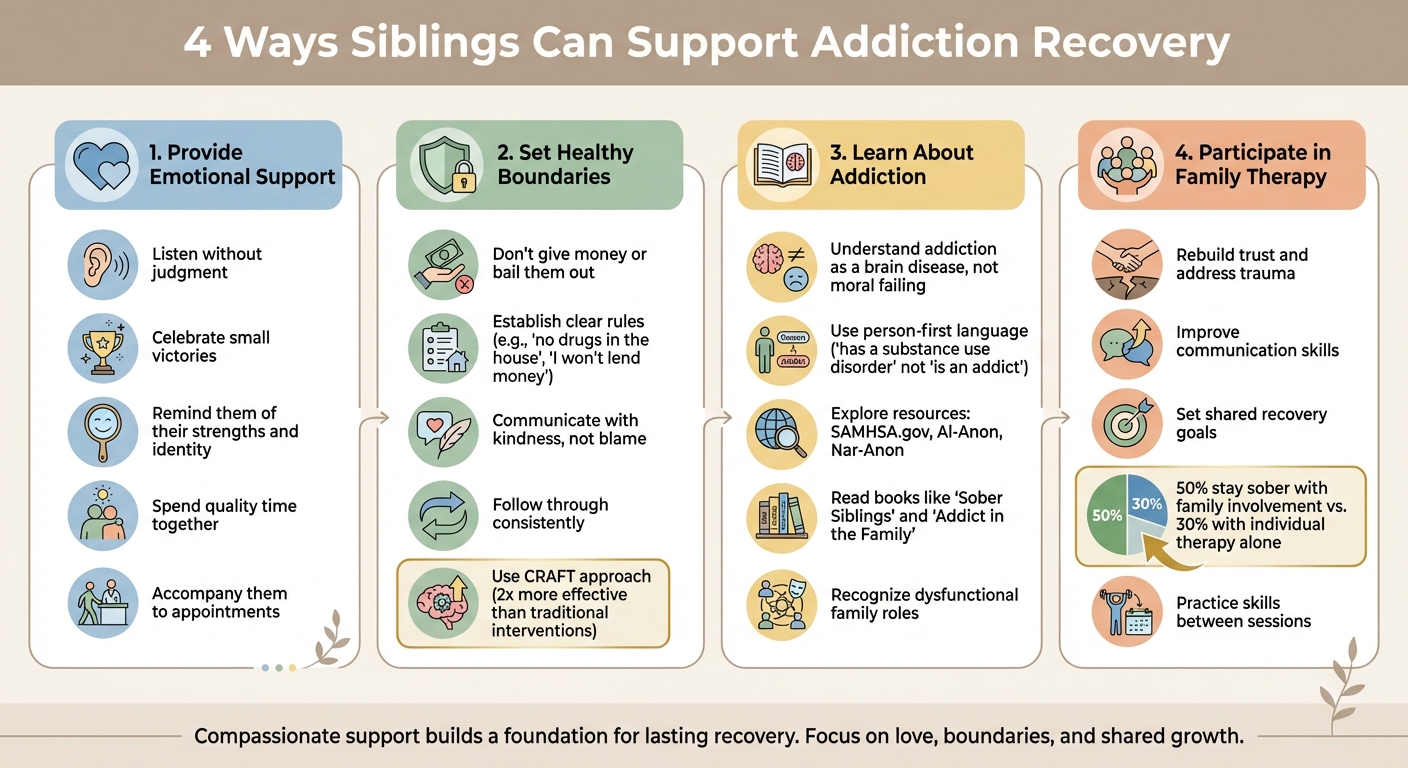
4 Ways Siblings Can Support Addiction Recovery
Addiction can strain sibling relationships, but brothers and sisters hold a unique position to help during recovery. The key is finding a balance between offering support and maintaining your own well-being. Here’s how siblings can provide meaningful assistance, from emotional encouragement to practical steps.
Providing Emotional Support and Encouragement
One of the most impactful ways to help is by being emotionally present. Listening actively and without judgment creates a safe space for your sibling to share their thoughts and feelings [12][1]. Remind them of their strengths, passions, and goals from before addiction entered their life. This can help them reconnect with their identity beyond substance use [14]. Celebrate even the smallest victories – acknowledging progress can strengthen their commitment to recovery [1].
"Siblings have a bond that is different from all other relationships… Be the one they can count on to provide support and encouragement during recovery." – Lighthouse Network [14]
Spending quality time together through activities they enjoy is another way to rebuild your bond outside the context of addiction [12]. Whether it’s a shared hobby or simply being present for them, these moments can deepen your connection. You can also show your support by accompanying them to appointments or encouraging them to seek help, emphasizing that asking for assistance is a sign of strength [12].
Setting Healthy Boundaries
Supporting a sibling in recovery doesn’t mean tolerating harmful behavior. Clear boundaries protect both you and your sibling by setting expectations and avoiding enabling behaviors [13]. Actions like giving money, covering for them, or bailing them out of trouble might seem helpful in the moment but can actually prolong addiction by shielding them from its consequences [15].
Establish boundaries with clear rules and consistent follow-through. For instance, you might set rules like "no drugs or alcohol in the house", "I won’t lend you money", or "I won’t interact with you when you’re under the influence" [13][15]. Communicate these boundaries with kindness and respect, avoiding blame or lectures, which can push them further away [1][7].
"Boundaries are rules that set limits on what is and is not acceptable in any given relationship. Boundaries create clear expectations for behavior that can work to protect family members from substance-induced harms and support recovery." – Recovery Research Institute [13]
The CRAFT (Community Reinforcement and Family Training) approach is particularly effective, showing twice the success rate of traditional interventions in encouraging loved ones to seek treatment [13].
Learning About Addiction
Knowledge is a powerful tool when supporting a sibling through recovery. Understanding addiction as a complex brain disease rather than a moral failing helps reduce stigma and allows you to approach your sibling with compassion [1][15]. Research shows that family involvement can significantly improve treatment retention and long-term recovery outcomes [9].
Start by exploring trusted resources like the Substance Abuse and Mental Health Services Administration (SAMHSA) website at samhsa.gov [1]. Books such as Sober Siblings by Patricia Olsen and Addict in the Family by Beverly Conyers offer practical advice grounded in real-life experiences [1]. Joining support groups like Al-Anon, Alateen, or Nar-Anon can also connect you with others who understand your situation and provide valuable insights [1][16][4].
"Understanding addiction as a complex, multifaceted disease reduces stigma and enables you to approach your sibling with empathy." – Care Addiction Center [1]
Learning about addiction can also help you identify and step away from dysfunctional family roles, allowing for more genuine interactions [4]. Additionally, using person-first language – such as saying "my sibling has a substance use disorder" instead of "my sibling is an addict" – can reduce shame and affirm their worth beyond their condition [16]. By educating yourself, you’ll not only become a better source of support but also protect your own mental health, enabling you to be there for your sibling when they need it most.
sbb-itb-596b85d
How Family Therapy Strengthens Sibling Bonds
How Family Therapy Supports Recovery
Family therapy creates a safe space where siblings can rebuild their relationships and support each other through recovery. It tackles the deep-seated issues that addiction often amplifies, such as lingering anger, broken trust, and unresolved trauma [4][19]. By addressing these challenges, therapy helps families break out of harmful patterns and encourages healthier ways of interacting.
One of the key components of family therapy is improving communication. It replaces unproductive or harmful exchanges with tools for resolving conflicts and setting clear boundaries [18]. Studies highlight its effectiveness: in one case, 50% of people who included their families in alcohol recovery remained sober for a year, compared to less than 30% who relied solely on individual therapy [18].
"The more relationally healthy people are, the less anxious, addicted, and depressed they are." – John Kane, LMFT, Growth and Change Counseling [19]
Therapy also emphasizes collaboration by encouraging families to set shared recovery goals. Using solution-focused techniques, therapists guide siblings in creating actionable plans for healing and growth [17]. Between sessions, families often receive "relational homework" to practice their new skills in real-life situations [19]. This approach shifts the focus from blame to teamwork, recognizing that changes in one family member can impact the entire family dynamic [9].
Growth and Change Counseling‘s Family Therapy Services
Growth and Change Counseling builds on the progress made in therapy by offering services tailored to strengthen family relationships during recovery. Their approach focuses on developing "relational intelligence", which helps families better understand and navigate their dynamics. As Jamula Taylor, LMFT, explains:
"We understand that our mental health conditions are related to the breakdown in our relationships and that we can’t simply make depression, anxiety, or other problems go away by simply treating the symptoms" [19].
The counseling practice provides flexible support, offering in-person sessions in Campbell, San Jose, Los Angeles, and Roseville, as well as telehealth services across California. This flexibility ensures that even siblings living in different locations can stay engaged in the recovery process [17]. Their approach equips siblings with the tools they need to set boundaries, build confidence, and maintain their own well-being while supporting a family-wide recovery effort [17]. These services empower families to create an environment where everyone can thrive together.
Conclusion
Siblings hold a special role in addiction recovery – they connect on a level that other family members often can’t match [1][8]. By offering emotional support, setting healthy boundaries, and engaging in family therapy, siblings can help improve the overall family dynamic. Their involvement has lasting benefits that go well beyond the initial stages of recovery. Research shows that strong family and social support are closely linked to long-term sobriety and successful recovery. Additionally, family participation significantly boosts treatment engagement and retention rates [20]. This creates what researchers call a "virtuous cycle", where healthier relationships and progress in recovery reinforce one another [5]. Family therapy plays a key role in solidifying these positive changes.
Siblings can also contribute by addressing and reshaping long-standing family dynamics. Breaking free from roles like the "Hero", "Scapegoat", or "Enabler" allows for more genuine and supportive interactions [4]. Family therapy provides a space to rebuild trust and resolve old resentments, strengthening family bonds and improving communication [6][7]. As the Hazelden Betty Ford Foundation explains:
"Each individual in the family needs to seek support and recovery in order to restore the family unit as a whole" [6].
It’s equally important for siblings to focus on their own well-being. Support groups like Al-Anon or Alateen can help them navigate their emotions and maintain healthy boundaries [6][4]. Celebrating small victories in recovery not only uplifts the individual but also reinforces the family’s commitment to the journey [1]. This balance helps prevent burnout and fosters resilience. In the end, the active participation of siblings benefits not just the person in recovery but the entire family, creating a stronger, more united support system.
FAQs
How can siblings take care of themselves while supporting a loved one in addiction recovery?
Supporting a sibling through addiction recovery is no easy task, and it’s essential to take care of your own well-being along the way. One of the most important steps is setting clear boundaries. This helps protect your mental and emotional health, ensuring you can be there for your sibling without becoming overly entangled in their struggles or unintentionally encouraging harmful behaviors.
Self-care is another key part of this process. Make time for activities that recharge you – whether it’s exercising, pursuing hobbies you enjoy, or connecting with friends and family who uplift you. If the emotional weight becomes overwhelming, consider seeking professional help. Counseling or family therapy can give you a safe space to process feelings like guilt or frustration and provide practical tools to handle the challenges of supporting someone in recovery.
While you can’t control your sibling’s journey, offering steady, compassionate support while keeping your own life in balance can make a real difference for both of you.
How can I set healthy boundaries with my sibling during their addiction recovery?
Setting boundaries with a sibling in addiction recovery can be challenging but is essential for both your well-being and their progress. Start by reflecting on what you’re comfortable with – emotionally and physically – and be upfront about your limits. When you communicate these boundaries, do so calmly and clearly, emphasizing that your intentions come from a place of care and support.
One key aspect is avoiding behaviors that enable their addiction. This might mean resisting the urge to cover for their mistakes or stepping in to handle responsibilities that they need to manage themselves. Instead, focus on encouraging accountability while protecting your own mental and emotional health. By establishing healthy boundaries, you’re creating a space that supports their recovery while ensuring your own needs are respected.
How can family therapy improve sibling relationships during addiction recovery?
Family therapy plays an important role in improving sibling relationships during addiction recovery. It creates a safe environment where siblings can openly share their emotions, discuss feelings like guilt or resentment, and address how addiction has affected their connection. This process helps rebuild trust and encourages healthier communication.
Additionally, therapy helps siblings better understand their roles within the family dynamic, which can ease the tension caused by shifting responsibilities. By promoting empathy and mutual support, family therapy turns sibling relationships into a source of comfort and stability, fostering a more supportive atmosphere for everyone involved in the recovery process.
Related Blog Posts
- How Family Therapy Restores Trust After Addiction
- Scapegoat Role in Addiction Recovery
- Hero Role in Family Systems: Healing Strategies
- Family Roles and Boundaries in Addiction Recovery
