Emotional distance in a marriage often shows up in subtle, nonverbal ways before it becomes obvious. These small changes – like avoiding eye contact or reduced physical touch – can quietly erode connection over time. Recognizing these signs early is key to addressing the problem and rebuilding closeness. Here’s a quick summary of what to watch for:
- Avoiding Eye Contact: A lack of eye contact often signals disconnection or unresolved emotions.
- Guarded Body Language: Crossed arms, stiff posture, or leaning away can indicate discomfort or defensiveness.
- Less Physical Touch: A decline in everyday affection, like hugs or holding hands, may point to deeper issues.
- Withdrawing or Stonewalling: Ignoring emotional bids by turning away or focusing on distractions like phones.
- Dismissive Gestures: Eye-rolling or sighing can communicate frustration or disrespect.
If these behaviors persist, they might hint at larger relationship challenges. Small changes, like open body language, consistent physical touch, and focused attention, can help rebuild connection. For deeper issues, seeking professional help can provide tools to repair and strengthen your relationship.
Emotional Disconnection in Marriage: Why It Happens and What to Do About It
Common Nonverbal Signs of Emotional Distance
Nonverbal cues can often reveal emotional distance in a marriage, even when words don’t. These subtle signs show how emotional gaps can quietly creep into everyday interactions, signaling a need for attention and care. Let’s break down some of these telltale cues.
Avoiding Eye Contact
Eye contact plays a huge role in maintaining emotional intimacy. When it starts to fade, it often reflects a growing disconnect. You might find yourself looking away or avoiding your partner’s gaze during conversations. According to research from The Gottman Institute, a staggering 69% of relationship conflicts persist because couples fail to address the emotions beneath the surface, focusing instead on external issues [3].
Closed or Guarded Body Postures
Pay attention to body language during conversations. Signs like crossed arms, stiff shoulders, or leaning away can signal defensiveness or discomfort. These postures create a physical barrier that makes emotional vulnerability harder to achieve, blocking the connection that relationships thrive on [7].
Reduced Physical Touch
Physical touch is one of the most powerful ways to build and maintain emotional bonds. When affectionate gestures like holding hands, a quick hug, or a gentle pat on the back begin to vanish, it can point to deeper issues such as resentment, fear of rejection, or unresolved anger. This isn’t just about sexual intimacy – it’s about those everyday moments of connection. Over time, even small lapses in physical touch can grow into a significant emotional divide.
Turning Away or Withdrawing Physically
Imagine your spouse sharing something meaningful, and instead of engaging, you glance at your phone or leave the room. This behavior, known as "stonewalling", is a clear sign of emotional withdrawal and is often linked to deeper relationship challenges. In fact, this type of disengagement is considered a strong predictor of divorce [6].
Eye-Rolling and Sighing
Though they might seem minor, gestures like rolling your eyes or sighing can send a loud, dismissive message. These actions often convey frustration or a lack of respect, chipping away at the emotional connection between partners. As Dr. Harel Papikian, a licensed clinical psychologist, points out:
"Love isn’t just about the words you say. It’s also in the way you lean in, hold hands, or offer a soft glance across the room" [7].
When these small but meaningful gestures of empathy and engagement disappear, they leave behind a void, signaling that the emotional bond is weakening.
How to Address Emotional Distance
Once you’ve spotted the nonverbal cues hinting at emotional distance, it’s time to take steps to rebuild your bond. Small, intentional adjustments in how you communicate without words can work wonders. Studies reveal that physical touch triggers the release of chemicals that strengthen emotional bonds, ultimately deepening your connection [4]. Here’s how to reconnect through subtle, meaningful actions.
Using Open Body Language
Nonverbal signals can either widen or close the emotional gap. To bridge that gap, start with open body language. Uncross your arms, face your partner directly, and lean in slightly to reflect their posture. These simple shifts can signal warmth and attentiveness. Sitting side-by-side instead of across from each other can also reduce feelings of opposition, reinforcing the idea that you’re a team.
Rebuilding Connection Through Touch
You don’t need grand gestures to make a difference – small, consistent touches often mean more. Michelle Cantrell, LPCC, from the Center for Growth and Connection, highlights the power of everyday physical contact:
"Physical touch isn’t just about sex. It’s the little things – hand-holding, a brief hug, a reassuring pat on the back" [1].
Incorporate small rituals into your day, like a goodnight kiss or sitting close during your morning coffee. These micro-moments, repeated over time, can gradually rebuild emotional closeness.
Practicing Positive Nonverbal Communication
Nonverbal communication goes beyond just listening – it’s about showing your presence. Actions like maintaining eye contact, offering affirming nods, and avoiding closed-off postures (like crossed arms) can create emotional safety. Eliminate distractions by putting your phone away during conversations, signaling that your partner has your full attention. Shared activities – whether it’s cooking, dancing, or walking side-by-side – can also naturally strengthen your connection. In fact, research shows that couples in thriving marriages respond to each other’s bids for connection 86% of the time [5]. Small, consistent efforts like these can make a big difference in closing the emotional gap.
sbb-itb-596b85d
When to Get Professional Help
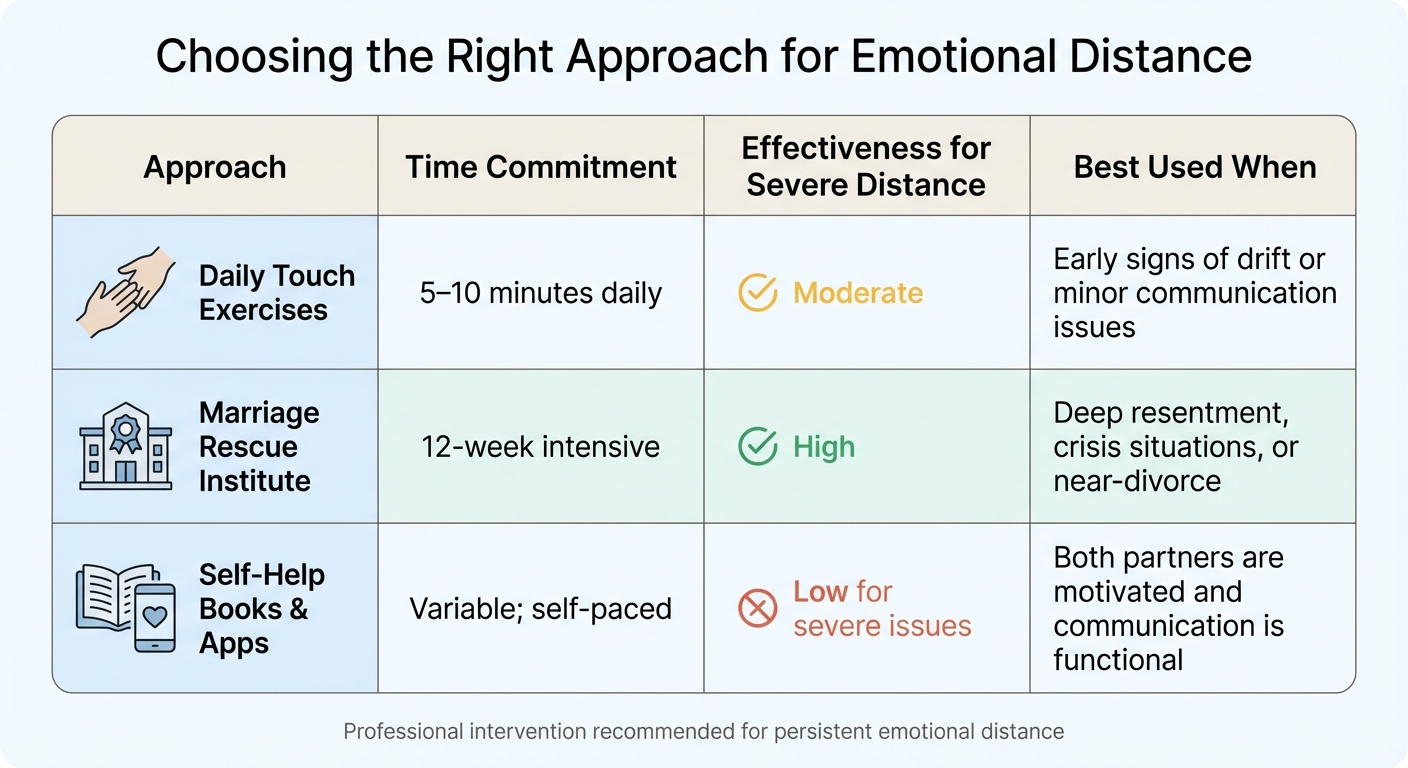
Self-Help vs Professional Marriage Counseling Comparison
Sometimes, subtle nonverbal cues hint at deeper issues in a relationship. When these signs persist, it may be time to seek professional guidance.
There are moments when emotional disconnects run too deep for everyday fixes. Recognizing when to ask for help can be a turning point. For example, if conversations constantly spiral into arguments or feel purely transactional – focused only on bills, schedules, or parenting logistics – it may indicate that self-repair is no longer working. Feeling like roommates rather than partners, walking on eggshells to avoid conflict, or facing a complete lack of physical intimacy are other red flags. Similarly, if you find yourself contemplating separation or noticing the same emotional wounds resurfacing despite your efforts, professional intervention might be the next step.
Lisa Rabinowitz, LCPC, a Certified Gottman Therapist, sheds light on the issue:
"Emotionally distant couples often feel too unsafe with one another to be vulnerable. Therapy creates a container where each of you can speak openly without fear of judgment." [2]
Research from The Gottman Institute shows that 69% of relationship conflicts remain unresolved because they stem from fundamental emotional differences rather than external problems [3]. A skilled therapist can help identify if you’re stuck in a "pursue-withdraw" cycle – where one partner’s attempts to connect push the other to retreat further – and provide tools to break free from this pattern.
Seeking help early is key. Couples who address these issues before negative habits become deeply ingrained often experience faster progress.
How Growth and Change Counseling Can Help
When self-help no longer bridges the gap, professional support can provide much-needed direction.
The Marriage Rescue Institute offers a focused 12-week coaching program designed for couples in crisis. This intensive, structured approach uses evidence-based methods, such as the Gottman Method and attachment repair techniques, to help rebuild relationships. The program provides a safe, neutral space for partners to work through resentment, learn specific repair strategies, and address underlying issues without blame.
In-person sessions are available in Campbell, CA; San Jose, CA; Los Angeles, CA; and Roseville, CA, while telehealth options serve couples across California. This approach ensures couples have the tools they need to address emotional distance and rebuild trust.
Self-Help Methods vs. Professional Support
Professional intervention offers a more structured and effective solution for couples facing severe challenges, especially when compared to everyday self-help strategies.
| Approach | Time Commitment | Effectiveness for Severe Distance | Best Used When |
|---|---|---|---|
| Daily Touch Exercises | 5–10 minutes daily | Moderate | Early signs of drift or minor communication issues |
| Marriage Rescue Institute | 12-week intensive | High | Deep resentment, crisis situations, or near-divorce |
| Self-Help Books & Apps | Variable; self-paced | Low for severe issues | Both partners are motivated and communication is functional |
Self-directed methods can be helpful for minor disconnects when both partners are motivated and communication remains intact. However, for recurring emotional wounds, failed self-repair attempts, or relationships on the brink, professional programs provide the expertise and structure needed to break destructive cycles and rebuild connection.
Understanding Emotional Distance with Growth and Change Counseling
Emotional distance doesn’t usually arrive with big fights or shocking betrayals. Instead, it sneaks in quietly through subtle changes – like avoiding eye contact during conversations, a decline in physical affection, distracted body language when your partner speaks, or an uncomfortable silence over dinner. Over time, these small shifts can create a gulf between partners, turning a once-close relationship into a distant cohabitation.
The first step to bridging this gap is recognizing it. As Michelle Cantrell, LPCC, puts it: "Awareness is the first step. The next step? Talking about it" [1]. Once you notice these patterns, take action by focusing on simple, meaningful gestures that encourage emotional connection. Open up with "I" statements and respond warmly to your partner’s emotional bids. Studies show that couples who acknowledge each other’s emotional bids 86% of the time maintain stronger connections [5]. This highlights how small, consistent efforts can often matter more than grand displays of affection. However, if these personal attempts don’t rekindle the closeness, it may be time to seek outside help.
When emotional distance feels too overwhelming to handle alone – when conversations turn into arguments, resentment builds, or separation feels inevitable – professional guidance can make a difference. Programs like The Marriage Rescue Institute offer structured, evidence-based approaches to help couples break negative patterns and rebuild their bond.
The journey back begins with facing the distance. Whether through small, daily moments of connection or the support of a professional, addressing emotional disconnection early can help couples find their way back to each other before the divide grows too wide.
FAQs
What are the early nonverbal signs that emotional distance is growing in a marriage?
When emotional distance starts creeping into a marriage, it often shows up in small, nonverbal ways. These can include skipping affectionate rituals like a good-night kiss, a noticeable drop in physical touch – fewer hugs, less hand-holding – or an increased preoccupation with distractions like phones instead of meaningful interaction with your partner. You might also sense a shift in body language, such as avoiding eye contact or creating physical space, which can hint at emotional withdrawal.
Identifying these subtle changes early is key to addressing the root causes and rebuilding connection. If these signs feel familiar, reaching out for professional support, like couples counseling, can be a valuable step toward restoring emotional closeness and strengthening your bond.
What are effective ways for couples to rebuild connection through nonverbal communication?
Rebuilding a connection in marriage often starts with the unspoken language of nonverbal communication – the subtle ways we share emotions without saying a word. Things like eye contact, touch, facial expressions, and body language can quietly convey love, attention, and understanding. These small, everyday gestures, when done regularly, can deepen emotional bonds.
Here are a few ways couples can restore that nonverbal connection:
- Make eye contact and share gentle touches during simple moments, like resting a hand on your partner’s arm or shoulder.
- Mirror one another’s posture or expressions to reflect empathy and understanding.
- Use engaged body language in conversations – lean in, nod, and maintain an open stance to show you’re fully present.
- Create small moments of closeness, like holding hands during a walk or sharing a hug before bed.
If reconnecting feels overwhelming, professional guidance can help. Growth and Change Counseling offers a focused 12-week couples coaching program that provides practical strategies to rebuild intimacy and strengthen relationships.
When should couples seek professional help for emotional distance in their marriage?
Couples might want to think about reaching out for professional support when emotional distance becomes a recurring issue that disrupts their connection and overall happiness. Some key warning signs include persistent feelings of loneliness, frequent miscommunication, or the sense that you’re more like roommates than partners. If efforts like spending quality time together or having open, honest discussions don’t seem to help, it could be a signal to seek outside guidance.
Other red flags include unresolved arguments, mounting resentment, a decrease in physical intimacy, or a tendency to avoid or become defensive with one another. When emotional distance starts to spill over into other parts of life – like work, parenting, or your own mental and emotional health – professional counseling can offer effective tools and strategies to help rebuild that lost connection. Growth and Change Counseling provides personalized support, including their focused 12-week Marriage Rescue Institute program, designed to help couples repair and strengthen their relationship.
Related Blog Posts
- 5 Ways Grief Impacts Marriages
- Ultimate Guide to Emotional Intimacy Through Shared Faith
- Emotional Disconnection in Marriage: Causes and Solutions
- Ultimate Guide to Emotional Communication in Marriage
