When couples face repetitive conflicts or emotional disconnection, generational trauma could be the hidden cause. Generational trauma refers to emotional and psychological pain passed down through families, often influencing how partners communicate, trust, and connect. Marriage counseling can help couples identify these inherited patterns and work toward healthier relationships. Here’s how:
- Generational Trauma Defined: Emotional wounds from events like war, systemic oppression, or family dysfunction can persist across generations, shaping behaviors and relationships.
- Impact on Marriages: Trauma often leads to emotional reactivity, trust issues, and unhealthy conflict patterns between partners.
- Role of Counseling: Therapists guide couples to recognize trauma-driven behaviors, improve communication, and build emotional safety.
- Healing Stages: Therapy often involves three stages – stabilization, mourning past pain, and rebuilding trust and connection.
- Techniques Used: Methods like narrative therapy, attachment-based approaches, and somatic practices address both emotional and physical effects of trauma.
- Intensive Programs: Condensed therapy options, like 12-week programs, provide focused support for couples dealing with deep-rooted issues.
Marriage counseling not only helps couples heal but also breaks harmful cycles, creating a healthier legacy for future generations.
Stronger Marriage Webinar: Writing Your Own Marriage Story after Generational Trauma – Tish White
How Marriage Counseling Addresses Generational Trauma
Marriage counseling helps couples untangle inherited trauma by exploring how past wounds influence current behaviors and guiding them toward healthier patterns. This process not only benefits the couple but also has a ripple effect on future generations.
Identifying Trauma Patterns Within the Relationship
The first step to healing is understanding what needs to be addressed. Therapists work with couples to examine their family histories and uncover what some experts call "psychological inheritance" – the emotional dynamics, caregiving roles, and power imbalances that have been passed down through generations. This helps pinpoint the roots of current behaviors.
Counselors assist couples in identifying recurring conflict patterns, often revealing arguments that follow predictable scripts rooted in unresolved family issues rather than present-day problems. For instance, a husband’s strong reaction to criticism might trace back to a childhood shaped by a harsh, overly critical parent. Similarly, a wife’s tendency to withdraw during conflict could stem from observing avoidance behaviors in her own upbringing.
Narrative therapy plays a key role here. By sharing their personal trauma stories, partners can better understand how past experiences shape their present-day interactions. This process reframes struggles as inherited challenges rather than personal shortcomings, providing a foundation for shared growth.
Building Emotional Safety and Trust
After identifying trauma patterns, creating a safe and supportive environment becomes essential. Therapists foster a judgment-free space where partners can express themselves openly without fear of rejection. This atmosphere of vulnerability is crucial for rebuilding trust and strengthening the relationship.
"I believe that therapy is a safe place for people to be whoever they are right now, no matter how bad they feel about themselves or their lives. It is in this place of vulnerability that we can admit our struggles, face our true selves, and then grow to become all that we are meant to be!" – John Mark Kane, LMFT, Founder of Growth and Change Counseling
Counselors teach active listening and reflective dialogue techniques to help partners feel heard and understood. These skills enable couples to see each other’s pain within the context of their histories, fostering empathy instead of judgment. Therapists may also intervene to redirect negative communication patterns, steering couples toward more constructive and respectful interactions.
Developing New Coping Mechanisms Together
Breaking generational cycles involves replacing harmful patterns with healthier ones. Therapists equip couples with tools to manage emotional triggers and de-escalate conflicts before they spiral. For example, partners learn to take a breather when tensions rise, allowing time to cool off and approach discussions with a calmer mindset.
Couples also practice reframing their communication. Instead of using defensive or indirect language – like sarcasm, withdrawal, or criticism – they’re encouraged to adopt direct, constructive expressions. For instance, switching from "You never listen to me" to "I feel unheard when I’m interrupted, and I need to finish my thought" can reduce defensiveness and promote understanding.
Somatic practices, such as yoga, hiking, or dancing, are introduced to help partners reconnect with their bodies and each other. These activities can ease emotional numbness often tied to generational trauma. Couples are also encouraged to share where they physically feel stress – like tightness in the chest or knots in the stomach – building a deeper emotional connection.
Through narrative therapy, couples work together to rewrite their shared story, shifting the focus from victimhood to empowerment. They also revisit and revise role expectations within their relationship, ensuring that responsibilities align with their current values rather than outdated family patterns. Research supports the effectiveness of tailored approaches like Emotionally Focused Therapy (EFT), Gottman methods, or Imago therapy, with over 70% of couples reporting lasting improvements [6].
These strategies provide a strong foundation for deeper healing and growth in the later stages of therapy.
3 Stages of Healing in Couples Therapy for Generational Trauma
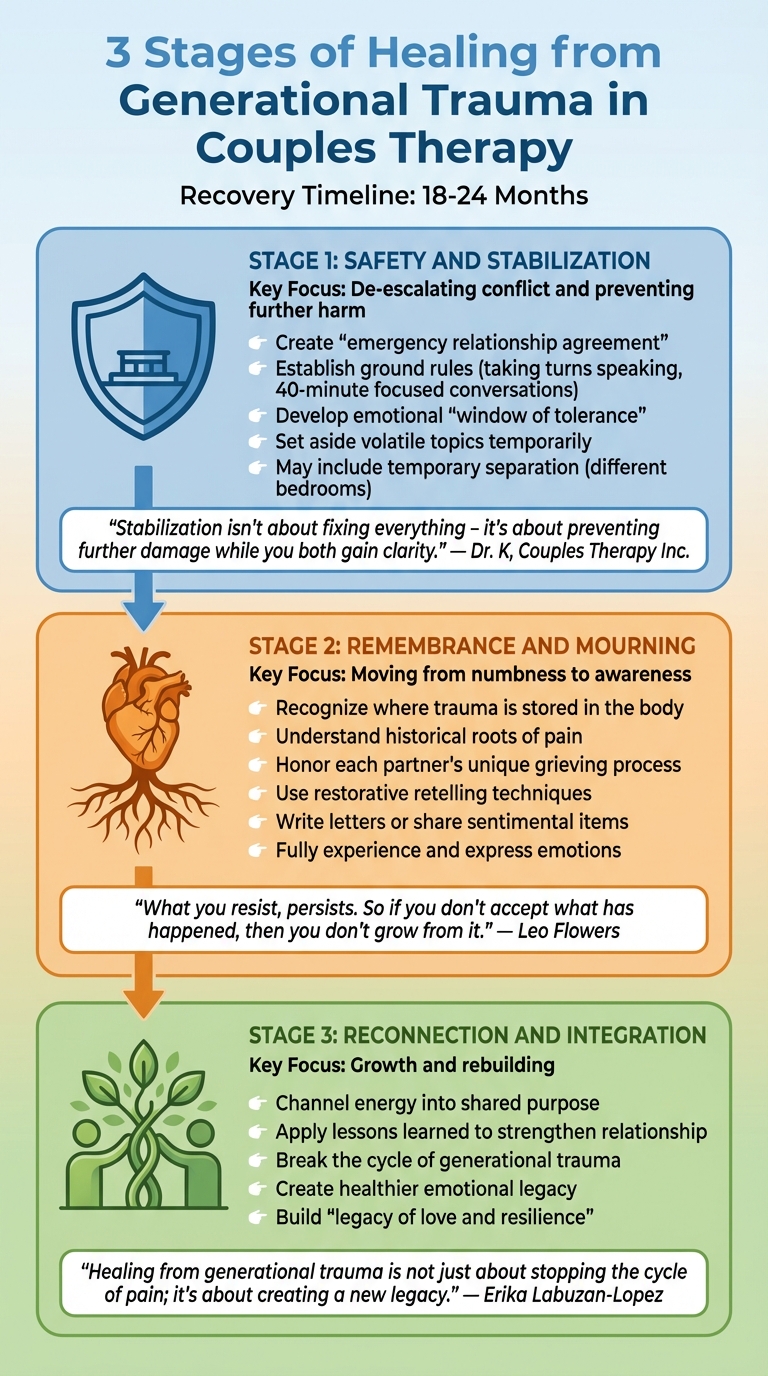
3 Stages of Healing from Generational Trauma in Couples Therapy
The process of healing from generational trauma in couples therapy often follows Judith Herman’s structured model [9]. Recovery from deep relational trauma can take anywhere from 18 to 24 months [8], so understanding these stages helps couples approach their journey with realistic expectations. This three-part framework guides partners from stabilization to integration, laying the foundation for lasting emotional growth.
Stage 1: Safety and Stabilization
The first step in healing focuses on de-escalating conflict and preventing further harm [8]. Therapists work with couples to create an "emergency relationship agreement", which includes ground rules like taking turns speaking and scheduling focused 40-minute conversations. These measures help maintain emotional balance and reduce immediate tension.
"Stabilization isn’t about fixing everything – it’s about preventing further damage while you both gain clarity." – Dr. K, Couples Therapy Inc. [8]
The goal here is to establish an emotional "window of tolerance", where both partners can regulate their feelings enough to truly hear each other without becoming overwhelmed [9]. Volatile topics are often set aside for later sessions, and in some cases, couples may temporarily separate – such as sleeping in different bedrooms – to maintain clarity and reduce stress [8]. This phase lays the groundwork for creating a safe, judgment-free environment.
Stage 2: Remembrance and Mourning
Once stability is achieved, couples begin to move from emotional numbness to deeper awareness. This stage involves recognizing where trauma is stored in the body and understanding the historical roots of their pain [7]. Partners are encouraged to honor each other’s unique ways of grieving – whether through work, rest, or other coping mechanisms – and to validate these differences.
"What you resist, persists. So if you don’t accept what has happened, then you don’t grow from it." – Leo Flowers [7]
Therapists employ techniques like restorative retelling [11] to help couples reframe their trauma narratives in a safe, controlled way. Activities such as writing letters or sharing sentimental items can also help facilitate these conversations. By fully experiencing and expressing their emotions, couples can prevent unresolved trauma from undermining trust and intimacy [7]. This stage clears the path for healing and prepares partners to reconnect on a deeper level.
Stage 3: Reconnection and Integration
The final stage focuses on growth and rebuilding. Couples channel their emotional energy into a shared purpose, using the lessons they’ve learned to strengthen their relationship [7]. The goal is not only to heal as a couple but also to break the cycle of generational trauma, creating a healthier emotional legacy for future generations.
"Healing from generational trauma is not just about stopping the cycle of pain; it’s about creating a new legacy." – Erika Labuzan-Lopez, LMFT-S, LPC-S, Center for Couples Counseling [5]
This stage is about building a "legacy of love and resilience." Having worked through their pain, couples can now apply their insights to foster lasting change, both for themselves and for those who come after them. Together, they create a new foundation rooted in understanding, trust, and hope.
sbb-itb-596b85d
Therapeutic Techniques for Trauma Recovery in Marriage Counseling
Marriage counselors use a variety of proven techniques to help couples navigate the challenges of generational trauma. These methods aim to address deep-seated emotional wounds that have been passed down through families and influence everyday interactions. By equipping partners with tools to approach their relationship differently, counselors help create a path toward healing.
Trauma-Informed Psychoeducation
A key starting point in therapy is helping couples understand the inherited nature of trauma. Counselors explain how experiences like war, forced displacement, or systemic oppression can leave emotional imprints on families, often manifesting as fear, hypervigilance, or other ingrained responses. This shift in perspective helps partners move from blaming each other to focusing on the root causes of their pain.
"It’s a collection of traumas that have been experienced by their ancestors, passed down, and it’s affecting them to this day. They are battling something bigger than them[selves]." – Ashlei Petion, Licensed Professional Counselor [10]
This newfound understanding often leads to pivotal "aha moments", where couples recognize recurring conflicts as part of long-standing family patterns. From here, attachment-based strategies can strengthen the emotional connection between partners.
Attachment-Based Therapy
Attachment-focused approaches, such as Emotionally Focused Therapy (EFT), aim to reshape the interaction patterns that perpetuate trauma within relationships [12]. By fostering a "healing relationship", couples can provide each other with the safety and support that may have been missing in their upbringing.
Therapists encourage the use of "I" statements during conflicts – shifting from accusatory phrases like "You hurt me" to reflective ones like "I felt hurt when this happened." This approach helps reduce defensiveness and allows partners to take ownership of their feelings. Over time, this enables couples to move beyond reactive behaviors, understand each other’s deeper pain, and build a stronger connection [5]. However, while emotional bonds are essential, addressing trauma’s physical effects is equally important.
Somatic Techniques for Emotional Regulation
Trauma often lives in the body, showing up as physical tension, chronic stress, or heightened alertness [14][15]. Somatic techniques help couples identify where trauma is stored physically – whether it’s tightness in the chest, a clenched jaw, or an uneasy stomach. Mindfulness practices, meditation, and movement-based activities can help partners stay present during difficult moments. Shared experiences, such as hiking, can also help break through emotional numbness caused by generational trauma [7].
Therapists teach co-regulation skills, allowing partners to calm each other through their presence [5]. Some practitioners also incorporate EMDR (Eye Movement Desensitization and Reprocessing), which has been shown to significantly reduce PTSD symptoms in as few as 6 to 12 sessions [4]. This technique helps release the physical charge associated with traumatic memories [14][15].
Another effective method is Cognitive-Behavioral Conjoint Therapy (CBCT) for PTSD, a structured 15-session program that combines psychoeducation, communication training, and cognitive restructuring. Research shows that couples who engage in CBCT experience reduced PTSD symptoms and improved relationship satisfaction – results comparable to individual trauma therapies [13].
These approaches, as practiced by Growth and Change Counseling, provide couples with a roadmap for healing, helping them rebuild trust and connection while addressing the lingering effects of generational trauma.
Writing Your Own Marriage Story with Growth and Change Counseling
Weekly therapy sessions can feel like a slow crawl when tackling deep-rooted issues in a relationship. In contrast, intensive programs offer a faster route by condensing months of therapy into a shorter, focused timeframe. This approach allows couples to dive into their challenges without long gaps between sessions, enabling more meaningful progress [18]. The program highlighted below takes this concept to the next level.
What is The Marriage Rescue Institute?
The Marriage Rescue Institute is a structured 12-week program offered by Growth and Change Counseling for couples grappling with toxic conflict, infidelity, or even separation [17]. Unlike traditional hourly sessions that often end just as deeper issues emerge, this program provides uninterrupted support, helping couples work through their struggles more effectively.
"The Marriage Rescue Institute, our 12 week marriage program is in the habit of putting marriages in dire circumstances back together!" – John Kane, Founder, Growth and Change Counseling [2]
This program doesn’t just focus on surface-level problems. It digs deep into unresolved anger, lingering trauma, and harmful belief systems that can derail relationships [2]. Using evidence-based methods like EMDR, somatic therapy, and attachment-focused techniques, therapists help couples develop the skills needed to rebuild trust and intimacy. Homework assignments reinforce the progress made during sessions, ensuring that the work continues beyond the therapy room [2].
How Intensive Programs Support Trauma Healing
Studies show that couples often wait an average of 4 to 7 years before seeking help for deeply entrenched issues [19]. Intensive programs, unlike standard 45-minute sessions, can deliver the equivalent of six months of therapy in a condensed timeframe. This format allows therapists to observe and guide couples in real time, offering targeted solutions [18].
Research on models like the Safe Haven Model, which incorporates Emotionally Focused Therapy (EFT), reveals impressive outcomes: 75% to 84% of couples experience positive change, with a 90% rate of significant improvement [18]. What’s even more encouraging is that many couples continue to thrive years after completing EFT-based therapy [18]. By addressing the defenses partners develop as a response to trauma, these programs help restore emotional intimacy and break generational cycles of pain [2].
For couples dealing with generational trauma, the continuous nature of intensive therapy allows them to process their pain without the interruption of sporadic sessions. This approach fosters genuine transformation, moving beyond crisis management to create lasting change [19].
Telehealth and In-Person Options for Couples
Growth and Change Counseling ensures accessibility by offering both in-person and telehealth services. In-person sessions are available in Campbell, San Jose, Los Angeles, and Roseville, CA, while telehealth options extend their reach across the entire state. This flexibility means couples can access specialized trauma recovery without the hassle of travel.
"When we serve clients through online video and phone therapy, we use HIPAA technology that protects your privacy. It provides flexibility and ease to meet your needs from the comfort of your home or office." – Growth and Change Counseling [3]
All practitioners are trained in a consistent therapeutic approach, ensuring high-quality care whether sessions are conducted face-to-face or virtually [3]. Sessions are priced at $165 for 45 minutes, with sliding scale options starting at $100 for those with financial constraints. A free initial consultation helps couples determine if this approach aligns with their needs [3].
For those who prefer in-person therapy, the offices in Campbell and San Jose offer a welcoming environment designed for deep, focused work. Telehealth, on the other hand, provides a private and convenient alternative for couples who value the comfort of their own space. Many couples find that combining in-person and virtual sessions creates an ideal balance for their healing journey. The program’s focus remains on addressing core issues, equipping couples with practical tools, and fostering progress without creating long-term dependency on therapy [3].
Breaking the Cycle of Generational Trauma Through Marriage Counseling
Generational trauma doesn’t have to define your marriage. Through counseling, couples can confront inherited pain and create a foundation of emotional safety. This process involves developing relational awareness – learning to identify when past wounds influence present behaviors and reactions [1].
"Healing from generational trauma is not just about stopping the cycle of pain; it’s about creating a new legacy." – Erika Labuzan-Lopez, Owner, Center for Couples Counseling [5]
The journey toward healing requires openness and consistent effort. Therapy equips couples with tools to replace destructive habits – like codependency or frequent conflict – with healthier communication and emotional management strategies.
These therapeutic approaches highlight how intentional effort can reshape relationship dynamics and foster lasting healing.
Key Takeaways from Trauma Recovery in Marriage Counseling
Marriage counseling helps couples uncover inherited patterns by examining family histories and understanding how unresolved wounds from previous generations affect current behaviors. Therapists often use tools like genograms to map family dynamics, making hidden patterns more visible [20][10]. Narrative therapy further empowers partners to move from a place of victimhood to one of empowerment, giving them the chance to rewrite their family story.
Creating emotional safety is crucial. Trauma-informed approaches like EMDR, somatic therapy, and attachment-based techniques help couples process deeply rooted pain stored in their bodies and nervous systems [16][20]. The goal goes beyond managing symptoms – it’s about achieving meaningful transformation that breaks the cycle for future generations.
With these insights, couples are better prepared to take the first steps toward significant change.
Next Steps for Couples Ready to Heal
If generational trauma is straining your relationship, don’t wait to seek support. Growth and Change Counseling offers trauma-informed therapy, available in-person in Campbell, San Jose, Los Angeles, and Roseville, or through secure telehealth services across California [3].
For couples facing urgent challenges, The Marriage Rescue Institute provides a focused 12-week program designed to address core issues rather than surface-level symptoms. Confronting generational trauma takes courage, but it can lead to a healthier partnership and a brighter legacy for your family.
FAQs
How does generational trauma impact communication in a marriage?
Generational trauma has a way of shaping how couples interact, often without them even realizing it. Past family experiences can create unconscious patterns that influence communication. For instance, someone might overreact to what feels like criticism, escalate small disagreements into major conflicts, or shut down and withdraw entirely during tense moments. These reactions can twist the meaning of everyday conversations, making neutral comments seem like personal attacks and triggering defensive or avoidant behaviors.
If these patterns go unaddressed, they can lead to ongoing relationship struggles. Couples may experience heightened anxiety, a lack of trust, or emotional distance. Over time, these issues often show up as repeated communication breakdowns, leaving partners stuck in cycles of blame, frustration, or misunderstanding. Therapy can play a crucial role in breaking this cycle by helping couples identify their triggers, shift away from reactive behaviors, and practice compassionate listening. This process lays the groundwork for healthier, more meaningful connections.
Growth and Change Counseling offers a 12-week couples coaching program through The Marriage Rescue Institute, specifically designed to address these trauma-driven communication challenges. Using trauma-informed approaches and guided dialogue exercises, the program helps couples move beyond inherited patterns and develop more intentional, supportive ways of communicating in their marriage.
What are the stages of healing in couples therapy for addressing generational trauma?
Healing generational trauma through couples therapy often unfolds in three main stages, each designed to guide partners toward deeper connection and understanding.
The first stage, Safety and Stabilization, is all about creating a foundation of trust and emotional security. In this phase, couples work to establish a safe space where open communication feels possible without the fear of being retraumatized. It’s also a time to learn coping strategies and build the trust necessary to navigate difficult emotions together.
Next comes the Processing and Understanding phase. Here, couples delve into how generational patterns and past experiences have shaped their relationship. Together, they identify inherited dynamics and reflect on how these influences have impacted their connection. This stage often involves grieving past wounds as a step toward healing.
The final stage, Integration and Growth, focuses on moving forward with a renewed sense of partnership. Couples work on rebuilding trust, redefining their relationship, and finding healthier ways to connect. This stage emphasizes creating a shared vision for the future, breaking free from generational cycles, and building a resilient, fulfilling bond.
What intensive therapy programs can help couples address deep-rooted challenges?
Couples dealing with serious relationship struggles may find intensive therapy programs to be a lifeline. One example is the 12-week directive Marriage Rescue Institute offered by Growth and Change Counseling. This program is specifically structured to help couples in crisis rebuild trust, enhance communication, and work toward restoring their relationship.
These sessions are highly focused and solution-driven, tackling deep-seated issues head-on. They aim to equip couples with practical tools and strategies that encourage meaningful and lasting improvements. Beyond this program, Growth and Change Counseling also provides individual and family therapy options, ensuring support is tailored to fit the unique circumstances of every client.
Related Blog Posts
- Attachment Styles in Couples Counseling
- Relationship Trauma: Root Causes and Solutions
- Trauma and Depression in Marriage: Key Connections
- Trauma Recovery for Couples: A Path to Healing
