Managing conflict during addiction recovery is challenging but essential for rebuilding relationships. Addiction often leaves behind broken trust, unresolved issues, and emotional strain. Recovery brings these problems to the surface, requiring time, effort, and communication to address them effectively.
Key Points:
- Conflict Triggers: Shifting roles, unresolved emotional patterns, and external stressors can spark disagreements.
- Recognizing Patterns: Look for recurring arguments and avoid destructive habits like criticism or defensiveness.
- Communication Skills: Use "I" statements, active listening, and set clear boundaries to navigate difficult conversations.
- Rebuilding Trust: Focus on consistent actions, accountability, and transparency to repair relationships over time.
- Professional Help: Therapy can address deeper issues and provide tools for healthier communication and conflict resolution.
Quick Tips:
- Identify what sparks conflict and reflect on recurring patterns.
- Practice emotional awareness to prevent impulsive reactions.
- Use structured communication methods, like the Four-Step Model.
- Take breaks during heated moments to avoid escalation.
- Seek therapy when conflicts feel unmanageable.
Recovery is about more than personal growth – it’s about creating healthier relationships through better communication and trust. Addressing conflicts constructively can strengthen bonds and support long-term sobriety.
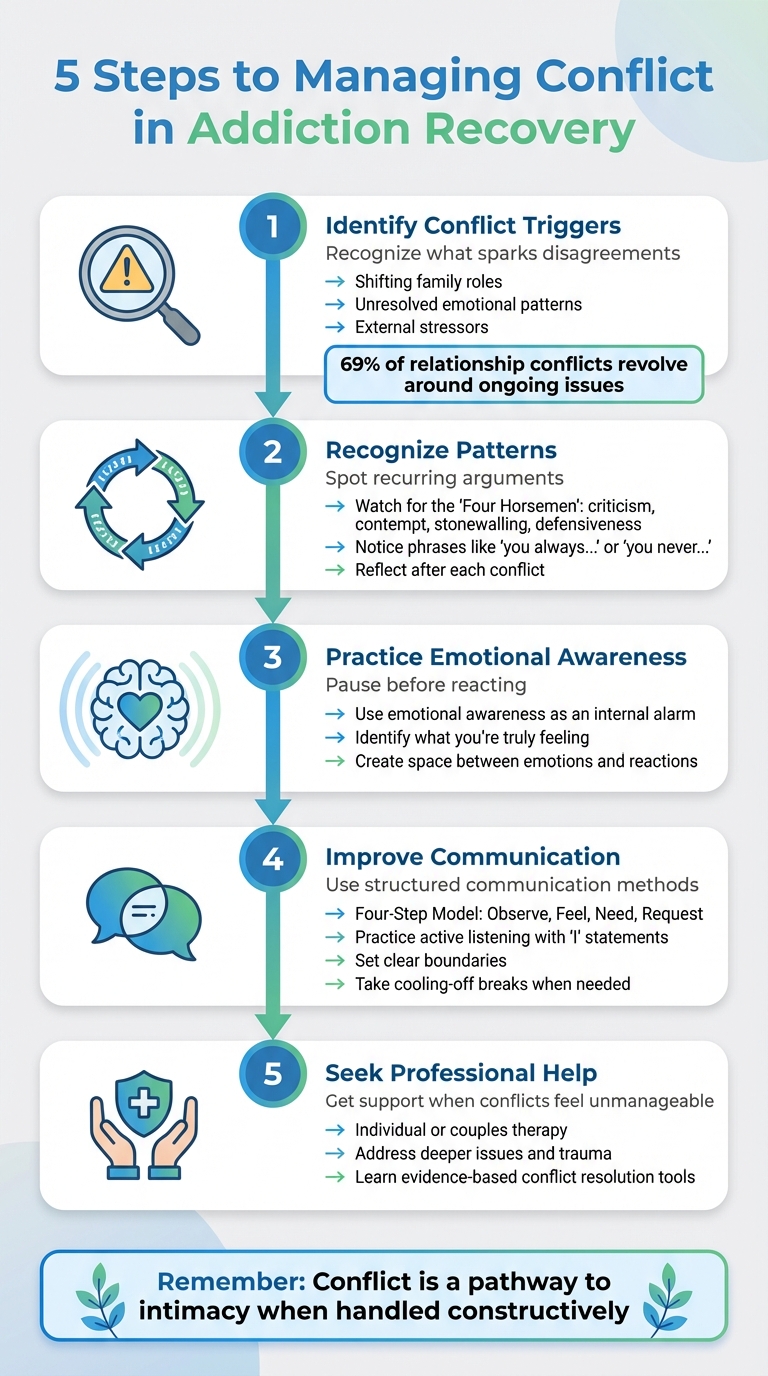
5-Step Guide to Managing Conflict During Addiction Recovery
Recognizing and Managing Conflict Triggers
What Triggers Conflict During Recovery
Conflict during recovery often stems from shifting family roles. For instance, when a partner takes over responsibilities like managing finances or parenting, it can disrupt trust and create tension around control and role adjustments [2]. These changes can unsettle the balance within relationships, leading to friction.
Dr. John Gottman’s research reveals that 69% of relationship conflicts revolve around ongoing issues – problems rooted in personality differences or lifestyle clashes [2]. These aren’t quick fixes; they require continuous, open communication. Common sources of tension include disagreements about money, parenting styles, and household responsibilities. These issues can become more pronounced if one partner handled these areas alone during the period of active addiction [2].
Early recovery also brings a flood of emotions. For someone who previously relied on substances to numb their feelings, the sudden intensity of emotions like anger, sadness, or frustration can feel overwhelming. Without healthy coping mechanisms, these emotions can lead to conflict. Additionally, external stressors such as social events with alcohol, excessive screen time, or sensory overload can heighten stress, making conflicts more likely [6][4]. Recognizing these triggers is the first step toward understanding and addressing recurring issues.
How to Spot Recurring Conflict Patterns
Once you identify what sparks conflict, the next step is to look for patterns. Pay attention to repeated arguments that seem to go in circles – these often point to deeper, unmet needs [2].
Be especially mindful of behaviors described as the "Four Horsemen": criticism, contempt, stonewalling, and defensiveness. These destructive habits can take root during active addiction and linger into recovery [2]. For example, phrases like "you always…" or "you never…" often signal criticism and defensiveness, which can trap couples in unproductive cycles.
Candice Rasa, LCSW, Clinical Director of the Beach House Center for Recovery, emphasizes that misattributing a diagnosable condition to a personality flaw can hinder the healing process [7].
After each conflict, take time to reflect on what triggered it and whether similar issues have surfaced before [8]. This self-awareness helps break the cycle of recurring arguments.
Why Emotional Awareness Matters
Recognizing conflict patterns is just the beginning – emotional awareness plays a critical role in preventing minor disagreements from spiraling out of control. Think of emotional awareness as an internal alarm system, giving you the chance to pause before reacting impulsively [12]. This pause can mean the difference between saying something hurtful and addressing the issue calmly and constructively.
Cynthia Moreno Tuohy, Executive Consultant at NAADAC, explains that resolving conflict "requires a different mindset – one focused on understanding rather than winning. Instead of reacting impulsively, it means slowing down, listening, and approaching the conversation with curiosity instead of defensiveness" [12].
This approach not only helps manage conflict but also safeguards your recovery. Emotional stress and unresolved tension are common relapse triggers. Learning to process emotions without turning to substances is a vital skill [11]. When you feel tension rising, take a moment to identify what you’re truly feeling and what you need [10][12]. This small but powerful habit creates space between your emotions and your reactions, paving the way for clearer, more compassionate communication.
Improving Communication Skills
Why Communication Is Critical in Recovery
Addiction has a way of reshaping communication, often leading to defensiveness, dishonesty, and emotional withdrawal – habits that can linger even during recovery [14]. These patterns, which are often tied to earlier conflict triggers, highlight the importance of adopting new communication strategies. Without addressing these issues, even minor misunderstandings can escalate into major conflicts, jeopardizing both relationships and the recovery process.
In recovery, effective communication means finding a balance between expressing concerns and accepting feedback without falling into shame or defensiveness [14]. It’s not about avoiding conflict altogether. In fact, John Mark Kane, LMFT at Growth and Change Counseling, emphasizes:
Conflict is a pathway to intimacy. If there’s no conflict in a relationship, at least one person isn’t being genuine [1].
With this perspective, communication becomes a cornerstone for rebuilding trust and connection. The aim is to handle disagreements in ways that strengthen, rather than harm, the relationship.
Communication Techniques That Work
One proven method is the Four-Step Communication Model: start with an objective observation, share your feelings, explain the underlying need, and request a specific change. For instance, instead of blaming, you could say, "I feel worried when the dishes are left unwashed" [14].
Practicing active listening is also key. This means maintaining eye contact, resisting the urge to interrupt, and reflecting back what you’ve heard using "I" statements. The Hazelden Betty Ford Foundation explains:
Beginning a sentence with ‘you’ flags the listener that he or she is about to be the center of attention… which puts the person into fight-or-flight mode [15].
Another essential tool is setting clear boundaries. Healthy boundaries focus on your own actions rather than trying to control your partner’s behavior. For example, you might say, "If you come home intoxicated, I will sleep in the guest room" [14]. This approach respects both individuals’ autonomy while maintaining necessary limits.
Even with these strategies, conversations can sometimes become heated. Knowing how to calm things down is just as important as knowing how to communicate effectively.
How to De-escalate Heated Conversations
Starting difficult conversations with softened startups can prevent defensiveness. Instead of jumping in with accusations, you might say, "I’d like to talk about something, but I want to make sure we’re both calm first" [4].
If emotions start to take over, cooling-off breaks can help. Use agreed-upon signals – whether verbal or non-verbal – to pause the discussion before it spirals into a full-blown argument. Techniques like TIPP (a method to regulate emotions) can also help calm your system [4].
The PIUS approach brings these strategies together: keep communication Positive, lead with "I" statements, show Understanding, and Share responsibility [15]. This framework emphasizes that both partners contribute to the dynamic and both play a role in resolving conflicts. Building healthier communication patterns takes time, but these tools can make the process more manageable.
Rebuilding Trust After Addiction
How to Rebuild Trust
Rebuilding trust after addiction is a long journey that requires consistent effort and complete transparency over time [16][18]. For someone in recovery, this means accepting full accountability for their past actions and showing genuine remorse – not just offering apologies [16][17].
Being radically honest and open is essential to counteract the secrecy that often comes with addiction. Share your daily routines and recovery struggles openly, and avoid becoming defensive. As Ellen Golding, MFT at Clearview Treatment, puts it:
Trust is gained through the mantra "actions speak louder than words" and by apologizing to those you have physically or emotionally hurt [18].
Actions always carry more weight than promises. If you’re part of a 12-step program, Step 9 offers a clear guide for making amends – whether that means repaying debts, covering legal expenses, or fixing property damaged during addiction [5][16]. Stability is also key. Holding down a job and actively working on relapse prevention can help your partner feel more secure [5].
Consistency is what builds reliability. Follow through on every commitment, no matter how small – whether it’s being on time, completing daily tasks, or simply showing up as promised [16][18]. At the same time, respect your partner’s need for personal space and emotional boundaries, which are often vital for their own healing process [16].
By proving trustworthiness through consistent actions, you lay the foundation for the next step: embracing forgiveness.
The Role of Forgiveness in Recovery
Forgiveness is a two-way street. Both self-forgiveness and the ability to forgive others make it easier to rebuild healthy relationships [5]. Marisa Crane, a writer for Recovery.com, explains:
You won’t be able to move on and build a positive and healthy relationship if you continue to carry around guilt about your past behaviors [5].
For partners, forgiveness doesn’t mean erasing the pain or excusing harmful actions. Kelly E. Green, PhD, a licensed clinical psychologist, highlights the emotional toll addiction takes on loved ones:
When you love someone with [an] addiction, you’re on a constant rollercoaster of hope and disappointment. You may feel betrayed or abandoned, which is particularly devastating to intimate or romantic relationships [17].
Research from 2007 revealed that women with partners struggling with substance use disorders were far more likely to experience mood and anxiety disorders, as well as victimization, including domestic violence [17]. Acknowledging this pain without dismissing it is crucial for both individuals to move forward.
Forgiveness also involves a shift in mindset – from focusing on being "right" to prioritizing understanding and connection. As Positive Recovery MD suggests, when conflict arises, ask yourself: "Do I want to be right, or do I want to be happy?" [12].
This mutual act of forgiveness creates the groundwork for healthier relationship dynamics moving forward.
Creating Healthy Relationship Patterns
Once trust and forgiveness are in place, the next step is to establish new, healthier relationship patterns. This involves addressing root issues rather than just avoiding conflict. Ignoring unresolved problems can lead to feelings of isolation, which can jeopardize both recovery and the relationship [1]. A 2019 study highlighted a cycle where substance use leads to poor relationship quality and increased conflict, which in turn can fuel further substance use [17].
Breaking this cycle requires intentional effort. Holding regular check-ins to discuss both relationship and recovery progress can help. These conversations should focus on using effective communication techniques to ensure they are productive [4][5][13].
Developing relational intelligence allows couples to move beyond the "survival mode" that often defines active addiction, fostering mutual respect and understanding instead [1]. Brianna Martin, AMFT at Growth and Change Counseling, captures this idea well:
What people miss about transformation is that it’s not about becoming someone else. It’s about becoming yourself more fully [1].
Sometimes, professional help is necessary to navigate this transition. Couples or family therapy can help mediate conflicts and guide both partners as they adjust to life in recovery [5]. Additionally, Medication-Assisted Treatment (MAT) can play a role in stabilizing the individual in recovery, reducing cravings and erratic behaviors that often lead to broken trust [16].
sbb-itb-596b85d
Getting Professional Help for Conflict Management
How Therapy Helps with Conflict
While improving communication is crucial, professional support plays a key role in addressing deeper, underlying issues. Therapy helps tackle root causes like unresolved anger, past trauma, and unhealthy patterns that can contribute to both addiction and relationship struggles [1]. As Jamula Taylor, LMFT at Growth and Change Counseling, puts it:
We understand that our mental health conditions are related to the breakdown in our relationships and that we can’t simply make depression, anxiety, or other problems go away by simply treating the symptoms.
Therapy provides a safe and non-judgmental environment where partners can openly share and face difficult truths. This setting is essential for building relational skills such as active listening, empathy, and using "I" statements to express needs without assigning blame. By addressing emotional stress and interpersonal challenges, therapy becomes a key component in supporting long-term sobriety. The growing demand for these services is reflected in recent helpline statistics [9].
The Marriage Rescue Institute‘s Approach
For couples dealing with serious relationship challenges – even those where one partner has already moved out – Growth and Change Counseling offers The Marriage Rescue Institute. This structured, 12-week intensive program is specifically designed to help marriages in crisis [1]. John Kane, LMFT and founder, shares:
The Marriage Rescue Institute, our 12-week marriage program is in the habit of putting marriages in dire circumstances back together!
The program uses a solutions-focused approach, combining evidence-based methods like Emotion Focused Therapy (EFT) with practical tools and strategies. Instead of prolonged therapy sessions, the program emphasizes quick results through relational homework, helping couples apply new skills in their daily lives. The Institute specializes in addressing complex dynamics, including neurodiverse relationships, infidelity, addiction, and recovery from abuse.
Services Available at Growth and Change Counseling
Growth and Change Counseling offers a variety of services tailored to meet individual and family needs. Alongside The Marriage Rescue Institute, the practice provides individual therapy, family therapy, parent coaching, and specialized treatments for anxiety, depression, addiction, trauma, and support for neurodiverse relationships [1]. Services are available in Campbell, San Jose, Los Angeles, and Roseville, California, as well as through telehealth across the state [19].
Session fees range from $100 (via sliding scale) to $200 for a 45-minute session. They accept in-network insurance options such as Anthem Blue Cross, Aetna, United Health Care, Oxford, and Oscar Health, and offer superbills for out-of-network reimbursement. Arione Capolupo, LMFT at Growth and Change Counseling, explains their philosophy:
We don’t believe in endless therapy. Our goal is to get you in and out as quickly as reasonably can be done.
These targeted services provide couples with the tools they need to rebuild trust and navigate the challenges of recovery more effectively.
Conclusion
Key Takeaways
Navigating conflict during addiction recovery involves focusing on three main areas. First, identify your triggers and understand the difference between solvable issues (specific situations) and ongoing challenges (personality or lifestyle differences). Many conflicts stem from patterns that repeat over time. The aim isn’t to make these conflicts disappear but to create an open dialogue that keeps emotional distance at bay.
Second, work on rebuilding trust through consistent actions – keeping promises, being punctual, and demonstrating reliability over time[5][13]. Pair these efforts with practical tools like clear communication and agreed-upon pauses to cool down during heated moments[2][13][4]. These strategies help reduce tension and encourage a deeper connection.
Third, don’t hesitate to seek professional support. Therapies designed for couples, such as Behavioral Couples Therapy, show better success rates for maintaining long-term sobriety compared to individual treatments[3]. Growth and Change Counseling offers tailored services, including The Marriage Rescue Institute’s 12-week program for couples facing significant challenges.
Moving Forward in Recovery
These strategies provide a strong starting point for meaningful progress. Recovery is not just about personal transformation – it’s also about nurturing healthier relationships through clear boundaries and intentional communication. As John Kane, LMFT at Growth and Change Counseling, wisely notes:
Conflict is a pathway to intimacy. If there’s no conflict in a relationship, at least one person isn’t being genuine.
The struggles you face today can become opportunities to strengthen your relationships when approached with the right mindset and tools. Embrace active listening, set firm boundaries, and remember that your response to adversity is what drives growth. Whether you’re navigating recovery on your own or with professional help, every step toward better communication paves the way for lasting change.
E76: Conflict Resolution: Improving Communication Skills in Recovery
Moving Forward with Support from Growth and Change Counseling
How can I recognize what triggers conflict during addiction recovery?
Understanding what sparks conflict during addiction recovery is all about noticing the patterns. Stressors like misunderstandings, unmet expectations, or intense emotions such as anger or frustration often play a big role. Pay close attention to the people, environments, or situations that seem to create tension, as well as the emotions that bubble up just before a conflict starts.
Spotting these triggers gives you the chance to tackle issues early and focus on building healthier ways to communicate and resolve problems.
What are effective ways to communicate and resolve conflicts during addiction recovery?
Clear and respectful communication plays a vital role in navigating conflicts during addiction recovery. Techniques like nonviolent communication (NVC) can guide partners in expressing their feelings and needs without assigning blame. For instance, instead of making judgments, focus on observations and requests. Using ‘I-statements’ – such as "I feel hurt when…" – can also help keep discussions centered on personal experiences, reducing the chances of defensiveness.
Another effective approach is reframing. This involves transforming critical remarks like "You never listen" into more neutral expressions, such as "I feel unheard and would like to discuss this." Setting clear communication boundaries – such as committing to honesty and maintaining a respectful tone – can further ensure that conversations remain healthy and avoid slipping into unhealthy or codependent dynamics.
When communication feels especially difficult, seeking professional support can be incredibly beneficial. Growth and Change Counseling offers couples-focused coaching and therapy that integrates these strategies, helping partners rebuild trust, navigate conflicts, and support each other’s recovery journey.
Why is rebuilding trust important during addiction recovery?
Rebuilding trust plays a crucial role in addiction recovery, as it restores emotional safety and stability within relationships. Trust paves the way for both the individual in recovery and their loved ones to begin healing, encouraging open communication and fostering mutual support.
When trust is reestablished, it helps ease the burden of guilt and shame for the person in recovery. At the same time, it offers their loved ones reassurance and confidence in the recovery journey. This renewed trust becomes the cornerstone of a supportive environment, essential for maintaining sobriety and nurturing healthier relationships.
Related Blog Posts
- Addiction Recovery and Marriage Communication
- Managing Anger During Addiction Recovery in Marriage
- Top Strategies for Couples in Recovery
- Study: Conflict Resolution Improves Recovery Outcomes
