Video game addiction can strain relationships, leaving one partner feeling ignored and the other overwhelmed. Around 75% of U.S. households include at least one gamer, and when gaming becomes excessive, it can impact emotional intimacy, trust, and daily routines. This guide offers practical ways for couples to tackle gaming addiction as a team, focusing on communication, setting boundaries, and seeking professional help when needed.
Key Takeaways:
- Signs of Addiction: Loss of control, withdrawal symptoms, neglect of responsibilities, and gaming secrecy.
- Impact on Relationships: Reduced intimacy, mismatched schedules, and increased arguments.
- Steps to Address the Issue:
- Recognize the problem and its effects on both partners.
- Use respectful communication techniques, like "I" statements.
- Set clear boundaries, such as limiting gaming time or creating screen-free zones.
- Replace gaming with shared activities to strengthen your bond.
- When to Seek Help: If self-help fails, consider couples counseling or therapy to rebuild trust and address deeper issues.
By working together, couples can rebuild their connection and create a healthier balance in their relationship.
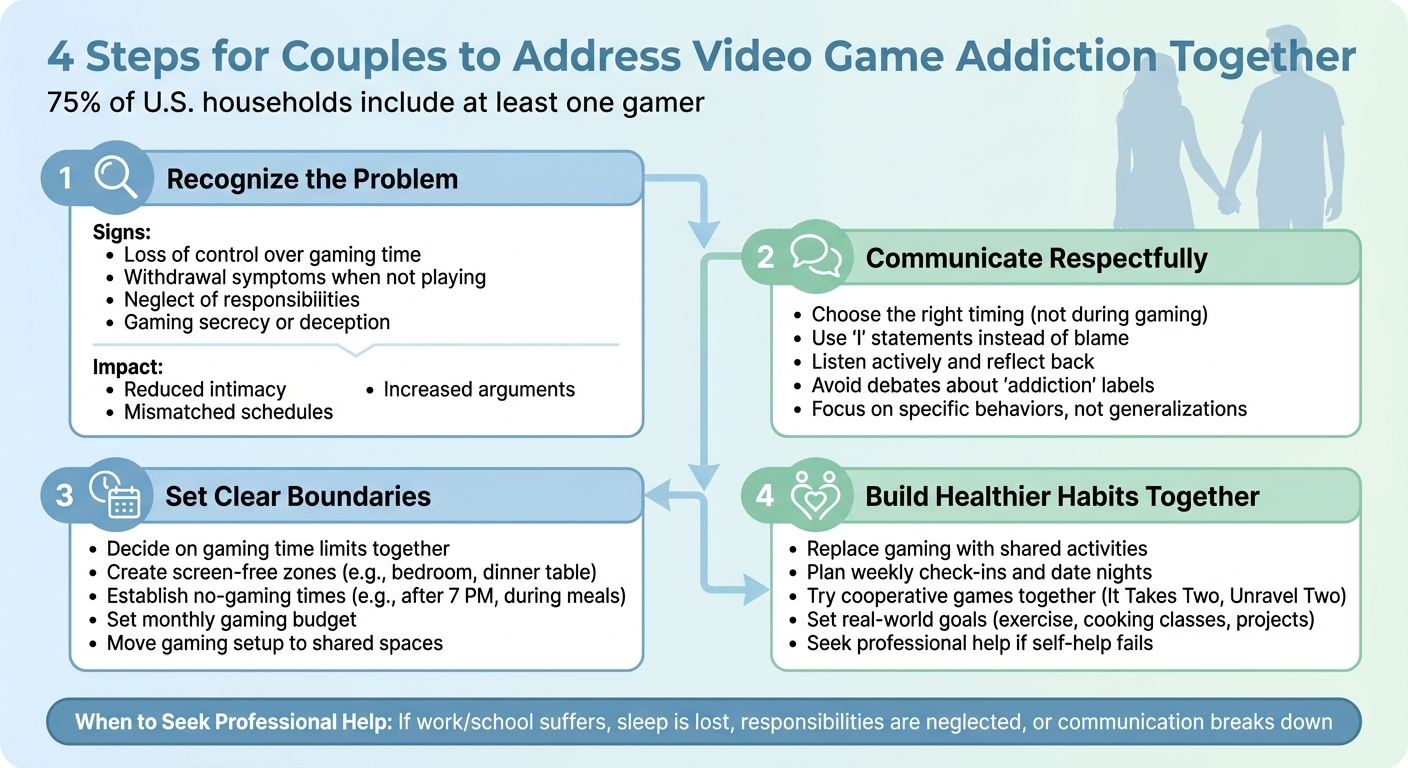
4-Step Guide for Couples Addressing Video Game Addiction Together
How Video Games Ruined My Relationship | Dr. David Hawkins
Recognizing How Gaming Affects Your Relationship
Before tackling gaming addiction as a couple, it’s important to first determine whether gaming is truly causing problems. This isn’t about criticizing your partner’s hobby – it’s about identifying when gaming shifts from a fun pastime to something that harms your relationship. Below, we’ll explore some signs that can help you figure out if gaming has crossed that line.
Signs Your Partner Has a Gaming Problem
Look for behaviors that go beyond simply enjoying a game. If your partner becomes irritable or restless when they can’t play, that’s a warning sign. They might also seem preoccupied with gaming even when they’re not actively playing, or they may start prioritizing gaming over spending quality time with you. Another clue is tolerance – needing to spend more and more time gaming to feel the same level of satisfaction.
Physical neglect can also creep in. This might include skipping meals, neglecting hygiene, or losing sleep because of late-night gaming sessions. Deception is another red flag – if they’re hiding how much time or money they’re spending on gaming, it could indicate they’re aware of the problem but feel unable to stop. As Ryan Hansen, a psychologist at Reset Button Consulting, explains:
"If this area of your life is eating into other areas of your life, that’s when you start to have a problem."
Warning Signs in Your Relationship
Gaming addiction doesn’t just impact the individual – it can create noticeable shifts in your relationship. You might feel like you’re being pushed aside, with emotional and physical intimacy taking a back seat. Some couples even stop going to bed at the same time because one partner stays up gaming into the early hours.
Arguments about gaming can turn into a cycle of blame and shame. The gaming partner might retreat further into their hobby to escape feelings of guilt, while the non-gaming partner may feel burdened, taking on all the household responsibilities or parenting duties alone. Social withdrawal is another sign – your partner might skip group outings they used to enjoy or insist on guarding their gaming time at all costs.
Recognizing these patterns is the first step toward having an open and productive conversation about gaming’s role in your relationship.
Questions for Both Partners to Consider
Taking an honest look at your own behaviors and feelings can help clarify whether gaming is a genuine issue or simply a difference in preferences.
Questions for the gaming partner:
- Is my work or school performance suffering because of gaming?
- Am I losing sleep due to late-night gaming sessions?
- Have I stopped participating in hobbies or activities I used to enjoy?
- Does gaming interfere with my responsibilities as a parent or partner?
- Am I using games to escape stress or avoid conflicts at home?
Questions for the non-gaming partner:
- Do I feel like I’m competing with a console for my partner’s attention?
- Am I left handling all the household or parenting duties on my own?
- Have I avoided bringing up my concerns to prevent arguments?
- Do I feel lonely even when my partner is sitting right next to me?
Reflection for both partners:
- Can we talk about gaming without it turning into a fight?
- Have we set boundaries for device-free times or zones in our home?
- Is gaming something that brings us closer, or does it feel like it’s creating distance?
These questions can help both of you move beyond defensiveness and focus on understanding what’s really happening in your relationship. By addressing the issue together, you can start finding solutions that work for both partners.
How to Talk About Gaming Without Fighting
Setting Up the Conversation
Timing matters. Don’t try to have this conversation while your partner is in the middle of gaming or right after a long session. Long hours of gaming can leave them in what’s often called a "gaming hangover" – a state where emotional processing is dulled, making meaningful dialogue more challenging [2]. Instead, pick a moment when you’re both calm and unhurried.
Start with something simple, like asking, "Is this a good time to talk for 20 minutes?" [8]. This approach helps ease any tension and prevents your partner from feeling blindsided. When you do bring up concerns, focus on specific behaviors – like playing through dinner or staying up until 3 AM – rather than making sweeping statements about gaming in general [6].
Once the conversation is framed respectfully, the next step is to use communication techniques that promote understanding and reduce defensiveness.
Communication Techniques That Work
Begin by showing your partner they matter to you. Saying something like, "You’re really important to me" or "I enjoy spending time with you" can help set a positive and open tone [3]. Follow this with "I" statements to express your feelings without placing blame. For example, instead of saying, "You game too much", try, "I feel lonely when you spend so much time gaming" [6].
Equally important is listening actively. Make an effort to reflect back what your partner says to ensure you’re on the same page. If they share, "I need gaming to unwind", you could respond, "So gaming helps you relax after work – is that right?" This technique helps clear up any misunderstandings before they escalate [8]. It’s worth noting that gaming is a big part of life for many people – about 75% of American households include at least one gamer, and the industry brings in more revenue than both movies and music combined [5]. For some, gaming is more than just a hobby; it’s a way to connect socially and unwind.
Communication Mistakes to Avoid
One major pitfall is getting into debates over whether gaming qualifies as an "addiction." Dr. Stephen Snyder advises against this approach:
Don’t get into an argument with your partner about whether their gaming habit is an addiction or not. Instead, stick to the facts as you’ve experienced them – your feeling of abandonment; your discouragement about the relationship; your lack of quality time together. [5]
Steer clear of generalizations like "you always game", which can come across as accusatory and derail the conversation [6]. Avoid nagging, shaming, or issuing ultimatums, as these tactics can push your partner further into gaming as a way to escape negative emotions [3]. Instead, come prepared with specific ideas for activities you can enjoy together. Suggest things like cooking a meal, going for a walk, or even playing a cooperative game like It Takes Two [6][3].
Setting Gaming Boundaries Together
Deciding What You Want Your Life to Look Like
Before diving into rules, take a moment to picture your ideal day-to-day life. Think about how much time you’d like to dedicate to work, meals, exercise, sleep, and yes – gaming. Psychologist Ryan Hansen highlights the importance of balance, saying:
It’s really hard to imagine when you’re playing 20 or 30 hours a week that that isn’t impacting some area of your life [3].
Talk with your partner about what balance looks like for both of you. Ask questions like, "How many evenings should we spend without screens?" or "What activities help us feel connected as a couple?" These conversations will shape the boundaries you decide on together.
Creating Gaming Rules and Schedules
Once you have a shared vision, collaborate to set boundaries that work for both of you. Avoid framing these as restrictions on one partner; instead, make them mutual agreements [8]. For example, you could decide on no gaming after 7:00 PM or during meals [2]. Moving the gaming setup to a shared space can also encourage more interaction [2]. Establish limits on gaming time, plan screen-free periods, and agree on a monthly budget for gaming expenses [2].
Building Healthier Habits Together
Cutting back on gaming opens up space for activities that provide similar rewards. Replace virtual achievements with real-world goals – like training for a 5K, tackling a home project, or signing up for a cooking class [3][6]. Lily Lu, LMFT, emphasizes the benefits of shared activities:
With joint activities, the couple will feel more togetherness [3].
These shared experiences can strengthen your bond and help with recovery [3]. Make it a habit to check in weekly to discuss plans, schedule date nights, and reassess boundaries [3]. Alternate choosing weekend activities to ensure both partners feel included [6]. If you still want to game together, try cooperative titles like It Takes Two or Unravel Two, which encourage teamwork and connection [6].
Remember, change takes time. Joshua Garth, AMFT, points out:
Removing all games devices will not show improvement in the relationship right away. You will probably see an increase in irritability, anger, and even hostility… as their brain expects fast-paced action [2].
Patience and understanding will go a long way as you navigate this process together.
sbb-itb-596b85d
Supporting Each Other Through Recovery
How the Non-Gaming Partner Can Help
Once the initial communication groundwork is laid, the next step is for the non-gaming partner to focus on offering support rather than control. Avoid micromanaging your partner’s behavior; instead, aim to create an environment of understanding. Start tough conversations by reinforcing the value of your relationship. Simple affirmations like "You’re important to me" or "I really enjoy spending time with you" can set a positive tone before addressing concerns [3].
When discussing your feelings, use "I" statements to express yourself without assigning blame. For example, saying "I feel lonely when we don’t spend time together" is more constructive and less confrontational. Equally important is listening actively – let your partner share their perspective without interruptions [3][6]. This approach fosters a sense of safety and mutual respect.
Joshua Garth, AMFT, offers this reminder:
If your partner is prioritizing video games over you, this just means their addiction is driving their action; not them. Do not take this personally! [2]
Rebuilding trust is another key element. Respect your partner’s privacy and avoid the temptation to monitor their every move. Offering space and showing faith in their ability to change can go a long way [10].
While support is crucial, the gaming partner also has a responsibility to take meaningful steps toward recovery.
Steps for the Gaming Partner to Take
The path to recovery is a two-way street, and the gaming partner plays a critical role. It starts with a candid self-assessment – acknowledging the time and money spent on gaming – and being open about gaming habits [2]. Transparency is essential; sharing details about gaming routines demonstrates accountability [2][3].
Using "I" statements can also help when discussing challenges. For instance, saying, "I feel the urge to game when I’m stressed at work" shows ownership of emotions without sounding defensive [3][6]. Additionally, gaming in shared spaces rather than isolating yourself can encourage interaction and show your commitment to connection over escapism [2].
Consistency is key. Keeping promises about agreed-upon boundaries builds trust over time. Honoring your word helps repair the damage caused by broken commitments [10].
Using Proven Treatment Methods
Recovery is often more effective with structured methods like Cognitive Behavioral Therapy (CBT) and mindfulness. These techniques help reshape obsessive gaming thoughts and replace unhealthy responses to triggers with better coping mechanisms [1][11]. CBT can even be practiced at home by identifying triggers – such as stress or boredom – and consciously choosing healthier ways to respond.
Mindfulness exercises, like meditation or deep breathing, can be done together. These practices not only promote self-awareness but also strengthen emotional bonds between partners [11]. By staying present, the gaming partner can resist the pull of virtual distractions.
Group therapy offers another layer of support by connecting individuals with others facing similar struggles [1]. Marriage counseling can also be a valuable tool, educating both partners about the addiction and fostering a stable, supportive home environment [1]. For some couples, 12-step programs designed specifically for online gamers provide a sense of community and a roadmap for rebuilding their lives [5]. Combining these therapeutic approaches with clear boundaries can significantly speed up the recovery process.
When to Get Professional Help
Signs You Need Counseling
Sometimes, no matter how hard you try with at-home strategies, professional help becomes necessary. For example, if someone is gaming 20–30 hours a week, it’s likely taking a toll on their work, school, or family life [3].
There are clear warning signs to watch for: a drop in work or school performance, neglecting responsibilities as a parent or partner, repeatedly failing to cut back on gaming, lying about the time or money spent on games, chronic sleep deprivation, and losing interest in activities that once brought joy [2][3][4][7].
The emotional impact is just as important. If the non-gaming partner feels persistently lonely or neglected, and every discussion about gaming ends in conflict, it’s a sign that deeper issues may be at play. LMFT Mathew Meyers highlights this dynamic:
"The more the couple is unable to thoughtfully discuss and process what is causing strain, the more the shame-and-blame cycle amps up" [3].
When communication has broken down to this extent, it’s time to seek professional guidance. If self-help isn’t working, turning to a trained therapist can provide the tools and support needed to move forward.
How Growth and Change Counseling Can Help
At this point, professional intervention can make all the difference. Growth and Change Counseling specializes in helping couples navigate the challenges of video game addiction and its impact on relationships. With 13 years of experience in addiction and relationship support, this practice uses a solutions-focused approach to deliver results efficiently [12].
For couples in crisis, The Marriage Rescue Institute offers a targeted 12-week program designed to repair even the most strained relationships, including those facing separation or severe emotional distance [12]. Founder John Kane, LMFT, explains:
"The Marriage Rescue Institute, our 12-week marriage program, is in the habit of putting marriages in dire circumstances back together!" [12].
Beyond mending relationships, these services address the underlying causes of addiction – such as unresolved anger, anxiety, depression, or trauma – that often disrupt intimacy [12][8]. Growth and Change Counseling also provides specialized support for individuals looking to regain control of their digital habits, all within a nonjudgmental environment. Services are available in Campbell, San Jose, Los Angeles, Roseville, and via telehealth across California. They accept various insurance plans, including Aetna, Cigna, Blue Cross Blue Shield, UnitedHealthcare, Oscar, Lyra, and Medicare [8].
Why Couples Counseling Works
Couples counseling goes beyond basic communication tips and boundary-setting to help partners break free from cycles of blame and isolation [12][9]. Therapists bring tools and expertise that self-help methods simply can’t match. One key focus is developing "relational intelligence" – the ability to build meaningful connections and improve social interactions [12][9]. Through Emotion-Focused Therapy (EFT), couples learn to understand their emotional triggers, manage their reactions, and rebuild a sense of security in their relationship [8].
Counseling also creates a safe space for open and honest communication, helping couples move past shame and blame. Therapists provide actionable strategies, assign relational "homework", and teach skills that strengthen emotional bonds [12][9]. As John Kane puts it:
"The more relationally healthy people are, the less anxious, addicted, and depressed they are" [12].
This structured, supportive approach not only addresses the addiction itself but also helps repair the damage it has caused to the relationship. By laying a solid foundation, couples can rebuild trust and work toward a healthier, more connected future together.
Conclusion: Working Together to Overcome Gaming Addiction
Gaming addiction doesn’t have to tear your relationship apart. When you approach it as a shared challenge rather than pointing fingers, you open the door to real healing. The idea of a "shared garden" encourages both partners to focus on nurturing the relationship together, rather than assigning blame or isolating the issue to one person [3].
What matters most is consistency, not perfection. Once you’ve set boundaries and created a schedule, replace excessive gaming with activities you can enjoy as a team – like cooking, exercising, or exploring new hobbies. Gaming addiction specialist Joshua Garth emphasizes the importance of staying firm:
Many people will try to curb their gaming habits only to lessen the restrictions over time because ‘they can handle it.’ DO NOT GIVE IN! [2]
Transparency and teamwork are key to moving forward. Regular check-ins allow you to monitor progress, address any concerns before they grow, and plan meaningful time together [3]. Be prepared for some bumps in the road – your partner may experience irritability or even emotional numbness as they adjust to new habits [2].
If self-help strategies aren’t enough, seeking professional support can make a big difference. When joint efforts stall, therapy can break the cycle of shame and blame, offering new tools to tackle the issue. A qualified therapist can provide a safe space to work through these challenges. As John Mark Kane, LMFT, explains:
Relationships are one of the most important aspects of my life… we are relational beings that can be made whole when we have healthy connection to others. [9]
For specialized guidance, you might consider reaching out to Growth and Change Counseling (https://johnmarkkane.com), which provides couples counseling tailored to these kinds of challenges. By working as a team and seeking help when needed, you can rebuild the connection that brought you together in the first place.
FAQs
How can I tell if my partner’s gaming is negatively impacting our relationship?
If you’re worried that your partner’s gaming habits might be straining your relationship, keep an eye out for certain signs. These might include feeling overlooked, noticing a lack of quality time together, or observing mood swings linked to gaming. Other warning signs could be skipping important commitments, ignoring responsibilities, or concealing gaming-related activities like spending money or the amount of time spent playing.
To address this, start by expressing your emotions with "I" statements. For example, you could say, "I feel lonely when we don’t spend time together." If the problem continues, reaching out for professional support could help. Growth and Change Counseling offers therapy tailored for couples, aimed at tackling these issues and strengthening your connection.
How can couples talk about gaming habits without creating conflict?
Discussing gaming habits in a relationship calls for calm and thoughtful communication. Start by taking a moment to manage your emotions – whether that’s reflecting quietly, practicing mindfulness, or confiding in someone you trust. This helps you approach the conversation with a clear mind and a steady tone.
Pick a neutral time to talk, avoiding moments when gaming is happening or when either of you feels stressed. Use “I” statements to share your feelings without sounding accusatory. For example, instead of pointing fingers, you might say, “I feel disconnected when we don’t spend time together in the evenings.” Be specific about what’s bothering you and propose realistic changes, like dedicating time to screen-free activities together. Make sure to invite your partner to share their perspective and listen carefully to understand their needs.
If the conversation feels too difficult to navigate on your own, consider seeking professional help. Growth and Change Counseling offers a 12-week couples coaching program aimed at improving communication and rebuilding connection – an option that can be especially helpful for tackling issues like gaming habits in a constructive way.
When should couples seek professional help for video game addiction?
Couples might want to seek professional guidance when gaming starts to strain their relationship or interfere with everyday life. Warning signs include irritability when away from games, spending too much time playing, losing interest in other activities, hiding gaming habits, or neglecting responsibilities. These patterns can lead to frequent arguments, emotional distance, and reduced relationship satisfaction.
If attempts to discuss gaming – using "I" statements and establishing boundaries – result in defensiveness or conflict, involving a neutral third party could be beneficial. A couples therapist with experience in these issues can help rebuild trust, establish healthy boundaries, and restore balance. For example, Growth and Change Counseling offers a 12-week coaching program through The Marriage Rescue Institute, designed to help couples reconnect and tackle challenges like gaming addiction.
Related Blog Posts
- Addiction Recovery and Marriage Communication
- How Addiction Impacts Marital Stability
- Addiction Recovery and Marriage: What Works
- How Couples Heal After Technology-Driven Conflicts
