Raising a resilient family starts with faith. Christian parenting emphasizes trust in God, teaching children to navigate life’s challenges with strength and confidence. By grounding family life in prayer, Scripture, and Christ-centered values, parents can equip their children with tools to handle setbacks, manage anxiety, and grow spiritually.
Key Takeaways:
- Faith as a foundation: Trusting in God’s sovereignty helps families face adversity with hope.
- Biblical guidance: Verses like James 1:2-4 and Romans 5:3-5 teach perseverance and character building.
- Daily habits: Simple practices like prayer, Bible study, and sharing faith stories strengthen family bonds.
- Teaching resilience: Use Scripture to guide children through failure and anxiety, reminding them of their identity in Christ.
Consistency matters. Small actions, like praying together or discussing Scripture, create lasting habits that shape character and faith for generations.
Biblical Foundations of Family Resilience
Bible Verses on Perseverance and Endurance
The Bible offers timeless guidance for families facing challenges, providing wisdom that transforms how we approach adversity. Take James 1:2-4, for example: "Consider it pure joy, my brothers, whenever you face trials of many kinds, because you know that the testing of your faith develops perseverance. Perseverance must finish its work so that you may be mature and complete, not lacking anything" [5][7]. This passage encourages families to see hardships not as mere obstacles but as opportunities for growth, shaping maturity and completeness through perseverance.
Similarly, Romans 5:3-5 reveals how struggles can lead to hope: "Not only so, but we also rejoice in our sufferings, because we know that suffering produces perseverance; perseverance, character; and character, hope. And hope does not disappoint us, because God has poured out His love into our hearts by the Holy Spirit, whom He has given us" [5][7]. By embracing this perspective, parents can teach their children that enduring difficulties today builds the strength and character needed for tomorrow.
Another powerful reminder comes from 2 Corinthians 4:16-18, which shifts focus to an eternal perspective: "Though outwardly we are wasting away, yet inwardly we are being renewed day by day. For our temporary troubles are achieving for us an eternal glory that far outweighs them all. So we fix our eyes not on what is seen, but on what is unseen, for what is seen is temporary, but what is unseen is eternal" [6][8]. This verse helps families differentiate between fleeting struggles and the lasting spiritual growth they foster.
These verses collectively highlight how faith not only shapes actions but also strengthens the emotional and spiritual core of a family, preparing them to navigate life’s uncertainties.
How Faith Builds Emotional Strength
Faith acts as a firm foundation for families, much like a house built on rock that withstands even the fiercest storms [9][11]. When families root their identity in God’s promises, they find the strength to adapt and rise above adversity [1].
The Bible is filled with examples of resilience born from trusting God’s plan, even in the face of suffering [1]. This trust serves as an emotional anchor, holding families steady when life feels uncertain. By reframing challenges as chances for spiritual growth and character development, faith equips families with the emotional strength to endure and thrive [1][10].
Christian Parenting Tips for Raising Resilient Children
Practical Steps for Building Resilient Families
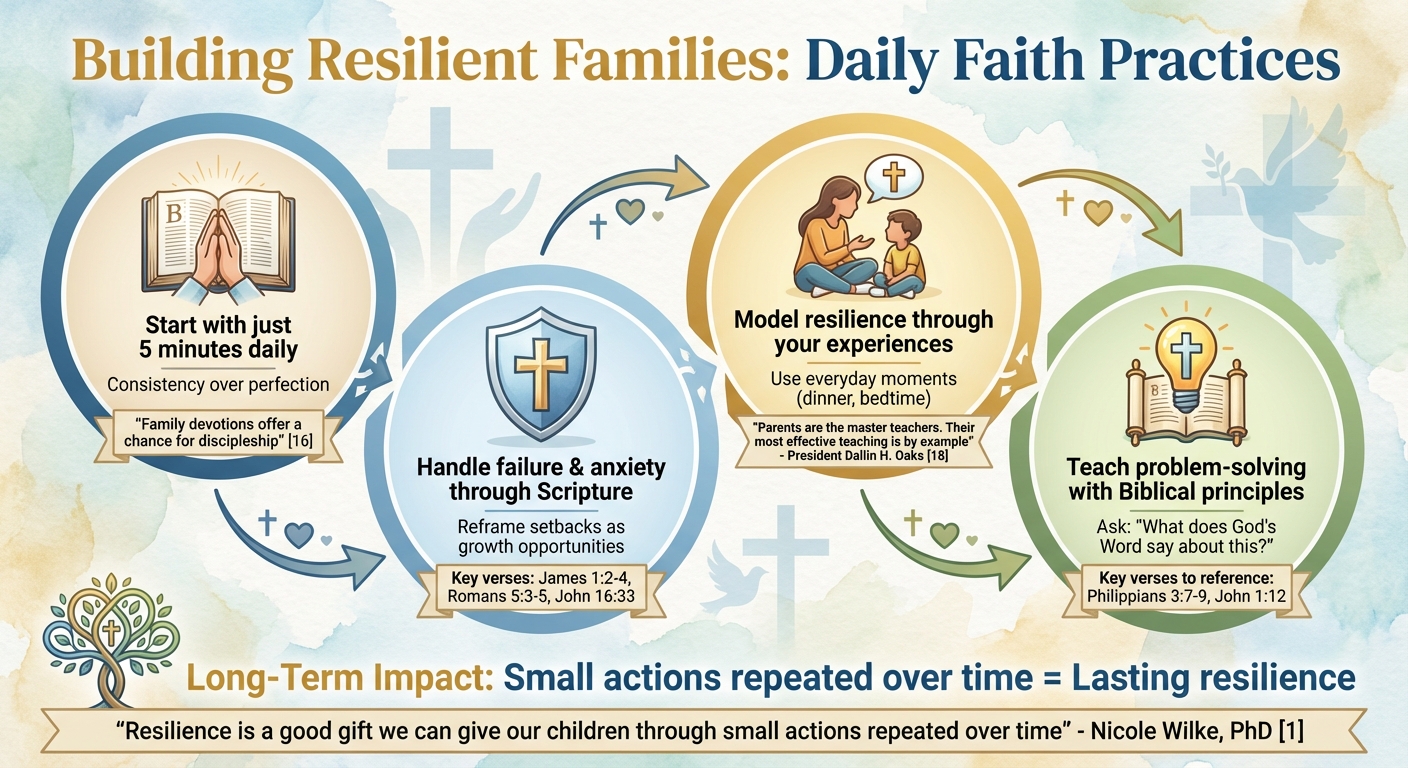
Daily Christian Parenting Practices for Building Family Resilience
Making Prayer and Bible Study Part of Daily Family Life
Creating a routine for prayer and Bible study is much like building any habit – it takes time, patience, and persistence [12]. Family devotions offer a chance for discipleship, where parents take the lead by example [13]. The goal isn’t perfection; what truly matters is showing up consistently and engaging in practices that nurture both spiritual and emotional strength. Even setting aside just five minutes a day for prayer or Scripture reading can make a meaningful difference in your family’s spiritual journey.
Family discipleship is an ongoing effort to guide your loved ones toward a closer relationship with Jesus Christ [14]. This means teaching, modeling, and living out your faith together – not just on Sundays but throughout everyday life. A simple way to start is by choosing a short Bible passage, reading it aloud, and then inviting your children to share their thoughts on its meaning. Let their curiosity shape the discussion, and don’t be afraid to admit when you don’t have all the answers.
You can also deepen this practice by sharing your own faith experiences, showing how resilience is built through trust in God.
Sharing Your Own Faith Stories with Your Children
Your children learn a lot about resilience by observing how you handle life’s ups and downs with prayer and a sense of calm [15]. As President Dallin H. Oaks wisely said:
Parents, single or married – and others, like grandparents, who fill that role for children – are the master teachers. Their most effective teaching is by example [15].
Dr. Tony Evans adds another layer of encouragement:
Setbacks are simply setups for something better [16].
Life’s inevitable challenges can be powerful teaching moments. Use them to show your children how to rely on God’s Word and trust His plan. Whether during dinner or bedtime, take these everyday moments to discuss Jesus’ teachings and reinforce His presence in their lives [3]. Nicole Wilke, PhD, emphasizes this idea:
It’s about consistently pointing them toward what’s true, even when we’re tired, overwhelmed, or unsure [17].
By weaving your personal faith stories into these conversations, you can inspire your children to see how Scripture applies to their own lives.
Teaching Problem-Solving Through Biblical Principles
Just as with daily prayer, Scripture can be a guiding light for real-life challenges. Encourage your children to connect the teachings of the Bible to everyday situations. Familiarity with passages like Philippians 3:7-9 and John 1:12 provides a strong foundation for them to navigate difficulties with confidence.
When faced with a problem, prompt your child to ask, "What does God’s Word say about this?" This simple question not only helps them develop critical thinking but also builds trust in God’s guidance. By turning problem-solving into a faith-centered practice, you’re helping them grow spiritually and emotionally, equipping them to handle life’s challenges with resilience and grace.
sbb-itb-596b85d
Handling Common Parenting Challenges with Faith
Teaching Children to Handle Failure Using Scripture
Failure can be a tough pill to swallow, but it’s also one of life’s greatest teachers. Scripture offers countless examples of how setbacks can pave the way for growth. Take Joseph, for instance: betrayed by his brothers, falsely accused, and imprisoned for years, he stayed faithful and was ultimately used by God to fulfill a greater purpose[1]. Then there’s Paul, who endured persecution, shipwrecks, and imprisonment. In 2 Corinthians 4:8-9, he reminds us:
We are hard pressed on every side, but not crushed; perplexed, but not in despair; persecuted, but not abandoned; struck down, but not destroyed[1].
Use these stories to teach your child that failure doesn’t define them. Their worth isn’t tied to achievements or mistakes but rests in their identity as God’s beloved. Paul captures this beautifully in Philippians 3:7-9, explaining that worldly gains pale in comparison to the surpassing value of knowing Christ[3].
As a parent, you can model grace by owning up to your own mistakes. When you approach your child’s missteps with patience and understanding instead of harsh criticism, you bring the gospel to life in your home. Praise their efforts, not just outcomes, and remind them that every mistake is a chance to learn and grow[18].
Scripture not only provides wisdom for handling failure but also offers comfort and strength during anxious times.
Helping Children Manage Anxiety Through Faith
Anxiety can feel overwhelming for children, but faith serves as a steady anchor in those stormy moments. True resilience comes not from avoiding tough emotions but from trusting in God’s strength and His plan, no matter the circumstances.
Share key verses like John 16:33, Philippians 4:13, and Romans 8:37 to remind them of God’s power and presence[1]. Encourage them to memorize these passages and recite them whenever they feel anxious. These words can become a source of comfort and courage.
Help your children see challenges as opportunities to grow closer to God and deepen their trust in Him[19]. When worries about school, friendships, or the future arise, guide them to ask, “What does God’s Word say about this?” This simple question can shift their focus from fear to faith, building both spiritual and emotional resilience.
If you’re looking for more practical ways to weave these lessons into everyday life, consider exploring resources like Growth and Change Counseling. Their parent coaching and family therapy services can help your family navigate challenges while staying grounded in Christian principles. For more information, visit Growth and Change Counseling.
Long-Term Impact of Christian Parenting
Evaluating Your Own Faith and Parenting Approach
Your children are always watching. They notice how you live out your faith, not just in words but in actions. The greatest gift you can give them isn’t perfection – it’s authenticity. As Laura Kuehn, LCSW, explains:
"The best gift you can give your children is to model genuine love for God. If they see you going through the motions of being a ‘good Christian,’ chances are that is what they will do as well. Share with your kids what God is doing in your life. Let them know that you are a work in progress and that what you seek is a relationship with Him, not a religion. If we seek to make Christ the center of our lives, He will be at the center of all these activities as well." [21]
Take a moment to reflect on your relationship with God and how it influences your parenting. Are you nurturing your children from a place of genuine faith, or are you simply checking items off a religious checklist? Building resilience – both in yourself and your children – requires consistent and intentional effort[1].
When Christ is at the center of your home, it creates a foundation that can withstand life’s challenges[22]. Regular self-reflection helps you align your parenting with enduring faith, which can guide your children as they grow.
Maintaining Faith Practices as Children Grow
The habits you cultivate now will shape the adults your children become. Research supports that early practices like prayer and reading scripture often carry over into adulthood[20]. This isn’t about enforcing religion – it’s about helping your children develop a deep, personal relationship with God that can sustain them through life’s ups and downs.
Proverbs 22:6 offers this wisdom: "Train up a child in the way he should go; even when he is old he will not depart from it"[4][23]. By grounding your parenting in God’s truth today, you’re equipping your child with a foundation that will guide them for a lifetime[4]. These habits also build resilience, enabling them to face challenges with strength and wisdom[1].
Consistency is key. Keep praying together. Keep reading scripture as a family. Keep showing up. These small, repeated actions will leave a lasting legacy, shaping not just your children but future generations.
If you’re looking for additional support, consider resources like Growth and Change Counseling to help integrate these faith practices into your family’s daily life.
Conclusion: Building Stronger Families Through Christian Faith
Creating a strong, resilient family begins with anchoring your home in Christ. When your family’s identity is rooted in Jesus rather than worldly measures of success, you establish a solid foundation capable of weathering any storm. This foundation not only shapes how you lead through challenges but also influences how your children learn to navigate life.
Resilience isn’t something that happens overnight – it grows through consistent, intentional actions. As Nicole Wilke, PhD, wisely notes:
Resilience is a good gift we can give our children through small actions repeated over time [1].
Those daily prayers, Scripture readings, and heartfelt discussions about God’s faithfulness are far more than routines. They are the building blocks of your child’s character and faith. Remember, you are your child’s first and most influential example of living a life of faith [2]. They observe how you handle struggles, celebrate blessings, and live out your love for God in the everyday. By modeling genuine faith, teaching biblical truths through real-life experiences, and consistently pointing them toward Christ, you equip your children with tools they’ll carry well into adulthood.
Every small act of faith you practice today is an investment in a resilient future. As highlighted throughout this guide, these seemingly simple habits – praying together, reading the Bible, or sharing stories of God’s faithfulness – have a lasting impact. They are the seeds of a legacy that can shape not just your family, but future generations.
If you’re looking for guidance on how to integrate these faith-based practices into your home, consider reaching out to Growth and Change Counseling. They offer parent coaching and family therapy services across California, helping families take intentional steps toward building a Christ-centered home. This journey is worth every effort – one faithful step at a time.
Frequently Asked Questions at Growth and Change Counseling
How can I make daily prayer and Bible study a natural part of our family’s routine?
Incorporating daily prayer and Bible study into your family’s routine doesn’t have to be complicated. With a few thoughtful steps, it can become a meaningful part of your day. Start by choosing a consistent time – like after dinner or before bedtime – so it naturally fits into your schedule. Kids thrive on routine, and this regularity can help make it a lasting habit.
Set an example by beginning with a short personal prayer, showing your children how to approach God with honesty and sincerity. Then, come together as a family for a brief moment of connection. Share prayer requests, express gratitude, and read a short Bible passage – just a verse or two is enough. Take a moment to talk about how the scripture relates to your day, helping your children see its relevance in their lives.
You might also introduce a weekly activity to deepen your family’s spiritual practice. For example, take a prayer walk around your neighborhood, lifting up your community in prayer and fostering a sense of purpose. Another idea is to start a family prayer journal. Use it to jot down prayers, moments of gratitude, or insights from your Bible readings. Over time, it becomes a beautiful record of your family’s spiritual journey, showing how prayers have been answered and faith has grown. By weaving these habits into your daily life, you’ll strengthen both your family’s faith and its sense of togetherness.
How can I teach my children resilience through Christian faith?
Teaching resilience through faith means weaving Christian principles into everyday moments, helping children lean on God while building practical coping skills. Start by making prayer a regular part of your family life. Pray together often, encouraging your children to share gratitude, seek wisdom, and pray for others. This not only nurtures a spirit of thankfulness but also reinforces the idea of divine support during life’s ups and downs.
Be a living example of resilience by handling challenges with patience, honesty, and grace. When kids see you relying on your faith to navigate tough situations, they’re more likely to understand how belief in God can provide strength. Bring Bible stories of perseverance into family discussions – figures like Joseph or Paul showcase how faith can help overcome even the hardest trials.
Establishing steady routines – whether it’s sharing meals, bedtime prayers, or weekly devotionals – adds a sense of security and calm. Stability like this can ease anxiety and give kids a solid foundation. Encourage them to take manageable risks, like trying a new skill or stepping into unfamiliar situations. These experiences teach them how to bounce back from mistakes, building confidence along the way.
For more support, Growth and Change Counseling offers parent coaching that combines biblical wisdom with practical tools, helping families grow stronger together while facing life’s challenges.
How does sharing your faith stories help your child grow spiritually?
Sharing your personal faith journey with your child can bring spiritual concepts to life in a way that’s relatable and meaningful. When you talk about moments where you felt God’s guidance, experienced answered prayers, or witnessed His love, you’re showing how faith plays out in everyday situations. These real-life examples not only make spiritual truths more tangible but also spark your child’s emotions and imagination, helping them build their own connection to faith.
To make these stories resonate, choose ones that emphasize God’s grace and use language your child can easily understand. Encourage them to ask questions – it’s a great way to deepen their understanding. You can weave these conversations into your daily routines, like mealtime chats, bedtime talks, or family devotion moments. This regular rhythm of sharing faith can nurture a sense of spiritual strength and resilience in your home. For parents seeking extra guidance, Growth and Change Counseling offers coaching to help integrate faith into family life seamlessly.
Related Blog Posts
- Faith-Based Parenting for Generational Healing
- Parent Coaching with Faith in Addiction Recovery
- 7 Traits of Christ-Centered Parenting
- How Christian Values Shape Parenting in Marriage
