Trauma and addiction can deeply affect marriages, creating cycles of pain and disconnection. Trauma often leads to addiction as individuals turn to substances to cope with emotional distress. This, in turn, damages trust, intimacy, and financial stability in relationships, leaving both partners struggling. Betrayed partners may experience PTSD-like symptoms, while addiction worsens emotional and financial strain, increasing the risk of divorce.
However, recovery is possible. Therapy – whether individual, couples, or family-focused – can help rebuild trust, address underlying trauma, and strengthen relationships. Behavioral Couples Therapy (BCT) has shown success in improving sobriety and relationship satisfaction, while individual therapy helps process trauma and develop healthier coping mechanisms. Family therapy addresses household dynamics, creating a supportive environment for long-term healing.
Key takeaways:
- Trauma and addiction often fuel each other, harming relationships.
- Trust, intimacy, and finances are common areas of conflict.
- Therapy, transparency, and self-care are critical for recovery.
With professional support and consistent effort, couples can rebuild stronger, healthier connections.
Hope for Sex Addiction and Betrayal Trauma: Matthew and Joanna Raabsmith (S12E46)
How Trauma and Addiction Damage Marriages
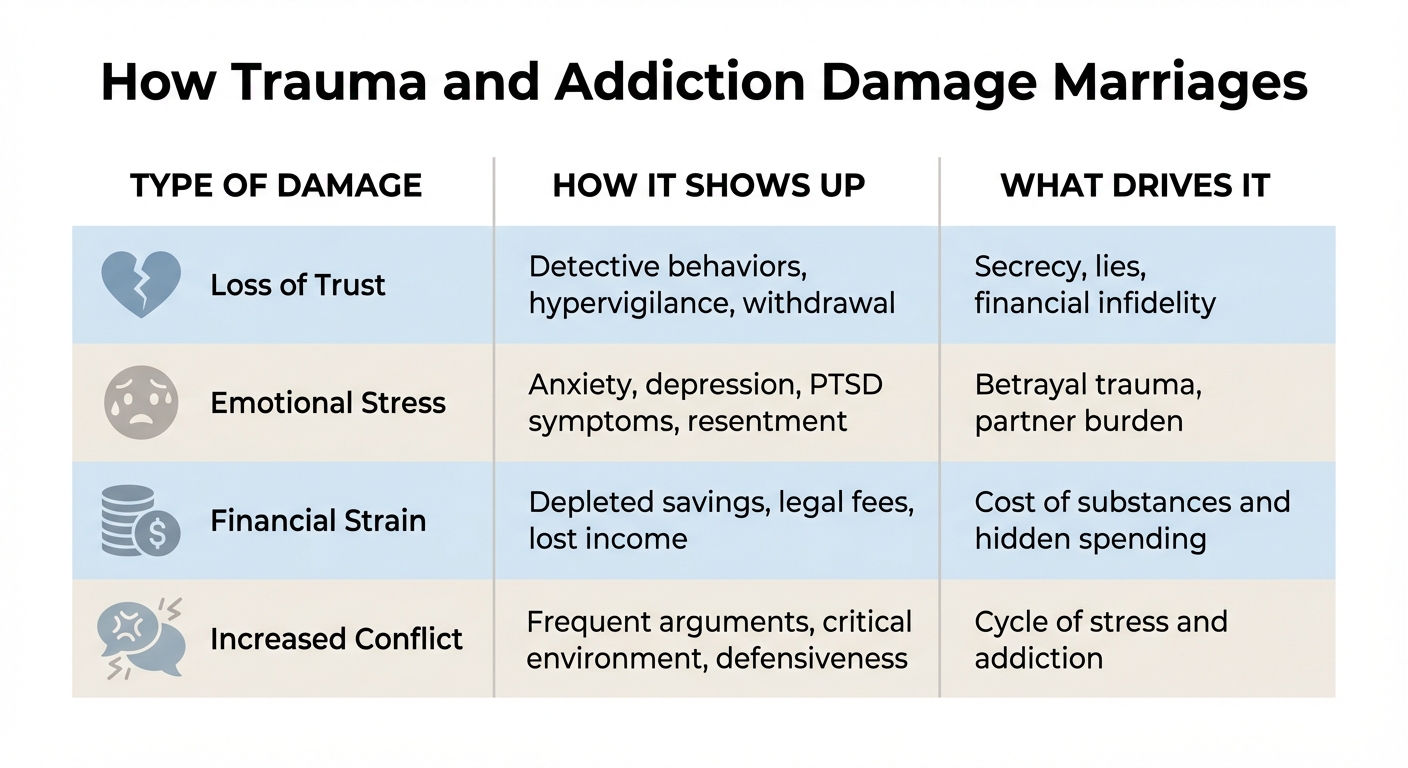
How Trauma and Addiction Damage Marriages: 4 Key Impact Areas
Trauma and addiction can deeply harm marriages, making professional intervention crucial. Understanding these impacts is an essential step toward addressing the challenges and seeking therapy.
Loss of Trust and Intimacy
Addiction often shatters trust within a marriage. Secrecy, constant lies, and broken promises can leave the betrayed partner feeling compelled to investigate – checking phones, bank accounts, or emails in an attempt to piece together the truth. Therapists call this the "detective cycle", where the betrayed partner tries to reconcile the reality of their relationship with the conflicting information they’ve been given [3]. Meanwhile, the partner struggling with addiction may dismiss these concerns by accusing the other of being "paranoid", which only deepens the betrayed partner’s self-doubt [3].
This dynamic often leads to a "pursue-withdraw" pattern: one partner desperately seeking connection while the other pulls away. Over time, this emotional disconnection becomes more entrenched. Studies show that among PTSD symptoms, emotional numbing – marked by withdrawal and a lack of positive emotions – has one of the most profound negative effects on relationships [2].
These trust issues don’t just damage intimacy – they also set the stage for emotional and financial strain.
Emotional and Financial Stress
The emotional toll of addiction can be overwhelming for both partners. For the spouse not struggling with addiction, the constant stress may lead to symptoms resembling PTSD, including hypervigilance and anxiety [3]. This partner often ends up shouldering the bulk of household responsibilities, managing legal issues, and dealing with the social fallout caused by their partner’s behavior [2].
Financial problems only add to the emotional strain. Take the case of Mary and George: their marriage suffered from financial betrayal, with addiction draining their savings and creating emotional scars that tarnished once-happy memories [3]. Discovering hidden spending or depleted funds often becomes a pivotal moment, revealing the full extent of the damage – such as unpaid bills, legal fees, and an inability to meet basic family needs [3].
Together, these stresses create a volatile environment that can push a marriage to its breaking point.
More Conflict and Higher Divorce Risk
When trust is broken, emotions run high, and finances unravel, conflict becomes inevitable. According to William Fals-Stewart, Ph.D., from the State University of New York, financial stress and poor communication can drive substance use, which in turn amplifies marital discord [1]. This creates a destructive cycle of arguments, defensiveness, and growing emotional distance.
Over time, trauma symptoms that were initially triggered by interpersonal issues can become the main factor driving a relationship’s decline [2]. Research shows that unresolved trauma and ongoing addiction significantly increase the likelihood of divorce. Without intervention, the combined weight of these issues often leads to separation, as couples struggle to cope with the overwhelming strain on their relationship.
| Type of Damage | How It Shows Up | What Drives It |
|---|---|---|
| Loss of Trust | Detective behaviors, hypervigilance, withdrawal | Secrecy, lies, financial infidelity [3] |
| Emotional Stress | Anxiety, depression, PTSD symptoms, resentment | Betrayal trauma, partner burden [2] |
| Financial Strain | Depleted savings, legal fees, lost income | Cost of substances and hidden spending [3] |
| Increased Conflict | Frequent arguments, critical environment, defensiveness | Cycle of stress and addiction [1] |
Therapy Solutions for Recovery
Therapy can be a powerful tool for breaking the cycle of trauma and addiction that often strains marital bonds. With the right approach, it’s possible to create meaningful changes that benefit both individuals and their relationships.
How Couples Therapy Supports Recovery
Behavioral Couples Therapy (BCT) has shown strong results for couples dealing with addiction. Research reveals that 50% of men participating in BCT remained abstinent, compared to just 30% of those undergoing individual therapy alone [1]. Additionally, couples in BCT reported 67% abstinent days in the year following treatment, significantly higher than the 45% achieved by those in individual therapy [1].
BCT focuses on rebuilding trust through daily practices. For example, therapists encourage couples to engage in daily sobriety discussions, which reinforce a 24-hour commitment to staying sober [1][7]. Communication skills are also a key component, with couples learning techniques like paraphrasing, empathizing, and validating to handle stress without escalating conflicts or risking relapse [1][6].
Betrayal trauma is addressed head-on through structured disclosure sessions. These sessions allow the betrayed partner to transition from constant vigilance to a sense of genuine safety. To avoid unnecessary conflict at home, therapists often recommend a "no-past" rule, reserving discussions about prior substance use for therapy sessions [1].
For couples in particularly challenging situations, intensive programs like The Marriage Rescue Institute at Growth and Change Counseling offer a 12-week structured process designed to restore and strengthen marriages through focused interventions and accountability.
While couples therapy works on the relationship, individual therapy plays a critical role in personal recovery, creating a foundation for mutual healing.
Treating Trauma Through Individual Therapy
Individual therapy delves into the root causes of addiction, often linked to unresolved trauma. Traumatic experiences can create a neurobiological vulnerability to substance use, driving both addiction and harmful relationship patterns [8]. Therapy helps individuals uncover how past trauma influences their behavior, while also addressing co-occurring mental health conditions like depression, PTSD, bipolar disorder, or social anxiety [10].
Approaches such as EMDR, Somatic Therapy, and DBT have proven effective in processing trauma and improving emotional regulation [9][12]. A trauma-informed care model is particularly beneficial, as it aligns with the understanding of addiction as a chronic condition, improving outcomes for many patients [8].
Beyond addressing trauma, individual therapy provides a safe space for personal growth. It helps individuals develop the tools they need to manage stress and challenges independently of their relationship [9]. In cases where one partner hesitates to participate in couples therapy, this personal work can often pave the way for future joint counseling efforts [11].
Repairing Family Relationships Through Family Therapy
Family therapy broadens the focus to include the dynamics of the entire household. It views the family as an interconnected system, addressing roles like the Enabler, Hero, or Scapegoat, which can perpetuate addiction [13]. Studies show that over 60% of families dealing with addiction face conflict rooted in these roles and the stress they create [14].
This form of therapy works to rebalance these roles, reducing enabling behaviors and fostering accountability. As family therapist Diane Bigler, LCSW, explains:
"The family’s wellness does not have to depend on the addicted person’s choices" [13].
Family therapy also equips loved ones with tools to identify early signs of relapse and encourage healthier coping strategies [14]. Techniques like using "I" statements, practicing active listening, and providing reflective feedback help reduce blame and tension during difficult conversations [14]. Strong family relationships are one of the most reliable indicators of long-term recovery success [3], making this systemic approach invaluable for both the family and the marital bond.
Growth and Change Counseling offers family therapy alongside individual and couples sessions, supporting households across California. Services are available in-person at locations like Campbell, San Jose, Los Angeles, and Roseville, as well as through telehealth options, ensuring accessible care for those navigating addiction and trauma recovery.
sbb-itb-596b85d
Practical Steps for Long-Term Marriage Healing
Healing a marriage after trauma and addiction isn’t a one-time event – it’s a daily commitment. Rebuilding trust and reshaping your relationship takes consistent effort, honest communication, and a shared dedication to transparency. By focusing on intentional habits and therapeutic practices, couples can create a strong foundation for recovery and growth.
Creating Transparency and Accountability
Trust is rebuilt one step at a time, and it starts with honesty. For the partner in recovery, this means offering complete transparency – sharing access to phones, social media accounts, and financial records without hesitation[3]. Anna Aslanian, LMFT, emphasizes the importance of this process:
"The betrayed partner requires reassurance and transparency. The recovering addict needs to practice honesty and have accountability"[3].
A simple but powerful daily habit is the "sobriety trust discussion", where the recovering partner reaffirms their commitment to staying sober for the next 24 hours, and the other partner provides encouragement and support. Research shows that couples who engage in this practice as part of Behavioral Couples Therapy experience more success, with 67% of their days being abstinent in the year following treatment, compared to just 45% for those who only pursue individual therapy[15].
Another useful tool is a recovery contract – a written agreement that outlines specific daily actions, like attending support meetings, taking prescribed medications, or completing therapy assignments. Some couples even use a shared calendar to track these commitments, creating a visual reminder of progress. When medications like naltrexone or disulfiram are part of the recovery plan, having the partner witness the daily dose can provide both accountability and emotional connection[15].
Making Self-Care a Priority for Both Partners
Transparency is essential, but it’s equally important for both partners to prioritize their own well-being. Recovery is a journey that requires strength from both sides. While the recovering partner focuses on sobriety, the betrayed partner may need to seek emotional support through therapy, faith communities, or trusted friends[5]. Healing takes time, and that’s okay. Studies show that trust grows significantly over time – 83% of coaddicts in recovery for three years or more report high levels of trust in their partner, compared to only 21% of those in recovery for less than six months[17].
Self-care isn’t just about therapy. Activities like yoga, walking, or working out can help manage stress and boost overall well-being. Some couples even work with functional medicine doctors to address the physical toll of trauma and addiction[5]. Replacing passive habits, like binge-watching TV, with engaging activities – such as cooking together, reading aloud, or exploring shared hobbies – can also bring joy and strengthen the bond. It’s worth noting that the brain may need 18 to 24 months to fully recover from substance abuse, depending on the severity of use[5]. Taking care of yourself isn’t optional – it’s what keeps you strong for the road ahead.
Developing Healthy Relationship Habits
Small, consistent efforts can make a big difference in restoring connection. Daily emotional check-ins, even if they’re just 10–15 minutes long, give couples a chance to share their highs and lows, discuss practical matters, and dream about the future. Making eye contact during these conversations helps deepen the connection. Another helpful habit is acknowledging at least one positive action your partner takes each day, which shifts the focus from past pain to present progress[16][15].
To prevent resentment from building up, couples can use tools like structured journaling or regular conversations to address small grievances before they grow[5]. Christie Orosz, LPCC-S, highlights the importance of empathy in these moments:
"When the partner who struggled with addiction learns to genuinely empathize – without defending, dismissing, explaining, or minimizing… it opens the door to reconnection"[5].
Practicing this kind of empathy allows the recovering partner to validate their spouse’s feelings, including their pain, fear, and financial concerns, without making excuses.
For couples in California looking for additional support, Growth and Change Counseling offers services like individual therapy, couples counseling, and family therapy. Their Marriage Rescue Institute provides a structured 12-week program designed specifically for couples in crisis, offering a path forward for those ready to rebuild.
Conclusion: Moving Forward with Hope and Support
Healing from trauma and addiction is no easy road – it demands honesty, empathy, and daily dedication from both partners. But the effort is worth it. Studies reveal that trauma-informed therapy has an 85% success rate in reducing relationship distress when both partners are fully invested[18]. These aren’t just statistics; they represent real stories of marriages mended and families brought back together.
The real breakthrough lies in addressing the root causes rather than just treating the symptoms. As John Kane, founder of Growth and Change Counseling, puts it:
"The more relationally healthy people are, the less anxious, addicted, and depressed they are"[4].
This philosophy breaks the cycle of pain, acknowledging how deeply addiction, trauma, and relationship challenges are interwoven. Healing one area naturally strengthens the others, creating a ripple effect of positive change.
Professional guidance can be the game-changer between feeling lost and having a clear path forward. Growth and Change Counseling offers specialized services tailored to meet couples wherever they are in their journey. Their Marriage Rescue Institute provides a structured program specifically designed for crisis situations, delivering intensive coaching to address urgent relationship challenges. This kind of focused support can be the lifeline couples need to rebuild their connection.
Taking that initial step toward professional help is an act of bravery. Recovery takes time – science shows the brain may need 18 to 24 months to fully heal from substance abuse[5] – but with the right tools and support, transformation is absolutely possible. With commitment, openness, and expert guidance, you can create a healthier, stronger relationship than you ever imagined.
Finding Hope After Betrayal with Growth and Change Counseling
How can couples rebuild trust after addiction-related challenges?
Rebuilding trust after addiction-related struggles takes time, effort, and a lot of open communication. It’s about being honest, showing patience, and working together toward recovery. Both partners need to commit to full transparency – this might include openly sharing schedules, finances, or even daily routines. These steps help reestablish a sense of safety and accountability. For the partner in recovery, consistency and managing emotions are key. Meanwhile, the hurt partner should feel safe to share their feelings and ask questions without the fear of being judged.
Seeking professional support can be a game-changer. Programs like the 12-week Marriage Rescue Institute at Growth and Change Counseling offer structured coaching to help couples improve communication, set boundaries, and rebuild emotional trust. Therapy also plays a crucial role in addressing past trauma, repairing the relationship, and building a healthier, more connected partnership for the future.
What types of therapy are effective for couples navigating trauma and addiction?
Therapies that involve both partners, rather than focusing on just one individual, have proven to be highly effective for improving sobriety and strengthening relationships. Behavioral Couples Therapy (BCT) is a well-supported approach that helps couples reduce substance use, enhance relationship satisfaction, and minimize conflict by addressing harmful interaction patterns and promoting healthier dynamics.
For couples navigating trauma, approaches like Cognitive-Behavioral Conjoint Therapy for PTSD (CBCT-PTSD) have demonstrated success. This trauma-focused therapy combines education, strategies for building safety, and joint exercises to alleviate PTSD symptoms while fostering emotional connection. Other beneficial methods include Emotionally Focused Couple Therapy and Systemic Family Therapy, which assist couples in rebuilding trust, managing triggers, and creating a supportive space for healing.
Growth and Change Counseling incorporates these evidence-based therapies into its 12-week couples coaching program, offering tools to help couples rebuild their relationships and recover from trauma and addiction. Services are offered in Campbell, San Jose, Los Angeles, Roseville, and through telehealth across California.
How can family therapy support couples dealing with addiction and its impact on their marriage?
Family therapy plays a key role in helping couples tackle the challenges of addiction by addressing how their interactions contribute to both substance use and relationship strain. It provides a space where couples and their families can learn healthier ways to communicate, manage conflicts, and rebuild emotional trust – critical steps for recovery and repairing their bond.
One effective approach is Behavioral Couples Therapy (BCT), which focuses on encouraging sobriety while strengthening the relationship through positive, shared activities. Family therapy also helps lower the risk of relapse by teaching practical skills like problem-solving and fostering non-blaming communication. It creates an environment where long-term recovery feels both achievable and supported.
At Growth and Change Counseling, family therapy is central to helping couples overcome addiction. With personalized, solutions-focused sessions offered in-person throughout California or via telehealth, couples can work on rebuilding trust, addressing past traumas, and creating a healthier, more supportive partnership.
Related Blog Posts
- How Addiction Impacts Marital Stability
- Restoring Trust in Marriage After Addiction
- Addiction Recovery and Marriage: What Works
- How Betrayal Trauma Impacts Partners of Addicts
