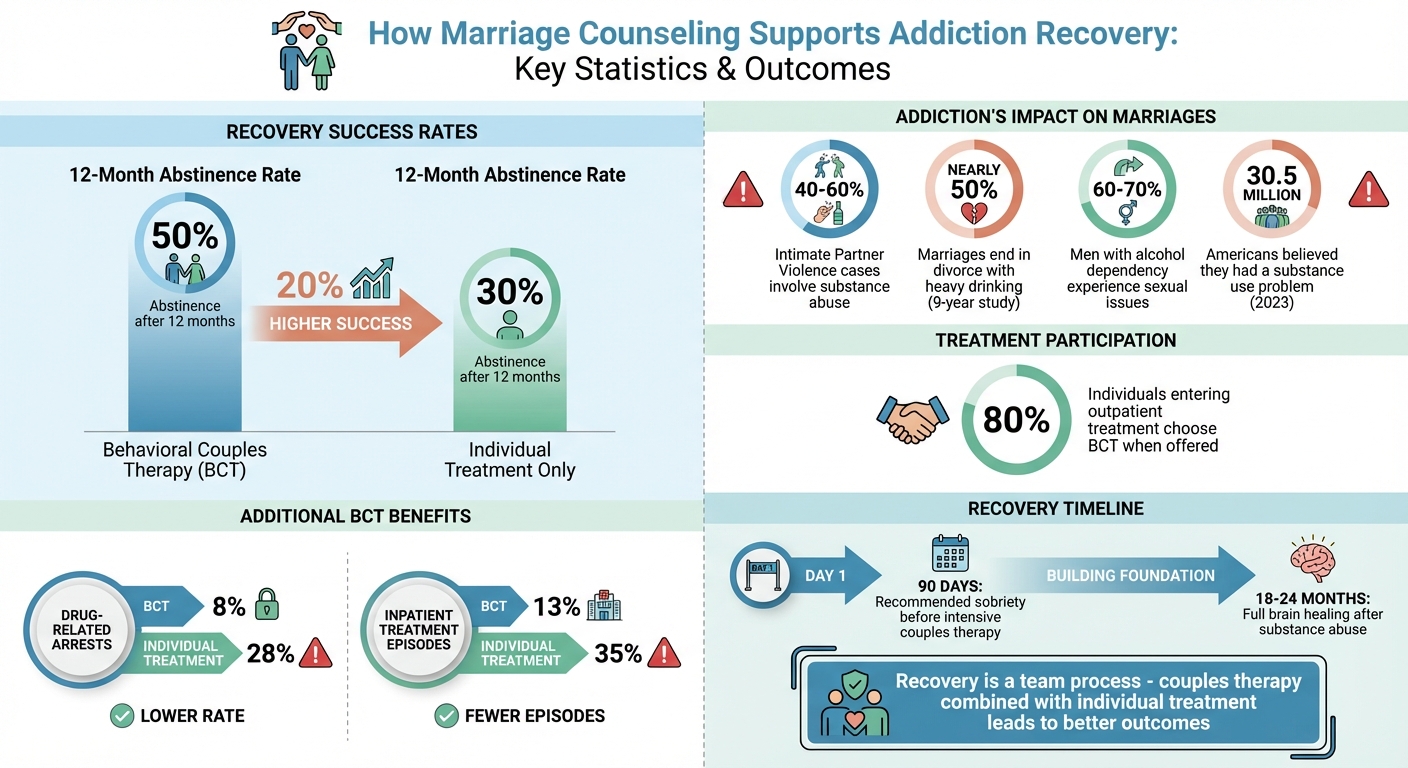
Addiction doesn’t just harm individuals – it can strain marriages and fuel a damaging cycle of stress and substance use. Marriage counseling helps break this cycle by rebuilding trust, improving communication, and addressing underlying emotional issues. Research shows couples who engage in therapy, like Behavioral Couples Therapy (BCT), achieve better recovery outcomes, with up to 50% maintaining sobriety compared to 30% in individual treatment. Counseling also reduces conflict and creates a supportive environment for long-term recovery.
Key takeaways:
- Addiction disrupts relationships: It erodes trust, creates financial strain, and fosters unhealthy dynamics like codependency.
- Marriage counseling strengthens recovery: Tools like recovery contracts and structured communication rebuild emotional connection and accountability.
- Combined approaches work best: Pairing couples therapy with individual treatment and support groups leads to better outcomes.
- Boundaries and trust are critical: Therapists guide couples in setting boundaries, addressing trauma, and fostering mutual support.
Marriage counseling turns recovery into a shared journey, helping couples rebuild both their relationship and their lives.
Marriage Counseling Impact on Addiction Recovery Outcomes
Couples Therapy with Addiction: What You Need to Know First
How Addiction Affects Marriages and Relationships
Addiction doesn’t just impact the individual – it ripples through a marriage, affecting trust, finances, and everyday life. Understanding these effects can help couples pinpoint what needs attention and begin the healing process. Acknowledging these challenges is the first step toward finding counseling solutions tailored to their needs.
Emotional Distance and Communication Problems
Addiction chips away at trust through broken promises, secrecy, and emotional withdrawal. This often leaves the non-addicted spouse feeling isolated and overwhelmed by unhealthy communication patterns [4][7]. The addicted partner may prioritize substance use over their relationship, further straining emotional connections [7].
Conversations that were once constructive can turn into heated arguments, verbal abuse, or complete avoidance of sensitive topics [4]. Addiction also impairs brain function, making calm and rational discussions nearly impossible during active use [5]. In some cases, one partner may even lie to loved ones to cover up the addiction, which only deepens the emotional divide [7].
The statistics paint a stark picture: substance abuse is a factor in 40% to 60% of intimate partner violence cases [4]. Additionally, men struggling with alcohol dependency face a 60% to 70% likelihood of experiencing sexual issues such as loss of desire or erectile dysfunction [4]. A nine-year study revealed that nearly half of marriages where one partner drank heavily ended in divorce [8].
Financial Problems and Lifestyle Disruptions
Addiction’s financial toll begins with the cost of purchasing drugs or alcohol but doesn’t stop there. Expenses related to treatment, legal issues, bail, and court fines can quickly pile up [4][7]. Many couples find their savings depleted, valuables sold, and jobs jeopardized, creating a cycle of stress and instability [4][7].
"Alcohol and drugs cost a lot of money, and if you’re in a marriage you should be taking a team approach to financial goals, but often the addict will be using more money to get alcohol or drugs."
– Dr. Sachi Ananda, Director of FHE Health’s "Shatterproof" treatment program [6]
This financial strain often shifts the household dynamic, leaving the non-addicted spouse to shoulder all domestic and financial responsibilities [6][7]. This imbalance breeds resentment and stress, and children in the household may also suffer – parents with substance abuse issues are three times more likely to abuse their children [4].
The financial and emotional strain can create an environment ripe for codependency, adding another layer of complexity to the relationship.
Codependency Patterns
Codependency arises when one partner sacrifices their own needs and identity to "rescue" the addicted partner from the consequences of their behavior [9]. Actions like making excuses, covering legal troubles, or financially supporting the addiction often come from a place of care but inadvertently enable the harmful cycle to continue [9].
Ironically, when the addicted partner begins recovery, the codependent spouse may unintentionally sabotage the process to maintain their role as the "rescuer" [9]. This dynamic can create a vicious cycle where the relationship’s struggles fuel substance use, and the family’s responses unintentionally reinforce the addiction [1].
In 2023, 30.5 million people in the U.S. reported believing they had a substance use problem [9]. Breaking codependency requires both partners to seek help. The addicted partner needs treatment, while the other can benefit from therapy or support groups like Al-Anon to address their own trauma and establish healthy boundaries [4][9].
Understanding these impacts highlights the importance of counseling to rebuild trust and restore balance in marriages affected by addiction.
How Marriage Counseling Supports Recovery
Marriage counseling offers structured tools and expert guidance to help couples address the strain addiction places on their relationship. Instead of viewing recovery as a solo journey, therapy reframes it as a shared effort, encouraging both partners to actively participate in rebuilding their connection. By tackling issues like trust, boundaries, and emotional wounds, counseling transforms recovery into a collaborative process. This approach not only helps couples heal but also strengthens their foundation for long-term success.
Rebuilding Trust and Communication
Rebuilding trust takes time and consistent effort – it’s not something that happens overnight. Therapists often use tools like a Recovery Contract, where the recovering partner commits to staying substance-free for 24 hours, while the spouse provides immediate, supportive acknowledgment [1]. This small but focused step helps establish accountability and mutual reinforcement.
One common challenge couples face is the "pursue-withdraw" cycle. In this pattern, one partner pushes for connection while the other retreats, leading to frustration and miscommunication. Through Emotionally Focused Therapy (EFT), couples learn to identify this cycle and address the deeper emotions fueling it – such as fear, shame, or grief – rather than getting stuck in surface-level anger [10].
"When the partner who struggled with addiction learns to genuinely empathize – without defending, dismissing, explaining, or minimizing, but rather to really see and validate the pain – it opens the door to reconnection."
– Christie Orosz, LPCC-S, Founder of Married Life Counseling [10]
The Gottman Method’s AAA Model – Atonement, Attunement, and Attachment – provides a step-by-step approach to repair and rebuild trust. This involves making amends, fostering curiosity and care, and creating a secure bond through shared rituals like daily walks or consistent prayer [10]. Research backs up the effectiveness of this approach: in one clinical trial, married male drug users who participated in Behavioral Couples Therapy (BCT) achieved a 50% abstinence rate over 12 months, compared to 30% with individual treatment. Additionally, drug-related arrests dropped significantly, from 28% to 8% [1].
Counseling also creates a safe environment for the non-addicted partner to voice concerns about substance use without triggering defensiveness. Therapists teach practical communication techniques like paraphrasing, empathizing, and validating, which help couples manage conflict and avoid falling back into unproductive patterns.
Once trust and communication are restored, setting clear boundaries becomes the next key step.
Setting Healthy Boundaries
Boundaries are essential for protecting both the recovery process and the relationship itself. Without them, couples risk slipping into enabling behaviors or constant conflict, both of which can undermine sobriety. Therapists guide partners in distinguishing between supportive actions and enabling behaviors, such as covering up legal troubles or making excuses for the addicted partner’s actions. These enabling patterns prevent the individual from facing the natural consequences of their choices [4][6].
"Recovery isn’t an individual process – it’s a team and family process. It’s very important that the person in recovery has their loved one on board for how they are going to address the issue."
– Dr. Sachi Ananda, Director of FHE Health’s Shatterproof program [6]
Counseling also helps couples establish clear roles and develop a written relapse contingency plan. Framing a relapse as a learning opportunity rather than a failure creates a constructive approach to setbacks [4][6]. Interestingly, about 80% of individuals entering outpatient treatment who are offered BCT choose to participate, highlighting its appeal and effectiveness [1].
In some cases, therapists may recommend a therapeutic separation with defined boundaries and conditions, particularly when the addicted partner resists treatment. This isn’t about ending the marriage but using structured distance to break through denial. Given that substance abuse is linked to 40% to 60% of intimate partner violence cases, professional guidance on boundaries is critical for ensuring safety [4].
Working Through Emotional Issues
Addiction often masks deeper emotional pain, unresolved trauma, or marital stress. Counseling provides a structured way to address these root causes, which frequently drive substance use as a coping mechanism.
Therapists help couples explore family-of-origin patterns that influence their current dynamics [10]. They also address the resentment and anger that can build up during active addiction, encouraging couples to confront the "elephant-in-the-room" issues they might otherwise avoid. This process requires the recovering partner to acknowledge and validate their spouse’s experiences of trauma, financial instability, or emotional chaos – without offering excuses or minimizing the impact [10].
"That moment of ‘I hear you, I can’t believe you had to carry that. I’m so sorry. Will you please forgive me?’ is often where real bonding begins again."
– Christie Orosz, LPCC-S, Founder, Married Life Counseling [10]
Behavioral Couples Therapy includes exercises like "Caring Days" and "Catch Your Partner Doing Something Nice" to rebuild emotional intimacy through positive reinforcement [1]. These small, intentional actions help couples reconnect and strengthen their bond.
Recovery is a long process – it can take 18 to 24 months for the brain to fully heal after substance abuse [10]. During this time, couples work on emotional regulation and reestablishing healthy communication patterns, with counseling offering the guidance they need to navigate this journey together.
sbb-itb-596b85d
Combining Marriage Counseling with Other Recovery Programs
Marriage counseling works hand-in-hand with individual therapy and 12-step programs by addressing relationship dynamics while other methods focus on personal challenges. Each approach tackles a unique aspect of recovery, and when combined, they create a well-rounded support system. Individual therapy dives into personal triggers and trauma, while marriage counseling focuses on reshaping unhealthy relationship patterns that may contribute to substance abuse. Together, these methods transform recovery from an isolated struggle into a shared journey. This collaboration not only strengthens individual progress but also fosters a renewed sense of partnership.
Working with Individual Therapy
Individual therapy and marriage counseling serve distinct purposes but complement each other effectively. Individual sessions focus on personal issues like past trauma, career challenges, and strategies for managing triggers. Meanwhile, marriage counseling hones in on communication, boundary-setting, and mutual support within the relationship.
When therapists and counselors coordinate care – sharing information with the patient’s consent – it aligns treatment goals and ensures that progress in one area supports the other. For instance, if work-related stress comes up in individual therapy, the marriage counselor can guide the couple in managing that stress together to prevent it from escalating into conflict at home. This alignment creates a unified approach to recovery, strengthening the couple’s resilience against addiction.
Studies highlight the effectiveness of this combined approach. Research by William Fals-Stewart, Gary R. Birchler, and Timothy J. O’Farrell found that married male drug abusers who participated in Behavioral Couples Therapy (BCT) alongside individual treatment had a 50% abstinence rate after one year, compared to 30% for those in individual therapy alone. Additionally, the BCT group experienced fewer inpatient treatment episodes (13% versus 35%) and fewer drug-related arrests (8% versus 28%) [1].
Couples therapy also improves treatment retention. The empathy and accountability fostered in these sessions help individuals stay engaged in their recovery journey. When both partners are actively involved, the recovering individual feels more motivated to continue, even during challenging moments.
Supporting Recovery Goals Together
Recovery contracts are another tool that helps couples align their daily routines with sobriety goals. These agreements may include commitments to attend 12-step meetings or adhere to medication schedules [1].
This structured accountability shifts the relationship dynamic from one of stress to one of support. Since relationship conflict is a leading cause of relapse, learning to handle disagreements constructively removes a significant risk factor. At the same time, the non-addicted partner gains tools to avoid enabling behaviors and finds support through groups like Al-Anon or Nar-Anon [4][5].
Experts often suggest waiting until the recovering partner has maintained sobriety for about 90 days before starting intensive couples therapy. Active addiction can impair decision-making, so initial steps like detox or medical stabilization may need to come first [4][5]. Once both partners are ready, combining individual therapy, marriage counseling, and peer support provides a strong foundation for sustainable recovery. This integrated approach often leads couples to programs tailored for intensive, focused support.
The Marriage Rescue Institute Program
The Marriage Rescue Institute offers a 12-week intensive program designed to address both marital challenges and addiction recovery. Developed by John Mark Kane, LMFT, founder of Growth and Change Counseling, the program emphasizes "relational intelligence" – the skills couples need to rebuild trust, communicate effectively, and navigate tough situations [2].
"The more relationally healthy people are, the less anxious, addicted, and depressed they are."
– John Mark Kane, LMFT, Founder of Growth and Change Counseling [2]
This program is especially beneficial for couples whose marriages have been deeply affected by addiction. Instead of merely addressing symptoms, it delves into the underlying causes of both addiction and marital issues. The 12-week structure provides the focused attention and guidance couples need when facing multiple crises simultaneously.
Growth and Change Counseling offers The Marriage Rescue Institute alongside other services like individual therapy, family therapy, and specialized addiction treatments. With locations in Campbell, CA, San Jose, CA, Los Angeles, CA, Roseville, CA, and telehealth options across California, couples have access to this intensive support regardless of their location. This accessibility makes it easier to commit to the process, even when navigating the challenges of addiction recovery.
Getting Started with Marriage Counseling During Recovery
Starting marriage counseling during recovery requires a thoughtful and deliberate approach. Couples who enter this process with clear intentions and realistic strategies are more likely to see meaningful progress in both their relationship and recovery journey.
Commit to the Process
Marriage counseling during recovery hinges on both partners being open and accountable. For the individual in recovery, this means sharing struggles and temptations honestly, giving their spouse an opportunity to provide support during tough times instead of being blindsided by a relapse [12].
It’s essential to confirm sobriety requirements with your therapist beforehand. Some programs recommend at least 90 days of continuous sobriety before beginning couples counseling [4]. This initial period allows for some healing from the effects of substance abuse, which can take up to 18–24 months for full recovery.
Both partners should also develop their own support systems. Individual therapy and self-help groups like AA, Al-Anon, or Nar-Anon can provide tailored tools to address personal challenges [4]. With these supports in place, marriage counseling can focus on rebuilding the relationship while each person strengthens their individual recovery. This dual approach lays the groundwork for setting clear, actionable goals together.
Set Clear Goals
For marriage counseling to be effective, it’s important to set specific, measurable goals rather than relying on vague hopes for improvement. For example, you might establish communication goals or use a Recovery Contract to reinforce daily abstinence and mutual support. One practical step could be scheduling a 20-minute weekly check-in to share feelings in a nonjudgmental way [1][13].
A real-life example illustrates how this can work: Sue and Gene, a couple in recovery, created a dual Recovery Contract. It included daily Antabuse ingestion witnessed by the other and attending three AA meetings per week. After a relapse five weeks into treatment, they identified a local bar as a trigger during a crisis session and adjusted their Friday night routine to attend AA meetings together. This change not only strengthened their recovery but also helped them regain custody of their children and maintain abstinence for over two years [11].
Another key goal is setting boundaries. For instance, reserve discussions about past substance use for therapy sessions to maintain a safe and supportive environment at home [11].
Work with Experienced Therapists
Choosing the right therapist can make a significant difference. A therapist with expertise in both addiction and marriage counseling is crucial for addressing the complex dynamics at play.
"Therapists who don’t have addiction experience will often not address addiction."
– Dr. Sachi Ananda, Clinician and Therapist, FHE Health [6]
When evaluating therapists, ask about their experience with addiction cases and whether they collaborate with individual substance abuse counselors or medical providers [1]. Research supports this approach: Behavioral Couples Therapy (BCT) has been shown to reduce drug-related arrest rates (8% versus 28%) and lower inpatient treatment episodes (13% versus 35%) within the year following therapy [1].
Programs like Growth and Change Counseling’s Marriage Rescue Institute exemplify this integrated approach. They specialize in cases where addiction and marital conflicts intersect. Available in locations such as Campbell, San Jose, Los Angeles, and Roseville, CA, as well as through telehealth across California, their services address the cycle where relationship stress fuels addiction, and addiction further strains the relationship [2]. For couples in severe crisis, their 12-week intensive program offers focused support to tackle both recovery and marital challenges simultaneously.
Conclusion
Addiction can deeply harm a marriage, breaking down trust, communication, and emotional bonds. Marriage counseling plays a crucial role in breaking the cycle of relationship stress and substance use. A stable and supportive marriage can significantly reduce the chances of relapse [3].
Research highlights this impact: 50% of men who participated in Behavioral Couples Therapy stayed abstinent, compared to just 30% who opted for individual treatment [1]. Beyond aiding sobriety, marriage counseling helps rebuild trust, establish healthy boundaries, and address unresolved emotional pain. These findings emphasize the importance of involving both partners in the recovery journey.
Recovery is not a solo mission – it’s a shared process. Both partners benefit from tailored support, whether through individual therapy, 12-step programs, or couples counseling. Choosing a therapist with expertise in addiction is essential, as they can address both substance use issues and the relational strain it causes.
If addiction is affecting your marriage, consider taking the first step with counseling. Growth and Change Counseling’s Marriage Rescue Institute offers specialized services for couples navigating these challenges. Whether you’re in Campbell, San Jose, Los Angeles, Roseville, or anywhere in California through telehealth, help is available. One conversation could be the beginning of your journey toward recovery and renewal.
Take the Next Step with Growth and Change Counseling
How can marriage counseling support addiction recovery?
Marriage counseling can be a key component in addiction recovery, offering a space where both partners can work through challenges together. It encourages open communication, helps rebuild trust, and addresses conflicts that might have fueled substance use.
Through counseling, couples can deepen their emotional bond, learn healthier ways to cope with stress, and maintain motivation during the recovery journey. This shared effort not only supports lasting sobriety but also nurtures healing and growth within the relationship.
How do boundaries help in marriage counseling during addiction recovery?
Boundaries are a cornerstone in marriage counseling when it comes to navigating addiction recovery. They establish clear guidelines that distinguish between offering healthy support and unintentionally enabling destructive habits. These boundaries not only safeguard the emotional and mental well-being of the non-addicted spouse but also encourage the partner struggling with addiction to take accountability for their actions. For instance, boundaries could involve setting limits on financial help or defining what behaviors are acceptable, creating a sense of structure and responsibility for both individuals.
Therapists play a crucial role in helping couples collaboratively define and respect these boundaries. This process enhances communication and begins the work of rebuilding trust. By setting clear expectations, couples can reduce conflict, avoid blame cycles, and create a safe environment where both partners can focus on recovery and healing. This joint commitment not only strengthens the relationship but also lays the groundwork for lasting sobriety.
Why is it helpful to combine marriage counseling with individual therapy during addiction recovery?
Combining marriage counseling with individual therapy offers a comprehensive approach to tackling addiction recovery. While marriage counseling focuses on resolving relationship issues that can contribute to stress or even trigger relapses, individual therapy hones in on personal struggles like anxiety, depression, or past trauma – factors that often fuel addictive behaviors.
By working together, couples can rebuild trust, enhance communication, and reduce conflict, creating a healthier and more supportive relationship dynamic. Meanwhile, individual therapy ensures that personal challenges and emotional triggers are addressed, helping to prevent setbacks. Together, these two approaches allow couples to heal as a team while also fostering personal growth, paving the way for a more stable and enduring recovery journey.
Related Blog Posts
- Addiction Recovery and Marriage Communication
- How Addiction Impacts Marital Stability
- Cognitive-Behavioral Therapy for Couples with Addiction
- Addiction Recovery and Marriage: What Works
