When couples from different backgrounds seek therapy, understanding their unique values and traditions is key to better results. Research shows that couples receiving therapy tailored to their cultural context are 50% more likely to feel satisfied and resilient during conflicts compared to standard counseling approaches. This article highlights how therapists can integrate cultural understanding into their methods to improve communication, resolve conflicts, and strengthen relationships.
Key Takeaways:
- Cultural values shape relationships: They influence communication, conflict resolution, and decision-making styles.
- Tailored therapy works: Clients feel more engaged, respected, and achieve lasting behavioral changes.
- Tools like genograms help: Visualizing family and cultural narratives uncovers patterns and strengths.
- Open discussions matter: Exploring traditions, values, and expectations prevents misunderstandings.
- Flexible approaches are crucial: Therapists adjust techniques to align with each couple’s background and preferences.
Therapists who integrate these practices help couples build stronger connections by respecting their backgrounds while addressing relationship challenges.
Research Results: How Cultural Awareness Improves Counseling
Higher Relationship Satisfaction
Studies highlight the clear advantages of counseling that incorporates cultural awareness. For example, couples who receive culturally adapted treatments are 50% more likely to report satisfaction and resilience during conflicts compared to those in standard therapy. They also show stronger commitment to treatment plans and better overall results[2][3]. This approach transforms how couples handle conflict, fostering healthier dynamics.
When cultural factors are thoughtfully integrated, clients feel seen and respected. This sense of validation encourages deeper engagement in therapy and promotes meaningful, lasting behavioral changes that extend well beyond the sessions themselves[2][3].
Long-Term Benefits
The benefits of culturally aware therapy stretch far beyond the immediate counseling experience. Research shows that therapy tailored to cultural dynamics leads to notable increases in marital intimacy scores[4]. These positive effects endure, as couples replace old negative interaction patterns with healthier, more constructive ways of relating to one another.
One standout area of improvement is communication. Culturally sensitive therapy helps couples navigate differences in communication styles, overcome language barriers, and better interpret non-verbal cues that might otherwise lead to misunderstandings[1]. This results in stronger relationships with fewer conflicts, benefits that persist long after therapy ends.
Navigating Cultural Differences at Growth and Change Counseling
What Cultural Competence Means in Therapy
Cultural competence in marriage counseling is about more than just understanding a couple’s cultural background. It’s an ongoing process where therapists work to respect, understand, and integrate couples’ cultural values and contexts into therapy[1][2]. This approach isn’t limited to acquiring facts about a culture. Instead, it involves cultural humility, self-reflection, and developing skills to appreciate how culture shapes relationship dynamics[2][3]. These principles form the foundation for creating therapy that genuinely addresses the needs of diverse couples.
Core Elements of Cultural Competence
At its core, cultural competence involves three key components: attitudes and awareness, knowledge, and skills. Therapists must cultivate curiosity, reflect on their own identities and biases, and understand the power dynamics at play. They also need to gain insight into how cultural factors influence relationship expectations. Finally, they must develop the skills to adapt their interventions to align with the couple’s cultural context.
One practical tool that embodies this approach is the cultural genogram. This method uses visual symbols to map out cultural, familial, and historical narratives that influence a couple’s current challenges[1][2][8]. For example, the genogram can reveal intergenerational patterns around gender roles or emotional expression. It can also highlight differences in the partners’ cultural narratives or uncover strengths such as community support or shared faith practices. By making these influences visible, couples can better understand how their histories shape their present struggles[2].
Adjusting Therapy for Different Cultures
Therapists who are culturally competent go beyond understanding – they actively tailor their methods to fit the couple’s cultural context. This means adapting both the process and techniques to align with the couple’s values and needs[1][2][8]. For example, communication styles might be adjusted: some couples may prefer a direct, problem-solving approach, while others might value more indirect methods that preserve harmony[1].
Family dynamics also play a significant role. For couples from collectivist cultures, therapists might involve family members or elders in parts of the process, rather than adhering to the Western norm of focusing solely on the couple[2][8]. Similarly, addressing gender roles and power dynamics requires sensitivity. Therapists can honor cultural values while promoting mutual respect, often by drawing on internal cultural resources like community teachings[2].
Decision-making strategies are another area where flexibility is key. Instead of imposing egalitarian norms, therapists might adapt their interventions to accommodate hierarchical or consensus-based decision-making styles[2][5]. When therapists ignore cultural factors or impose Western, individualistic norms – like emphasizing personal autonomy over family loyalty – couples often feel misunderstood. This can lead to frustration and, in many cases, premature dropout from therapy[2][6].
sbb-itb-596b85d
Methods for Culturally Responsive Marriage Counseling
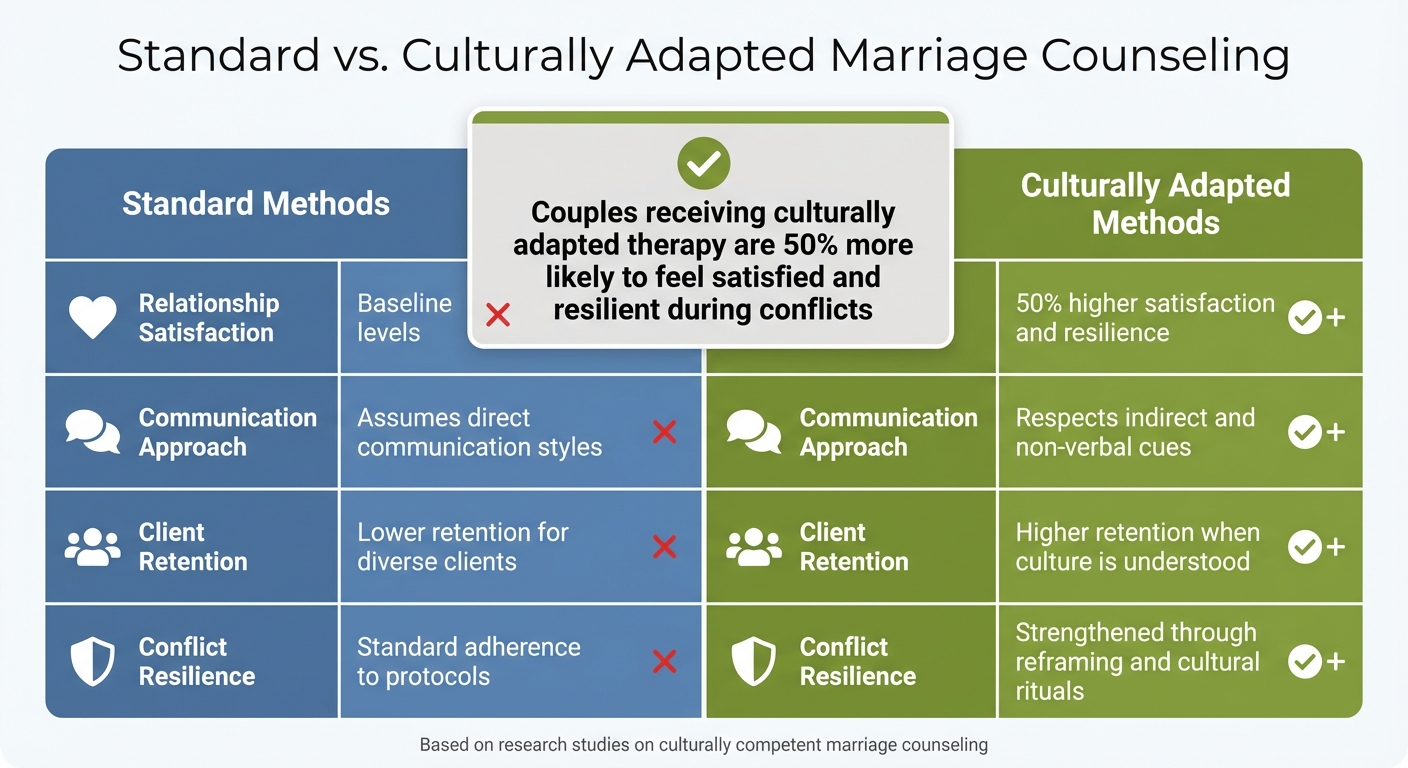
Standard vs Culturally Adapted Marriage Counseling: Key Differences and Outcomes
Building on the foundation of cultural awareness, these approaches fine-tune counseling strategies to better serve couples from diverse backgrounds.
Reframing and Rituals
Therapists can help couples view conflicts through a cultural lens rather than as personal flaws. For instance, if one partner avoids direct confrontation, the therapist might interpret this as a reflection of collectivist values that emphasize harmony and respect, rather than labeling it as avoidance or evasiveness[2][8]. This shift in perspective can transform cultural differences into opportunities for understanding and growth.
Genograms, as previously mentioned, are another valuable tool for uncovering family histories and intergenerational patterns[2][8]. By mapping out these dynamics, couples can gain insight into how their familial backgrounds shape their conflicts. This understanding allows them to work together to reframe challenges and identify shared strengths.
Rituals also play a meaningful role in therapy. Counselors can guide couples in creating new traditions that honor both of their cultural heritages. These could include blended holiday celebrations, forgiveness rituals incorporating spiritual symbols, or commitment ceremonies marking significant milestones like childbirth or immigration[2][7]. Such practices foster deeper connection and help couples navigate life transitions. In addition to reframing conflicts, open discussions about culture further integrate these values into the therapeutic process.
Discussing Culture Openly
A safe space for cultural dialogue is essential for effective therapy. Counselors should encourage open conversations about values, traditions, and expectations by asking questions like, "How did your family express love and respect?" or "What were the expectations around decision-making in your family?"[2][7]. These discussions prevent assumptions and allow couples to define their cultural identities on their own terms.
The ultimate goal is to help partners identify which cultural or religious practices are non-negotiable and which are open to compromise[7]. By navigating these differences, couples can create a shared marital culture that respects their individual backgrounds. These culturally aware conversations pave the way for comparing standard therapeutic methods with tailored, culturally sensitive approaches.
Standard vs. Culturally Adapted Methods
Culturally adapted counseling methods consistently outperform standard approaches when it comes to fostering relationship satisfaction. For example, studies indicate that couples receiving culturally competent counseling are about 50% more likely to feel satisfied and resilient during conflicts compared to those receiving standard care[2]. The table below outlines some key differences:
| Aspect | Standard Methods | Culturally Adapted Methods |
|---|---|---|
| Relationship Satisfaction | Baseline levels | 50% higher[2] |
| Communication Approach | Assumes direct styles | Respects indirect and non-verbal cues[1] |
| Client Retention | Lower for diverse clients | Higher when culture is understood[2] |
| Conflict Resilience | Standard adherence | Strengthened through reframing and rituals[2][8] |
Culturally adapted approaches lead to better engagement, improved outcomes, and higher adherence to treatment for couples from diverse racial and ethnic backgrounds[2][3][5]. The success lies in how therapists adjust their methods – acknowledging hierarchical decision-making styles, involving extended family when appropriate, and using culturally relevant metaphors rather than relying solely on Western concepts.
How Growth and Change Counseling Uses Cultural Awareness
The Marriage Rescue Institute Program
The Marriage Rescue Institute offers a 12-week intensive program tailored for couples facing serious relationship challenges. A key aspect of this program is its integration of cultural awareness right from the start. Therapists begin by conducting a detailed cultural assessment, exploring each partner’s ethnic, religious, regional, and family backgrounds. This includes looking into migration histories and significant cultural rituals[1][2]. As part of this process, they create a cultural genogram – a tool that helps uncover generational beliefs about marriage, gender roles, money management, and conflict resolution.
Throughout the program, therapists at Growth and Change Counseling focus on identifying and normalizing cultural differences rather than misinterpreting them as personality conflicts. The practice works with a diverse range of clients, including couples from Indian, Chinese, Thai, Vietnamese, and Korean backgrounds, as well as expatriates, missionaries, and Third Culture Kids (TCKs). Founder John Mark Kane brings a unique perspective to this work, shaped by his own experiences living in Southeast Asia.
The program also adapts its coaching methods to align with the communication styles of different cultures. For example, couples from cultures that value harmony or indirect communication may experience a slower, more nuanced approach to interventions. These culturally sensitive practices provide a foundation for tailoring therapy to each couple’s specific needs[1][2].
Therapy Adapted for Different Couples
Building on the strategies of the Marriage Rescue Institute, Growth and Change Counseling further customizes its approach to suit the unique challenges faced by different couples. For instance, in neurodiverse relationships – where one or both partners have Asperger’s or High Functioning Autism Spectrum Disorder – therapists treat neurodivergence as a cultural difference in how individuals communicate and process information[2]. Sessions may include practical tools like visual aids, structured communication exercises, and clear guidelines. These strategies help partners reframe misunderstandings as variations in sensory needs, social energy, or emotional expression.
For couples seeking a faith-based approach, the practice offers the option to incorporate Christian Psychology and theological insights into therapy. This flexibility extends to couples managing cross-cultural marriages, the high-pressure environment of Silicon Valley, or the challenges of international relocation. By blending cultural sensitivity with relational skill-building, Growth and Change Counseling ensures therapy feels both meaningful and respectful for every couple.
Conclusion
Acknowledging cultural differences in counseling can increase relationship satisfaction by 50% [2]. When therapists actively recognize and explore cultural backgrounds instead of overlooking them, they create stronger bonds with their clients, enhance communication, and keep couples engaged in therapy.
Being culturally aware requires therapists to continuously reflect on their own practices and adjust their approaches to suit each couple’s unique background. Techniques like cultural genograms and reframing differences as opportunities for growth allow couples to gain deeper understanding of one another and work through conflicts that might otherwise drive them apart. These ideas are at the heart of specialized programs like The Marriage Rescue Institute.
For couples navigating significant challenges, Growth and Change Counseling offers culturally sensitive support through The Marriage Rescue Institute’s 12-week intensive program. This program tailors its approach to the needs of diverse couples, including those from Indian, Chinese, Thai, Vietnamese, and Korean communities, as well as expatriates, missionaries, and neurodiverse relationships. With locations in Campbell, San Jose, Los Angeles, Roseville, and telehealth options across California, Growth and Change Counseling provides solutions-focused therapy that respects cultural identities while fostering the skills needed for meaningful, lasting change.
For couples from diverse backgrounds, culturally responsive counseling transforms conflict into connection, embracing who you are while helping you build the relationship you desire.
FAQs
How does understanding cultural differences benefit marriage counseling?
Cultural awareness is key in enhancing the success of marriage counseling. By recognizing and respecting the cultural differences between partners, counselors can help couples achieve better communication, deeper understanding, and stronger empathy.
When counselors adapt their methods to reflect the unique cultural backgrounds of each couple, it allows them to address conflicts in a way that feels relevant and meaningful. This approach not only helps resolve issues more effectively but also nurtures a sense of mutual respect and appreciation, strengthening the bond between partners.
How do therapists incorporate cultural context into marriage counseling?
Therapists bring a couple’s cultural background into marriage counseling by recognizing and respecting their specific values, beliefs, and traditions. Through cultural awareness training, they deepen their understanding of diverse perspectives and use client-centered approaches to honor these differences.
When interventions are customized to fit a couple’s cultural framework, the counseling process becomes more impactful and relatable. This approach fosters trust, enhances communication, and tackles issues in a way that feels genuine and supportive for both individuals.
Why is understanding cultural differences important in marriage counseling?
Cultural understanding is central to effective marriage counseling. It allows therapists to identify the distinct values, traditions, and viewpoints that influence each partner’s experiences and the dynamics of their relationship. By approaching these differences with care and respect, counselors can offer guidance that feels more relevant and personalized.
This kind of thoughtful approach not only helps couples build stronger connections but also ensures the counseling process honors their cultural backgrounds. The result? Communication improves, and the outcomes are both meaningful and enduring.
Related Blog Posts
- Top 7 Therapy Approaches for Cross-Cultural Couples with Addiction
- Checklist for Therapists Working with Asian-American Couples
- Guide to Relational Intelligence for Intercultural Couples
- Best Practices for Multicultural Telehealth Counseling
