The way you connect with your partner can impact addiction recovery more than you might think. Attachment styles – secure, anxious, avoidant, and disorganized – shape how couples handle emotions, communicate, and support each other during recovery. Here’s the key takeaway:
- Secure attachment promotes trust, open communication, and mutual support, making recovery smoother.
- Anxious attachment can lead to clinginess, enabling behavior, or burnout due to fear of abandonment.
- Avoidant attachment often causes emotional distance, making it hard to address issues openly.
- Disorganized attachment creates instability, with unpredictable behaviors rooted in trauma, complicating recovery efforts.
Understanding these patterns helps couples break harmful cycles and build healthier relationships. Therapy, like Emotion-Focused Therapy (EFT), and daily habits such as check-ins and repair conversations can help couples strengthen their bond and improve recovery outcomes. Secure attachment isn’t just an emotional goal – it’s a practical tool for lasting sobriety.
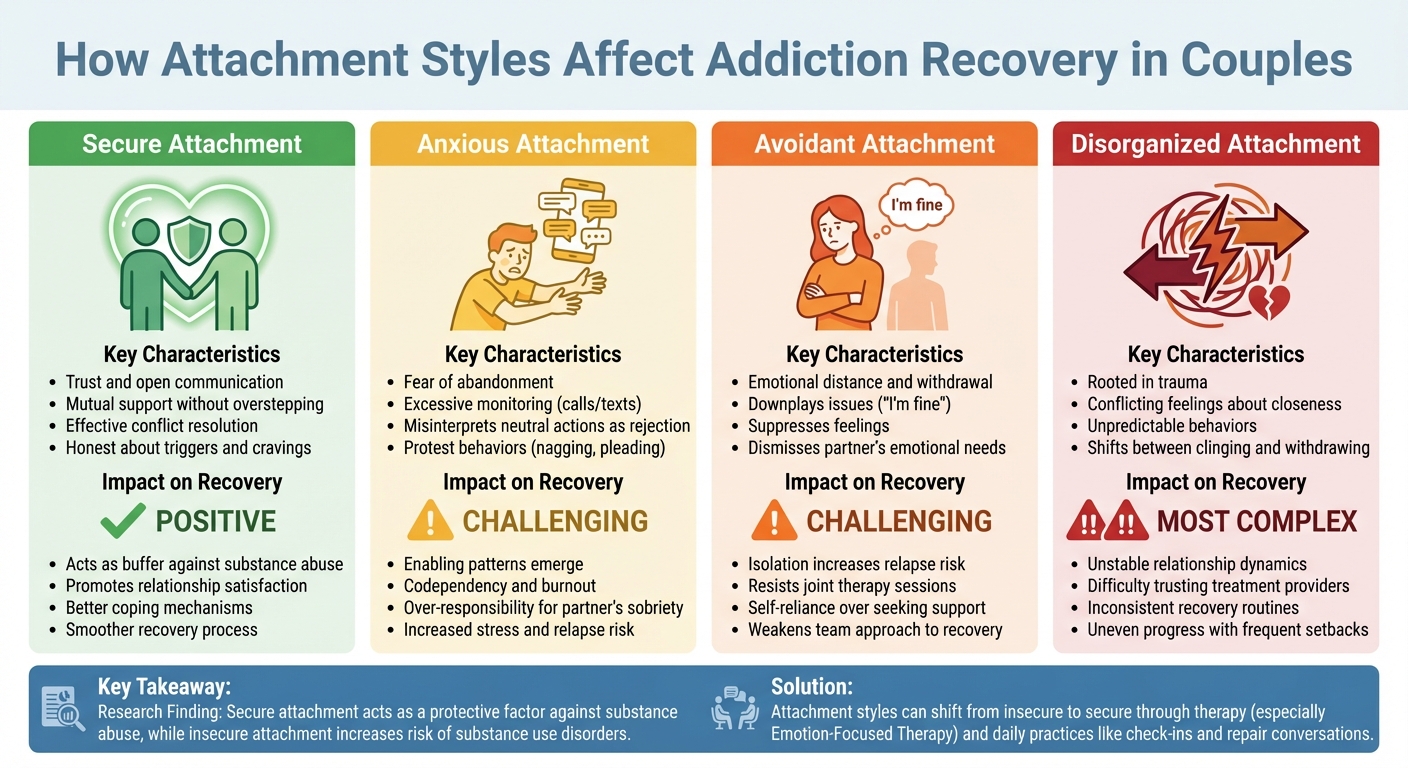
How 4 Attachment Styles Impact Addiction Recovery in Couples
How Your Attachment Style Affects Addictive Behaviors
How Attachment Styles Affect Couples’ Recovery
Each attachment style shapes unique behaviors during recovery. Understanding these patterns can help build stronger, healthier connections.
Secure Attachment: Building Supportive Recovery
Secure attachment lays the groundwork for a more stable recovery process. Couples with this style tend to communicate openly about their triggers, cravings, and emotional challenges without fear or defensiveness. They stick to sobriety plans and resolve conflicts effectively. Research highlights that secure attachment acts as a buffer against substance abuse, promoting greater relationship satisfaction and better coping mechanisms during recovery [2][9].
In these relationships, partners feel comfortable asking for help and offering support without overstepping boundaries. This creates an environment where honesty thrives, and both individuals can address struggles without fear of judgment. When stress or disconnection arises, they recognize it as a signal to reconnect – whether through open conversations or extra counseling sessions. This approach helps counteract the isolation that often fuels addiction, reinforcing their shared commitment to sobriety [4][6].
Anxious Attachment: Managing Fear of Abandonment
Anxious attachment can complicate recovery with behaviors rooted in fear of abandonment. Partners with this style often experience intense worry about being left or seeing their loved one relapse. This fear can lead to behaviors like excessive calls or texts, misinterpreting neutral actions as rejection, or engaging in protest behaviors such as nagging, pleading, or making accusations [3][4].
This attachment style may also result in enabling patterns, like covering for a partner’s substance use or repeatedly providing financial support to avoid conflict or abandonment [3]. Anxious partners often feel overly responsible for their loved one’s sobriety, which can lead to codependency, burnout, and resentment. When boundaries are set, they might panic and revert to over-functioning to maintain the connection. These emotional responses can exhaust both partners and create a cycle of stress that increases the risk of relapse [3][4].
Avoidant Attachment: Bridging Emotional Distance
Avoidant attachment can create significant hurdles in recovery by fostering emotional distance. Those with this style often feel uneasy with emotional dependence, leading them to downplay issues, suppress feelings, and retreat into solitary activities rather than discussing stress or cravings. They may insist they’re "fine" until problems escalate, which can leave both partners feeling disconnected – an environment that heightens relapse risk [3][9][4].
Avoidant partners often rely on self-reliance and coping mechanisms like solitary substance use instead of seeking support. They might dismiss their partner’s emotional needs with statements like "You’re overreacting", which weakens the couple’s ability to work as a team. In therapy, these individuals may resist joint sessions or deeper emotional discussions, preferring to keep conversations surface-level. This pattern of avoidance increases isolation, making it harder to build the supportive connection necessary to sustain recovery [3][5][9].
Disorganized Attachment: Working Through Trauma and Instability
Disorganized attachment poses some of the most complex challenges in recovery. Often rooted in trauma or frightening early experiences, this style leads to conflicting feelings about closeness – partners may feel both drawn to and fearful of intimacy. These internal struggles result in unpredictable behaviors, such as sudden shifts between clinging and withdrawing [3][7][8].
For example, a partner might plead desperately for reassurance one day and then shut down or disappear the next, especially when emotionally triggered. Crises like relapse or financial strain can activate trauma responses, disrupting progress. These partners may unconsciously fall into roles like victim, rescuer, or perpetrator, creating chaotic and stressful relationship dynamics that increase relapse risk [3][7][6][8].
The instability of this attachment style makes it harder to trust treatment providers, stick to therapy sessions, or maintain consistent recovery routines. Progress often happens unevenly, with setbacks that undermine the foundation needed for lasting sobriety. This unpredictability can make recovery an uphill battle for both partners [3][7][8].
Problems Insecure Attachment Creates in Recovery
Insecure attachment patterns can make the road to recovery much more difficult by chipping away at the trust and support that are vital for success. These patterns don’t just complicate relationships; they create conditions where stress can push partners toward substance use instead of healthier coping mechanisms. Research shows that insecure attachment is a notable risk factor for both developing and maintaining substance use disorders, whereas secure attachment can act as a safeguard [8] [9].
Behaviors That Block Recovery Progress
Certain behaviors linked to insecure attachment can severely disrupt recovery efforts. For instance, codependency and enabling often arise when a partner with anxious attachment takes on excessive responsibilities, hides consequences, or tries to "fix" the addicted partner to avoid abandonment [3]. These actions can delay treatment and weaken the motivation to recover, reinforcing denial.
Another common issue is chronic reassurance-seeking and monitoring, which can lead to power struggles and secrecy [3]. On the flip side, avoidant behaviors – like withdrawing or refusing to engage in recovery conversations – make it nearly impossible to address high-risk situations effectively [9] [5].
Escalating conflicts can also increase stress, fueling cravings or relapse. Arguments that quickly spiral into shouting, threats, or emotional shutdowns – often seen in anxious or disorganized attachment styles – leave both partners feeling emotionally depleted [3] [7]. Additionally, inconsistent support creates uncertainty about when it’s safe to ask for help. If one partner alternates between being overly involved and detached, it disrupts the stability needed for healing [4] [6].
"The more relationally healthy people are, the less anxious, addicted, and depressed they are." – John Kane, Relationship Therapist [1]
Recovery Challenges for Couples
These behaviors translate into significant obstacles for couples working toward recovery, primarily by undermining consistent, mutual support. For example, the risk of relapse increases when partners can’t reliably provide each other with comfort and effective problem-solving [4] [10]. Unstable support can lead to self-medication and elevate the likelihood of relapse [9] [6] [8].
Emotional misunderstandings also disrupt recovery routines, such as attending meetings, checking in daily, or discussing triggers. An anxious partner might misread an avoidant partner’s need for space as a sign of impending relapse or abandonment, which could lead to protest behaviors. Conversely, an avoidant partner might see reassurance-seeking as controlling, causing them to withdraw further [3] [7].
Treatment participation often suffers due to insecure attachment. Avoidant partners may resist therapy or family sessions altogether, while anxious or disorganized partners might attend but struggle to open up, leading to superficial involvement or even dropping out [2] [9]. Following through on recovery plans can also become inconsistent when mistrust and conflict interfere. For instance, routines involving medication, financial safeguards, or meeting schedules can break down. If a slip or relapse occurs, anxious partners might panic and issue ultimatums, avoidant partners may downplay the problem, and disorganized partners could become overwhelmed or dissociate – delaying critical responses like contacting a sponsor or adjusting the treatment plan [3] [7].
"Anxious, addicted, depressed people isolate because they are pulling away from relationships, it hurts too much, it’s easier in the moment. But they get more mentally unwell because the root issues are endured instead of resolved, marriages are isolated instead of repaired." – John Kane, Relationship Therapist [1]
Understanding these challenges is a crucial first step toward fostering secure attachment and creating a stronger foundation for recovery.
sbb-itb-596b85d
How to Build Secure Attachment During Recovery
Secure attachment plays a vital role in navigating the challenges of sobriety. Research highlights that couples can shift from insecure to secure attachment styles through therapy and consistent daily efforts, leading to stronger relationships and better recovery outcomes [2]. Addressing attachment wounds tied to addiction can make recovery more effective. Below are practical strategies to use attachment as a recovery tool.
Emotion-Focused Therapy (EFT) for Couples
Emotion-Focused Therapy (EFT) helps couples identify and change negative interaction cycles that contribute to both relationship struggles and substance use. Research shows that couples engaging in EFT experience improved recovery and move closer to secure attachment [2].
EFT unfolds in three stages. First, couples work on reducing conflict by recognizing anxious or avoidant patterns in their interactions. Next, they explore the deeper emotions driving these reactions – such as fears of abandonment during relapse. Finally, they establish new patterns of accessibility, responsiveness, and engagement, transforming their relationship into a reliable source of support [2][10]. For example, an anxious partner expressing fears of being left behind may receive reassurance from their partner, breaking the cycle that previously triggered substance use [3].
Integrating Attachment Work into Recovery Counseling
Beyond EFT, therapists can weave attachment-focused strategies into recovery counseling by assessing clients’ attachment styles early on. This can be done through questionnaires or conversations about early caregiving experiences and current relational patterns [9]. Understanding these dynamics allows therapists to address attachment wounds that may fuel substance use. Exploring these fears in therapy builds emotional resilience [3].
The therapeutic relationship itself models secure attachment. When therapists maintain consistency, set clear boundaries, and show empathy, they demonstrate what a healthy connection looks like. This helps clients gradually adopt healthier relational patterns, which are key predictors of long-term sobriety [4][7]. Combining EFT with approaches like Cognitive Behavioral Therapy (CBT) or Dialectical Behavior Therapy (DBT) enhances treatment by addressing both addiction and attachment insecurities. These methods challenge distorted thinking while improving emotional regulation skills [9].
Daily Practices to Strengthen Attachment
Couples can take simple, daily steps to build emotional safety without needing formal therapy sessions. A great starting point is a daily check-in routine: each partner shares one recovery-related feeling, one stressor, one appreciation, and one need. This keeps communication open and prevents minor issues from escalating [4][6][10].
Physical connection also fosters attachment. Holding hands during walks while celebrating recovery milestones, practicing 20-second hugs after conflicts to signal safety, or having phone-free dinners for uninterrupted attention are all small but meaningful gestures [3][4][7].
Repair conversations are another powerful tool. When emotions run high, partners can take a 20–30 minute timeout to cool down. Afterward, they can use a simple script to share feelings, acknowledge their roles, and plan a better response for the future [2][4][6]. These everyday habits, grounded in attachment research, create a stable support system that significantly boosts the chances of long-term recovery [4][6].
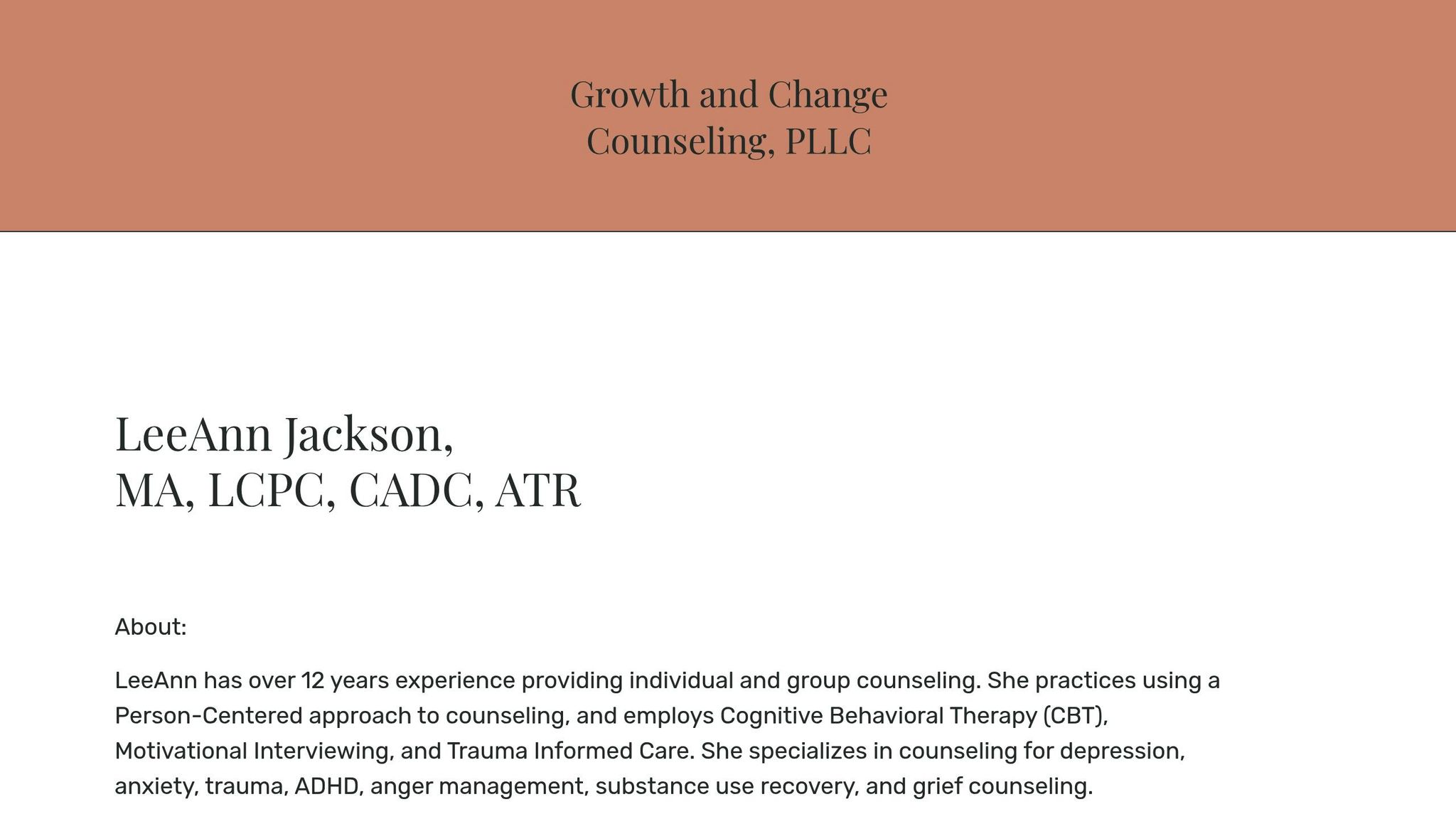
"The more relationally healthy people are, the less anxious, addicted, and depressed they are." – John Kane, Relationship Therapist, Growth and Change Counseling [1]
How Growth and Change Counseling Supports Couples
Marriage Rescue Institute: Intensive Help for Couples in Crisis
When addiction and deep-seated attachment wounds strain a relationship to its limits, traditional weekly therapy might not be enough. That’s where the Marriage Rescue Institute steps in, offering a focused 12-week couples coaching program tailored for crisis situations. This program combines structured sessions, homework assignments, and behavioral agreements to help stabilize the relationship quickly.
One of the program’s key approaches is helping couples recognize how anxious, avoidant, or disorganized attachment styles contribute to enabling behaviors, withdrawal, and conflicts – especially when substance use is involved. Partners are guided to uncover the fears driving their reactions and are encouraged to replace blame with reassurance. By adopting safe and intentional rituals of connection – like regular check-ins or shared recovery activities – couples begin to see each other as dependable and emotionally supportive. This shift not only enhances relationship satisfaction but also strengthens recovery outcomes. The program lays a solid foundation for further personalized support.
Comprehensive Care for Emotional and Relationship Wellness
Growth and Change Counseling also extends its services to include individual, family, and parent therapy, addressing the broader effects of addiction and attachment challenges. Individual therapy provides a private space for each partner to work through personal trauma and related struggles using trauma-focused methods and emotion-regulation techniques. This individual healing makes it easier for partners to engage in healthier, more supportive relationship dynamics.
Family therapy dives into issues like enabling behaviors, codependency, and intergenerational patterns that can affect the couple’s sense of safety within their relationship. By fostering better communication and setting clear boundaries – on topics like finances or interactions with relatives who are actively using substances – the family system can become a source of support rather than strain. These services are available in Campbell, San Jose, Los Angeles, and Roseville, California, as well as through telehealth options for clients across the state.
Start Your Recovery Journey with Growth and Change Counseling
Grasping how attachment styles influence addiction recovery is a key step in fostering healthier relationships and achieving lasting sobriety. When couples identify how anxious tendencies can lead to enabling behaviors, avoidant patterns encourage withdrawal, or disorganized attachment creates instability, they can start addressing the deeper issues that hinder progress. Research shows that while insecure attachment increases the risk of substance use disorders, secure attachment provides a protective shield against relapse [9][8].
The good news? Insecure attachment styles can shift toward secure ones with the help of professional therapy. This transformation helps couples build stronger bonds, promoting emotional balance and long-term recovery [9][7]. As John Kane, founder of Growth and Change Counseling, explains:
"The more relationally healthy people are, the less anxious, addicted, and depressed they are." [1]
If underlying attachment issues go unaddressed, recovery efforts often only scratch the surface, treating symptoms rather than root causes. However, when attachment work becomes part of the treatment process, couples report better recovery outcomes and stronger, more satisfying relationships [2].
These findings have inspired the creation of specialized programs that tackle both addiction and attachment challenges. Growth and Change Counseling offers tailored support through The Marriage Rescue Institute’s 12-week intensive program for couples in crisis. They also provide individual and family therapy focused on addiction and trauma, with services available in Campbell, San Jose, Los Angeles, and Roseville, California, as well as statewide through telehealth.
Secure attachment is a powerful tool against addiction. By building a strong foundation of connection, couples can heal together and move forward as a united team rather than struggling in isolation.
FAQs
How can couples understand their attachment styles during addiction recovery?
Couples can start uncovering their attachment styles by examining how they handle emotional situations, communicate with one another, and either seek or shy away from connection. Recognizing repeated patterns in conflicts or emotional needs can reveal a lot about the underlying dynamics in their relationship.
Seeking help from a therapist can take this understanding to a deeper level. For instance, therapy services like those at Growth and Change Counseling offer a space for couples to explore how their attachment styles influence their relationship and the process of addiction recovery. With professional support, couples can gain practical tools to strengthen their bond and create healthier connections while navigating the challenges of recovery together.
How does Emotion-Focused Therapy help improve attachment styles?
Emotion-Focused Therapy (EFT) works to transform attachment styles by diving into the emotional core of attachment difficulties. It provides a safe and supportive setting where individuals can examine and work through their fears, insecurities, and recurring relational patterns.
By promoting emotional awareness and encouraging openness, EFT helps individuals and couples disrupt harmful interaction patterns and cultivate stronger, more trusting bonds. This approach not only enhances relationships but also nurtures healthier emotional interactions, laying a foundation for personal healing and growth.
What daily habits can help couples strengthen their bond during addiction recovery?
Rebuilding trust and fostering a secure emotional bond during addiction recovery often comes down to small, intentional daily habits. Taking time for meaningful conversations, expressing gratitude through kind words, and offering steady emotional support can go a long way in strengthening a relationship.
Other simple yet impactful actions include truly listening to your partner, maintaining physical affection, and embracing forgiveness. These efforts create a sense of safety and closeness, helping couples face challenges as a team and nurture a stronger, more supportive connection.
Related Blog Posts
- Attachment Styles in Couples Counseling
- How Addiction Impacts Marital Stability
- EFT for Addiction Recovery in Marriage
- Addiction Recovery and Marriage: What Works
