I can support a partner with depression without trying to fix it myself. I’d start with a calm check-in – “You seem overwhelmed. Want to talk?” – then listen before offering advice.
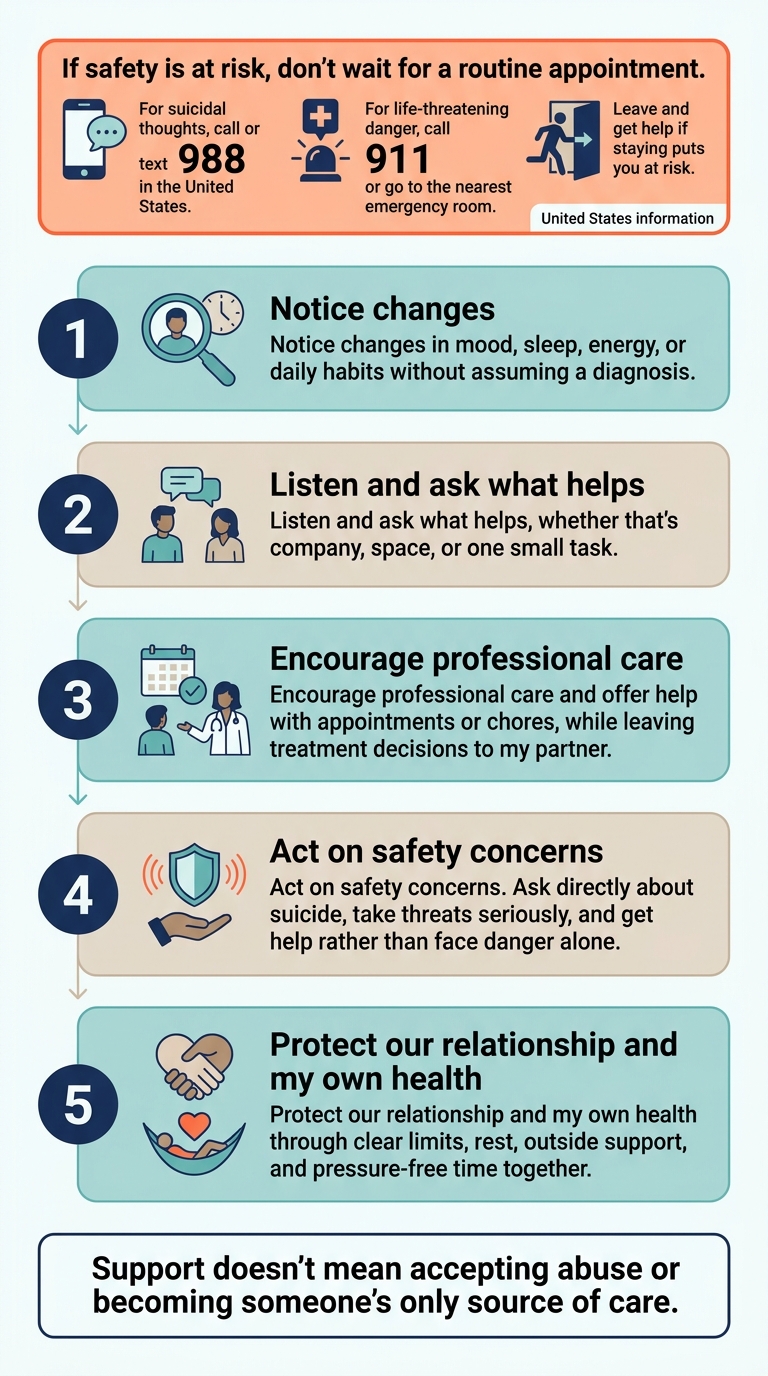
My focus would be on five steps:
- Notice changes in mood, sleep, energy, or daily habits without assuming a diagnosis.
- Listen and ask what helps, whether that’s company, space, or one small task.
- Encourage professional care and offer help with appointments or chores, while leaving treatment decisions to my partner.
- Act on safety concerns. Ask directly about suicide, take threats seriously, and get help rather than face danger alone.
- Protect our relationship and my own health through clear limits, rest, outside support, and pressure-free time together.
Support doesn’t mean accepting abuse or becoming someone’s only source of care. In the United States, I can call or text 988 for suicide crisis guidance – even about someone else. For immediate danger, I’d call 911.
How to Help a Partner With Depression: 5 Support Steps
Supporting a Partner With Depression | Growth and Change Counseling
sbb-itb-596b85d
Step 3: Encourage Treatment and Help With Daily Tasks
If symptoms continue after your first conversation, shift from listening to offering practical help. Encourage a professional evaluation if symptoms persist, worsen, or disrupt work, relationships, parenting, sleep, or self-care.[3][4]
If safety is at risk, don’t wait for a routine appointment. For suicidal thoughts, call or text 988 in the United States. For life-threatening danger, call 911 or go to the nearest emergency room.[6][7]
Help Your Partner Get Professional Care
A primary care clinician or mental health professional can assess symptoms and discuss therapy, medication, or both. With your partner’s permission, help schedule an appointment, put together a symptom timeline and questions, or arrange transportation. Attend only if invited.[3][4][5]
Ask about treatment benefits, possible side effects, and when to review progress. Your partner stays in control of appointments, consent, and medical decisions. Never change their medication yourself.[3][4][5]
Individual treatment addresses depression. Couples counseling can help with communication and conflict, but it doesn’t replace depression care.
While you’re arranging treatment, help ease the workload at home.
Share Tasks and Support Daily Routines
Offer specific help with meals, laundry, school pickup, groceries, or prescription pickup. Agree on who will handle each must-do task and for how long. Keep the list short enough for days when energy and concentration are low, and plan a brief check-in to review what’s working.[3]
Alongside treatment, support regular sleep, meals, light movement, contact with trusted people, and activities that take little effort. Offer company without pressure. If your partner declines help, ask again later. Use your check-in to adjust tasks and boundaries as needed.[3]
Step 4: Respond to Suicide Risk and Unsafe Behavior
If safety is at risk, stop here and act. Shift from support to crisis response if your partner has a suicide plan and access to a weapon, pills, or other lethal means; is too intoxicated to stay safe; or poses an immediate threat of violence. Call or text 988 for crisis guidance. If there’s immediate danger or an attempt in progress, call 911 or go to the nearest emergency department. Leave and get help if staying puts you at risk.[8][9]
Focus on warning signs, immediate help, and clear safety boundaries.
Recognize Suicide Warning Signs and Get Help
Watch for new or worsening signs, such as talking about dying or being a burden, researching suicide methods, gathering pills, giving away valued belongings, or saying goodbye.
Ask directly whether they’re thinking about suicide or killing themselves. Then ask whether they have a plan, can access what they would use, or have already taken any steps today. Don’t promise secrecy or confidentiality.
If they share suicidal thoughts, call or text 988 for guidance – even if your partner won’t call. Share their exact statements, their location, their access to lethal means, and whether they’ve taken pills, alcohol, or drugs. Stay nearby only if it’s safe. Reduce access to lethal means only if you can do so safely, without confrontation or handling weapons.[8]
Set Boundaries Around Unsafe Behavior
Depression does not excuse abuse, threats, coercive control, or financial harm. Set limits around verbal abuse, unsafe substance use, and demands for constant monitoring. Focus on what you will do, rather than trying to control your partner:
“I’ll talk when there’s no yelling or threats. If it continues, I’ll leave and call for help.”
Take suicide threats seriously, including when they’re used to stop you from leaving. Contact crisis help instead of staying in danger. Your job is to respond, not absorb the harm.
Seek emergency or domestic-violence guidance for aggression or severe substance-related danger. If suicide risk persists, involve clinicians and trusted supports in a written safety plan – not a promise to keep watch indefinitely. If abuse or coercive control is present, choose a confidential safety plan with a domestic-violence advocate rather than joint counseling.[10]
Step 5: Care for Your Relationship and Yourself
Once immediate safety is addressed, shift your attention from managing the crisis to caring for your relationship and your own stability.
Depression can lead to withdrawal and low energy, but it doesn’t define your partner or excuse unsafe behavior. Separate symptoms from identity without setting aside your own needs. Relationship problems still need attention. Supporting recovery doesn’t mean becoming your partner’s therapist, constant monitor, or only social connection.
Discuss Responsibilities and Make Time to Connect
Choose a calm moment to talk about chores, finances, parenting, appointments, and intimacy. Agree on specific tasks, what each of you can realistically handle, and a date to revisit the plan.
Make time to connect without pressure. Share a meal or take a short walk together. Respect a no, and keep physical and sexual intimacy consensual and pressure-free.
If the same conflicts keep coming up and both partners feel physically safe, couples counseling techniques can help you communicate and repair the relationship. Couples work does not replace depression treatment.[1]
Protect Your Rest and Support Network
Make room for sleep, regular meals, movement, work, friendships, and spiritual practices if they matter to you. Seek individual counseling or practical help when you need it. Persistent exhaustion, resentment, isolation, or missed responsibilities are signs that the support plan needs to change.
Ask permission before sharing your partner’s private information, and share only what’s needed. You can get confidential support for your feelings without giving more details than necessary. Urgent safety concerns may require contacting crisis or emergency services without consent.
Compare Helpful and Harmful Responses
Use these contrasts to check whether your support is helping or starting to cause harm.
Helpful support Harmful response “I’m here to listen.” “Just snap out of it.” Offering one agreed-upon task for a defined period Taking over all responsibilities long term Maintaining clear boundaries and rest Ignoring harmful behavior or neglecting yourself
Conclusion: Choose One Next Step
Take one step today: check in calmly, help schedule a primary care or therapy appointment, or take care of an agreed-upon errand. Small, steady support helps more than trying to fix depression on your own.
Recovery can be uneven. You can support your partner’s care without taking responsibility for the outcome.
If you’re concerned about suicide, call or text 988.[11] Call 911 if there’s immediate danger.[3][11]
Caring for your partner doesn’t mean setting aside your own needs. Pick a next step that leaves room for your well-being, too.
FAQs
What if my partner refuses depression treatment?
If your partner refuses treatment, lead with empathy, not control, and respect their right to decide. Suggest a visit with a primary care doctor or offer to attend a session together to help ease their concerns.
If they continue to resist, protect your boundaries and care for your own well-being. Growth and Change Counseling offers individual and couples therapy, including the Marriage Rescue Institute, to help you work through these challenges and support your relationship.
How can I handle feeling rejected by my depressed partner?
It’s natural to feel rejected when your partner withdraws, seems irritable, or shows little interest. But these behaviors may reflect depression, not how they feel about you. Try to keep that distinction in mind.
Share what you need without placing blame. Using “I” statements can help:
“I feel disconnected and would like to find ways to spend time together.”
Growth and Change Counseling offers couples therapy to help you work through these challenges.
How do I recognize caregiver burnout?
Caregiver burnout can happen when you put your own needs aside while supporting a partner. Signs include emotional exhaustion, resentment about your caregiving role, and neglect of your physical and emotional well-being [1][2]. You may feel drained and less able to care for your partner effectively [1].
Making time for self-care helps restore the energy you need to provide steady, compassionate support [1].
Related Blog Posts
- 5 Therapy Techniques for Couples Facing Depression
- 7 Ways to Support a Spouse Struggling With Depression
- Trauma, Addiction, and Depression in Marriage
- 7 Ways to Support a Partner in Recovery Without Losing Yourself
