When trust breaks, healing starts with truth, clear limits, and steady follow-through. In my view, Christ-centered counseling helps couples separate forgiveness from trust, deal with the harm in plain language, and rebuild safety and overcome trust issues one step at a time.
Here’s the core idea in simple terms:
- Trust is rebuilt, not declared
- Confession must be plain and complete
- Forgiveness is a choice; trust takes time
- Boundaries and accountability lower fear
- Daily actions matter more than promises
- In addiction or repeated betrayal, the process often moves through 4 stages: crisis, stabilization, rebuilding, and restoration
A key point many couples miss: saying “I’m sorry” is not the same as repentance. In counseling, the focus is usually on visible change: honest answers, open devices or finances when needed, scheduled check-ins, and calmer conflict over time.
A few signs the marriage is moving in the right direction:
- Hidden behavior stops
- Promises are kept
- Hard talks feel less explosive
- Both spouses know the boundaries
- Prayer and emotional closeness start to return
| Issue | What helps repair it |
|---|---|
| Lying or secrecy | Full truth and openness |
| Infidelity or betrayal | Confession, limits, and steady action |
| Addiction | Recovery work plus couples counseling |
| Emotional shutdown | Guided conversation and validation |
| Broken safety | Accountability and repeated follow-through |
If I had to sum up the article in one sentence, it would be this: Christ-centered counseling repairs trust by pairing biblical repentance and forgiveness with plain structure, honest communication, and repeated action.
What if I Don’t Feel Ready To Forgive? | Therapy & Theology
sbb-itb-596b85d
What Makes Christ-Centered Counseling Different
Christ-centered counseling brings faith right into the work of recovery. It uses clinical tools, but it also makes room for prayer, Scripture, confession, and accountability. That mix speaks to both spiritual conviction and day-to-day change. In plain terms, it helps couples move from what they say they believe to how they live it out.
Biblical Principles That Guide Trust Repair
Biblical principles give couples a clear path, not just good intentions. Repentance is more than saying, “I’m sorry.” It calls for changed behavior, real empathy, and steady transparency over time. Confession means naming the harm plainly and directly. Forgiveness is treated as a spiritual choice to let go of resentment, while trust is treated as a separate process that must be rebuilt through steady, visible action.
"Forgiveness and trust are related but separate. Forgiveness can begin internally, while trust is rebuilt externally through consistent behavior over time." – Valiant Couples Therapy and Consulting [2]
Keeping forgiveness separate from trust gives both spouses a more honest way forward. One person may choose forgiveness before the relationship feels safe again, and that’s okay. Trust still has to be rebuilt in the open, step by step. For that to happen, the counseling room needs enough structure for both spouses to speak plainly.
Why Structure and Safety Matter in Counseling
After betrayal, honest conversation can feel risky. The wounded spouse may fear being brushed off. The offending spouse may fear being hit with anger the moment they speak. When there’s no structure, those fears can trap a couple in the same old pattern: one person pushes, the other pulls back, and nothing changes.
That’s where a marriage therapist in Roseville steps in. The job is to slow the cycle down. Through guided conversation in session, each spouse learns how to speak and listen without letting the moment spiral. Without safety, honesty often falls apart and turns into blame, defensiveness, or silence. The counselor helps both spouses stay calm, speak plainly, and hear each other without shutting down.
That kind of safety gives truth-telling somewhere to land. And that matters, because trust repair can’t start without it.
How Christ-Centered Counseling Rebuilds Trust Step by Step
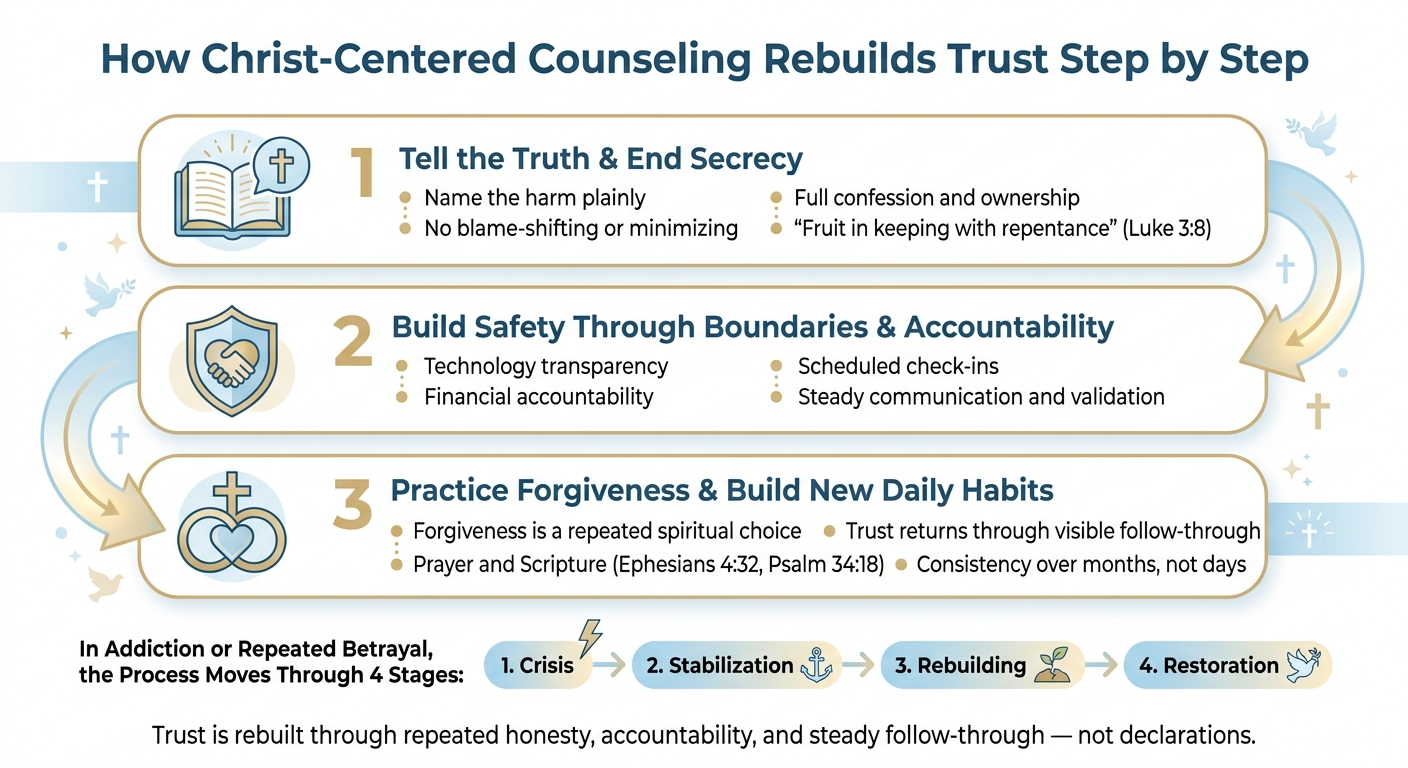
How Christ-Centered Counseling Rebuilds Trust: A Step-by-Step Process
Once a sense of safety is in place, trust repair usually moves in three directions: truth, boundaries, and new habits.
Step 1: Tell the Truth and End the Cycle of Secrecy
If the breach involved addiction, infidelity, or repeated lying, which may require overcoming addiction with faith, the first move is simple, but hard: say what happened clearly. Healing begins when the harm is named plainly and safely, without blame-shifting or minimizing. The spouse who caused the harm has to own it in full.
In a Christ-centered setting, that looks like true confession. It isn’t a vague, "I’m sorry if I hurt you." It names the wrong directly and accepts responsibility for the pain it caused. Biblical restoration places the burden on the one who broke trust to prove repentance through "fruit in keeping with repentance" (Luke 3:8) – changed behavior, real empathy, and steady transparency over time [3].
Once the truth is out in the open, counseling helps turn that honesty into clear safeguards.
Step 2: Build Safety Through Boundaries, Accountability, and Consistent Communication
After the truth is on the table, there need to be practical safeguards. These tools help lower fear and confusion for both spouses. That can include technology transparency, financial accountability, and scheduled check-ins [1].
Steady communication matters just as much as those structural boundaries. That means listening without interrupting, staying present during hard talks, and validating your spouse’s feelings even when you don’t agree. Trust comes back through steady, intentional change over time [1].
With those boundaries in place, couples can start working on forgiveness in the marriage covenant and new day-to-day patterns.
Step 3: Practice Forgiveness and Build Trust Through New Daily Habits
Forgiveness is a repeated spiritual choice. Trust comes back through repeated, visible follow-through [2]. Forgiveness does not mean giving permission for old behavior to return. It means choosing – again and again, often over months – to release resentment without excusing the harm [2].
Prayer and Scripture matter here. Counselors often guide couples to use prayer not as a way to rush past the pain, but to ask for willingness to forgive and for strength to stay emotionally present when every instinct says to shut down. Ephesians 4:32 and Psalm 34:18 are often used to ground that process.
| Old Patterns | New Christ-Centered Practices |
|---|---|
| Secrecy | Full transparency |
| Blame-shifting | Accountability |
| Defensiveness | Vulnerability |
| Isolation | Counseling and community |
| Broken promises | Consistency |
Trust usually rebuilds over months, not days.
Healing Deep Betrayal and Addiction at Growth and Change Counseling
When addiction or repeated betrayal is part of the story, this process needs to slow down. It also needs more structure. In these cases, safety comes first, and trust comes back only through steady, visible change over time. The aim isn’t just sobriety or an apology. It’s covenant repair.
When Addiction or Repeated Betrayal Is Part of the Trust Breakdown
Addiction and repeated betrayal make trust repair slower and more structured. Why? Because the damage usually runs on two tracks at once: the compulsive behavior itself and the marital wound left behind.
Counseling has to deal with both. Individual recovery can help with sobriety and behavior change, but choosing couples therapy over self-healing is often necessary to repair the marriage.
When pornography or sex addiction is involved, counselors need a focused plan for the cycle of shame and secrecy. That cycle tends to keep people stuck. One spouse hides, the other feels blindsided, and the relationship loses its footing.
How Counseling Supports Both Spouses During the Rebuilding Process
The betrayed spouse’s trauma needs direct validation, not minimization. Counseling gives that pain a place to be named honestly. It also asks the recovering spouse to respond with transparency, remorse, and humility.
Progress often moves through a few clear stages:
- crisis
- stabilization
- rebuilding
- restoration
In the most severe cases, structure matters just as much as insight. Stabilization has to come first. That often means setting clear boundaries around technology, finances, and communication before deeper emotional work starts.
Some situations need intensive therapy for couples in crisis to protect safety and keep accountability in place. Individual recovery can support sobriety, but couples counseling is what helps heal the betrayed spouse’s trauma, restore communication, and rebuild shared trust.
Conclusion: What Restored Trust Can Look Like With the Right Help
After truth, boundaries, and daily change, restored trust starts to show up in normal life. You can see it in small moments, not just big talks. Trust comes back through repeated honesty, accountability, and steady follow-through.
Most couples need structure to turn insight into change that lasts. Without it, the same painful patterns tend to keep looping. With it, a fragile process starts to feel more grounded and easier to track.
Clear Signs That Trust Is Being Rebuilt
You don’t have to guess whether things are heading in the right direction. Restored trust shows up in concrete, everyday ways:
- Hidden behavior stops. Questions get direct, honest answers.
- Conflict becomes less reactive through co-regulation techniques. Disagreements still happen, but with less reactivity or shutdown.
- Promises are kept consistently. Commitments made are commitments kept.
- Boundaries stay clear and respected. Both spouses understand and respect what’s needed for safety.
- Couples pray together again. A shared, biblically based vision for the future begins to take shape.
- Vulnerability is met with compassion. Emotional safety grows as the relationship stabilizes.
For couples in California who want structured Christian counseling, Growth and Change Counseling offers intensive marriage support through The Marriage Rescue Institute.
FAQs
How long does it take to rebuild trust?
Rebuilding trust doesn’t follow a neat schedule. In most cases, it takes time, patience, and a lot of steady work. This is rarely something that gets fixed overnight.
The timeline often depends on two things: how deep the hurt goes, and whether both partners are willing to show up with honest, steady effort. Growth and Change Counseling helps couples through The Marriage Rescue Institute, a structured 12-week coaching process built to help rebuild connection with a faith-based, practical approach.
Can forgiveness happen before trust returns?
Yes. Forgiveness and trust are separate processes.
Forgiveness is an internal choice, and it can start early. Trust is different. It has to be rebuilt over time through steady, visible behavior, reliability, and accountability.
Growth and Change Counseling offers structured support for people working through both paths toward restoration.
What if my spouse keeps hiding things?
If your spouse keeps hiding things, that usually shows the openness and accountability needed for healing still aren’t there. Trust comes back through steady, visible actions over time – not words alone.
They need to choose full accountability on their own. That includes being open about devices, accounts, and daily routines. Growth and Change Counseling can help couples set clear boundaries and move from secrecy toward restoration and emotional safety.
Related Blog Posts
- 5 Steps to Forgiveness in Christian Marriage
- How Faith Helps Rebuild Trust After Addiction
- Overcoming Betrayal: Biblical Solutions for Restoring Trust
- Christian Counseling Tools for Marriage Recovery
