Parenting a child with ADHD can feel overwhelming, but understanding their unique needs and challenges makes a big difference. ADHD stems from neurological differences, not defiance, and often affects attention, impulse control, and executive function. This guide offers practical strategies to create a supportive, structured, and compassionate home environment. Here’s a quick summary of what you’ll learn:
- Structure and Routines: Use visual aids, clear schedules, and predictable routines to help your child feel secure and reduce daily stress.
- Task Management: Break tasks into smaller steps, use checklists, and support executive function development with tools like timers and visual organizers.
- Emotional Connection: Prioritize trust, praise small wins, and replace punishment with positive reinforcement to build your child’s confidence.
- Sensory-Friendly Spaces: Minimize clutter, adjust lighting, and create calming zones to reduce overstimulation.
- Consistent Caregiver Strategies: Align parenting approaches across all caregivers to avoid confusion and improve outcomes.
- Professional Support: Collaborate with teachers, therapists, or ADHD specialists to create a cohesive plan for success at home and school.
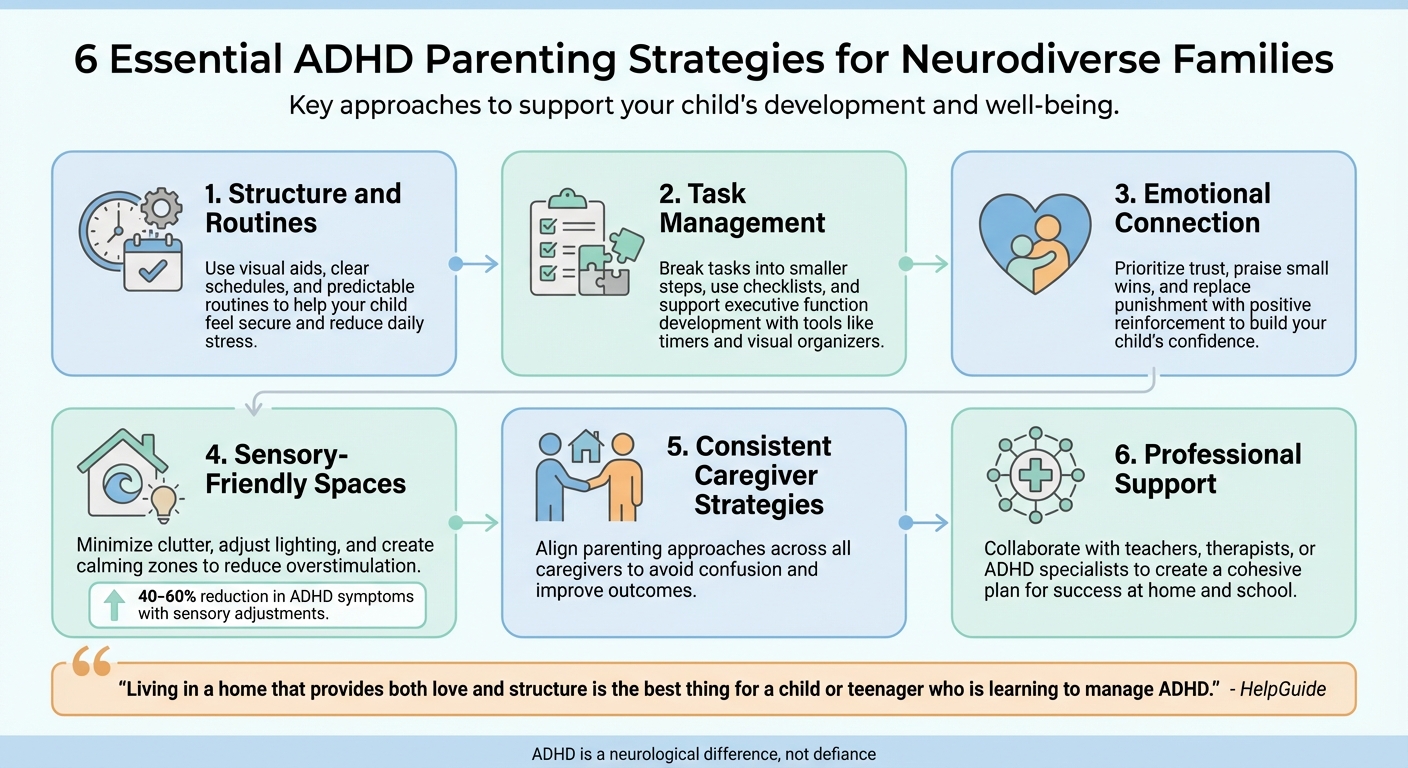
6 Essential ADHD Parenting Strategies for Neurodiverse Families
Understanding ADHD as a Neurological Difference
What is ADHD and How Does It Impact Neurodiverse Families?
ADHD, short for Attention-Deficit/Hyperactivity Disorder, is a neurodevelopmental condition that begins in early childhood. It’s an inherited difference in brain development, not the result of poor parenting or environmental factors [3]. This distinction is especially important for families where multiple members may share similar traits, as it helps frame behaviors in a neurological context rather than a moral or disciplinary one.
ADHD primarily affects areas like attention control, impulse regulation, and executive function. But it’s not about having a “deficit” of attention – it’s about difficulty directing attention. For instance, a child with ADHD might intensely focus on video games but struggle with homework because their brain craves immediate stimulation [9].
"What’s really disordered is the child’s ability to control and direct what he’s paying attention to." – Child Mind Institute [9]
Executive function difficulties make tasks like planning, organizing, and decision-making particularly challenging. Emotional regulation can also be a hurdle. Simple transitions, like stopping a fun activity to start a necessary one, can feel overwhelming. Impulse control issues might show up as interrupting conversations, acting without thinking, or struggling with patience.
These behaviors often stem from skill gaps, not defiance or intentional disobedience. Understanding this can dramatically shift how parents approach these challenges. When behaviors are seen as neurological differences rather than moral failings, it opens the door to more compassionate and effective parenting methods. This perspective is essential, especially since traditional parenting approaches often fall short for children with ADHD.
Why Standard Parenting Methods Often Fall Short
Traditional parenting techniques typically rely on the idea that children will self-regulate in response to consequences. While this might work for neurotypical children, it often misses the mark for those with ADHD [3].
For example, promising a reward for good behavior next week may not resonate with a child whose brain craves immediate feedback. This is tied to differences in dopamine levels, which play a key role in motivation and reward [10]. Similarly, expecting a child with ADHD to manage multi-step instructions or keep their school materials organized without support can lead to frustration – not because they don’t care, but because their executive function is still developing [1].
Relying on punishment to enforce compliance can also damage the parent-child relationship. Behaviors like forgetfulness might be mislabeled as laziness, or impulsivity might be misunderstood as disrespect. Over time, children can internalize these negative perceptions, which can affect their self-esteem. Instead, using strategies that acknowledge the neurological realities of ADHD can foster a more supportive dynamic.
Effective parenting for ADHD involves stepping in as your child’s external executive function. This means providing structure through tools like visual schedules, clear routines, and breaking tasks into smaller, manageable steps. Immediate reinforcement can help bridge the gap until their skills catch up. By meeting children where they are, parents can create an environment that supports growth and reduces frustration for everyone involved.
ADHD 101 – Why Kids With ADHD Need Different Parenting Strategies
Building Structure and Predictability at Home
Children with ADHD thrive when their environment is predictable. A clear routine doesn’t just reduce anxiety; it also helps build a sense of security. In fact, a review of 50 years of psychological research shows that even infants and preschoolers benefit from predictable family routines, leading to better-regulated behavior and improved health [12]. For children with ADHD, this kind of structure is even more crucial.
"A predictable schedule offers structure that helps kids feel safe and secure. By building one, you send a message that says, ‘This is how we do things.’" – Peter Jaksa, Ph.D. [12]
When routines are consistent, they help minimize the mental effort required to tackle daily tasks. That said, you don’t have to create a rigid schedule. Focus on establishing clear routines for key parts of the day – like mornings, after school, dinner, and bedtime.
Using Visual Aids for Routines and Transitions
For children with ADHD, visual cues can be a game-changer. A wall chart or visual schedule can communicate expectations without constant verbal reminders [13][14]. These tools break down multi-step tasks into smaller, more manageable pieces.
Start with one routine at a time. Bedtime is often a good starting point. Create a simple chart with two or three steps, such as "brush teeth", "put on pajamas", and "read a book." For younger kids, use photos or drawings, while older kids who can read might prefer written instructions [16].
"Visual schedules often take out the personal piece of an adult’s demands." – Cierra Chmiliar, Registered Psychologist [16]
Timers are another helpful tool for transitions. For example, set a timer 5-10 minutes before an activity ends to help your child prepare for the next one. A Time Timer, which visually shows time as a shrinking red disk, can be especially effective [13][14]. Pair this with a "First–Then" approach (e.g., "First finish your game, then have dinner") to clarify what’s expected.
Interactive visual aids can make routines more engaging. A chart with Velcro tabs, where your child can remove or flip over tasks as they’re completed, adds a sense of accomplishment. Place these aids where they’re most useful – a handwashing chart near the sink or a getting-ready checklist inside the closet [16].
Preparing the night before can also turn chaotic mornings into smoother starts. Lay out clothes, pack backpacks, and handle school forms in the evening. Keep essentials like shoes and bags by the door, and limit distractions – turn off the TV and save emails or phone scrolling for after your child leaves for school [12][13].
| Routine Phase | Recommended Strategies |
|---|---|
| Morning | Post a task list, keep essentials by the door, and brush teeth together [12]. |
| After School | Set a consistent start time, allow movement breaks, and offer a snack immediately [12]. |
| Dinnertime | Assign tasks like setting the table; keep conversation light and avoid heavy topics [12]. |
| Bedtime | Establish a "lights-out" ritual, offer a healthy snack, and consider a relaxing bath [12]. |
These visual aids not only make daily tasks more manageable but also set the stage for smoother transitions to other strategies.
Balancing Structure with Flexibility
While structure is key, it’s just as important to allow for flexibility. Think of routines as a supportive framework – something that holds things steady while your child learns and grows – not as unbendable rules [14].
"Structure doesn’t mean being super strict or perfect. It means having clear routines, rules that stay the same, and a plan that helps everyone know what to do." – Kyla Beecham, LISW-S [14]
Get your child involved in the process. Let them help design visual charts or decide the order of tasks. This sense of ownership can reduce resistance and make routines feel less like a chore. If a certain step proves difficult, adjust it – whether that means breaking it into smaller parts or giving them more time to complete it. The aim is steady progress, not perfection.
Life happens – dentist appointments, sick days, or family emergencies can disrupt even the best-laid plans. When changes occur, acknowledge them and explain what will happen instead. Use visual aids to illustrate any adjustments to the schedule.
If your child resists, acknowledge their feelings briefly, then guide them back to the plan. Consistency across caregivers is essential to reinforce these routines, creating a unified approach [12][3]. And if you have ADHD yourself, tools like phone reminders or shared digital calendars (e.g., Google Calendar) can help you manage recurring tasks and lighten your mental load [13][15].
Breaking Down Tasks to Support Executive Function
Helping kids manage their tasks effectively can make a big difference, especially in a structured home environment. For children with ADHD, executive function – a set of skills that includes planning, organizing, and completing tasks – can be a significant challenge. Since the prefrontal cortex doesn’t fully mature until around age 25, parents often need to step in as a sort of "external executive function" for their child [20]. But don’t worry – this doesn’t mean doing everything for them. Instead, it’s about breaking down complicated tasks into smaller, more approachable steps to ease the mental load.
"Often these kids will get so wrapped up in the decision-making process that they never even start the task." – Ruth Lee, Educational Therapist [17]
The key is to make the process visible. When tasks seem overwhelming, children with ADHD may freeze up. Breaking a big job into bite-sized steps, each with a clear time frame, can help them get started [17][19]. For instance, instead of saying, "Clean your room", try something like: "First, put your clothes in the laundry basket. Then, put the books back on the shelf. Finally, place toys in the bin." By turning a daunting task into a series of smaller, achievable goals, you make it easier for your child to take that first step. These strategies also pave the way for consistent, step-by-step routines.
Step-by-Step Guidance for Daily Tasks
Start with everyday activities like homework, chores, or getting ready for school. A checklist can work wonders here. For younger kids, include pictures – like a toothbrush for "brush teeth" – to make the steps even clearer [17][21]. Keep these checklists in visible spots, such as on the bathroom mirror or near their study area.
Time awareness is another common hurdle for kids with ADHD. They often struggle to predict how long a task will take. A simple way to practice this is by asking your child to guess how much time a chore will require, then timing it with a stopwatch or timer [13]. Over time, this builds their sense of timing. Another technique worth trying is the Pomodoro Technique: 25 minutes of focused work followed by a 5-minute break [19]. Just make sure the break doesn’t involve highly stimulating activities like video games [20].
"Kids don’t remember that they won’t remember their homework if they don’t write it down. It doesn’t matter how many times they forget." – Matthew Cruger, PhD, Director of the Child Mind Institute Learning and Development Center [17]
For homework, visual tools like graphic organizers can be a game-changer. Take the "Hamburger Model" for writing assignments: the top bun represents the thesis, the fillings are the supporting points, and the bottom bun is the conclusion [17]. These tools lighten the mental load by externalizing the steps, so your child can focus on completing the task rather than juggling everything in their head [17][18].
Building Independence Through Scaffolding
Once your child gets the hang of these strategies, you can start encouraging independence. Scaffolding is all about providing just enough support to help your child succeed, then gradually stepping back as they gain confidence. This process can take a couple of weeks or more, but it’s worth the effort [17][20]. Start tasks together, transition to checklist-based reminders, and eventually let them take the reins [17][20].
Involving your child in creating these systems can boost their commitment. Let them help design their checklists or decide how to organize their workspace – they’re more likely to stick with tools they’ve had a hand in creating [21]. Also, explain the reasoning behind each strategy. Kids with ADHD are more likely to embrace a tool if they understand how it saves time or reduces stress [17].
"If we serve as our children’s EF system, then they will never learn to develop their own." – Jen Dryer and Gabriele Nicolet, Co-founders of Raising Orchid Kids [21]
Encourage self-monitoring with simple questions like, "Am I on task right now?" or "What should I be doing at this moment?" This kind of internal dialogue helps build self-regulation over time. For younger kids, "Social Stories" can be helpful. These are short, first-person narratives that outline how to successfully complete a task, boosting both confidence and understanding [17].
Creating a supportive environment also matters. Keep workspaces organized, quiet, and stocked with all necessary supplies to avoid interruptions like hunting for a pencil or paper [17][4].
It’s important to remember that children with ADHD may develop executive skills more slowly – sometimes lagging by as much as 30%. That means a 12-year-old might display the executive abilities of a 9-year-old [21]. Adjust your expectations accordingly, and celebrate small victories as your child builds these essential skills. This approach not only nurtures their independence but also strengthens the overall harmony within your family.
Prioritizing Emotional Connection Over Compliance
While breaking tasks into smaller steps helps with executive function, building a strong emotional connection is the real key to lasting behavioral change. For children with ADHD, struggles with follow-through or seeming disregard for requests can often lead parents to rely on constant corrections. But here’s the thing: many ADHD behaviors, like distractibility, forgetfulness, and impulsivity, aren’t acts of defiance. They stem from challenges in the brain’s executive function, not intentional misbehavior [1].
"The child who is ignoring, annoying, or embarrassing you is not acting willfully… Kids with ADHD want to sit quietly; they want to make their rooms tidy and organized… but they don’t know how to make these things happen." – Melinda Smith, M.A. and Jeanne Segal, Ph.D. [1]
Studies reveal that harsh, critical parenting can activate a stress response in children, making it harder for them to regulate their emotions. On the flip side, calm and consistent parenting leads to better long-term outcomes, like reduced rates of delinquency and substance use as kids grow [27]. The focus shouldn’t be on achieving perfect compliance but on nurturing a relationship strong enough to handle everyday struggles.
Building Emotional Safety and Trust
Children with ADHD often face more criticism than their peers, making it crucial to create a home environment where they feel unconditionally accepted. One powerful approach is co-regulation: staying calm and centered yourself helps your child do the same [1].
A simple yet effective strategy is carving out daily "Special Time." Spend about 10 minutes on an activity your child enjoys – whether it’s playing, cuddling, or just hanging out – without giving directions or critiques [25]. This small but meaningful interaction strengthens your bond and builds a sense of security, making it easier for your child to accept guidance when challenges arise [27].
"For a child to feel accepted and supported, he needs to feel that his parents have confidence in his abilities. Once parents learn to look at the gifts of ADHD… they can see the shine inside their child." – Ken Brown-Gratchev, Ph.D., Special Education Instructor [22]
Acknowledging and praising positive behavior is another key practice. Celebrate small wins, like staying focused for a few minutes or speaking in a calm voice. For example, saying, "I noticed how you stayed in your seat during dinner – that took effort", is far more impactful than a vague compliment [24]. Explaining why you’re making a request, rather than just issuing commands, also helps nurture their self-esteem [22].
It’s important to avoid punishing behaviors your child can’t control, like forgetfulness or getting distracted. These are symptoms of ADHD, not choices. Punitive responses can damage trust and set your child up for failure. If tensions rise, consider reframing time-outs as moments for both of you to cool down, rather than as punishment [22].
Focusing on emotional connection allows you to replace punitive methods with positive reinforcement, creating a supportive foundation for growth.
Shifting from Punishment to Positive Reinforcement
Just as structure helps kids complete tasks, positive reinforcement creates an environment where change feels achievable. At its core, discipline is about teaching. Shifting from a mindset of judgment to one of understanding – recognizing that difficult behaviors often stem from factors like sensory overload, transitions, or time blindness – can make a world of difference [23].
"Punishing a child with ADHD for difficult behaviors is ineffective and counterproductive because they don’t have the luxuries of regulating their emotions and behaviors like a neurotypical child would." – Merriam R. Sarcia Saunders, LMFT [23]
Positive reinforcement focuses on encouraging behaviors you want to see more of, rather than punishing the ones you don’t. For example, ignoring minor misbehaviors like whining or interrupting can sometimes reduce their frequency [25]. At the same time, praising the opposite behavior – such as calmly acknowledging when your child uses a quiet voice instead of shouting – reinforces positive habits [24].
Visual reward systems, like sticker charts for younger kids or point systems for teens, can be especially helpful. These tools provide immediate feedback, which is crucial for children who struggle with time blindness. Keeping the system simple and targeting just a few behaviors at a time ensures that rewards and feedback are timely and effective [26][27].
sbb-itb-596b85d
Creating Sensory-Friendly Spaces at Home
While positive reinforcement can shape behavior, the physical environment plays a big role in helping children with ADHD focus and self-regulate. Studies suggest that thoughtful sensory adjustments and organized spaces can reduce ADHD symptoms by 40% to 60% [29]. Kids with ADHD often process sensory input differently – what feels like a regular room to one person might feel chaotic and overwhelming to them. By reducing sensory overload, these environmental changes work hand-in-hand with behavioral strategies.
Adjusting the Environment for Sensory Sensitivities
To start, focus on common triggers like lighting, noise, and clutter. Harsh fluorescent lights can overstimulate, so swap them for softer, steady lighting. Painting walls in neutral, calming shades – think soft blues, greens, or browns – can also help create a more soothing atmosphere, avoiding the intensity of bright colors or busy patterns.
"Clutter overwhelms the ADHD brain and makes focus nearly impossible." – Candice Lapin, The Ladder Method [29]
Visual clutter can be a major distraction. Clearing off surfaces and using storage solutions like bins or shelves can reduce visual distractions by up to 50% to 70% [29]. Keeping spaces tidy and organized makes it easier for kids to focus without feeling overstimulated.
Noise is another factor to consider. White noise machines or electric fans can help mask distracting household sounds, while noise-canceling headphones are great for quiet, focused activities like homework. Creating distinct zones for activities – like separate areas for homework, play, and relaxation – can also make transitions between tasks smoother.
A designated "quiet retreat" can be a lifesaver for moments when your child feels overwhelmed. Fill this space with soft textures, cozy seating, and dim lighting. This isn’t a place for punishment but rather a haven for self-regulation and calming down.
Using Sensory Tools and Movement Breaks
In addition to adjusting the environment, sensory tools and movement breaks can help your child manage their energy and focus. Fidget toys, stress balls, and textured objects can be incredibly useful during homework or other seated tasks.
Movement breaks are just as important. Set aside a space for physical activity with items like yoga mats, jump ropes, or resistance bands. Activities that involve heavy work – like carrying groceries or moving laundry baskets – can provide calming, deep-pressure input that many neurodiverse kids find soothing. These breaks should be a regular part of the day, not something they need to "earn."
"The day that they need [sensory breaks] the most is the day they are least likely to ‘earn’ them." – Carol Stock Kranowitz, M.A. [30]
Spending time in nature, like visiting a park, can also help reduce ADHD symptoms. For winding down at bedtime, calming scents like lavender can help an overstimulated brain relax.
Finally, tools like visual timers (such as the Time Timer) can make transitions between activities easier by giving kids a clear, visual understanding of how time is passing. These small adjustments can make a big difference in creating a supportive and sensory-friendly home environment.
Aligning Parenting Strategies Between Caregivers
When caregivers take a consistent approach, it creates a more predictable environment for children, especially those with ADHD. Mixed messages – like one parent using time-outs while another leans on rewards, or extended caregivers ignoring house rules – can confuse kids and make it harder for them to understand expectations. This inconsistency can even worsen ADHD symptoms[28]. While every caregiver doesn’t need to parent in exactly the same way, having a unified core strategy is key.
Developing a Unified Parenting Approach
Start by agreeing on shared goals. Even if you have different opinions on screen time or discipline methods, chances are you both want the same big-picture outcomes: helping your child manage emotions and grow more independent. Once you’ve established those priorities, you can work backward to figure out the tactics[32]. Meeting with your child’s healthcare providers together can also help you create a cohesive plan for routines like bedtime, nutrition, discipline, and rewards[31].
"Consistency among caregivers is critical… Involving teachers, babysitters, grandparents and other caregivers in setting expectations also supports healthy development." – Mark Bertin, M.D.[28]
To avoid confusion and reduce mental strain, divide responsibilities between caregivers. For instance, one parent might handle doctor appointments, prescription refills, and medical records, while the other focuses on school communication[31]. Create a short guide that outlines expectations for all caregivers, including extended family or babysitters, so everyone uses the same language and techniques[31].
Use tools like shared digital calendars (e.g., Google Calendar) to track appointments, routines, and events[15]. Set reminders for recurring tasks, like prescription refills, to lighten the mental load[15]. Posting a visible list of house rules ensures that expectations stay consistent, no matter who’s in charge[33].
If disagreements arise, take a break to cool down and revisit the discussion within 24 hours[32]. Try the gift and request method: start with a positive comment, like “I appreciate how patient you were during homework time,” and then suggest a change, such as “Could we try using the visual timer we talked about?” This approach can ease tension and lower defensiveness[32]. If you’re stuck on a specific issue, consider the lead parent experiment: let one caregiver take the lead for a week while the other observes, then evaluate how it went together[32].
"When families face ADHD challenges, tension lurks beneath the surface all the time. We can’t change that. But you can reduce the stress by improving how you communicate with each other." – Elaine Taylor-Klaus, CPCC, MCC[32]
Once you’ve aligned your strategies, it’s important to focus on maintaining caregiver resilience to ensure consistent support for your child.
Preventing Caregiver Burnout
Even the best parenting strategies can fall apart if caregivers are overwhelmed. Taking care of yourself isn’t optional – it’s essential for effective parenting[4].
"If you are overtired or have simply run out of patience, you risk losing sight of the structure and support you have so carefully set up for your child with ADHD." – Melinda Smith, M.A. and Jeanne Segal, Ph.D.[4]
Make self-care a priority. Get enough sleep, exercise regularly, and spend time outdoors. Studies show that outdoor activities can reduce ADHD symptoms for both kids and parents[4]. Plan family “green time” at the park or schedule a calming “buffer hour” before bedtime with quiet activities like reading or cuddling to help everyone unwind.
Since ADHD often runs in families, consider whether you or your co-parent might have ADHD as well. Addressing a parent’s symptoms can be crucial for maintaining the structure your child needs[3]. Joining support groups like CHADD can also provide a sense of community and practical advice from other families who face similar challenges[3]. If additional guidance is needed, parent coaching can offer tailored strategies to reduce power struggles and improve family dynamics. Growth and Change Counseling, for example, offers coaching services in Campbell, San Jose, Los Angeles, Roseville, and via telehealth across California.
It’s worth remembering that even small changes in how one parent communicates can help reduce family stress, even if the other caregiver takes longer to adapt[32]. Be patient with each other – both of you are working toward the same goal: doing what’s best for your child[32].
Working with Professional Support and Resources
While structured routines and emotional connections form the foundation of effective parenting, professional support adds another layer of strength to your approach. By collaborating with your child’s doctor, teachers, school psychologists, and therapists, you can create a unified plan that works both at home and in the classroom [3][7]. This teamwork ensures everyone is on the same page about what strategies are effective and helps address challenges as they arise.
Coordinating with Educators and Therapists
Keeping open lines of communication with your child’s teacher can have a meaningful impact on their success in different environments. Start by expressing gratitude for the teacher’s efforts, and work together to tackle one challenge at a time [34].
"Working closely with your child’s teacher will help your child with ADHD succeed in the classroom." – Children’s Hospital of Philadelphia [34]
A simple tool like a daily or weekly checklist that travels between home and school can help track progress and maintain consistency. If communication becomes strained, you might involve a neutral third party, like a school psychologist or guidance counselor, to mediate discussions [34].
Taking on the role of your child’s case manager can also streamline collaboration. Keep important documents – such as report cards, teacher notes, disciplinary records, medical evaluations, and contact details for professionals – organized in one place [3][7]. This preparation not only ensures continuity of care but also makes it easier to share relevant information during meetings. Additionally, you can request input from your child’s physician or private therapist during school-based discussions, such as IEP or 504 plan meetings [3].
This coordinated effort doesn’t stop at school – it extends into your home life through resources like parent coaching and family therapy.
Parent Coaching and Family Therapy
For children under 12, healthcare providers often recommend parent training in behavior management as the first step before considering medication. These programs teach parents how to use positive reinforcement, structured communication, and consistent discipline to guide their child’s behavior [11].
"Only therapy that focuses on training parents is recommended for young children with ADHD because young children are not mature enough to change their own behavior without their parents’ help." – CDC [11]
When choosing a therapist or coach, look for someone who provides actionable practice assignments and meets regularly to review progress and adjust strategies [11]. It’s also important to find professionals who are licensed by your state board and experienced in evidence-based ADHD programs [35].
Organizations like Growth and Change Counseling offer parent coaching and family therapy services in locations such as Campbell, San Jose, Los Angeles, and Roseville, as well as via telehealth across California. Their tailored approach integrates seamlessly with home strategies, helping families manage ADHD challenges while fostering a more peaceful home environment.
Professional support not only helps manage your child’s needs but also eases caregiver stress. Parent coaching focuses on building customized strategies that emphasize family strengths, creating balance and reducing the focus on symptoms [3][8].
Conclusion
Parenting a child with ADHD means recognizing that their brain processes the world differently. ADHD is a brain-based condition, often passed down through families [3][7]. When your child struggles with focus, impulse control, or staying organized, it’s not about defiance – it’s about their developing brain needing extra support. In these moments, you become their external guide, helping them build the skills they’ll need as they grow [5][1].
The best way to support your child is by combining structure with emotional warmth. Consistent routines and visual aids create a reliable framework, while spending quality time together and offering positive reinforcement help boost their confidence [2][3][6]. Addressing challenges early can make a big difference, helping to avoid struggles like school difficulties, social isolation, and low self-esteem [3].
"Living in a home that provides both love and structure is the best thing for a child or teenager who is learning to manage ADHD." – HelpGuide [1]
Supporting your child also means taking care of yourself. Parenting can be overwhelming, and seeking professional help when needed is essential. Therapists and parent coaches can provide personalized strategies that focus on your family’s strengths. Growth and Change Counseling, for example, offers parent coaching and family therapy in Campbell, San Jose, Los Angeles, and Roseville, as well as telehealth services across California. These resources can help families create a balanced, supportive environment.
While parenting a child with ADHD comes with unique challenges, it’s also an opportunity to grow together. With the right tools, professional guidance, and a team effort, you can help your child thrive. Remember to celebrate progress, no matter how small – it’s those little victories that pave the way for big successes.
Empowering Your Parenting Journey with Growth and Change Counseling
What are some practical tips for creating routines for a child with ADHD?
Establishing routines for a child with ADHD can bring much-needed structure and ease tension for everyone in the family. Start by creating consistent schedules for key parts of the day – like mornings, after school, and bedtime. Tools such as visual charts, checklists, or even apps can help make these routines clear and engaging for your child.
Keep things straightforward and adaptable, shaping the routines to fit your family’s lifestyle. Involving your child in the planning process can make them feel included and more likely to cooperate. Offering positive reinforcement, like praise or small rewards, can motivate your child to stick with the plan and develop lasting habits. Above all, consistency and patience are key as you adjust routines to meet your child’s specific needs.
What sensory changes can make home life easier for a child with ADHD?
Creating a home environment that supports children with ADHD can make a noticeable difference in how they feel and focus. Start with lighting – choose soft, natural light or use dimmable fixtures to avoid overstimulation. To manage noise, consider soundproofing, using white noise machines, or playing calming background music. Keeping spaces tidy and free of clutter can also help reduce visual distractions and enhance concentration.
You might also want to create a quiet retreat area where your child can unwind and self-regulate during overwhelming moments. These thoughtful changes, paired with consistent daily routines, can go a long way in easing ADHD symptoms and fostering a more balanced atmosphere at home.
How can I align ADHD parenting strategies with other caregivers?
To ensure that ADHD parenting strategies work seamlessly across all caregivers, the focus should be on building consistent routines, establishing clear rules, and agreeing on shared methods for discipline. For children with ADHD, consistency isn’t just helpful – it’s essential. It minimizes confusion and lowers stress, creating a more stable environment for them to thrive.
Open communication plays a huge role in this process. Caregivers should regularly discuss expectations, share strategies, and align on how to handle specific behaviors. This helps everyone stay on the same page and approach challenges with a unified mindset.
A practical step is developing a shared plan that emphasizes positive reinforcement and specific praise to encourage good behavior. Regular check-ins among caregivers can be a game-changer, offering opportunities to address any issues, tweak strategies, and celebrate progress. When everyone works together like this, it not only supports the child’s growth but also creates a more harmonious and encouraging atmosphere for the whole family.
Related Blog Posts
- 5 Ways to Support Your Neurodiverse Partner
- Ultimate Guide to Routines for Neurodiverse Families
- Parenting Stress: Solutions for Neurodiverse Families
- Therapy vs. Coaching for Neurodiverse Kids in Recovery
