Media addiction is more than just excessive screen time – it impacts mental, emotional, and spiritual well-being. Christian counseling offers a faith-based solution by addressing the root causes of addiction while fostering healthier habits and deeper spiritual connections.
- What is Media Addiction? It’s an uncontrollable urge to engage with screens, leading to neglect of responsibilities, strained relationships, and even mental health issues like anxiety and depression.
- How Christian Counseling Helps: By blending biblical teachings with therapeutic strategies, it guides individuals to overcome compulsive behaviors and find fulfillment in faith rather than digital distractions.
- Key Steps in Recovery:
- Using faith to replace screen reliance with spiritual growth.
- Addressing underlying issues like loneliness or trauma through scripture.
- Building accountability and incorporating prayer into daily routines.
- Establishing healthier media habits, such as "tech-free zones" and a "Digital Sabbath."
Christian counseling doesn’t just focus on reducing screen time – it helps individuals reconnect with God, heal emotionally, and build stronger relationships. Services like those offered by Growth and Change Counseling provide tailored support to help individuals regain balance and purpose in their lives.
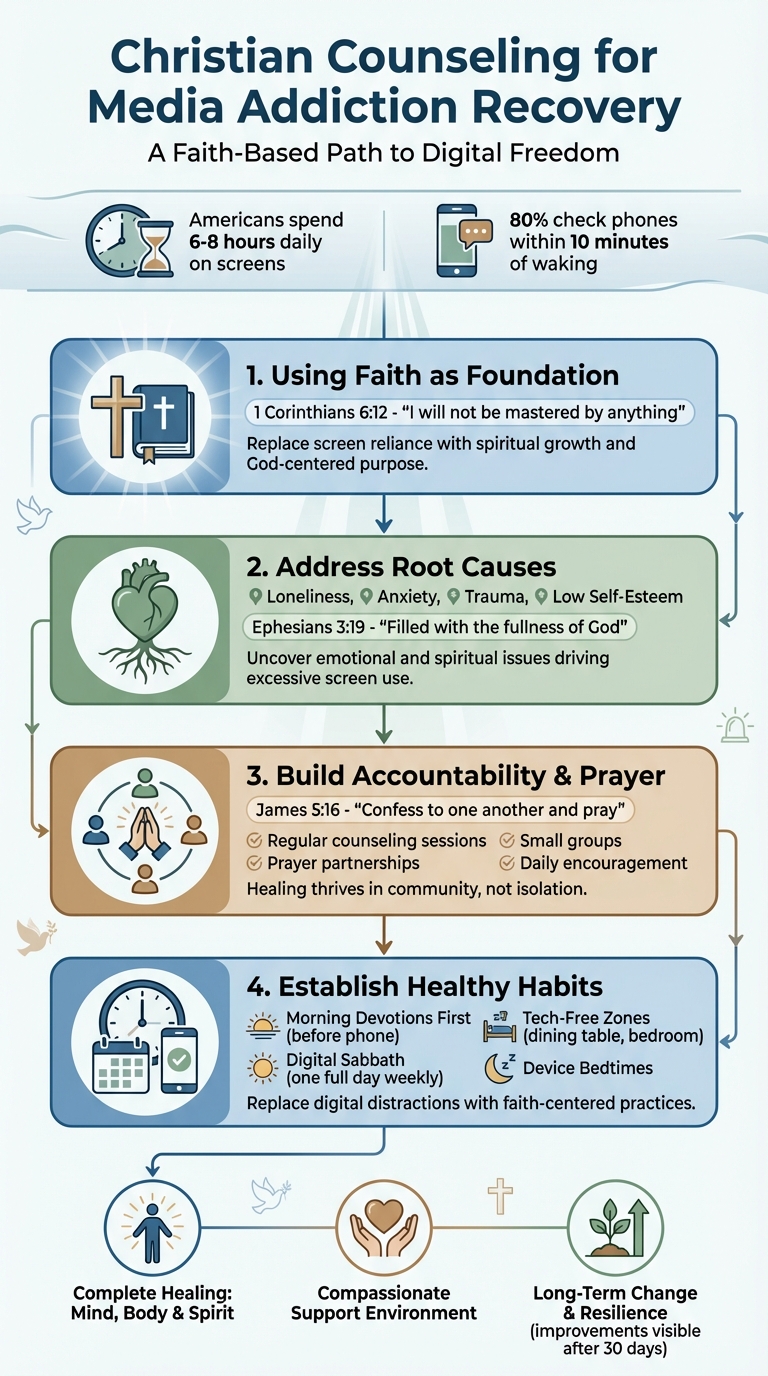
Christian Counseling Recovery Process for Media Addiction
Need Internet Addiction Treatment Here’s How Counseling Helps | Nitish Matthew
Core Principles of Christian Counseling for Media Addiction
Christian counseling approaches media addiction by addressing both the spiritual emptiness and behavioral patterns that fuel it. Instead of simply focusing on limiting screen time, this method seeks to transform the underlying beliefs and relationships that drive compulsive use. By combining spiritual insights with therapeutic techniques, it lays a strong foundation for meaningful recovery.
Using Faith as a Foundation for Healing
Faith offers the hope and purpose needed for lasting transformation. In Christian counseling, individuals are seen as having inherent worth and a God-given ability to grow. This perspective creates a compassionate and open environment for healing. Media addiction is often viewed as a form of modern idolatry, where reliance on screens replaces deeper spiritual fulfillment. Counselors draw on scriptures like 1 Corinthians 6:12 – "All things are lawful for me, but I will not be mastered by anything" – to help individuals shift their focus from what is merely permissible to what is spiritually enriching. The ultimate goal is to guide individuals back to God as the true source of satisfaction and purpose.
Addressing Root Causes with Biblical Teachings
Behavioral changes alone rarely lead to long-term recovery. Christian counseling dives deeper, using biblical principles to uncover and address the emotional and spiritual issues behind excessive screen use. These may include feelings of loneliness, anxiety, unresolved anger, or low self-esteem. As A.W. Tozer famously said:
What you believe about the world determines the way you live your life!
Counselors work to reshape negative beliefs and harmful worldviews, often rooted in past traumas, that feed addiction. Biblical teachings, such as Ephesians 3:19, remind individuals that true fulfillment comes from being "filled with the fullness of God", not from fleeting digital distractions. This approach also emphasizes restoring healthy relationships, which are often strained by addiction. Through these internal changes, combined with structured accountability and communal prayer, individuals can build a stronger foundation for recovery.
Accountability and Prayer in Recovery
Healing thrives in community, not isolation. Christian counseling incorporates the biblical principle from James 5:16: "Confess your sins to one another and pray for each other so that you may be healed." Structured accountability, such as regular counseling sessions, helps individuals recognize and manage digital temptations. Additionally, small groups and prayer partnerships provide mutual support and encouragement, reducing the risk of relapse. Hebrews 3:13 underscores the importance of daily encouragement to avoid being hardened by sin’s deceitfulness.
Prayer also serves as a proactive tool in recovery. Inviting God into the healing process helps individuals resist the urge to turn to screens as an escape from difficult emotions. Simple practices, like starting the day with morning devotions before engaging with apps, can set a Christ-centered tone that minimizes compulsive device use [7].
These guiding principles create a spiritual framework that supports the practical strategies discussed in the next section.
Therapeutic Techniques in Christian Counseling for Media Addiction
Christian counseling blends practical therapeutic methods with spiritual practices to tackle both the psychological and spiritual struggles tied to media addiction.
Cognitive Behavioral Therapy (CBT) with a Christian Perspective
Cognitive Behavioral Therapy (CBT) is a powerful tool for identifying and reshaping the thought patterns that drive media addiction. In Christian counseling, this method is enriched by biblical principles, such as the message in Romans 12:2 to "be transformed by the renewing of your mind." Counselors guide clients in analyzing their "Thought Life" [5], helping them uncover how media consumption might be used to numb emotional pain, avoid challenges, or seek validation [1].
Philippians 4:8 serves as a practical framework, encouraging individuals to focus on thoughts that are true, noble, right, pure, lovely, and praiseworthy [3]. Madison Fergerstrom, a Licensed Mental Health Counselor, explains:
As a Christian therapist, I will help you implement positive changes in your life that will promote lasting healing and growth in the Lord. You will be encouraged to identify emotions, challenge unhelpful patterns of thinking and behavior, and explore new opportunities to grow and move forward [1].
This process not only reorients thinking but also lays the foundation for healthier, more intentional media habits.
Building Healthy Media Habits
Establishing clear boundaries around media use is key to recovery. Christian counselors often encourage individuals to shift from passive consumption to active engagement, focusing on creativity and God-given talents [2]. Today, Americans spend an average of 6–8 hours per day on screens [2].
One effective strategy is adopting a "Morning Devotions First" rule. Instead of reaching for a smartphone – something 80% of people do within 10 minutes of waking [7] – individuals can start their day with prayer or scripture reading. This sets a Christ-centered tone and helps curb compulsive phone use.
Other practical tips include creating "tech-free zones" at places like the dining table or in bedrooms to foster in-person connection [7]. Setting device bedtimes, such as charging phones outside the bedroom, can also reduce nighttime scrolling and improve sleep quality [3]. For more severe cases, counselors may suggest a "Matthew 18:7-9" approach, which involves taking decisive and sometimes drastic steps to eliminate sources of temptation [4].
However, practical changes alone aren’t enough – true recovery involves nurturing spiritual growth.
Growing Spiritually During Recovery
Once healthier media habits are in place, filling the spiritual void left by excessive screen use becomes essential. One recommended practice is a weekly Digital Sabbath – a full day without screens dedicated to rest, worship, and meaningful relationships [7]. This intentional pause helps address the spiritual emptiness that often accompanies overuse of technology.
Eliza Huie, MA, Dean of Biblical Counseling at Metro Baltimore Seminary, highlights the importance of prioritizing God over screen time:
Stewarding screens means to put God above screen activity. If screen usage is inhibiting your time with the Lord in prayer or the Word, it is time to get serious about making changes [4].
Daily spiritual disciplines like scripture reading, meditating on Psalm 46:10 ("Be still"), and gratitude journaling offer meaningful alternatives to endless scrolling [7]. The goal is not just to cut back on screen time but to replace it with activities that strengthen one’s faith and foster connection with others in the Body of Christ [10]. Studies show that increased time spent on the internet and social media is linked to higher rates of depression [1], making this spiritual renewal all the more vital.
sbb-itb-596b85d
Benefits of Christian Counseling for Media Addiction Recovery
Complete Healing: Mind, Body, and Spirit
Christian counseling takes a comprehensive approach to media addiction, treating it as more than just a habit to break. It focuses on healing the whole person – psychologically, physically, and spiritually. On the psychological side, techniques like Cognitive Behavioral Therapy (CBT) and Motivational Interviewing help individuals identify and challenge the thought patterns driving their compulsive screen use. These methods also uncover why media often becomes a way to escape deeper emotional pain such as depression, anxiety, or trauma [1][5][9].
On a physical level, treatment works to reset the brain’s reward system, restore healthy sleep habits, and establish clear digital boundaries [8][2][3]. Counselors also address the effects of low-quality digital content, which can impair cognitive function over time [8]. Spiritually, addiction is viewed as a void where screens take the place of God [8][6]. Healing involves renewing the mind through Scripture, shifting one’s identity from online validation to a deeper connection with Christ, and finding true rest in God rather than relying on the fleeting comfort of digital distractions [3][6].
A Compassionate and Supportive Environment
Christian counseling also emphasizes creating a safe and supportive space where clients can be honest about their struggles without fear of judgment. This approach is modeled after Jesus’ example of unconditional love. Madison Fergerstrom, a Licensed Mental Health Counselor, explains:
Jesus was the prime example of love and acceptance. Just as Jesus accepts and loves, we therapists are to do the same. We are to imitate his example… seeing them through a grace-filled lens [1].
This philosophy is grounded in the truth of Romans 3:23, which reminds us that "all have sinned." By embracing this perspective, counselors avoid judgment and instead focus on fostering growth and healing. Rather than acting as authority figures, they use supportive strategies to honor each individual’s potential for change. John Mark Kane, LMFT, describes this approach:
Therapy is a safe space for people to be whoever they are right now, no matter how bad they feel about themselves or their lives. It is in this place of vulnerability that we can admit our struggles, face our true selves, and then grow [5].
Long-Term Change and Resilience
Christian counseling combines faith and therapeutic techniques to create lasting recovery and inner strength. By applying CBT strategies alongside spiritual practices, clients can leverage the brain’s ability to adapt and form healthier patterns through consistent effort [11]. Biblical teachings provide a foundation for long-term transformation, helping individuals build stronger relationships and connect with supportive communities that counteract the isolation often linked to relapse [5][9].
The focus shifts from chasing short-term pleasures – like the dopamine rush from endless scrolling – to finding deeper fulfillment in God’s purpose [5]. Studies suggest that noticeable improvements in recovery often emerge after about 30 days, with even greater progress occurring over a few months [11]. Addressing the root causes of addiction, such as relational struggles, and embracing what God says about one’s worth fosters spiritual growth and reduces the need for digital escapism [2][5].
These transformative benefits set the stage for the personalized, faith-centered support discussed in the next section.
How Growth and Change Counseling Supports Media Addiction Recovery
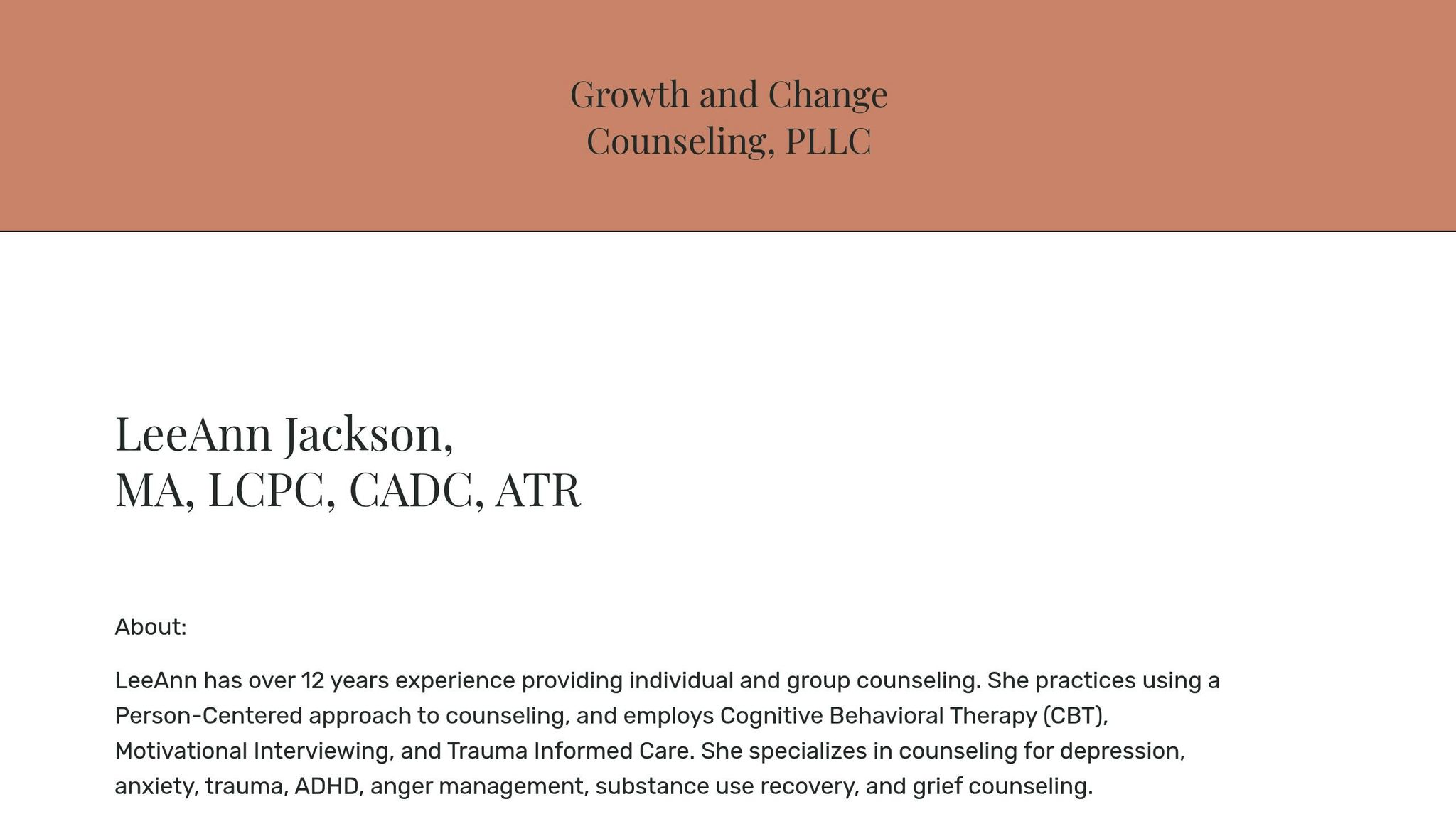
Christian Counseling Services at Growth and Change Counseling
Growth and Change Counseling combines clinical methods with Christian principles to help individuals overcome media addiction. This practice provides a supportive, nonjudgmental environment to address various forms of media dependency. Founder John Mark Kane, LMFT, describes his approach:
"I take a practical and integrated approach to therapy, using skill building interventions and techniques from science, psychology, and the Christian faith." – John Mark Kane, LMFT
Therapists at Growth and Change Counseling use evidence-based techniques, enhanced by Christian Psychology when requested. Many of the counselors have degrees from institutions like Western Seminary and Azusa Pacific University, equipping them to address faith-based recovery needs. A key focus of the practice is rebuilding human connections – whether with God, family, or others – to combat the isolation that often fuels addiction. This holistic approach forms the foundation for creating tailored recovery plans.
Personalized Recovery Plans
Growth and Change Counseling tailors recovery strategies to each individual, focusing on restoring spiritual and relational well-being. The process begins with a thorough assessment, leading to a treatment plan designed to balance media use with faith-centered practices. These plans may include prayer, self-reflection, and applying biblical principles like forgiveness to address spiritual struggles and mend trust. Counselors also help clients reframe negative thought patterns and manage addictive cravings, encouraging a more fulfilling, faith-driven perspective. Services include individual therapy, family counseling, and parent coaching, addressing the relational dynamics that often underlie addiction.
Accessible Support Across California
Growth and Change Counseling offers both in-person and telehealth services to clients across California. With offices in Campbell, San Jose, Los Angeles, and Roseville, as well as statewide telehealth options, they ensure accessible care. The practice is in-network with major insurers like Anthem Blue Cross, Aetna, United Health Care, Oxford, and Oscar Health, and provides superbills for out-of-network reimbursement.
To start the journey toward recovery, individuals can schedule a free consultation through the website, call +1 408 461 9658, or email support@johnmarkkane.com. With accessible services throughout California, Growth and Change Counseling offers both psychological and spiritual support for those navigating media addiction.
Conclusion: Moving Toward a Balanced, Faith-Filled Life
Recovering from media addiction through Christian counseling isn’t just about cutting back on screen time – it’s about addressing deeper spiritual needs. Digital distractions often act as stand-ins for the true rest and fulfillment that only God can provide, leaving many feeling spiritually drained [7]. Christian counseling identifies this as a "heart problem", where temporary pleasures take the place of Christ’s enduring peace [6].
The journey forward involves replacing mindless habits with intentional choices. For instance, instead of reaching for a smartphone within minutes of waking – a habit practiced by 80% of Americans [7] – recovery begins with prayer and immersing oneself in Scripture. As John Mark Kane, LMFT, from Growth and Change Counseling, explains:
Happiness is a very poor measurement of a well lived life. Satisfaction and fulfillment are much better measurements [5].
This mindset shift lays the foundation for creating boundaries and embracing spiritual disciplines.
Morning practices are just the start. Long-term balance is built by setting clear limits and establishing routines that nurture the spirit. For example, dedicating one full day each week as a "digital Sabbath" – free of screens – can refresh the soul and strengthen real-world relationships [7]. Similarly, designating tech-free zones, like the dining table or bedrooms, helps preserve sacred spaces for connection with God and loved ones. These practices foster genuine rest that scrolling through a screen simply cannot provide.
Recovery also involves rediscovering relational skills and rooting one’s identity in Christ rather than seeking validation online [5]. At Growth and Change Counseling, personalized plans combine faith-based guidance with proven therapeutic techniques to address deeper issues like trauma and isolation [5][2]. This integration reflects the article’s core message: blending evidence-based methods with faith-centered approaches leads to meaningful change.
If you’re ready to take the first step, Growth and Change Counseling offers support across California, with offices in Campbell, San Jose, Los Angeles, Roseville, and through telehealth. To start your journey toward freedom and spiritual renewal, schedule a free consultation at +1 408 461 9658 or email support@johnmarkkane.com.
FAQs
How can Christian counseling help with overcoming media addiction?
Christian counseling offers a unique way to tackle media addiction by blending therapeutic methods with faith-based principles. This approach emphasizes strengthening one’s relationship with God, encouraging self-reflection, and drawing on biblical teachings to cultivate self-discipline and establish positive habits.
By addressing the spiritual, emotional, and behavioral dimensions of addiction, this method helps individuals find strength and accountability through their faith. It supports them in creating a more balanced and meaningful life rooted in their values and beliefs.
How does Christian counseling help reduce screen time and overcome media addiction?
Christian counseling weaves together spiritual practices and practical strategies to support individuals in cutting down screen time and overcoming media addiction. This approach often integrates prayer, scripture reading, and mindfulness exercises to promote self-awareness and build self-discipline.
Counselors may suggest setting firm boundaries, like designating screen-free zones or specific times, while encouraging accountability through trusted spiritual partners or group settings. By focusing on biblical teachings such as stewardship and self-control, clients are guided to place their emotional and spiritual health above excessive media consumption.
How does Christian counseling support recovery from media addiction and strengthen relationships?
Christian counseling offers a unique path to recovery from media addiction by blending spiritual principles with therapeutic practices. This approach helps individuals realign with their faith while developing healthier habits and setting firm boundaries to minimize the harmful effects of excessive media use on their relationships.
By emphasizing accountability, emotional development, and core values such as forgiveness and trust, Christian counseling strengthens bonds with loved ones. This method not only aids in the healing process but also inspires a more balanced and meaningful way of living.
Related Blog Posts
- Overcoming Addiction and Anxiety in Christian Marriages
- How Faith Helps Couples Overcome Addiction Together
- Christian Counseling for Addiction Recovery
- Biblical Solutions for Addiction in Marriage
