Addiction can deeply harm marriages, breaking trust and connection. The Bible offers a path to healing, focusing on spiritual transformation rather than just behavioral change. Key principles include:
- Confession and Accountability: Honesty about struggles builds trust. Support from church leaders or trusted individuals strengthens recovery.
- Renewing the Mind: Scripture encourages replacing harmful habits with godly thinking, relying on passages like Romans 12:2 and 1 Corinthians 10:13.
- Forgiveness and Grace: Forgiveness helps release resentment, while grace mirrors Christ’s love, creating space for healing.
- Practical Steps: Daily devotionals, setting clear boundaries, and seeking Christian counseling provide actionable ways to rebuild relationships.
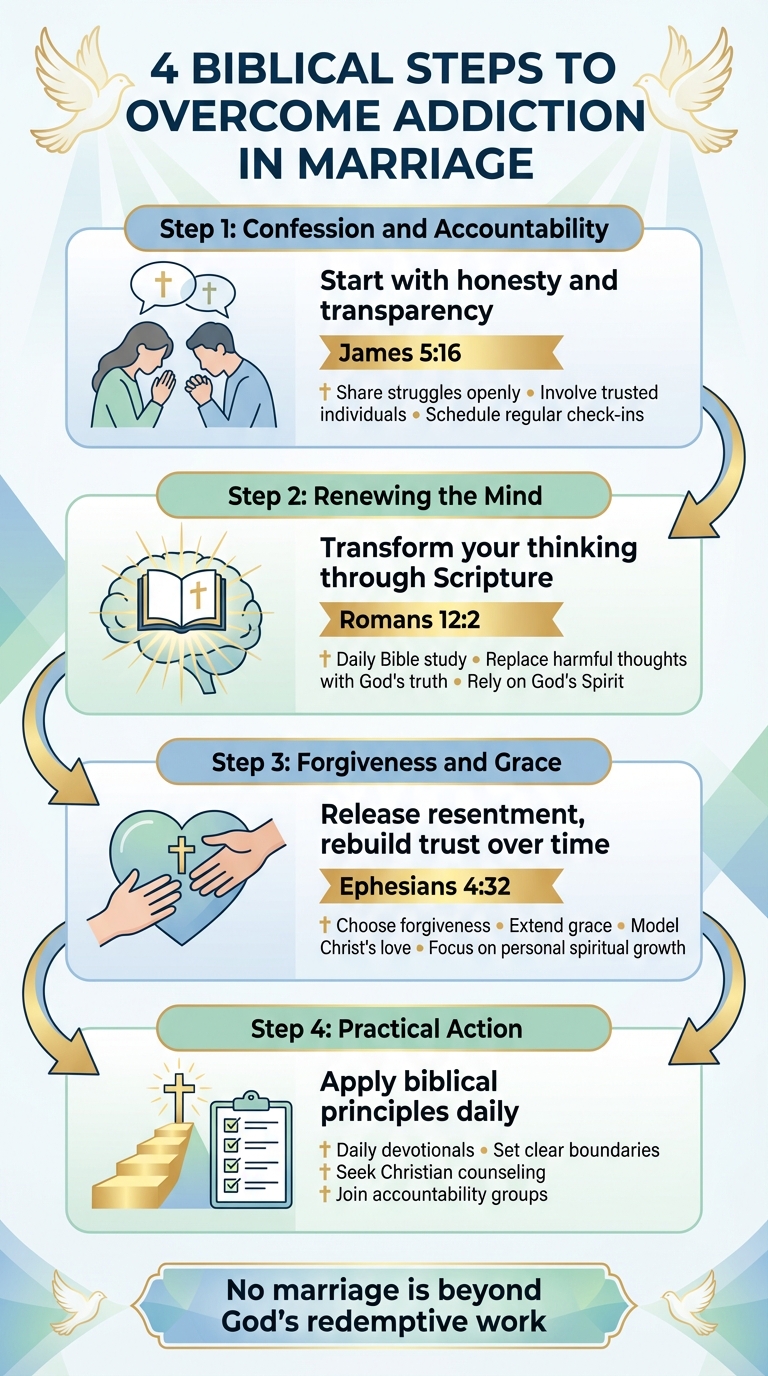
4 Biblical Steps to Overcome Addiction in Marriage
Breaking Addiction Cycles with Growth and Change Counseling
Biblical Principles for Overcoming Addiction
The Bible provides a path for genuine change by addressing the root of addiction. This journey begins with confession and continues through a transformation of the mind.
Confession and Accountability
Healing starts with honesty. A spouse battling addiction should openly share the details of their struggle, including its nature, duration, and frequency[8]. As James 5:16 teaches, "confess your sins to one another and pray for one another, that you may be healed." In marriage, this kind of transparency builds the trust needed for recovery. Beyond the marriage, involving trusted individuals – such as pastors, close friends, or church groups – can create a network of support and accountability. Regular check-ins, even multiple times a week, help establish clear boundaries and reduce the chances of relapse[3]. The principle found in Matthew 18:20, "where two or three are gathered in My name, there am I among them", underscores the power of community in overcoming addiction[5].
Renewing the Mind Through Scripture
Overcoming addiction is not just about stopping destructive habits – it’s about transforming the way you think. Romans 12:2 encourages believers to avoid conforming to the world and instead be transformed by renewing their minds. Spending time in Scripture helps replace harmful thoughts with God’s truth[7]. This renewal involves shedding old, sinful behaviors and embracing new spiritual practices[3]. When temptation strikes, 1 Corinthians 10:13 offers reassurance: God provides a way out of every trial[1][7]. Similarly, Ephesians 5:18 contrasts being "drunk with wine" with being "filled with the Spirit", highlighting that true recovery comes through reliance on God’s Spirit rather than sheer willpower.
Restoration Through Forgiveness and Grace
Addiction can leave deep scars on a marriage, but forgiveness and grace offer a path to healing rooted in biblical teachings. Let’s explore how these principles can renew marital bonds and restore spiritual strength.
Biblical Forgiveness in Marriage
Forgiveness, as taught in Scripture, is a divine command, but it’s important to distinguish it from trust. Trust must be rebuilt over time. As The Church of Jesus Christ of Latter-day Saints explains, "A person can repent and be forgiven long before he or she earns trust again" [8]. This distinction is key for healing, even in fragile relationships.
Ephesians 4:32 urges believers to "be kind to one another, tenderhearted, forgiving one another, as God in Christ forgave you." In marriage, this means the hurt spouse chooses to let go of resentment and bitterness. Forgiveness, in this context, doesn’t mean tolerating harmful behavior. Instead, it’s about refusing to let anger take root in your heart [8][10]. For the non-addicted spouse, the focus should be on personal spiritual growth rather than trying to control their partner’s journey toward change [8].
This act of forgiveness creates space for God’s redemptive love to work as a transformative force in the marriage.
God’s Redemptive Love as a Model
Marriage is meant to reflect Christ’s relationship with the Church, as described in Ephesians 5. Just as Christ sacrificed Himself for the Church, spouses are called to extend sacrificial love and grace to one another [2]. This divine model reminds us that no marriage is beyond the reach of God’s restoration. Julie Ganschow, Founder and Director of Reigning Grace Counseling Center, reinforces this hope:
"Christ is more than enough and provides more than enough grace for transforming a lousy marriage into one that glorifies God" [2].
Grace doesn’t just uplift the spouse struggling with addiction – it also strengthens the partner carrying the emotional burden. While living with addiction can be overwhelming, God’s grace offers peace and strength to endure [8]. Candice Lucey, a writer for Christianity.com, captures this beautifully:
"God’s love is not contingent on our self-control and victory over addiction; He is the victory" [1].
When both spouses embrace God’s redemptive love, a profound transformation becomes possible. Through confession, reconciliation, and a commitment to biblical principles, forgiveness and grace can bridge the gap between marital pain and spiritual renewal [2].
sbb-itb-596b85d
Practical Steps for Recovery Using Biblical Solutions
Applying principles from the Bible to daily life can bring real change to marriages in need of healing. Here are practical ways couples can integrate God’s Word into their recovery journey.
Daily Devotionals and Scripture Study
Couples should commit to daily Bible study and prayer as a way to strengthen their spiritual connection. This practice helps to "renew the mind" by replacing harmful thoughts with truths from Scripture. A.W. Tozer once said:
"What you believe about the world determines the way you live your life!"
Taking time for regular self-reflection can reveal areas in need of prayer and correction. The Bible’s teaching on "putting off and putting on" encourages letting go of destructive habits and replacing them with godly ones. This daily discipline forms the backbone of setting clear, actionable boundaries for recovery [3][6][7].
Setting Boundaries and Practicing Self-Control
Alongside devotionals, setting boundaries is essential to fostering self-control. The Bible underscores the importance of self-control rather than attempting to control others. Proverbs 25:28 illustrates this vividly: a person without self-control is like a city with broken walls, vulnerable and unprotected.
Practical boundaries might include using internet filters, avoiding environments that trigger temptation, or limiting access to finances. Boundaries should be clear and come with enforceable consequences when crossed. Written repentance plans, which include Gospel principles, community involvement, and specific goals, can serve as a roadmap for progress. Regular check-ins with a pastor or counselor ensure accountability and help keep the recovery process on track [3][4][7][9][11].
Seeking Support Through Christian Counseling
In addition to personal efforts, seeking external faith-based support can make a significant difference. Accountability partners, support groups, and professional Christian counseling can address deeper emotional and relational issues. As John Kane, LMFT, puts it:
"The more relationally healthy people are, the less anxious, addicted, and depressed they are."
Programs like the Marriage Rescue Institute, offered by Growth and Change Counseling, provide structured support for couples in crisis. This 12-week intensive coaching program combines biblical wisdom with clinical expertise, guiding couples through "relational homework" to build healthier connections. Services are available in locations such as Campbell, CA; San Jose, CA; Los Angeles, CA; and Roseville, CA, as well as via telehealth throughout California. For couples dealing with serious addiction issues, faith-based counseling offers a path toward meaningful restoration [3][6][9].
Conclusion: Finding Healing and Hope in Marriage
Key Takeaways for Couples
Conquering addiction within a marriage takes far more than sheer determination – it requires a deep, transformative shift in the heart. The journey starts with confession; full transparency is essential to break the grip of secrecy. Prayer becomes a vital source of strength, offering access to God’s power to free a heart enslaved by addiction – something human effort alone cannot achieve [1][5]. Forgiveness is equally crucial, as it releases bitterness, paving the way for trust to be rebuilt through consistent and visible actions [8]. As Julie Ganschow wisely observes:
"As Christ treats the Church with love and grace, the husband and wife must follow His example and treat each other the same way" [2].
Couples must also prioritize their own spiritual growth and emotional well-being, understanding that they cannot control their partner’s willingness to change or dictate the timeline of repentance [8].
Moving Forward with Faith and Support
Taking these insights further, couples can adopt practical strategies that encourage steady progress in recovery. Anchored in biblical principles, daily disciplines and accountability provide the structure needed for lasting change. Addressing the root causes of addiction, rather than just the symptoms, often requires both spiritual practices and professional guidance. Tools like daily devotionals, clear boundaries with enforceable consequences, and accountability through pastoral oversight form an effective framework for healing.
For marriages facing severe challenges, specialized programs can offer tailored support. For example, the 12-week Marriage Rescue Institute combines biblical principles with clinical expertise, serving couples in California and through telehealth options.
No marriage is beyond the reach of God’s redemptive work. With faith, professional help, and unwavering effort, couples can move from a place of crisis to one of restoration, becoming a living reflection of Christ’s love.
FAQs
How can confession and accountability support couples dealing with addiction in their marriage?
Confession – openly admitting the addiction and its impact on the marriage – can break the cycle of secrecy that often fuels shame and destructive patterns. By bringing the issue into the light before God and one’s spouse, couples can pray together, seek forgiveness, and take the first steps toward rebuilding trust and healing their relationship.
Accountability plays a key role in this journey by providing consistent support through a trusted individual, faith-based community, or structured program. Regular check-ins, prayer, and establishing clear boundaries help reduce feelings of isolation and offer encouragement during tough times. When couples commit to holding each other accountable, they create a safe and supportive space that reduces the chances of relapse and encourages growth.
For those looking for a biblically centered approach, Growth and Change Counseling offers resources like intensive coaching through The Marriage Rescue Institute. These programs integrate confession, accountability, and Christian principles to guide couples in restoring their marriages.
How can renewing the mind with Scripture support addiction recovery in marriage?
Renewing the mind through Scripture is a powerful step in overcoming addiction, as it shifts destructive thought patterns toward truths grounded in God’s Word. Take verses like Philippians 4:13 (“I can do all things through Christ who strengthens me”) and 2 Corinthians 12:9 (“My grace is sufficient for you…”). These passages highlight that strength and resilience come from God, not substances, offering hope and a pathway to lasting change. This transformation helps individuals replace harmful cravings with moments of spiritual growth and a deeper commitment to obedience.
For couples, diving into Scripture together lays a strong spiritual foundation that nurtures forgiveness, trust, and accountability. Regular prayer and Bible study enhance communication and serve as a reminder of God’s grace and healing power in their relationship. Growth and Change Counseling weaves these biblical principles into their couples counseling approach, blending faith-based renewal with practical tools to help partners rebuild their marriage and sustain recovery.
What are practical ways for couples to establish boundaries and build self-control during addiction recovery?
Establishing clear boundaries is crucial for couples working through addiction recovery. Begin by outlining specific agreements, such as maintaining a substance-free home, committing to complete honesty in conversations, and respecting each other’s emotional needs. Writing these agreements down and reviewing them regularly can help reinforce them. Think of these commitments as a way to honor both your relationship and your faith.
Developing self-control takes effort and intention. Couples can turn to daily prayer or devotions to seek strength and guidance. Practical strategies can also make a big difference – like taking a moment to cool off during heated arguments, using a pre-agreed signal to ask for space, or reaching out to a trusted friend for support. Staying consistent and keeping communication open will help ensure these boundaries are maintained and adjusted when necessary.
For those looking for additional guidance, Growth and Change Counseling offers a faith-based, 12-week counseling program through The Marriage Rescue Institute. This intensive program focuses on rebuilding trust, redefining boundaries, and creating personalized strategies to support recovery and long-term growth.
Related Blog Posts
- How Addiction Impacts Marital Stability
- Overcoming Addiction and Anxiety in Christian Marriages
- How Faith Helps Couples Overcome Addiction Together
- Christian Counseling for Addiction Recovery
