Recovering from addiction often brings unexpected sensory challenges. Everyday stimuli like sounds, lights, or even family interactions can feel overwhelming as the nervous system recalibrates after substance use. These sensory sensitivities can strain family dynamics, especially in households with neurodiverse members, where sensory needs vary widely and require tailored support. Addressing these challenges is crucial for creating a calm and supportive environment that aids recovery.
Key takeaways:
- Why sensory issues arise: Addiction dulls sensory input; recovery heightens sensitivity as the body adjusts.
- Impact on families: Differing sensory needs can lead to conflicts, especially with neurodivergent members.
- Practical solutions: Adjust lighting, reduce noise, and create sensory toolboxes with calming items.
- When to seek help: Persistent sensory overload or extreme reactions may require professional support.
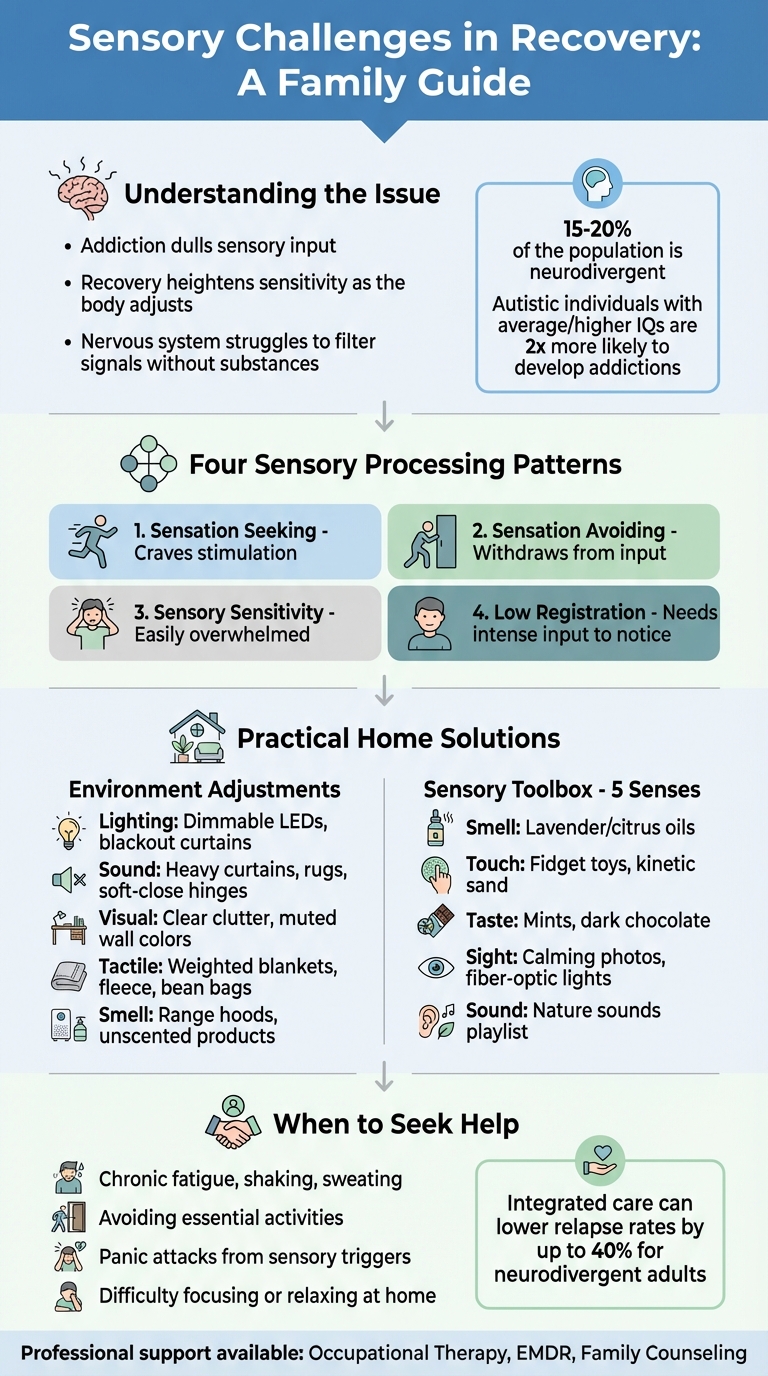
Managing Sensory Challenges in Recovery: A 4-Step Family Guide
What Are Sensory Challenges in Recovery Contexts?
Sensory challenges happen when the nervous system struggles to process signals from the environment or the body. People have different sensory thresholds – some feel overwhelmed by even small stimuli, while others require more intense input to notice them [7]. These differences can be especially apparent in recovery households, where someone in recovery may experience heightened sensitivity, while family members, like neurodiverse children, have their own unique sensory needs.
How Sensory Processing Impacts Family Life
Sensory processing involves more than just the five senses we learn about in school. It also includes proprioception (body awareness), vestibular processing (balance and movement), and interoception (internal body signals) [7]. When family members process sensory input differently, everyday activities can become complicated. For instance, a recovering parent might find the TV volume unbearable, while a child with low sensory registration might not even notice someone calling their name.
Dunn’s model categorizes sensory processing into four patterns: sensation seeking, sensation avoiding, sensory sensitivity, and low registration [7]. These patterns explain why one family member might crave quiet while another thrives on stimulation. In recovery, these differences often become more pronounced, adding another layer of complexity to family dynamics.
Why Addiction Recovery Heightens Sensory Sensitivity
During active addiction, environmental stimuli are often dulled. But in recovery, without substances to mask sensations, the nervous system can struggle to filter signals. Everyday sounds, bright lights, or household activity might suddenly feel overwhelming [5]. Withdrawal only amplifies this sensitivity as the brain adjusts [5].
Recovery also tends to bring underlying stress, anxiety, or depression to the surface, making sensory experiences feel even sharper [2]. This creates a cycle: sensory overload triggers emotional distress, which then increases sensitivity. The result? Irritability, emotional shutdowns, and even a higher risk of relapse [5]. When neurodiversity is part of the equation, these sensory shifts can make family life even more challenging.
Sensory Overload in Neurodiverse Recovery Households
In households with neurodiverse members, sensory challenges are often magnified [2][7]. Neurodiverse conditions, which frequently co-occur with substance use disorders, often involve distinct sensory processing differences [2][7]. For example, a parent in recovery with PTSD might feel overwhelmed by everyday noises like vacuuming or children’s chatter during stressful moments [2]. At the same time, a child with autism might experience a meltdown due to scratchy clothing or an unexpected change in routine [9].
Research shows that sensory sensitivity can be linked to relationship anxiety, while sensory avoidance often correlates with relationship withdrawal [7]. If left unaddressed, these sensory challenges can strain family relationships, making it harder for everyone to feel connected and supported during an already difficult period.
sbb-itb-596b85d
Practical Strategies for Managing Sensory Needs at Home
Making thoughtful changes to your home environment can help reduce sensory triggers and create a calm space for your family, especially during stressful times.
Adjusting Your Home Environment
Start by focusing on lighting and sound. Swap out harsh fluorescent bulbs for dimmable LED lights, and use heavy curtains, plush rugs, and soft-close hinges to reduce noise. Designate a quiet corner or room where family members can retreat when they need a break from disruptions [10][8][6]. In bedrooms, blackout curtains can block external light, promoting deeper, more restorative sleep – something critical for recovery [8].
To reduce visual clutter, clear surfaces, organize shelves, and use bins for storage. Opt for muted wall colors like soft blues, greens, or grays, which can create a more soothing atmosphere [10][8]. For tactile comfort, consider adding fleece blankets, weighted lap pads, or smooth sheets. Bean bags or floor cushions are also great for flexible seating and can help with grounding during tough moments [10]. In the kitchen, manage strong odors by using range hoods and sticking to unscented cleaning products to avoid triggering nausea or headaches [8].
"A sensory-friendly home offers comfort, predictability, and relief. When your space is set up to minimize sensory triggers and promote calm, you may notice improvements in self-regulation and emotional balance." – New Horizons Wellness Services [8]
Creating a Family Sensory Toolbox
A sensory toolbox is a personalized kit designed to engage the five senses and help shift someone from feeling anxious to feeling calm. For those in recovery, these tools can offer a safe way to self-regulate without relying on substances [1]. Build a box for each family member, tailoring it to their preferences.
For smell, include lavender or citrus essential oils [11]. For touch, add items like fidget toys, kinetic sand, or smooth stones [11]. For taste, pack options like mints, spicy candy, or dark chocolate to help anchor someone in the present moment [11]. For sight, include calming visuals such as photos of loved ones or fiber-optic lights [11][1]. For sound, create a written list of soothing songs or nature sounds – this avoids the distraction of scrolling through a phone during a crisis [11].
Prepare these toolboxes ahead of time [11]. You might also include a "connection" item, such as a heartfelt letter or poem, to remind the person they’re loved and supported during challenging times [11].
Having these tools ready can help your family proactively manage stress and sensory needs before tensions escalate.
Supporting Sensory Regulation During Stressful Moments
When sensory overload hits, the body often needs immediate grounding. Deep pressure stimulation – like using weighted blankets or vests – can activate the parasympathetic nervous system, easing physical symptoms of anxiety [1]. If someone in your family is feeling overwhelmed, guide them to a quiet space with minimal noise where they can decompress [1][10].
Movement can also be incredibly helpful. Indoor swings, rocking chairs, or yoga mats provide opportunities for rhythmic motion, which can help release pent-up energy [1][10].
"While your mind can dwell in the past and future, your body is always in the present moment. Grounding is an attempt to take you from the mind, back into the body through the use of your very own 5 senses." – The Center for Growth [11]
Keep the sensory toolbox within easy reach during high-stress moments, and encourage its use before stress levels peak. Practicing these techniques during calm periods can make them second nature when a crisis arises.
Working with Professionals to Address Sensory Needs
Sometimes, making changes at home isn’t enough to manage persistent sensory challenges. If sensory overload is regularly disrupting your ability to focus or enjoy daily life – leading to symptoms like chronic fatigue, shaking, sweating, or chest tightness – it’s time to consider professional help [12][8]. You should also seek support if sensory sensitivities prevent you from essential activities, like avoiding social situations or struggling to relax at home [8]. These issues often signal the need for a deeper evaluation by an expert.
When to Seek Professional Help
"If you find that sensory overload happens to you often, or that you just can’t seem to control it when it hits, it might be time to speak with a professional." – Dr. Grace Tworek, Health Psychologist at Cleveland Clinic [12]
This advice is particularly important when sensory triggers lead to extreme reactions, such as panic attacks or heightened irritability [12]. Families should also consult professionals if sensory challenges are tied to conditions like ADHD, autism, PTSD, or past trauma, as these situations require tailored strategies for regulation [2][4][12].
An Occupational Therapist (OT) can provide a formal "Adolescent/Adult Sensory Profile" to pinpoint specific sensory processing patterns. From there, they can design a personalized "sensory diet", which is a mix of activities and environmental changes aimed at calming or energizing the nervous system [1][4]. Research suggests that 15% to 20% of the population is neurodivergent in some way [4], and studies show that autistic individuals with average or higher IQs are over twice as likely to develop addictions compared to neurotypical individuals [4].
Combining Sensory Strategies with Recovery Plans
If you’re undergoing addiction treatment, sharing your sensory assessment results with your provider can help tailor your recovery plan to better meet your needs [4]. For instance, you could request therapy goals in writing or ask for movement breaks during sessions to address executive functioning challenges [4].
"What’s really helped me need less alcohol are sensory-based techniques – designing a ‘sensory diet’ for myself, understanding what triggers and what soothes, and setting up my life in a way that accommodates my needs." – Jesse Meadows, neurodiversity advocate [4]
Integrated family counseling can also play a key role in addressing substance use by reducing conflict and strengthening family bonds [13]. However, safety must come first – joint counseling isn’t recommended if there’s a history of active domestic violence or child abuse [13].
How Therapy Supports Sensory and Emotional Regulation
Therapy goes beyond structured plans to enhance both sensory and emotional regulation. Techniques like Eye Movement Desensitization and Reprocessing (EMDR) can help individuals reconnect with their bodies and reduce the intensity of physical responses to triggers, especially in cases involving trauma [4]. Therapists may also teach quick grounding exercises, such as "3-3-3 breathing," to help manage sensory-induced panic in real time [12].
Growth and Change Counseling provides a range of services, including individual and family therapy, as well as specialized treatments for addiction, trauma, and neurodiverse relationships. With locations in Campbell, San Jose, Los Angeles, and Roseville, along with telehealth options across California, their therapists can help you tackle sensory challenges while working toward recovery. This comprehensive approach can create meaningful, lasting improvements in everyday life.
Setting Boundaries and Adapting Over Time
Recovery and sensory needs aren’t static – they change and grow over time. That’s why boundaries should be treated as evolving agreements: structured enough to provide guidance but flexible enough to adapt to everyone’s shifting needs. This requires a thoughtful and responsive approach to household rules.
Setting Household Boundaries for Recovery and Sensory Needs
Establishing boundaries that support recovery and maintain sensory balance is crucial. This can include removing substances from the home, keeping recovery efforts private, and stepping away from disrespectful interactions. To address sensory needs, create designated "noise" and "quiet" zones, using visual markers to make these areas clear to everyone involved [6].
"Healthy boundaries in recovery help individuals discover who they are and what they can bring to relationships to ensure that the relationships are supportive, safe, and respectful." – Spero Recovery [14]
Think of household rules like a sensory toolbox: they should address individual needs while benefiting the entire family. Work together as a family to create routines that respect everyone’s unique sensory preferences. This collaborative process fosters a sense of autonomy and ensures that boundaries are meaningful for all. For added clarity, consider drafting a written family recovery contract. This can outline sensory expectations, recovery boundaries, and consequences. You might also introduce "pause signals" – code words or gestures that allow anyone to step back when sensory or emotional stress becomes overwhelming [18, 21].
Identifying Early Warning Signs
Pay attention to emotional and physical cues that suggest it’s time to revisit your strategies. Early signs might include irritability, agitation, anxiety, panic attacks, trouble sleeping, or a growing discomfort with everyday stimuli, like the hum of a vacuum or bright lights during rush hour [2].
Relational strain can also indicate boundary issues [14]. For instance, signs of codependency within the family system – such as prioritizing the needs of the person in recovery over your own or feeling overly responsible for their actions – may signal that boundaries are too loose [15]. Trust your instincts; if someone feels their personal space is being compromised, treat that as a sign to reassess household rules. Regular family check-ins can help identify these warning signs before they escalate.
Adapting Strategies as Recovery Progresses
As recovery evolves, so should your approach to boundaries. In the early stages, families often benefit from stricter limits to create a safe, stable environment. This might mean removing potential triggers, enforcing quiet times, or using blackout curtains to help with light sensitivity during withdrawal [13, 17, 20].
Once recovery stabilizes, the focus can shift toward encouraging personal growth and building healthier relationships [16]. Gradually reintroduce social activities, but with clear exit strategies in place. Maintaining regular stress-management routines is equally important during this phase [18].
"As your loved one demonstrates consistent commitment, some boundaries may relax. Be prepared to tighten boundaries if warning signs of relapse emerge." – Mountainside [17]
In long-term recovery, the emphasis is on respectful communication, emotional regulation, and granting greater independence. However, if relapse warning signs appear, families should be ready to temporarily reinstate stricter boundaries and sensory controls to restore balance [17]. Regularly evaluating family dynamics helps ensure boundaries remain effective and appropriate [16]. These discussions are best held during calm moments, not during heightened emotional states, and using "I" statements can help express concerns without assigning blame [16].
Prioritizing Sensory Health with Growth and Change Counseling
Addressing sensory challenges in recovery settings plays a crucial role in fostering healing and emotional balance. By focusing on sensory needs alongside recovery efforts, families can tackle the root causes of distress rather than just managing surface-level symptoms. Research reveals that integrated care – addressing both substance use and mental health needs at the same time – can lower relapse rates by up to 40% for neurodivergent adults [19].
Creating a sensory-friendly environment is essential for recovery. Such an environment supports the parasympathetic nervous system, helping individuals transition from impulsive reactions to more thoughtful, regulated responses [1][8]. As John Kane, Founder of Growth and Change Counseling, explains:
"The more relationally healthy people are, the less anxious, addicted, and depressed they are" [3].
This approach highlights how addressing sensory and relational stressors at their core can lead to meaningful change. It also emphasizes the value of professional support in navigating these challenges.
Growth and Change Counseling provides tailored services for families facing these complexities, including their 12-week Marriage Rescue program and therapy for neurodiverse couples managing sensory-related conflicts [3]. Their evidence-based methods, such as EMDR, CBT, and DBT, combine sensory strategies with recovery plans to help families build long-term regulation skills [4][5]. Services are available across several locations in California and through telehealth.
Sensory needs often shift as recovery progresses, so strategies that work early on may need adjustments over time. Staying alert to warning signs – like irritability or increased sensitivity to everyday stimuli – and making changes as needed is key [2]. Regular family check-ins during calm moments can help ensure your strategies continue to be effective.
FAQs
What impact does sensory overload have on addiction recovery?
Sensory overload can play a disruptive role in addiction recovery. When the senses are overwhelmed, it can lead to heightened stress, anxiety, and irritability. These emotional spikes can throw off focus, cloud decision-making, and make resisting cravings much harder – all of which can raise the chances of relapse.
To support recovery, it’s important to manage sensory triggers effectively. Creating a calm and soothing environment, practicing mindfulness techniques, and establishing healthy boundaries are practical ways to reduce overstimulation. These strategies can help individuals maintain emotional balance and navigate recovery with greater confidence.
How can families manage different sensory needs effectively?
Managing varying sensory needs within a family takes thoughtful communication, intentional spaces, and consistent routines. Start by discussing sensory preferences as a family – things like preferred lighting, noise levels, or textures. This helps everyone understand potential triggers and work together to make adjustments.
Designate sensory-friendly spots in your home. These could be cozy corners with soft lighting, areas with noise-reducing materials, or spaces equipped with soothing items like weighted blankets. These retreats can provide a much-needed escape when someone feels overstimulated. Using visual schedules or shared calendars can also help by mapping out daily activities and including sensory breaks, so everyone knows when to expect changes in stimulation.
Incorporate practices that help regulate sensory input for the whole family. Movement breaks, quiet hobbies, or mindfulness exercises can make a big difference. Parents can set the tone by modeling self-care, like turning down background noise or taking short moments to recharge. These small habits can prevent burnout and create a more supportive home environment. For families seeking extra guidance, Growth and Change Counseling offers personalized support to address specific sensory needs and recovery goals.
When should someone in recovery get help for sensory challenges?
If sensory overload starts to feel frequent, overwhelming, or disrupts your daily life, it’s crucial to reach out for professional help. This could manifest as heightened anxiety, emotional struggles, or even an increased risk of setbacks. Tackling these issues early can play a key role in maintaining stability and fostering long-term progress.
Professionals can offer practical strategies to manage overstimulation, creating a more balanced and supportive environment. This guidance can make it easier for both individuals and their families to navigate the recovery journey with confidence.
Related Blog Posts
- How Sensory Processing Affects Neurodiverse Relationships
- Managing Relapse Triggers in Family Systems
- How to Create Emotional Safety for Kids in Recovery
- Parenting Stress: Solutions for Neurodiverse Families
