Future-focused therapy helps individuals struggling with addiction by shifting attention from past mistakes to creating a better future. This approach emphasizes setting clear goals, visualizing positive outcomes, and developing actionable steps to achieve them. By focusing on long-term rewards rather than short-term relief, it reduces impulsivity and strengthens motivation for recovery. Key techniques include:
- Future-oriented questioning: Encourages clients to imagine life without addiction and identify specific changes they want to see.
- Episodic Future Thinking: Helps individuals visualize future milestones, reducing cravings and impulsive decisions.
- Goal-setting and strength-based strategies: Builds confidence by highlighting past successes and existing coping skills.
Research shows that these methods improve the ability to prioritize long-term benefits, such as better relationships and career growth, over immediate gratification. This therapy also reduces shame and guilt by focusing on strengths rather than failures, making recovery more attainable and sustainable.
If you’re seeking support, professional guidance from practices like Growth and Change Counseling can provide tailored solutions, including telehealth options, to help you create a roadmap for a healthier future.
Core Principles of Future-Focused Therapy for Addiction
Focusing on Solutions Instead of Problems
Traditional therapy often revisits past struggles, but future-focused therapy shifts the lens toward solutions. The idea is straightforward: fixating on problems doesn’t fix them. As the Hazelden Betty Ford Foundation explains:
The solution-focused model holds that focusing only on problems is not an effective way of solving them [8].
Rather than asking questions like "Why did you relapse?" therapists ask, "What would be the first thing you’d notice if you woke up tomorrow and the problem was gone?" This forward-thinking approach helps clients avoid feelings of hopelessness and concentrate on aligning their actions with recovery goals – whether it’s mending family relationships or reentering the workforce. By encouraging individuals to look beyond the immediate future (a common limitation for those with heroin use disorder, who often focus on a nine-day horizon), therapy promotes valuing long-term rewards, such as career growth, over the short-lived relief of substance use [2][3]. This solutions-oriented mindset becomes the foundation for building recovery on personal strengths.
Building on Personal Strengths and Resources
Recovery isn’t about fixing what’s broken – it’s about amplifying what’s already working. Therapists help clients uncover "exceptions", or moments when they managed to resist cravings or when addiction felt less powerful [1][5]. These moments demonstrate coping skills that can be strengthened and repeated. As SAMHSA explains:
Recovery is built on their strengths, abilities, resources, and inherent values and is holistic, addressing the whole person and their community [4].
This strength-based approach spans four critical areas: Health (managing emotional and physical well-being), Home (ensuring stable housing), Purpose (finding meaningful work or hobbies), and Community (building supportive relationships and peer networks). By focusing on abilities rather than shortcomings, clients develop the confidence to believe they can change [9]. Using their existing strengths naturally paves the way toward envisioning a future that feels achievable and fulfilling.
Creating a Vision for Life After Addiction
A vivid, detailed picture of life beyond addiction can be a powerful motivator. Therapists work with clients to create a "thick description" – not just a general goal of sobriety, but a richly imagined vision of what a restored life looks like [10]. Who will they spend time with? What will their daily routine involve? How will they manage stress?
Research supports this approach. For example, a 2020 study on individuals with alcohol use disorder found that a single session of Episodic Future Thinking reduced impulsive decision-making and alcohol demand [2]. By practicing these positive future scenarios, clients prepare themselves to navigate high-risk situations and make healthier choices [6]. This forward-looking perspective helps anchor recovery in a hopeful and actionable plan for the future.
Techniques Used in Future-Focused Therapy
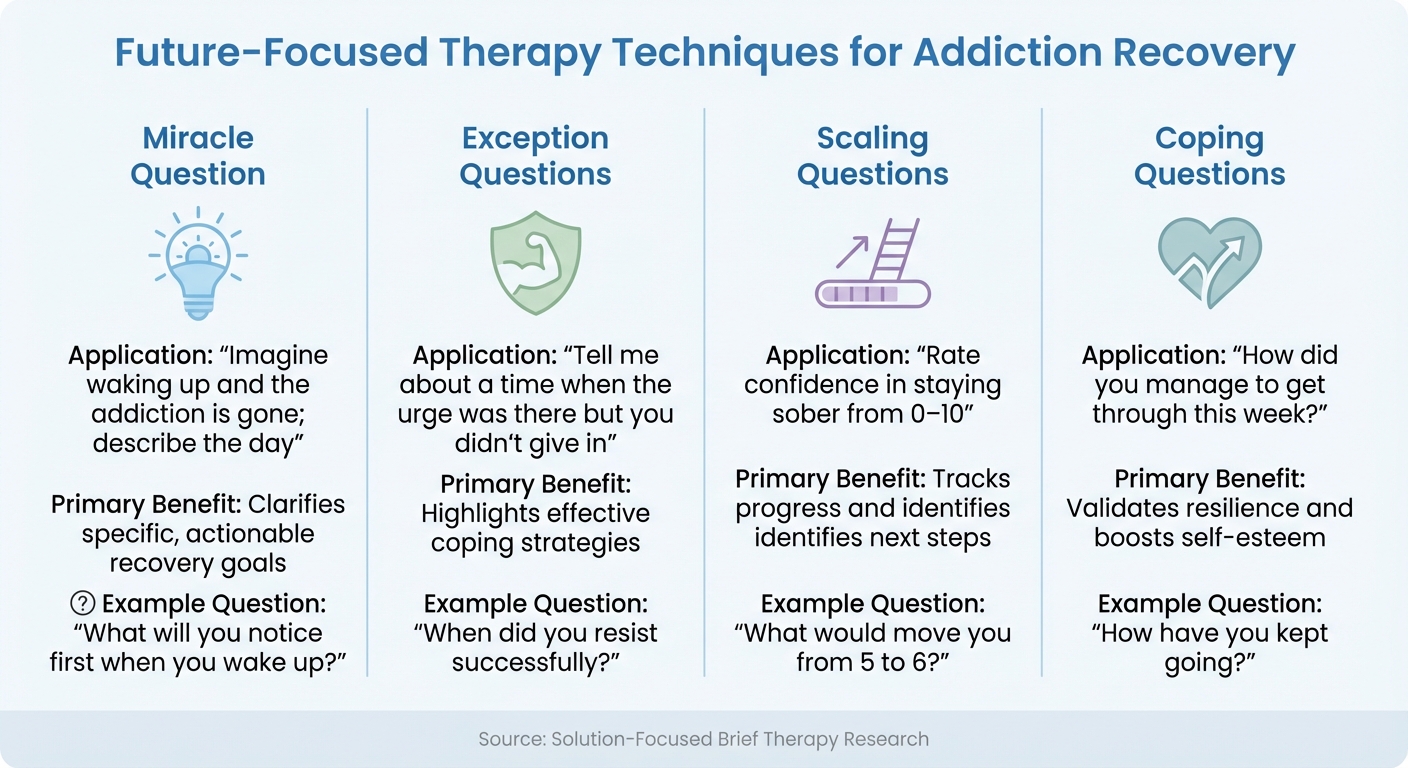
Future-Focused Therapy Techniques for Addiction Recovery
Future-Oriented Questioning
Therapists working with future-focused techniques often use future-oriented questions to help clients shift their attention from past struggles to a future free from addiction [11]. One popular method is the Miracle Question: "Suppose you wake up tomorrow and your problem is miraculously solved. What will you begin to notice?" [11]. This question encourages clients to describe specific, tangible changes rather than vague aspirations.
Adding sensory details makes these future goals feel more real and achievable. For instance, therapists might ask, "What will you hear?", "Who will be with you?", or "How will you feel in that moment?" This sensory approach helps clients focus on long-term rewards – such as regaining custody of their children – rather than seeking short-term relief.
Another useful tool is scaling questions. A therapist might ask, "On a scale of 1 to 10, how confident are you about staying sober this week?" If the client answers "5", the follow-up might be, "What would help you move from a 5 to a 6?" [11]. These questions offer a simple yet effective way to measure progress and identify small, actionable steps.
Solution-Focused Brief Therapy (SFBT)
Solution-Focused Brief Therapy takes a different approach: it emphasizes building on strengths rather than dwelling on problems. Instead of asking, "Why did you relapse?", therapists use exception-finding questions like, "Can you tell me about a time when you felt the urge but didn’t give in?" [1]. These moments highlight the client’s existing coping mechanisms, which can be reinforced for future challenges.
Coping questions also play a key role in building resilience. For example, asking, "How have you managed to keep going despite these challenges?" shifts the focus to strategies that are already working [8]. Sessions often begin with goal-oriented questions like, "What are your best hopes for today’s session?" [10].
| Technique | Application in Recovery | Primary Benefit |
|---|---|---|
| Miracle Question | Imagine waking up and the addiction is gone; describe the day | Clarifies specific, actionable recovery goals [11] |
| Exception Questions | "Tell me about a time when the urge was there but you didn’t give in" | Highlights effective coping strategies [1] |
| Scaling Questions | Rate confidence in staying sober from 0–10 | Tracks progress and identifies next steps [11] |
| Coping Questions | "How did you manage to get through this week?" | Validates resilience and boosts self-esteem [8] |
Visualization and Goal-Setting Exercises
Visualization and goal-setting exercises help clients turn their imagined futures into actionable plans. These exercises often involve identifying personal milestones – like 1 day, 1 week, 1 month, 3 months, and 1 year – and envisioning them in vivid detail [2]. For example, clients might picture attending their child’s graduation, going on a family vacation, or celebrating a promotion at work.
A 2020 pilot study in Hamilton, Ontario, tested this approach with 28 individuals seeking treatment for Alcohol Use Disorder. Participants generated positive future cues and wrote them down twice daily for one week. By the end of the study, 82% of participants had completed the exercise, showing reduced impulsivity and alcohol demand, as well as improved mindfulness scores [2].
Effective goals are specific, positive, and realistic. For instance, instead of saying, "I will not drink", a more actionable goal might be, "I will take a walk when I feel stressed." This shift from avoiding negative behaviors to building positive routines helps clients focus on long-term recovery. Repetition and daily practice reinforce these healthier habits, making it easier to prioritize lasting change over temporary relief [6].
Benefits of Future-Focused Therapy for Addiction Recovery
Increased Motivation and Confidence
Addiction often traps people in a cycle of prioritizing short-term gratification over long-term rewards. Future-focused therapy shifts this perspective, helping individuals see the value in lasting rewards over fleeting cravings. For instance, when clients vividly picture future milestones – like earning a degree or reuniting with their children – they start to place greater importance on these outcomes, a process that reduces "delay discounting" (the tendency to undervalue future benefits) [3][7]. Additionally, setting positive, achievable goals – such as saying, "I’ll limit my drinking to two drinks", instead of focusing solely on restrictions – empowers clients to feel more in control of their recovery journey [5]. This forward-looking mindset not only increases confidence but also helps to ease the emotional burden of recovery.
Less Shame and Guilt
Traditional therapy often emphasizes past mistakes and trauma, which can amplify feelings of shame and guilt. Future-focused therapy takes a different approach, encouraging clients to identify their strengths rather than dwell on failures. For example, therapists might ask questions like, "Can you recall a time when you resisted the urge to use?" to highlight moments of resilience [1][5]. This method helps shift the narrative from failure to capability.
Another valuable tool in this approach is the use of scaling questions, which break down recovery into manageable steps. By framing progress as incremental rather than all-or-nothing, clients are better able to see their growth and avoid feeling overwhelmed [5].
Long-Term Recovery Through Positive Reinforcement
Sustainable change often comes from celebrating small, consistent victories. Future-focused therapy supports this by encouraging clients to acknowledge achievements beyond complete abstinence. Success might look like honoring a personal commitment, rebuilding a relationship, or navigating a craving successfully. Recognizing these moments fosters a sense of self-efficacy, which is crucial for maintaining long-term recovery.
Research backs this up: studies show that individuals who practiced episodic future thinking – mentally imagining future scenarios – experienced noticeable reductions in alcohol demand and delay discounting [2]. By mentally "pre-living" future actions, clients develop clear strategies for handling high-risk situations. This process reinforces daily recovery habits and strengthens their commitment to long-term goals.
sbb-itb-596b85d
How Growth and Change Counseling Supports Future-Focused Addiction Recovery
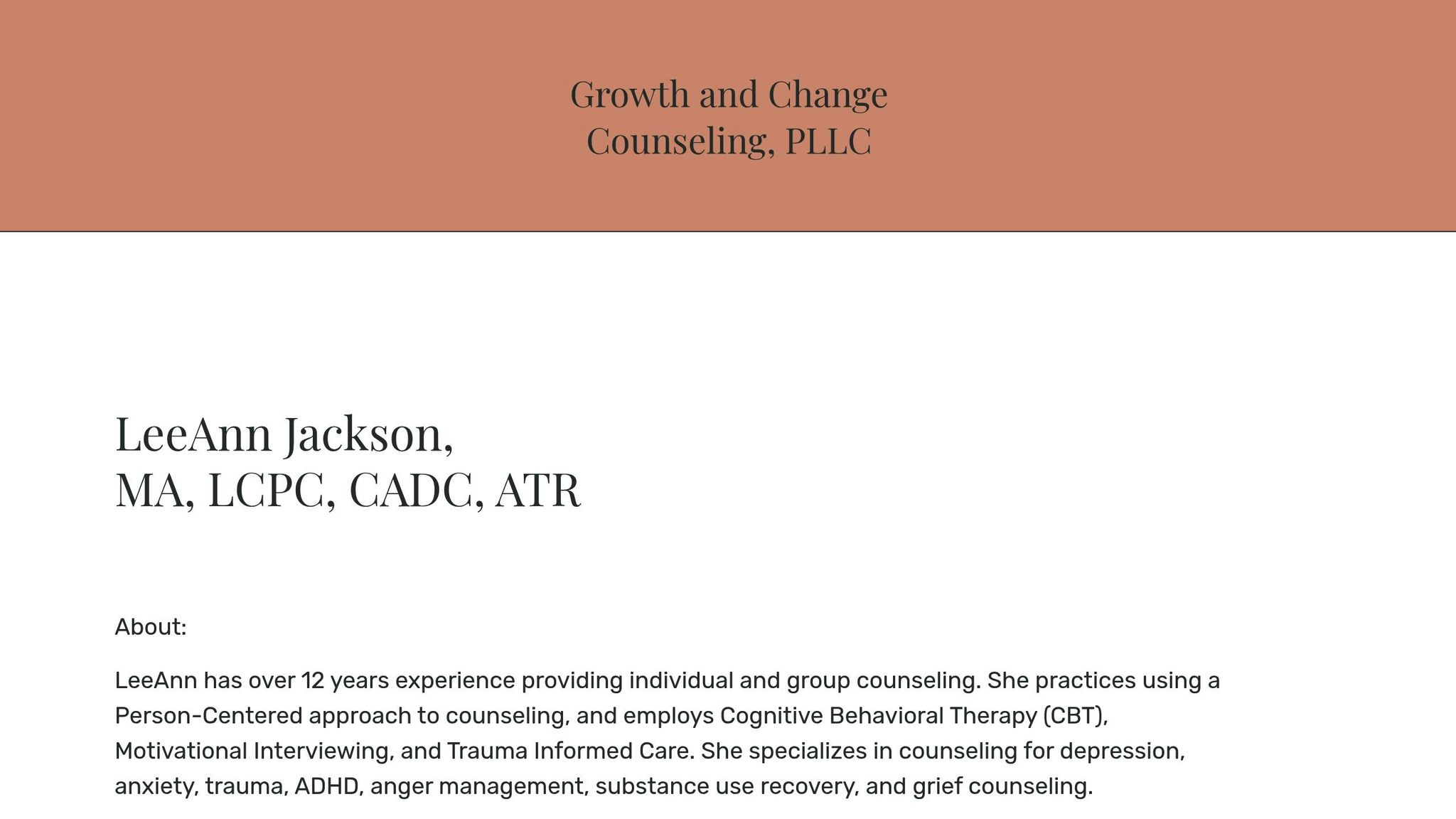
Tailored Therapy for Unique Needs
With over 13 years of experience, Growth and Change Counseling takes a solutions-focused approach, helping clients move toward practical, actionable outcomes. Instead of dwelling on past struggles, therapists guide individuals to imagine and work toward their ideal future. As Karin Wiese, LMFT, puts it:
"Together we can explore where you currently are, what you would like your future to look like, and how we can work together to help you get there."
This method sees addiction as a sign of deeper relational challenges. Therapists help clients develop "relational intelligence", equipping them to build stronger, healthier connections with others and themselves. The practice also addresses related issues, such as struggles with excessive digital media use [12]. By focusing on what’s ahead, clients gain a clear sense of direction for their recovery journey. This personalized approach ensures accessible and ongoing support tailored to each individual.
Telehealth Services for Greater Reach
All therapists at Growth and Change Counseling are California-licensed and offer telehealth services, eliminating obstacles like transportation issues, childcare concerns, or living far from specialized care.
The practice’s forward-thinking techniques work seamlessly in virtual sessions. For instance, Episodic Future Thinking – a powerful tool in future-focused therapy – has been shown to help individuals prioritize long-term sobriety over short-term cravings [6]. Telehealth also allows for regular recovery check-ins to catch early warning signs without requiring frequent in-person visits [13]. This remote accessibility complements the practice’s comprehensive focus on emotional and relational well-being.
Focusing on Emotional and Relational Health
Addiction often intersects with other challenges like anxiety, depression, and trauma. Growth and Change Counseling takes a whole-person approach, using methods such as CBT, EMDR, and somatic therapy to address these overlapping issues. The foundation of their work is the belief that healthier relationships can reduce anxiety, addiction, and depression. By helping clients examine how their personal beliefs shape their relationships, therapists guide them toward lasting change. Stronger emotional and relational health provides the stability needed for long-term recovery, reinforcing the forward-looking strategies at the heart of the practice.
Therapy sessions are available at $150 for 45 minutes with an Associate Marriage and Family Therapist, with sliding scale options for those who need financial flexibility. Sessions with a Licensed Marriage and Family Therapist are $200 for 45 minutes. Services are offered in Campbell, San Jose, Los Angeles, and Roseville, as well as through telehealth across California [12].
Conclusion: Moving Forward Beyond Addiction
Key Takeaways
Future-focused therapy tackles one of addiction’s toughest hurdles: the difficulty in imagining life beyond immediate cravings. By encouraging individuals to think ahead, this approach shifts focus to long-term rewards – like better health and closer family connections – over the pull of instant gratification. This process helps reduce delay discounting, making it easier to prioritize future benefits over short-term impulses. With these insights, you can take concrete steps toward securing a healthier, more fulfilling future.
For example, a three-day intervention using Episodic Future Thinking showed promising results, achieving a 64% completion rate and noticeably reducing alcohol demand [2]. The Substance Abuse and Mental Health Services Administration (SAMHSA) defines recovery as:
Recovery is a process of change through which individuals improve their health and wellness, live a self-directed life, and strive to reach their full potential [4].
These techniques equip individuals with the tools to create a clear and actionable vision for long-term recovery.
Next Steps for Getting Help
Armed with these key takeaways, you can take the next step on your recovery journey. If you’re struggling with addiction, start by practicing vivid visualization. Picture specific future events in detail – what you see, hear, and feel. This can help make your goals more tangible [3]. Reflect on moments when you successfully resisted urges. What strengths did you draw on during those times? Identifying these can reinforce your ability to move forward [1].
Professional guidance can make this process even more effective. Growth and Change Counseling specializes in future-focused techniques to support recovery. Their approach not only addresses substance use but also the relational challenges that often accompany it, helping you create a roadmap for a better future. Services are available in Campbell, San Jose, Los Angeles, and Roseville, as well as through telehealth across California. Sessions start at $150 for a 45-minute appointment with an Associate Marriage and Family Therapist, and sliding scale options are offered to ensure accessibility.
With only 11% of individuals with substance use disorders currently receiving treatment [2], taking that first step toward future-focused therapy could mark the beginning of a transformative change. Help is closer than you think.
FAQs
What makes future-focused therapy different from traditional approaches to treating addiction?
Future-focused therapy takes a different approach to addiction treatment by concentrating on building a healthier, sober future rather than dwelling on past traumas or uncovering root causes. Unlike traditional methods that often analyze past behaviors or delve into pathology, this approach, which includes techniques like Solution-Focused Therapy (SFT) and episodic future-thinking (EFT), emphasizes setting clear goals and taking actionable steps to achieve them. It’s all about leveraging strengths, inspiring hope, and encouraging forward momentum.
One of the key benefits of this method is its ability to tackle impulsive decision-making, a common hurdle for people dealing with addiction. By helping individuals visualize positive long-term outcomes, future-focused therapy promotes better decision-making and supports lasting recovery. Growth and Change Counseling integrates these techniques into its addiction treatment programs, guiding clients toward a clear, achievable path to transformation.
How does future-focused therapy help reduce cravings during addiction recovery?
Future-focused therapy works to curb cravings by encouraging individuals to concentrate on their long-term aspirations and the positive outcomes of staying sober. One powerful tool in this approach is episodic future thinking (EFT). This involves visualizing meaningful and rewarding future moments – like reaching personal achievements or enjoying quality time with loved ones – and tying these moments to sobriety goals. By doing so, it shifts attention away from immediate temptations and toward the lasting benefits of a healthier life.
Another technique blends future-oriented cue exposure with imaginative exercises. In this method, clients are briefly exposed to triggers while envisioning themselves successfully resisting cravings and experiencing positive outcomes. Over time, this practice reduces the emotional grip of cravings. Therapists also incorporate goal-setting strategies and delay-discounting exercises, which help individuals strengthen their ability to prioritize long-term rewards over fleeting impulses. Together, these methods provide the tools needed to stay committed to recovery and work toward a more fulfilling future.
How does future-focused therapy support long-term addiction recovery?
Future-focused therapy, often referred to as solution-focused therapy or episodic future thinking (EFT), offers a powerful approach for individuals recovering from addiction. Instead of dwelling on past struggles, this method encourages clients to concentrate on building a brighter, healthier future. Through guided exercises, participants are encouraged to vividly imagine positive milestones – like experiencing a successful sober day – and outline practical steps to make those visions a reality. By doing so, this approach helps cultivate motivation and instills a sense of control, both of which are essential for sustained recovery.
Studies reveal that visualizing clear, positive future events can diminish impulsive decisions and reduce cravings for substances. It also enhances the importance placed on long-term well-being. At Growth and Change Counseling, therapists weave these techniques into their addiction treatment programs, guiding clients to set clear recovery goals and practice future-focused strategies. These tools give individuals the confidence and motivation to lower their risk of relapse and work toward meaningful, lasting transformation.
Related Blog Posts
- Addiction Recovery with Solution-Focused Therapy
- EFT for Addiction Recovery in Marriage
- Building Resilience: Solution-Focused Therapy for Addiction
- Solution-Focused Therapy for Addiction Recovery Couples
