Trauma-induced sexual addiction stems from unresolved emotional pain, often linked to past abuse or neglect. This condition is not just about compulsive behavior but a way individuals cope with deep psychological wounds. Effective recovery requires addressing both the addiction and the trauma driving it. Here’s a quick overview of five therapies that help individuals heal:
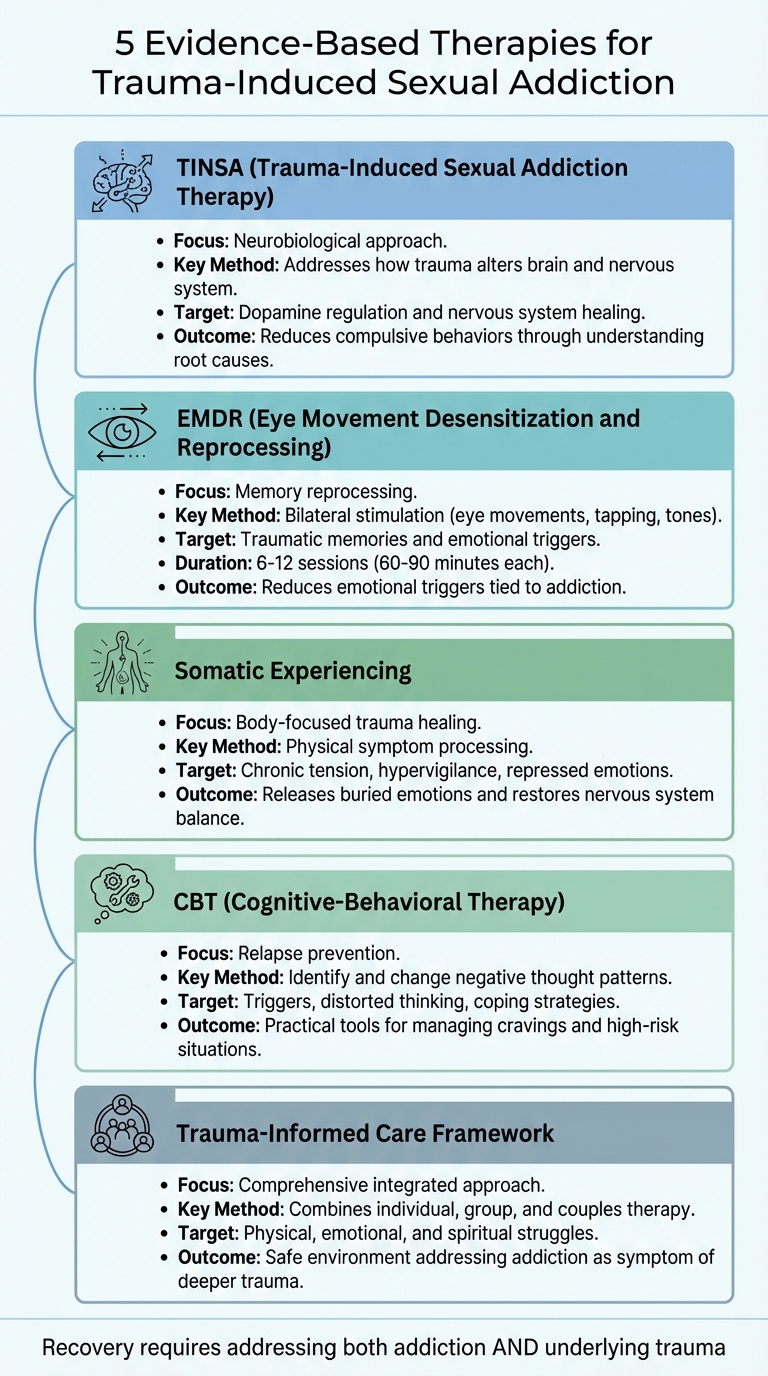
- TINSA Therapy: Focuses on how trauma impacts the brain and nervous system, helping individuals regulate emotions and reduce compulsive behaviors.
- EMDR: Uses bilateral stimulation to reprocess traumatic memories, reducing emotional triggers tied to addiction.
- Somatic Experiencing: Targets physical symptoms of trauma, helping individuals release buried emotions and restore nervous system balance.
- CBT: Provides tools to identify triggers, challenge negative thoughts, and prevent relapse.
- Trauma-Informed Care: Combines individual and group therapy within a supportive framework to address both trauma and addiction.
Recovery starts with finding the right therapist, such as a Certified Sex Addiction Therapist (CSAT), who can guide you through these methods. Taking the first step – whether through therapy, support groups, or self-assessment – can break the cycle of addiction and lead to meaningful healing.
5 Evidence-Based Therapies for Trauma-Induced Sexual Addiction
Childhood Trauma and Sexual Addiction (The Hidden Connection) | Dr. Doug Weiss
5 Effective Therapies for Trauma-Induced Sexual Addiction
Addressing trauma-induced sexual addiction requires a treatment approach that tackles both the underlying trauma and the compulsive behaviors it fuels. Below are five therapies that help individuals break free from addiction while healing the emotional wounds at its core.
Trauma-Induced Sexual Addiction Therapy (TINSA)
Developed by Dr. Michael Barta, TINSA is a neurobiological approach that views sexual addiction as a brain-based response to trauma rather than a personal failing. It focuses on how adverse experiences – such as neglect, abandonment, or childhood trauma – alter the brain and nervous system, leading to a reliance on sexual stimuli to regulate dopamine levels [4].
This therapy digs into the root causes of addiction, helping individuals understand how trauma shaped their behaviors and perceptions. A key element is learning to regulate the nervous system, which in turn improves decision-making and reduces compulsive behaviors.
"You have a neurobiological problem, not a character flaw. And you can help yourself heal and live a more authentic life." – Integrative Life Center [3]
Dr. Barta later expanded this method into the "Reconnection Model®", which emphasizes healing trauma directly at its source by working with both the brain and nervous system [5]. This approach goes beyond identifying trauma by addressing its lasting effects on the body and mind.
Eye Movement Desensitization and Reprocessing (EMDR)
EMDR is a psychotherapy technique designed to help individuals process and reframe traumatic memories stored in the brain [8]. In cases of sexual addiction, these compulsive behaviors are often seen as dysfunctional coping mechanisms rooted in past trauma [7].
The therapy uses bilateral stimulation – such as eye movements, tapping, or auditory tones – to reprocess traumatic memories, allowing the brain to store them in a healthier, less triggering way. By reducing emotional triggers, EMDR helps individuals gain control over compulsive behaviors [7][8].
Typically, EMDR sessions last between 60 and 90 minutes, and most individuals complete treatment within 6 to 12 sessions [6].
"EMDR views dysfunctional behavior as originating from traumatic past incidents. These incidents are targeted by the clinician and then processed and integrated so as to produce adaptive and functional behaviors." – NCJRS Virtual Library [7]
Somatic Experiencing Therapy
Somatic Experiencing takes a body-focused approach to healing trauma, addressing physical symptoms like chronic tension and hypervigilance. This method bridges the gap between the body and the mind, helping individuals who may have previously concentrated only on emotional or mental healing [9].
By unlocking repressed emotions that traditional talk therapy might miss, Somatic Experiencing allows clients to release deeply buried feelings and reconnect with their physical and emotional selves. This process helps individuals relax and engage more fully in therapy [9].
For those with trauma-induced sexual addiction, this therapy is particularly effective as it targets nervous system dysregulation, a key driver of compulsive behaviors. Seeking out Certified Sex Addiction Therapists (CSATs) trained in trauma-informed techniques like Somatic Experiencing can ensure the focus remains on addressing the addiction’s root causes [1][2].
Cognitive-Behavioral Therapy (CBT) for Relapse Prevention
CBT is a structured therapy that helps individuals recognize and change negative thought patterns contributing to their addiction. While it doesn’t directly address trauma, it plays a crucial role in recovery by equipping individuals with practical tools to prevent relapse.
This therapy teaches clients to identify triggers, challenge distorted thinking, and develop effective coping strategies. When paired with trauma-focused therapies like TINSA or EMDR, CBT provides a solid foundation for managing cravings and navigating high-risk situations. It also emphasizes building a support network to reinforce long-term recovery.
Trauma-Informed Care Framework
For lasting recovery, a comprehensive approach that integrates multiple therapies within a trauma-informed care framework is essential. This model views addiction as a symptom of deeper physical, emotional, and spiritual struggles rather than a moral failing [9].
Trauma-informed care often combines individual therapy to address personal trauma, group therapy to build community and reduce isolation, and couples counseling to repair damaged relationships. All providers within this framework understand how trauma impacts the brain and behavior, ensuring a safe and supportive environment for healing.
Structured programs, often called "intensives", can be particularly effective. These multi-day sessions provide a focused setting for addressing untreated trauma, helping individuals make significant progress while laying the groundwork for continued recovery [1].
How to Choose the Right Therapy and Therapist
Finding the right therapist takes more than just browsing online. Start by checking their credentials. Look for a Certified Sex Addiction Therapist (CSAT) or Associate Sex Addiction Therapist (ASAT). These certifications require a master’s degree, state licensure, and over 120 hours of specialized training in trauma and addiction [11][12]. Once you’ve confirmed their qualifications, consider whether their approach creates a sense of safety and trust.
The connection between you and your therapist is just as important as their credentials. A good therapist should provide a space where you feel safe to discuss even the most difficult topics without fear of judgment. As The Finding Place Counseling and Recovery explains:
"The most important quality of a CSAT is their ability to make a client struggling with sexual addiction feel safe by not shaming, judging, or reacting in shock" [10].
If you don’t feel secure or understood, it’s okay to keep looking.
Ask direct questions about their treatment methods and qualifications. Do they use the 30-task treatment model developed by Dr. Patrick Carnes? Are they trained in trauma-focused techniques like EMDR or Somatic Experiencing? If your addiction has impacted your relationship, you might want to work with someone who holds a Certified Partner Trauma Therapist (CPTT) credential to address betrayal trauma [12]. For those dealing with multiple addictions – like substance abuse or eating disorders – a Certified Multiple Addiction Therapist (CMAT) can be particularly helpful. This is important since nearly half of those with one addiction often face additional addictive behaviors [11].
It’s also critical to match your treatment needs with the right level of care. Severe cases might benefit from intensive programs designed to deliver focused treatment without long-term disruption [1]. Make sure your therapist offers consistent, weekly sessions, as regularity is essential for recovery. Additionally, ask if they include group therapy or recommend 12-step programs like Sex Addicts Anonymous (SAA). These can complement individual therapy and build a supportive community for accountability. Taking the time to explore your options ensures you’ll be better prepared for meaningful progress.
sbb-itb-596b85d
Growth and Change Counseling‘s Approach to Trauma and Addiction
Growth and Change Counseling takes a deep dive into trauma-focused therapies, refining them to address the emotional roots of trauma-induced sexual addiction – not just the outward behaviors. By focusing on the underlying trauma that fuels compulsive actions, their therapists help clients achieve meaningful, long-term progress. This approach allows individuals to address their personal trauma while also working on relationship dynamics, providing couples with practical tools to navigate challenges like infidelity and addiction-affected relationships, rather than getting stuck in labels.
The practice uses a "Foundational Approach", a standardized treatment model that blends proven relational principles with evidence-based methods like Emotionally Focused Therapy (EFT), Cognitive Behavioral Therapy (CBT), and specialized addiction frameworks. This strategy is designed to bring about noticeable changes quickly, often within six to eight sessions. Founder John Kane, LMFT, explains the importance of relational skills in this process:
"If we don’t have the relational intelligence to relate to each other in healthy ways, we will resort to manipulative ways of behaving to try to get our needs met and we will hurt and abuse each other in that process."
This integrated model not only addresses individual trauma but also strengthens the relational connections necessary for recovery.
For couples navigating the aftermath of sexual addiction, The Marriage Rescue Institute offers a structured 12-week coaching program. This intensive process includes targeted communication techniques and relational exercises aimed at rebuilding trust. Mari A. Lee, LMFT, a Certified Sex Addiction Therapist, highlights the complexity of this issue:
"Sexual compulsivity is complex and often rooted in past unresolved trauma. With courage, focus, support, and determination there is hope and healing for the individual and couple."
To make these services accessible, Growth and Change Counseling provides flexible options, including telehealth sessions across California and in-person appointments at offices in San Jose, Campbell, Los Angeles, and Roseville. Each 45-minute session costs $165. They accept a variety of insurance plans, including Anthem Blue Cross, Aetna, United Health Care, Cigna, Medicare Part B, Oxford, and Oscar Health. For clients with out-of-network insurance, superbills are available for reimbursement through providers like HealthNet, Blue Shield of CA, and Kaiser.
Conclusion: Taking the First Step Toward Recovery
Recovery from trauma-induced sexual addiction isn’t just about stopping harmful behaviors – it’s about tackling the root cause. True change comes when you address both the addiction and the underlying trauma together. Without this dual focus, the original pain remains unresolved, increasing the likelihood of relapse. This dual approach is essential for meaningful and lasting progress.
The journey begins with recognizing that this is a neurobiological issue requiring professional care. Matt Wenger, Clinical Director at Begin Again Institute, puts it perfectly:
"Effective addiction treatment encounters the brain, body, and emotions. Mere education is not enough." [1]
Your brain and body have developed patterns of responding to pain through these behaviors, and changing those patterns requires expert care. Certified Sex Addiction Therapists (CSATs) trained in trauma-informed techniques like EMDR or Somatic Experiencing can guide you toward recovery. These professionals help you process the experiences that shaped your behavior while equipping you with healthier tools to manage emotions and triggers [1][12]. Programs like those at Growth and Change Counseling combine these methods to support individuals and couples, offering services such as individual therapy and The Marriage Rescue Institute’s 12-week program for couples facing these challenges. Therapies like TINSA, EMDR, and Somatic Experiencing, discussed earlier, provide proven strategies to break free from the addiction cycle.
Taking that first step – whether it’s completing a self-assessment, reaching out to a specialized therapist, or joining a support group like Sex Addicts Anonymous – can disrupt the cycle of shame and isolation. With the right support, the right tools, and the courage to face what’s driving the behavior, recovery is within reach. Action is the key to moving forward [2][12].
Trauma and Addiction Links at Growth and Change Counseling
What are the signs of trauma-induced sexual addiction?
Trauma-induced sexual addiction can manifest as persistent sexual thoughts, urges, or behaviors that serve as a way to escape or numb the pain of past trauma. Common signs might include dedicating excessive time to sexual activities, feeling driven to act despite negative impacts on work, relationships, or daily life, and struggling with guilt, shame, or anxiety afterward. When sexual behavior becomes your main method of coping with emotional distress, it could signal unresolved trauma.
A licensed therapist can help identify these patterns by examining the frequency and intensity of your urges, how they affect your well-being, and any associated challenges. If this feels familiar, connecting with a mental health professional can help you uncover the underlying causes and build healthier ways to cope. Growth and Change Counseling provides therapy specifically designed to support recovery and emotional healing, personalized to meet your individual needs.
What qualities should I look for in a therapist for trauma-related sexual addiction?
When searching for a therapist to address trauma-related sexual addiction, it’s crucial to choose someone who uses evidence-based, trauma-informed methods while creating a supportive and non-judgmental space. Approaches like cognitive-behavioral therapy (CBT), trauma-focused strategies, and relational work can be especially effective in managing compulsive behaviors and addressing deep emotional wounds.
It’s also important to find a therapist with specialized training. Look for certifications in trauma-focused treatments like EMDR or DBT, or in sex addiction therapy. Experience in handling issues like shame, intimacy struggles, and the effects of trauma on relationships is equally important. A structured approach, such as a 12-week intensive program, can help set clear goals and track progress over time.
Growth and Change Counseling provides personalized therapy options for individuals, couples, and families, focusing on addiction, trauma, and relationship health. They offer both in-person sessions across California and telehealth services, making effective and accessible care available to support long-term recovery and stronger relationships.
Can different therapies be combined for better results in treating trauma-induced sexual addiction?
Combining different therapeutic methods often yields more effective and lasting outcomes when addressing trauma-induced sexual addiction. For instance, trauma-focused cognitive-behavioral therapy (CBT) is frequently integrated with approaches like Eye Movement Desensitization and Reprocessing (EMDR) or Somatic Experiencing. This combination helps tackle both the emotional and physical effects of trauma while addressing the thought patterns that drive compulsive behaviors.
At Growth and Change Counseling, therapists apply a personalized, integrative approach to meet each client’s unique needs. This might involve using CBT to challenge and change harmful thought patterns, EMDR to process and reframe traumatic memories, and, when necessary, incorporating medication or peer-support groups to stabilize mood and enhance coping strategies. By blending these techniques, clients can work toward breaking the addiction cycle, healing from past trauma, and building healthier emotional and relational habits.
Related Blog Posts
- Root Causes of Shame in Sexual Addiction
- Top 5 Therapy Techniques for Restoring Intimacy
- Intergenerational Trauma and Addiction Recovery
- How Betrayal Trauma Impacts Partners of Addicts
