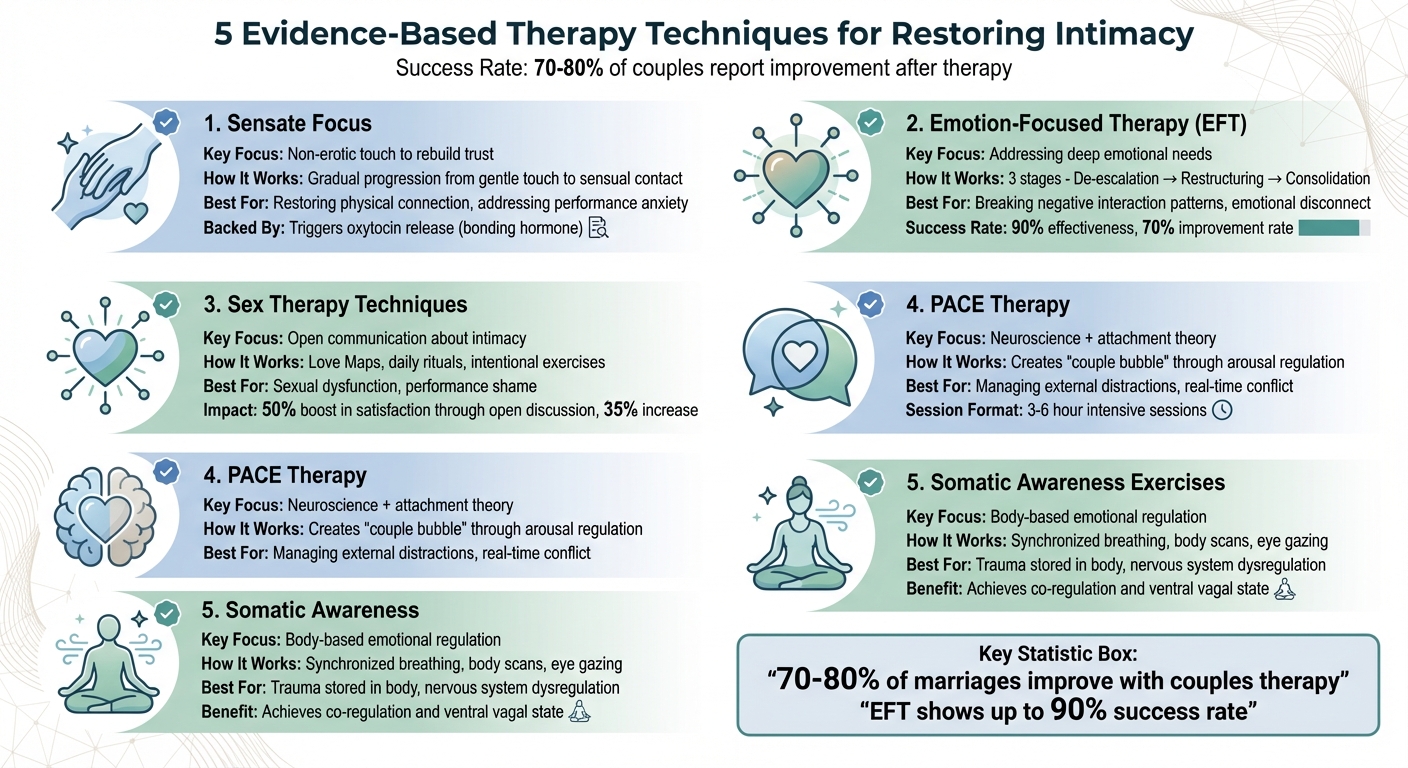
Addiction can severely impact relationships, eroding trust, emotional connection, and physical intimacy. But targeted therapy techniques can help couples rebuild their bond. Here are five methods that support emotional and physical reconnection:
- Sensate Focus: Uses non-erotic touch to rebuild trust and physical connection gradually.
- Emotion-Focused Therapy (EFT): Focuses on addressing deep emotional needs and breaking negative patterns.
- Sex Therapy Techniques: Encourages open communication about intimacy and practical exercises to restore physical closeness.
- Psychobiological Approach to Couple Sexuality (PACE): Combines neuroscience and attachment theory to create a safe "couple bubble."
- Somatic Awareness Exercises: Uses physical techniques like breathing and mindfulness to regulate emotions and reconnect partners.
These approaches are backed by research, showing success rates of up to 80% for couples therapy. Whether addressing emotional distance, sexual challenges, or trust issues, these methods provide actionable steps toward healing and reconnection.
5 Therapy Techniques for Restoring Intimacy After Addiction
Reconnecting Through Sensate Focus at Growth and Change Counseling
How It Rebuilds Emotional and Physical Intimacy
Sensate Focus encourages couples to reconnect through touch, free from any performance expectations. It starts with gentle, non-erotic touches, allowing partners to rediscover physical comfort with each other. Over time, this evolves into more sensual and full-body contact, all while fostering open communication. Asking questions like, "How does that feel?" helps deepen emotional trust and strengthen the physical bond [7].
Why It Works for Addiction Recovery
Addiction often disrupts the body’s natural reward system and can dull physical sensations. Sensate Focus, grounded in mindfulness, helps restore these sensory experiences. This technique can address the reward processing issues commonly seen in individuals recovering from opioid use or managing chronic pain [8]. By focusing on present-moment sensations, couples can also alleviate anxiety-related sexual challenges and rebuild intimacy.
Peyton Richard, LMFT, highlights the broader impact:
"When intimacy is rebuilt intentionally, it creates a foundation of trust and emotional closeness that extends beyond physical connection" [7].
Research Supporting This Approach
Touch plays a key role in connection, as it triggers the release of oxytocin – often called the "bonding hormone" – which promotes feelings of happiness and closeness [6]. Modern sex therapy divides Sensate Focus into two stages: Sensate Focus 1, aimed at addressing clinical sexual dysfunctions, and Sensate Focus 2, which enhances intimacy for couples feeling emotionally distant. This flexibility makes it a valuable tool for a variety of relationship issues [8].
The process is not about rushing; instead, it emphasizes building a secure and respectful connection. While some couples move through the stages in weeks, others may take months. The key is creating a safe, present-centered foundation where both partners feel valued. This mindful approach not only strengthens intimacy but also prepares couples for further therapeutic progress.
2. Emotion-Focused Therapy (EFT)
How It Rebuilds Emotional and Physical Intimacy
Emotion-Focused Therapy (EFT) dives into the deeper emotional needs that often fuel conflicts in relationships. Instead of focusing on surface-level disagreements, EFT helps couples see these conflicts as what Sue Johnson, Ph.D., the creator of EFT, describes as a "howl for connection" – a plea to fulfill profound attachment needs [12]. The therapy unfolds in three stages: de-escalation, where negative interaction patterns are identified and reduced; restructuring the bond, which involves learning to connect through vulnerability; and consolidation, where couples integrate these new patterns into their daily lives [16,17]. By addressing both emotional and physical intimacy, EFT works to strengthen the entire relationship.
Why It Works for Addiction Recovery
Addiction often disrupts relationships, creating a cycle where one partner pursues closeness through criticism while the other withdraws to avoid conflict [11]. EFT helps couples break free from these defensive patterns, replacing them with vulnerability and open communication. For instance, a study involving 14 couples navigating relationship struggles found that after 8–10 sessions of EFT, participants reported improvements in emotional, psychological, sexual, and physical intimacy [13]. Research published in the Journal of Marital and Family Therapy also shows that nearly 70% of couples experience improvement in their relationships after participating in couples therapy [2]. By moving away from the cycle of blame and retreat, EFT lays the groundwork for a deeper emotional connection.
Building Trust and Connection Through Emotional Awareness
While techniques like Sensate Focus work to restore physical intimacy, EFT targets the emotional disconnect. It encourages partners to look beyond anger and criticism, uncovering the vulnerability that lies beneath. This shift transforms negative interactions into moments of emotional openness and responsiveness [2][9]. Sue Johnson captures this idea perfectly:
"The anger, the criticism, the demands, are really cries to their lovers, calls to stir their hearts, to draw their mates back in emotionally and reestablish a sense of safe connection" [12].
Daily rituals that encourage connection can make this process easier, helping couples stay emotionally present. Asking reflective questions like "What do I fear most?" or "What do I need most from you?" can further deepen emotional understanding and strengthen the partnership [12].
Research Supporting This Approach
EFT’s focus on emotional transformation is backed by solid research, making it a trusted, evidence-based method rooted in attachment theory [15,21]. It has shown to be effective not only for couples dealing with addiction but also for those facing challenges like depression, PTSD, or chronic illness [15,21]. Leslie Greenberg, Ph.D., who co-developed EFT, emphasizes the profound impact of emotional connection:
"When two people connect, it is like the meeting of two chemicals: All kinds of reactions occur" [10].
This emotional bond becomes the cornerstone for rebuilding lasting intimacy and trust in relationships.
3. Sex Therapy Techniques
How It Rebuilds Emotional and Physical Intimacy
Sex therapy emphasizes the critical link between emotional connection and physical intimacy. Techniques like building "Love Maps" and establishing daily rituals of affection highlight how a strong emotional bond can enhance sexual connection. For instance, couples with well-developed Love Maps are 60% more likely to feel satisfied in their sexual relationships. Similarly, dedicating intentional quality time together is linked to a 35% increase in sexual satisfaction [14].
Why It Works for Addiction Recovery
Addiction often disrupts attachment patterns, leading to difficulties such as erectile problems or challenges with achieving orgasm [3]. Sex therapy helps address these issues by encouraging open conversations about sex early on, which can reduce feelings of performance-related shame [15]. David Mars, Ph.D., from the Transformative Couples Therapy® Institute, explains:
"The transformance strivings (the biological drive to evolve and grow) are the key to increasing the felt experience of eros, the life force, which energizes sexual desire and momentum toward sexual connection" [15].
By tapping into this innate drive for growth and connection, therapy enables couples to overcome the fear and emotional distance that often accompany addiction.
Building Trust and Connection Through Sexual Healing
Rebuilding trust often begins with simple, practical exercises. Small non-sexual gestures, like a six-second kiss or a warm hug, can release oxytocin, easing stress and creating a sense of safety [14]. Another technique, the "Intentional Delight" exercise, encourages partners to spend a week noticing and appreciating actions they enjoy from one another. Using small tokens, such as beans, to track these moments helps foster secure attachment by ensuring both partners feel valued and acknowledged [3]. These exercises work hand-in-hand with other methods to strengthen trust and reconnect emotional and physical intimacy.
Research Supporting This Approach
Studies show that openly discussing sexual preferences and boundaries can boost sexual satisfaction by 50% [14]. Noelle Zamudio of Ascension Counseling & Therapy emphasizes:
"Emotional connection is the heartbeat of a fulfilling sexual relationship. Feeling emotionally close to your partner enhances trust, vulnerability, and the desire to be physically intimate" [14].
This emotional groundwork creates a safe space for sexual healing, even in the challenging context of addiction recovery.
4. Psychobiological Approach to Couple Sexuality (PACE) Therapy
How It Rebuilds Emotional and Physical Intimacy
The Psychobiological Approach to Couple Sexuality, or PACE, takes a unique route compared to traditional talk therapy. It blends neuroscience, attachment theory, and the biology of arousal to create what’s known as a "couple bubble." This bubble acts as a safe space, built through mutual agreements and daily habits, that shields the relationship from outside pressures [24,26,27,28]. As Stan Tatkin, founder of the PACT Training Institute, puts it:
"Partners who are experts on one another know how to please and soothe each other" [18].
This "expertise" comes from learning to interpret subtle cues like facial expressions, tone of voice, and body language – signals that reveal emotions before they escalate into conflict [26,28].
Why It Works for Addiction Recovery
PACE goes a step further than traditional reconnection methods by aligning emotional and physical responses. Addiction often brings "thirds" into the relationship – external distractions like substances, pornography, or secrets that disrupt the couple’s bond [16]. PACE tackles these issues by teaching arousal regulation, which is the ability to manage intense emotions in real time. Dr. Kate Balestrieri, founder of Modern Intimacy, explains:
"When you recognize and understand threat responses, you can consciously manage them. Arousal regulation improves your readiness to engage in conflict in a productive way" [16].
This approach helps partners stay in a calm, empathetic state rather than reacting impulsively. By understanding how the brain seeks safety and reduces perceived threats, couples learn to soothe each other’s nervous systems – whether through touch, eye contact, or simply recognizing when one partner feels overwhelmed [18].
Building Trust and Connection Through Mind-Body Integration
PACE therapy sessions stand out from traditional formats. Lasting 3 to 6 hours, these sessions focus on real-time physiological responses, often reducing the overall number of sessions required [24,25,27,28]. Therapists might use video recordings to highlight automatic reactions – like crossed arms, subtle frowns, or changes in tone – that signal underlying distress [26,27]. This focus on body language and somatic awareness bypasses lengthy verbal arguments and addresses the emotions driving the conflict directly.
Data shows that about 70% of couples report improvement after therapy, with PACE’s targeted approach playing a key role in these results [2]. Its focus on integrating emotional and physical awareness is well-supported by modern research.
Research Supporting This Approach
PACE is grounded in years of research on attachment theory and developmental neuroscience [18]. Gal Szekely, founder of The Couples Center, emphasizes:
"PACT (Psychobiological Approach to Couples Therapy)… quickly gets to the heart of what’s happening with conflict and tension in your relationship" [17].
This method treats the relationship as a whole, understanding that individual issues – like trauma or addiction – can ripple through and affect the couple’s ability to function securely together [25,28].
sbb-itb-596b85d
5. Somatic Awareness Exercises
How It Rebuilds Emotional and Physical Intimacy
Somatic awareness exercises offer couples a way to reconnect by focusing on the autonomic nervous system – the part of the body responsible for managing essential functions like heartbeat and breathing. Addiction often leaves relationships stuck in survival modes like fight, flight, or freeze. These exercises gently guide partners toward a "ventral vagal" state, where feelings of safety make emotional and social engagement possible [19][20].
Unlike traditional talk therapy, which may not fully address trauma stored in the body, somatic techniques like synchronized breathing and body scan meditation allow partners to process their experiences physically [20]. For example, a 2018 study revealed that eye gazing between partners can create a sense of "self-other merging", breaking down psychological barriers and deepening their connection [9].
Why It Works for Addiction Recovery
Somatic practices help rebuild emotional regulation through physical reconnection. One of the key benefits is co-regulation, where two nervous systems influence each other to reach a calm, balanced state. Techniques like box breathing synchronize partners’ rhythms, enhancing heart rate variability and emotional stability [20]. This shared regulation helps both partners find equilibrium [19]. Additionally, mindfulness practices integral to somatic work have been linked to improved relationship satisfaction [9].
Building Trust and Connection Through Body Awareness
Practical exercises make the benefits of somatic awareness more tangible. Activities such as partner yoga, a 6-second kiss, or 30- to 60-second eye contact foster nonverbal intimacy and emotional alignment [2][9][21].
Reflective listening, where partners take turns as active listeners, enhances understanding and connection [9]. This combination of focused attention and body awareness helps partners feel deeply seen and valued. These simple yet impactful exercises highlight the effectiveness of somatic approaches.
Research Supporting This Approach
Somatic therapy is grounded in concepts from interpersonal neurobiology and Polyvagal Theory, which explore how the nervous system influences emotional well-being and relationships [19]. Research shows that somatic techniques can alleviate symptoms of PTSD and depression – conditions often linked to addiction and intimacy challenges [19]. The Bay Area CBT Center emphasizes:
"Research and practical application suggest that somatic therapy provides relief for symptoms of PTSD and depression" [19].
Interestingly, couples now seek help after about three years of relationship difficulties, a significant improvement from the six-year delay noted in past studies [21]. This shift underscores the growing awareness of the importance of addressing relationship struggles sooner rather than later.
The Surprising KEY to Restoring INTIMACY After Addiction
How Growth and Change Counseling Uses These Techniques
Growth and Change Counseling customizes a range of therapeutic methods to support couples recovering from addiction. Through the Marriage Rescue Institute, founded by John Mark Kane, LMFT, a 12-week intensive program is offered to address the root causes of relationship distress. This program combines approaches like Emotionally Focused Therapy (EFT), Cognitive Behavioral Therapy (CBT), Sensate Focus, and somatic awareness practices to transition couples from patterns of toxic conflict to secure and healthy attachment [22].
The process begins with an initial assessment, followed by weekly sessions. These sessions include real-time communication coaching and practical relational exercises, such as synchronized breathing and non-sexual touch, aimed at rebuilding trust and fostering vulnerability [22]. This structured and personalized approach demonstrates how therapy can effectively restore intimacy and connection.
"We don’t believe therapy should go on forever. You deserve real results in the quickest way possible." – Growth and Change Counseling [22]
Therapy sessions are available in Campbell (1875 S Bascom Ave Suite 2400), San Jose, Los Angeles, and Roseville, with telehealth options accessible throughout California. Each 45-minute session costs $165, and the practice accepts major insurance providers, including Anthem Blue Cross, Aetna, United Health Care, Cigna, and Medicare Part B. Approximately 70% of couples report significant improvements, with EFT boasting a success rate of around 90% [22][23].
John Kane’s expertise in Wilderness Therapy and Somatic Experiencing significantly influences the institute’s clinical methods. These techniques are particularly beneficial for couples dealing with issues like codependency, broken trust, and emotional distance – common challenges in relationships affected by substance abuse. The program’s structured approach not only delivers measurable results but also helps couples create a supportive environment that encourages long-term sobriety.
Conclusion
Rebuilding intimacy after addiction is no small feat, but it’s entirely possible with proven methods that address both emotional and physical disconnection. Studies reveal that 70% to 80% of marriages improve when couples engage in therapy, underscoring the effectiveness of professional support [2][4].
Practical strategies can help couples reconnect and heal. Techniques like reflective listening – using "I" statements to express feelings without blame – can foster better communication. Incorporating intentional physical touch helps boost oxytocin, the hormone tied to bonding, while examining harmful patterns rooted in past trauma lays a foundation for long-term growth [2][5][6].
"The more relationally healthy people are, the less anxious, addicted, and depressed they are." – John Kane, Relationship Therapist, Growth and Change Counseling [24]
This quote emphasizes the critical role professional guidance plays. Therapists offer tailored approaches to navigate the unique challenges of each relationship, balancing individual struggles with relational healing during recovery [1][5]. Their expertise can turn overwhelming struggles into meaningful progress.
FAQs
How does Sensate Focus support intimacy recovery during addiction treatment?
Sensate Focus is a therapeutic approach designed to help couples reconnect both emotionally and physically. Instead of emphasizing performance, it encourages shared, non-pressured physical touch, allowing partners to explore sensations and comfort at a pace that feels safe. This technique nurtures trust and mindfulness, creating a supportive space for deeper connection.
For couples recovering from addiction, Sensate Focus can play a key role in rebuilding intimacy. Addiction often disrupts emotional and physical closeness, leaving behind feelings of guilt, anxiety, and tension. By creating a calm and supportive environment, this method helps partners rediscover pleasure and rebuild their bond, easing relational stress and fostering a stronger connection – an essential element in the recovery journey.
How does emotional awareness help rebuild intimacy after addiction?
Emotional awareness is a key ingredient in rebuilding intimacy, especially after addiction. It allows partners to recognize, understand, and openly share their feelings. When emotions like fear, longing, or love are expressed without fear of judgment, it creates a foundation of trust and fosters a deeper connection – both of which are essential for restoring emotional and physical closeness.
Therapies such as Emotion-Focused Couples Therapy (EFT) and the Gottman Method highlight the importance of emotional awareness in helping couples reconnect. These approaches provide a safe, empathetic environment where partners can break away from negative patterns, develop secure attachments, and strengthen their bond.
At Growth and Change Counseling, the Marriage Rescue Institute program incorporates these principles to help couples enhance emotional awareness, improve communication, and rebuild trust. This guided process supports couples in navigating addiction recovery while re-establishing a strong and intimate relationship.
Why is somatic awareness essential for couples rebuilding intimacy after addiction?
Somatic awareness – the ability to notice and interpret physical sensations in the body – plays a key role for couples rebuilding intimacy after addiction. It helps partners identify how stress, cravings, or anxiety show up physically – like tension in the shoulders, shallow breathing, or a tight chest. By recognizing these signals together, couples can step back before conflicts spiral and use calming techniques, such as synchronized breathing or gentle touch, to soothe the nervous system. This creates a sense of safety and trust, paving the way for deeper emotional connection.
Somatic practices also aid in releasing trauma stored in the body, a common experience for those with a history of substance use. By becoming more attuned to their own physical sensations and each other’s experiences, partners can better understand how unresolved wounds from the past affect their current relationship. This shared awareness not only improves communication but also strengthens both emotional and physical intimacy, helping to build a more solid foundation for long-term recovery.
Related Blog Posts
- Rebuilding Emotional Intimacy After Addiction
- Addiction Recovery and Emotional Connection in Marriage
- EFT for Addiction Recovery in Marriage
- Rebuilding Intimacy After Addiction Recovery
